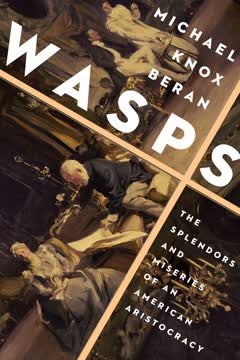
Key Takeaways
1. The WASP Ideal: A Contradictory Pursuit of Power and Perfection
For it was not blood or heredity, but a longing for completeness that distinguished the WASPs in their prime.
A self-conscious class. The WASPs, or White Anglo-Saxon Protestants, emerged after the Civil War as a distinct class and movement, driven by a self-conscious devotion to both power and reform. They were largely descended from colonial elites, yet their identity was forged less by English blood or Protestant religion than by an aspiration for human completeness. This ambition often clashed with their inherent blood-pride, creating a tension between their self-perception as suffering idealists and their reality as an entrenched oligarchy.
Flawed people in a scrupulous age. The book explores how these individuals, despite their flaws, profoundly shaped America. Their story is not merely genealogical or sociological, but a history illuminating their acts and the "ends and purposes that incited them, and made them a little mad." This pursuit of a higher motive often coexisted with baser inducements like vanity and a hunger for power.
An American phenomenon. The term WASP, though imperfect, captures the tragicomedy of this formidable tribe. They were not merely English in strain, but a uniquely American phenomenon, embodying a corrosive blood-pride that they struggled to reconcile with their self-image as idealists. Their most significant contribution, a myth of regeneration, eventually became lost in their decadence.
2. Neurasthenia: The WASP's Inner Struggle and Catalyst for Action
WASPs are creatures of guilt and self-questioning, more likely to kill themselves than kill others.
A pervasive malady. WASPs were deeply haunted by despairs, lunacies, and hysterias, often manifesting as neurasthenia—a condition described as "lack of nerve-force" leading to insomnia, irritability, and profound exhaustion. This "soul-sickness" was so prevalent that suicide blighted entire families, including the Sturgises, Gardners, and Roosevelts.
A modern variation on ancient woes. While seemingly a medical condition, neurasthenia was more a state of mind, akin to Greek melancholia or medieval acedia. It was a modern expression of immemorial despondencies, distinguished by the WASP's consciousness of "unused powers in the soul" that they sought to discharge in civic and creative activity. This condition, though debilitating, often provided a "holiday from practical tasks," offering time for introspection and self-discovery.
Productive lunacy. Figures like Henry Adams adopted the pose of a neurasthenic weakling, yet this very debility became a means to diagnose his class's predicament and plot a comeback. For some WASPs, neurasthenia was a curse to be conquered through "strenuous exertion," as with Theodore Roosevelt. For others, it was a process, a "productive lunacy" that, by exempting them from marketplace demands, allowed them to cultivate their inner lives and eventually emerge as reformers.
3. Humane Forums: The Quest for Regenerative Community
The WASPs’ idea that we are, many of us, suffering under the burden of our unused potential—drowning in our own dammed-up powers—does not make up for the evils of their ascendancy. But it may perhaps repay study.
A longing for completeness. WASPs were born with a "consciousness of a void in their lives," a sense that their existence mocked life's promise. Unlike those content with unchanging tradition, they were drawn to the Greek maxim "become what you are," feeling their "unused powers rotting within them." This led to a fervent quest for "humane forums"—places where the soul could ripen and human potential could be fully realized.
Art as regeneration. Isabella Stewart Gardner, for instance, sought to impose her "inner romance on an alien environment" by creating a museum in Boston, bringing the "artistic and spiritual fruits of the Old World" to the New. This was part of a broader WASP belief in art as a means of regeneration, a cure for America's cultural maladies. However, some reformers felt her passion for form stopped short at mere aesthetics, failing to achieve a truly "humanized society."
Beyond mere aesthetics. The ideal humane forum was envisioned as a place where "poetry, music, ritual, the visual arts, the theatre" cooperated to create a comprehensive art: a humanized society. This aspiration, though often imperfectly realized, reflected a deep-seated desire to overcome the "spiritual penury" and "cultural drabness" of American life, which they believed stifled the soul and prevented genuine human flourishing.
4. The Tension Between Virtue and Worldly Power
His rhetoric of service, humility, and civic conscience is rarely altogether false. But neither is it ever wholly true. WASPs like to give orders.
Proximity to power. Young WASPs, like Henry Adams, grew up in close proximity to power, fostering a conviction that they were destined to wield it. This longing for command, often cloaked in rhetoric of service and civic conscience, was a defining characteristic. They sought to direct the destinies of the nation, believing their background and education uniquely qualified them.
Reform as a means to an end. Adams's early attempts at political reform were driven by a genuine desire to purify a corrupt Republic, yet also by a need to "get the better precisely of those new men who were usurping the place of families like the Adamses." This blend of idealism and self-interest was common, with reform often serving as a way to reassert patrician authority against rising plutocrats and party bosses.
The compromise of purity. Theodore Roosevelt, while dreaming of "pure government," understood that "it would not do to be too pure." His political pragmatism, exemplified by his willingness to campaign for a corrupt candidate like James G. Blaine, showed a readiness to compromise ideals for the sake of power. This lesson—that "it would not do to be too pure"—imprinted itself on generations of WASPs, shaping their approach to public life.
5. Education as Soulcraft: Molding Character for Public Service
Many have admired the WASPs for their effort to shape character in accordance with an ideal: but few have studied how they did it, or examined the techniques, the institutional artistry, by which they wrought upon the soul.
Beyond academics. WASP educators like Endicott Peabody at Groton aimed to cultivate "manly, Christian character," emphasizing moral and physical development alongside intellectual growth. They sought to instill "vigor and manliness" as an antidote to the "neurasthenic weaklings" they feared their boys might become. This "muscular Christianity" was a regimen of strenuous living, cold showers, and athletic discipline, designed to conquer fear and cultivate toughness.
The "family idea" and intimate mentorship. Groton's early years were characterized by a "family idea," fostering intimacy between masters and boys. Teachers like William Amory Gardner, Peabody's cousin, believed in developing the "heart" and exposing young WASPs to the "richness and subtlety of the world" through art and classical literature. This approach aimed to draw out hidden potential and send forth leaders "as a force for good."
Paideia: A holistic approach. Gardner's "paideia" involved an immersion in "the best that has been thought and said in the world," using poetry, music, and ritual to open minds and instill a "higher idea of what a human being might be." This soulcraft, rooted in Greek and Renaissance ideals, sought to integrate learning with daily life, fostering a "clarity of purpose" and a deep sense of civic obligation, even as the school grew larger and more regimented.
6. The Jazz Age and the Erosion of Victorian Morality
In that prelude to the Jazz Age when, Virginia Woolf said, “human character changed,” WASP women, not WASP men, took the lead in smashing the idols.
Rebellion against constraint. The early 20th century saw WASP women like Alice Roosevelt, Gertrude Vanderbilt Whitney, and Mabel Dodge leading a rebellion against Victorian pruderies and constraints. Alice, a "mischievous gamine," defied social norms, while Gertrude, an heiress, scandalously pursued a career as a sculptor, rejecting the prescribed role of a society matron.
New freedoms, new challenges. This era brought a relaxation of sexual taboos, with love affairs and divorce becoming more common. The cocktail party, where men and women drank and conversed freely, further eroded old reticences. This "sexual and social iconoclasm" gave WASP women a new ascendancy, allowing for greater "cross-pollination" of ideas and experiences, though it also led to broken homes and a retreat from earlier, more integrated aspirations.
The allure of the "Village." WASP women ventured into bohemian enclaves like Greenwich Village, bringing back tales of ragtime, Freud, and Cubism. Gertrude Whitney, for example, became a patroness of the Ashcan School, embracing American artists who sought to connect art with "American life." This engagement with new cultural forms, however, often occurred in a vacuum, divorced from the deeper wisdom of the cultures that created them.
7. The Rooseveltian Compromise: Adapting WASP Ideals to Modern America
This great Nation will endure as it has endured, will revive and will prosper. So, first of all, let me assert my firm belief that the only thing we have to fear is fear itself—nameless, unreasoning, unjustified terror which paralyzes needed efforts to convert retreat into advance…
A child of privilege, a man of destiny. Franklin Roosevelt, though carefully protected from life's rawness, emerged as a radiant figure promising regeneration. Schooled in Groton's ideals of service, he possessed a pragmatic expediency, believing that action, even if mistaken, was necessary to restore confidence during the Great Depression. His "unnatural sunniness" and ability to connect with ordinary Americans, despite his patrician background, were key to his success.
The New Deal as a middle way. Roosevelt's New Deal policies, while imperfect, aimed to save capitalism from its "malefactors of great wealth" and establish a welfare state. He deliberately stoked class tensions with rhetoric against "economic royalists," yet sought a "middle way" between unregulated markets and radical socialism. This compromise, balancing private initiative with government mandarinism, largely prevails today.
The king in a democracy. Roosevelt's leadership style was both progressive and deeply archaic. He spoke with the accent of a "lord of the manor" and acted like a king, yet his fireside chats created an intimate connection with the nation. This blend of aristocratic bearing and democratic appeal allowed him to navigate the crisis, embodying a "Tory radical" who, despite his personal flaws, was "a superb war President."
8. The Cold War: WASPs as Architects of American Global Power
Containment was their credo, and under Dean Acheson’s generalship they were quick to give it expression in such world-altering policies as the Marshall Plan and NATO, even as the cloak-and-dagger institutions of the national-security state extended their lease on public life.
A new sense of purpose. The Cold War revived the WASP elite, giving them a renewed sense of purpose after the decline of their domestic influence. Figures like George Kennan, minister-counselor in Moscow, articulated the "Long Telegram," a foundational document for the doctrine of containment, which became the WASP credo against Soviet expansion.
Geopolitical realism and idealistic rhetoric. WASP statesmen, influenced by Theodore Roosevelt's geopolitical realism, understood the threat of a single power dominating Eurasia. However, they learned from Woodrow Wilson to cloak this realism in idealistic rhetoric, portraying America's global interventions as extending "the blessings of its own city on a hill to a suffering humanity." This blend of prose and poetry, while ingenious, often led to self-deception.
The Washington dinner party as a "syssítia." Postwar Washington saw the revival of the WASP dinner party, a "syssítia" or mess hall where the elite maintained caste fellowship. These gatherings, often marked by fierce arguments and copious drink, were crucial for networking and policy formation. Despite their internal quibbles and personal foibles, these "centurions of an American Century" were instrumental in shaping the postwar world order.
9. The Decline: Meritocracy, Cultural Shifts, and the End of an Era
With the death or disgrace of so many of their luminaries, WASPs lost their grip on power, and they were soon doing penance for having been in power at all.
Erosion of privilege. The WASP ascendancy began to wane as new forces reshaped American society. The New Deal's wealth taxes diminished their capital, and meritocracy, championed by figures like Henry Chauncey and his SATs, undermined their near monopoly on elite institutions like Harvard and Yale. This shift, while fairer, also hindered their cherished projects of cultural regeneration.
Cultural irrelevance. By the 1960s, WASPs were increasingly seen as "amiably goofy," their style parodied in popular culture. Their "lock-jawed dialect" and "steam-room-and-martinis culture" became jokes. The death of figures like Jack Kennedy, whom many WASPs had looked to for reanimation, marked a symbolic end to their era of influence, leaving behind "male widows" mourning a lost vitality.
A retreat into private enclaves. Disillusioned by the "anarchy and stupidity" of modern America, many WASPs retreated into private gardens and ancestral fiefs, seeking refuge from the "polluting multitude." Edmund Wilson, for example, mourned the passing of the cultivated haute bourgeoisie, deploring the "coarseness of American civilization" and the "tyranny of its bureaucracies." This withdrawal reflected a profound sense of estrangement from a world that no longer valued their "superior 'values.'"
10. The Enduring Legacy: A Flawed but Illuminating Failure
Failure, then, is the WASPs’ epitaph. But it was an illuminating failure.
A tragicomic end. The WASPs, in their final disintegration, became a rich source of material for artists like Robert Bingham, who depicted their lives as "expensive example[s] of moral decay." Their pursuit of eutrapelian completeness dwindled into the "fatuities of Southampton," where their scions stooped to "pimp their patrimony," a stark contrast to the grand aspirations of their forebears.
The unbuilt "little cities." Despite their fervent desire to revive the "artistry of Florence and Athens," the WASPs ultimately failed to build the "little cities" or humane forums they envisioned. This failure stemmed from the inherent difficulty of transplanting ancient myths and beliefs into a modern, specialized environment, and their own inability to bridge the gap between their cultivated ideals and the broader American reality.
A valuable lesson. Yet, their failure was "illuminating." They showed how a certain kind of education could awaken the soul and promote civic virtues, contributing to a culture of public service that helped steer the 20th century away from totalitarianism. Their "habits of civility," "good manners," and "self-effacing humor" were valuable in themselves, even if often debased by self-interest and snobbery. Their story remains a poignant reminder of the "great tracts of possibility" that lie undiscovered in our own lives.
11. The Eutrapelian Imagination: A Lost Art of Living
High WASPs wanted to keep alive parts of the soul that were endangered amid so many beneficent revolutions in our way of living.
The soul's vast territory. High WASPs believed that modern life, with its focus on material and technical advances, only utilized a "slender part" of the soul's territory, leaving "large regions... uncultivated" and leading to neurasthenia. They sought "eutrapelia," the Greek ideal of human completeness, as an art of balancing different gifts and ministering to the soul's variousness.
Artistry of place, play, and poetry. They yearned for "placefulness," where architecture, music, ritual, and games created a "magical veil" of significance, fostering community and stimulating the imagination. This "artistry of play" endowed life with dignity, contrasting sharply with the "psychological crudity" of modern leisure. They believed poetry, with its rhythms and harmonies, could "sink furthest into the depths of the soul" and bring nobility.
A deeper reasonableness. The WASPs, though often seen as priggish, sought to keep the "human difference" alive, believing humans had evolved beyond mere biology to embrace rational arts of seeking the good. They saw art and poetry as embodying their own "reasonableness," as useful and rational as corporate finance. Their quest, though ultimately unfulfilled, was for a "deeper reasonableness" that could integrate the soul's diverse aspects and resist the "atrophy of the melodic sense" in a disenchanted world.
People Also Read
 Immersive


 Immersive