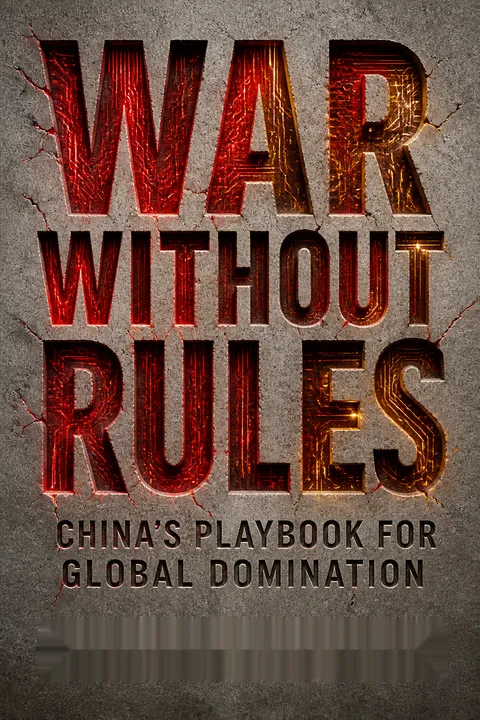

Key Takeaways
1. Unrestricted Warfare: China's Blueprint for Global Domination
If you look closely at everything China has done since 1999—at all aspects of its economic, military, diplomatic, and technological relations with the rest of the world—it’s like watching Unrestricted Warfare come to life.
A Prescient Manual. Initially dismissed as "wacky" by the author in 1999, the Chinese war manual Unrestricted Warfare (UW) has proven to be the definitive blueprint for China's global strategy. Written by PLA Colonels Qiao Liang and Wang Xiangsui, it outlines a comprehensive, long-term plan for China to unseat America as the world leader, not through conventional military might, but through a "war without rules."
Beyond Traditional Conflict. The book argues that modern warfare extends far beyond traditional battlefields and military means. It encompasses corporate sabotage, cyberwarfare, dishonest diplomacy, violations of international trade and intellectual property laws, and calculated abuses of the global financial system. The core tenet is that "the only rule in Unrestricted Warfare is that there are no rules."
A Call to Awareness. The author's previous work, Stealth War, faced skepticism, prompting this deeper dive into UW to make its insights accessible. The book aims to expose how the Chinese Communist Party (CCP) has systematically undermined the world, using events like the COVID-19 pandemic, climate change negotiations, and the fentanyl crisis as opportunities to advance its agenda.
2. The Enemy's Mindset: CCP Survival and Western Naivete
The number one goal of the Chinese Communist Party is the survival of the Chinese Communist Party. And second, the number one threat to achieving that goal is American democracy.
Existential Threat. The CCP views American democracy as an existential threat to its survival, a core tenet that shapes all its actions. This perspective was solidified after events like the Tiananmen Square protests in 1989, which the CCP blamed on Western influence and responded to with brutal suppression and heightened ideological control.
Not Russia 2.0. Unlike the Soviet Union, China's version of communism is more complex, allowing free enterprise with strict party oversight, and its economy dwarfs Russia's. Western leaders, particularly during the Obama administration, mistakenly believed that economic engagement would lead to political liberalization, failing to grasp the CCP's unwavering commitment to its totalitarian rule.
Strategic Deception. The CCP's strategy involves maintaining a low profile while waging a stealth war, allowing other global actors like Russia or Iran to distract the West. This approach enables China to advance its goal of becoming the sole world power by 2049, the hundredth anniversary of the Communist takeover, without provoking direct military confrontation.
3. Technology as the "Magic Shoes" of War
Technology is like “magic shoes” on the feet of mankind, and after the spring has been wound tightly by commercial interests, people can only dance along with the shoes, whirling rapidly in time to the beat that they set.
A Double-Edged Sword. The colonels view technology as a powerful, yet potentially uncontrollable, force. While it offers "innumerable benefits," it can also turn mankind into its victim if not properly managed. Information technology, especially the internet, is seen as the most significant revolution, capable of linking disparate technologies and driving globalization.
Blurring the Lines. This technological integration fundamentally blurs the traditional "face of war," making it impossible to define conflict solely by weapons. The authors question whether a hacker attack, financial manipulation, or media broadcast constitutes an act of war, concluding that "warfare which transcends all boundaries and limits" is the new reality.
The Battlefield is Everywhere. The rise of information technology means that "the battlefield will be everywhere," encompassing not just physical domains but also information, economies, and even the human psyche. This insight led to the creation of the "Great Firewall of China," a high-tech solution to control information flow and protect the CCP from dangerous Western ideas.
4. Everything is a Weapon: Beyond Traditional Definitions
Everything that can benefit mankind can also harm him. This is to say that there is nothing in the world today that cannot become a weapon...
Redefining the Arsenal. The colonels argue that the traditional concept of weapons is obsolete. In an age where high-tech military hardware is increasingly expensive and less decisive, anything from a stock market crash, a computer virus, a rumor, or even a commercial jetliner loaded with fuel can be weaponized. This broadens the scope of warfare beyond conventional military means.
The Cost of Extravagance. The book criticizes the American military's "illness of extravagance," its reliance on costly, high-tech weapons, and its aversion to casualties. This approach, while achieving low casualty rates in conflicts like the Gulf War, makes the U.S. vulnerable to adversaries who exploit these weaknesses by inflicting casualties or engaging in low-cost, unconventional attacks.
Control, Not Kill. The authors advocate for "kinder" weapons—precision-kill and non-lethal technologies—that aim to control and paralyze rather than indiscriminately destroy. This aligns with the broader strategy of "control, not to kill," which can achieve strategic objectives without triggering a conventional military response, as seen in China's use of fentanyl smuggling or corporate espionage.
5. The Battlefield is Everywhere: Blurring Lines of Conflict
Just think, if it’s even possible to start a war in a computer room or a stock exchange that will send an enemy country to its doom, then is there non-battlespace anywhere?
Expanded Domains. The traditional battlefield, once confined to land, sea, and air, has expanded infinitely to include space, cyberspace, and even the "inner world of the heart" through psychological warfare. This means that every aspect of human activity, from financial markets to social media, can become a theater of conflict.
New Warriors. The definition of a "warrior" has also evolved beyond professional soldiers. Hackers, financial speculators like George Soros, media moguls, and non-state organizations like Al Qaeda are identified as potent "non-professional warriors" capable of inflicting significant damage. The colonels were remarkably prescient about Osama bin Laden's threat years before 9/11.
Non-Military Warfare. The book details numerous forms of non-military warfare:
- Trade War: Tariffs, sanctions, embargoes.
- Financial War: Currency manipulation, stock market crashes.
- Terror War: High-tech biochemical attacks, cyberterrorism.
- Ecological War: Influencing natural phenomena, climate change manipulation.
- Psychological Warfare: Spreading rumors, disinformation.
- Network Warfare: Cyberattacks, data theft.
- Resources Warfare: Plundering resources.
- Cultural Warfare: Assimilating different views.
6. Weaponizing the International Order: Rules are for Suckers
In the international community, the participation by large nations, when facing the weak and powerless, in the formulation and the utilization of rules as well as the disregard and even destruction of rules when the rules are not advantageous to them, . . . contrast with . . . non-state forces who do not acknowledge any rules and specialize in taking the existing national order as their goal of destruction.
Contempt for Rules. The colonels argue that international laws and treaties are merely tools for powerful nations to control weaker ones, or to be disregarded when inconvenient. They cite the U.S.'s actions in Panama or the IMF's conditions for loans as examples of "armed robbery" and "economic occupation," justifying China's own disregard for international norms.
Infiltrating Institutions. China's strategy involves systematically infiltrating and manipulating international organizations like the UN and WHO. This allows the CCP to exert influence, promote its agenda, and deflect criticism, as demonstrated by the WHO's initial handling of the COVID-19 pandemic and its alignment with Chinese narratives.
The "New Terrorists." The book groups financial speculators (like George Soros), computer hackers, and traditional terrorists (like Osama bin Laden) as "new terrorists" who operate without rules, across borders, and with tremendous destructive power. Their actions, often concealed, serve as a model for how a nation-state can wage effective, deniable warfare.
7. The Power of "Addition" and "Combination": Overwhelming the Foe
It can be affirmed that whoever is able to mix a tasty and unique cocktail for the future banquet of war will ultimately be able to wear the laurels of success on his own head.
Synergy of Tactics. The core of unrestricted warfare lies in the "addition" and "combination" of diverse military and non-military tactics. This means simultaneously deploying multiple forms of attack—from financial and cyber warfare to media manipulation and psychological operations—to create confusion, overwhelm the enemy, and achieve objectives rapidly.
Beyond Military Spheres. Unlike traditional military "combined arms" strategies, this approach extends to all aspects of national power. The colonels envision combining stealth aircraft with network killers, or nuclear deterrence with financial wars and terrorist attacks, to create a "cocktail mixture of warfare" that is far more potent than any single method.
One-Mindedness. Success in this "beyond-limits combined war" requires "one-mindedness"—a coordinated effort across all levels of government and society. This doctrine aims to reorient Chinese leadership to leverage every asset, even against a seemingly invincible adversary like the United States, by exploiting its "insufficient frequency band width" to new threats.
8. America's Fatal Flaw: Extravagance and Aversion to Casualties
“Pursuit of zero casualties,” this completely compassionate simple slogan, has actually become the principal motivating factor in creating American style extravagant warfare.
The Cost of Compassion. The American military's post-Vietnam obsession with minimizing casualties, coupled with its "illness of extravagance" in deploying costly high-tech weapons, is identified as a critical weakness. This makes the U.S. vulnerable to adversaries who understand that inflicting casualties, even without strategic gain, can erode public support and force a withdrawal.
Misplaced Priorities. The colonels argue that America's focus on maintaining technological superiority in conventional weaponry leads to an "arms race" that drains resources and distracts from the true nature of modern conflict. They note that the U.S. military is "technologically stagnant" in its thinking, failing to adapt to unconventional threats.
Exploiting the Gap. The U.S. military's "insufficient frequency band width" to deal with non-military threats—such as hacker intrusions, terrorist bombings, or financial attacks—leaves it psychologically and strategically unprepared. This gap allows adversaries to wage war effectively without direct military confrontation, slowly eroding America's vitality and influence.
9. The New Cold War: A Stealth Attack on All Fronts
Everything is part of a grand strategy, and everything is part of a long-term war.
No Random Acts. The seemingly disparate actions of the Chinese Communist Party—from espionage and cyberhacking to threats against Taiwan and the manipulation of global health crises—are not isolated incidents. They are all meticulously coordinated components of a grand, long-term strategy of unrestricted warfare aimed at undermining and eventually surpassing the United States.
Exploiting Openness. China leverages the openness of free societies, including their media, social media, political systems, and economies, to its advantage. This involves planting disinformation, influencing public opinion, and exploiting social divisions, as seen in the CCP's use of "cancel culture" or its deflection of criticism by invoking racism.
A War of Attrition. This "stealth war" is designed to slowly strangle democracies, erode their economic strength, and destabilize their political systems without firing a shot. The goal is to keep America distracted, internally divided, and massively overcommitted, ultimately leading to its decline, much like the Soviet Union's collapse due to overspending.
10. Fighting Back: A Three-Pillar Strategy for American Revival
What is of supreme importance in war is to attack the enemy’s strategy. Now we know their strategy.
A Unified Response. To counter China's "one-minded" approach, the U.S. needs a single, coherent team to manage its opposition, transcending the fragmented efforts of multiple agencies. This requires a fundamental mindset shift, recognizing that China is at war with the United States, not merely a "challenge" or "competitor."
Protect, Rebuild, Inspire. The author proposes a three-pillar strategy for American revival:
- Protect: Implement permanent tariffs, enforce technology and capital bans to authoritarian nations, build resilient military communications, and ensure financial transparency.
- Rebuild: Shift defense spending to massive R&D and reindustrialization efforts in critical technologies (AI, 5G, quantum computing), invest in infrastructure, and boost STEM education.
- Inspire: Forge a new global consensus with democratic allies, promote economic prosperity tied to human rights and rule of law, and counter China's Belt and Road Initiative with ethical development plans.
Reclaiming the High Ground. This comprehensive strategy aims to revitalize America's economic, technological, and military superiority, while simultaneously strengthening democratic alliances and promoting human rights globally. By understanding China's strategy and responding with a coordinated, multi-dimensional approach, the U.S. can counter unrestricted warfare and ensure the survival of its own principles.
Review Summary
Reviews of War Without Rules are mixed, averaging 4.04 out of 5. Supporters praise it as an eye-opening analysis of China's non-kinetic global strategy, drawn from the PLA document Unrestricted Warfare. Critics call it alarmist, biased, and lacking intellectual rigor, arguing Spalding selectively presents facts while ignoring America's own role in empowering China. Several readers note the book is repetitive and politically charged. Most agree it sparks important conversations about great-power competition, even if its recommendations feel like common sense and its tone occasionally undermines its credibility.
People Also Read



Download PDF
Download EPUB
.epub digital book format is ideal for reading ebooks on phones, tablets, and e-readers.








































