
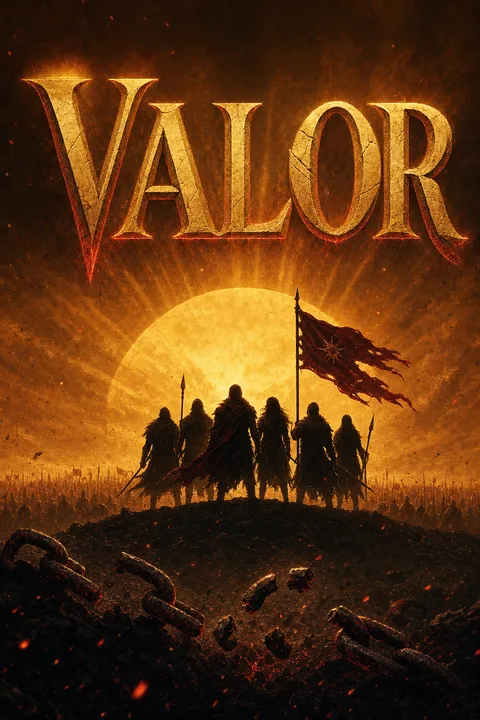


Plot Summary
Prologue
Deep beneath Murias, the last Benothi giant stronghold, Uthas18 approaches the cauldron, a squat mass of black iron that swallows torchlight and seems to throb like a diseased heart. Whispers stir within it as white wyrms circle the shadows. Summoned to Queen Nemain, he urges her to strike south and reclaim lost lands, secretly praying she will spare him the terrible task he has bound himself to.
She refuses: the cauldron must be guarded, never used again. Then Ethlinn the Dreamer bolts upright, wild-eyed, crying that the Kadoshim draw near, that the Black Sun is coming to make them flesh, coming for the cauldron. The prophecy is no longer distant. The War of Sorrows has begun to breathe.
Gwynne opens on the object that will magnetize every storyline, framing the sprawling war around a single artifact of dread. The cauldron, personified as a diseased heart, embodies temptation itself: power that promises restoration yet guarantees ruin. Nemain's refusal establishes the book's central moral fault line, the tension between fearful preservation and reckless ambition, while Uthas's private prayer plants the seed of betrayal beneath apparent loyalty. Ethlinn's seizure converts abstract prophecy into imminent threat, a countdown. The scene functions as an overture: giants, wyrms, treasures, and the returning god-war are all sounded at once, teaching readers to hear the deep drumbeat under the coming human politics.
Waking Among the Dead
Cywen2 surfaces to consciousness sprawled across a corpse in the courtyard of fallen Dun Carreg, red-cloaked soldiers of Narvon heaping the slain around her. In the feast-hall she discovers her father Thannon dead, the great hound Buddai guarding his body, and learns that her mother,16 her brother Corban,1 and their companions escaped by sea believing her killed.
Rafe, a childhood rival now serving the traitor Evnis,19 taunts her about abandonment; she rams a knee into his groin and walks away. Alone in her cold, empty kitchen, clutching Buddai, she breaks into racking sobs. Yet she does not shatter. She rearms herself with a belt of throwing knives and resolves to survive, to guard Corban's1 stallion Shield, and one day to find her kin.
Gwynne inverts the usual heroine's departure: Cywen's story begins not with a journey but with being left behind, a wound of abandonment she will carry as fuel. The scene weaponizes grief into agency, the throwing knives becoming both literal armament and psychological armor. Buddai, the loyal hound, externalizes the loyalty she still commands when humans have failed her. By opening on the aftermath rather than the battle, the book insists that war's true cost is measured in the survivors who wake alone. Her refusal to weep for long, choosing rearmament over paralysis, establishes the stubborn, prickly resilience that will keep her alive as a pawn among kings.
A Boat of Broken Exiles
Aboard a fisherman's skiff fleeing north, Corban1 mourns his father and sister while the survivors, Princess Edana15 among them, argue over sailing to distant Domhain for sanctuary.
That night his mother Gwenith16 and the stablemaster Gar10 draw him into the dark and finally speak the truth hidden his whole life: he was born chosen, a piece in the coming God-War, hunted since birth by Asroth, and they must abandon the others and flee to the giant city of Drassil.
Bound by a warrior's oath to Edana15 and unwilling to desert the last remnant of home, Corban1 refuses flatly. The rift wounds all three. Still Gar10 wakes him each dawn to train through the sword dance, patient as a circling hawk, certain the truth will one day claim the boy whether he wills it or not.
The chosen-one revelation arrives not as glory but as burden and betrayal of trust, a teenager discovering his entire childhood was a managed secret. Corban's refusal is the book's quiet thesis on free will: prophecy may name him, but he insists on choosing his oaths and his people over cosmic destiny. Gwynne stages the revelation in literal darkness, mirroring Corban's disorientation and the moral murk of being told you matter to gods you never chose. The sword dance becomes ritual continuity, a father-son intimacy standing in for the biological father just lost. Grief and destiny braid together, establishing that Corban will be dragged toward greatness through loss rather than triumph.
The Axe and the Tunnels
When the giant stronghold of Haldis falls, Nathair's5 silver-haired counsellor Calidus6 emerges from the catacombs bearing the starstone axe, one of the Seven Treasures, and reports that King Romar died below.
Veradis,4 Nathair's5 honorable first-sword, smells betrayal: Romar and all his men perished while the ambitious Jael conveniently lived. Beneath the ruins, two survivors of Romar's elite Gadrai, the grizzled Maquin3 and bald-headed Orgull,23 wake amid the slaughter. Maquin3 cradles the corpse of Kastell, murdered by his own cousin Jael, and swears a blood-oath of vengeance.
Fighting free through wyrm-haunted tunnels and burning tents, they witness the battlechief Lothar murder his own wounded king to keep Nathair's5 schemes buried, then flee into Forn Forest determined to warn Isiltir before Jael seizes its throne.
This section establishes the machinery of Nathair's expanding empire: treasures gathered, inconvenient kings quietly removed, loyal witnesses silenced. Calidus operates like a spider, and Veradis's dawning unease seeds the book's most interesting internal conflict, the good man serving a cause whose methods curdle. Maquin's blood-oath introduces the novel's darkest thread, vengeance as a fire that both sustains and consumes. Gwynne repeatedly contrasts honorable combat with pragmatic murder, and here the two collide: Kastell dies by treachery, Braster by a subordinate's calculated blade. The tunnels become a womb of rebirth into a harder world, where survival demands abandoning the illusion that righteousness protects anyone.
Pirates in the Black Walls
In Tenebral, the pirate lord Lykos8 of the Vin Thalun builds Nathair's5 war-fleet on the lake beneath the black fortress of Jerolin while dueling politically with Fidele,9 Nathair's5 mother and queen regent. She demands he close the brutal fighting pits where captives are forced to kill for sport, and he feigns compliance.
Privately, Lykos8 interrogates and murders a young crewman, Jace, who informed on him, then sinks the body in the lake. Plagued nightly by dreams of alien yellow eyes since a long-ago pact, Lykos8 drinks to hold the dark at bay. When fishermen drag Jace's mutilated corpse from the water, Fidele9 and her battlechief Peritus realize the corsairs answer to no law, and the uneasy alliance begins hardening toward open enmity.
Gwynne opens the Tenebral front as a study in colonization by treaty, how an outsider force embeds itself and rots a realm from within. Lykos is fascinating precisely because his cruelty coexists with terror: the man who tortures a boy also cannot sleep for nightmares, hinting that his pact with darkness has already made him a kind of slave. The fighting pits function as a moral litmus test and a foreshadowing engine. Fidele's political maneuvering against Lykos establishes her intelligence and will, making her later helplessness all the more harrowing. The murdered informant is the first crack in a facade of diplomacy the reader knows is doomed.
The Cauldron in the North
In captured Dun Carreg, King Nathair5 courts the traitor counsellor Evnis,19 promising to help find his lost son Vonn in exchange for loyalty and knowledge. Evnis19 reveals what Nathair5 burns to learn: the cauldron, greatest of the Seven Treasures, lies far north in the giant fortress of Murias.
But Evnis19 then discovers his own prize gone, the ancient book of earth magic stolen from his hidden room by Vonn, who fled with Edana.15 Meanwhile Calidus,6 cradling Corban's1 old forge apron, sings a divination and pronounces the boy alive across the sea to the northwest.
When Calidus6 recites a line of Halvor's prophecy about one before whom storm and shield shall stand, Nathair5 grasps a chilling possibility: the blacksmith's son travelling with a wolven22 may be Asroth's Black Sun.
Two quests lock into place here: Nathair's hunt for the cauldron and his hunt for Corban, whom he wrongly believes to be his infernal opposite. The dramatic irony is exquisite, since readers know Gar names Corban the Bright Star, meaning both messianic camps have identified the same boy as their enemy's champion. Gwynne uses divination to collapse distance, turning a stolen apron into a tracking device and demonstrating that no exile can outrun sorcery. Evnis embodies the transactional soul of the age, selling knowledge for protection, mourning a son he alienated through the same ruthlessness he prizes. The prophecy fragments function as a slowly assembling map to catastrophe.
Teaching the Night to Fear
Driven ashore in Rhin's7 realm of Cambren after their boat is burned, Corban's1 band flees overland toward Domhain, tracked relentlessly by mounted warriors and baying hounds. The reformed outlaw Camlin,14 the huntsman Marrock, and the archer Dath24 ambush pursuers on a forest track while Corban's1 wolven Storm22 tears riders from their saddles.
At the warrior Halion's20 urging they turn predator, luring a lone tracker into Storm's22 jaws by night and leaving mangled corpses to seed terror. Rumors bloom among Rhin's7 soldiers of shape-shifters and demon-wolven packs.
Along the road the healers Brina17 and Heb, keepers of the stolen giant book, offer to teach Corban1 the earth power, judging him trustworthy and, half in jest, expendable. Grief dogs every league as friends fall and home shrinks behind them.
The pursuit sequence transforms a fugitive band into a myth, demonstrating how legend is manufactured from fear and darkness rather than deeds. Storm becomes psychological warfare incarnate, and the wolven's growing role foreshadows the disguises Corban will later exploit. Camlin's arc quietly deepens here, the thief discovering belonging and loyalty he never expected, wrestling with a cynical inner voice that urges him to slip away. The offer to teach Corban earth power expands his identity from warrior to potential mage, while Brina's dark humor about him being expendable masks genuine trust. Gwynne balances relentless dread with camaraderie, insisting that shared danger forges the truest kinship these characters have known.
The Hundred Ride Forth
Deep within Forn Forest, in the hidden giant city of Drassil built among the roots of a colossal tree, the aging Jehar warrior Tukul12 has drilled his holy order for over fourteen years, guarding a spear and awaiting the Bright Star. At last the dark-haired counsellor Meical11 arrives, scarred and urgent, bearing word that High King Aquilus has been murdered and that Asroth's plans move faster than anyone foresaw.
He orders Tukul12 to stop waiting for the Bright Star to come to them and instead ride out to find him, for the young man is in mortal danger. Tukul,12 who long ago sent his own son Gar10 into the world on that same sacred errand, weeps with joy and summons his warriors. On the morrow the Jehar leave the Great Tree.
This section reveals the scale of the resistance that has been quietly assembling in secret for decades, reframing Corban's lonely flight as the object of a vast, patient devotion. Tukul embodies faith stretched to breaking, worship of an absent god sustained through discipline and hope of being noticed. His joy at news of his son transforms a cosmic mission into an intimate ache: the father who gave up everything, including his boy, for a prophecy. Meical's urgency signals that the balance of the war is tipping and that caution has become its own danger. Gwynne uses Drassil's fabled emptiness to suggest how much history waits underground, ready to erupt.
The Wall of Shields
On the giantsway, King Owain of Narvon leads his larger host against Queen Rhin's7 invading army, blind to the fact that Rhin7 has choreographed every move. Evnis,19 ordered to spearhead Owain's charge, unfurls Rhin's7 banner in mid-gallop and defects, splitting the attack from within.
Behind the lines Veradis4 unleashes Nathair's5 shield wall, a locked barrier of iron and discipline that grinds forward and butchers Owain's warriors with cold efficiency while the black-clad Jehar ride down the fleeing.
Owain, betrayed and broken, is dragged before Rhin,7 who dangles a mercy he proudly refuses; she has his head struck from his shoulders. Watching from the ridge, the captive Cywen2 sees warfare stripped of all valor, a soulless machine of slaughter, and grasps the true measure of the enemies encircling her.
The battle dramatizes the book's title as bitter irony: valour, the old warrior code of individual courage, is annihilated by the shield wall's industrial anonymity. Gwynne stages a clash of eras, and the future wins ugly. Evnis's mid-charge betrayal shows loyalty as pure commodity, while Owain's defiant refusal of mercy grants the defeated king the only dignity left, a good death. Cywen's horrified spectatorship gives the reader a moral anchor, refusing to let the tactical brilliance be celebrated. Rhin emerges as the master manipulator who wins wars before they are fought, and her theatrical cruelty toward Owain reveals a ruler who savors power as performance.
A Knife for the Queen
At Rhin's7 victory feast, Cywen2 recognizes Morcant, the first-sword who killed her sweetheart Ronan, and hurls a hidden knife into his shoulder before lunging to finish him. Veradis4 wrestles her clear, for Nathair5 has claimed her as bait to lure her brother.1
Earlier she had slipped into the woods to save Shield, wounded by an arrow, and spared the enemy warrior Drust out of unexpected mercy. Now bound and closely guarded, she is marched north with Nathair,5 Calidus,6 and thousands of Jehar toward Murias, the giant fortress hoarding the cauldron.
Veradis,4 who arranged Jehar horse-healers to save her stallion, finds himself drawn to her sharp tongue and stubborn grief, an enemy who makes him laugh. When they part at the mountains, Cywen2 realizes, to her own confusion, that she will miss him.
Cywen's failed assassination confirms her as a creature of impulse and loyalty, ruled by a grief she cannot channel into patience. The unlikely tenderness with Veradis is the book's most humane cross-line relationship, two decent people on opposite sides discovering respect and something warmer. Gwynne complicates the war by making the enemy likable, deepening the tragedy of the collision to come. Her mercy toward Drust, mirroring her ferocity toward Morcant, reveals a moral compass beneath the knives. As bait, she becomes a hook for the entire northern plot, her captivity the gravitational pull that will drag Corban into the cauldron's shadow, an intimate love turned into geopolitical leverage.
Wolven, Giants, and Rescue
Trapped in a mountain dell, Corban's1 exhausted band is overwhelmed first by a wolven pack, then by Benothi giants sweeping down from Benoth. Brina17 and Heb ignite the surrounding pines with earth magic to scatter the beasts, but Heb the loremaster and Anwarth, Farrell's25 father, are slain.
As the giants close in, riders burst from the trees: the veteran giant-hunter Rath of Domhain and his warriors, among them the fierce red-haired Coralen,13 half-sister to Halion.20 They drive the giants off and escort the survivors to safety.
Days earlier, pressed by his companions to explain his uncanny skill, Gar10 had at last confessed the secret that reframes everything: Corban1 is the Seren Disglair, the Bright Star, avatar of Elyon, and Gar10 is a Jehar sworn to guard him. Dath24 laughed. No one else did.
The gauntlet through the peaks is Gwynne's crucible, killing beloved mentors to prove that no one is safe and that mythic destiny does not exempt friends from ordinary death. Heb's loss guts Brina, humanizing the acerbic healer and darkening the mood. Rath and Coralen arrive as the Domhain lifeline while introducing the prickly, guarded Coralen, whose armored heart will become a slow-burning subplot. Gar's public confession detonates the group's understanding of Corban, converting private burden into communal expectation. Dath's laughter is the perfect note of disbelief, the reader's own skepticism voiced, even as the surrounding carnage suggests the prophecy may be terribly real. Survival here costs pieces of home that cannot be recovered.
Chains and the Fighting Pits
Reaching Dun Kellen, Maquin,3 Orgull,23 and young Tahir warn the Lady Gerda that Jael comes for her son Haelan, the boy-heir to Isiltir. They help defend the walls through a savage siege, but Lykos8 and his Vin Thalun arrive by river to swing the battle, and the fortress falls. Tahir escapes through a giant tunnel carrying the child-king to safety while Maquin3 and Orgull23 are taken.
Lykos8 shears off Maquin's3 warrior braid, brands him a slave, and chains him to an oar bound for the Three Islands. There, half-starved and desperate, Maquin3 is thrown into a pit and told the only way out is over the dead. Choosing life and the distant hope of one day killing Jael, he kills, then weeps at what he is becoming.
Maquin's plunge from elite warrior to branded slave is the book's harrowing meditation on dehumanization and the price of vengeance. Gwynne strips him of everything, name, freedom, honor, warrior braid, until only hatred remains as a will to live, asking whether a man who kills to survive can keep a soul worth saving. The fighting pits pay off Lykos's earlier cruelty, now weaponized on a grand scale. Orgull's endurance and quiet faith counterpoint Maquin's nihilism, keeping a thread of brotherhood alive. Saving the boy-king Haelan preserves a flicker of hope amid ruin. The chapter argues that the most brutal captivity is internal: Maquin's growing self-loathing as he masters the art of murder to buy a chance at revenge.
The Prisoner Who Talks
Safe in Domhain's capital Dun Taras under old King Eremon's uneasy protection, Corban's1 group interrogates a prisoner taken in the hills: Rafe, sent north by Evnis19 to help hunt them. Grudgingly he spills everything, including two names that upend the room.
Conall,21 Halion's20 estranged brother long believed dead, lives as Rhin's7 new first-sword. And Cywen,2 presumed killed in Dun Carreg's fall, is alive, a captive being marched toward Murias as bait. Corban,1 hollowed by a year of grief, feels reborn by the news.
Though sworn to protect Edana,15 he begs her leave to go after his sister.2 Edana15 releases him, and his mother Gwenith,16 Gar,10 Dath,24 Farrell,25 Brina,17 and the guide Coralen13 choose to ride north with him, straight back into Rhin's7 country and toward the enemy's heart.
Rafe, the childhood tormentor, becomes an unlikely instrument of hope, his forced confession converting Corban's grief into purpose. The revelation that Cywen lives fuses the two sibling arcs that opened the book, promising the reunion readers have craved while baiting a trap everyone half-recognizes. Gwynne dramatizes chosen family through the friends who volunteer for near-certain death simply because Corban goes: loyalty as the counterweight to a world of betrayal. Edana's release of her sworn protector is an act of grace and political maturity, honoring love over service. The double revelation of Conall's survival also reloads the Halion subplot, guaranteeing that brothers who once seemed lost to each other will meet again on opposite sides.
The Clay in His Hand
Returned to Tenebral, Lykos8 springs the trap Calidus6 prepared for him. He murders Fidele's9 loyal shieldman Orcus, then produces a small clay effigy woven with a lock of her hair, an artifact of earth sorcery.
With it he seizes command of her body and voice, forcing her to speak words she loathes and obey his every whim. He scatters her eagle-guard to distant posts, floods Jerolin with Vin Thalun warriors, and raises a great arena for the fighting pits on the plain below the fortress.
When her old friends Peritus and Armatus attempt to claim the regency, sensing that something is deeply wrong, Lykos8 crushes the coup: Armatus is executed and Peritus flees into the mountains. Trapped inside her own flesh, screaming silently, Fidele9 is dragged toward a forced marriage.
The effigy literalizes the book's obsession with the loss of self-sovereignty, giving Fidele the most claustrophobic horror in the novel: full consciousness inside a commandeered body. Where other characters lose freedom to chains or oaths, she loses it to sorcery, her every loyal word twisted into betrayal of the realm she loves. Gwynne stages tyranny as intimate violation, and Lykos's audacity in doing all this before Nathair's return shows how thoroughly power has slipped its leash. The failed loyalist coup underscores that even courage and friendship cannot break a magical cage. Fidele's silent internal screaming becomes the purest expression of the book's terror: to be present, willing, and utterly powerless.
Dragged Before the Fallen One
On the road north the trader Ventos, whom Corban1 had befriended, is exposed as a spy sending word by hawk; in the struggle Corban1 knifes him, and Storm22 plunges into a mountain river chasing Ventos's hound and vanishes.
Separated from his band, Corban1 is seized by the outlaw Braith and carried into Rhin's7 fortress of Dun Vaner. Rhin7 drugs and interrogates him, and when he names himself the Seren Disglair, she carries his spirit into the Otherworld and lays him before Asroth himself, the winged, black-eyed lord of the Fallen, who orders his heart cut out.
Then winged Ben-Elim warriors storm the palace and pluck Corban1 free, one carrying him skyward, a dark-haired savior with silver-scarred cheeks11 whom he half-recognizes from years of dreams.
Ventos's betrayal drives home the book's bleak lesson that trust is a luxury fugitives cannot afford, while Storm's apparent drowning strips Corban of his greatest protector at his lowest point. The Otherworld sequence is the moment the metaphysical stakes stop being theoretical: Corban stands before Asroth and feels his own designated role as prey. Gwynne renders the divine as visceral and terrifying rather than abstract, black eyes, flaking skin, a sword trailing smoke. The rescue by the Ben-Elim confirms the prophecy Corban has resisted believing, and the scarred savior's familiarity ties his recurring nightmares to reality. Captivity, sorcery, and the supernatural converge to force his final acceptance of what he is.
The Jehar Storm the Gate
Tukul12 and Meical,11 whose Jehar are mistaken by border scouts for Nathair's5 allies, bluff their way inside Dun Vaner by disguising Meical11 as a prisoner, then carve through Rhin's7 thin garrison.
Meanwhile Corban's1 own band scales the fortress walls by rope, guided by the crow Craf, and Coralen's13 desperate cry stays her brother Conall's21 blade at the very instant it would have opened Corban's1 throat, letting Conall21 flee with Rhin7 through a hidden door. In the corridors Gar,10 cutting down enemies alone, turns to find the leader of the rescuing Jehar: Tukul, his father,12 unseen for years.
They embrace without words. Storm,22 thought drowned, appears alive and runs down the fleeing riders. Freed at last, Corban1 stands before a small army of Jehar who kneel and hail him as the Bright Star.
The convergence of three rescue efforts, Meical's deception, the band's climb, and Storm's return, delivers cathartic relief after Corban's nadir, while foregrounding the theme that salvation comes through many hands rather than a single hero. The Tukul and Gar reunion pays off the Drassil thread with emotional force, the sacrificed son restored to the father who gave him up for duty. Coralen's cry sparing Corban complicates Conall's villainy, suggesting the estranged brother is not wholly lost, and her divided heart deepens. The kneeling Jehar formalize Corban's transformation from fugitive boy to acknowledged champion, an elevation he still resists internally even as the world reorganizes itself around his supposed destiny.
The Wolf Refuses
In Jerolin's new arena, on the very day of Fidele's9 forced wedding to Lykos,8 Maquin3 is made to fight his last surviving comrade, the tortured and half-blinded Orgull.23 Rather than earn his freedom by killing his sword-brother, Maquin3 throws down his blades and refuses. Orgull,23 drugged and dying, buries his giant axe in a guard and frees two chained captives as eagle-guard loyal to the vanished Peritus erupt from the crowd.
In the chaos Fidele,9 her sorcerous bond broken when the effigy is crushed underfoot, drives a knife into Lykos's8 back. Lykos8 escapes wounded; Orgull23 dies in Maquin's3 arms, begging him to seek out Meical11 and say he stayed true to the end. Maquin,3 a free man at last, flees into the trees leading Fidele9 to safety.
Maquin's refusal is the book's redemptive counterweight to his long descent, the moment he reclaims his soul by choosing loyalty over the freedom he has bled for. Gwynne makes mercy the true act of defiance in a world that has trained him only to kill. The synchronized uprising and Fidele's knife reward the reader's accumulated fury at Lykos, and the crushed effigy pays off the sorcery device with satisfying physical logic. Orgull's dying charge ties the Tenebral thread back to the wider war, planting Maquin as an eventual ally to Corban's cause. Fidele's liberation, achieved through violence she chooses, restores the agency stolen from her, though the wound of her captivity clearly lingers.
The Sea Gate at Dun Taras
Besieged for months, Dun Taras cracks when Rhin7 parades Conall21 as a candidate king and offers bread and peace. Old King Eremon, resolved to give battle rather than surrender, is assassinated by the serving-girl Maeve, and Roisin's faction moves to escape.
The battlechief Rath stays behind to buy time and dies in Veradis's4 assault, slain at last by his own nephew Conall.21 Edana,15 her shieldmen, Roisin, and young Prince Lorcan flee through a giant tunnel to a waiting ship.
On the quay Halion20 faces Conall21 to hold the stairs, wounded by the poisoned blade of the first-sword Quinn, while Camlin14 duels the outlaw Braith to the death. Marrock holds the rearguard and is captured; when Edana15 cannot trade Lorcan for him, Conall21 cuts his throat. The ship escapes toward the marshes of Dun Crin.
The fall of Domhain closes the Edana thread of this book on brutal, tragic notes, refusing tidy escape. Gwynne piles loss upon loss, Eremon, Rath, Marrock, to show that Rhin's conquest devours even the noblest. The brother-against-brother confrontation between Halion and Conall crystallizes the novel's fascination with loyalty fractured by grievance: Conall justifies betrayal as liberation from his brother's shadow. Camlin's duel completes his arc from cutthroat to steadfast friend, killing the mentor who represents his abandoned past. Edana's impossible choice, sacrificing a loyal cousin rather than surrender a child, hardens her into a leader who must weigh lives coldly. The retreat to Dun Crin reframes defeat as the seed of future resistance.
The Traitor Opens Murias
For years the Benothi giant Uthas18 has secretly served Rhin7 and Asroth, chafing under Queen Nemain's fearful refusal to wield the cauldron or reclaim their lost southern lands. As Nathair's5 host reaches Murias and Nemain's raven-summoned storm nearly turns the battle at the gates, her spy-raven Fech whispers Uthas's18 treachery in her ear, but too late.
Uthas's18 shieldman Salach cuts her down, and Uthas18 casts her broken body from the balcony in a spasm of shame. Then he marches to the barred gates, declares Nemain dead, offers his kin a stark choice between joining him or being buried with the fallen, and throws down the bars.
The gates of the last Benothi stronghold groan open, Nathair's5 draig charges through, and the defenders die guarding the treasure their queen perished to protect.
Uthas embodies the tragedy of a broken people, his betrayal born less of malice than of despair, nostalgia, and a conviction that survival requires terrible action. Gwynne grants the giants pathos, framing Nemain's caution as wisdom and Uthas's ambition as the very recklessness the prologue warned against. The murder of a queen who has ruled for millennia lands with the weight of an age ending. His shame in casting her body away reveals a conscience he cannot silence, making him more pitiable than hateful. The opened gates convert the entire northern march into inevitability: the cauldron's guardians undone from within, mirroring how every realm in the book falls through betrayal rather than strength of arms.
The Cauldron Wakes the Kadoshim
In the cauldron chamber, Nathair5 claims his prize while Calidus,6 ignoring Nathair's5 alarm, performs a blood rite to open a gateway. Instead of Elyon's angels, the demon Kadoshim pour through and possess the kneeling Jehar, who rise with black eyes and monstrous strength, ripping men apart.
Corban's1 band fights in behind the raven Fech, allies with the giant Balur, and Corban1 at last reaches Cywen;2 brother, sister, and mother16 embrace amid the carnage. But Calidus,6 revealed as no servant of Elyon but a creature of Asroth, kills Gwenith16 as she flings knives to save her son.1
Storm22 discovers the Kadoshim die only when beheaded. Meical11 duels Calidus6 while the survivors flee north into the hills, where they raise a cairn over Gwenith,16 grief and resolve fused into a single vow: they must be stopped.
The climax detonates every long-laid device at once: the cauldron opens, the prophecy inverts, and Nathair's certainty that he serves the light is annihilated by the demons that answer his summons. Gwynne delivers the cruelest possible reunion, giving Corban his sister only to tear away his mother in the same breath, ensuring the victory tastes of ash. Gwenith's death, dealt while defending her child, completes the book's insistence that love demands blood. Calidus's unmasking recontextualizes the entire war as a con played on the would-be Bright Star. The final cairn transforms private grief into collective purpose, closing the novel on hardened resolve rather than triumph, the true beginning of Corban's reluctant war.
Analysis
Valour is an epic about the death of an ideal, staged across a continent of interlocking betrayals. Its title names the old warrior creed of individual courage and honor, and the book systematically demonstrates that creed's obsolescence: Veradis's4 shield wall wins by anonymous, dishonorable efficiency, kings fall to poison and treachery rather than valiant combat, and nearly every realm is undone from within by a turncoat. Gwynne's recurring refrain, that things are done for the greater good, becomes an indictment of how righteousness rationalizes atrocity, embodied in Nathair,5 a sincere idealist enabling horrors he cannot perceive. The novel's deepest preoccupation is the loss of self-sovereignty. Characters are enslaved by chains (Maquin3 ), by sorcery (Fidele9 ), by oaths (Halion,20 Gar10 ), and by prophecy (Corban1 ), and the book asks whether the self can survive such captivity. Its answer is cautiously humane: Maquin3 reclaims his soul through an act of mercy, Fidele9 through violence she chooses, Corban1 through insisting that love of specific people outranks any cosmic role assigned to him. Against a world governed by manipulation, Gwynne elevates chosen family, the fugitive band who follow Corban1 not because he is destined but because they love him, as the only reliable moral force. The chosen-one framework is deliberately destabilized, since two opposed camps name the same boy their enemy's champion, suggesting that destiny is less a fixed truth than a story imposed on the vulnerable. Grief is the connective tissue: almost every arc is powered by a death, and the climactic reunion is poisoned by fresh loss, refusing catharsis. Ultimately the book argues that in an age when honor no longer wins wars, the last valour available is fidelity, staying true to the living even when the gods have gone absent and the light itself may be a lie.
Review Summary
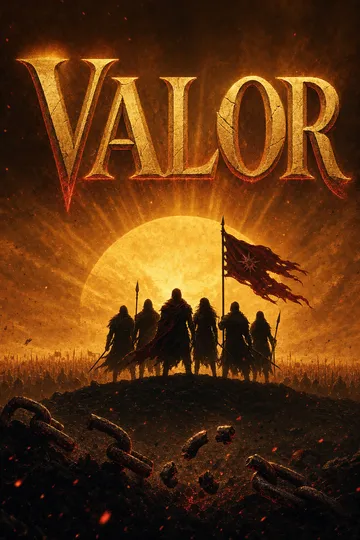
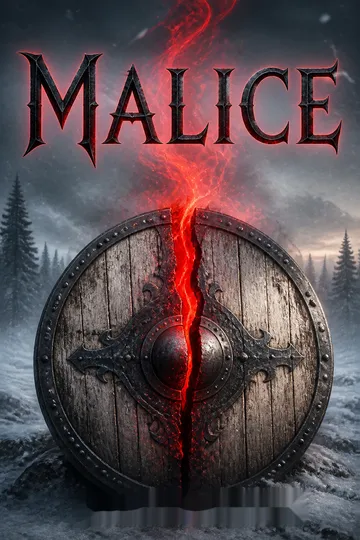
Valour, the second book in The Faithful and the Fallen series, builds on the foundation laid in Malice. Readers praise Gwynne's character development, intense battle scenes, and exploration of good versus evil. The story's fast pace, emotional depth, and unpredictable plot twists keep readers engaged. Many consider it an improvement over the first book, with compelling character arcs and a richly developed world. The novel's themes of friendship, loyalty, and the consequences of war resonate strongly with fans, who eagerly anticipate the next installment.
People Also Read


Characters
Corban
Reluctant prophesied championA blacksmith's son from Dun Carreg, barely past boyhood, thrust into exile after his home falls and his father dies. Loyal to the point of stubbornness, Corban clings to friends and oaths as the last fragments of a shattered life, refusing grand destinies that would force him to abandon those he loves. Skilled beyond his years with a blade thanks to Gar's10 secret training, and bonded to the wolven Storm22, he is gentle by nature yet increasingly capable of lethal violence, a tension that troubles him. Grief has been his constant companion, and he prays to an absent god more from habit than belief. Beneath his reluctance grows a quiet, dangerous strength: the capacity to inspire others to follow him anywhere, even into darkness.
Cywen
Defiant abandoned sisterCorban's1 older sister, fierce, quick-tempered, and deadly with throwing knives. Left for dead in fallen Dun Carreg and believing her family abandoned her, she channels raw grief and a burning sense of betrayal into stubborn survival. She has a healer's touch with horses and hounds, mothering the stallion Shield and the hound Buddai as anchors when humans fail her. Impulsive to a fault, she attacks enemies before weighing consequences, yet she is capable of surprising mercy toward the helpless. Held captive among those who murdered her king and kin, she trades barbs to preserve her dignity and never stops calculating escape. Her loneliness runs bone-deep, and the thread of hope that her mother16 and brother1 still live is what keeps her heart beating.
Maquin
Vengeful enslaved warriorA grizzled veteran of Isiltir's elite Gadrai, hardened by decades of war and defined by a single consuming vow. When his beloved ward Kastell is murdered by treachery, Maquin swears to kill the man responsible, and that oath becomes the only fire warm enough to keep him alive through captivity, branding, and the horror of the fighting pits. He is a man wrestling with a death wish and an equally fierce refusal to quit, watching himself become a killer he despises. Beneath the hardness lies a stubborn core of honor and loyalty to his sword-brothers that even slavery cannot fully extinguish. His journey probes whether vengeance can coexist with a soul, and whether mercy might cost more courage than murder ever did.
Veradis
Conflicted loyal first-swordFirst-sword and closest friend to King Nathair5, a young Tenebral warrior of unshakable loyalty and rigid honor. Architect of the devastating shield wall, he is a brilliant, humane soldier increasingly troubled by the dark deeds committed in his king's name. Veradis wants desperately to believe his cause is just, clinging to the reassurance of Nathair's5 counsellor6 even as betrayals and murders gnaw at his conscience. He mourns fallen comrades deeply and treats even enemies with unexpected decency, a trait that draws him toward the captive Cywen2. His internal struggle, the good man serving a possibly corrupt master, makes him one of the novel's moral compasses. He fears where his oaths are leading, yet cannot conceive of breaking them.
Nathair
Ambitious deceived young kingThe young High King of Tenebral, driven by dreams and a fervent conviction that he is Elyon's chosen champion, the Bright Star destined to save the Banished Lands from Asroth. Charismatic and genuinely idealistic, he believes every hard deed serves a greater good. He hunts the cauldron and his supposed enemy the Black Sun with single-minded zeal, guided at every turn by his silver-haired counsellor6. Nathair's tragedy is his sincerity: he means well while enabling monstrous things, unable to see the manipulation woven around him. He commands a draig, prizes his shield wall, and dreams of empire as the surest path to peace. His faith in his own righteousness is both his greatest strength and his most exploitable weakness.
Calidus
Nathair's dark counsellorThe silver-haired, yellow-eyed counsellor who guides Nathair5 with patient, spider-like precision. Ancient, learned, and formidable in sorcery, he claims to be a Ben-Elim, a warrior-angel of Elyon sent to shepherd the Bright Star through the coming war. He orchestrates betrayals, gathers the Seven Treasures, and steers kings like pieces on a board, always framing ruthlessness as necessity for the greater good. His true loyalties and nature remain shrouded, sensed only in the cold flashes behind his measured warmth. Calidus is the intelligence behind much of the book's machinery of conquest, a manipulator who understands that the surest way to control a righteous man is to convince him his cruelty is holy.
Rhin
Cunning conquering queenQueen of Cambren and the master strategist of the western wars, ambitious, patient, and utterly without scruple. She engineered the conflicts that shattered the western realms, then swept in to devour them one by one. Old in years but razor-sharp in mind, she delights in her own cleverness and takes younger men as lovers and instruments. Bound to Asroth by a long-ago pact and skilled in the earth power, she pursues dominion over the entire Banished Lands. Rhin treats mercy as theater and cruelty as policy, always several moves ahead of her rivals. Her jealousy and appetite for power are matched only by her genius for turning others' ambitions into weapons against them.
Lykos
Pirate lord of the pitsLord of the Vin Thalun, the pirate nation of the Three Islands, and builder of Nathair's5 war-fleet. Brutal, cunning, and charismatic, he rules by fear and spectacle, keeping his violent crews entertained with the murderous fighting pits. Haunted nightly by dreams of alien yellow eyes since sealing a pact with dark powers, he drinks to hold the terror at bay, a man both predator and prey. Lykos hungers for lasting power and finds Tenebral the perfect prize, pursuing it with audacity and sorcery. His fascination with those who possess a fierce will to live reveals a strange connoisseur's eye amid his cruelty.
Fidele
Trapped queen regentWidow of the murdered High King Aquilus and queen regent of Tenebral in her son Nathair's5 absence. Intelligent, proud, and fiercely devoted to her land and people, she struggles to govern amid grief and the corrosive presence of the Vin Thalun. She investigates dark secrets in the giant library with the scholar Ektor and fights to protect her realm from corruption. Her strength of will is tested to its absolute limit, making her one of the book's most sympathetic figures. Beneath the regal composure lies a mother's terror for her distant son5 and a woman's horror at forces she cannot fight with courage alone.
Gar
Secretive Jehar guardianLongtime stablemaster of Dun Carreg and Corban's1 secret protector, revealed to be a warrior of the holy Jehar order sworn to guard the Bright Star. Grave, disciplined, and lethal with his curved blade, Gar has hidden his true nature for years while raising Corban1 like kin. He carries buried oceans of emotion beneath a cold surface, especially where Corban1 and Gwenith16 are concerned. Torn between duty and love, he embodies faithful service across a lifetime of waiting. His fighting style astonishes all who witness it, and his quiet devotion runs deeper than blood.
Meical
Scarred angelic counsellorThe mysterious, silver-scarred counsellor who once served High King Aquilus and now marshals the resistance against Asroth. Intense, cold, and driven, he can walk the Otherworld in dreams, tracking allies and enemies across the veil. He has laid patient plans for decades, gathering champions and guardians, and blames himself for growing too cautious. Meical offers counsel rather than commands, deferring to the Bright Star1 even as he shapes events. Behind his weathered gravity lies something not quite human and a devotion to a long, sorrowful cause.
Tukul
Aging Jehar lordLeader of the Hundred, the Jehar warriors who waited fourteen years in hidden Drassil for the Bright Star1. Fiery yet self-controlled, fierce in battle and warm in spirit, he sacrificed his own son10 and his wife to a cause of unwavering faith. Tukul's lifelong prayer is simply to be noticed by an absent god. His joy, grief, and devotion make him deeply human beneath the warrior's discipline, and his reunion with what he lost drives his heart.
Coralen
Fierce bastard trackerBastard daughter of King Eremon and the finest tracker among Rath's giant-hunters, half-sister to Halion20 and Conall21. Raised among hard men after her mother's neglect, she armors her heart with sharp words and deadly skill, determined never to depend on anyone's goodwill. Beneath the prickly exterior runs fierce loyalty and a well-guarded tenderness she rarely admits. Torn between the brother she idolized21 and the friends she comes to trust, she wrestles with grief and a reluctant, dawning affection.
Camlin
Reformed outlaw archerA former Darkwood outlaw and superb archer who unexpectedly finds belonging among Edana's15 fugitive band. Pragmatic, wry, and haunted by a violent past, he battles an inner voice urging him to slip away and save himself, yet keeps choosing loyalty instead. For the first time he has true friends, and that discovery reshapes him. Skilled at stealth, ambush, and blunt honesty, he becomes an indispensable protector who quietly wonders what has become of the hard man he used to be.
Edana
Fugitive orphaned princessPrincess and now heir of Ardan, orphaned when her parents were murdered and her kingdom fell. Once sheltered and meek, she is forged by exile into a young queen learning statecraft, courage, and the brutal arithmetic of leadership. She insists on staying with her people rather than accepting comfort, and her growing political shrewdness surprises allies and enemies alike. Grief and responsibility age her rapidly, tempering fear into resolve.
Gwenith
Corban's secret-keeping motherCorban1 and Cywen's2 mother, wife of the slain smith Thannon, a warm yet steel-spined woman who has guarded profound secrets about her son's1 birth and destiny his whole life. Devoted utterly to her children, she takes up spear and knives on the road and refuses to be left behind when family is at stake. Her love is fierce, protective, and unwavering, the emotional heart that holds the scattered family's hope together.
Brina
Sharp-tongued healer mentorThe acerbic healer of Dun Carreg, owner of the cantankerous talking crow Craf and one of the few who understand the earth power. Caustic, brilliant, and impatient with fools, she masks deep loyalty and grief beneath a barrage of insults. She takes Corban1 as her reluctant pupil in earth magic, judging him uniquely trustworthy. Her prickliness conceals a tender heart that suffers loss keenly.
Uthas
Scheming Benothi giantAn ancient Benothi giant who drank from the cup of long life and remembers his people's fallen glory. Torn between loyalty to Queen Nemain and a desperate conviction that only bold, terrible action can save his dwindling clan, he moves through secret councils and old pacts. Melancholy, patient, and burdened by memory and shame, he is a tragic figure driven by nostalgia and despair as much as ambition.
Evnis
Ambitious traitor counsellorThe counsellor who betrayed and murdered his own king to serve his ambitions, bound by an old pact to Asroth. Grieving a dead wife and a lost, estranged son, he plays a dangerous game among more powerful players, hoarding forbidden knowledge and the earth power. Ruthless yet capable of genuine sorrow, he trusts no one and serves chiefly himself, always rolling the dice for advantage.
Halion
Dutiful oath-bound swordsmanBastard son of King Eremon and sworn first-sword to Edana15, a warrior of quiet integrity and strategic mind. Bound by a deathbed oath to protect Brenin's daughter15, he shoulders responsibility beyond his years, acting as guardian, peacemaker, and father-figure to his younger half-siblings. Humble and steadfast, he consistently chooses the hard right over the easy wrong, even when it costs him dearly.
Conall
Halion's estranged brotherHalion's20 charismatic, hot-tempered younger brother, quick to laugh and quicker to anger, gnawed by resentment at living in his brother's shadow20. Prideful and reckless, he craves recognition and chafes at being anyone's lesser, making him vulnerable to those who flatter his ambitions. A superb swordsman whose bitterness has curdled his loyalties, he is dangerous, wounded, and not entirely lost.
Storm
Corban's loyal wolvenThe great white wolven Corban1 raised from a cub, now full-grown and fiercely bonded to him and his family as pack. Silent, lethal, and uncannily intelligent, she saves the band countless times and becomes a living legend that spreads terror among their enemies. Her devotion is absolute, her presence both weapon and omen.
Orgull
Steadfast Gadrai captainBald, bull-necked captain of Isiltir's elite Gadrai, secretly sworn to a hidden brotherhood resisting Asroth. Immensely strong and unexpectedly wise, he becomes Maquin's3 anchor of faith and honor through their shared ordeal, urging his sword-brother to keep the faith when all seems lost.
Dath
Fearful loyal archerCorban's1 boyhood friend, a fisherman's son and gifted archer who openly admits his terror in every battle yet stands and fights anyway. Grieving his own father, he grows steadily braver, embodying the truth that courage is fear mastered rather than fear absent.
Farrell
Hammer-wielding smith's sonCorban's1 large, good-natured friend, son of the warrior Anwarth, who fights with a war-hammer and forge-hardened strength. Loyal and earnest, he nurses a clumsy infatuation with Coralen13 and proves his father was no coward through his own steadfast courage.
Plot Devices
The Cauldron
Coveted world-bridging treasureGreatest of the Seven Treasures forged from starstone, a hulking mass of black iron kept in the giant fortress of Murias. It is said to hold the power to thin the veil between the world of flesh and the Otherworld, making it both a healing relic and a potential weapon of apocalyptic scale. Every major faction orients around it: Nathair5 dreams of it, Calidus6 schemes toward it, and the Benothi giants die to keep it hidden. Introduced in the opening chapter as a throbbing, light-devouring presence guarded by white wyrms, it functions as the gravitational center that pulls the sprawling storylines together, transforming personal quests and political wars into a single converging march toward one terrible object of desire.
Halvor's Prophecy
Names two warring championsAn ancient text written by a giant after the Scourging, foretelling the return of Asroth and his demon Kadoshim, the reawakening of the Seven Treasures, and the rise of two champions: the Bright Star, avatar of Elyon, and the Black Sun, avatar of Asroth. Recited in fragments throughout the book, its riddling lines about wolven, shield, and storm allow different factions to identify champions, often incorrectly. The prophecy drives Nathair's5 certainty, Gar's10 lifelong mission, and the Jehar's decades of waiting. Gwynne uses it to generate dramatic irony and to interrogate whether destiny is discovered or manufactured, since more than one man is convinced he wears the crown of light while others name him the darkness.
The Wolven Pelts
Disguise for night terrorAfter a wolven pack is slain in the mountains, Corban1 keeps the skins and, with Gwenith16 stitching leather and Farrell25 forging iron claws, fashions pelts and clawed gauntlets. Worn over faces smeared with mud and blood, these disguises let Corban1, Coralen13, Farrell25, and others impersonate wolven and changelings during night raids on Rhin's7 warband. Exploiting the superstitious dread already spread by Storm's22 earlier killings, the raiders spill panic through enemy camps, thinning morale before battle. The device demonstrates the band's growing cunning and turns folklore into a psychological weapon, illustrating a recurring theme that fear, once seeded, becomes a force more powerful than any sword.
The Clay Effigy
Sorcery that enslaves the bodyA small figure of clay bound with a lock of a victim's hair and inscribed with runes, given to Lykos8 by Calidus6 as a tool of earth magic. Whoever holds it can command the victim's body and voice absolutely, forcing them to speak and act against their own will while remaining fully, agonizingly conscious. Lykos8 uses it to seize control of Fidele9 and, through her, the realm of Tenebral, scattering her guards and compelling her toward a forced marriage. The device is the book's most intimate horror, literalizing the theme of stolen self-sovereignty, and its physical vulnerability, being made of brittle clay, becomes crucial to how the captivity is eventually broken.
Dream-Walking the Otherworld
Crossing the spirit veilCertain adepts can send their consciousness into the Otherworld, the spirit realm where Elyon's Ben-Elim and Asroth's Kadoshim dwell. Meical11 falls into a deathlike sleep to track the Bright Star's1 spirit across the veil, while Rhin7 uses a blood-and-steam rite to drag Corban's1 spirit before Asroth himself. These crossings make the metaphysical war concrete and dangerous, allowing revelations that no physical journey could deliver, and they confirm the reality of a cosmology Corban1 long refused to believe. The device bridges the book's political intrigue and its supernatural stakes, ensuring that gods and demons are not distant abstractions but active, hungry participants reaching into the world of flesh.
The Faithful and the Fallen Series
About the Author
Other books by John Gwynne


Download PDF
Download EPUB
.epub digital book format is ideal for reading ebooks on phones, tablets, and e-readers.








































