
Plot Summary
Prologue
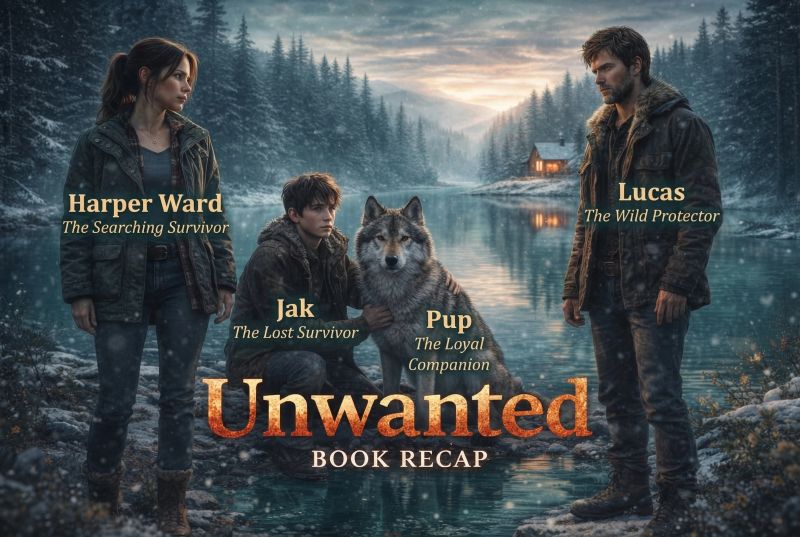
Four drugged boys wake on a cliff edge in the snow, a hooded man's voice booming behind them: will you die today? Before any can answer, ice cracks and the ground slides. All four tumble over the edge. In the chaos, a dark-haired child with enormous eyes slips a pocketknife into Jak's1 palm.
Jak1 grabs that child and shoves them onto a tiny ledge — the only handhold big enough for one — then falls into the darkness himself, shouting a single demand: live. Two boys vanish screaming into the abyss below. Jak1 catches a branch, hits deep snow, and survives. He doesn't know where he is, who took him, or why. He is almost eight years old.
The Caveman in the Cell
Helena Springs, Montana, has never seen anything like this — two people killed by arrows in a single week. The first victim, an unidentified woman at the Larkspur bed-and-breakfast, died with an arrow through her throat.
The second, a recluse named Isaac Driscoll,4 was pinned to his cabin wall by an arrow through his chest. When a deputy nearly runs over a massive, fur-clad man carrying a bow on a remote back road, the stranger is brought in for questioning.
He gives only one name — Lucas — and stares into the security camera with piercing intelligence. Harper Ward,2 a local wilderness guide and the orphaned daughter of the former sheriff, is summoned to assist. Watching him on a monitor, she cannot look away. Something about his locket catches her eye.
Three Hearts Entwined
Agent Mark Gallagher,3 a seasoned California investigator recently transferred to Montana after his daughter's death from leukemia, takes the lead on both murders. He asks Harper2 to serve as his wilderness consultant, driving him through terrain he cannot navigate alone. Meanwhile, Harper2 keeps circling back to that silver locket.
Rifling through old family photos, she finds what she feared — her mother wearing an identical pendant engraved with three linked hearts. She drives to Jak's1 cabin in the snow, rifle in hand, and demands to know where he got it. He opens the locket for her. Inside is a tiny photograph of her father, her mother, and herself as a baby. He found it in a wrecked car at the bottom of a canyon — her parents' car.
Fifteen Years in the Canyon
At first light, Jak1 guides Harper2 on a trek across frozen valleys and down a treacherous canyon wall. At the bottom, half-buried under branches and leaves, sits a blue car she has been searching for since she was old enough to hike alone. The skeletons of her parents are still inside — her father turned toward the back seat, her mother slumped forward.
Harper2 collapses into Jak's1 arms, her grief ricocheting off the canyon walls. For fifteen years, she believed her parents died in a car accident she couldn't remember. For fifteen years, she searched the wrong terrain. The car is extracted and sent to Missoula. Harper2 finally has remains to bury, but this discovery only deepens the mystery of how they ended up so far from any road.
The Den That Saved Him
In alternating chapters, the story reveals what happened to Jak1 after the cliff. Stripped nearly naked by hypothermia-induced delirium, the boy stumbles into a wolf den and falls unconscious among six pups. Four are already dead. One more dies by morning. The lone surviving pup, whom Jak1 names Pup,10 becomes his sole companion — hunting partner, furnace against the killing cold, the reason he refuses to give up.
Together they survive on raw rabbit, river fish, and foraged berries. Jak1 spots helicopters circling overhead but cannot signal them. They never return. Years pass in brutal succession: starvation, frostbite, loneliness so total it feels carved into bone. Pup10 keeps him moving. Pup10 keeps him alive.
A War That Never Was
Wandering deeper into the wilderness, young Jak1 discovers a cabin with smoke rising from its chimney. Isaac Driscoll4 opens the door and delivers a lie that will imprison Jak1 for years: there is a war raging outside these woods, enemies are killing children, and the only safe place is here.
Driscoll4 provides shelter in an empty camp cabin on his property but little else — Jak1 must trade fish and handmade boots for matches, the difference between surviving winter and freezing to death.
Driscoll4 watches Jak1 with unsettling fascination, quoting Spartan warriors, praising survival as the greatest training. Jak1 senses something predatory in him but has nowhere else to turn. The lie holds because the boy has no evidence to contradict it — and no one to ask.
Words in the Wilderness
Back in the present, Harper2 catches Jak1 quoting Alexandre Dumas — a line from The Count of Monte Cristo that his limited vocabulary shouldn't contain. She presses him, and he reveals what he's hidden: her mother's turquoise backpack, found in the wrecked car's trunk, containing spiral notebooks of class notes on the novel.
For years, Jak1 pored over these pages by candlelight, practicing the handwriting, learning words he'd never spoken aloud, drawing wolves and trees in the margins.
Her mother's reflections on vengeance, forgiveness, and human goodness became his theology, his education, his only proof that the world contained anything worth living for. Harper2 returns the notebooks to him, believing they were always meant for him. Her mother taught classrooms of teenagers — but her most devoted student lived alone in the snow.
Murder, Not Accident
Mark3 calls Harper2 with news that dismantles everything she thought she knew: her parents' remains show evidence of gunshot wounds. Their deaths were not an accident — they were murdered. The car was nine miles from any highway and nowhere near the route her father would have driven.
Mark3 gently asks if she remembers anything about that night, but her memory yields only fragments — falling, cold, the taste of blood. Meanwhile, his investigation radiates outward. He traces the murdered woman at the Larkspur to a Missoula library where she looked up a lumber magnate named Halston Fairbanks.5
At Driscoll's4 former research lab, a colleague named Dr. Swift7 recalls a man grown deeply cynical about humanity, obsessed with Spartan warriors. The connections tighten, but the full picture remains out of reach.
The Night Everything Started
During an evening together, Jak1 confesses his real name — not Lucas but Jak, given to him by the Bosnian grandmother8 who raised him until a man drugged him and left him on a cliff. He admits he lied because he didn't know who to trust. Then he drops a revelation that shakes them both: he saw the search helicopters the morning after he was dumped in the wilderness — the same helicopters looking for Harper's2 parents.
Two catastrophes on the same night, in the same vast wilderness. Harper's2 car crash and Jak's1 abandonment cannot be coincidence. Their separate tragedies appear to share a common architect. The mystery deepens even as their trust in each other solidifies, the map between them suggesting an intersection they cannot yet see.
The Forest Goes Still
Harper2 returns to Jak's1 cabin with canned food, orange soda, and a growing inability to resist what lives between them. They share soup and frank conversation, their attraction thickening with every brush of hands.
Stranded during an ice storm, Harper2 climbs a rock and yells her secrets at the mountains — her anger at the town that refused to adopt her, her loneliness, her wish that she'd died alongside her parents. Jak1 catches her when she slips. Their faces are inches apart, and then they are kissing — his first, clumsy and electric.
She wraps her legs around him and tells him to take her inside. What follows is tender, exploratory, and shattering — two survivors discovering that bodies nature gave them were built for pleasure, not just endurance.
A Grandson Returns to Thornland
Mark3 traces the Larkspur murder victim to Emily Barton6 — Jak's1 biological mother, a troubled addict who'd been paid off by Halston Fairbanks5 decades ago when she became pregnant by his son. Halston's5 son died of a heroin overdose; Emily6 gave the baby to a man who raised him off the grid.
Now consumed with regret, Halston5 offers Jak1 a home at his grand estate, Thornland. Driscoll's4 sister, meanwhile, demands Jak1 vacate the cabin immediately. Left with few options, Jak1 accepts his grandfather's5 invitation.
He enters a mansion of marble and velvet, discovers a library with floor-to-ceiling books, and begins reading voraciously. But the household harbors its own predators: Halston's5 second wife Loni12 and her entitled children make it clear that this newcomer from the woods is not welcome.
The Mine Shaft's Photographs
Cadaver dogs locate two children's bodies buried on Driscoll's4 land — the other boys from the cliff. Harper,2 helping Mark3 search the property, discovers a hidden mine shaft that served as Driscoll's4 surveillance center.
Hundreds of photographs line the walls: Jak1 as a skeletal child biting into raw rabbit, Jak1 dragging a deer through snow, Jak1 fighting another starving boy to the death over a carcass. Audio recordings narrate his evolution from frightened possum to cautious deer to the apex predator Driscoll4 called the wolf.
The bow used to kill Emily6 is propped in a corner. Harper2 sobs, her heart breaking not with disgust but with ferocious compassion. When Mark3 tells Jak1 what they found — that Harper2 has seen everything — he makes a wounded sound and disappears into the forest.
The Pocketknife's Secret
Harper2 tracks Jak1 to the woods, where he stands shattered with shame. She tells him the photographs made her love him more, not less — every image was proof of courage she could barely fathom. He tests her resolve, confessing the worst: eating insects on his hands and knees, living in animal dens, crawling through mud. She does not flinch. Then he opens his palm.
Inside lies a mother-of-pearl pocketknife, worn nearly to nothing. Harper2 recognizes it instantly — her father carried it every day of his life. Jak1 tells her she placed it in his hand on that cliff, in the dark, when she was a short-haired seven-year-old he mistook for a boy. They saved each other that night. Their fates have been braided together since the beginning.
The Archer's Confession
At Thornland, Jak1 pages through the family photo album and finds a picture of his father holding a first-place archery trophy, his grandfather5 beaming beside him. Then he catches the lingering scent of cigar smoke — the same smell he noticed at Driscoll's4 cabin the day of the murder.
He confronts Halston,5 who crumbles. The old man admits he tracked Driscoll4 down and shot him through the heart with an arrow, wielding the same weapon his son once mastered.
He killed Driscoll4 because the man had stolen his grandson and turned him into something Halston5 believed could never be reclaimed. As the confession spills out, Halston5 clutches his chest and collapses. Jak1 catches him, lays him gently on the floor, and calls for help. His grandfather slips into a coma.
The Mastermind at Amity Falls
Dr. Swift7 — the colleague Mark3 interviewed at Rayform Laboratories — has been the architect all along. He kidnaps Harper2 and brings her to the top of Amity Falls, where he explains the full scope of the program: unwanted children stolen from addicts and the foster system, placed in remote wilderness camps, observed as they fight to survive.
Those who endure become elite soldiers, bodyguards, and assassins, auctioned to wealthy bidders and governments. Driscoll's4 camp was merely the first prototype — and its only success was Jak.1
Harper's2 father, the sheriff, had been investigating missing children, so they murdered him and took Harper2 too. Now Dr. Swift7 intends to eliminate the last loose ends. Jak1 arrives, tracking Harper's2 scent through the wind, and finds her trapped between a gunman and the roaring falls.
Together Over the Edge
With a gun aimed at their backs and three hundred feet of thundering water behind them, Jak1 and Harper2 face the same impossible arithmetic as on that cliff fifteen years ago. Harper2 curls her fists — the same gesture she made as a terrified seven-year-old — and Jak1 recognizes it.
He grabs her hand. They turn and leap into the falls together, bullets whipping past their heads. The water seizes them, batters them, drags them toward lethal rapids.
But Mark3 is waiting at the bottom, guided there by his wife Laurie,9 who found a planted note in Harper's2 apartment and trusted her instincts enough to send him. He thrusts a massive branch across the current, and the two survivors grab hold. He hauls them to the muddy bank — battered, half-drowned, still gripping each other's hands.
Epilogue
Six months later, Jak1 and Harper2 marry in the Gallaghers'3 backyard under a summer sunset. They live at Thornland, where Jak1 has removed every camera and every birdcage. Harper2 takes psychology courses in Missoula; Jak1 devours the library and slowly learns the lumber business.
They are expecting a child. Mark3 holds a national press conference exposing the network of survival camps, and the search for Dr. Swift7 and other victims continues. Jak1 reaches out to his Baka,8 forgiving her.
He keeps his grandfather's5 secret about Driscoll's4 murder, and the case is closed. On quiet evenings, he reads The Count of Monte Cristo for the sixth time, finding new lessons each time — about vengeance, forgiveness, and the stubborn miracle of waiting and hoping.
Analysis
Unwanted operates as a layered examination of what it means to be discarded and how humans construct identity from rejection. Jak1 and Harper2 are mirror images — both violently separated from their families at age seven, both forced to survive without the love they needed. Yet their parallel abandonments produce opposite coping strategies: Jak1 turns inward, developing almost animal sensitivity to his environment, while Harper2 turns outward, searching the physical landscape for proof that her family existed. Neither strategy heals them. What does is recognizing themselves in each other.
The novel's most provocative argument lives in the villain's ideology: Dr. Swift7 genuinely believes that suffering produces superior humans. The uncomfortable truth Sheridan forces readers to confront is that he is not entirely wrong about Jak1 — survival did forge extraordinary abilities — but the moral cost, measured in dead children and shattered psyches, renders the results obscene. The book's rebuttal is precise: it was not suffering that saved Jak1 but the connections he forged despite it — Pup's10 companionship, Baka's8 secret literacy lessons, a dead woman's class notes about forgiveness.
The Count of Monte Cristo functions as more than a recurring motif. Edmond Dantès transforms suffering into vengeance; Jak's1 arc pointedly rejects that trajectory. He has every reason to become the weapon his captors designed, but chooses the novel's deeper teaching — that forgiveness, not retribution, marks the truly strong. His grandfather,5 who chooses vengeance, literally dies from it.
The dual-timeline structure enacts the book's central psychological insight: trauma creates multiple selves. Jak's1 internal taxonomy — possum, deer, wolf — mirrors the dissociative splitting that real survivors experience. Harper's2 confession that she talks most when hiding something reveals the same mechanism in civilized dress. Their love story works because neither asks the other to be only one self. Wholeness, the novel insists, requires integrating every version of who survival forced you to become. The book further argues that institutions designed to help the vulnerable — foster care, social services — can themselves become instruments of harm, creating the very population of 'unwanted' children that predators then exploit.
People Also Read






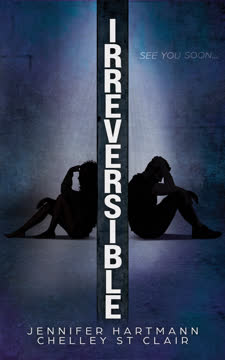

Characters
Jak
Wilderness survivor seeking homeA man forged entirely by wilderness, Jak possesses a preternatural awareness of his environment—reading weather, tracking scents, moving through forests in absolute silence. Beneath his physical prowess lives a mind of startling intelligence, one that taught itself literacy from stolen notebooks and pieces together unfamiliar words through context alone. His deepest wound is not physical but psychological: the conviction that he is fundamentally broken, split between the civilized man he wants to be and the feral survivor he was forced to become. He categorizes his emotional states as animals—the frightened possum, the wary deer, the predatory wolf—because no one ever taught him human vocabulary for fear, caution, and rage. What drives him above all else is the ache for connection in a life defined by its absence.
Harper Ward
Orphaned guide searching for answersOutwardly competent and cheerful, Harper has built a life around a search she barely admits to herself—driving clients through the wilderness while scanning every ravine for the car wreck that took her parents. Orphaned at seven, she endured the foster care system's worst failures, including sexual abuse by an older boy in her first placement, an experience that carved deep grooves of hypervigilance into her psyche. She works night shifts at a group home, watching sleeping children because no one watched over her. Her rapid-fire speech patterns serve a dual purpose: social camouflage and emotional deflection. She talks most when she is hiding the most. What drives her is the desperate need for stability and belonging—the two things torn from her before she understood what she'd lost.
Mark Gallagher
Grieving agent turned protectorA veteran investigator from California, Mark carries the particular gravity of a man who has outlived his child. His daughter Abbi's death from leukemia hollowed out his marriage to Laurie9 and sent them both fleeing to Montana, where distance from memories was supposed to heal what proximity could not. On the job, he is methodical, patient, and disarmingly warm—the kind of man witnesses trust instinctively because he listens more than he speaks. His investigation into the Helena Springs murders becomes a surrogate for the parental purpose he lost, and his growing bond with Jak1 and Harper2 fills a void he did not expect to address through casework. What drives him is the need to protect the vulnerable—the impulse that outlasted the person he most wanted to protect.
Isaac Driscoll
Reclusive researcher turned captorA former social researcher who retired to thousands of acres of remote wilderness, Driscoll presents himself as a harmless hermit trading matches for fish. In truth, he is consumed by a dark fascination with human survival under extreme duress and an obsession with ancient Spartan warrior culture. His meticulous nature manifests in journals, surveillance, and an appetite for observation that crosses every ethical boundary imaginable.
Halston Fairbanks
Regretful lumber dynasty patriarchThe aging patriarch of a Montana lumber dynasty, Halston inhabits a grand estate that echoes with the absence of the son he lost to addiction. His wealth insulates him from consequences but not from guilt. Beneath his commanding presence and sharp business instincts lies a man dismantled by regret, desperate to reclaim a family legacy he helped destroy through his own arrogance and haste.
Emily Barton
Jak's troubled biological motherA young woman shaped by lifelong addiction, Emily carries fierce maternal instincts that war constantly with the chemical dependencies derailing every attempt at stability. Driven by guilt over choices made under impossible pressure, she cycles between desperate redemption attempts and devastating relapses, always reaching for the child she gave up and the life she yearns to build.
Dr. Swift
Charismatic research ideologueA charismatic scientist at Rayform Laboratories and Driscoll's4 former colleague. Intellectually brilliant and socially polished, he espouses bold theories about societal improvement and the untapped potential within marginalized populations. His warmth and charm mask a calculating pragmatism that views human suffering as an acceptable variable in pursuit of what he considers civilizational progress. His convictions are genuine, which makes them terrifying.
Almina Kavazović
Jak's coerced Bosnian caretakerA Bosnian war refugee who raised Jak1 from infancy under coerced conditions, caught between impossible choices—her own survival and immigration status versus the welfare of a child she was forbidden to love too openly. Despite restrictions, she secretly taught him to read and instilled a belief in his own strength, giving him tools that would prove more vital than she could have imagined.
Laurie Gallagher
Mark's grieving, intuitive wifeMark's3 wife, a warm and intuitive woman whose grief over losing their daughter Abbi has created a quiet chasm in their marriage. She yearns for inclusion in her husband's life and work, having once been his trusted sounding board on cases. Her maternal instincts remain powerfully intact, extending naturally toward the young people her husband's investigation brings into their orbit.
Pup
Jak's wolf companionThe lone surviving wolf pup from the den that saved Jak's1 life on his first freezing night in the wilderness. Pup becomes Jak's1 hunting partner, warmth against the killing cold, and only friend for years of isolation. His loss represents Jak's1 deepest grief.
Brielle
Planted woman who warns JakA troubled young woman with a history of addiction, sent into Jak's1 world under false pretenses to test his behavior. She recognizes something deeply wrong in her assignment and takes a risk to warn him about hidden cameras.
Loni Fairbanks
Halston's predatory second wifeBeautiful and calculating, Loni keeps a roomful of caged tropical birds and regards the household's inhabitants with the same possessive interest she shows her collection. She represents the corruption within Jak's1 new wealthy family.
Dwayne Walbeck
Helena Springs sheriffThe small-town sheriff who inherited the role from Harper's2 father. Well-meaning and protective of Harper2, he recognizes his department is outmatched and calls for outside help.
Rylee
Harper's loyal best friendHarper's2 closest friend in Helena Springs, a hairstylist and newlywed who provides warmth, normalcy, and unwavering loyalty in a life that offers Harper2 few stable relationships.
Plot Devices
The Pocketknife
Links two survivors across timeHarper's2 father's mother-of-pearl pocketknife serves as the story's deepest connecting thread. In the prologue, a dark-haired child slips it into Jak's1 palm before both go over a cliff. For fifteen years, Jak1 uses it to hunt, skin animals, and stay alive—the blade worn nearly to nothing by the time he shows it to Harper2. When she recognizes it as her father's, the revelation unlocks the story's central secret: she was the child on that cliff. The knife bridges their separate survival stories into one shared origin, transforming what seemed like serendipity into fate. It functions as both literal survival tool and symbolic proof that their bond predates conscious memory.
The Silver Locket
Connects Harper to Jak's worldA round silver pendant engraved with three linked hearts and the inscription 'Always together, never apart,' containing a tiny family photo. Jak1 found it in the wrecked car and wore it for five years, drawn to the image of a family he never had. When Harper2 spots it at the sheriff's station, she recognizes it as her dead mother's, triggering her solo visit to Jak's1 cabin and eventually leading him to guide her to the car where her parents' remains still lie. The locket is the inciting object of their relationship—without it, Harper2 would have no reason to seek Jak1 out, and her parents' car might have remained hidden indefinitely.
The Mother's Notebooks
Nourishes Jak's humanityHer mother's spiral-bound class notes on The Count of Monte Cristo, found in a turquoise backpack in the wrecked car's trunk, become Jak's1 education, moral compass, and lifeline against despair. He reads and rereads them by candlelight, practices the handwriting, draws forest animals in the margins, and absorbs reflections on vengeance, forgiveness, and human goodness. These notes teach him that the world contains both cruelty and grace—a revelation he could not have arrived at alone. They represent the book's thesis about how connection persists beyond death: a teacher who never knew her most important student still saved his life through the words she left behind.
The Thermopylae Painting
Encodes Driscoll's obsessionA depiction of the famous Spartan battle hangs in both Driscoll's4 cabin and his former workplace at Rayform Laboratories. It represents his fixation on the Spartan method of forging soldiers through childhood deprivation and survival testing. The painting serves as a visual clue connecting Driscoll's4 research interests to his treatment of Jak1—and eventually to a much larger network. Mark3 photographs it early in his investigation, and its significance grows as the full scope of what Driscoll4 was involved in emerges. The word 'Obedient' on Driscoll's hand-drawn map references a monument to fallen Spartan soldiers, transforming the painting from an eccentric decorator's choice into evidence of systematic cruelty.
Driscoll's Hand-Drawn Map
Leads to buried evidenceA crude piece of paper found in Driscoll's4 bedside drawer, featuring two red X-marked boxes, one empty black box, a wavy line, and the word 'Obedient.' Mark3 and Harper2 puzzle over its meaning throughout the investigation. The red markers ultimately correspond to locations on Driscoll's4 land that yield devastating discoveries when cadaver dogs are brought in. The black marker leads Harper2 to a hidden mine shaft containing Driscoll's4 full surveillance operation. The map's simplicity belies its horror: it is essentially a record of subjects, its Spartan reference revealing how Driscoll4 viewed the children whose lives he controlled and catalogued.








































