
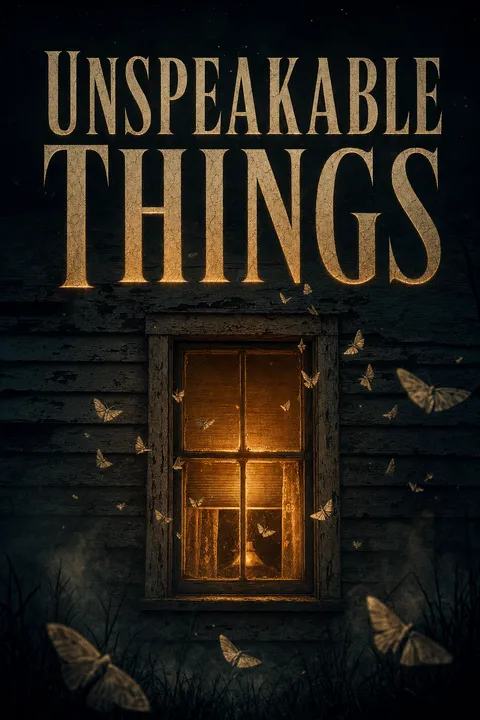


Plot Summary
Prologue
Now a grown novelist married to a man named Noah, Cassie1 returns to Lilydale for a funeral that drags her back into memory. The stench of a dirt basement, a smell she calls a lonely-scream cave stink, still ambushes her sleep and convinces her she is trapped underground again at thirteen.
She has spun the ordeal into a famous first novel and shared its inspiration on tour, but one detail she never confessed to anyone: a gold paper airplane necklace, and the boy named Gabriel7 who wore it. She had believed that boy, and that charm, would change everything and carry her out of her family's orbit. Looking back, she admits that in his own devastating way, he did.
The frame establishes an unreliable-by-omission narrator: an adult who has monetized her trauma yet withheld its most tender, shameful piece. Lourey uses smell as involuntary memory, a Proustian trapdoor, to show how childhood terror lodges in the body rather than the timeline. The withheld necklace signals that this will be a story about what children cannot say and adults refuse to hear. By naming Gabriel and hinting he changed everything, the prologue plants dread and longing simultaneously, promising both a love story and a loss. The confession that she never told even her husband frames silence itself as the book's central wound and its organizing principle.
Game Night, Forbidden Basement
The McDowells play cribbage and eat brewer's-yeast popcorn while thirteen-year-old Cassie1 watches her father, Donny,3 knead her sister Sephie's2 shoulders a beat too long. A knock rises from beneath the floor, and Donny3 insists it is only an old house settling.
The next morning, when their mother, Peg,4 sends the girls to fetch flowerpots, Donny3 plants himself before the basement door and forbids it, his voice hardening to a threat.
Cassie,1 who sleeps wedged under her bed or curled in her closet rather than exposed on her mattress, reads her father's moods like weather fronts. The household runs on his whims, his sculptures, his drinking, and his private work below the stairs. Something waits down there, and everyone has agreed not to hear it.
Lourey opens in the uncanny register of domestic normalcy warped just enough to unsettle. The forbidden basement functions as a Gothic locked room, but the true horror is procedural: a family that has learned to metabolize dread as routine. Cassie's sleeping arrangements reveal preverbal survival instinct, a child organizing her body around threat she cannot articulate. The father's charm and menace occupy the same breath, modeling the coercive-control dynamic where affection is a leash. By withholding what the knock is, the narrative implicates the reader in the family's willed deafness, the collective agreement to mistake terror for eccentricity.
A Boy Was Raped
At her mother's4 school, Cassie1 overhears the secretary tell Peg4 that a Lilydale boy was assaulted over the weekend, supposedly by a gang from Minneapolis hunting children.
At an assembly the students dub the Snake Symposium, Sergeant Bauer8 announces a nine o'clock curfew enforced by the tornado siren, orders children to travel in pairs, and warns them never to walk alone. Cassie1 already knows Bauer8 from her father's3 parties and distrusts his wet red smile. The warnings, meant to soothe, instead make the kids feel stalked.
She soon learns the victim is Mark Clamchik,12 a rough eighth grader from the poor tracks-side neighborhood called the Hollow. Cassie,1 dreaming of becoming a writer, decides that cracking the mystery could win her friends and prove her worth.
The inciting rumor arrives as language the children can barely parse, since cultural scripts insist rape happens only to girls. Lourey exposes how communities weaponize vagueness, offering aliens and outside gangs as comforting fictions rather than confronting the predator within. The curfew dramatizes a favorite theme: adult authority that performs protection while surveilling and blaming the vulnerable. Cassie's decision to investigate braids ambition with loneliness, recasting trauma-solving as a bid for belonging. Her instinctive recoil from Bauer plants the first misdirection, training the reader to suspect the obvious authority figure.
Whiskey Talk at Little John's
Donny3 drags his daughters to his favorite bar, where a spiteful bartender opens their sodas then refuses to hand them over. In the corner Donny3 leans mouth-to-ear with Bauer,8 the two men murmuring about mushrooms, about boys, about something recurring every few years like a plague. Once a loud despiser of police, Donny3 has lately cultivated Bauer,8 and the girls sense the friendship is calculated, not warm.
On the ride home Donny3 blames his jumpiness on new power lines that will raise their taxes, but Cassie1 feels genuinely hunted for the first time in her life. She becomes convinced her father3 and the sergeant8 share something wet and hidden, a knowledge that sours her stomach even though she cannot yet name its shape.
The bar scene renders complicity as intimacy, two men whispering like lovers over a shared depravity. Lourey exploits Cassie's partial hearing to generate dramatic irony: the reader assembles fragments the child cannot, feeling the noose tighten around a truth she lacks vocabulary for. Donny's sudden alliance with the law he once despised signals a transactional realignment around mutual protection, foreshadowing organized adult wrongdoing. The bartender's petty cruelty miniaturizes the book's larger thesis that adults casually humiliate children because they can, priming Cassie to expect no rescue from grown-ups.
Gabriel and the Gloves
Cassie1 nurses a secret love for Gabriel Wellstone,7 the dentist's handsome son, ever since a December morning when he slid beside her on the bus and offered his mother's spare gloves to spare her mitten-less, frozen hands.
He wore a gold paper airplane necklace, a Christmas gift, and told her it would look pretty on her. From that instant Cassie1 built a Cinderella future: Gabriel7 would give her the charm, it would cover her rope-like neck scar, and together they would fly away to an ordinary life.
She hoards the daydream in her pocket, waiting for the perfect opening to reciprocate. On the last day of school she schemes to have him sign her yearbook, imagining the necklace as her literal ticket out of Lilydale and away from her father's3 house.
Gabriel functions as Cassie's projected sanctuary, a fantasy of male tenderness untainted by her father's predation. The necklace crystallizes her deepest longing: to cover the scar that marks her as strange, to be seen as lovable rather than damaged. Lourey ties the birth-cord scar to identity throughout, and here it becomes the wound Cassie hopes love will erase. The child's elaborate rehearsed scenarios reveal a novelist forming in real time, converting powerlessness into narrative control. That she keeps the crush entirely private underscores her isolation and the preciousness of a single uncorrupted thing.
Caught With the Lip Gloss
Cassie1 has a quiet compulsion to hold other kids' belongings, and while digging through a classmate's clarinet case for a cookie-shaped lip gloss, Clam12 corners her in the instrument room, transformed and menacing, no longer the boy she grew up beside. Mr. Connelly,10 the beloved band teacher, chases him off, but Clam12 tells the principal, and Cassie1 is caught with the gloss in her pocket.
Principal Janowski summons Sergeant Bauer8 to frighten her straight. Facing the man she once glimpsed with a woman named Kristi at her father's3 party, his dog tags clicking, Cassie1 refuses to show shame. The theft brands her a thief and a liar, a label Bauer8 will later exploit to guarantee that no adult ever believes a single word she says.
The stolen gloss operationalizes a devastating mechanism: a traumatized child's minor transgression becomes the credibility-destroying weapon that predators need. Cassie's habit of holding others' objects reads as a hunger for intimacy and permanence she is denied at home. Clam's transformation introduces the motif of the changed child, the victim who becomes uncanny, mirroring how abuse propagates. Lourey stages the institutional betrayal precisely: the school reflexively delivers the girl to the very officer implicated in the town's rot, illustrating how systems protect abusers by discrediting witnesses before they can speak.
Footsteps on the Stairs
Since December, on nights when Peg4 works late and collapses into exhausted sleep, Donny3 clips his nails in the kitchen and then drifts to the base of the stairs. He never used to climb them. Now, drink by drink, he tests the treads, ascending one step higher each night, while Cassie1 lies frozen in her closet certain that if he reaches the landing she will die.
She copes by scrawling frantically in a secret journal, convinced the words build a wall that pushes him back down. The forbidden basement, the nail-clipping ritual, and Donny's3 leering remarks about the bodies his daughters are growing all braid into a single unspeakable terror that no one in the family will name aloud.
This is the book's dread engine and its title made literal: the unspeakable that structures a life. The nail-clipping becomes a Pavlovian alarm, sound as terror, anticipating the auditory clues that later crack the case. Cassie's magical belief that writing repels her father dramatizes narrative as survival, the origin myth of the novelist framing the whole book. Lourey captures the specific paralysis of incest dread, the child who cannot flee or name the threat, only endure and encode it. The steady one-step escalation renders abuse as slow siege, patience weaponized.
Babysitting Brings a Friend
Sent to babysit the newly arrived Gomez family,15 Cassie1 discovers her charge is Frank,6 the smart-mouthed new kid from the lunchroom. Over lasagna and dishwashing they thaw into instant friendship, finishing each other's sentences and snooping through his parents'15 drawers, hilariously mistaking birth control pills for drugs.
Frank,6 ten years old and dreaming of the Air Force, tells her that boys were being taken in his old town too, and warns that dirt basements are always haunted. Warm and ordinary, the Gomez household15 shows Cassie1 what family can feel like.
She and Frank6 become blood brothers, mixing scab and river blood, and she recruits him as her sidekick to investigate the attacks, biking the county like the A-Team, never guessing she is steering her one true friend toward danger.
Frank offers the book's only wholly benign relationship, a friendship uncontaminated by power or predation. The Gomez home operates as counterfactual family, proving to Cassie and the reader that warmth is possible, which sharpens the horror of her own house by contrast. Frank's offhand line about boys vanishing in his previous town widens the predatory pattern beyond one town, hinting at something itinerant and systemic. The blood-brother ritual literalizes chosen kinship over biological bond. Yet Lourey plants tragic irony: Cassie's crusade to be a hero endangers the very person who makes her feel safe.
The Swinging Party's Secret
At Donny's3 legendary summer party, adults strip and drift to the pillow-lined barn while Cassie1 and Sephie2 tend bar. Pressed against a wall, Cassie1 overhears Bauer8 tell her father3 that three Hollow boys, Clamchik,12 Milchman, and a Kleppert kid, were all assaulted, that their masked-attacker descriptions do not match, and that he dismisses it as poor kids lying for attention.
Then Donny3 casually asks the sergeant8 how much he would pay for Cassie.1 She bolts outside and vomits in the yard. Afterward she cannot find Sephie2 anywhere, counting all forty-three cars in vain. The party lays two horrors bare at once: her father3 would traffic her like livestock, and the police have already decided the Hollow children are not worth protecting.
The party is the moral abyss of the McDowell world, adult appetite unleashed while children serve drinks. Bauer's contempt for Hollow boys exposes how class prejudice becomes a shield for abusers, since disbelieving the poor is policy. Donny's pricing of his daughter, played as drunken joke, reveals the commodifying logic beneath his possessiveness and detonates any residual fatherly image. Sephie's disappearance quietly advances a parallel tragedy Cassie is not yet ready to read. Lourey stages depravity as ambient rather than sensational, letting overheard fragments do the devastating work.
Peeping on the Band Teacher
At Lynn's birthday sleepover, the girls sneak out past curfew to spy on Mr. Connelly,10 whom town gossip brands the Peeping Tom simply because he is gay and lives with his parents. Cassie1 sprints across the street to steal a rose as a trophy, and through the window she glimpses Clam12 inside with Connelly's10 hands on his shoulders.
The image refuses to fit her love of the gentle teacher, so she lies to the other girls and says she saw no one. Days later, classmate Ricky Tink13 confides the true pattern: the boys were seized near the creek by a masked man who made a rhythmic clicking sound while he touched them, a noise they assumed was a metronome, pinning suspicion once more on Connelly.10 Cassie1 tucks the clicking detail away.
Lourey skewers small-town homophobia, showing how a community's bigotry manufactures a convenient scapegoat and blinds it to the real threat. Cassie's loyalty to Connelly, her refusal to condemn on appearances, marks her emerging moral discernment against mob logic. The clicking sound is planted here as the story's crucial auditory clue, deliberately misattributed to a metronome so the reader shares the children's misreading. The scene layers surveillance ironies: children spying on a man the town wrongly surveils, everyone watching the wrong window while the actual predator moves unseen through the dark.
Gabriel Does Not Return
One bright morning, after Donny3 and Peg4 come home from a rare overnight trip in strangely buoyant moods, the news breaks: Gabriel Wellstone7 has been abducted and, unlike the others, not returned. Connelly10 is arrested. Wild with guilt and love, Cassie1 bikes to Bauer's8 rented farmhouse to tell him the pattern only a child noticed, that every victim rides bus twenty-four, the route that rolls past Bauer's8 own place.
Drunk and self-pitying, Bauer8 admits he already knows, reminds her that no one believes a thief, and shoos her off his property. When his dog tags spill from his open shirt and click together, Cassie1 is gripped by certainty that the sergeant8 himself is the molester, the source of the rhythmic clicking Ricky13 described.
Gabriel's abduction converts Cassie's private fantasy into public catastrophe, and her guilt reveals a child's magical thinking that love and attention cause harm. The bus-route insight showcases how children perceive patterns adults ignore, yet Cassie's cleverness is neutralized by the credibility trap Bauer engineered earlier. The dog-tag clicking is a masterstroke of misdirection, offering a plausible false solution that satisfies both Cassie and the reader. Lourey indicts a system where the investigator, being the authority, can bury the truth simply by refusing to hear the only witness who solved it.
A Salesman Takes the Blame
On Cassie's1 birthday, word races through Lilydale that a traveling salesman, Arnold Fierro, was caught peering into a girl's window and charged as the culprit. Relief washes over the town, but Cassie1 knows the peeper and the boy-hunter are two different men.
A state trooper then visits the McDowell farm, asking about the reclusive neighbor Gary Godlin, called Goblin,9 as a person of interest. Cassie1 teeters on the edge of confessing everything, the bus route, Bauer's dog tags,8 her father's3 blacked-out basement, but her lifelong conditioning that telling will shatter the family clamps her mouth shut. The trooper leaves his card, promising that any genuine lead would let them search for Gabriel,7 and Cassie1 chokes down the guilt of her own silence.
The false arrest satisfies a town desperate for closure, dramatizing how communities prefer a tidy villain to an uncomfortable truth. Lourey sharpens the tragedy of silence: Cassie possesses the decisive knowledge but is muzzled by internalized family loyalty, the abuser's most effective lock. The trooper introduces a rare adult who might actually listen, making Cassie's failure to speak agonizing rather than merely frustrating. The scene reframes the whole book around a single question, whether a disbelieved child will ever be allowed to testify, and delays the release to maximize dread.
Aunt Jin's Broken Halo
After Donny3 finally climbs the entire staircase to Cassie's1 door one night, only to crumple into sobbing in the pantry, glamorous Aunt Jin5 arrives like an answered prayer. But Jin5 drinks Donny's3 liquor, laughs at his creepy jokes, and flirts openly, hinting at a grandfather's abuse echoing down the generations.
Cassie1 realizes with hollow clarity that Jin5 is missing the same something Sephie2 lost back in December, and that no dazzling aunt will save her. Peg4 throws Jin5 out in a shaking fury.
Then television reports a fourth victim, Wayne Johnson.14 Comparing the attacker's clicking with Sephie,2 Cassie1 recognizes it not as dog tags but as Goblin's throat-tic, the cuk-cuk-cuk9 she heard when she once collided with him, and knows at last which neighbor is the monster.
Jin's collapse from savior to fellow casualty completes Cassie's disillusionment with every adult, revealing intergenerational abuse as the family's true inheritance. Lourey suggests the McDowell women are all bent around the same broken axis, Sephie now joining Jin in that lost-piece kinship. Donny's weeping humanizes without exonerating, showing the abuser as also a product of harm, a moral complication the book refuses to simplify. The corrected identification of the clicking sound resolves the misdirection through the girls' pooled memory, dramatizing that the truth was always available to children who compared notes, and always ignored by the adults.
The Finger in the Dirt
Determined to protect Frank,6 who lives near Goblin,9 Cassie1 sneaks out at night and bikes to the recluse's farm. In the wild strawberry patch by the road she spots Gabriel's7 paper airplane necklace glinting in the moonlight. Steeling herself, she waits until Goblin9 drives off, then slips into his blacked-out dirt basement, the grim twin of her own family's forbidden cellar.
Her flashlight lands on a single human finger poking from the packed earth. Goblin9 returns without warning, traps her on the stairs, and closes his hands around her throat, making the telltale cuk-cuk-cuk as he squeezes. Cassie,1 the girl born with a cord wrapped around her neck, gasps out that they should have believed her, and her vision collapses into black.
The two basements finally rhyme, collapsing the distinction between Cassie's home and the killer's lair and suggesting predation is not an anomaly but an ecology. The necklace, longed for as an escape token, becomes instead a grave marker, a brutal inversion of the Cinderella fantasy. Lourey binds Cassie's origin, the strangling birth cord, to her near-death, making survival feel both fated and cruelly ironic. Her defiant last words indict every adult who dismissed her, transforming a victim's final breath into an accusation. The horror is spatial and thematic: the child descends into the exact darkness the town refused to acknowledge.
The Father Who Came Looking
Having climbed the empty stairs and found Cassie1 gone, Donny3 spotted her bike in the ditch, stormed into Goblin's9 cellar, tore the killer off her, and choked him unconscious. Cassie1 wakes in the hospital with a broken wrist, told that her ancient neck scar tissue helped save her life.
Gabriel7 is confirmed dead, and his grieving mother presses the paper airplane necklace into Cassie's1 hand, insisting she keep the charm the boy7 dreamed would carry him into the sky.
When Officer Kent returns with a social worker and asks to speak with her alone, Frank6 and Evie11 waiting in the hallway, Cassie1 decides at last to tell her whole story: Goblin,9 the bus route, the basement, and the father who both terrorized and rescued her.3 The silence that ruled her life finally breaks.
The climax refuses catharsis-by-simplification: the man who hunts his daughter is the same man who saves her, forcing an unbearable coexistence of gratitude and horror. Lourey withholds any clean redemption for Donny, leaving his monstrousness intact even in heroism. The scar, mark of a birth that nearly killed her, becomes literal armor, closing the motif with grim poetry. Gabriel's necklace passes to Cassie as inheritance and burden, love surviving only as memory. The final decision to speak to a listener who might believe her reframes the entire novel as a hard-won act of testimony, the unspeakable finally spoken.
Analysis
Unspeakable Things weaponizes the naivete of its child narrator1 to indict the adult conspiracy of silence that lets predators flourish in plain sight. Lourey, drawing on the real dread of her 1980s Minnesota childhood, refuses the tidy comforts of the thriller genre. The mystery of who is taking boys is solved less by clever deduction than by the slow, agonizing recognition that everyone with power to stop it, parents, police, teachers, neighbors, has chosen not to look. The book's true subject is epistemic injustice: how communities decide whose testimony counts, discrediting poor children, gay men, and traumatized girls before they can speak, so that abusers are protected by the very structures meant to safeguard the vulnerable. Cassie's stolen lip gloss1 is not a subplot but a thesis, the trivial transgression that renders her permanently unbelievable. The novel braids two horrors, the external abductions and the private incest dread of her father's3 nightly climb, insisting they are the same phenomenon at different scales, the same appetite, the same enforced quiet. Lourey's most unsettling move is refusing moral simplicity in the climax, where the man who hunts his daughter also saves her,3 denying the reader clean redemption or clean condemnation. Abuse here is intergenerational and ecological, passed through the family's women, mirrored across the county's identical farmhouses and buried basements. Yet the book is finally about narrative as survival and testimony as liberation. The child who believes her writing builds a wall1 against her father3 grows into the novelist framing the whole story, and the closing decision to speak to someone who might believe her reframes the entire ordeal as hard-won witness. To name the unspeakable, Lourey argues, is both the wound and the only available cure.
Review Summary
Unspeakable Things is a dark, intense thriller set in 1980s Minnesota, inspired by true events. The story follows 12-year-old Cassie as she navigates her dysfunctional family life and investigates a series of local boy abductions. Readers praised the author's compelling writing style, atmospheric setting, and realistic portrayal of small-town secrets. Some found the ending unsatisfying, while others appreciated the epilogue available on the author's website. The book tackles heavy themes, including child abuse and sexual assault, making it a challenging but impactful read for many.
People Also Read







Characters
Cassie McDowell
Watchful aspiring writerNearly thirteen, sharp-eyed and imaginative, Cassie narrates from a child's vantage that catches everything and understands only part of it. Born with an umbilical cord around her neck, she wears a rope-like scar she longs to hide, a physical emblem of being marked as strange. She sleeps hidden under her bed or in her closet, a body-level response to a threat she cannot name. Hungry for friendship and validation, she dreams of writing for a curiosities magazine and imagines investigations that will make her admired. Her compulsion to hold others' belongings betrays a starved need for intimacy and permanence. Beneath her wit runs relentless vigilance, the hyperawareness of a child raised to monitor an unstable, dangerous parent while pretending everything is fine.
Persephone (Sephie)
Withdrawing older sisterTwo years older than Cassie1, Sephie is skinny, dimpled, and quietly good at making herself invisible. Once her sister's playmate in games like willowacks, she has grown moody and secretive since the previous December, drawn to makeup, boys, and risky attention. She oscillates between fierce protectiveness of Cassie1 and sudden cruelty, and she carries a private grief she cannot share. Their father3 favors her, a favoritism that reads as ominous rather than lucky. Sephie represents the cost of enforced family silence, a girl coping with harm by seeking control in the only arenas available to her, her body and her secrets, while shielding her younger sister1 from a truth she cannot bear to say aloud.
Donny McDowell
Charismatic dangerous fatherA Vietnam veteran and self-styled artist who welds metal flowers and hosts legendary swinging parties, Donny rules his family through unpredictable moods that swing from expansive charm to cold menace. He preaches freedom and self-command while treating his wife4 and daughters as possessions and enemies. Haunted by a violent stepfather and the war, he weaponizes his own suffering to demand endless sympathy. His drinking peels back layers of grievance, cruelty, and unsettling remarks about his daughters' bodies. He forbids the basement and creeps toward the girls' rooms at night, embodying coercive control at its most intimate. Lourey renders him neither cartoon villain nor tragic hero but a terrifyingly recognizable domestic tyrant, a man whose charisma is inseparable from his threat.
Peg McDowell
Enabling exhausted motherA dedicated schoolteacher who pays the family bills and feeds her daughters as an expression of love, Peg is smart, admired at work, and utterly diminished at home. She placates Donny3, refills his drinks, tolerates his affairs, and dismisses Cassie's1 fears as dramatics. Behind her denial lies a woman worn thin, occasionally flashing sardonic wisdom that hints at the sister she might have been. Her insistence that she loves her husband3 and that leaving is impossible reveals the trapped logic of a codependent survivor. Peg embodies the complicity of the bystander, the parent who chooses managed misery over the terrifying rupture of the truth.
Aunt Jin
Glamorous absent idolPeg's4 younger sister, a decade her junior, Jin travels, smuggles liqueur, quotes cynical aphorisms, and treats Cassie1 as special rather than strange. Cassie1 idolizes her through frequent letters and imagines Jin as her guaranteed rescuer. Free-spirited and warm from a distance, Jin carries her own generational wounds and a compromised relationship to the family's patterns. She represents the seductive fantasy of escape and the crushing discovery that a beloved adult can be as broken and unreliable as the ones a child is fleeing.
Frank Gomez
Loyal new best friendThe ten-year-old son of the newly arrived Gomez family15, Frank is a smart-mouthed boy who dreams of the Air Force and rides a prized chrome BMX. After a rocky start he becomes Cassie's1 blood brother and investigative sidekick. He offers her the first uncomplicated friendship of her life, grounded in jokes, shared curiosity about bugs and mysteries, and honest talk about their families. Living near the feared neighbor9, Frank also becomes the person Cassie1 most wants to protect, raising the stakes of her amateur detective work.
Gabriel Wellstone
Cherished unattainable crushThe dentist's handsome, kind son, a year older than Cassie1, who rides her bus and never mocks her homemade clothes. He wears a gold paper airplane necklace and dreams of becoming a pilot. His gift of gloves on a freezing morning ignites Cassie's1 private love and her fantasy of escape. Gentle and popular yet decent to everyone, Gabriel embodies the tenderness absent from Cassie's1 home and becomes the emotional center of her hope and, ultimately, her mission.
Sergeant Aramis Bauer
Menacing local lawmanA Lilydale police sergeant who graduated with Cassie's1 parents and has recently become Donny's3 drinking companion and business partner. He enforces the curfew while privately dismissing the assaulted Hollow boys as liars, revealing his contempt for poor children. Cassie1 has seen his unsettling private behavior at the parties, marked by clicking dog tags. Self-pitying, corrupt, and quick to use a child's stolen lip gloss to discredit her, Bauer personifies institutional betrayal, the authority whose power lies in deciding whose testimony counts.
Gary Godlin (Goblin)
Feared reclusive neighborThe barrel-chested loner who lives down the road, nicknamed Goblin by the schoolkids who hold their breath when his green Impala passes. He has a snake tattoo, a mangy dog, a nervous throat-tic that sounds like cuk-cuk-cuk, and a childhood history of abuse. Surrounded by rumors of Satanism and violence, he keeps to himself behind a blacked-out farmhouse. Lourey uses him to probe how a community both fears and ignores the same man, and how monstrousness can be manufactured by prior victimhood.
Mr. Connelly
Kind scapegoated teacherThe young, stylish, universally liked band teacher who talks to students as equals and smells of cinnamon apple. Because he is gay and lives with his parents, small-town gossip wrongly casts him as the Peeping Tom and predator. Patient and encouraging, he becomes the town's convenient scapegoat. Cassie's1 steadfast refusal to condemn him marks her moral independence and exposes how bigotry blinds a community to the actual danger in its midst.
Evie
Odd prescient classmateA fox-faced girl with one brown eye and one green, long a fellow outsider of Cassie's1. Confident and self-possessed, Evie organizes daytime playtimes to keep kids safe and dispenses blunt truths about the attacks. She seems to understand more than the gossips do and refuses to be defined by fear. Her calm oddness and generosity offer Cassie1 a quiet model of dignity outside the popularity hierarchy.
Mark Clamchik (Clam)
First changed victimA tough, often-punished eighth grader from the Hollow, raised largely by his mother while his father drives a wide-load truck. After being assaulted he becomes menacing and uncanny, cornering Cassie1 and lashing out. Clam embodies the motif of the child transformed by trauma, the victim rendered frightening, and the way abuse ripples outward into aggression the town misreads as mere delinquency.
Ricky Tink
Honest wart-fingered boyA Hollow boy a year younger than Cassie1, known for the bandages over his finger warts, who plays trombone in band. Nervier than the others, he confides the true details of the attacks, including the clicking sound, and dreams of learning to weld. His candor gives Cassie1 the crucial clue.
Wayne Johnson
Class clown from HollowA Hollow boy and Clam's12 friend who once vaulted to popularity with an accidental joke and carries a crush on Sephie2. Alternately swaggering and wounded, he deflects questions about the attacks with anger, hiding fear beneath bravado.
Sally and Hector Gomez
Warm new neighborsFrank's6 parents, newly moved from Rochester. Sally is a warm, affectionate redhead who mothers Cassie1 instantly; Hector is a quiet, courteous farmer with a guarded past. Their loving household shows Cassie1 a model of family life utterly unlike her own.
Plot Devices
The paper airplane necklace
Symbol of longing and clueGabriel's7 gold paper airplane charm anchors Cassie's1 fantasy of love, escape, and a covered scar. Introduced on the freezing bus, it recurs as the emblem of everything she wants and cannot have. Cassie1 imagines the necklace draped at her throat, hiding her disfigurement and carrying her out of Lilydale. Its ordinary preciousness makes it the story's emotional currency. Later the charm reappears in a way that transforms it from a token of hope into evidence, closing the loop the prologue opened when the adult narrator1 confesses she never told anyone about it. Lourey uses the object to bind desire, identity, and mystery into a single glinting image that the reader tracks across the whole novel.
The forbidden dirt basement
Locked-room dread engineDonny3 forbids his daughters from entering the family's dirt basement, a rule enforced with unusual menace. The cellar's grave-like smell and blacked-out associations recur as a source of nameless terror, and the prologue frames the entire book around a basement's stench lodged in the narrator's1 memory. Lourey doubles the image across several houses in the county, suggesting that behind ordinary farmhouse facades lie secrets kept underground. The basement operates as Gothic locked room and as metaphor for everything the family and town bury rather than face. Its recurrence trains the reader to associate descent with revelation, so that going down the stairs eventually means confronting what the community has refused to see.
The clicking sound
Auditory misdirection and key clueVictims report a rhythmic clicking made by their attacker as he touched them, a detail the children assume is a metronome, steering suspicion toward the band teacher10. Cassie1 independently connects the sound to Sergeant Bauer's8 clicking dog tags, generating a persuasive false solution that the reader shares. Lourey seeds multiple candidate sources for the noise, including a nervous throat-tic9 she encounters early, so that the true meaning is available yet camouflaged. The clue is finally decoded not by an adult but by the two sisters comparing memories. It exemplifies the book's central idea that children perceive the decisive evidence adults dismiss, and that truth often hides in a sound no grown-up bothers to hear.
Footsteps and nail-clipping
Escalating suspense motifOn nights her mother4 sleeps, Donny3 clips his nails then advances step by step up the staircase toward Cassie's1 hidden room, climbing one tread higher each time. The nail-clipping becomes a Pavlovian signal of terror, and the slow ascent measures dread like a countdown. Cassie's1 belief that her frantic journaling builds a wall to push him back converts the motif into a meditation on writing as survival. Lourey uses the recurring ritual to sustain unbearable tension across the novel and to render domestic threat with claustrophobic intimacy. The device pays off structurally when the pattern of the climb ties directly into the story's climactic rescue, linking the private horror at home to the public mystery outside.
Bus route twenty-four
Pattern only a child seesCassie1 notices that every assaulted boy, Clam12, Teddy, Ricky13, Wayne14, and Gabriel7, rides her school bus, route twenty-four, rather than sharing only the Hollow neighborhood the adults fixate on. This deduction is the story's genuine investigative breakthrough, the kind of concrete pattern children register because they live inside it. Yet the insight is neutralized when the officer8 who most needs it has already discredited her as a thief. Lourey deploys the bus route to dramatize both the acuity of the young witness and the tragedy of institutional deafness, since possessing the answer means nothing if no adult will listen. The route quietly connects geography, class, and predation into the book's map of harm.

Download PDF
Download EPUB
.epub digital book format is ideal for reading ebooks on phones, tablets, and e-readers.








































