Key Takeaways
1. Creativity is essential for deep learning and developing critical life skills
Creativity occurs while we're doing a task, and as we're performing the task we have to improvise through it, responding movement by movement to the changing needs of the situation. Everyday creativity is improvisational.
Creativity develops essential skills. Creativity is not limited to artistic endeavors but is crucial for problem-solving, critical thinking, and innovation across all disciplines. It fosters:
- Resilience and adaptability
- Curiosity and imagination
- Risk-taking and perseverance
- Empathy and collaboration
By engaging in creative processes, students learn to navigate ambiguity, generate multiple solutions, and develop a growth mindset. These skills are invaluable in an ever-changing world, preparing students for future challenges and opportunities.
Creativity enhances learning. When students approach learning creatively, they:
- Develop deeper understanding of concepts
- Make meaningful connections across subjects
- Increase engagement and motivation
- Retain information more effectively
Creative approaches allow students to personalize their learning, leading to greater investment and long-term retention of knowledge and skills.
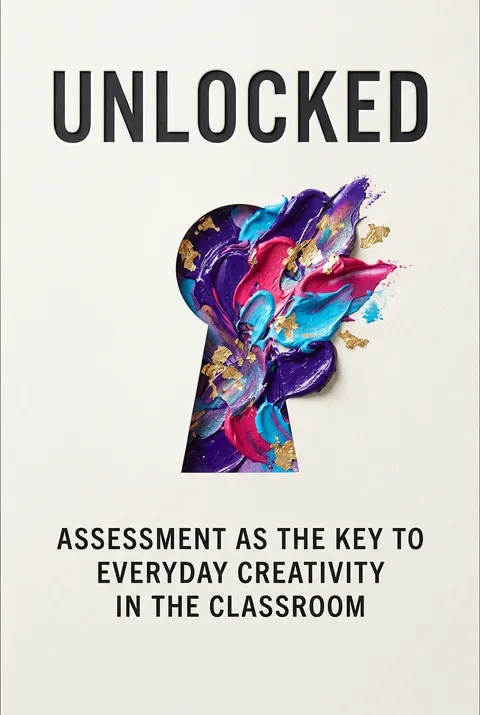
2. Assessment is the key to unlocking creativity in the classroom
Assessment cultivates student investment, a dual kind of reflection—on learning and engagement—where students persist through tasks and pursue higher levels of learning because they now believe that with effort, they can do it.
Redefine assessment for creativity. Traditional assessment often stifles creativity by focusing on right answers and grades. To unlock creativity:
- Use formative assessment throughout the creative process
- Emphasize self-assessment and peer feedback
- Delay summative assessment until the end of the creative cycle
This approach allows students to take risks, experiment, and refine their work without fear of failure.
Integrate assessment into the creative process. Effective assessment for creativity:
- Provides timely feedback to guide improvement
- Encourages reflection on both process and product
- Helps students set and refine goals
- Develops metacognitive skills
By embedding assessment within the creative process, teachers can support students in developing their creative abilities while still ensuring progress towards learning objectives.
3. Create a supportive environment that nurtures creative exploration
When we introduce creativity into all classroom settings, we unlock the potential for profound learning and development of valuable life skills. We can use creativity to teach resilience, to foster imagination, and to nurture stamina.
Design spaces for creativity. The physical and emotional environment plays a crucial role in fostering creativity. Consider:
- Flexible seating arrangements
- Access to diverse materials and resources
- Displays of student work-in-progress
- Safe spaces for risk-taking and experimentation
Create a classroom culture that values curiosity, embraces mistakes as learning opportunities, and encourages diverse perspectives.
Foster a creative mindset. Help students develop attitudes and habits that support creativity:
- Encourage questioning and wonder
- Model creative thinking and problem-solving
- Celebrate unique ideas and approaches
- Provide time for incubation and reflection
By explicitly teaching and reinforcing these creative habits, teachers can help students become more confident and skilled creative thinkers.
4. Guide students through the exploration stage of creativity
Exploration is the stage that invites learners into creative processes. This is when students explore materials, questions, and goals and begin to imagine how their creative pursuit might unfold.
Facilitate idea generation. Help students generate and refine ideas through:
- Brainstorming techniques
- Question formulation exercises
- Exposure to diverse stimuli and perspectives
- Collaborative discussions and activities
Encourage students to generate many ideas without judgment, then guide them in selecting and developing the most promising ones.
Support research and experimentation. During exploration:
- Provide access to relevant resources and information
- Teach research skills and strategies
- Allow time for hands-on experimentation
- Encourage students to document their process
Guide students in building the knowledge and skills they need to pursue their creative ideas while maintaining their autonomy and ownership of the process.
5. Facilitate elaboration to deepen creative thinking and problem-solving
Elaboration always goes together with evaluation, because it's often hard to tell if an insight is a good one without elaborating it at least part way. You probably have to work with an idea at least a little bit before you can tell if it's a good one.
Guide refinement and development. During elaboration:
- Teach specific skills and techniques as needed
- Encourage students to seek and apply feedback
- Provide opportunities for revision and iteration
- Help students evaluate and refine their ideas
Support students in developing their initial ideas into more fully-formed concepts or products.
Foster critical thinking. Encourage students to:
- Analyze their work critically
- Consider multiple perspectives and alternatives
- Make connections and see relationships
- Evaluate the effectiveness of their choices
Help students develop the analytical skills needed to improve their creative work and solve complex problems.
6. Support students in expressing their creative work
Expression occurs when students decide how to share their creative work and prepare to do so. This may manifest as a large-scale architecture project that learners in the elementary grades create and share with their peers or a performance that senior students share with the rest of the school, or a small-scale output over a short period of time such as sharing a solution to a mathematics problem with classmates.
Prepare for sharing. Guide students in:
- Selecting appropriate forms of expression
- Refining their work for presentation
- Practicing and rehearsing as needed
- Preparing to receive and respond to feedback
Help students feel confident and prepared to share their creative work with others.
Create meaningful sharing opportunities. Provide diverse platforms for students to express their creativity:
- Class presentations or exhibitions
- School or community events
- Digital platforms or publications
- Collaborative projects or performances
Ensure that students have authentic audiences and purposes for sharing their creative work, increasing motivation and engagement.
7. Reflection and response complete the creative cycle and foster growth
We don't learn from experience. We learn from reflecting on that experience.
Guide meaningful reflection. Help students analyze their creative process and outcomes:
- Provide prompts for deep reflection
- Teach metacognitive strategies
- Use portfolios to track growth over time
- Encourage students to set goals for future creative work
Reflection helps students internalize lessons learned and develop a growth mindset towards creativity.
Foster a culture of continuous improvement. Encourage students to:
- Celebrate successes and learn from failures
- Identify areas for growth and improvement
- Apply insights to future creative endeavors
- Share reflections with peers to learn from each other
By making reflection and response an integral part of the creative process, teachers can help students develop lifelong habits of creative thinking and problem-solving.
Download PDF
Download EPUB
.epub digital book format is ideal for reading ebooks on phones, tablets, and e-readers.








































