


Key Takeaways
Sin isn't just adultery or addiction — it's any disobedience to God
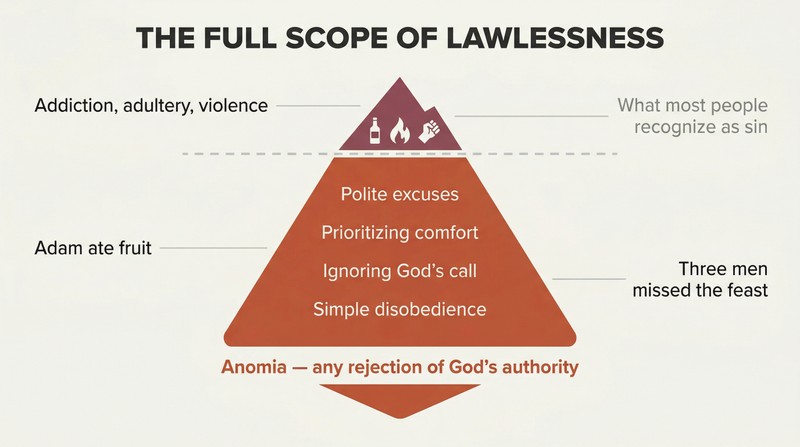
Bevere redefines sin at its root. The Greek word anomia — translated "lawlessness" in 1 John 3:4 — means any rejection of God's authority, not merely dramatic moral failures. Adam's single act of eating forbidden fruit enslaved all creation, yet it involved no sexual misconduct, substance abuse, or violence. He simply disobeyed a command.
Jesus drove this home in His parable of the wedding supper (Luke 14). Three men were barred from the feast — not for murder or theft, but for politely prioritizing land, business, and marriage over the Master's call. Meanwhile, the prostitutes and thieves of the highways heard the invitation and obeyed instantly. The church's narrow definition of sin blinds believers to the lawlessness hiding in everyday disobedience.
God's protection flows from staying under His authority, not just believing in Him
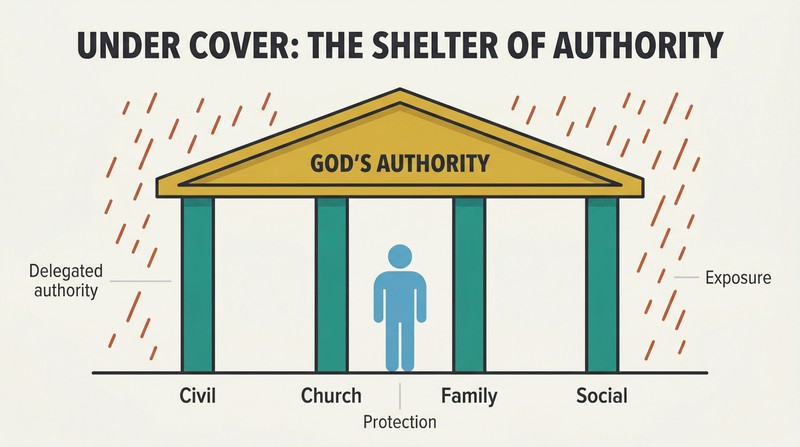
The book's central metaphor is shelter. Just as a house protects from a storm, God's authority "covers" those who submit to it. Adam and Eve lived under this cover in the Garden — until they disobeyed and immediately tried to cover themselves. "Under cover" means living under both God's direct authority (His Word, His Spirit) and His delegated authority through human leaders in four domains:
1. Civil (government officials)
2. Church (pastors, elders)
3. Family (parents, husbands)
4. Social (employers, teachers)
Bevere argues you cannot separate submission to God from submission to His delegated authorities, because all authority originates from Him (Romans 13:1-2). Resisting the authority He placed over you is resisting God Himself — and stepping out from under His protective cover.
Satan's oldest trick: make God look stingy so rebellion feels justified
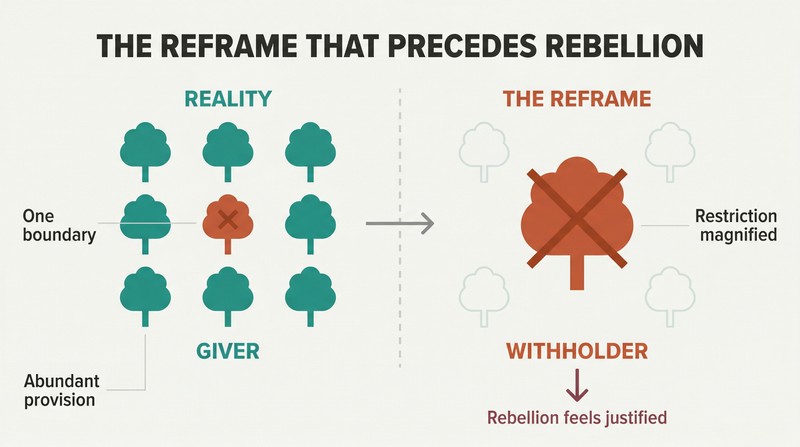
The serpent didn't start with a command to disobey. He started by twisting God's generous provision into a restriction: "So God said you can't eat from every tree?" Despite access to an entire garden, Eve's attention was drawn to the one forbidden tree. God was reframed from giver to withholder. Once His character was questioned, His authority collapsed in her mind.
Bevere calls this the secret power of lawlessness — a hidden force (2 Thessalonians 2:7) that makes rebellion appear reasonable. The defense is what Bevere calls "revealed knowledge ": truth personally illuminated by the Holy Spirit, not just rules heard secondhand. Eve had only "communicated knowledge" passed through Adam, making her vulnerable. Those who tremble at God's Word receive His secrets and detect deception before it takes root.
You can obey every rule and still have a rebellious heart
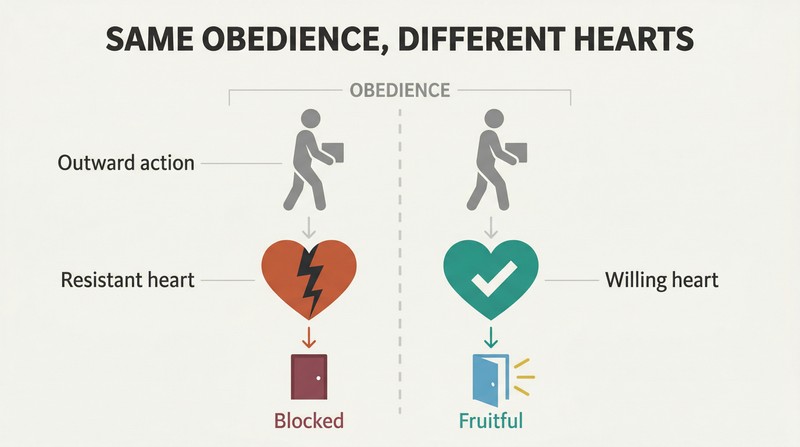
Hebrews 13:17 issues two commands: obey those who rule over you, and be submissive. These aren't synonyms. Obedience is outward compliance; submission is inward willingness. Bevere illustrates with his own life: for months he obeyed his pastor's directives but harbored a critical spirit. He complained about "not being fed" spiritually. God told him bluntly: the problem was his attitude, not his pastor's preaching.
Isaiah 1:19 requires both: "If you are willing and obedient, you shall eat the good of the land." Bevere's childhood analogy seals the point — he obediently took out the garbage when his mother asked, but muttered complaints under his breath. Outwardly compliant, inwardly resistant. When he repented of his critical spirit toward his pastor, the same sermons suddenly overflowed with revelation.
Rebellion literally opens doors to demonic influence and control
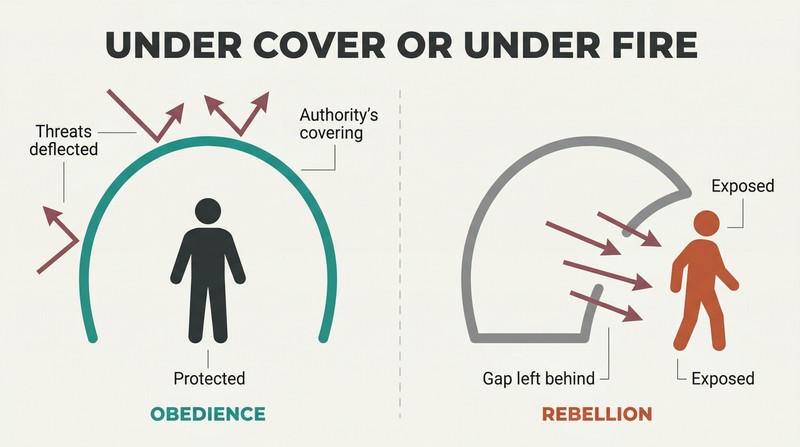
Samuel told King Saul that "rebellion is witchcraft" (1 Samuel 15:23). Bevere argues the original Hebrew doesn't merely compare them — it equates them. Witchcraft's goal is control through the demonic realm; rebellion achieves the same result by granting legal spiritual access to dark forces. Even the satanic bible's first commandment is "Do what thou wilt" — a direct inversion of Christ's "Thy will be done."
Saul's life illustrates the progression. After his rebellion, a tormenting spirit came upon him. The humble young man who once hid among the equipment descended into jealousy, paranoia, and murder — killing 85 innocent priests in a rage. A former witch confirmed to Bevere's team: "We cannot curse obedient Christians, but we could affect the disobedient ones in the church."
Doing 99% of what God says is still rebellion, not obedience
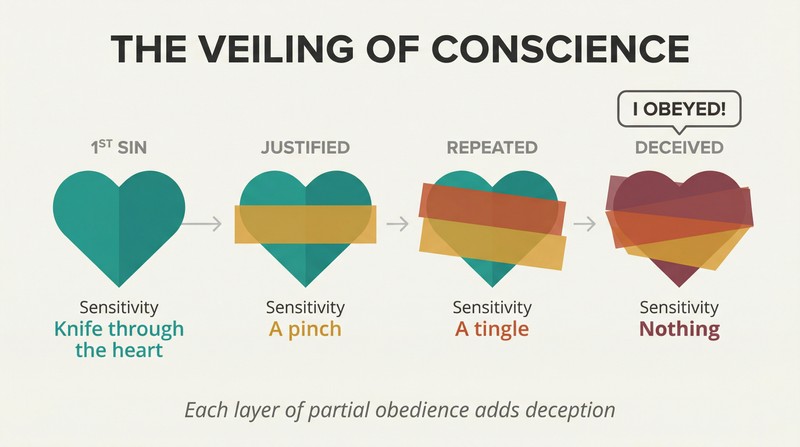
King Saul slaughtered nearly everything God commanded — tens of thousands killed, most animals destroyed. But he spared one king and the best livestock, reasoning they'd make fine sacrifices to God. He completed roughly 99.9% of his assignment. When Samuel confronted him, Saul declared with genuine confidence: "I have carried out the Lord's instructions!"
He was completely sincere — and completely deceived. Bevere describes a progressive numbing that explains how: the first sin after salvation feels like a knife through the heart. If justified rather than repented, a veil covers the conscience. The next sin feels like a pinch. Then a tingle. Then nothing. Each layer of partial obedience adds deception until a person genuinely believes he obeyed when God says he rebelled. This is the terrifying mystery of lawlessness.
Expect God to deliver blessings through messengers you'd never choose
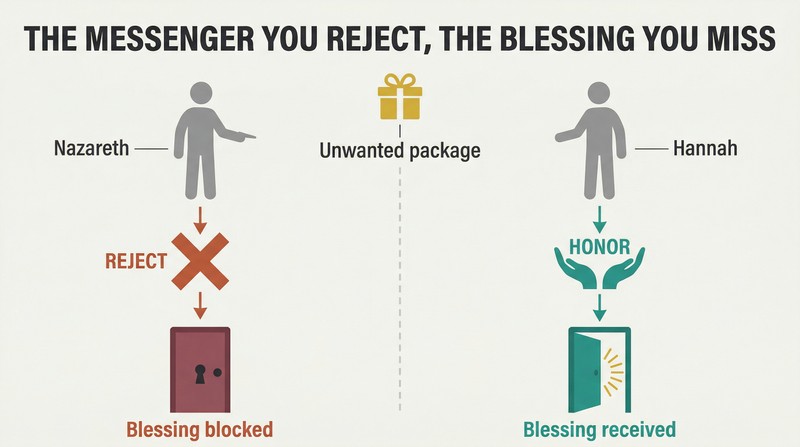
Jesus "could not" do miracles in His hometown — not "would not" but "could not." The people knew Him as a carpenter's son and refused to receive Him as sent by God. The degree to which you honor a messenger determines what you receive through them.
Hannah demonstrates the flip side. While praying through anguish over her barrenness, the priest Eli accused her of being drunk — a stinging insult from the highest spiritual authority in the land. Yet Hannah responded with respect: "Oh no, sir! I am not drunk!" She honored his position despite his insensitivity. Eli then spoke the prophetic word that unlocked her womb, and she conceived Samuel — the prophet who brought revival to Israel. Had she stormed out offended, she would have missed the very blessing she came for.
When you stop defending yourself, God starts defending you
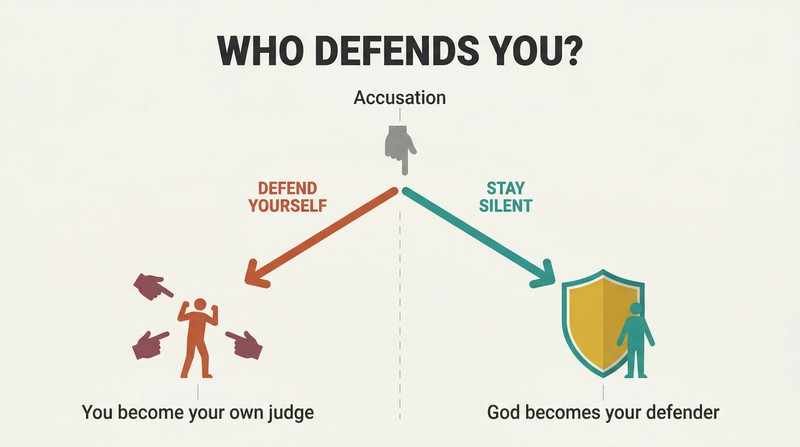
David twice had Saul at his mercy — a king who murdered 85 innocent priests and hunted David for years. Both times David refused to strike, declaring no one could touch the Lord's anointed and remain guiltless. When Jesus stood trial on entirely false charges, He answered nothing. Pilate marveled — he'd never seen it.
Bevere tested this with his nine-year-old son Addison, who was repeatedly blamed by a teacher for classmates' misbehavior. When Addison stopped arguing his innocence and instead apologized for challenging the teacher's authority, everything shifted: he was named student of the week, then received the class's highest year-end honor. Bevere's principle: the moment you justify yourself before your accuser, you make him your judge and forfeit God's intervention on your behalf.
Being 100% right about a leader's sin doesn't justify dishonoring them
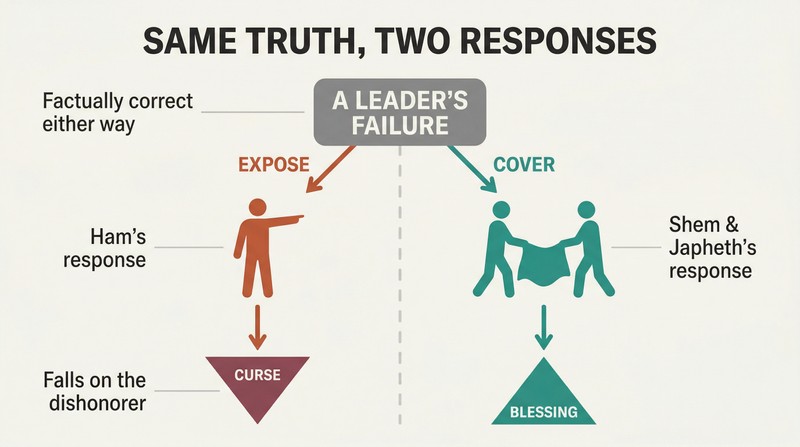
After Noah got drunk and lay naked, his son Ham reported it to his brothers. Ham was factually accurate — Noah was drunk and exposed. But Noah cursed Ham's descendants while blessing the two sons who covered their father's nakedness without even looking. Right information, wrong response.
David's reaction to Saul's death reveals the opposite heart. He mourned, composed a love song honoring Saul, executed the man who claimed credit for the kill, and showed kindness to Saul's remaining family. Those with rebellious hearts celebrate when leaders fall: "He got what he deserved." Those with David's heart grieve. Bevere warns that reducing a leader's authority in your eyes becomes fuel for disobedience — and the resulting curse falls not on the leader, but on the one who dishonored him.
Submission to authority is unconditional; obedience has exactly one exception
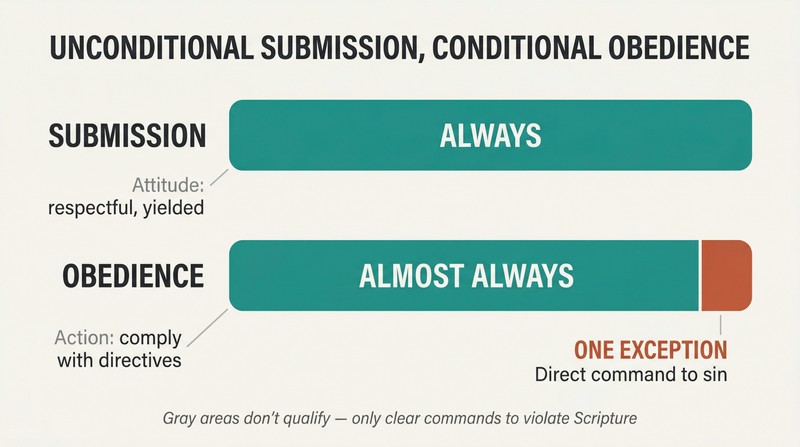
This is Bevere's critical distinction. Believers must always maintain a submissive attitude — respectful, yielded, reverent toward the position. But they should refuse to obey only when directly commanded to violate a clear command of Scripture. Shadrach, Meshach, and Abed-Nego refused to bow to Nebuchadnezzar's idol but addressed him as "Your Majesty." The Hebrew midwives defied Pharaoh's infanticide order, and God rewarded them with households of their own.
Gray areas don't qualify. If a pastor says "Don't counsel people during office hours," that isn't a command to sin — it's a workplace policy. Bevere stresses "clearly" sinful commands: worshiping other gods, lying, murder, denying Christ. Everything else falls under obedient submission, even when you disagree. If the leader is wrong, God holds the leader accountable — not the one who obeyed.
The greatest faith Jesus ever saw came from a soldier who understood authority
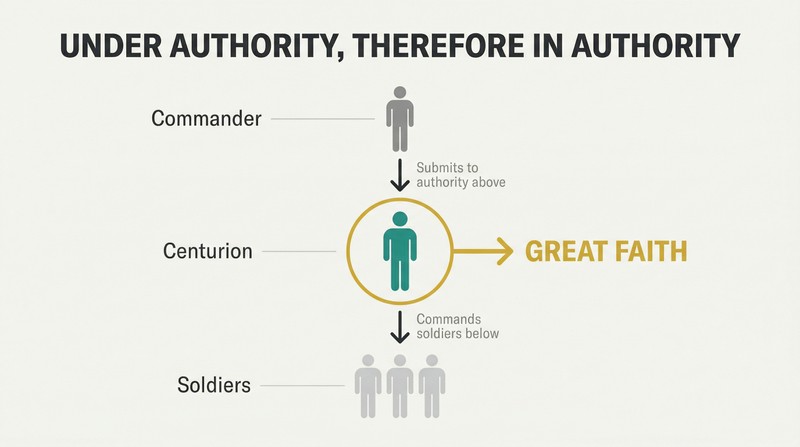
A Roman centurion told Jesus He needn't come heal his servant in person — just speak a word. His reasoning: "I am a man under authority, having soldiers under me. I say 'Go' and he goes." Because the centurion submitted to his commander, he had authority over his soldiers. He recognized the same spiritual dynamic in Jesus. Christ's response: "I have not found such great faith, not even in Israel."
In Luke 17, when the apostles begged "Increase our faith," Jesus didn't give a formula. He told a parable about a servant completing everything his master commanded. Bevere connects the dots: faith isn't increased merely through better theology — it grows through obedient completion of what authority assigns. Abraham's faith made him the father of nations because he obeyed all the way to raising the knife over Isaac.
Analysis
Under Cover occupies a contested space in Christian theology — the intersection of divine sovereignty, institutional authority, and individual conscience. Bevere's central claim that all legitimate authority is God-appointed and that resisting it equals resisting God Himself echoes Watchman Nee's Spiritual Authority (1972), which Bevere explicitly cites. What Bevere adds is pastoral accessibility: vivid personal failures, modern applications, and a willingness to use his own rebellious seasons as cautionary tales rather than relying solely on biblical exposition.
The book's strongest intellectual contribution is the obedience-submission distinction. This linguistic precision resolves a genuine pastoral problem that few authors name clearly: mechanical compliance without heart alignment, and enthusiastic assent without follow-through. Both patterns are spiritually corrosive, and Bevere anatomizes them with uncommon clarity.
Where the argument strains is in its treatment of abusive authority. Bevere acknowledges the exception — disobey when told to sin — but his examples of suffering under corrupt leaders (Pharaoh, Saul, Nebuchadnezzar) are almost exclusively resolved by dramatic divine intervention. This creates a framework where individual suffering is instrumentalized for God's redemptive purposes, which is comforting to some and deeply troubling to others — particularly survivors of spiritual abuse who were told to 'stay under cover 'by leaders who benefited from their silence.
Published in 2001, before widespread reckoning with institutional abuse in churches, the book's warnings against 'gossip' about leaders occupy considerably more space than its caveats about leaving corrupt ones. Read charitably, Bevere is addressing the far more common problem of casual insubordination in Western churches. Read critically, the framework can be weaponized by the very leaders it briefly warns about. The honest reader must hold both truths simultaneously — submission is genuinely countercultural and transformative, and uncritical deference to authority has enabled genuine harm. The book's enduring value lies in forcing that conversation.
Review Summary
Under Cover receives mixed reviews, with some praising its biblical insights on authority and submission, while others criticize it as promoting dangerous, cult-like teachings. Positive reviewers find it eye-opening and life-changing, appreciating its focus on obedience and honoring leadership. Critics argue it misapplies Scripture, undermines Christ's headship, and encourages blind submission to potentially abusive authorities. Many warn against its teachings, especially regarding church leadership, while others recommend it as essential reading for Christians seeking to understand God's authority structure.
People Also Read




Glossary
Under cover
Living under God's protective authorityBevere's central metaphor for the spiritual state of a believer who submits to both God's direct authority (His Word and Spirit) and His delegated authority (human leaders in civil, church, family, and social domains). Remaining 'under cover' grants divine protection and provision; stepping out through disobedience removes that covering, as illustrated by Adam and Eve's immediate exposure after their sin.
The secret power of lawlessness
Hidden force behind subtle rebellionFrom 2 Thessalonians 2:7 ('the mystery of lawlessness'), Bevere uses this phrase to describe the invisible spiritual force that subtly deceives believers into disobedience. It operates not through blatant temptation but through distorting God's character—making His commands appear unjust or His provisions insufficient—so that rebellion feels reasonable and even righteous. Its power lies in its hiddenness; victims genuinely believe they are right.
Anomia
Lawlessness; biblical definition of sinThe Greek word translated 'lawlessness' in 1 John 3:4 ('Sin is lawlessness'). Bevere uses it to argue that the core biblical definition of sin is not specific immoral acts but the condition of rejecting God's law or authority and substituting self-will. This reframing broadens sin beyond dramatic offenses like adultery or murder to include any willful disobedience to what God has commanded.
Revealed knowledge vs. communicated knowledge
Spirit-illuminated truth vs. secondhand informationBevere's distinction between truth personally illuminated by the Holy Spirit (which becomes internalized and guards against deception) and secondhand information about God's commands (which remains external rules). Eve had only communicated knowledge of God's prohibition—passed through Adam—making her vulnerable to the serpent's distortion. Revealed knowledge comes through personal seeking of God with fear and trembling, making His Word a living part of the believer rather than mere regulation.
The three-step corrective process
God's progressive method of correctionBevere's framework for how God reaches disobedient believers through escalating interventions: (1) internal conviction by the Holy Spirit, which is the gentlest correction; (2) a prophetic messenger—any person God sends to speak truth, such as a pastor, friend, or parent; (3) judgment through hardship, sickness, or affliction, which occurs when the first two methods are ignored. Illustrated by the story of a rebellious teenager warned at youth camp who was later in a head-on collision three weeks later, exactly as prophesied.
Delegated authority
Human leaders carrying God's authorityHuman leaders through whom God exercises His authority on earth. Bevere categorizes these into four New Testament divisions: civil (government officials), church (pastors, elders, fivefold ministers), family (parents, husbands), and social (employers, teachers, bosses). The key principle is that God appoints all legitimate authorities (Romans 13:1), so resisting them constitutes resisting God's own ordinance—regardless of whether the leader is godly or harsh.
FAQ
What is Under Cover: The Promise of Protection Under His Authority by John Bevere about?
- Central theme of authority: The book explores the biblical principle of living "under cover," meaning under God’s authority and the authorities He delegates.
- Promise of protection: John Bevere teaches that true spiritual protection, blessing, and freedom are found in submission to God’s order.
- Consequences of rebellion: The book warns that rebellion against authority leads to spiritual bondage, deception, and loss of God’s favor.
- Practical and scriptural focus: Through personal stories and biblical examples, Bevere illustrates how obedience and submission impact every area of a believer’s life.
Why should I read Under Cover by John Bevere?
- Addresses root spiritual issues: The book tackles the often overlooked root of many spiritual struggles—rebellion against authority.
- Biblical and practical guidance: Bevere provides scriptural answers and real-life examples to help readers understand and apply the principles of submission.
- Promise of blessing and protection: Readers are shown how honoring authority leads to God’s protection, provision, and spiritual growth.
- Equips for spiritual maturity: The book offers tools for overcoming subtle forms of rebellion and growing in faith and humility.
What are the key takeaways from Under Cover by John Bevere?
- All authority is from God: Submission to authority is ultimately submission to God Himself (Romans 13:1–2).
- Obedience vs. submission: Obedience is outward action; submission is the heart’s attitude—both are necessary for God’s protection.
- Blessings and consequences: Faithful submission brings blessing, promotion, and spiritual authority, while rebellion brings judgment and loss.
- Limits of obedience: Believers must not obey commands that contradict God’s Word, but should maintain a submissive attitude even in disagreement.
How does John Bevere define authority and its order in Under Cover?
- Flow of authority: Authority begins with God the Father, flows through Jesus, then to church leaders, family, and civil authorities.
- Delegated authority: All governing authorities—spiritual, civil, family, and social—are appointed by God and must be honored as such.
- Receiving authority: Honoring and receiving God’s delegated leaders is equated with honoring God Himself, bringing corresponding rewards.
- Chain of command: The book emphasizes the importance of respecting the entire chain of authority, not just the top leaders.
How does Under Cover by John Bevere define sin and rebellion?
- Sin as lawlessness: Bevere defines sin as "lawlessness," meaning disobedience or rejection of God’s authority (1 John 3:4).
- Root of rebellion: Rebellion is presented as the root cause of Lucifer’s and Adam’s fall, and the source of ongoing spiritual struggles.
- Partial obedience is disobedience: Even 99% obedience is considered rebellion in God’s eyes, as illustrated by biblical examples like Saul.
- Broader understanding: The book challenges readers to see sin as any form of disobedience to God’s authority, not just obvious moral failures.
What is the "secret power of lawlessness" in Under Cover by John Bevere?
- Hidden force behind deception: Lawlessness operates subtly, making rebellion seem desirable or harmless to believers.
- Satan’s tactics: The book compares Satan’s deception of Eve to how lawlessness deceives people today.
- Ignorance as vulnerability: Lack of revealed knowledge of God’s Word opens the door to deception and spiritual danger.
- Protection through truth: Understanding and applying God’s Word is the antidote to the secret power of lawlessness.
What are the consequences of disobedience and rebellion in Under Cover by John Bevere?
- Spiritual and practical loss: Disobedience leads to spiritual bondage, deception, and loss of God’s protection and favor.
- Biblical warnings: Examples like Cain, Saul, Miriam, and Korah show how rebellion brings judgment, curses, and even demonic oppression.
- Partial obedience is dangerous: Incomplete submission is equated with rebellion and brings severe consequences.
- Community impact: Rebellion can spread quickly, causing division and judgment within families, churches, and communities.
How does Under Cover by John Bevere relate rebellion to witchcraft and spiritual oppression?
- Rebellion as witchcraft: The book cites 1 Samuel 15:23, equating rebellion with witchcraft and opening the door to demonic influence.
- Bewitchment through disobedience: Disobedience to God’s commands brings a curse or spiritual bewitchment, making believers vulnerable.
- Biblical and modern examples: Stories like Balaam and the Galatian church illustrate how rebellion leads to spiritual bondage, even among believers.
- Seriousness of rebellion: The book stresses that rebellion is not a minor issue but a gateway to spiritual oppression.
What does Under Cover by John Bevere teach about honoring and submitting to authority?
- Honor as reverence: Honoring authority means showing respect and reverence, regardless of the leader’s personal flaws.
- Biblical commands: Scriptures like 1 Peter 2:17 and Romans 13:7 instruct believers to honor all authorities as a reflection of honoring God.
- Practical examples: The book shares stories of believers who honored difficult leaders and received blessings as a result.
- Double honor for leaders: Spiritual leaders, especially those laboring in ministry, deserve special respect and support.
How should Christians respond to unfair or harsh leaders according to Under Cover by John Bevere?
- Called to submission: Believers are commanded to submit to harsh or unfair authorities, following Christ’s example of suffering without retaliation.
- Christ’s model: Jesus did not defend Himself before unjust accusations but trusted God for justice and vindication.
- Blessing through suffering: Submission under unfair treatment leads to spiritual maturity, blessing, and eventual promotion.
- Avoid self-defense: Defending oneself before authorities can forfeit God’s protection and elevate the accuser’s influence.
What does Under Cover by John Bevere say about authority in the family and marriage?
- Family as foundation: Parents and husbands are given God-ordained leadership roles within the family structure.
- Children’s obedience: Children are commanded to obey and honor their parents, with promises of blessing and long life.
- Wives’ submission: Wives are to submit to their husbands “in everything,” even when husbands are unbelievers, as a witness to them.
- Limits and exceptions: Obedience does not extend to commands that contradict God’s Word, but a submissive attitude is still required.
What practical advice does John Bevere give for applying the principles of Under Cover?
- Examine your heart: Regularly pray and ask the Holy Spirit to reveal areas of disobedience or rebellion, then repent and seek forgiveness.
- Honor all authorities: Respect and honor those God has placed over you, including church leaders, employers, parents, and civil authorities.
- Maintain humility: Cultivate a humble heart, recognizing that obedience is a duty and trusting God to reward faithfulness.
- Respond biblically to conflict: When facing unfair treatment or disagreement, respond with submission, petition respectfully, and avoid gossip or rebellion.
About the Author
Other books by John Bevere






Download PDF
Download EPUB
.epub digital book format is ideal for reading ebooks on phones, tablets, and e-readers.








































