
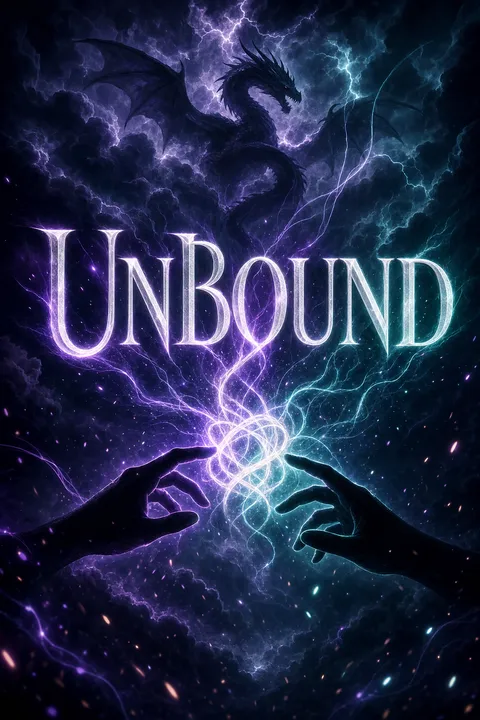


Plot Summary
Volunteering to Die
After four days in a padded carriage, Nessa Thorne1 arrives branded with a volunteer's badge she felt forced to wear rather than freely chose. She expected a sacrificial pit and instead finds Confluence Academy, the half-mythical place where primals are forged.
Among fifteen hundred terrified offerings taken from every corner of Empire, she befriends red-haired Mireen,6 who jokes about death to survive it, and meets a scarred, hostile fellow volunteer named Raith,2 who sneers that she is dying for a kingdom that only wants a weapon. Guards herd them into a testing hall beneath the castle. A girl is called forward, and seconds later a scream and the reek of burnt flesh teach them the truth: pass the coming trial or die.
The opening weaponizes a sacrificial lottery as a metaphor for institutions that consume the young while calling consumption honor. Nessa's volunteering is a disguised death wish born of survivor guilt, and the badge marking her choice becomes a brand of shame. Bloom lets hope curdle deliberately: learning the school is real should be salvation, yet the screams below convert relief into dread. The chapter installs the book's engine, survival as the only currency, and introduces Raith as a distorted mirror, another volunteer whose cynicism names the lie Nessa cannot yet face. Belonging, secrecy, and the ethics of survival are all seeded in a single terrified morning.
The Fifth Affinity
Called into a chamber littered with charred corpses, Nessa1 faces four humanoid elementals who drag the truth from her: she blames herself for the storm that drowned her father and brothers. When she touches each of the four vessels, every element answers her, an impossibility that throws the elementals into furious debate.
The fire elemental, Pyraxis, hurls flame to destroy her; the water elemental shields her instead. They name her unbound, and one voice demands her death. Overruled, they spare her and brand her palm with a shifting silver spiral that matches no known affinity. She stumbles out alive but marked as something Empire tried to erase from history, clutching a word she does not understand and a power she cannot explain.
The trial literalizes otherness. Where peers slot into one element, Nessa answers to all four, and the system's reflex toward anomaly is annihilation. The elementals' debate stages a political allegory about how societies treat the exceptional as either salvation or existential threat. Her coerced confession fuses magic with trauma, binding power to guilt so competence itself feels like culpability. The silver spiral, unreadable and ever-shifting, is a perfect emblem of an identity with no category and no precedent. Survival here is not triumph but sentence: she leaves the chamber marked as something history has already decided should not be allowed to exist.
Hiding the Silver Spiral
While survivors proudly display their colored affinity marks, Nessa1 hides her freakish silver one. The polished, pale-eyed legacy Bastian5 pulls her aside, recognizes the symbol from an old family book, and coaches her to disguise it as an ordinary blue water wave through focus and will. He lays out the merciless rules: offerings remain expendable until a distant milestone called Confluence Day, and students may murder one another freely to cull the weak.
Bastian5 pledges to send for a book that might explain her nature, then withdraws to avoid attention. Nessa1 realizes survival demands silence and deception, and she deliberately chooses water, the element of her drowned home in Saltcrest, refusing to keep fleeing the past that shaped her.
Concealment becomes Nessa's second skill, and the disguised mark dramatizes the labor of passing and the constant terror of exposure. Bastian enters as an ambiguous benefactor whose aid always carries the tint of agenda, teaching that at Confluence generosity is a form of leverage. The revelation that murder is institutionally sanctioned strips away any fantasy of academy as sanctuary; this is a slaughterhouse with a syllabus. Nessa's choice of water, her lost family's element, quietly reframes self-punishment as refusal, an early sign that her guilt might be forged into resolve rather than dissolved into surrender. Identity, here, is a thing you hide to keep.
Pinned by the Burned Volunteer
On the first day, instructors open the floor to challenge matches, and Raith2 selects Nessa.1 He overwhelms her with ease and pins her to the mat, but with their skin held together she instinctively pulls fire from his body, wrapping her hands in flame that is not her own.
Raith2 recoils, a flash of raw fear crossing his face before his cold mask returns, and afterward he presses her to explain what she is. She refuses to admit anything. The clash marks her as someone he cannot stop watching, and it teaches her a chilling truth about her gift: she does not create magic, she siphons it through touch. From that day, Raith2 begins circling her, half menace and half guardian.
The mat becomes a site of involuntary intimacy and revelation. Nessa's power is parasitic, defined by taking rather than making, casting her as inherently transgressive in a world that prizes self-generated strength. Raith's flash of fear is crucial: the dangerous man is frightened by her, inverting the predator-prey script that dominates such fantasies. Their charged antagonism follows an enemies-to-lovers grammar, but Bloom roots it in genuine power asymmetry and startled mutual recognition. Touch, the very mechanism of her magic, doubles as the vocabulary of attraction, ensuring that for these two desire and danger will remain physically, inextricably fused throughout everything that follows.
Malakai's Reign of Murder
Weeks harden into brutal routine: dawn sparring, weight training, and channeling class where Nessa1 cannot summon even a droplet because her borrowed power obeys no ordinary rules.
A hulking water named Malakai10 begins slaughtering classmates in the ring and between lessons, honing water into blades and gathering followers he calls his elites. Nessa1 clings to loyal Mireen,6 the sharp-tongued scholar Ambrose,8 and later the easygoing Beck.7 Bastian5 delivers the promised encrypted book, warning that Empire purged the truth of unbound centuries ago.
Deciphering it by candlelight, Nessa1 learns her kind are both menders and breakers, and that the most powerful unbound ever, Lorkan Grace,16 once led thousands to ruin. The knowledge lands less as a gift than a diagnosis.
The middle establishes attrition as pedagogy. Malakai enacts the logic the academy only implies: if the weak are meant to die, why not accelerate it? His ascent indicts a system that manufactures monsters and then disowns them. Nessa's channeling failures sharpen a bitter irony, that the most powerful student appears the weakest, a gap between essence and expression mirroring her hidden self. The book converts private fear into historical dread: to be unbound is to inherit a legacy of world-breaking. Knowledge here does not liberate so much as burden, framing selfhood as a condition to be secretly managed rather than a birthright to embrace.
Whispers on the Castle Wall
Raith2 breaks his icy distance to help Nessa1 choose a quick, thin rapier suited to her speed, then begins drilling her in secret. At night, driven from sleep by dreams of black water and something hunting her, she climbs to the castle walls and finds him there, haunted by his own dreams of fire.
Their wary talk warms into something charged before they overhear two instructors below, panicking about a corpse whose affinity mark was burned to nothing and murmuring the word siphon. Raith2 warns her the knowledge could get her killed and tells her to trust no one, his eyes dropping to her disguised hand. The moment binds them tighter even as it confirms a childhood horror walking Confluence's halls.
Two insomniacs meeting on a wall is Bloom's quietest, most romantic register: intimacy built from shared haunting rather than banter. Raith's fire dreams and Nessa's water dreams cast them as elemental opposites drawn toward equilibrium. The overheard siphon rumor threads dread through tenderness, teaching that at Confluence even private moments are surveilled and every comfort is provisional. The rapier gift matters psychologically: Raith invests in her survival while insisting on distance, protecting her while refusing to be known. The scene crystallizes their entire dynamic, closeness offered then withdrawn, while seeding the siphon threat that will eventually detonate the plot's hidden machinery.
The Beast in Mirror Lake
The water trial sends aspirants diving into Mirror Lake to retrieve elemental echoes. Underwater, Malakai10 ambushes Nessa1 and stabs her shoulder, but before he can finish her, a colossal corrupted water serpent3 devours his allies. Nessa1 recognizes it from her recurring nightmares.
Rather than kill her, the ancient creature heals her wound, lifts her and the unconscious Malakai10 to the surface on a raft of magic, and warns her that if she sees it on Confluence Day she must run. Given the chance, Nessa1 releases her hold on Malakai10 instead of letting the beast crush him, refusing to become a killer even to her would-be murderer. She surfaces changed, certain the monster and her own fate are entwined.
The trial returns Nessa to her origin wound, the deep water that swallowed her family, now inhabited by a literal monster. Her refusal to let the dragon crush Malakai is the book's moral spine: she will not buy survival with cruelty, distinguishing herself from his utilitarian butchery. The dragon's mercy and cryptic warning reframe the beast of her nightmares as something bound to her by fate rather than malice. Being healed rather than devoured inverts her expectation of punishment by water, offering tentative redemption: the element that took everything from her might, impossibly, come to answer to her call instead.
Cleansing the Ancient
On Confluence Day a rift tears open and drags the aspirants into the elemental plane, a color-drenched wilderness where a flaming wolf incinerates fleeing students. Cornered, Nessa1 faces the same corrupted water dragon3 from Mirror Lake and her dreams.
Instead of running, she presses her hands to it and draws out the inky void corruption that has driven it mad for centuries, venting the poison until the beast shrinks into a smaller, lucid, whole form. It names itself Typhon,3 ancient heir to the water throne, and offers her a debt. When she hears Raith2 screaming nearby, she swears Typhon's3 oath and tethers him, the silver spiral on her hand threading with deep blue as true power finally answers her.
The tether scene reframes power as relationship rather than possession. Nessa does not conquer the dragon; she heals it, and her unbound gift is revealed as the cleansing of corruption, a restorative counterpoint to the destructive legacy she fears she carries. Typhon's grumpy grandeur injects warmth into a grim world and gives Nessa an unconditional ally, filling the void left by an estranged family. The oath binds through mutual vulnerability, not domination. Symbolically, curing a madness born of broken bonds foreshadows her larger destiny in a world poisoned by severed connections, positioning her as a potential mender of an ancient, civilization-splitting rupture.
Riding a Dragon to War
Hearing Raith2 cry out, Nessa1 rides Typhon3 into a clearing where Malakai,10 Serena,11 and their tethered elementals have nearly killed him. Typhon3 scatters them with towering pillars of water, and his magic, channeled through Nessa,1 seals Raith's2 mortal wounds. Bastian5 arrives on a wind-steed to cover the retreat, and they plunge back through the rift to Confluence.
In the healer's room her friends meet Typhon3 and marvel that she tethered a dragon,3 though she guards the deeper truth of being unbound. At the tethering ceremony, with Rector Voss4 watching far too closely, Nessa1 disguises Typhon3 as a harmless flying fish she names Oceanus. The survivors are promoted from expendable offerings to aspirants, earning a fragile scrap of safety.
The rescue completes a satisfying inversion: the girl repeatedly saved now rides a dragon to haul Raith back from death. Channeling Typhon's healing through her own body literalizes the theme that her strength flows only through relationship. Disguising an ancient elemental as a comic flying fish stages the book's central strategy, hiding overwhelming power behind harmlessness, and mirrors Nessa's own daily concealment. Promotion to aspirant grants the narrative's first structural relief, a plateau of comparative safety that Bloom instantly complicates by fixing Voss's watchful gaze on her. Survival, she learns again, buys not peace but graduation into subtler, more political dangers.
The Rector's Bargain
Summoned to the Rector's4 tower and braced for interrogation, Nessa1 hears Voss4 calmly speak the word she has hidden: unbound. He insists no one betrayed her, that the signs are obvious to those who know, and offers to mentor her in secret, promising rare texts and safe practice where no one can misjudge her.
Starved for answers and desperate to protect her friends, she accepts, learning to weave elements together while absorbing his knowledge of siphons, manifestations, and the ancient war that split humans from elementals. He orders her to tell no one, especially Raith.2 Nessa1 cannot decide whether Voss4 is a savior or a spider, but his approval fills the hollow her unforgiving family carved.
Voss's mentorship dramatizes the seduction of being truly seen. After a family that recoiled from her, Nessa is offered acceptance by the one authority who names her without fear, and the psychology of that hunger makes her ripe for manipulation. Bloom sustains heavy dramatic irony: readers sense menace beneath the benevolence while Nessa, craving belonging, rationalizes every caution. The mentorship also serves as an exposition engine, delivering siphon and unbound lore. The command to keep secrets from Raith isolates her, a textbook grooming tactic, quietly foreshadowing that the mentor's generosity may be a leash dressed convincingly as liberation.
Conspiracy Before the Crucible
As the Crucible looms, Malakai10 swells into a cross-affinity army and stockpiles smuggled Empire steel, hinting at a powerful hidden backer. Sparring one day, Beck's7 blade opens Nessa's1 arm and the wound seals itself before witnesses, confirming her manifestation is true healing.
Scouting the quarry with Raith,2 they overhear Bastian5 arguing with his father, a Council member: the father coldly dismisses Bastian's5 fear that this year's Crucible will become an engineered slaughter meant to discredit and remove Voss.4
Meanwhile Raith2 shelters a slight young fire named Cade12 the way he could not save his dead brother Gareth. Threats now converge from every direction: Malakai,10 the Council's machinations, and a siphon still hunting somewhere within the walls.
The pre-Crucible movement widens the frame from schoolyard rivalry to Council intrigue, revealing students as pawns in an adult struggle over power. The overheard argument exposes the machinery that treats young lives as acceptable losses for political ends. Beck's accidental cut confirms Nessa's healing gift precisely when it becomes strategically indispensable, a clean instance of setup demanding payoff. Raith's tutelage of Cade externalizes his grief over Gareth, revealing that his protectiveness is atonement rather than mere loyalty. The section braids personal and political stakes so that survival will require navigating not only monsters but institutions deliberately engineered to spend the young.
The Face-Stealing Monster
A gifted dagger and a note appear in Nessa's1 locked room, and when she meets Raith2 to train, he draws his sword and speaks in a voice not quite his. A siphon wearing Raith's2 face has come, using her as bait for the man himself. It sheds his form into a long-limbed nightmare, its void lion clashing with Typhon3 while it hunts her.
The real Raith2 and Bastian5 burst in and fight beside her, but the creature clamps its hand around Raith's2 throat, flooding him with corruption until his fire mark gutters. Rector Voss4 finally appears and banishes the siphon with terrifying, effortless power, then departs, coldly stating nothing can be done for the dying Raith.2
The impersonation weaponizes intimacy itself: the beloved's face becomes the deadliest disguise, literalizing the paranoia that no one at Confluence can be trusted. That Nessa is merely bait confirms the siphons' true quarry and deepens the mystery of their purpose. Voss's effortless banishment is a reveal that should alarm, a supposed non-primal cowing an ancient horror, yet Nessa's gratitude blinds her to the implication. The attack tests the lovers through shared mortal danger and inverts their dynamic yet again: now she must save him. Void magic, which severs the capacity to channel, menaces the very bonds the book valorizes as the true wellspring of power.
An Oath to Save Him
With Raith2 fading and void corruption blackening his veins, Typhon3 tells Nessa1 the only way to save him is to tether him as she tethered the dragon.3 She presses his marked hand over her heart, swears an oath, forging a thin one-way bond, then draws the oily corruption out of his body and vents it harmlessly into the stone.
The healing works, but it also melts away most of the twisted burn scars that armored half his face, leaving him nearly unmarked. Nessa1 collapses, drained beyond her limits. For days she drifts in and out while Raith2 and her friends guard her, and through the fragile new tether she begins catching fragments of his emotions and memories: a burning castle, screaming.
Healing Raith through a forged tether fuses the book's central metaphors: love as literal life-force transfer, connection as salvation. Erasing his scars is ambivalent, an act of care that also strips away the visible history of his survival, raising the question of whether love should reshape the beloved without consent. The one-way bond that leaks his memories collapses the boundary between selves, so intimacy becomes epistemological: to love him is to inhabit his trauma. Her collapse enforces cost, since healing is never free, and the fragments of a burning castle let the reader begin assembling Raith's guarded secret before he ever speaks it aloud.
The Prince and the Assassins
Recovering in Raith's2 room, Nessa1 demands the whole truth, and he gives it: he is Raith Aurenciel,2 hidden crown prince of the Red Kingdom, whose family was slaughtered by siphons on the orders of his usurping uncle Darian. He means to reclaim the throne. That night they become lovers, and Raith2 swears a matching oath that thickens their tether into something mutual.
Before the Crucible, Serena11 corners Nessa's1 group at the smuggled weapons cache and, in the name of honor, exposes the plan: a magical blackout will blind Empire's observers, and two windborne, elite Council assassins, wait to butcher the survivors. Nessa's1 team sabotages the stolen blades and braces for a trial designed to kill them all.
The prince reveal recontextualizes the whole romance as geopolitically explosive: Nessa loves the heir of Empire's enemy, and her oath binds her to his coming war. Consummation and the mutual oath mark an emotional and magical point of no return. Serena's honor-bound warning complicates the antagonist, insisting even zealots may keep a code, and reframes the Crucible as assassination dressed as rite. The windborne threat escalates the stakes from schoolyard to statecraft. Bloom stacks revelation upon revelation so intimacy and dread arrive together, the lovers bonding fully at the very moment the machinery built to destroy them begins, irreversibly, to turn.
The Crucible Bloodbath
The bell rings hours early, catching everyone half-asleep, and Voss4 teleports the aspirants into a misted forest, scattered and disoriented, each clutching a stasis token meant to freeze them at the brink of death.
But Malakai's10 forewarned, organized forces drag frozen victims from the mist, strip their tokens, and cut their throats. Nessa1 fights through the trees, sparing enemies by triggering their stasis rather than killing, and reunites with Mireen,6 Beck,7 Ambrose,8 and Brunhild,9 then with Raith's2 assembled fires and earths.
When Malakai's10 army converges, a pitched battle erupts. Nessa1 deliberately lets Malakai10 stab her, dropping her own token first, so she can seize his skin, drain his essence, and defeat him. Their side prevails, but the true threat has not yet come.
The Crucible funnels every theme into a single arena: scattered and drowsy, the students embody the vulnerability of the disposable. The stasis tokens, intended as mercy, are perverted into a harvesting mechanism, a chilling image of protections repurposed for slaughter. Nessa's refusal to kill even while sparing enemies reasserts her moral line under maximum pressure. Her tactical sacrifice, taking Malakai's blade to steal his essence, transforms her parasitic power from source of shame into ingenious weapon when wielded with intent. The battle resolves a yearlong rivalry, yet Bloom withholds catharsis, signaling that the true architects of this engineered massacre have not yet shown their hand.
Killing the Windborne
Two windborne assassins descend from the sky, faceless and impossibly fast, crushing the air from Nessa's1 lungs and freezing the rest of her allies. Typhon3 abandons his fish disguise and unleashes his full ancient fury, ripping apart one assassin's air elemental.
Desperate and nearly empty, Nessa1 seizes the female windborne's ankle and tears out her essence so violently the woman's head bursts, her first true, permanent kill, with no stasis to save either of them. Bastian5 falls covering them, and Raith2 cuts down the second assassin.
Overloaded with stolen power, Nessa1 collapses beneath a raging storm of her own making. Elsewhere, Raith2 fights through the legacies guarding the quarry and claims the cursed ceremonial blade, ending the Crucible and winning legacy status.
The windborne climax forces Nessa across the line she has guarded all book: a true kill, no stasis, blood on her face. The visceral horror refuses to let violence feel triumphant, honoring her earlier refusals even as circumstance overrides them. Typhon's unleashing pays off the long-disguised power, catharsis long deferred. Raith's parallel quest for the cursed blade ties victory to sacrifice and quietly foreshadows a price. The storm she conjures unconsciously echoes the tragedy that opened her story, but now the power that once drowned her family defends the people she loves, a hard-won, bittersweet reversal of the wound that made her.
The Mender's Betrayal
Nessa1 wakes days later, weak but alive, and Voss4 tells her Raith2 lies gravely wounded and needs her healing. He leads her through a door that teleports them to a hidden cave, where Raith2 floats frozen in stasis, bleeding.
Frantic, she pours her power into healing him, only to watch the body reshape into a beautiful silver-eyed woman: Milena Grace. Voss4 reveals himself as Lorkan Grace,16 the legendary unbound whose manifestation is transformation and who created the siphons. He tricked her into reviving his ancient partner.
Rather than kill her, he plants a seed of doubt, promising she will see the Aurenciels cannot be trusted, and sends her home. Sensing her return, Raith2 realizes with horror that they have forged Nessa1 into a weapon aimed at his heart.
The twist reframes the entire novel as a long con: mentorship was grooming, kindness was harvest, and Nessa's defining gift, healing, becomes the instrument of catastrophe. Bloom weaponizes the reader's own hope that Voss might be benign. Lorkan's transformation manifestation retroactively explains the siphons and the face-stealing attack, tightening the plot's logic. Crucially he neither kills nor captures her; he plants doubt, betting the Aurenciel history of persecuting unbound will corrode her loyalty from within. The final image, Raith recognizing she is a blade aimed at him, converts the romance into the coming war's fault line, ending on dread rather than resolution and daring the reader onward.
Analysis
Unbound reworks the magical-academy template into a meditation on belonging, complicity, and the ethics of power. Its engine is scarcity: Confluence manufactures weapons by making survival the only value, and Bloom uses that pressure cooker to ask what a person will refuse to become in order to live. Nessa's1 defining trait is not her rare power but her insistence on a moral floor, sparing enemies and refusing execution, a line that separates her from Malakai's10 utilitarian slaughter. Her magic literalizes the book's relational thesis: she cannot generate strength alone, only borrow it through touch and tether, so intimacy, trust, and oath-swearing become the actual sources of power. This inverts the lone-chosen-one fantasy; Nessa1 is strong precisely to the degree she is connected. The novel is preoccupied with concealment as survival. The disguised mark, the flying-fish dragon,3 Raith's2 hidden crown, Voss's4 benevolent face: everyone passes as something safer than they are, and the plot's cruelty is that the disguises are necessary. Trust becomes the scarcest and most dangerous resource, and Bloom repeatedly rewards and punishes it, culminating in a betrayal that indicts the reader's own optimism. Thematically, the book interrogates inherited guilt. Nessa1 believes she is a monster because a storm she could not control killed her family; the unbound legacy tells her monstrousness is her birthright. Her arc reframes that determinism: she chooses what her power means. Yet the ending denies easy redemption. By making her healing hands the tool that revives an ancient evil, Bloom insists that good intentions ungrounded in knowledge can be catastrophic, and that the persecuted may be tempted toward the persecutors who finally offer belonging. The final beat, love turned into a weapon, argues that the deepest wars are fought not between kingdoms but inside the bonds people forge, where loyalty and manipulation become impossible to tell apart.
Review Summary
Unbound receives mixed reviews, with ratings ranging from 1 to 5 stars. Many readers enjoy the academy setting, elemental magic, and character development, particularly praising the FMC Nessa and her elemental Typhon. However, some criticize its similarities to Fourth Wing and lengthy pacing. The slow-burn romance and world-building are generally well-received. Critics note plot holes and repetitive scenes. Despite divided opinions, many readers express excitement for the sequel, appreciating the book's engaging storyline and character growth.
People Also Read
Characters
Nessa Thorne
Guilt-haunted unbound survivorA fisherman's daughter from the coastal town of Saltcrest who volunteered as an offering partly to punish herself for a storm she believes she summoned, drowning her father and brothers. Nessa is stubborn, quick-witted, and morally rigid in ways that repeatedly endanger her: she refuses to kill even enemies who hunt her. Psychologically she is defined by survivor guilt and a hunger for the forgiveness her mother and sister denied her, which makes acceptance intoxicating and dangerous. Her rare unbound nature lets her draw power from others through touch rather than generate it, a parasitic gift she experiences as monstrous until she learns to wield it with intent. Her arc is a slow migration from self-punishment toward self-possession, protecting others as a way of redeeming herself.
Raith
Scarred volunteer with secretsA towering, burn-scarred fire volunteer from the Red Kingdom border whom other students both fear and follow, calling him a burned prince. Raith is deadly, disciplined, and emotionally armored, having built walls to avoid losing anyone else after catastrophic loss. He trains Nessa1 relentlessly while insisting on distance, protecting her even as he warns her he is dangerous to love. Beneath his cold control runs fierce protectiveness, dry humor, and a grief he carries for a lost younger brother, Gareth, whose memory he honors by shielding vulnerable students. His guardedness is not detachment but the opposite: he feels too much and fears what caring costs. His hidden past and true loyalties are the axis on which much of the story quietly turns.
Typhon
Ancient water dragon elementalAn immensely old elemental, self-styled heir to the water throne, once driven mad by a broken tether until Nessa1 cleanses his corruption. Grandiose, prickly, and endlessly amused by his own superiority, Typhon provides the story's comic warmth while embodying its theme of connection as power. He grumbles about human frailty and constantly offers to devour Nessa's1 enemies, yet the tether betrays a deep, protective devotion he will never admit aloud. He can shrink into a mocking flying-fish disguise or expand into a terrifying dragon. As Nessa's1 constant inner voice, he functions as mentor, bodyguard, and reluctant father figure, his loyalty an anchor for a girl long starved of unconditional acceptance.
Rector Voss
Enigmatic academy headmasterThe charismatic, silver-haired Rector of Confluence, oddly unmarked for the leader of a school of primals. Voss takes an unusual personal interest in Nessa1, recognizing what she is and offering secret mentorship, rare texts, and protection while urging her to keep her nature hidden even from Raith2. Calm, patient, and unsettlingly powerful, he radiates a benevolence that never quite reaches his eyes. He speaks of nurturing talent rather than fearing it, positioning himself as the one authority who accepts Nessa1 without recoil, which makes his influence over her both comforting and quietly ominous.
Bastian
Aloof legacy benefactorA blonde, pale-eyed air legacy and son of a powerful Council member who repeatedly aids Nessa1 at pivotal moments. Bastian gives her the encrypted unbound book, teaches her to disguise her mark, and intervenes when enemies close in. Reserved and calculating, he insists his help is not friendship, warning that closeness endangers her, yet his actions suggest deeper investment. His true motives remain deliberately opaque, hovering between principled ally and self-interested strategist playing a longer game.
Mireen
Loyal gallows-humor friendA copper-haired water aspirant from the war-torn north who befriends Nessa1 on arrival, joking about death to survive it. Fiercely loyal and talented at channeling, Mireen adopts rats and trains messenger birds, finding small joys amid horror. She is Nessa's1 emotional anchor and moral sounding board, wary of Raith2 yet ultimately trusting her friend's judgment. Her irreverence masks real courage and a protective heart forged by growing up near the front lines.
Beck
Easygoing water bruiserA broad-shouldered, sandy-haired farmer's son tethered to a water bear named Uther. Beck is a shameless flirt and comic relief whose bravado hides genuine loyalty; he joins Nessa's1 circle after losing friends to Malakai10. Beneath the jokes he is brave and steadfast, quick to throw himself between his friends and danger, and devoted to the fierce northern warrior Brunhild9.
Ambrose
Bespectacled scholar strategistA precise, wire-rimmed water aspirant and aspiring historian tethered to a water hawk named Akaron. Ambrose supplies the group with lore, tactics, and analysis, treating even his own wounds as academic curiosities. Humble in speech but confident in intellect, he grounds the team's planning and often voices the uncomfortable strategic truths the others avoid.
Brunhild
Fierce northern warriorA towering, platinum-braided fighter from drowned northern islands, tethered to a giant crab. Blunt, intimidating, and darkly funny, she joins the team as their fifth Crucible member and teaches Nessa1 northern grappling. She reveres old tales of unbound as heroes rather than monsters, and her fierce loyalty attaches especially to Beck7, whom she affectionately calls her sexy bear.
Malakai
Ruthless empire zealotA powerfully built water aspirant who murders classmates to cull the weak and builds a cross-affinity army, driven by a father's death and a belief that traitors must be purged for Empire. Cold, calculating, and emotionally hollow, he is Nessa's1 primary rival and a tool of larger forces. His willingness to slaughter fellow students makes him the human face of the academy's brutal ideology.
Serena
Honor-bound fire antagonistA beautiful, deadly fire aspirant from a military family who despises volunteers and suspected traitors, especially Nessa1 and Raith2. Proud and vicious, Serena hunts them yet clings to a rigid code of honor, refusing the dishonorable tactics her allies embrace. That code makes her an unpredictable antagonist, capable of both cruelty and reluctant fairness.
Cade
Gentle young fireA slight, innocent fire aspirant whom Raith2 protects and mentors, treating him with a big-brother tenderness that reveals the softness beneath Raith's2 hard exterior and his need to atone for a loss he could not prevent.
Pyrin
Raith's fire pantherRaith's2 tethered elemental, a fire panther that grows steadily more powerful and solid. Quiet and fiercely protective, Pyrin mirrors his human's guarded loyalty and fights at his side in every crisis.
Nolan
Doomed hopeful offeringA lanky, talkative fire replacement offering who befriends Nessa1 on arrival, confident his affinity markers will save him. His early fate in the testing chamber brutally establishes the stakes of the trial.
Sestra
Severe channeling instructorA stern water primal who teaches channeling and openly disdains Nessa's1 apparent incompetence, embodying the academy's contempt for the weak and its indifference to student deaths.
Lorkan Grace
Legendary unbound of historyThe most powerful unbound in recorded history, blamed for near-apocalyptic destruction and the reason Empire purged all records of unbound. His legend haunts the encrypted book Nessa1 studies, framing her own feared potential.
Plot Devices
The disguised silver mark
Concealed identity, constant perilEvery student is branded with an affinity mark, but Nessa's1 is a shifting silver spiral that marks her as unbound, something Empire supposedly exterminated. Bastian5 teaches her to disguise it as an ordinary blue water wave through focused will, though silver threads still lurk beneath. The mark drives the book's engine of concealment: it must be hidden from instructors, rivals, and observers, and it flickers dangerously whenever she touches other affinity-users or draws deeply on power. Its growth over time tracks her strengthening tether, while the constant threat of exposure keeps her isolated and afraid. The mark literalizes the labor of passing and the terror of being seen as monstrous.
The tether
Bonds that share power and mindPrimals bond elementals through sworn oaths, gaining shared power and a mental link. Nessa's1 tether to the ancient Typhon3 gives her both a formidable ally and a constant inner voice. Crucially, unbound can also tether other humans, a rare and dangerous ability she uses to save a dying Raith2 by swearing an oath and pulling corruption through the bond. That bond leaks emotions and memory fragments between them, collapsing the boundary between selves and turning intimacy into literal life-force transfer. The tether embodies the book's central thesis that power flows through connection rather than isolation, making relationships the true source of strength and the deepest vulnerability.
The encrypted unbound book
Forbidden knowledge, slow revelationA leather-bound tome from Bastian's5 family library, encrypted because Empire destroyed all records of unbound during a historical purge. Using a cipher key Bastian5 creates, Nessa1 decodes it a few passages a night, learning that unbound are menders and breakers, that their power draws from the world rather than the self, and that the legendary Lorkan Grace16 once led thousands to ruin. The book functions as a steady exposition engine and a source of mounting dread, teaching Nessa1 both how to use her gift and why history fears it. It also binds her to Bastian5 in shared, deadly secrecy, deepening the mystery of his motives.
Stasis tokens and the Crucible
Deadly rite, perverted mercyThe Crucible is the first-year's final trial: teams are scattered into wilderness to retrieve a ceremonial blade while rival teams hunt them. This year students are issued stasis tokens meant to freeze them at the point of death as protection. The device becomes horrifying when Malakai's10 forces strip tokens from frozen victims and execute them anyway, turning mercy into a harvesting tool. The tokens also let Nessa1 fight without killing and enable a key gambit: she drops her own token and takes a blade to seize an enemy's essence. The Crucible externalizes the book's themes into a single arena where protections are weaponized and the disposable fight to matter.
Siphons and void magic
Hidden predators, existential dreadSiphons are creatures thought to be children's myths: beings that cannot channel but feed on the magic and life of humans and elementals, leaving behind corpses with burned-out marks. They can wear the faces of others, making trust lethal, and their void magic can sever a person's ability to channel and even permanently kill elementals. A siphon's presence on campus threads dread through the middle of the book, and one attack, using a beloved's face as disguise, nearly kills Raith2. The siphons connect the academy's small horrors to a vast historical conspiracy, and their origin becomes central to the story's largest, most devastating revelation.
Download PDF
Download EPUB
.epub digital book format is ideal for reading ebooks on phones, tablets, and e-readers.








































