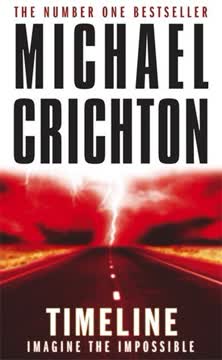
Plot Summary
Quantum Miracles and Catastrophe
The turn of the twenty-first century brings scientific arrogance reminiscent of a bygone era—physics, once thought complete, is again on the brink of unexpected revolution. In the remote deserts of New Mexico, the mysterious ITC corporation pushes the frontier further than the public can guess, developing quantum technologies permitting travel between universes. But audacious experiments go awry when an elderly physicist, Joseph Traub, is found rambling and deranged in the Arizona desert, his body fatally afflicted by strange internal "mismatches." His mysterious demise, and the tech he clutched, hint at a power more dangerous than ITC will publicly admit. Amid secrecy and boardroom plotting, ITC's ambition remains unchecked—untouchable, even as the consequences of their experiment draw death close and threaten to shatter the presumed boundary between the possible and impossible.
Medieval Echoes Beckon
In the lush valley of the Dordogne, France, a team of Yale historians led by Professor Edward Johnston excavates lost medieval castles and monasteries, seeking to reconstruct life in the fourteenth century. Behind the academic bustle lies a pervasive sense of mystery; ancient feuds and betrayals seem to linger beneath the ruins of Castelgard, La Roque, and Sainte-Mère monastery. Their American funding source, ITC, maintains a strange interest, supplying advanced technologies and demanding frequent updates. Yet their interest grows personal and troubling when they press for faster reconstruction, and ground-breaking discoveries—such as uncannily accurate medieval diagrams and artifacts—raise unsettling questions about both ITC's motives and the very nature of time and memory.
The Professor's Disappearance
Johnston, frustrated by ITC's evasions, journeys to New Mexico, determined to break through corporate secrecy. Days later, he vanishes—at the same time the dig unearths a centuries-old parchment in his handwriting: "HELP ME 4/7/1357." Sensible explanations collapse under scrutiny. A modern bifocal lens is found buried deep in medieval strata, yet analysis says it's as old as the dirt that surrounds it. An unraveling sense of reality descends upon his loyal students—Chris, Kate, Marek, and Stern—who are haunted by the evidence of impossible communication across time. Only then does ITC summon them, their urgency edged with desperation, thrusting the academic team into the heart of its secretive labyrinth.
Riddles at the Monastery
As unrest spreads through the Dordogne project, the researchers' trust in ITC erodes. Interrogated by French officials and pursued by a persistent journalist, the team becomes entangled in the tangle of medieval allegiances—knights and monks, traitors and lovers. Their search for answers leads to discoveries in the catacombs and forgotten chapels: bones with wounds from ancient battles, coded diagrams, and manuscripts referencing keys, secret passages, and figures lost to history. Hints of ITC's true experiment hover everywhere: signs of artifacts moving not just through space but through time itself. Confronted with layered puzzles, Chris and his companions awaken to the magnitude of the stakes, knowing that the fate of Johnston—and maybe of time itself—depends on what they next choose to believe.
Gathering the Rescue
ITC finally reveals its technological secret: not time travel, but traversing nearby universes in the multiverse—shadows differentiated by quantum probability, some a match to the medieval past. The company's desperate gamble: send the best-equipped team (the Yale historians, linguist, and technologist) to "recover" Johnston from the year 1357. ITC militarizes the mission with corporate commandos; the students undergo painful reconstruction, learning archaic tongues and being fitted with covert communication devices and defense gadgets. Yet as they prepare to cross realities, a question harrows each: is this a journey to the past, or into an altogether alien reality where history—and the identities of the living and dead—can be rewritten by anyone holding the secrets of the transit machines?
Notes Across Centuries
Thrown back into fourteenth-century France, Chris, Kate, Marek, and their ex-marine escorts find the past both exhilarating and lethal. In seconds, blood flows—one escort is beheaded, another killed, leaving only the disoriented civilians. With their guides dead and their only means of return destroyed, the team tries to regroup, relying on coded notes, earpieces, and mysterious clues left by Marcel, a monk whose knowledge of secret passages may be their sole hope. Their attempts to contact the present falter amid quantum noise: a police officer on the other end of "time" listens to their voices, but neither side can comprehend the true scope of what's happening. The students realize both rescue and their own survival may depend on learning to navigate the medieval world as insiders, not tourists.
Through the Foam
The medieval world, at once beautiful and horrifying, begins to change the travelers as they are washed over by its raw reality: violence is commonplace, chivalry double-edged, and the common folk are as perilous as the lords. Chris earns his place with Lady Claire and the enigmatic Sir Guy amidst shifting loyalties, while Kate must hide her gender, and Marek's martial obsession becomes his strength. Their classical skills become their lifelines, but modern values are rapidly eroded—and new bonds, of love, trust, and rivalry, are forged in fire and danger. As the siege of La Roque approaches, their path becomes a race not just for escape, but for mastery of a reality immune to their modern logic.
Lives on the Line
The travelers are swept up in the brutal siege of La Roque, their fates now inextricably linked with those of the medieval figures they once studied. Marek and Chris are forced into public tournaments and deadly combats; Kate is hunted, her cover at perpetual risk. They must solve centuries-old riddles in real time: identifying traitors, locating secret passages, and weighing whom to trust as alliances change with every hour. Betrayal is everywhere—their contemporary enemies (such as the warped de Kere/Deckard, once a fellow ITC traveler, now mad from "splitting" and desperate) are as deadly as medieval foes. The team's only hope: solve the physical codes left by Brother Marcel and reunite with Professor Johnston before the batteries in their return markers run out.
A Time for Violence
Chris and Kate's journey beneath the castle leads through cave systems—a labyrinth of dripping darkness where wrong footsteps could mean forever entombment. Emergent violence is as much psychological as physical; confronted with enemies and the warped consequences of ITC's technology, the students—once intellectuals—become warriors. Chris discovers the cost of killing, while Marek chooses to remain and embrace the medieval world he's always romanticized. For the rest, escape—backed by a running timer, flaming powder, and the chaos of battle—drowns out all questions of morality. In the end, not everyone will leave; sacrifice, by choice or fate, is the only escape.
Secrets Beneath Stone
Kate deciphers the last riddle, finding the green chapel and following the coded steps from "the giant's feet" to the hidden tunnel. The survivors reunite in a final desperate dash through burning, collapsing courtyards, turn deadly weapons (ancient and quantum) against traitors, and at last rescue the Professor. Marek, however, chooses to stay behind, drawn irrevocably to a world that demands all his courage and skill. His presence in history is written into new medieval records, closing the temporal loop and haunting his friends in the future with the tangible proof of their journey's reality.
Siege at La Roque
The climactic siege of La Roque plays out with all the blood, spectacle, and horror that only living history can offer. Knights and townspeople suffer and slaughter, alliances and ambitions are tested to destruction, and love—between Chris and Claire, and Marek's silent longings—intertwines with death and loss. The Professor's arc ends where it began: witnessing history, but also written into the new fabric of its outcome. In the boiling violence, the lines between victors and vanquished, past and future, blur beyond recovery.
The Unraveling Passage
The surviving students, battered and changed beyond recognition, race against both physical destruction and the quantum clock. Doniger, exposed as a corporate manipulator, is betrayed by his own greed—sent into the darkest past by his colleagues for his crimes, to perish in the Black Death he thought would make him immortal. ITC's plans to commodify authenticity for profit are revealed, as is their true intention: to dominate not just the present, but the future's understanding of the past. Yet the real legacy belongs to those who lived and suffered beside stone and flame, leaving proof that history is not just written, but lived—and changed, in ways no one can predict.
History's Price
Back in the present, Chris, Kate, and Johnston piece together the fate of Marek, discovering his tomb in England beside Lady Claire. The final records, written in both stone and parchment, show lives irreversibly shaped by their passage to the past. Yet the scars and lessons remain, echoing as warnings for the future. The lure of authenticity and the promise of technology have both extracted their prices on those bold enough to seek "empires of the mind." The story closes not with triumphant discovery, but a final question: what does it mean to make history?
Marek's Choice
Marek's irresistible immersion in the medieval world—his physical prowess, linguistic talent, and chivalric code—culminate in his refusal to return. His fate is no longer theoretical; he lives and loves, becomes an ancestor rather than merely an observer. His friends, haunted and proud, know his journey is what scholars (and perhaps all of us) ultimately seek: meaning found not in the comfort of the present but in the risk of living, in the raw and unmediated past.
The Future's Promise
In the aftermath, ITC's plans for "authentic" history sites foreshadow a coming world in which the past is packaged and sold—authenticity itself another commodity. Yet beneath these grand claims, the true lesson echoes: the power to shape the narrative of history is more consequential than any technology could ever imagine. In the end, it is the courageous, the flawed, and the striving—those who lived their history—who shape its future.
Analysis
Michael Crichton's Timeline crystallizes a warning and a seduction: the dream of returning to a more authentic past—as antidote or escape from modern technocratic banality—contains as much peril as it does promise. It is fiction for an age addicted to progress but hungering for lost meaning; it exposes how the past is continuously reimagined, commodified, and weaponized by those in power. Through quantum mechanics and medieval violence, the novel scrutinizes the illusion that history can be controlled, packaged, or inhabited without consequence. Crichton's characters become both products and victims of their aspirations—scholars who become warriors, technocrats who become tyrants, and outsiders who find in the past a destiny unattainable in the present. The story powerfully insists that no "authentic" immersion is free from risk: both technological ambition and nostalgic idealism exact their toll. History is not a theme park but a living, deadly world, where true engagement requires sacrifice—and the outcomes, however carefully planned, can always spiral beyond control. In its fusion of spectacle, intellect, and raw emotion, Timeline offers a bracing meditation on progress, the value of lived experience, and the real dangers—and genuine rewards—of seeking to inhabit or rewrite history.
Review Summary
Reviews of Timeline are largely positive, averaging 3.87/5. Readers praise Crichton's meticulous historical research into 14th-century France and his accessible explanations of quantum physics and multiverse theory. The novel's relentless pacing, medieval adventure, and creative time-travel premise draw frequent admiration. Common criticisms include one-dimensional characters, an overly Hollywood ending, and excessive early scientific exposition. Many compare it favorably to Jurassic Park while noting similar weaknesses. The 2003 film adaptation is widely considered inferior to the novel.
People Also Read
Characters
Edward Johnston
Johnston, the Regius Professor of History at Yale, is both father-figure and intellectual compass for the team. An unorthodox, dynamic scholar who believes living the past is as vital as studying it, Johnston's disappearance catalyzes the entire narrative. Understated, resourceful, and unflappable even when imprisoned in a medieval dungeon, his personal code blends rigor with compassion. His ability to adapt in the alien world of the fourteenth century steers the others through danger. Ultimately, he embodies the quest for historical truth: not just knowledge, but empathetic engagement, shaping the arc of the entire team as they move from academic detachment to transformative experience.
André Marek
Marek is the living bridge between past and present—a historian who embodies his obsessions in body, skill, and mind. Gifted in languages and martial arts, he is driven by longing for direct experience, to the point of obsession. As others falter, Marek becomes both defender and strategist, mastering medieval survival and earning genuine respect from knights and townsfolk alike. His ultimate choice to remain in the past—forsaking modern comfort and safety for the authenticity and passion he always lacked in the present—completes his transformation from outsider to legend, sacrificing friendship for self-actualization and love.
Chris Hughes
Chris, brilliant yet insecure, arrives as a quintessential modern intellectual, ill equipped for the realities of the Middle Ages. Initial arrogance and theoretical certitude are replaced with humility, adaptability, and a fierce capacity for action. Enduring physical injury, combat, and psychological trauma, he discovers hidden resources of resilience and courage. His bond with Lady Claire triggers both profound affection and existential confusion, as he must reconcile scholarly detachment with the moral ambiguities of "living" history. Chris's journey becomes one of integration—bringing medieval experience and modern identity together at great personal cost.
Kate Erickson
Kate is both analytical and physically adept—a climber, scholar, and quick thinker whose skepticism shields deep feeling. Unsparing with herself and others, she navigates the violence and gender constraints of the fourteenth century through courage and ingenuity—disguising herself, climbing to survive, and deciphering cryptic puzzles essential for rescue. Her relationships, especially with Chris and Marek, are fraught with rivalry and respect. Kate's ordeal in the green chapel and the siege's chaos drives her to the limits of endurance and insight, challenging her concepts of authenticity, power, and her own purpose.
David Stern
Stern, a physicist among historians, is acutely aware of the dangers—both technical and existential—of ITC's experiments. Intellectual, observant, and quietly resourceful, his "outsider" status gives him clarity the others lack; he both warns and enables the return mission. Stern's scientific instincts and moral hesitation keep him skeptical of ITC's corporate motivations and the romantic delusions of his peers. His efforts to communicate across centuries, and later to save his friends using technological ingenuity, provide a modern counterpoint to the narrative, illuminating the novel's tension between rationality and reckless longing for the past.
Robert Doniger
As ITC's founder, Doniger is both genius and sociopath: charismatic, dazzling, and ruthless, his vision of technological power is untempered by empathy. He views history as a product to be sold—authenticity itself as a commodity for profit. His manipulations catalyze disaster, endangering lives for the sake of demonstration and securing corporate influence. Doniger's ultimate fate—abandoned to the most lethal moment in medieval plague history, unable to reverse his own narrative—serves as both retribution and commentary on the hubris of unchecked ambition.
Diane Kramer
Kramer, ITC's legal and operational chief, is gifted at navigating the complexities of institutional power. She is simultaneously Doniger's enabler and skeptic, balancing the need for secrecy with pangs of conscience regarding the mission's immense risks. Her loyalty to Doniger is transactional; her detachment conceals a capacity for empathy, but she ultimately cannot prevent or subvert the company's catastrophic trajectory. As ITC collapses from within, she must face the moral ambiguities of sidelining the human cost behind technological utopianism.
Robert de Kere / Rob Deckard
First a trusted ITC observer, de Kere (once Deckard) is the living casualty of the company's reckless pursuit of the possible. Transcription errors have warped his body and mind, turning him from language prodigy and friend into a monster capable of cruelty. Driven by pain and paranoia, he haunts the medieval landscape as both warning and nemesis, pursuing the team with a fractured blend of medieval ambition and modern malice. His story is a dire forecast of the cost of trespassing ancient boundaries without wisdom.
Lady Claire d'Eltham
Lady Claire is as complex as the world she inhabits: beautiful, courageous, and intensely pragmatic, she manipulates male rulers and lovers, survives by wit, and ultimately becomes both partner and inspiration to Marek. Her presence tests the boundaries between romance and realism, tradition and agency, as she weaves her fate alongside the time-displaced intruders. Her relationship with Chris and Marek provides emotional depth and narrative counterpoint, embodying both the perils and the allure of belonging in another era.
Arnaut de Cervole
Leader of a rampaging company of knights, Arnaut embodies the contradictions of the period: both monstrous and dashing, capable of savage cruelty and civilized negotiation. He serves as both adversary and unlikely ally to the stranded team, driving the siege of La Roque and dictating terms that test the limits of what they will do to survive. Through him the reality of medieval life—its power structures, its codes, its inescapable violence—is rendered immediate, visceral, and unforgettable.
Plot Devices
Quantum Multiverse Transit
Crichton's narrative leverages the speculative concept of quantum reality—not "time travel," but universe-hopping across the many-worlds multiverse, selecting a past universe nearly identical to our own. The transit machine, with its quantum encoding, exploits "quantum foam"—transforming travelers into information and "reconstituting" them via the probabilities inherent to quantum mechanics. This device grounds the uncanny overlap between present and past, sidesteps paradox, and enables the cohabitation of medieval and future destinies. The dangers of "splitting" (transcription errors) and unreliability of technology add constant tension and a powerful commentary on the risks of technological hubris.
Authenticity, Immersion, and Commodification
The book interrogates the allure of "authenticity" in a world of endless spectacle—both for individual characters like Marek (who seeks belonging) and for Doniger's ITC, which seeks to own and sell the genuine experience of history. The corporate plot to brand the past and shape the future through historical tourism, architectural restoration, and intellectual property drives much of the hidden conflict, entwining personal stakes with broader questions of control.
Parallel Structure and Foreshadowing
Key motifs—mirrored events, repeated betrayals, and ambiguous clues (such as coded notes and inconsistent artifacts)—build an atmosphere of recursive challenge. Early foreshadowing (the mysterious medieval diagrams, broken timelines, and fate of earlier quantum travelers) connects tightly to later disaster (the fatal siege, Deckard's madness, Doniger's comeuppance). The story's architecture, with chapters paralleling both physical journey and psychological transformation, allows the emotional arc to echo the dangers of living in two times at once.








































