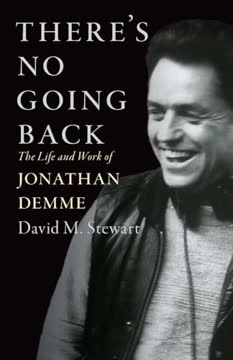
Key Takeaways
1. Early Passions Forged a Unique Vision
"Once you start seeing movies for free, there is no going back."
Childhood fascinations. Jonathan Demme's early life on Long Island and in Florida was a crucible of diverse influences, igniting passions that would define his career. From a young age, he was captivated by cinema, finding refuge and inspiration in the darkened theaters of Long Island and Miami. This early immersion in film, coupled with his mother's artistic encouragement, laid the groundwork for a lifelong dedication to storytelling.
Social awakening. His move to segregated Florida in 1959 proved pivotal, exposing him to vibrant Black communities in Overtown and Coconut Grove. This experience, alongside his father's public relations career and his grandmother's wartime efforts, fostered a deep sense of social awareness and a burgeoning feminist perspective. These formative years instilled in him a profound empathy for the marginalized and a commitment to using his art to reflect diverse human experiences.
Mentorship and direction. Key encounters further shaped his path. A meeting with film mogul Joseph E. Levine led to a publicity job, while chauffeuring French New Wave pioneer François Truffaut sparked a nascent interest in directing. Truffaut's prescient words, "Yes, you are," when Demme denied directorial ambitions, foreshadowed a career marked by an innate ability to connect with stories and bring them to life on screen.
2. Corman's School of Hard Knocks: The Foundation of Independence
"He (Corman) gives you a chance to make a movie, and if he doesn’t pay you much money, terrific. Who else was going to give you the chance to make the movie? And what are you worth anyway, at that stage of the game?"
Learning the ropes. Jonathan Demme's entry into filmmaking was through the legendary low-budget producer Roger Corman, a period he often referred to as his "film school." Corman's New World Pictures was a proving ground for aspiring directors, where creativity was paramount and financial constraints demanded ingenuity. Demme embraced this ethos, learning to maximize every penny and shoot at a breakneck pace, skills that would serve him throughout his career.
Audience-first approach. Corman instilled a pragmatic, audience-centric philosophy in Demme: "You work backwards from your audience. Don’t do a project that does not reflect the taste or the desire of the audience." This commercial sensibility, combined with Demme's independent spirit, allowed him to craft genre films like Angels Hard as They Come and Caged Heat that were both entertaining and subtly subversive. He learned to deliver on genre expectations while injecting his own social commentary.
Creative freedom. Despite the tight budgets and quick turnarounds, Corman offered unparalleled creative freedom. Demme's directorial debut, Caged Heat, a women-in-prison film, showcased his early feminist leanings and distinctive visual style, including his preference for long takes and a collaborative approach with his crew. This period solidified his comfort behind the camera, fostering a "relaxed family atmosphere" on set that would become his trademark.
3. Navigating Hollywood's Treacherous Waters: The Fight for Control
"Swing Shift, in its original form, wasn’t a great picture, but it was a good picture—a good, solid picture with a feminist theme that revealed the fact that women on the homefront in World War II saved the day. It had no possibility of being a romantic comedy about Goldie and Kurt."
The Swing Shift ordeal. Demme's experience with the major studio system, particularly on Swing Shift, became a defining battle for creative control. What began as a promising opportunity to tell a feminist story about women during WWII, inspired by his grandmother's experiences, devolved into a painful struggle with star Goldie Hawn and Warner Bros. over the film's tone and narrative focus. Demme's vision of a nuanced social commentary was ultimately reshaped into a conventional romantic comedy.
Loss of autonomy. The studio's interference, including extensive reshoots and the removal of his original score and key scenes, left Demme feeling stripped of his directorial authority. He famously described his role during this period as merely calling "Action!" and "Cut!" and asking, "Goldie, was that okay for you?" This profound loss of control, coupled with the film's critical and commercial failure, pushed him to a breaking point, leading him to question his place in Hollywood.
Resilience and resurgence. Despite the setback, Demme's resilience shone through. The critical acclaim for his concert film Stop Making Sense, released shortly after Swing Shift, reaffirmed his unique talent and independent spirit. This period taught him the vital importance of working on his own terms, leading him to seek out studios like Orion Pictures that offered greater creative autonomy, a lesson he would carry forward into his most successful projects.
4. A Champion of the Marginalized: Cinema as Social Commentary
"I didn’t have some better vision—some deeper, more complicated version—of this movie that we turned away from. We set out to make a movie dealing with AIDS discrimination, and there it is. And I’ve got to tell you: When I sit in a theater, and Denzel says, ‘Let’s talk about it, our fear, our hatred, our loathing of homosexuals,’ I’m like ‘What? An American movie saying that? Holy shit! I love that.’”
Feminist narratives. From his early Corman films to his Oscar-winning work, Demme consistently centered women protagonists, exploring their strength, vulnerability, and resilience. He saw films like The Silence of the Lambs as inherently feminist, focusing on Clarice Starling's journey through a male-dominated world. His commitment to portraying complex female characters was a hallmark of his storytelling.
Addressing social injustice. Demme used his platform to tackle pressing social issues, often giving voice to the marginalized. His deep engagement with civil rights and LGBTQ+ issues culminated in Philadelphia, a groundbreaking mainstream film addressing AIDS discrimination and homophobia. Despite controversy and criticism, Demme was unapologetic about his intent to reach a wide audience with a message of empathy and understanding.
Activism beyond film. His social consciousness extended beyond the screen. Demme was a vocal activist, participating in protests against apartheid, advocating for Haitian refugees, and challenging government policies. He saw his documentaries, such as Cousin Bobby and I'm Carolyn Parker, as extensions of his activism, profiling individuals who fought for justice and community, embodying his belief that "you cannot kill the truth."
5. The Rhythmic Heartbeat: Music as a Narrative Force
"Jonathan had his finger on the musical pulse. The music was so important to him, especially work that had a niche and wasn’t popularized already."
Integral to storytelling. Music was not merely a backdrop in Demme's films; it was a vital, pulsating character. His deep love for diverse genres, from punk and new wave to reggae and folk, infused his narratives with unique energy and emotional depth. He meticulously curated soundtracks, often featuring lesser-known artists, to enhance the mood and themes of his stories.
Concert film mastery. Demme revolutionized the concert film genre with Stop Making Sense, a minimalist yet electrifying portrayal of the Talking Heads. His approach focused solely on the performance, treating each musician as a character and capturing the raw energy of live music without external distractions. This philosophy extended to his collaborations with Neil Young, resulting in intimate and powerful musical portraits.
Sonic landscapes. Whether it was the twangy harmonica in Caged Heat, the eclectic pop and country samples in Melvin and Howard, or the soulful reggae of Sister Carol East in Something Wild and Married to the Mob, Demme's films were rich sonic tapestries. He understood how music could evoke emotion, drive plot, and create a communal experience for the audience, making it an indispensable part of his cinematic vision.
6. The Power of Collaboration: Building a Cinematic Family
"Jonathan held that glue to make everyone on the set feel like family."
Nurturing environment. Demme was renowned for fostering a uniquely collaborative and inclusive atmosphere on his film sets. He treated his cast and crew as an extended family, encouraging improvisation and valuing every individual's contribution. This approach created a loyal network of collaborators, from cinematographers like Tak Fujimoto and Declan Quinn to producers like Gary Goetzman and Kenneth Utt, who returned to work with him repeatedly.
Empowering artists. He actively sought input from his team, often asking, "How would you do this? How do we shoot this?" This openness extended to actors, whom he encouraged to delve deeply into their characters and even improvise dialogue. His ability to empower artists, whether it was Michelle Pfeiffer developing a Long Island accent or Jim Roche delivering an unscripted philosophical line in Something Wild, brought authenticity and unexpected magic to his films.
Lifelong connections. Demme's sets were often filled with friends, family, and musicians, blurring the lines between professional and personal life. His mother, Dodie, appeared in Philadelphia, his children worked on his documentaries, and artists like Sister Carol East and Robyn Hitchcock became recurring collaborators and close friends. This "cinematic family" was a testament to his warm, generous spirit and his belief in the collective power of creative endeavor.
7. Haiti's Enduring Influence: A Lifelong Commitment to Humanity
"I’m not saying that I’m a good person, but it made me so better a person; I learned so much about America from going to Haiti."
A profound connection. Demme's first visit to Haiti in 1987, a year before its first democratic election, marked a profound turning point in his life and work. He was deeply moved by the "instant generosity" and "passion" of the Haitian people, particularly their fervent desire for democracy in the wake of the Duvalier regime. This experience ignited a lifelong commitment to the country, its culture, and its struggles.
Documenting a nation's spirit. His documentary Haiti: Dreams of Democracy captured the inspiring spirit of the anti-Duvalier movement, showcasing the resilience and hope of ordinary Haitians. This film, co-shot with Sandy McLeod and Jo Menell, was a powerful testament to the human spirit in the face of political turmoil. His subsequent work, including The Agronomist, continued to highlight Haiti's rich history and ongoing challenges.
Activism and advocacy. Demme's connection to Haiti extended to active advocacy. He protested the detainment of HIV-positive Haitians at Guantanamo Bay, leading to his arrest alongside Rev. Jesse Jackson. He also championed Haitian art, curating exhibitions and publishing books to promote the country's artists. This deep, personal bond with Haiti underscored his belief in using his art and influence to fight for justice and human dignity on a global scale.
8. From Personal Struggles to Profound Art: The Director's Evolution
"Petit à petit, l’oiseau fait son nid ('little by little, the bird makes its nest')."
Resilience in crisis. Demme's career was a testament to his ability to navigate both professional setbacks and personal challenges with unwavering determination. From the commercial failure of The Truth about Charlie to his battle with esophageal cancer, he consistently found ways to rebound and reinvent his creative path. This proverb, heard in Haiti, became his guiding philosophy during times of crisis, emphasizing patience and persistent effort.
Embracing new frontiers. Despite his success in mainstream cinema, Demme continually sought out projects that aligned with his independent spirit. He embraced digital filmmaking, seeing it as a tool for accessible storytelling, and found renewed purpose in documentaries that celebrated individuals he admired, such as Neil Young and Jimmy Carter. His volunteer work at the Jacob Burns Film Center further fueled his passion for nurturing new talent and fostering a love for cinema.
A lasting legacy. In his final years, even as his health declined, Demme remained committed to his craft and his values. He directed episodes of socially conscious television, filmed a TED Talk in Sing Sing Penitentiary, and supported his son Brooklyn's documentary work on indigenous rights. His life and films, marked by ceaseless optimism, empathy, and a profound love for humanity, left an indelible mark on cinema and inspired countless others to use their voices for meaningful change.








































