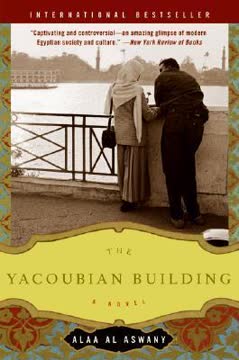
Plot Summary
1. Building Dreams, Broken Lives
The Yacoubian Building, once a symbol of cosmopolitan elegance in central Cairo, gradually becomes a reflection of Egypt's fractured society. Here, wealthy businessmen share corridors with impoverished rooftop dwellers, their lives and ambitions interweaving often in conflict. Built in a European style with marble and ornate balconies, its original aristocratic tenants were displaced after the 1952 Revolution, replaced by nouveau riche, military, and the struggling poor. Over the decades, the building's spaces splinter into separate worlds—swanky apartments below, makeshift rooftop shacks above. These spaces host a tapestry of characters, each emblematic of Egypt's stratified present: Zaki Bey, a relic of a vanishing order; young Taha, son of the doorkeeper, dreaming of social mobility; and Busayna, working tirelessly to support her family, confronting moral compromise. The building's transformation from jewel to decaying relic mirrors the decline, hopes, and corruption pervading Egypt itself.
2. Zaki Bey's Lost Era
Zaki Bey el Dessouki is a charming, aging bachelor with a mind sharp from French education and an appetite for pleasure. The youngest son of a once-powerful minister, his fortunes shrank after the revolution stripped his family of status and wealth. Zaki's world now is routine: flitting between office and cafes, trading in jokes, nostalgia, and half-remembered affairs. His failures stem as much from Egypt's upheaval as from his own distractions and love of women. The Yacoubian Building is his escape—a fading stage where he plays the dandy among the city's changing cast. Yet, what once brought him admiration now draws pity or ridicule. His encounters—with women who both delight and rob him, and with his embittered sister Dawlat who eventually throws him out—expose both his vulnerability and the relentless erosion of an old order. Zaki's life is both comic and tragic, embodying the evaporation of Egypt's golden past.
3. Aspirations on the Rooftop
Above the marble staircases, the rooftop shacks teem with struggle. Taha el Shazli, the son of the building's doorkeeper, is bright, respectful, and devout—hoping education will lift him above his station. His soulmate, Busayna, is practical but battered by family need; after her father's death, she becomes the provider, navigating Cairo's predatory workplaces. Their love is an anchor, but also exposed to the harsh winds of fate and class barriers. Taha's nights are filled with prayer and dreams of police college, imagining a dignified life far from the scorn reserved for those "of the roof." Around them, neighbors' lives are shaped by the same cramped space, where every modest victory is hard-won, and dignity is constantly under assault. This rough community, though divided by gossip and rivalry, shares a common longing for respect, prosperity, and a future that seems always just out of reach.
4. Taha's Bitter Rejection
After grueling effort and top school results, Taha faces his final hurdle: the interview at the Police Academy. Here, his poverty and heritage—the son of a doorkeeper—become insurmountable obstacles. Despite answering perfectly, he is dismissed not for lack of ability, but for origins. The general's contempt is a cold reminder that Egypt's doors remain closed to those from the "wrong" background. Taha's sense of humiliation and injustice grows acute, his dreams and faith in fairness shattered. Attempts to seek redress fail against the wall of bureaucracy and indifference. Even as his mother and Busayna try to comfort him with talk of future opportunities abroad, he is consumed by rage, disappointment, and alienation. The ideal he once held for himself is now a source of shame and simmering rebellion. The state's hypocrisy—proclaiming opportunity but rewarding inheritance—becomes only more glaring.
5. Women, Desire, and Survival
The fate of women in the building reflects wider societal constraints. Busayna, forced into adulthood and work by her father's death, discovers men's attention invariably comes at the price of dignity. She becomes practiced in fending off (and eventually accepting) the compromises most working-class women must make—small transactions of her body or affections in exchange for much-needed money. Her mother, turning to housework, expresses anger and resignation, signalling the exhaustion of those who rely on others' charity. Meanwhile, women like Souad Gaber, who marry for stability, must navigate unequal arrangements, always conscious that their affections are assets to be traded, not celebrated. The love between Busayna and Taha is constantly tested by practical necessity, suspicion, and the mounting cynicism that says love is a youthful illusion, expendable before hunger and cold. The city's double standards—the sexual freedom of the rich; the peril of the poor—starkly mark every transaction.
6. Power in High Places
Among the powerful, the building hosts figures like Hagg Azzam, self-made tycoon, and Kamal el Fouli, the nation's kingmaker in parliament. Azzam, once a shoeshine boy, climbed to enormous wealth—and, now, political ambition. His pious exterior and charitable acts are as much strategic as spiritual. He courts party bosses and holy men, paying bribes to gain favors: a million pounds for a parliamentary seat, never trusting that merit is enough. Kamal el Fouli dispenses offices and fixes elections, wielding dossiers of dirt and the threats that keep rivals compliant. For such men, the public language is religion, patriotism, and service; the reality is transaction, leverage, and self-preservation. Even charity—meat slaughters, support for mosques—is both display and defense. Their world is a network where loyalty, not law, governs outcome, and the only certainty is the deal behind the deal.
7. Loves Found, Loves Lost
Love and desire, whether hopeful or illicit, are never far from violence and betrayal. Zaki Bey's romantic pursuits, in bars and offices, lead as often to theft as to pleasure. Busayna longs for tenderness but is marked by suspicion; what begins as necessary compromise becomes disillusionment, bitterness—and, finally, the temptation of betrayal. Hatim Rasheed, the building's sophisticated, closeted editor, seeks love and acceptance with younger men—yet his relationships, shaped by secrecy and class, end painfully. His affair with Abd Rabbuh, a conscript from the countryside, promises stability but succumbs to shame, loss, and deadly violence. For male or female, rich or poor, loving means risking dignity—sometimes even life. Temporary reprieves, in bed or brief companionship, cannot undo the pervasive sense that vulnerability is a liability, and every love story in the Yacoubian Building teeters toward loss.
8. The Price of Ambition
For those who strive upward—like Malak, the shrewd tailor, or Abaskharon, the loyal servant—ambition is an exercise in calculation. The price of progress may be fraud, betrayal, or brute force. Malak bribes and schemes to secure a room on the roof, using every trick and lie. Busayna faces a wrenching decision when offered money to help forge a contract to steal Zaki Bey's apartment, torn between guilt and her own family's needs. Hagg Azzam, in seeking more power, is forced to share his fortune with political mafias or break personal agreements to protect himself. Even marriage and love become commodities to be weighed, employed, and, when necessary, discarded. The system, built on patronage and exclusion, ensures that innocence is punished, while those willing to pay the toll—money, pride, relationships—may be tolerated, but never truly secure.
9. Busayna's Moral Wounds
Once the agent of her own survival, Busayna is forced to confront the cost: in betraying Zaki Bey, she confronts the harm she will inflict on the one person who has treated her gently. The task set for her—tricking Zaki into signing a fraudulent contract—brings her to a precipice. Instead, caring for Zaki through illness awakens real affection and remorse. Freed from the cycle of transactional exchange, she discovers a deeper emotional connection—one that offers healing for both, beyond physical need or financial rescue. Her decision to abandon the betrayal is an act of self-restoration—a rare moment when the cost of survival is rejected for the sake of dignity and genuine love. For once, a relation bound in utility blossoms into renewal for both parties, breaking the pattern of loss.
10. Corruption's Gentle Hand
Every opportunity in the Yacoubian Building is mediated by corruption: contracts secured through bribes, elections decided by checkbook, justice dispensed by influence. Officials are both gatekeepers and predators, extracting their share at every step. The supposedly sacred—religion, the law, the family—become tools of leverage. Sheikh el Samman rules on piety not by faith but transaction, and is easily enlisted to persuade or justify. Businessmen hedge their bets with strategic gifts and social contracts, ever aware that the favor of the "Big Man" is both shield and sword. Corruption does not live in shadow, but is the open language of the elite—a necessary grammar to ensure not success, but survival. For the powerless, it is a closed loop; for the powerful, it is a tax on ambition.
11. Souad's Calculated Longing
Souad Gaber, chosen by Hagg Azzam as his secret second wife, embodies the calculus of vulnerability among women. For her, marriage is not the promise of romance but arrangement: affection exchanged for safety, child left behind for the chance at stability. Her longing—for her son, for lost intimacy with her first, passionate husband—filtrates every gesture. When she becomes pregnant, her resistance to abortion is part religious conviction, part pursuit of dignity: a chance to claim stature and permanence in a relationship designed to keep her marginal. Souad's story is that of many—caught between dependency and self-assertion, embracing cunning, resilience, and, ultimately, confrontation as the only routes to survive an unequal bargain.
12. Extremism's Quiet Seduction
Denied justice, Taha finds community among Islamist students, swept up by the fervor and certainty offered by the Gamaa Islamiya. Disillusioned with state power, he is seduced by the promise of brotherhood, moral clarity, and meaningful action. The mosque is a shelter; the rhetoric of struggle, an intoxicant for those exhausted by hypocrisy and exclusion. Under the influence of the charismatic Sheikh Shakir, Taha's pain and humiliation are channeled into anger against the state—his personal wound made ideological mission. The process is gradual, wrapping prayer, intellectual study, and, ultimately, paramilitary training in a sense of higher purpose. Yet, as hope is replaced by grievance, and love is sacrificed for vengeance, the spiral toward violence gathers pace, pulling others in its wake.
13. Scandal and Decay
Hidden transgressions never stay secret. Zaki Bey's relationship with Busayna, once a renewal, is weaponized by Dawlat during a bitter fight over property, resulting in police humiliation and exposure. In this moment, the edifice of respectability cracks: old rivalries are animated into official sanction, and the law is employed for personal vendetta. Public shame replaces private indignity, and both Zaki and Busayna are left battered by a system that uses morality to mask underlying power struggles. Elsewhere, Hatim's private life, kept carefully separated from his public role, reaches its violent end—another secret, another life destroyed by the collision of desire with social repression. The building's apartments become not refuges, but sites of surveillance, blackmail, and naked ambition.
14. Vengeance and Revival
All the roads Taha once aspired to—education, love, civil service—are now closed. Scarred by state-sanctioned sexual violence and torture, fueled by a thirst for revenge and belonging, he becomes a soldier in the clandestine war waged by the Islamist underground. The transformation—from aggrieved citizen to militant—is the logical extension of a world with no recourse or redress. The operation he participates in, targeting the officer responsible for his torture, is both personal and political: the lines between justice and revenge, law and terror, blur. In its aftermath, Taha's fate is sealed—not as a martyr or hero, but as a casualty in an endless cycle of oppression and resistance.
15. The Price of Escape
For some, escape offers the promise of reinvention or healing. After the loss of her child, Abd Rabbuh's wife pushes for a break from the past. For Zaki and Busayna, dreams of emigration stand as beacons, but the corrosive pull of home, history, and obligation remains strong. Attempts to run—abroad, into love, or sect—are equally constrained by systems too pervasive to avoid. Even those who seem to ascend, like Azzam, find freedom illusory. The world beyond the building is only a new arrangement of the same obstacles, and the debts of the past must always be settled, whether in money, shame, or blood.
16. Exile, Betrayal, and Return
Hatim's attempt to reclaim lost love with Abd Rabbuh ends in brutality. Their final night together, meant as closure, reverts to power, shame, and fatal conflict. The haunting repetition of betrayal—within families, lovers, and communities—underscores the impossibility of permanent escape. Those who remain must accept the price of compromise; those who leave seldom find peace. In the end, cycles of loss and violence reassert themselves, and the possibility of clean breaks or fresh starts is revealed as an ever-receding mirage.
17. Renewal from Ruin
Amid the wreckage—scandal, grief, broken dreams—new beginnings flicker. Zaki, stripped of family, fortune, and status, finds salvation in Busayna's loyalty and care. Their marriage, at once late and imperfect, is the closing of wounds old and new; it is a partnership born of shared survival, forgiveness, and the stubborn refusal to live only for the past. The rooftop people, once hostile or indifferent, gather to celebrate—not just a union, but the enduring human need for community and recognition. In the face of structural decay and endless disappointment, these moments of solidarity suggest the stubborn hope that, however briefly, life and love can be rebuilt.
18. Endings and Beginnings
The stories that began in the Yacoubian Building end not with neat resolutions, but with changed people: dreams deferred, alliances shifted, and wounds both healing and open. Some die or disappear; others build new homes from the wreckage of old relationships. The building remains, mosaic-like, both constant and unsteady—an emblem of Cairo, Egypt, and, by extension, the world's struggle for dignity amid decay. Its rusting gates and splintered doors frame the next generation's ambitions and sorrows, carrying forward the ancient promise that in every ending waits another beginning.
Analysis
The Yacoubian Building is, at heart, the anatomy of a society in crisis, wrapped in the skin of a lively, character-driven drama. Through the microcosm of a single, once-grand apartment block, Alaa Al Aswany dissects the mechanisms of privilege, exclusion, hypocrisy, and resistance that mark modern Egypt. Each character's journey—from frustrated meritocrat to predatory politician, from shamed lover to scarred radical—embodies the particular ways in which personal dreams collide with societal structures and betrayals. The novel's greatest achievement lies in rendering systemic corruption not as an abstraction but as lived experience: the state's failure, economic decline, and moral compromise are made visible in the details of daily survival, intimate relationships, and vanished possibility. Al Aswany suggests that where hope is thwarted by authority and tradition, violence and cynicism become natural recourses—but also that love, loyalty, and small acts of courage persist. Ultimately, The Yacoubian Building warns that communities crumble not just from outside pressures, but from the corrosive effects of injustice tolerated within, yet hints that, even from ruin, new beginnings are possible when empathy overrides transaction. The novel stands as both witness and plea for a more just, inclusive, and honest Egyptian society—a cautionary tale as much as a chronicle.
Review Summary
Reviews of The Yacoubian Building are largely positive, averaging 3.72/5. Many praise its bold, realistic portrayal of Egyptian society under Mubarak, highlighting corruption, class inequality, religious extremism, and marginalized communities. Readers admire the vivid, multi-layered characters and straightforward writing style. Some compare it favorably to Naguib Mahfouz's work. Critics, however, take issue with excessive sexual content, one-dimensional female characters, and an overly bleak worldview. Several Arabic-language reviewers debate its literary merit versus perceived vulgarity, while international readers value it as an authentic cultural window into Cairo.
Characters
Zaki Bey el Dessouki
Zaki Bey is the last scion of a once-powerful Egyptian elite, an aging playboy marooned in post-revolutionary Cairo. Cultured, witty, and lightly decadent, he once navigated a cosmopolitan world of salons, lovers, and privilege, but now finds himself reduced—his fortune wasted, his ambitions languishing. Despite his failings, he remains warm-hearted and loyal, with a deep appreciation for beauty in women and life. His relationship with his sister Dawlat, full of bitterness and rivalry, culminates in betrayal and homelessness. Yet, through hardship, Zaki's character evolves from feckless to reflective, learning to accept vulnerability and, ultimately, love from Busayna. Their improbable union is both an act of mutual rescue and a rare reclamation of tenderness in a world dominated by loss. Zaki is emblematic of a vanished Egypt—irrecoverable, but not without hope for redemption.
Busayna el Sayed
Busayna, eldest daughter of a rooftop family, grows up fast after her father's death. Practical, attractive, and burdened, she navigates a world that punishes her for poverty—and tempts her into moral compromise simply to provide for her family. Through a string of exhausting jobs and sexual harassments, she learns to trade her charm for survival, losing some innocence and gaining hard-won cynicism. Torn between loyalty to her childhood sweetheart Taha and the urgent needs of kin, she is repeatedly tested—by betrayal, by guilt at her involvement in a plot against Zaki Bey, and, eventually, by genuine affection for the only man to treat her with kindness. Her arc moves from victimhood through bitterness to self-forgiveness and maturity. Busayna embodies how adversity shapes character: not without scars, but not without agency either.
Taha el Shazli
Taha is the quintessential outsider—brilliant, pious, and hopeful—who believes in meritocracy, only to have his dreams shattered by entrenched class prejudice. The state's casual cruelty in denying him entry to the Police Academy, based solely on his humble origins, drives him from despair into radicalization. Gama'a Islamiya offers him certainty and camaraderie, yet the spiritual shelter soon yields to bitterness as he endures torture, sexual violence, and betrayal by the very society he wished to join. Rescued briefly by marriage and faith, his sense of grievance and need for justice propel him to violence and martyrdom. Taha's tragedy is that of Egypt's wasted promise—talented youth sacrificed on the altar of hierarchy, hypocrisy, and systemic humiliation.
Hagg Muhammad Azzam
Azzam's dazzling rise from shoeshine boy to millionaire businessman epitomizes the new Egypt of resourceful but ruthless survivors. Pragmatic, outwardly devout, and shrewd, he exploits religious rituals and philanthropy for social climbing and legitimacy. His pursuit of parliamentary power is marked by prodigious bribery, calculated charity, and strategic marriages. Yet, his relationships are transactional—marrying Souad only to discard her when she threatens his reputation. Though he fears and resents the "Big Man" above him, he is caught within the very system he helps perpetuate—always powerful, but never in control. Azzam's trajectory reflects both the possibilities and perils of aggressive ambition in a society where corruption is the only open avenue to success.
Dawlat el Dessouki
Zaki's older sister, Dawlat, is formidable, resentful, and deeply possessive of family legacy. Her life has been shaped by exile, disappointed marriages, and the gradual erosion of status. She responds by clinging ferociously to the remnants of property and respect, projecting her bitterness onto Zaki and, ultimately, orchestrating his public humiliation. Dawlat's rage is less about morality than about thwarted inheritance and autonomy. Yet, beneath the harshness lies loneliness and despair—the same emotional poverty that afflicts many in the building. Her battle for control, masked as respectability, brings only further alienation.
Hatim Rasheed
Hatim is the tragic embodiment of refined alienation—a French-educated, cosmopolitan journalist who leads a double life as a closeted homosexual. His quest for intimacy is stymied by class, shame, and rejection—from lovers and society alike. His relationship with Abd Rabbuh, a conscript from the Egyptian hinterland, is fraught with the dynamics of power, dependency, and cultural gulf. Despite professional achievement and taste, Hatim is unable to secure the security or affection he craves, culminating in his murder by Abd Rabbuh after a final, desperate night. Hatim is as much a prisoner of Egypt's repression as he is of his own identity.
Kamal el Fouli
El Fouli is the cunning, amoral power broker at Egypt's political heart. Having climbed the party ladder by shifting allegiances and outmaneuvering rivals, he now controls nominations, elections, and the futures of aspiring politicians. His methods—bribery, blackmail, and relentless gamesmanship—are an open secret. El Fouli's is the system's gentle—but always lethal—glove, and his rule is both organized and merciless. In his hands, the ideals of democracy and justice are emptied, and loyalty becomes the only coin of value.
Souad Gaber
Souad is a working-class woman whose life is governed by the need to secure safety and a future for her son. Her marriage to Azzam is a pragmatic pact more than a love match: her body for his companionship, her compliance for a roof and support. When she asserts her own will—refusing to abort her pregnancy—her autonomy is challenged and ultimately destroyed by those more powerful. Even in defeat, Souad maintains her dignity, refusing to be erased or shamed. Her resilience, in the face of exploitation, is both survival tactic and a subtle act of defiance.
Abaskharon and Malak Khilla
Abaskharon, loyal office servant, and Malak, the resourceful tailor, are siblings bonded by poverty and the need to survive through "side deals." Abaskharon's servility masks a pragmatic intelligence and quiet ambition, as he schemes behind Zaki Bey's back. Malak, always hustling—from securing a shirt shop to orchestrating real estate grabs—is a chameleon, by turns obsequious and foul-mouthed, ever alert to opportunity. Their relationship blends strategy and affection, their acts a commentary on the everyday negotiations required to navigate a society that rewards cunning as much as effort.
Plot Devices
The Yacoubian Building - A Living Metaphor
The Yacoubian Building itself functions as the novel's central metaphor and structuring device, encapsulating Egypt's social, political, and moral contradictions. Its physical layers—luxury apartments, decaying offices, and rooftop shanties—mirror the country's stratification and lost cosmopolitanism. The building's changing demographics track the nation's political shifts: aristocrats replaced by army officers, then by capitalists and the impoverished. As characters move between floors, struggle for space, and collide in love and conflict, the building refracts their interactions into a larger commentary on national decline, failed revolutions, and the resilience of survival instincts.
Multiple Interwoven Narratives
Through interlocking character arcs, Al Aswany explores the intersection of private aspirations and collective trauma. Each major character's journey—from Taha's slide into Islamism, to Zaki Bey's nostalgia, to Busayna's transformations—acts as a separate thread, periodically interweaving with others. Major plot events (scandals, betrayals, deaths) serve both as personal climaxes and as turning points in the building's communal life, illuminating the systemic pressures that move individuals to make tragic or redemptive choices.
Cycles of Betrayal and Redemption
Betrayal—by employers, lovers, family, or the state—recurs as a structuring force, each incident thrusting characters into new kinds of compromise or resistance. This pattern is periodically punctuated by small episodes of empathy, forgiveness, or genuine connection, most notably in the renewal between Zaki and Busayna. These moments, though tenuous, provide emotional anchor points and suggest the possibility (however fragile) of healing.
Foreshadowing and Irony
Al Aswany effectively deploys foreshadowing—early references to ambition, rivalry, or hidden resentments—to set up ensuing disasters or reversals. There is also significant irony: the state that promises justice delivers humiliation; marriages founded for security breed new vulnerabilities; and victories (elections, love, revenge) often yield only further loss. The ending, with its wedding and celebration, is tinged with melancholy—renewal achieved not despite, but through ruin.
Layered Symbolism and Social Critique
The fates of the building's tenants are consistently allegorical—marking the end of an old Egypt, the corruption of new elites, and the cost of marginalizing the majority. The persistent motif of space—who is allowed "in" or banished to the margins—becomes a running metaphor for social inclusion and exclusion. Sex, religious ritual, and violence are all revealed as both literal events and as symbolic undercurrents in a society stretched between repression and release.








































