


Plot Summary
Prologue
In 2008, twenty-two-year-old Desiree Richard1 flies to Paris with Nolan,6 the light-skinned grandfather who raised her and her older sister Danielle5 after their mother's early death. Nolan6 has paid a Swiss organization thousands to end his life with dignity rather than lose another diabetic foot or waste away in diapers.
They spend one strange last day revisiting his wartime haunts and eating forbidden sweets, while he hints he may have fathered a son in France. Danielle,5 a Cleveland doctor, accuses Desiree1 by phone of aiding a possibly demented man's suicide. The next morning, on the Alpine train to Zurich, Nolan's6 heart simply stops before they arrive. All his meticulous planning collapses into an unchosen, ordinary death.
The opening inverts the euthanasia narrative's promise of control: Nolan, who spent a lifetime never wearing out his welcome, tries to author a grand exit and instead dies mid-transit, denied even his chosen ending. Flournoy establishes her governing preoccupations here, the gap between intention and outcome, the labor of caretaking that women inherit, and death as something bureaucratic and undignified rather than transcendent. Desiree's compliance, her willingness to sit beside dying, foreshadows a life organized around others' needs. The sisterly phone call plants the estrangement that will haunt the novel. Grief, complicity, and the impossibility of a clean goodbye become the emotional grammar of everything that follows.
The Last Trip Together
The journey that opens the book is also Desiree's1 initiation into how loss actually behaves. Having quit culinary school to inject Nolan's6 insulin and pack his meals, she has become his reluctant nurse, resentful and devoted at once. In Paris he plays at being a man with plans, ordering steak and wine his body cannot handle, mourning the public dates he was too afraid to take as a Black soldier decades earlier.
When he dangles the possibility of a lost French child, Desiree1 recognizes his need to make his death grander than his life. Her call to Danielle5 detonates old wounds: accusations of dementia, aiding and abetting, a sister who will not say goodbye. Then the failure of the whole enterprise on the train.
This section dramatizes the asymmetry of family duty. Desiree, the 'compliant' sister, absorbs the moral risk of Nolan's death while Danielle, the achiever, judges from a safe distance. Flournoy interrogates dignity itself: Nolan equates it with control over his body, yet his death is precisely the loss of that control. The Parisian detour reveals how racism narrowed even his private joys, so that dying extravagantly becomes a belated reach for the freedom he denied himself. Desiree's guilt, her sense that she was 'eager' to help, will metastasize. The prologue's aftermath establishes her as the novel's still center, defined by service, silence, and unspoken longing for her sister.
The Letter She Can't Send
In 2018 Harlem, January Wells,2 a graphic designer barely sustaining her business, drafts a letter to Morris,7 the man she left after more than a decade together. She is secretly pregnant and has decided she wants him to surrender any claim to the child, unable to bear being tethered to him for eighteen more years.
Morning sickness ambushes her in a colonial-kitsch coffee shop, where she snaps at a laptop stranger; a video call to Desiree,1 vacationing in Martinique, dissolves into tears when Desiree1 gently urges her to wait a few days. Wandering home through a half-hearted anniversary march, January2 finds Harriet Tubman's statue crowned with a pink protest hat, an absurdity so complete it makes her laugh instead of rage.
January embodies the novel's study of ambition curdled into paralysis. Her performative online life, tweets composed and deleted, likes stoked like small fires, mirrors an inner hollowness she cannot name. The pregnancy crystallizes a larger dread she calls the Worst, part political, part personal, part chemical. Wanting Morris legally erased is less about him than about reclaiming authorship of a life she feels she is merely squatting inside. The Tubman statue in a pussy hat becomes a bleak emblem of coalition politics that never quite included women like her. Flournoy renders depression not as sadness but as futility, the insurmountable weight of a single unstarted task.
Broke With a Backstop
After Nolan6 dies, Desiree1 discovers he secretly owned several rundown rental properties plus life insurance. She sells everything but the Leimert Park house, drinks her way out of a waiting job, and drifts through nearly a million dollars of someone else's fortune, which a financial planner warns is not real wealth.
Haunted by a city whose ghosts refuse to appear to her, she follows her oldest friend Nakia3 to New York in 2012 and throws herself a bottle-service party to mark her return to visibility. She had met January2 years before at an Inglewood barbecue, drawn to a fellow sad girl. Three friends now feel like an abundance, almost enough to fill the hole her estranged sister5 left behind.
Inheritance here is curse rather than gift: money that arrives with grief attached, guilt disguised as fortune. Desiree's self-destruction, then her flight east, expresses a refusal to build the striving life others expect. Her longing for ghosts, for any sign from her dead, underscores a spiritual absence at her core: she never feels presence, only lack. Friendship becomes her chosen family, deliberately cultivated to replace blood. Flournoy examines how Black women manufacture belonging when biological ties fail or vanish. The party, a purchase of temporary significance, reveals Desiree's ache to be seen in a world that literally overlooks her, even offering away her airplane seat without asking.
The Familiar Stranger
At Desiree's1 party, Morris7 brings two friends, Chika10 and Dale. The night sours when Dale gropes Nakia3 between her breasts, confirming her alienation from the aggressively straight club scene and her growing wish to move home to LA. Chika,10 a doctor just finished with an Ohio residency, keeps insisting Desiree1 looks familiar.
Scrolling his Facebook in the taxi uptown, Desiree1 finds a 2008 photo from a medical mission to Haiti: Chika10 standing among the residents alongside Danielle.5 The man who flirted with her all night once worked beside, perhaps loved, her estranged sister.5 Rather than recoil, Desiree1 sends him a friend request and, receiving his address, slips quietly out of her apartment to meet him in the dark.
Coincidence in Flournoy is never neutral; it is the machinery of buried longing. Discovering Chika's link to Danielle should repel Desiree but instead magnetizes her, because he offers proximity to the sister she cannot reach. Nakia's assault and her confession of not belonging run parallel, showing how each woman is quietly deciding whether these friendships can hold her. The scene braids desire, revenge, and grief into a single impulse. Desiree's decision to pursue rather than avoid signals her characteristic passivity flipping into a rare, secretive agency, an appetite for something that can only wound her, chosen precisely because she chose it.
The Miss April Houses
Recruited onto a committee at an unnamed Southern university, Monique LaMorne4 watches administrators debate how to restore two former slave cabins without ever uttering the word slave.
A shadowy donor committee dictates every euphemism, approving placards about preserved dialect and a beloved cook named Miss April while forbidding mention of the transatlantic trade. A colleague, Nnamdi, fights to name the truth and loses vote after vote; a hidden gris-gris box is quietly removed from display.
Monique4 abstains from the plaque, skips the sit-in, and ends up shunned by both administrators and activists. Years later she posts the story as a confession that becomes her viral Tru Talk, launching the online following that will reshape and destabilize her sense of self.
This documentary interlude widens the novel's lens from private grief to institutional memory. The committee is a machine for making 'logical the illogical,' laundering atrocity into heritage tourism. Monique's abstention captures the ambivalence of the credentialed Black professional, complicit yet resistant, punished by all sides for occupying the middle. Her later monetization of the episode raises the book's sharpest question about virtue in the attention economy: when does bearing witness become branding? Flournoy refuses to absolve her. The euphemisms (inhabitants, workers, houses) enact linguistic violence, showing how naming and unnaming determine whose suffering counts, a theme that will echo grimly in the novel's final tragedy.
The Cook She Couldn't Keep
In 2015 Los Angeles, Nakia Washington,3 proprietress of Safe House Cafe and descendant of a self-emancipated ancestor, loses her steady chef Miguel15 when his brother is nearly beaten to death in Chiapas. Forced onto the line herself, she falls for Reina,9 a fierce, undocumented Guatemalan cook who crossed on a high-school Rose Parade trip and never went back.
She promotes her, sleeps with her in walk-in fridges and her Jeep, visits the converted garage where Reina9 lives on almost nothing. When Miguel15 unexpectedly returns, Nakia3 restores his role, effectively demoting Reina.9 Reina9 accuses her of toying with people while preaching that she wants to help them, of not being a good person, and walks off toward her bus as sirens scream past.
Nakia's romance becomes a parable of class blindness among the well-meaning. Her progressive self-image cannot survive contact with Reina's precarity, the garage without a bathroom, the wages sent home, the deportability Nakia preferred not to know about for plausible deniability. Flournoy skewers the boss who wants to be good without relinquishing power. Reina's parting indictment lands because it is true: care without justice is just management. The section also deepens Nakia's lineage motif, freedom won generations ago set against a lover with no path to it. Desire here is inseparable from asymmetry, and the sirens that end the scene rhyme ominously with the state violence gathering at the novel's edges.
Crosstown at Midnight
Through the summer of 2012, Desiree1 sprints across Harlem after midnight for wordless, feral sex with Chika,10 the affair a coded rebellion against Danielle,5 a way to make their estrangement her own deliberate choice. Snooping on his laptop, she confirms he once bought her sister5 a ticket to Cancun, that the two were lovers.
When a returned Erykah Badu T-shirt arrives, a shirt Danielle5 mailed hoping to rekindle things with Chika,10 Desiree1 keeps it, sleeping with it like a lovesick girl. Chika,10 meanwhile, slowly recognizes this woman as Danielle's5 sister, from their identical chins to their talk of family heart attacks. When Desiree1 hums a Smokey Robinson tune, the bubble bursts; he cools, and she leaves his apartment for the last time.
The affair is triangulated desire, Desiree loving through Chika the sister she cannot touch, Chika drawn to Desiree because she echoes the woman he could not please. Flournoy stages intimacy as haunting: both parties know they are proxies. Nolan's word tawdry hovers over the arrangement, cheap because it is a substitute for something real. The T-shirt, an object crossing between three people, becomes the novel's charged relic of betrayal and yearning. Bach's inward-turning music, heard through the wall, mirrors an affair that is 'about nothing but itself.' Desiree's secret is her one act of authorship, but it only deepens her isolation, converting grief into complicity.
Sisters Splitting the Ashes
Six months after Nolan's6 death in 2009, Danielle5 storms the Leimert Park house, barely greeting Desiree1 while retrieving family photos and her graduation cords. She accuses her sister1 of being eager to help their grandfather die, of aiding instead of seeking his care, and announces she wants only enough inheritance to clear her student loans.
She hints that Nolan6 told her secrets he never shared with Desiree.1 As Danielle5 reverses out of the driveway, Desiree1 hands her a gold box holding the last of Nolan's6 ashes. Danielle5 finally breaks, sobbing that he never even liked her, that being loved was not the same as being wanted. She drives off, and the sisters' silence calcifies into a grief as total as any death.
Chronologically earlier than the affair yet placed to detonate its emotional logic, this scene explains what Desiree is running from and toward. Danielle's rigidity, her need for control and process, is armor over the wound of feeling perpetually a burden, unloved by the grandfather who favored her sister. Flournoy renders estrangement as elective loss, a death that both sisters keep choosing. The ashes, passed hand to hand, are all Desiree can offer of a shared past. Danielle's rare, violent weeping reveals the cost of her certainty. The mirror motif recurs: without her sister, Desiree fears she is only a single face reflected, incomplete and unwitnessed.
Dinner Parties and Earthquakes
By 2022 Nakia3 has softened and settled, hosting monthly Group of 7 salons with her cool, wealthy girlfriend Jay,8 debating desalination and homelessness over grilled peaches. Monique4 attends for the first time, dazzling the room, and Jay8 quietly offers to relaunch her Tru Talk fame.
Alone late that night, the two old friends fight: Nakia3 calls the pursuit of influencer status hollow and sad, Monique4 retorts that Nakia3 fetishizes poverty and gatekeeps how others earn a living. Mid-argument an earthquake sends everyone diving under the marble table, and Monique4 freezes on the couch, later admitting that her instinct to stay still, to wait for danger to pass, could have gotten her killed.
The salon satirizes a professional class that mistakes conversation for action, performing conscience over locally sourced peaches. Nakia and Monique's clash externalizes the novel's central tension between authentic service and monetized virtue, though neither holds clean moral ground. Flournoy lets the argument implicate both women, and the reader. The earthquake operates as brutal metaphor: Monique's paralysis anticipates a recurring question about whether stillness is safety or surrender, whether waiting out catastrophe is wisdom or complicity. Nakia's quiet, unposted outreach with Arielle stands as the book's model of goodness precisely because it seeks no audience, a rebuke to the platforms everyone else is climbing.
Rescue From the Warehouses
In 2019, alarmed by January's2 terse texts after her second son Brook is born, Desiree1 flies to the Inland Empire subdivision ringed by fulfillment warehouses where January2 now lives, having married Morris.7 She finds her in a darkened, freezing house, gagging through every feeding, confessing that she loves her children yet does not want to be there.
In the guest bathroom Desiree1 examines a prolapse, an organ pushed outside January's2 body. They flee toward Nakia's,3 stopping to buy two meals for a haunted young homeless man named Van, who murmurs about the word verbatim, about how what you do is who you are. The drive becomes an intervention: January2 admits she feels utterly necessary to her family and forever exiled from it.
Motherhood here is bodily catastrophe and identity erasure, the prolapse a literal image of a woman whose insides can no longer be held together by will. Flournoy insists on the unspoken physical violence of birth and the mental load that men like Morris never perceive. Desiree's arrival, her willingness to kneel on a bathroom floor, defines her as the friend who shows up when family fails. Van, glimpsed at the edges, introduces the unhoused as the novel's moral test and its recurring specter; his riddle about verbatim, about integrity of action, will echo through Danielle's returned note and the book's climactic reckoning with who is treated as human.
The Chef Who Won't Win
In 2024 the four reunite in Chicago for Nakia's3 Best Chef nomination. They take an architecture cruise, roast one another over hotel outfits, and crash a caviar-soaked party bus hosted by a food celebrity named Niles, drifting among preening male chefs and much younger women.
An old industry acquaintance quietly tips Nakia3 that the judges have moved past diversity; she privately concludes she has lost and decides to spare everyone the news so they can keep their hope and their fun. Monique4 offers a rare, genuine apology for trying to do too much. Walking the riverfront at midnight, they carry a barefoot January2 and marvel that their friendship, decades deep, still bends and holds.
This is the novel's warmest movement, a portrait of aging intimacy rendered through ritual teasing, disco singalongs, and the regressions old friends slip into like siblings. Flournoy uses the food-world spectacle to critique how institutions consume Black excellence when it is fashionable and discard it when the moment passes. Nakia's silent acceptance of defeat, her choice to protect the others' joy, distills her generosity and her private loneliness. The scene also quietly measures each woman's compromises with success, ambition, and money. Beneath the laughter runs an elegiac undertow, the sense of borrowed time, of a circle savoring itself before the world exacts its price.
The Father in the Park
In 2027 Danielle,5 now married to Warren and mother of twin girls, finally meets her father Terry Joyner11 in Central Park after decades of silence. Her side of the T-shirt saga surfaces: Chika10 had mailed her Erykah Badu shirt back with her own note copied word for word, a humiliation that revealed he had slept with her little sister.
Terry11 apologizes for staying far away but refuses to regret leaving her mother, insisting he paid child support that Nolan6 hid from them. Disappointed, Danielle5 resolves at last to contact Nakia3 and request Desiree's1 number, ready to try. On the train home she dials, but Jay8 answers, sobbing amid strange voices. Something terrible has happened. Nakia3 is dead.
Danielle's reckoning with her father closes the loop on abandonment, only to reveal that the parent she truly mourns is her mother, and the sister she truly wants is Desiree. Terry's unrepentant honesty denies her the villain she needs; leaving, he claims, kept everyone alive. Flournoy exposes how a hidden fact, the concealed child support, distorted a whole family's story of who loved and provided. The returned note, verbatim, finally lands on the reader with full cruelty. Then the structural gut-punch: reconciliation arrives at the exact instant of irreversible loss, dramatizing the novel's thesis that we reach for one another always a beat too late.
Grief Paralysis
In fractured, lyrical chapters the friends absorb the unthinkable. Desiree,1 who could not believe it was real and arrived a week late for the postponed funeral, cleans out Nakia's3 rotting fridge because no one else can bear to, and visits a Harlem botanica whose psychic only reports that Nakia's3 soul is at peace, which enrages her: she wanted a joke, a scolding, warm hands, not a benediction.
Monique4 learns of the death mid blind-date, seventeen ignored minutes during which Nakia3 still lived for her. Watching her friend flatten into a hashtag stripped of her real self, Monique4 eventually renounces America after a viral confrontation at an ice-cream truck, vowing to raise a child somewhere kinder.
Flournoy fragments form to enact mourning, prose poems, decaying produce catalogued item by item, second-person incantations begging the dead to return. The rotting garden vegetables become a still life of unattended grief, beauty and decomposition entwined. Desiree's fury at the psychic's platitude captures the specific rage of the bereaved who want the person, not consolation. Monique's meditation on Nakia becoming a symbol indicts the machinery that converts a Black woman's death into content, alienating her life from her legend. Her expatriation dramatizes the exhaustion of surviving in a country eager to catch its citizens at their worst, choosing exile over spectacle, softness over the algorithm.
Kettled on the Bridge
The novel finally shows the day itself. During the Bunker Hill Uprisings, sparked by police letting a disabled woman burn in her tent, Nakia3 joins Arielle12 and a volunteer named L. to hand out sandwiches downtown despite a curfew, because people still need to eat. Driverless police tanks herd them and a swelling crowd onto the new Sixth Street Bridge and trap them there.
A National Guard helicopter, ostensibly dousing a fire, dumps thousands of gallons on the soaked, freezing group; the machines fire rubber bullets, one striking Nakia's3 shoulder. When the crowd at last charges the trucks to escape, the narration insists, wishfully, that they all made it, that they prevailed together, even as reality says otherwise.
The climax renders state violence as bureaucratic, faceless, algorithmic, killing without a killer, so that Monique's earlier question, how do you prosecute a machine, becomes literal. Nakia dies enacting the one form of goodness the novel endorses: unglamorous, unposted service. Flournoy fuses climate collapse, mass homelessness, and automated policing into a near-future that feels only steps from now. The bridge, once a site of civic celebration, becomes a killing floor, and the recurring motifs converge: stillness as death, the unhoused as the discarded, the body's fragility against cold. The narrator's insistence that they prevailed is heartbreaking irony, a survivor's refusal to say the unsayable, love guarding the truth it cannot bear.
Epilogue
After the death, severed threads knot back together. In a Washington park two aging sisters with identical hands, Danielle5 and Desiree,1 sit at awkward angles and finally talk, watched by Danielle's5 twin daughters awaiting introduction to their brand-new aunt. In Inglewood, Miguel15 at last renames the restaurant Nakia,3 her portrait crowning the wall opposite the door.
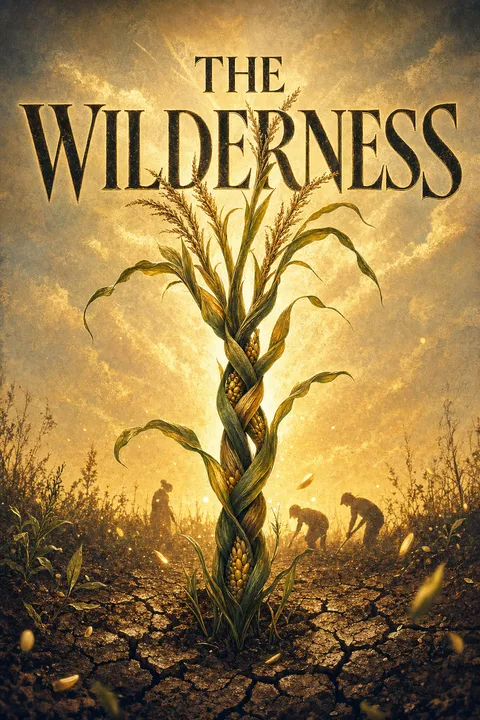
Her garden, abandoned to possums, coyotes, and mourning doves, spills melons and stubborn resurrected corn that returns year after year, biding its time. It waits for Desiree,1 Monique,4 and January2 to come tend it, for January2 and her sons to make a home where night creatures once ruled, so that a plot good only for wild things might again be good for boys.
Flournoy ends not with resolution but with regeneration, the garden as the book's final argument. Death does not restore the sisters, grief does, converting Nakia's absence into the pressure that reopens a decade-closed door. The corn that resurrects itself, remembering it descended from wild grass, becomes an image of Black survival and inheritance, of life persisting through neglect and catastrophe. Renaming the restaurant transforms loss into monument, while the friends' plan to inhabit the garden turns mourning into cultivation. The title's wilderness, once the terror of being unsheltered and alone, is reclaimed as fertile ground. What endures is not the individual but the chosen family, tending what the dead planted.
Analysis
The Wilderness is a novel about the load-bearing architecture of Black women's friendship and the ways American life, past and future, keeps testing its beams. Flournoy braids two decades and multiple lives into a mosaic that argues chosen family can substitute for blood, yet never fully repairs the wounds blood leaves. Desiree's1 estrangement from Danielle,5 the buried figure of their mother,13 and Nolan's6 conditional love form a psychological substrate beneath a friendship that repeatedly asks whether three friends can fill the hole a sister leaves. The answer is tender and unresolved. The book's title names its recurring dread: the wilderness of being unsheltered, orphaned, exposed, whether by a parent's death, a partner's indifference, a body's failure after childbirth, or a state that treats the poor as disposable. Against this exposure Flournoy sets acts of care, the friend who flies across the country, the chef who feeds strangers unposted,3 the grandfather's recipe cards, the garden replanted. Goodness in this novel is defined against its performance; the internet, the salon, the university committee, the awards circuit all convert conscience into brand, and the book reserves its deepest admiration for service that seeks no witness. Its formal daring, nonlinear, polyvocal, punctuated by blog posts and prose poems and a catalogue of rotting produce, enacts grief's refusal of sequence. Most devastating is its structural thesis about timing: reconciliation and revelation arrive one beat too late, again and again, so that love is forever reaching for a hand already withdrawn. In its speculative final act, Flournoy extends contemporary crises to their logical, mechanized conclusion, insisting that the sanitizing of history and the automation of violence are the same erasure. Yet she ends in a garden, where resurrected corn remembers its wild ancestry and waits, faithfully, for the living to return and tend it.
Review Summary
The Wilderness by Angela Flournoy follows four Black women navigating friendship over twenty years, from their twenties into middle age. Reviews are divided: some praise the stunning prose, authentic characters, and genuine portrayal of female friendship, comparing it favorably to shows like Insecure. Others criticize the fragmented structure, numerous timelines, and underdeveloped characters that left them confused. The novel explores themes of class, race, motherhood, and social justice, though some found these elements superficial. A surprising dystopian ending polarized readers. While many appreciated Flournoy's writing craft and character depth, others felt the book lacked cohesion despite beautiful individual moments.
People Also Read









Characters
Desiree
The watchful convenerThe novel's still, observant center. Orphaned young when her mother13 died of a heart attack, raised with her older sister5 by their grandfather Nolan6, Desiree becomes a compliant, self-effacing woman who learned that good behavior earns affection. She drops out of culinary school to nurse her ailing grandfather6 and never quite restarts, drifting through waitressing, inherited money, and a deliberately small life. Wary of ambition and legacy, she wants only her friends, modest pleasure, and eventual quiet disappearance. Beneath her calm lie survivor's guilt and a bottomless ache for her estranged sister5, whom she experiences as a lost limb. She is the friend who shows up: flying across the country, kneeling on bathroom floors, cleaning out kitchens. Intuition, not logic, steers her toward the people who need her.
January
The stuck striverA funny, baby-faced first-generation success from Inglewood who followed her college boyfriend Morris7 to New York and built a graphic-design business. Behind her bubbly surface festers a deepening depression and a dread she calls the Worst. Haunted by the randomness of her escape from South LA and by an insatiable hunger for a bigger, more meaningful life she cannot define, she performs a self she does not recognize around Morris7, feeling both essential to and exiled from her own family. Prone to controversial tweets she deletes minutes later, addicted to the small fires of online approval, she is nonetheless fiercely loyal. She is drawn to sad, wary people because she is secretly one of them, better only at hiding it.
Nakia
The generous proprietressWarm, decisive, and preternaturally sure of what her hands are for, Nakia descends from a striving Newark family of First Blacks and a self-emancipated ancestor named Ann. She rejects that bougie lineage for the sweaty eroticism of kitchen work, becoming owner of Safe House Cafe. She loves feeding her community, mentoring teenagers, and doing quiet outreach among the unhoused without ever performing her goodness online. A queer woman who knew early what she wanted, she distrusts self-righteous virtue-signaling yet privately fears her scrambling adds up to nothing amid so much want. Generous especially with the orphaned Desiree1, she is the group's anchor, the one who can make something real. Her deepest question is simply what she is doing with her life.
Monique
The viral moralistThe youngest-sibling energy of the group, a Brooklyn-raised, Barbadian and South Carolina rooted librarian turned viral essayist and influencer. Righteous, quick to indignation, and often insufferable in familial settings, she chases relevance and financial stability with equal hunger. Her blog and Tru Talk make her a public figure, but the scrutiny corrodes her sense of self, exactly as friends warn. Generous with words, historically stingy with time and care, she is slowly, painfully learning how to actually show up for the people she loves, and how to weigh being useful against being famous.
Danielle
The estranged sisterDesiree's1 older sister, four years her senior, bossy since birth and hardened by finding their mother13 dead when she was a teenager. A disciplined anesthesiologist who distrusts her own mercurial emotions, she loves ritual, process, and church. She experienced their grandfather's6 love as conditional and stingy, always made to feel a burden, and carries a lifelong sense of exposure, of being marched too soon into the wilderness of adulthood. Rigid, unforgiving, quick to hold a grudge yet capable of violent grief, she guards herself behind certainty. Her estrangement from Desiree1 is both weapon and wound, a control she mistakes for freedom, and the loneliness at her core never fully recedes.
Nolan
The grandfather who raised themThe light-skinned, Louisiana-born grandfather who raised Desiree1 and Danielle5 after their mother's13 death. A WWII veteran, former Army clerk, and secret slumlord, he lived by never wearing out his welcome, doting on Desiree1 while withholding warmth from Danielle5. Private and undemonstrative in his prime, he becomes chatty, theatrical, and fixated on controlling his own death in old age, insisting on dignity above all.
Morris
January's steady partnerJanuary's2 longtime partner and eventual husband, a CPA who met her in a college marching band, offering a skinny drummer's unsolicited advice. Controlling in the guise of concern, he fixes her problems then retreats, treats her like a precocious child, and craves the unbroken, stable family of his own upbringing. A devoted father and an oblivious mate, he cannot perceive the self January2 feels she loses beside him.
Jay
Nakia's polished girlfriendNakia's3 later partner, a beautiful, wealthy former tech HR executive turned consultant and Tru Talk board member. Cool, sunny, and uncomplicated, she perceives Nakia3 clearly without judging her, an ease Nakia3 finds unexpectedly restful. She champions green initiatives and social ventures, embodying the sleek, monied activism Nakia3 simultaneously enjoys and mistrusts.
Reina
The undocumented cookA fierce, butch Guatemalan cook, an actual Maya, undocumented since crossing on a high-school Rose Parade trip and never returning. Talented, proud, and self-reliant, she sends her wages home and lives in a converted garage with a single outlet. Her hard-won clarity about power, poverty, and dignity punctures Nakia's3 comfortable assumptions about goodness and help.
Chika
The doctor who links themA Nigerian American doctor, gregarious and physically restless, fresh from an Ohio residency when Desiree1 meets him at a club. Danielle's5 former colleague and lover, he becomes Desiree's1 secret summer fling, unaware at first of the sisterly connection whose discovery will doom whatever fragile thing they had.
Terry Joyner
The absent fatherThe sisters' father, who left their pregnant mother13 and built a new family in North Carolina. Trim, unbothered, and unexpectedly unrepentant in old age, he claims he quietly paid child support Nolan6 hid and that his leaving kept everyone alive.
Arielle
The Skid Row organizerA tall, endlessly kind former college athlete who runs a gym and a Skid Row food outreach. She embodies unperformed goodness, drawing Nakia3 into volunteer work over many years and later leading the fateful downtown distribution.
Sherelle
The daughters' late motherThe sisters' mother, dead of a heart attack at forty-two, discovered by teenage Danielle5. Her early death and her heartbroken choice to give her daughters different surnames shadow the entire family's story.
June
January's Inglewood motherJanuary's2 mother, a doting grandmother who long postponed retirement waiting for a new husband, wary of strangers, quick to lock her car doors, and stingy with charity unless it feels like a fair trade.
Miguel
Nakia's kitchen partnerNakia's3 kind, steady head chef and eventual co-manager, whose family emergency in Chiapas triggers the Reina9 affair. Loyal for nearly a decade, he anchors Safe House and its legacy.
Plot Devices
Fractured chronology
Cross-decade ensemble mosaicThe novel refuses linear time, leaping between 2008 and 2027 and rotating among four friends plus Danielle5, told in third person, first person, and interpolated documents. Each section is dated and titled, forcing the reader to assemble causality across gaps. Consequences often precede their origins: we grieve a death chapters before we witness it, meet a marriage before we see the courtship's fault lines. This architecture mimics memory itself, the way people relive a life not sequentially but by the moments that mattered. It also lets Flournoy withhold and detonate revelations, so that emotional payoffs land through structural surprise rather than plot mechanics, and every reunion feels shadowed by what the reader already knows is coming.
The Erykah Badu T-shirt
Object of buried betrayalA concert merch shirt smelling of coconut oil and summer lawn circulates among three people across years. Danielle5 mails it to her old lover Chika10 hoping to rekindle their bond; instead he returns it to her later with her own note copied word for word, a humiliation that reveals he has since slept with her sister1. Desiree1, mid-affair with Chika10, intercepts and hoards the shirt like a lovesick teenager. The object silently carries the novel's central triangle of desire, revenge, and estrangement, connecting the sisters through the man neither can quite have. Its verbatim returned note also seeds the recurring meditation on identity and integrity that a homeless man named Van later voices aloud.
Blog and Tru Talk texts
Metafictional documentary voiceMonique's4 blog posts and her viral Tru Talk about sanitized slave cabins interrupt the fiction as primary documents. These interludes let the novel speak directly about race, memory, gentrification, grief, and the attention economy, while also characterizing Monique4 through her evolving public voice, from earnest confession to influencer branding. They function as a Greek chorus, articulating themes the intimate scenes only imply. Crucially, they also stage the book's argument about who controls narrative: how institutions euphemize atrocity, and how the internet flattens a real woman's life into a symbol. The documents both critique and enact the commodification of Black testimony that the plot ultimately mourns.
Nolan's greens recipe
Inheritance between womenBefore leaving New York, Desiree1 gives Nakia3 a going-away gift with instructions to keep it secret: four index cards in Nolan's6 cramped blue handwriting, the whole of his recipe collection, including collard greens made with liquid smoke. Years of tinkering later, those greens anchor a beloved sandwich at Safe House. The cards trace how legacy passes not through blood or property but through care and cooking, from a dead grandfather6 to his granddaughter1 to her chosen sister3 to a restaurant feeding a community. Food throughout the book is love, memory, and survival, and the recipe quietly links the opening story of Nolan's6 death to the closing image of a garden meant to nourish.
Driverless police tanks
Machine-administered state violenceIn the near-future 2027 sections, robot police trucks, drones, and Guard helicopters enforce curfews and crush the unhoused without a visible human hand. During the climactic Bunker Hill Uprisings, these faceless machines kettle a crowd onto the Sixth Street Bridge, fire less-lethal rounds, and coordinate a water dump on freezing people. The device literalizes Monique's4 despairing question about how one prosecutes a machine, dramatizing accountability's evaporation when violence is automated and algorithmic. It fuses the novel's anxieties, climate collapse, mass homelessness, and racialized policing, into a single apparatus. The trucks make the tragedy both intimate and systemic, a death with no killer to name, only a country that let it happen.
Download PDF
Download EPUB
.epub digital book format is ideal for reading ebooks on phones, tablets, and e-readers.








































