
Plot Summary
City of Shadows
In 1871, New York is a city of ambition, corruption, and restless energy. The narrator, McIlvaine, is a seasoned city editor at the Telegram, observing the city's pulse and its cast of characters. Among them is Martin Pemberton, a brilliant but tormented freelance writer, haunted by his family's legacy of wealth built on war profiteering and the slave trade. The city is ruled by Boss Tweed's corrupt Ring, and the streets are alive with both progress and poverty. McIlvaine's world is one of bustling newsrooms, political intrigue, and the ever-present tension between the city's glittering surface and its darker undercurrents. The stage is set for a story that will expose the city's soul and the secrets lurking beneath its industrial progress.
The Vanished Freelance
After a disturbing encounter in which Martin claims to have seen his supposedly dead father alive, he vanishes from his boarding house, leaving behind unpaid rent and a room in disarray. McIlvaine, concerned for his best writer, begins to investigate, uncovering Martin's troubled relationship with his father, Augustus Pemberton, a notorious war profiteer and slaver. Martin's disappearance is dismissed by some as melodrama, but McIlvaine senses a deeper mystery. The city's corruption and the Pemberton family's dark history intertwine, hinting at a larger conspiracy. As McIlvaine delves into Martin's past, he encounters a web of secrets, betrayals, and unresolved grief that will draw him—and the reader—into the heart of the city's moral decay.
Ghosts on Broadway
Martin's claim that his father is alive is dismissed as madness by those around him, including his fiancée Emily Tisdale and Reverend Grimshaw. Yet Martin insists he has seen Augustus Pemberton riding a white city stagecoach filled with old men, first in a snowstorm and then in the rain. These ghostly sightings unsettle Martin and those who hear his story, blurring the line between reality and hallucination. The city itself becomes a haunted landscape, where the past refuses to stay buried. McIlvaine, intrigued by the metaphorical and literal implications of Martin's visions, begins to suspect that the city's corruption is embodied in these spectral apparitions, and that Martin's torment is a symptom of a deeper societal malaise.
The Pemberton Curse
The Pemberton family's history is one of wealth tainted by exploitation and moral compromise. Augustus Pemberton's fortune, built on shoddy war supplies and illegal slave trading, casts a long shadow over his son. Martin's estrangement from his father culminates in his disinheritance after he exposes Augustus's crimes in a college thesis. Sarah Pemberton, Augustus's widow, and Martin's stepmother, is left destitute after Augustus's supposed death, forced to rely on the charity of relatives. The family's downfall mirrors the city's own moral decline, as secrets and betrayals accumulate. Martin's quest to confront his father becomes a search for redemption—not just for himself, but for a city complicit in its own corruption.
The White Stage
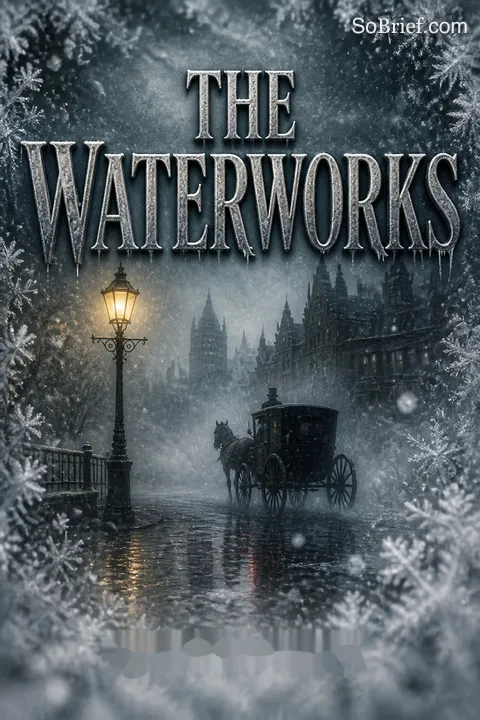
The recurring image of the white stagecoach, filled with decrepit old men and driven by a menacing figure, becomes central to the mystery. Martin's pursuit of the stage leads him through the city's streets, culminating in a desperate attempt to board it and confront its passengers. The stage is both a literal vehicle and a symbol of the city's hidden networks of power and exploitation. Its riders are revealed to be members of a secretive fellowship—wealthy men seeking to escape death through unnatural means. The stage's appearances coincide with moments of crisis, linking Martin's personal torment to a broader conspiracy involving the city's elite and their quest for immortality.
The Orphanage's Secret
Investigating further, McIlvaine and Captain Donne, an honest police officer, uncover the Home for Little Wanderers, an orphanage run by Eustace Simmons and Dr. Sartorius. Ostensibly a charitable institution, the orphanage is a front for sinister experiments. Children are periodically taken away in the white stage, never to return. The staff, mostly deaf and mute, are unaware of the true nature of the place. The orphanage's records reveal a pattern of missing children and financial transactions linked to the city's most powerful men. The discovery of Martin, imprisoned and near death in the orphanage's basement, exposes the extent of the conspiracy and the human cost of the elite's pursuit of eternal life.
The Fellowship of Immortals
The investigation reveals that Augustus Pemberton and other magnates have joined a clandestine fellowship, entrusting their fortunes to Dr. Sartorius in exchange for experimental treatments designed to prolong their lives. Sartorius, a brilliant but amoral scientist, uses the children from the orphanage as sources of blood, bone marrow, and other biological materials. The old men are kept alive in a state of suspended animation, their individuality and vitality sacrificed for the illusion of immortality. The fellowship's activities are protected by the city's corrupt officials, who hope to benefit from the secret themselves. The moral and physical decay of the fellowship mirrors the city's own decline, as the boundaries between science, crime, and the supernatural blur.
The Pursuit Begins
With Martin rescued but traumatized, McIlvaine and Donne intensify their investigation. They trace financial records, interview witnesses, and piece together the connections between the orphanage, the fellowship, and the city's political machine. Their pursuit is hampered by the power and reach of the Ring, as well as by the reluctance of victims and witnesses to speak out. The search leads them from the city's slums to its grandest institutions, revealing the extent to which the conspiracy has infiltrated every level of society. The pursuit becomes a race against time, as the conspirators move to cover their tracks and eliminate anyone who threatens to expose them.
The Grave's Deception
In a pivotal moment, Martin and his friend Harry Wheelwright exhume Augustus Pemberton's grave, only to find the body of a child in the coffin. This shocking discovery confirms that Augustus faked his death and is still alive, hidden within Sartorius's secret facility. The grave's deception is emblematic of the larger pattern of lies and substitutions that define the conspiracy. The dead are not truly dead, and the living are sacrificed to maintain the illusion of power and control. The exhumation galvanizes the investigation, providing the evidence needed to confront the conspirators and bring their crimes to light.
The Waterworks Conspiracy
The trail leads to the city's waterworks, a fortress-like building north of Manhattan, where Sartorius has established his laboratory and sanctuary for the fellowship. Here, the old men are kept alive through grotesque medical procedures, attended by mute nurses and protected by loyal henchmen. The facility is a marvel of industrial science and a horror of ethical transgression. McIlvaine, Donne, and the police raid the waterworks, discovering the dying remnants of the fellowship and the full extent of Sartorius's experiments. The confrontation with Sartorius is both anticlimactic and chilling—he is unrepentant, convinced of the righteousness of his scientific quest, and indifferent to the suffering he has caused.
The Science of Evil
Sartorius is committed to an asylum, where he remains unrepentant and intellectually aloof. His notebooks, written in Latin, reveal the depth and ambition of his experiments, as well as his utter disregard for conventional morality. The city's institutions—medical, legal, and political—struggle to process the enormity of his crimes. The question of sanity versus evil is debated, but ultimately Sartorius is consigned to oblivion, his genius and monstrosity alike buried by a society eager to forget. The episode forces the city to confront the dangers of unchecked ambition, the limits of science, and the ease with which evil can masquerade as progress.
The Rescue and Recovery
With the conspiracy exposed and its leaders dead or imprisoned, the survivors begin to rebuild their lives. Martin, physically and emotionally scarred, slowly recovers under the care of Emily and his family. Sarah Pemberton, restored to some measure of security, finds solace in new love with Captain Donne. The city, shaken by scandal and the fall of Tweed, begins a process of reform and self-examination. Yet the scars remain—personal, familial, and civic. The story's survivors are marked by their ordeal, and the city itself is left to ponder the cost of its own ambitions and the fragility of its moral foundations.
The Fall of Tweed
The exposure of the Ring's corruption, aided by the evidence uncovered during the investigation, leads to the downfall of Boss Tweed and his associates. The city is convulsed by scandal, financial panic, and political upheaval. Newspapers, once complicit, now trumpet the cause of reform. The collapse of the old order creates opportunities for renewal, but also leaves a vacuum that is not easily filled. The events surrounding the waterworks conspiracy become part of the city's collective memory—a cautionary tale about the dangers of unchecked power and the necessity of vigilance in public life.
The Reckoning at Ravenwood
The story's denouement takes place at Ravenwood, the Pemberton family estate, where the bodies of Augustus Pemberton and Eustace Simmons are discovered and laid to rest. The recovery of stolen fortunes provides some restitution to the victims, but the emotional and moral reckoning is more complex. The survivors gather for funerals and weddings, marking the end of one era and the uncertain beginning of another. The city, too, must reckon with its past, as the boundaries between progress and exploitation, science and crime, are redrawn in the aftermath of scandal.
The Fate of Sartorius
Sartorius, confined to the asylum, is ultimately murdered by another inmate, his genius and crimes erased from public memory. His notebooks are hidden or destroyed, and his name becomes a cautionary whisper among the city's elite. The fate of Sartorius is both a punishment and an evasion—society is spared the spectacle of a public trial, but also denied the opportunity for true reckoning. The story ends with a meditation on the limits of justice, the persistence of evil, and the uneasy coexistence of progress and barbarism in the modern city.
The Cost of Survival
The survivors—Martin, Emily, Sarah, Donne, and McIlvaine—struggle to find meaning and stability in the wake of trauma. Marriages and new beginnings offer hope, but the memory of what has transpired lingers. The city, too, is changed—its innocence lost, its institutions shaken, its future uncertain. The cost of survival is measured not just in lives and fortunes, but in the enduring questions about the nature of evil, the responsibilities of science, and the possibility of redemption. The story closes with a sense of hard-won wisdom and the recognition that the city's story, like its people's, is never truly finished.
The Enduring City
As the city moves into a new era, the events of the waterworks conspiracy recede into history, but their lessons remain. The city's energy, diversity, and ambition persist, tempered by the memory of what has been lost and what has been learned. McIlvaine, older and wiser, reflects on the enduring nature of the city—its capacity for both greatness and depravity, its resilience in the face of disaster, and its endless capacity for reinvention. The story ends with a vision of New York as a living organism, forever changing, forever haunted by its past, and forever striving toward an uncertain future.
Analysis
A modern parable of power, science, and conscienceThe Waterworks is a masterful fusion of historical fiction, detective story, and social critique, using the mystery of Martin Pemberton's disappearance to explore the dark heart of Gilded Age New York. Doctorow's narrative interrogates the costs of progress, the dangers of unchecked ambition, and the ethical limits of science. The city itself is both setting and character—a living organism shaped by its inhabitants' dreams and crimes. The novel's central conspiracy, in which the wealthy seek to escape death at the expense of the vulnerable, serves as a powerful allegory for the era's inequalities and the enduring temptation to sacrifice morality for power. Through its richly drawn characters and intricate plot, the book asks whether redemption is possible in a world built on exploitation, and whether truth can survive in a society determined to forget its own sins. Ultimately, The Waterworks is a cautionary tale about the perils of forgetting our shared humanity in the pursuit of progress—a lesson as urgent today as it was in Doctorow's imagined nineteenth-century New York.
Review Summary
Reviews of The Waterworks are mixed, averaging 3.45/5. Many praise Doctorow's evocative portrayal of 1871 New York City, its corruption under Boss Tweed, and the novel's atmospheric, philosophical depth. Admirers highlight its elegant prose, compelling moral themes, and blend of detective fiction with science fiction elements. Critics, however, frequently cite the overuse of ellipses as deeply distracting, and some find the pacing slow, characters underdeveloped, and the plot underwhelming. Overall, readers appreciate the rich historical setting more than the mystery itself.
People Also Read
Characters
McIlvaine
McIlvaine is the narrator and moral center of the story, a veteran newspaperman whose cynicism is tempered by a deep sense of justice and compassion. He is both observer and participant, drawn into the mystery of Martin Pemberton's disappearance and the larger conspiracy it reveals. McIlvaine's relationships—with Martin, Emily, Donne, and others—are marked by a mixture of professional detachment and personal investment. Psychologically, he is haunted by the city's corruption and his own limitations, struggling to reconcile his ideals with the realities of urban life. Over the course of the story, he evolves from a passive chronicler to an active seeker of truth, risking his career and safety to expose the city's darkest secrets.
Martin Pemberton
Martin is the story's catalyst, a brilliant but troubled young man burdened by his family's legacy of guilt and exploitation. His quest to confront his supposedly dead father leads him into the heart of a conspiracy that threatens his sanity and his life. Martin's relationships—with his stepmother Sarah, his fiancée Emily, and his friend Harry—are marked by intensity and conflict. Psychologically, he is driven by a need for truth and redemption, but also by a deep sense of alienation and self-doubt. His ordeal at the hands of Sartorius leaves him physically and emotionally scarred, but ultimately wiser and more compassionate. Martin's journey is both a personal and a symbolic one, reflecting the city's own struggle with its conscience.
Augustus Pemberton
Augustus is the story's absent presence, a war profiteer and slaver whose crimes set the plot in motion. His faked death and participation in the fellowship of immortals embody the city's moral rot and the dangers of unchecked ambition. Augustus's relationships—with his son Martin, his wife Sarah, and his factotum Simmons—are marked by manipulation, betrayal, and emotional distance. Psychologically, he is a study in selfishness and denial, seeking to escape the consequences of his actions through science and secrecy. His ultimate fate—dying alone and unrecognized—serves as a cautionary tale about the limits of power and the inevitability of mortality.
Sarah Pemberton
Sarah is a figure of quiet strength and dignity, enduring the loss of her husband, her home, and her security with remarkable composure. Her relationship with Martin is complex—she is both a surrogate mother and a fellow victim of Augustus's cruelty. Sarah's psychological resilience is tested by poverty, betrayal, and the revelations of the conspiracy, but she remains a source of stability and hope for her family. Her eventual romance with Captain Donne offers a measure of redemption and renewal, suggesting the possibility of healing even in the aftermath of trauma.
Emily Tisdale
Emily is Martin's childhood friend and intended bride, a woman of intelligence, integrity, and emotional depth. Her love for Martin is unwavering, even as his obsessions and disappearances strain their relationship. Emily's psychological strength is evident in her ability to endure uncertainty, support Martin's recovery, and maintain her own sense of self. She represents the possibility of normalcy and happiness in a world marked by chaos and corruption. Her eventual marriage to Martin is both a personal triumph and a symbol of hope for the future.
Captain Edmund Donne
Donne is a rare figure of integrity in a corrupt police force, dedicated to justice and the rule of law. His partnership with McIlvaine is instrumental in unraveling the conspiracy, and his personal courage and intelligence are crucial to the story's resolution. Donne's psychological makeup is marked by a sense of duty, loneliness, and a longing for connection, which is fulfilled in his relationship with Sarah Pemberton. He serves as a counterpoint to the story's villains, embodying the possibility of goodness and reform in a flawed society.
Dr. Wrede Sartorius
Sartorius is the story's antagonist, a genius whose pursuit of scientific knowledge is untempered by morality or empathy. His experiments on the fellowship and the orphaned children are both groundbreaking and monstrous, reflecting the dangers of science divorced from ethics. Sartorius's psychological profile is one of detachment, arrogance, and intellectual isolation. He is both a product and a critique of the era's faith in progress, embodying the potential for both greatness and horror in human endeavor. His ultimate fate—madness and murder—serves as a grim commentary on the limits of reason and the costs of hubris.
Eustace Simmons
Simmons is Augustus Pemberton's right-hand man and later Sartorius's administrator, a figure of ambition and adaptability. His loyalty is to power, not principle, and he is instrumental in facilitating the conspiracy's operations. Psychologically, Simmons is a survivor, willing to do whatever is necessary to maintain his position. His eventual downfall—killed while attempting to escape with stolen money—underscores the precariousness of a life built on opportunism and betrayal.
Harry Wheelwright
Harry is Martin's friend and confidant, a painter whose wit and irony mask deeper insecurities and desires. His role as both observer and participant in the story's events provides a counterpoint to Martin's intensity. Harry's psychological complexity is evident in his ambivalence toward Martin, his unrequited feelings for Emily, and his struggle to find meaning in his art. He represents the city's bohemian spirit, as well as its capacity for both insight and self-delusion.
Reverend Charles Grimshaw
Grimshaw is the family's spiritual advisor, a man of faith struggling to reconcile his beliefs with the realities of the world around him. His relationship with the Pembertons is marked by both compassion and frustration, as he seeks to provide comfort and guidance in the face of overwhelming evil. Psychologically, Grimshaw is torn between doubt and conviction, tradition and change. His journey mirrors the city's own struggle with faith, morality, and the demands of modernity.
Plot Devices
Gothic Mystery and Social Critique
The novel employs the structure of a gothic mystery, with McIlvaine as the detective unraveling a series of disappearances, spectral sightings, and hidden crimes. The use of unreliable narration, shifting perspectives, and layered revelations creates an atmosphere of suspense and ambiguity. Foreshadowing is achieved through recurring motifs—the white stage, the orphanage, the waterworks—that gradually reveal their significance. The narrative structure alternates between personal testimony, investigative reportage, and philosophical reflection, allowing the story to function both as a gripping thriller and a profound meditation on the nature of evil, progress, and the city itself. The interplay of science and superstition, wealth and poverty, and individual and collective guilt provides a rich tapestry for exploring the moral dilemmas of the era.

Download PDF
Download EPUB
.epub digital book format is ideal for reading ebooks on phones, tablets, and e-readers.








































