
Plot Summary
Immersion and Intrusion
Finley, a young woman living off-grid with her mother Dianella near the Siding Spring Observatory, finds solace in a secluded rockpool, immersed in the rhythms of nature. Her peace is abruptly broken by the appearance of a stranger—a child with unusual features, an "Incomplete"—and the arrival of unfamiliar vehicles. The intrusion signals danger, forcing Finley to abandon her sanctuary and race through the bush to warn her mother and their hidden community. The tension between the serenity of the land and the looming threat of outsiders sets the tone for a world on edge, where every moment of connection with nature is shadowed by the risk of discovery and the need for constant vigilance.
The Warning Run
Finley's desperate sprint through the rugged landscape is fueled by adrenaline and guilt—her brief lapse in caution may have exposed their group. She navigates steep slopes and dense undergrowth, her senses heightened by the memory of her family's past and the ever-present danger of being found. Reaching the cabin, she finds Dianella already preparing to flee, their practiced escape routine triggered. The community, once a vibrant hub of scientists and families, is now reduced to scattered survivors, each carrying the weight of loss and the burden of secrecy. The chapter pulses with anxiety, regret, and the bittersweet ache of a world slipping away.
Fractured Community
The hidden community gathers in the forest, tense and uncertain. Old friends and allies—Des, Blair, Uncle Nate, Fran, Stella, and their children—arrive in small groups, each wary and watchful. The arrival of outsiders has forced them to enact contingency plans, splitting up to avoid detection. Trust is strained, blame simmers, and the pain of separation is palpable. Finley feels both responsible and isolated, longing for the comfort of belonging but knowing that survival demands sacrifice. The group's dissolution is marked by hurried goodbyes, unspoken fears, and the haunting sense that their way of life is unraveling, one encounter at a time.
Golden Hour Memories
As Finley and Dianella retreat to a favorite campsite, the golden light of dusk evokes memories of better times—family, friends, and the awe of the night sky. Dianella's passion for astrophotography, her quest to capture the sublime, is both a source of inspiration and a reminder of what's been lost. The landscape is alive with meaning, every tree and rock a witness to their history. Yet, beneath the surface, grief and uncertainty linger. The chapter is suffused with nostalgia, the ache of things slipping away, and the fragile hope that beauty can still be found amid chaos.
Living on the Edge
Life on the run is a delicate balance of caution and routine. Finley and Dianella move like foxes, erasing their tracks, listening for threats, and relying on hard-earned skills. Food is scarce, trust scarcer. The natural world—once a playground—is now both refuge and obstacle. The rhythms of day and night, the stages of twilight, become markers of safety and danger. The chapter explores the psychological toll of perpetual alertness, the erosion of innocence, and the resilience required to endure. Every decision is fraught, every moment tinged with the fear of being hunted.
The New Illegals
The world outside has changed: fertility rates have plummeted, and a new generation of "Incompletes"—children with altered genetics—has emerged. Laws have turned draconian, targeting women and girls for testing and control. Finley's memories of school, friends, and the slow tightening of restrictions reveal a society in crisis, where the boundaries between legal and illegal, human and other, are blurred. The chapter delves into the psychological impact of being labeled an outsider, the loss of agency, and the desperate measures taken to preserve autonomy and dignity in a world that no longer values either.
The Incomplete Encounter
Finley and Dianella stumble upon Terry, the Incomplete child from the spring, traumatized and alone after his parents are taken by mysterious soldiers. Despite initial reluctance, they cannot abandon him. Terry's presence is both a liability and a catalyst, forcing Finley to confront her own prejudices and fears. As they flee together, the dynamics of trust, responsibility, and empathy shift. Terry's unique abilities—his echolocation, his vulnerability—challenge Finley's assumptions about strength and survival. The encounter marks a turning point, binding their fates and setting them on a path toward the unknown.
Plans and Partings
The group regroups at a remote campsite, where plans are made for a bold action: reclaiming the observatory during the upcoming total eclipse. Finley is tasked with three missions—delivering evidence to the outside world, signaling during the eclipse, and safeguarding Dianella's photographic legacy. The weight of responsibility is heavy, and the pain of separation acute. Goodbyes are hurried, emotions raw. The chapter is charged with anticipation, fear, and the sense that everything hinges on the coming days. Finley and Terry set out alone, carrying hope, doubt, and the memory of those left behind.
Escape Through the Pilliga
Finley and Terry navigate the devastated Pilliga Forest, dodging patrols, evading drones, and witnessing the scars of environmental destruction—gasfields, mines, and dying ecosystems. The landscape is both adversary and ally, offering hiding places but also reminders of what's been lost. Along the way, they encounter remnants of resistance, traces of old friends, and moments of unexpected beauty—rare birds, resilient plants, and the enduring presence of water. The journey is a test of endurance, ingenuity, and trust, as Finley and Terry learn to rely on each other and adapt to a world in flux.
Lessons in Survival
The road to safety is paved with challenges—mechanical failures, hostile encounters, and the constant threat of exposure. Finley draws on the lessons of her parents, her community, and the land itself: how to read signs, solve problems, and make hard choices. Terry, too, grows in confidence and competence, his unique perspective offering new ways of seeing and being. Together, they confront their fears, share stories, and forge a bond that transcends difference. The chapter is a meditation on resilience, adaptation, and the power of connection in the face of adversity.
The Forest Tower Pact
Reaching the Forest Tower, Finley fulfills a pact made with her parents: to leave a record for the future, a message of what was lost and what remains. The act is both practical and symbolic—a gesture of hope, defiance, and continuity. The tower, once a place of family and wonder, is now a waypoint in a journey of survival. The chapter weaves together past and present, memory and action, as Finley and Terry prepare for the final leg of their quest, carrying with them the weight of history and the possibility of renewal.
The Road to Kaputar
The approach to Mount Kaputar is fraught with obstacles—crowds of eclipse pilgrims, checkpoints, and the ever-present risk of discovery. Finley and Terry must navigate not only the physical landscape but also the shifting currents of human behavior: suspicion, kindness, and the unpredictable dynamics of a society on the brink. Along the way, they reunite with Hild, Finley's childhood friend, whose own journey reflects the costs of survival and the complexities of loyalty. The chapter is a crescendo of tension, as the eclipse—and the planned uprising—draws near.
Reunion and Revelations
The reunion with Hild is bittersweet, marked by joy, regret, and the painful realities of a world transformed. Hild's story—her forced compliance, her determination to protect her sister—mirrors Finley's own struggles. The encounter forces Finley to confront the limits of trust, the costs of resistance, and the enduring power of friendship. As they part once more, the stakes are higher than ever, and the sense of impending change is palpable. The chapter is a meditation on love, loss, and the choices that define us.
The Climb and the Crowd
The ascent of Kaputar is both literal and metaphorical—a journey through crowds, conflict, and the wild beauty of the mountain. Finley and Terry navigate tensions among pilgrims, moments of danger, and encounters with rare and miraculous creatures—pink slugs, glass snails—that symbolize resilience and hope. The climb is a crucible, testing their resolve and deepening their bond. As they near the summit, the anticipation of the eclipse—and the planned signal—builds to a fever pitch. The chapter is charged with awe, anxiety, and the sense of standing on the edge of transformation.
Eclipse of the Sun
As the total eclipse begins, the world is plunged into an uncanny darkness. The crowd's collective awe, fear, and wonder are palpable. Finley and Terry, in their secret vantage point, experience a profound sense of connection—to each other, to the land, and to the universe. The act of signaling with the laser, relayed across the landscape, becomes a catalyst for rebellion. The eclipse is both a literal and symbolic turning point, a moment when the boundaries between past and future, self and other, dissolve. The chapter is a crescendo of emotion, revelation, and possibility.
The Signal and the Fall
The signal from Finley is answered by a chain of lights, culminating in a coordinated uprising at the observatory. Explosions rock the landscape, power grids fail, and the sky is filled with falling satellites—an unprecedented meteor shower that marks the end of the old order. The chaos is both terrifying and exhilarating, a release of pent-up energy and a reckoning with the consequences of resistance. Amid the destruction, there is a sense of catharsis, unity, and the hope that something new can emerge from the ashes.
The Flood and the Fire
As the satellites burn and the power grids collapse, water rises from the earth, flooding the scars of extraction and destruction. The land, long abused, begins to heal—forests drink deep, animals return, and the balance of nature is restored. The flood is both literal and metaphorical, a cleansing and a rebirth. Finley and Terry, witnesses to this transformation, are filled with awe and relief. The chapter is a hymn to resilience, the power of collective action, and the possibility of renewal even in the darkest times.
Dark Skies Return
In the aftermath, as the sun sets and true night falls, the stars return in their millions. The Milky Way arches overhead, the Dark Emu flies once more, and the land breathes with new life. Finley and Terry, changed by their journey, look to the future with cautious hope. The bonds of family, friendship, and community endure, and the promise of a better world glimmers in the darkness. The chapter closes with a sense of peace, possibility, and the enduring beauty of a world restored to balance.
Analysis
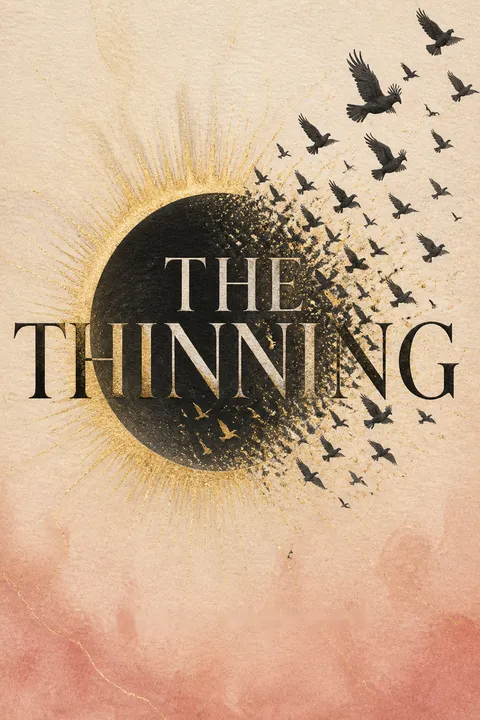
Inga Simpson's The Thinning is a haunting, lyrical meditation on extinction, survival, and the fragile beauty of a world in crisis. Through the eyes of Finley and her companions, the novel explores the psychological toll of environmental collapse, the erosion of community, and the struggle to find meaning and hope amid loss. The narrative's fragmented structure, sensory richness, and deep engagement with landscape invite readers to inhabit both the terror and wonder of a world on the brink. At its core, the novel is a call to remember—our connections to each other, to the land, and to the stories that sustain us. The eclipse, both cosmic and personal, becomes a moment of reckoning and possibility, when the darkness reveals not only what has been lost but also what might yet be reclaimed. The Thinning challenges us to imagine new ways of being, to honor the wisdom of the past, and to act—however imperfectly—in defense of a future where all beings might thrive.
Review Summary
The Thinning receives mixed but generally positive reviews, averaging 3.57/5. Praised for its lyrical prose, vivid Australian landscapes, and urgent environmental themes, many readers admire its astronomy focus and hopeful undertones. It was longlisted for the 2025 Stella Prize. Critics note it reads more like YA than literary fiction, with some finding the plot vague, characters underdeveloped, and the sci-fi "Incomplete" elements unnecessary. Fans of climate fiction and Australian nature writing tend to rate it highly, while those expecting a literary thriller may feel misled by its marketing.
Characters
Finley Kelvin
Finley is the heart of the narrative—a young woman shaped by loss, love, and the wild landscapes of her childhood. Daughter of Dianella and Phil, she is both scientist and dreamer, torn between nostalgia for a vanished world and the demands of survival. Her journey is one of growth: from guilt-ridden fugitive to courageous actor in a collective uprising. Finley's relationships—with her mother, her lost friend Hild, and the vulnerable Terry—reveal her capacity for empathy, loyalty, and sacrifice. Her psychological arc is marked by grief, resilience, and the gradual acceptance of responsibility, culminating in a hard-won hope for renewal.
Dianella Kelvin
Dianella is a renowned astrophotographer whose images once inspired awe and activism. Fiercely protective and uncompromising, she is both mentor and enigma to Finley. Her passion for the night sky is matched by her determination to resist the forces destroying both nature and human freedom. Dianella's psychological complexity is rooted in loss—of her husband, her community, her place in the world—and her struggle to balance love with the demands of resistance. She is a figure of strength and vulnerability, whose legacy shapes the actions and hopes of those around her.
Terry (the Incomplete)
Terry is a second-generation "Incomplete", a child born with altered genetics and unique abilities—echolocation, heightened perception, and a deep sense of otherness. Orphaned by violence, he is both burden and catalyst for Finley and Dianella. Terry's journey is one of adaptation and self-discovery, as he learns to trust, contribute, and find belonging. His presence challenges the prejudices and fears of others, while his resilience and insight offer new ways of seeing and surviving. Terry embodies the hope and uncertainty of a new generation, poised between extinction and transformation.
Hild
Hild is Finley's childhood confidante, a fierce and intelligent young woman caught in the machinery of a society obsessed with fertility and control. Her experiences—forced testing, the threat of reproductive conscription, the loss of agency—mirror the broader themes of the novel. Hild's loyalty to Finley is unwavering, but her own struggles with compliance, resistance, and family fracture reveal the costs of survival. She is both a reminder of what has been lost and a beacon of what might be reclaimed through solidarity and courage.
Phil Kelvin
Phil, Finley's late father, is a constant presence in memory and influence. A head astronomer and gentle leader, he embodies curiosity, kindness, and a commitment to both science and community. His illness and death mark a turning point for Finley and Dianella, deepening their grief but also their resolve. Phil's legacy is one of wonder, humility, and the belief that knowledge and love can endure even in the face of overwhelming loss.
Des
Des is a respected elder and expert in Dark Skies, whose wisdom and calm provide stability amid chaos. He bridges scientific and Indigenous knowledge, offering a broader perspective on survival and resistance. Des's role as mediator, planner, and moral guide is crucial to the group's cohesion and ultimate rebellion. His psychological depth lies in his ability to balance tradition and innovation, hope and realism.
Blair
Blair is the group's problem-solver, skilled in both technology and survival. His work on de-orbiting satellites becomes central to the uprising. Blair's steady presence, practical mindset, and willingness to take risks make him indispensable. He is a figure of quiet strength, whose actions speak louder than words, and whose loyalty to the community is unwavering.
Uncle Nate
Uncle Nate embodies the connection to Country, tradition, and the wisdom of Indigenous knowledge. His teachings about the land, animals, and stars ground Finley and the others in a sense of place and purpose. Nate's optimism, humor, and resilience offer comfort and guidance, even as he faces the erosion of his world. He represents continuity, adaptability, and the hope that ancient wisdom can inform new beginnings.
Jade
Jade is a childhood friend whose presence evokes memories of freedom, play, and the gradual loss of innocence. Her physical prowess and competitive spirit contrast with the vulnerability and uncertainty of the present. Jade's journey reflects the costs of growing up in a world unraveling, and her loyalty to the group underscores the importance of solidarity.
Fran
Fran, a refugee from the outside world, brings compassion, resourcefulness, and a sense of home to the group. Her baking, caregiving, and quiet resilience provide comfort amid hardship. Fran's relationship with her daughter May, and her willingness to adapt and support others, highlight the importance of community and the enduring power of maternal love.
Plot Devices
Fragmented Narrative and Memory
The novel employs a fragmented, nonlinear structure, weaving together present action, flashbacks, and memories. This device reflects the psychological state of the characters—traumatized, nostalgic, and struggling to make sense of a world in flux. The use of sensory detail, recurring motifs (light, water, stars), and shifting perspectives deepens the emotional resonance and immerses the reader in the characters' lived experience. The narrative's layering of past and present also serves to foreshadow key events and reveal the interconnectedness of personal and collective histories.
Environmental Catastrophe as Backdrop
The devastated landscape—burned forests, polluted water, extinct species—serves as both setting and metaphor. The environmental crisis is not merely background but an active force driving the plot, shaping characters' decisions, and symbolizing the broader unraveling of society. The motif of "thinning"—of species, skies, and human connection—underscores the urgency and stakes of the narrative.
The Eclipse as Catalyst
The total solar eclipse is both a literal and symbolic turning point. Its approach structures the narrative, heightening tension and anticipation. The eclipse becomes the moment of collective action, when hidden plans are enacted, boundaries dissolve, and the possibility of renewal emerges. The interplay of darkness and light, fear and awe, mirrors the characters' internal journeys and the broader themes of extinction and rebirth.
The Incomplete as Symbol
The figure of the Incomplete—genetically altered, marginalized, and misunderstood—serves as a focal point for anxieties about the future, the meaning of humanity, and the potential for adaptation. Terry's abilities and vulnerabilities challenge assumptions about strength, belonging, and the value of difference. The Incomplete is both a source of danger and a catalyst for empathy, growth, and transformation.
Foreshadowing and Recurring Motifs
The novel is rich in foreshadowing—ominous signs, repeated warnings, and the cyclical rhythms of nature. Motifs of water, stars, and animal encounters recur, signaling shifts in mood, impending danger, or moments of grace. These devices create a sense of inevitability and interconnectedness, reinforcing the themes of loss, resilience, and the possibility of renewal.
Download PDF
Download EPUB
.epub digital book format is ideal for reading ebooks on phones, tablets, and e-readers.








































