Key Takeaways
1. Stress is a cumulative feed-forward cycle driven by Micro Stress Doses (MSDs).
The very existence of stress in our lives, minds and bodies has the power to generate more stress.
The compounding nature of stress. Dr. Chatterjee introduces the "Cupboard of No Return" as a metaphor for how minor, unaddressed anxieties accumulate. Every day, we are bombarded by Micro Stress Doses (MSDs)—seemingly trivial events like a late alarm, a negative news headline, or a dripping tap. Individually, these events are manageable, but collectively, they push us closer to our emotional and physical breaking point.
The biological shift. When these MSDs pile up, our bodies transition from a restorative "thrive state" to a defensive "stress state." This shift activates two primary biological systems:
- The sympathetic nervous system, which releases adrenaline and raises our heart rate.
- The HPA (hypothalamic-pituitary-adrenal) axis, which floods our bloodstream with cortisol.
The feed-forward trap. This chronic activation alters our brain chemistry, making us hyper-vigilant and overly reactive. Our emotional brain (the amygdala) actually swells with repeated stress, while our rational brain is sidelined. As a result, we make poorer lifestyle choices, which in turn generates even more stress, trapping us in a toxic, self-reinforcing loop.
2. Cultivate the three habits of calm: affirmations, reframing, and gratitude.
The 3 Habits of Calm - affirmations, reframing and gratitude — will help you significantly reduce your stress levels and put you in the right frame of mind for tackling the big questions of meaning and purpose.
Reprogramming the subconscious. To break the stress cycle, we must actively feed our brains positive information. Affirmations are short, present-tense statements of intent—such as "I am calm and stress-free"—that act as a new blueprint for the mind. By repeating these daily, we directly counter the brain's evolutionary bias toward negativity and threat detection.
Altering our perspective. Reframing is the conscious choice to change how we interpret stressful events. Instead of adopting a victim mentality when faced with workplace or personal challenges, we can zoom out to see the bigger picture. Effective reframing techniques include:
- Writing down the experience to adopt a more rational, distant viewpoint.
- Focusing on the external causes of other people's negative behavior.
- Replaying the event in the third person as if we were an objective observer.
The power of appreciation. Gratitude serves as the ultimate antidote to toxic rumination. By practicing the "Three P's of Gratitude" every evening, we train our minds to focus on the positive aspects of our lives. We simply spend a few minutes projecting deep appreciation toward a specific Person, a daily Pleasure, and a Promise for the future.
3. Reclaim your time through strict scheduling and purposeful "do" time.
Instead of waiting for yourself to feel right, you need to purposefully schedule that action in.
Regaining life control. Many people suffer from chronic anxiety because they feel they have no control over their time. Dr. Chatterjee's wife, Vidh, discovered that creating a highly detailed daily schedule paradoxically freed her from this mental trap. Ticking off scheduled tasks provides a satisfying dopamine hit, sending signals to the brain that we are in control of our environment.
Active versus passive relaxation. True stress relief requires "do" time rather than passive "me" time. Engaging in an absorbing, challenging hobby—like indoor climbing, painting, or learning a language—forces our attention away from daily worries. This active engagement triggers a state of "flow" that quietens the emotional brain. Key elements to schedule include:
- Activities that bring pure, intrinsic joy.
- Pursuits that train our ability to delay gratification.
- Daily movement or structured physical exercise.
The necessity of downtime. We must also schedule periods of absolute solitude and unstructured downtime. Staring at a tree or sitting quietly without digital distractions activates the brain's default mode network (DMN). This network is a powerful engine for creative problem-solving and self-reflection, helping us answer the vital question of who we truly are.
4. Build a life of meaning using the L.I.V.E. framework.
A lack of meaning in our lives stresses us out, but too much stress makes it harder to find meaning.
The purpose deficit. Living a life devoid of meaning and authentic purpose is inherently stressful. Many people use unhealthy coping mechanisms, such as sugar or alcohol, to compensate for a lack of professional or personal fulfillment. To address this, Dr. Chatterjee adapted the Japanese concept of ikigai into a practical, four-part framework called L.I.V.E.
The four pillars of L.I.V.E. This framework helps us align our daily actions with our deeper values through four distinct elements:
- Love: Actively doing something we love purely for intrinsic pleasure, not external validation.
- Intention: Performing at least one small, daily task with absolute, mindful focus.
- Vision: Developing and taking action toward a clear, twelve-month personal goal.
- Engagement: Doing small, daily acts of kindness in the service of others.
The resilience shield. Implementing the L.I.V.E. framework creates a powerful buffer against daily Micro Stress Doses. When we have a clear "why" for our existence, we become far more resilient to short-term struggles. Finding purpose is not about grand, world-changing projects; it is about making space to nourish your authentic self.
5. Prioritize physical touch to soothe your nervous system.
Francis McGlone at Liverpool John Moores University, has said that touch is ‘not just a sentimental human indulgence, it’s a biological necessity’.
Our primal wiring. Humans are mammalian creatures, and physical touch is our first and most fundamental language. Affectionate touch stimulates specialized nerve fibers in our skin called C-tactile (CT) afferents. These fibers bypass the rational brain and travel directly to the emotional limbic system, immediately lowering our heart rate and blood pressure.
The biochemistry of touch. Regular, gentle touch acts as a powerful biological de-stressor. It directly calms the HPA axis, reducing cortisol levels while boosting our immune system. The physical benefits of affectionate touch include:
- Lowered heart rate and blood pressure.
- Reduced circulating levels of the stress hormone cortisol.
- Increased activity of Natural Killer (NK) cells to fight infections.
- Elevated levels of oxytocin and feel-good endorphins.
The touch deficit. A chronic lack of touch acts as a silent, physical stressor that pushes us into a constant stress state. To combat this "skin hunger," Dr. Chatterjee recommends keeping a touch diary to track and deliberately increase our daily physical interactions. Simple acts like hugging loved ones, roughhousing with children, or booking a massage can dramatically raise our stress threshold.
6. Foster deep intimacy and connection by removing digital distractions.
Once upon a time we worried about our partners having an affair with a work colleague, but these days we're all having extramarital relationships with our devices.
The erosion of intimacy. Modern couples are having significantly less sex and experiencing greater emotional distance than previous generations. This decline is largely driven by the constant presence of smartphones, which act as an intrusive "third member" in our relationships. Silently scrolling in bed or checking emails during dinner starves our partnerships of essential connection.
Rebuilding the bond. Intimacy does not require grand romantic gestures; it is built through presence, trust, and vulnerability. Dr. Chatterjee suggests simple, daily exercises to restore this connection, such as:
- The "Seeing Eye to Eye" exercise, which involves five minutes of uninterrupted eye contact.
- Scheduling dedicated, tech-free connection times, like a daily walk holding hands.
- Implementing the "3D Greeting" to welcome your partner with eyes, touch, and voice.
Hormonal balance. Chronic stress directly suppresses our libido by prioritizing cortisol production over sex hormones like testosterone. Low testosterone levels in both men and women lead to fatigue, low mood, and muscle weakness. By actively minimizing stress and prioritizing intimate connection, we naturally restore our body's hormonal balance and vitality.
7. Feed your gut microbiome to stabilize your mental health.
The right kind of food promotes a healthy microbiome, which in turn helps to train and educate the immune system...
The gut-brain connection. Our food choices do not just fuel our muscles; they directly program our psychological well-being. The gut and the brain are linked by a bi-directional communication highway known as the gut-brain axis, primarily mediated by the vagus nerve. The trillions of microbes living in our gut—our microbiome—produce chemical messengers that dictate our mood.
The threat of inflammation. Eating highly processed foods, sugar, and artificial sweeteners damages our gut lining, leading to a condition known as "leaky gut." This allows toxic bacterial components (LPSs) to slip into our bloodstream, triggering chronic inflammation. This ongoing inflammatory state sends danger signals to the brain, manifesting as anxiety, fatigue, and depression.
Eating for happiness. To cultivate a resilient mind, we must feed our gut bugs a highly diverse, fiber-rich diet. Dr. Chatterjee recommends "Eating the Alphabet" by aiming for at least 26 different plant foods every month. This diversity of fiber and polyphenols trains our immune system to dial down inflammation, keeping us firmly locked in a calm, thrive state.
8. Optimize your exercise dose using the principle of hormesis and HRV.
With the right intensity and in the right dose, working out can be a phenomenal antidote to stress.
The law of dose response. Exercise is a form of physical stress, and its benefits are governed by the biological principle of hormesis. A small, controlled dose of stress strengthens the body, while an excessive dose causes systemic damage. Pounding the treadmill for hours when you are already exhausted can trigger a massive stress response, driving up chronic inflammation.
Measuring your resilience. Heart-Rate Variability (HRV)—the variation in time between consecutive heartbeats—is the ultimate marker of our body's resilience. A high HRV indicates that our autonomic nervous system is balanced and in a thrive state, meaning we can handle intense workouts. A low HRV warns us that our body is depleted and requires restorative movement rather than high-intensity training.
Tailoring your movement. We must learn to listen to our bodies and choose the appropriate exercise prescription for our current stress levels. When highly stressed, we should opt for restorative practices like yoga, Pilates, or walking in nature. To release stored physical tension, Dr. Chatterjee recommends:
- Doing one minute of intense activity like star jumps to process adrenaline.
- Practicing deep-tissue massage or myofascial release.
- Engaging in hot yoga or spending time in a sauna to induce beneficial heat stress.
9. Align your daily habits with your natural circadian rhythms.
The internal rhythms that our bodies live by have been finely tuned over millions of years.
The disruption of light. Our biological systems are governed by precise internal clocks, the most famous of which is our circadian sleep-wake rhythm. Modern life, with its abundance of artificial blue light from screens, has severely disrupted these ancient rhythms. Exposing our eyes to smartphones in the evening suppresses the release of melatonin, the hormone crucial for deep, restorative sleep.
The sleep-deprivation epidemic. Chronic sleep loss acts as a severe biological stressor, mimicking the physiological signature of trauma. Just one week of restricted sleep distorts the expression of over 700 genes, ramping up inflammation and stress pathways. To protect our sleep quality, we must establish a healthy body-clock routine:
- Wake up at the same time every day, even on weekends.
- Expose your eyes to bright, natural sunlight first thing in the morning.
- Turn off all electronic devices at least 90 minutes before bedtime.
Eating in rhythm. Our digestive system also runs on a strict daily clock. Eating heavy meals late at night, when melatonin is active, severely impairs digestion and lowers our morning HRV. Dr. Chatterjee strongly advocates for time-restricted eating, recommending that we consume all our food within a twelve-hour window and finish our last meal at least three hours before bed.
10. Mute the digital world and bathe your mind in nature and breath.
Breathing slowly and deeply will prevent us from activating the neurons in the brain that send messages to the brain’s arousal centre.
The digital onslaught. Our minds are constantly bombarded by an overwhelming stream of notifications, emails, and curated social media feeds. This information overload creates "Facebook Brain," a state of chronic hyper-vigilance where we constantly perceive social threats and rejection. To reclaim our mental focus, we must establish strict digital boundaries and practice regular "digital holidays."
The healing power of nature. Spending time in natural environments is the ultimate antidote to technological overstimulation. Nature encourages us to look outward, activating our brain's default mode network and reducing circulating cortisol. Whether practicing "forest bathing" (shinrin-yoku) or simply looking at natural geometric patterns (fractals), nature rapidly shifts our nervous system into a calm, thrive state.
The remote control of the brain. Breathing is the fastest, most accessible tool we have to directly alter our nervous system's state. Slow, deep diaphragmatic breathing through the nose sends immediate signals of safety to the brain's arousal center. Dr. Chatterjee recommends practicing simple, daily breathing techniques to instantly lower stress:
- The 3-4-5 Breath: Inhale for three seconds, hold for four, and exhale for five.
- Box Breathing: Inhale, hold, exhale, and hold for four seconds each.
- Alternate-Nostril Breathing: A yogic practice to balance and calm the nervous system.
I confirm that I have written detailed takeaways for ALL 10 key takeaways in the format requested.
Review Summary
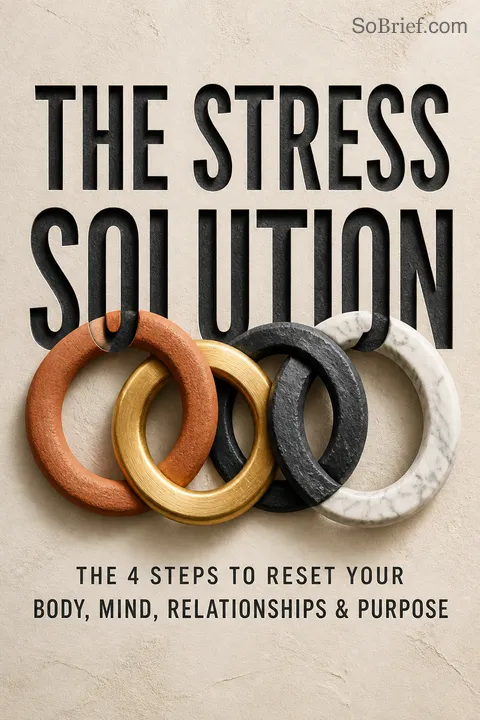
The Stress Solution receives mostly positive reviews for its practical advice on managing stress through purpose, relationships, body, and mind. Readers appreciate the accessible writing style, scientific backing, and actionable tips. Many find it helpful for improving wellbeing and reducing stress. Some criticize overlap with the author's previous works or find certain suggestions overwhelming. Overall, reviewers recommend the book for its comprehensive approach to stress management, though a few feel the advice is basic or not entirely applicable to their lives.








































