Key Takeaways
1. The Hidden Child's True Nature
Find the secret of childhood, and the whole disposition of the child changes.
Unseen psychological life. Dr. Montessori, through scientific observation, was convinced that children possess laws of growth in character and disposition as distinct as those in physical life. Adults often fail to appreciate these, forcing their own ideas, which results in the child's deepest drives being oppressed and their mind thrown into confusion. This repression manifests as naughtiness, crying, and sulking, leading to adult complexes.
Adult egocentrism's impact. Psycho-analysis revealed that adult psychoses often originate in infancy due to the repression of spontaneous child activity by authoritative adults, primarily mothers and teachers. Adults, viewing the child as an "empty being" to be filled or an "inert and incapable being" to be guided, unconsciously cancel the child's personality. This egocentric perspective, masked by zeal and love, prevents true understanding.
A new scientific exploration. A new field of scientific exploration is needed, distinct from psycho-analysis, focusing on the child's psychic life from birth. This approach aims to ascertain unknown psychological facts about the child and awaken adults to their mistaken attitudes. By understanding the child's secret, we can unlock a superior, saner psychological development for humanity, potentially leading to a new civilization.
2. The Spiritual Embryo and Birth's Trauma
The new-born child does not come into a natural environment, but into the civilised environment of the life of men.
Invisible blueprint of life. Just as a germ-cell contains an invisible, predetermined pattern for physical development, a newborn is a "spiritual embryo" with latent psychic capacities. This spiritual blueprint guides the child's psychological instinct and functions, preparing it for a cosmic mission in relation to its environment. Man, unique in his mental grandeur, also possesses this pattern of psychic development.
Birth: a tremendous transition. The transition from prenatal absolute rest to the external world is a profound struggle for the newborn, demanding scientific treatment and specialized care. However, civilization often neglects the child's needs during this period, focusing instead on the mother. The child, emerging from darkness and silence, is plunged into light and sound, enduring immense physical and psychological exhaustion from birth.
Adults' lack of reverence. Adults often handle newborns roughly, expose them to harsh stimuli, and prioritize their own convenience over the child's delicate adjustment. While much progress has been made in physical childcare, there remains a lack of "nobility of conscience" in welcoming this new life. True care requires reverence for the mystery of creation, providing a sheltered, quiet, warm environment, and gentle handling, akin to a sacred ritual.
3. Sensitive Periods: Nature's Blueprint for Development
These periods correspond to special sensibilities to be found in creatures in process of development; they are transitory and confined to the acquisition of a determined characteristic.
Transient, guiding instincts. Sensitive periods are temporary, intense sensibilities in developing creatures, crucial for acquiring specific characteristics. Once a characteristic is acquired, the corresponding sensibility disappears. This meticulous guidance by transient instincts drives determined activities, often strikingly different from adult behaviors, ensuring precise and ordered growth.
Examples from nature. Hugo de Vries first observed these in animals, like the butterfly caterpillar's irresistible attraction to light for tender leaves, which vanishes once it matures. Similarly, a bee grub's ability to become a queen is limited to a specific period of intense hunger for "royal jelly." These biological facts illuminate the human child's developmental process.
Child's creative aptitude. The child's "exalting vitality" during sensitive periods enables miraculous natural conquests, such as language acquisition or orientation in a complex world, with ease and joy. These inner sensibilities guide the child to select necessary elements from the environment, like a light illuminating only what is needed for growth. When these needs are unmet, the child exhibits "naughtiness" or "temper," which are expressions of inner disturbance and unsatisfied vital needs.
4. Adults as Unconscious Obstacles
The adult, who is unaware of this mysterious labour, may wipe out the primitive pattern of the child mind, like the sea when it sweeps over the sand and carries away the sandcastles, so that those who would build on the sand must begin over and over again.
Conflict over activity. Once a child becomes active—walking, touching, exploring—the unconscious conflict with adults intensifies. Adults, driven by an "irresistible instinct to defend themselves" from disturbance and protect possessions, impose restrictions. This defensive attitude is often camouflaged as love, sacrifice, or duty, leading to repression of the child's vital activities.
Repression through "care." The adult's desire for convenience translates into forcing children to sleep excessively or confining them in "cruel prisons" like cots. This prevents the child from exercising their voluntary movements, which are essential for ego development. Similarly, adults impose their own pace during walks, denying the child the opportunity to practice walking for self-development, viewing the child's natural slowness as an inconvenience.
"Don't touch!" and its consequences. The adult's constant command "Don't touch!" stifles the child's natural impulse to use their hands as "executive organs of the mind." This prevents the child from engaging in purposeful activity, which is crucial for building necessary co-ordinations and integrating their inner psyche with their environment. Such interventions, though seemingly minor, can erase the child's mental patterns and instill feelings of incapacity and inferiority.
5. The Child's Intrinsic Instinct to Work
The child’s instinct confirms the fact that work is an inherent tendency in human nature; it is the characteristic instinct of the human race.
Work as self-construction. The child's attitude towards work is a vital instinct; without it, their personality cannot organize itself and deviates from normal development. Man builds himself through working with his hands, using them as instruments of his individual mind and will. This inherent tendency is fundamental for the child's psychic metabolism, leading to growth and increased energy rather than weariness.
Beyond external aims. When a child works, the aim is not an outward end but the act of working itself. Repetition of an exercise, like carrying napkins or unstopping bottles, satisfies an inner need for psychic maturation. The external object and action serve as a means for inner activity, guided by an accurate knowledge and a profound desire to build their inner being. This contrasts sharply with the adult's "law of least effort."
Adult misunderstanding of child's rhythm. Adults, driven by efficiency and speed, often interrupt or "help" the child, failing to understand their slow, meticulous rhythm. This "adult substitution" prevents the child from performing essential self-building tasks, leading to frustration and "naughtiness." The child's plea, "Help me to do it by myself!", highlights this need for an environment that supports their independent, purposeful activity.
6. Normalization: The Emergence of the True Self
The child who seems miraculous in his precocious intelligence, the hero who overcomes himself and his own grief, finding strength to live and new serenity, the rich child who prefers disciplined work to frivolities of life, are normal children.
Discovery of the true child. The Montessori method, born from observing poor, timid children in the first Casa dei Bambini, revealed a "hidden nature" in the child. When obstacles were removed and a suitable environment provided, these children underwent an extraordinary transformation, or "conversion," from sadness and disorder to joy, concentration, and self-discipline. This was not due to teaching, but to the liberation of their innate qualities.
Spontaneous manifestations. Key observations included:
- Repetition of exercise: Children endlessly repeated tasks like cylinder work or hand washing, driven by inner satisfaction.
- Love for order: They meticulously put things back, even correcting adult-made disorder.
- Free choice: They chose specific scientific materials over toys, showing preference for purposeful work.
- Rejection of rewards/punishments: Gilt crosses or sweets were often refused, indicating an intrinsic motivation and sense of dignity.
- Silence and concentration: Children achieved profound silence and focus, controlling their breathing and movements.
Universal "normalization." This "conversion" was observed across diverse social conditions and races, proving it to be a universal phenomenon of "normalization." Children, once seen as disorderly or lacking concentration, became calm, reflective, and self-mastered. This process is a "psychological recovery," a return to their true, healthy nature, where deviations disappear as symptoms of illness vanish with restored health.
7. Psychic Deviations: Roots of Adult Problems
A very trivial thing leads to deviation, something hidden and tenuous that creeps in under the guise of love and help, but which at bottom comes from a blindness in the adult soul, a veiled and unconscious egotism, that is really a diabolical power working against the child.
Childhood characteristics as deviations. Many traits traditionally considered "normal" for children—untidiness, disobedience, laziness, greed, selfishness, quarreling, imaginative play, attachment to persons, submissiveness, inconstancy—are, in fact, deviations. These arise when the child is prevented from fulfilling their natural developmental pattern, often by unconscious adult egotism disguised as love or help.
Two main forms of deviation:
- Fugues: Psychic energy flees into fantasy and disordered, purposeless movements. Children become restless, imaginative, but lack focus. Toys, rather than fostering real activity, feed these illusions.
- Barriers: Intelligence is suppressed, leading to subconscious impediments to learning, like a "curtain" over the mind. This manifests as repugnance to subjects (e.g., mathematics), timidity, and an "inferiority complex."
Consequences for adult life. These deviations, if not rectified in childhood, persist into adulthood, leading to psychological diseases, social maladjustments, and even physical ailments like gluttony or aversion to food. The adult's "camouflage" of duty and authority hardens the heart, transforming love into subtle forms of hate, and perpetuating a cycle of misunderstanding and repression.
8. The Educator's Essential Spiritual Preparation
The true educator is the man who rids himself of the inner obstacles which make the child incomprehensible to him; he is not simply the man who is ever striving to become better.
Beyond academic knowledge. An educator's preparation extends beyond cultural study; it demands an inward moral cultivation. The crucial point is how one perceives the child, which requires self-examination to uncover personal defects that hinder understanding. This "inner preparation" is not about achieving perfection, but specifically identifying and correcting biases against the child.
Purging pride and anger. The primary "deadly sins" that obstruct understanding are anger and pride. Anger, often checked by stronger adults, finds an outlet against defenseless children. Pride camouflages adult actions as beneficial, creating a "tyranny" where the adult is always right. The educator must tear down this "ancient complex of pride and anger," becoming humble and re-clothing themselves in charity.
Seeing the child as Jesus saw him. This spiritual humility allows the educator to see the child's true nature, as Jesus taught: "Unless ye be converted and become as little children, ye shall not enter into the Kingdom of Heaven." This transformation enables the educator to become a "real helper," not a blind ruler, and to interpret the child's "naughtiness" as a vital conflict between their creative urge and their love for the misunderstanding adult.
9. The Child as Society's Master and Key to Humanity's Future
It is the child who builds up the man, the child alone.
Humanity's most vital work. The child's task is the "work of producing man"—transforming from a helpless infant into a perfected adult with a rich mind and spirit. This creative work is done unconsciously, through continuous activity and exercise, following an unerring natural program. The adult cannot substitute for the child in this work; the child's exclusion from the adult world is as absolute as the adult's exclusion from the child's self-construction.
Two distinct social questions. Society must recognize two distinct social questions: that of the adult (productive, social, organized work) and that of the child (self-construction). The adult's environment, with its complexity and speed, is often unsuitable and dangerous for the child, forcing them into a "refugee" or "extra-social" status. This conflict corrodes the roots of life, leading to widespread human error and deviation.
The child as our master. The child holds the key to humanity's future. Normalization of the child is the fundamental achievement for social life, resolving pedagogic problems and leading to a higher civilization. Parents, as "supernatural guardians," have a sacred mission to protect the child's rights and purify their love from egotism. Society must direct its wisest care to the child, learning from them the practical secret of our own life and renewal.
10. "Help Me to Do It By Myself": The Core Principle of Assistance
Help me to do it by myself!
The child's eloquent plea. This paradoxical request encapsulates the child's deepest need: not abandonment, nor complete adult intervention, but assistance that empowers their independent action. The child needs a "living environment" that provides the necessary means for their constructive energies, rather than a passive one or one where adults do everything for them.
The adult's renewed mission. The adult's role is to prepare this environment, imbued with "higher intelligence," and to learn how to help without substituting their own actions. This requires a mental and spiritual renewal of education, moving beyond the traditional model where the adult is the sole actor. The adult must hold themselves in check, taking their lead from the child, and feeling proud to understand and follow them.
Building a world for the child. The delicate and far-reaching factors of child development necessitate a vast societal shift. It is not enough to awaken mothers or train new teachers; humanity, which has built a world primarily for adults, must now consciously construct a world for the child. This new outlook on life, centered on the child's needs, is essential for the renewal and progress of human civilization.
Review Summary
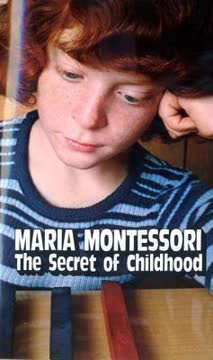
Reviews of The Secret of Childhood are generally positive, averaging 4.15/5. Many readers praise Montessori's profound philosophical insights into child development, particularly her concepts of sensitive periods, children's psychic needs, and the role adults play in either supporting or hindering a child's growth. Some critics find the book overly philosophical, repetitive, or difficult to read, while others note its heavy religious references. Readers across multiple languages and cultures find value in its core message: children possess an innate drive for self-development that adults must respect.
People Also Read