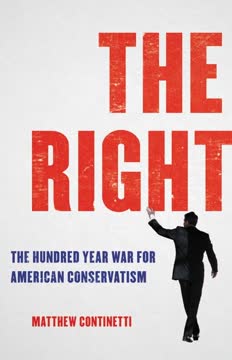
Key Takeaways
1. The Shifting Sands of Early Conservatism (1920s-1940s)
To them, the 1920s were “normal.”
Normalcy's foundations. American conservatism in the 1920s, under Presidents Harding and Coolidge, championed "normalcy"—a return to limited government, economic freedom, and non-interventionist foreign policy after the Progressive era and World War I. This period saw tax cuts, reduced regulation, and a veneration of the Constitution, identifying economic growth with patriotism and religious piety. However, this mainstream also coexisted with darker, nativist tendencies, exemplified by the resurgence of the Ku Klux Klan and Henry Ford's anti-Semitism.
New Deal's challenge. The Great Depression and Franklin D. Roosevelt's New Deal shattered this consensus, expanding federal power and redefining liberalism as government provision rather than individual autonomy. Anti-New Deal forces, including Herbert Hoover and the American Liberty League, fought against what they saw as a radical restructuring of American government, warning of "collectivism, coercion, [and] concentration of political power." Intellectuals like Albert Jay Nock and the Southern Agrarians, though often elitist and pessimistic, also critiqued the burgeoning state, sometimes flirting with authoritarian ideas.
War and isolationism. World War II further complicated the Right's identity. While the war ended the Depression, it also expanded federal power. Figures like Robert Taft championed constitutionalism and non-interventionism, fearing that foreign entanglements would lead to a "totalitarian state" at home. The America First Committee, with figures like Charles Lindbergh, advocated neutrality, but its association with anti-Semitism and the Pearl Harbor attack ultimately discredited the isolationist stance, forcing conservatives to re-evaluate their approach to global conflict.
2. Anti-Communism: The Unifying Force
Anticommunism became the touchstone for the religious conservatives, economic conservatives, foreign policy realists, and ex-Communists who made up the Cold War Right.
A common enemy. The emergence of the Soviet Union as a global superpower after World War II provided American conservatism with a powerful, unifying cause: anti-communism. This shared adversary allowed disparate factions—from free-market advocates to traditionalists and former Marxists—to coalesce, prioritizing national security and opposing Soviet expansion abroad and Communist subversion at home. This era saw the establishment of institutions and policies like the Truman Doctrine, Marshall Plan, and NATO, defining a bipartisan "containment" strategy.
Intellectual rigor. Ex-Communists like James Burnham brought a new intellectual intensity to the Right. Burnham's "Managerial Revolution" argued that bureaucracy, not capitalism or socialism, was the dominant force, and his "Struggle for the World" called for aggressive global leadership against communism. Whittaker Chambers's testimony in the Alger Hiss case exposed Soviet espionage within the government, galvanizing anti-Communist sentiment and highlighting the ideological stakes of the Cold War.
McCarthy's shadow. Joseph McCarthy capitalized on these fears, accusing government officials of Communist infiltration, though his demagoguery and disregard for norms ultimately led to his censure and discredited aspects of the anti-Communist cause. Despite his excesses, McCarthy's actions underscored a deep public anxiety about internal subversion and forced conservatives to grapple with the balance between national security and civil liberties, a tension that would continue to shape the movement.
3. The Rise of Movement Conservatism
National Review, its editors wrote, “stands athwart history, yelling Stop.”
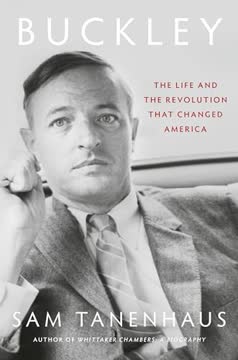
Building an apparatus. In the wake of McCarthy's decline and Eisenhower's moderate Republicanism, William F. Buckley Jr. recognized the need for a cohesive intellectual "Apparatus" to systematically articulate conservative thought. In 1955, he founded National Review, a magazine designed to compete with liberal journals and provide a platform for diverse conservative voices. This initiative aimed to give conservatism intellectual respectability and a unified voice, moving beyond the fragmented critiques of earlier decades.
Fusionism's promise. National Review sought to synthesize the often-conflicting tenets of libertarianism, traditionalism, and anti-communism into a coherent philosophy known as "fusionism," primarily articulated by Frank Meyer. This framework emphasized:
- Individual freedom grounded in a "transcendent moral order."
- Limited government to protect liberty.
- Aggressive anti-communism as a shared imperative.
This intellectual project aimed to provide a philosophical basis for a broad-based political movement, despite internal debates over the primacy of freedom versus virtue.
Defining boundaries. Buckley actively worked to define the acceptable boundaries of conservatism, publicly repudiating anti-Semitism (e.g., Gerald L. K. Smith, American Mercury) and the "rhetorical totalism" of Ayn Rand's Objectivism. While these exclusions sometimes cost National Review subscribers, they were crucial for establishing the movement's mainstream credibility and distinguishing it from extremist elements. This period also saw the emergence of influential traditionalist thinkers like Russell Kirk and Straussian scholars like Harry Jaffa, who provided deep philosophical roots for the burgeoning movement.
4. Populist Undercurrents and the Great Disruption
The public support that had sustained the civil rights movement melted under the heat of violent streets and radicalized demands.
Backlash against the Great Society. Lyndon Johnson's Great Society programs and the Vietnam War, coupled with rising crime rates and social unrest, triggered a significant backlash among working-class Americans. This "street-corner conservatism" was less about abstract ideology and more about a visceral rejection of perceived liberal excesses and the erosion of traditional values. William F. Buckley Jr.'s surprising success in his 1965 New York mayoral campaign, drawing support from ethnic Democrats in outer boroughs, hinted at this burgeoning populist discontent.
The New Left's radicalism. The rise of the New Left and the counterculture, with its embrace of radical social liberation and anti-American sentiment, further alienated mainstream Americans. Campus protests, urban riots, and the Black Power movement created a sense of societal chaos, pushing many traditional liberals and the general public toward a more conservative stance on "law and order." This period saw a growing divide between the cultural values of elite institutions and the sentiments of a significant portion of the electorate.
Wallace's appeal. George Wallace emerged as a powerful populist figure, tapping into this widespread resentment. While his overt segregationism was problematic, his anti-elite rhetoric, calls for law and order, and antagonism toward liberal intellectuals resonated with voters who felt ignored or disrespected. Wallace's ability to attract support from both working-class whites and some conservatives highlighted the deep fissures within the Democratic coalition and the potential for a new political alignment based on cultural grievances rather than traditional economic divides.
5. Nixon's Pragmatism and the Neoconservative Shift
For anti-Communist conservatives appalled at both LBJ’s conduct of the war and what they perceived as the anti-American turn of left-wing radicals inside the Democratic Party, Nixon was, as Buckley said, “the most right, viable candidate who could win.”
A new majority. Richard Nixon, a pragmatic conservative, skillfully navigated the fractured political landscape of the late 1960s and early 1970s. His "southern strategy" and appeal to the "silent majority"—working-class whites, Catholics, and ethnic voters—aimed to incorporate George Wallace's supporters into the Republican coalition. Nixon's domestic policies, such as the Family Assistance Plan, sought to modify rather than dismantle the welfare state, reflecting a more flexible approach to government intervention than traditional conservatives preferred.
Neoconservatism's rise. The social and cultural upheavals of the 1960s pushed many anti-Communist liberals, disillusioned by the New Left and the Democratic Party's perceived weakness, toward the right. Figures like Irving Kristol, Daniel Bell, and Norman Podhoretz, through journals like The Public Interest and Commentary, critiqued the unintended consequences of Great Society programs and defended American institutions against radical assaults. These "neoconservatives" brought intellectual rigor to the critique of liberalism, emphasizing empirical analysis and a defense of liberal democracy.
Foreign policy shifts. Nixon's foreign policy, particularly his opening to China and pursuit of détente with the Soviet Union, deeply alienated many traditional anti-Communists within the conservative movement. This pragmatic approach, driven by Henry Kissinger's balance-of-power realism, was seen by some as a betrayal of the ideological struggle against communism. However, the neoconservatives, while often critical of détente, found common ground with Nixon's assertive stance against the counterculture and his efforts to restore national pride.
6. Reagan's Synthesis: Populism, Principle, and Power
“There was unrest in the country,” Reagan later wrote, “and it was spreading across the land like a prairie fire.”
The prairie fire. Ronald Reagan, emerging from California's governorship, masterfully synthesized the disparate elements of the American Right into a powerful political force. His blend of optimism, unwavering anti-communism, and populist appeal resonated with a nation weary of economic stagnation, social unrest, and perceived national decline. Reagan's ability to articulate conservative principles in simple, relatable terms, as seen in his "A Time for Choosing" speech, made him a charismatic leader for the burgeoning movement.
New Right and supply-side. Reagan's coalition included the "New Right," a grassroots movement focused on social issues like abortion, gay rights, and school prayer, championed by figures like Phyllis Schlafly and Jerry Falwell's Moral Majority. He also embraced supply-side economics, popularized by Jack Kemp and Jude Wanniski, which advocated for tax cuts to stimulate economic growth, a departure from traditional conservative emphasis on balanced budgets. This economic vision, combined with a strong defense posture, offered a compelling alternative to the perceived failures of the Carter administration.
Confronting the "Evil Empire." Reagan's foreign policy was a direct challenge to Soviet power, characterized by a massive defense buildup, the Strategic Defense Initiative, and the "Reagan Doctrine" of supporting anti-Communist insurgents worldwide. He famously called the Soviet Union an "evil empire" and predicted its demise, a strategy that resonated deeply with anti-Communist intellectuals like James Burnham and neoconservatives like Jeane Kirkpatrick. This assertive stance, coupled with his domestic agenda, led to his landslide re-election in 1984 and solidified conservatism's dominance within the Republican Party.
7. Post-Cold War Identity Crisis
The end of communism also meant the end of conservative unity.
Loss of a unifying force. The collapse of the Soviet Union in 1991 removed the central "harnessing bias" that had unified the diverse factions of the American Right for decades. Without a clear external enemy of communism's magnitude, conservatives struggled to define their purpose and priorities in the "new world order" envisioned by George H. W. Bush. This vacuum led to internal conflicts and a re-evaluation of core conservative tenets.
Paleoconservative resurgence. The end of the Cold War saw a resurgence of paleoconservatism, a faction that opposed:
- Neoconservative interventionism (e.g., the Gulf War).
- Free trade and high immigration.
- Globalism in favor of a renewed "America First" nationalism.
Figures like Pat Buchanan and Sam Francis championed this isolationist and culturally conservative viewpoint, often clashing with the more internationalist and economically liberal wings of the movement. Buchanan's presidential bids in 1992 and 1996, though unsuccessful, highlighted the deep divisions within the GOP.
The "culture war" begins. With the Cold War over, conservative attention increasingly shifted to domestic cultural issues. Debates over education, family values, and morality intensified, becoming what Buchanan termed a "cultural war, as critical to the kind of nation we shall be as was the Cold War itself." This focus on social and cultural battles, often fueled by anxieties about perceived liberal excesses and the erosion of traditional norms, became a defining feature of post-Cold War conservatism, further fragmenting the movement along ideological lines.
8. The Media Revolution and the Culture Wars
Limbaugh’s importance to the conservative movement cannot be overstated.
The rise of conservative media. The 1990s witnessed a revolution in conservative media, driven by technological changes and the repeal of the fairness doctrine. Rush Limbaugh's syndicated radio show became the primary circulatory system of the conservative movement, reaching millions and shaping public discourse with his irreverent humor, anti-elite rhetoric, and direct engagement with listeners. This new media landscape, later expanded by Fox News Channel and online platforms like the Drudge Report, provided conservatives with powerful tools to bypass mainstream media and directly communicate with their base.
Clinton as antagonist. President Bill Clinton, despite adopting some conservative policies like welfare reform and free trade, became a central antagonist for the Right. Conservatives viewed him as the embodiment of 1960s immorality and a symbol of liberal cultural decay. The relentless focus on Clinton's personal scandals, particularly the Monica Lewinsky affair, fueled conservative media and galvanized calls for his impeachment, demonstrating the potent intersection of moral outrage and political opposition.
Cultural anxieties. Beyond Clinton, conservatives grappled with broader cultural anxieties. Books like William J. Bennett's The Book of Virtues and Charles Murray's The Bell Curve reflected concerns about declining moral standards, family breakdown, and the role of intelligence in social stratification. These discussions, often controversial, highlighted the Right's deep engagement with social issues and its belief that cultural health was paramount to national well-being, even as they sometimes alienated allies and sparked accusations of racism.
9. The Iraq War and the Populist Revolt
“If I knew then what I know now about what kind of situation we would be in, I would have opposed the war.”
Post-9/11 consensus. The September 11, 2001, terrorist attacks initially forged a strong national consensus, particularly on the right, for a robust response. President George W. Bush's "war on terror" and the invasion of Afghanistan were widely supported. However, the subsequent decision to invade Iraq, driven by neoconservative arguments for regime change and democracy promotion, proved to be a deeply divisive issue that ultimately fractured the conservative movement.
Fracturing the Right. The failure to find weapons of mass destruction in Iraq and the prolonged, costly insurgency led to widespread disillusionment. Prominent conservatives, including William F. Buckley Jr., George Will, and Francis Fukuyama, publicly expressed regret or opposition to the war, signaling a significant break from the Bush administration's foreign policy. This division exposed the fault lines between:
- Neoconservatives (e.g., Kristol, Kagan) who championed democracy promotion.
- Paleoconservatives (e.g., Buchanan) who advocated non-interventionism.
- Traditional conservatives who questioned the war's prudence and cost.
Populist backlash. The Iraq War, coupled with Bush's attempts at comprehensive immigration reform and the 2008 financial crisis, fueled a powerful populist revolt within the Republican Party. The Tea Party movement, emerging in 2009, expressed deep hostility toward both Democratic and Republican establishments, railing against government spending, bailouts, and perceived elite failures. This anti-establishment sentiment, amplified by figures like Ron Paul and Sarah Palin, laid the groundwork for a new era of national populism, challenging the very intellectual and political leadership that had guided conservatism for decades.
10. Trump's Ascendancy: The Return of Repressed Populism
“The ideas made it, but I didn’t,” said the seventy-eight-year-old paleoconservative, who had lost his cable contract in 2012 but still churned out a syndicated column twice a week.
A new kind of populist. Donald Trump's 2016 presidential campaign represented a dramatic re-emergence of anti-establishment populism, echoing figures like Andrew Jackson and Pat Buchanan. Trump's appeal stemmed from his direct, often abrasive communication style, his disdain for "political correctness," and his willingness to challenge the conventional wisdom of both parties on issues like immigration, trade, and foreign intervention. His "America First" agenda resonated with a base of white working-class voters who felt ignored by the political establishment.
Challenging conservative orthodoxy. Trump's candidacy exposed deep divisions within the conservative movement. Many traditional conservative intellectuals and pundits, including those at National Review and prominent neoconservatives, vehemently opposed him, viewing him as a "philosophically unmoored political opportunist" who would betray conservative principles. However, Trump garnered strong support from the New Right, social conservatives, and paleoconservatives, who saw him as a necessary disruptor willing to fight against perceived liberal cultural dominance and globalist policies.
The postliberal turn. Trump's victory catalyzed a "postliberal" intellectual movement within conservative circles, exemplified by publications like American Affairs and thinkers like R. R. Reno and Yoram Hazony. This movement critiqued "neoliberalism" and classical liberalism itself, advocating for a stronger nation-state, industrial policy, and a "common good constitutionalism" that prioritized communal well-being over individual autonomy. This shift signaled a willingness among some conservatives to abandon core tenets of economic and political freedom that had long defined the movement, embracing instead a more authoritarian-leaning nationalism.
11. The January 6th Aftermath: A Movement at a Crossroads
Trump divided the country between Americans loyal to him and Americans loyal to the rule of law.
The Capitol riot. Donald Trump's refusal to concede the 2020 election and his encouragement of claims of widespread voter fraud culminated in the January 6, 2021, attack on the U.S. Capitol. This event, marked by violence and desecration, exposed the dangerous consequences of unchecked populism and the erosion of respect for democratic institutions. The riot highlighted the growing influence of conspiracy theories and the willingness of some segments of the Right to prioritize loyalty to a single leader over constitutional order.
Internal divisions exposed. The aftermath of January 6th further deepened the fissures within the Republican Party and the conservative movement. While some Republican officials and conservative intellectuals condemned Trump's actions and called for accountability, a significant portion of the party remained loyal to him, echoing his claims of a stolen election. This created a stark divide between those who upheld the rule of law and those who embraced an anti-establishment politics willing to challenge democratic norms.
A future uncertain. The events of the Trump presidency and January 6th left the American Right at a crossroads. The tension between populism and elitism, a recurring theme throughout its history, intensified, with populists gaining significant sway. The movement faces the challenge of forging a new consensus that can address contemporary issues while reaffirming its commitment to constitutionalism, individual liberty, and a non-sectarian civil religion. The path forward requires a depersonalization of the Right and a renewed focus on principles, lest it continue to be defined by the demagoguery and anti-democratic impulses that marked the end of the Trump era.
People Also Read

 Immersive