
Key Takeaways
1. Exile's Enduring Scars and the Perilous Return
What do you do when you cannot leave and cannot return?
A Chasm of Years. Hisham Matar's return to Libya in March 2012, after 33 years of exile, was fraught with profound internal conflict. The journey across the "chasm" separating his adult self from the eight-year-old boy he was when his family fled, felt reckless. He feared losing the hard-won skill of living away from loved ones and places, echoing the dilemma of artists like Brodsky and Nabokov who never returned, versus those like Pasternak who never left.
Infantilized by Exile. The author grappled with the psychological toll of prolonged displacement, feeling "infantilized by exile" and struggling with a sense of arrested development. He questioned the wisdom of his return, secretly longing for the familiar comfort of his London flat. This internal struggle highlighted the deep-seated anxieties and identity crises that often accompany forced separation from one's homeland.
A New York Fantasy. Matar recounts a fantasy of moving to Manhattan, the city of his birth, to escape the agitation of the question, "Where are you from?" This desire for a neutral, unburdened identity underscored the constant negotiation of belonging that defined his life in surrogate cities like Cairo, Rome, and London. His eventual decision to return to Libya was a surrender to this long-resisted pull, a final confrontation with the land that had taken so much.
2. The Father's Unseen War and Disappearance
My forehead does not know how to bow.
A Dangerous Enemy. Jaballa Matar, Hisham's father, was a formidable opposition figure against Muammar Qaddafi's regime. His background as an army officer, diplomat, and successful businessman (importing Mitsubishi vehicles and Converse shoes) made him a "dangerous enemy." Despite attempts by the dictatorship to "buy him off" or "scare him," Jaballa refused to negotiate with what he called "criminals," demonstrating an unyielding commitment to his principles.
Kidnapped and Imprisoned. In March 1990, Jaballa Matar was kidnapped from his Cairo flat by Egyptian secret police and delivered to Qaddafi's regime. He was taken to Abu Salim prison in Tripoli, infamously known as "The Last Stop"—a place where the regime sent those it wished to erase. This act of state-sponsored disappearance plunged his family into decades of agonizing uncertainty and a relentless search for truth.
A Legacy of Defiance. Even from within the brutal confines of Abu Salim, Jaballa's spirit remained unbroken. His smuggled letters revealed astonishing resilience, stating, "The cruelty of this place far exceeds all of what we have read of the fortress prison of Bastille." He described his cell as a "concrete box" and endured years without seeing the sun, yet maintained his defiance, a trait that profoundly shaped his son's understanding of independence and resistance.
3. Qaddafi's Regime: A System of Calculated Cruelty
The cruelty of this place far exceeds all of what we have read of the fortress prison of Bastille.
Pervasive Repression. The 1980s marked a "lurid chapter" in Libya's political history under Qaddafi, characterized by extreme state violence. Opponents were publicly hanged in squares and sports arenas, while dissidents abroad were "pursued—some kidnapped or assassinated." This campaign extended to families, as evidenced by the attempted kidnapping of Hisham's brother, Ziad, from his Swiss boarding school.
Cultural Eradication. The regime systematically suppressed any form of dissent or independent thought. Books and musical instruments deemed "anti-revolutionary" or "imperialist" were confiscated and burned in public squares. Intellectuals, businessmen, and students were paraded on television, handcuffed, dictating confessions. This deliberate destruction of cultural life aimed to isolate and control the population, fostering an atmosphere of fear and conformity.
International Complicity. Qaddafi's campaign against exiles was not confined to Libya, with incidents occurring in Rome, Greece, and London, including the killing of a policewoman during a demonstration outside the Libyan Embassy. The Egyptian authorities, in a "dirty deal," collaborated by handing over Jaballa Matar, highlighting the international reach and complicity that enabled the regime's atrocities. This network of repression left no one truly safe, even in exile.
4. Prison as a Microcosm of Resistance and Resilience
Knowing a book by heart is like carrying a house inside your chest.
The "Noble Palace." Jaballa Matar, in his letters from Abu Salim, ironically referred to his cell as a "noble palace," a "concrete box" with a steel door and a window "three and a half metres above ground." Despite the desolate conditions, prisoners found ingenious ways to resist the regime's attempts at dehumanization. They discovered tiny holes in the prefabricated walls, large enough to pass books through, creating a clandestine "great library" within the prison.
A Network of Knowledge. These hidden passages fostered a vibrant intellectual network among inmates. Books, regardless of their quality, circulated, connecting nearly all the cells and providing a lifeline to the outside world and to sanity. This act of sharing knowledge and literature became a powerful form of defiance, demonstrating the human spirit's unyielding need for connection and intellectual engagement even in the most oppressive environments.
Poetry as Sustenance. Uncle Mahmoud recounted how, in the silent nights of Abu Salim, a prisoner would recite elegiac Bedouin poetry of the alam, a form popular in Ajdabiya. This voice, later revealed to be Jaballa Matar's, offered comfort and a connection to their shared heritage. For Jaballa, who believed "knowing a book by heart is like carrying a house inside your chest," poetry was not merely entertainment but a vital tool for survival, a way to preserve identity and resist erasure.
5. The Elusive Truth of Death and the Burden of Hope
I envy the finality of funerals. I covet the certainty.
The Agony of Uncertainty. For Hisham, the "unknown death and silence" of his father created an unbearable void, making him "envy the finality of funerals" and "covet the certainty." The opening of Abu Salim prison in 2011, and the release of all prisoners except his father, confirmed the inescapable truth of his death. Yet, the lack of a body or definitive account left Hisham and his family in a perpetual state of grief and unresolved longing.
A Blind Man's Clue. The discovery of an old blind prisoner in Abu Salim, who had lost his memory but possessed a photograph of Jaballa Matar, fueled Ziad's desperate hope that their father might still be alive, albeit incapacitated. This poignant detail, however, only deepened Hisham's struggle with the "bottomless abyss" of uncertainty, as he grappled with the possibility of his father's transformation beyond recognition.
The 2002 Sighting Debunked. A man's claim in 2209 to have seen Jaballa Matar alive in 2002, years after the 1996 prison massacre, ignited a powerful, albeit fleeting, surge of hope. This "tremendous news" invigorated Hisham's campaign, but was later debunked by the same witness, who admitted he had not recognized Jaballa himself, but had been told by another prisoner. This retraction left Hisham with the "old dark acknowledgment that Father had been killed in the massacre."
6. The Revolution's Promise and its Tragic Aftermath
Anything seemed possible, and nearly every individual I met spoke of his optimism and foreboding in the same breath.
Euphoria and Foreboding. The early days of the 2011 Libyan revolution were marked by a paradoxical mix of "hope and apprehension." The fall of Tripoli and the opening of prisons brought immense optimism, yet beneath the surface, a sense of foreboding lingered. This dual emotion reflected the fragile nature of the nascent freedom and the deep-seated anxieties about the country's uncertain future, a future that would soon turn "darkly on itself."
Izzo's Sacrifice. Hisham's cousin, Izzo, a civil engineering student, became a freedom fighter, embodying the youthful idealism of the revolution. He fought in the bloody battles of Misrata and Zliten, believing he would find Jaballa Matar alive in Qaddafi's compound. His death in Tripoli, shot by a sniper after breaking into Bab al-Azizia, symbolized the immense personal cost of the uprising and the tragic loss of a generation.
Seif's Chilling Prophecy. Seif el-Islam Qaddafi's televised speech in February 2011, delivered against a map of the world, chillingly predicted the civil war, destruction, and mass emigration that would follow if the uprising continued. While his motives were self-serving, his predictions proved accurate, highlighting the deep structural flaws of the system his father built. The subsequent chaos, Hisham argues, was "more true to the nature of his dictatorship than the ideals of the revolution."
7. Memory, History, and the Power of Narrative
To be a Libyan artist in Libya was heroic. The country, its politics and social dogmas, thwart every possible artistic instinct.
A Scarcity of History. Libya's modern history is marked by a profound "shortage of historical accounts," a consequence of its "painful birth" and deliberate suppression under Qaddafi. Libyans seeking their past must navigate foreign narratives, entering books "as an intruder at a private party." This absence of self-authored history underscores the regime's success in controlling public memory and identity.
Art as Resistance. Despite the pervasive censorship and repression, Libyan artists like Ahmed al-Faitouri heroically persevered. Al-Faitouri, imprisoned for ten years for his literary pursuits, revived an independent newspaper, Al-Mayadin ("squares"), to "document the February 17 revolution." This resurgence of journalism, from a handful to 200 publications, demonstrated the country's "appetite for a free and plural press" and the enduring power of narrative.
Father's Hidden Stories. Hisham's discovery of his father's two published short stories from 1957, "In the Stillness of the Night" and "A Struggle with Fate," was a "profound discovery." These narratives, written when Jaballa was eighteen, revealed a young man grappling with the consequences of colonialism and injustice, foreshadowing his later political commitment. For Hisham, these stories were a "gift sent back through time," offering a window into his father's interior landscape and the formative experiences that shaped him.
8. The Intertwined Fates of Oppressor and Oppressed
There is no country where the oppressed and the oppressor are so intertwined as in Libya.
Seif's Deceptive Charade. Seif el-Islam Qaddafi, the dictator's son, presented himself as a reformer, engaging in "leveraged engagement" with Western powers. He promised Hisham information about his father's fate, but his actions were a calculated attempt to "close the file" and gain international legitimacy. His aide, Mohammed Ismail, even named his son Hannibal after Seif's brother, who had brutally beaten his servants, illustrating the chilling normalization of oppression within the regime's inner circle.
British Complicity. The British government's "leveraged engagement" with Qaddafi's regime, described as "carrots and nearly no sticks," prioritized trade and "international acceptability" over human rights. Figures like Peter Mandelson maintained close ties with Seif, while the Foreign Office's "boredom" with human rights concerns highlighted a cynical pragmatism. This complicity allowed the regime to operate with impunity, further entrenching the suffering of its victims.
The Illusion of Choice. The regime's tactics often forced individuals into impossible choices, blurring the lines between victim and perpetrator. Uncle Ali and other prisoners were coerced into signing "formal apologies" for opposing Qaddafi, a humiliating condition for their release. This act, though understandable under duress, "corrupted everything" for Hisham, revealing the insidious ways in which the regime sought to break the spirit and compromise the integrity of its opponents.
9. The Silent Sacrifices of Family and the Weight of Loyalty
We all know what Jaballa Matar did. But I came here tonight not so much for Jaballa or Hisham, but to tell you all what I know of this gracious woman and to thank her, although no amount of gratitude would be sufficient.
Mother's Unsung Heroism. Hisham's mother, Fawzia Tarbah, embodied quiet strength and unwavering loyalty. During Jaballa's imprisonment, she housed mothers of other political prisoners, cooked for the entire prison wing, and sent books and supplies, earning a reputation for her "open house." This "silent sacrifice," as a former prisoner attested, was a profound act of resistance and compassion, often overlooked in the grand narratives of political struggle.
A Family's Collective Grief. The Matar family's reunion in Nairobi on the anniversary of Jaballa's disappearance underscored their shared grief and the enduring impact of his absence. They commemorated him by "telling and retelling the story of how it had happened," each memory a "tributary to the main one." This ritual of collective remembrance became their way of bearing witness and keeping his memory alive, even as they scattered to different countries.
Uncles' Enduring Loyalty. Hisham's uncles and cousins, who endured decades of imprisonment alongside Jaballa, demonstrated profound loyalty. Uncle Hmad, who regarded Jaballa "as a father," refused to call him a "stray dog" under torture, choosing words that would "cut off my head than those that would lower it." Their survival and their eagerness to share their stories with Hisham were acts of devotion, acknowledging Jaballa's legacy and the sacrifices made for their shared cause.
10. The Unfinished Nation: A Reflection of Internal Turmoil
Our unfinished homes are, in other words, a reflection of our present.
A Landscape of Neglect. Benghazi, a city that "always unenthusiastic about the Qaddafi regime," bore the physical scars of neglect and punishment. The "low-rise concrete blocks with their antennae and satellite dishes" and the pervasive rubbish reflected a deeper "inner upheaval, a private disquiet." Hisham observed that the "unfinished state of much of modern Libya's architecture" expressed neglect more actively than ruins, symbolizing a nation perpetually "in the making."
Distance-Sickness. Hisham experienced a "distance-sickness" upon returning, a state where "not only the ground was unsteady but also time and space." This disorientation was shared by ex-prisoners, whose "slightly stifled gait" and "reticence" revealed the toxic sediment of oppression lingering in their muscles. The physical and psychological landscape of Libya mirrored the unresolved conflicts and deep-seated anxieties of its people, a country "poised on a knife-edge."
The Weight of the Future. The city, once a symbol of hope, was poised to descend into further chaos, with buildings becoming "ghostly skeletons, charred and empty." Hisham sensed the "possibility of horror" in the night, recognizing that the "calamity that followed the fall of Qaddafi is more true to the nature of his dictatorship than the ideals of the revolution." The unfinished nation, with its proliferation of arms and competing militias, reflected a profound lack of self-regard and a future as uncertain as its past.
Review Summary
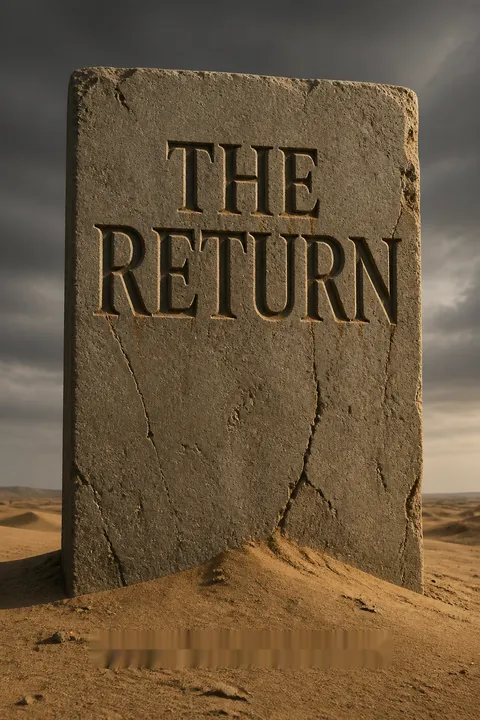
The Return is a Pulitzer Prize-winning memoir that deeply resonates with most readers, earning praise for its lyrical prose, emotional depth, and historical insight into Libya under Qaddafi's dictatorship. Reviewers highlight Matar's masterful interweaving of personal grief, political history, and themes of exile, identity, and father-son relationships. Some critics note the narrative's occasional digressive structure and male-centric perspective as weaknesses. Overall, the memoir is celebrated as a moving, courageous account of one man's search for truth about his disappeared father.
People Also Read





Download PDF
Download EPUB
.epub digital book format is ideal for reading ebooks on phones, tablets, and e-readers.








































