
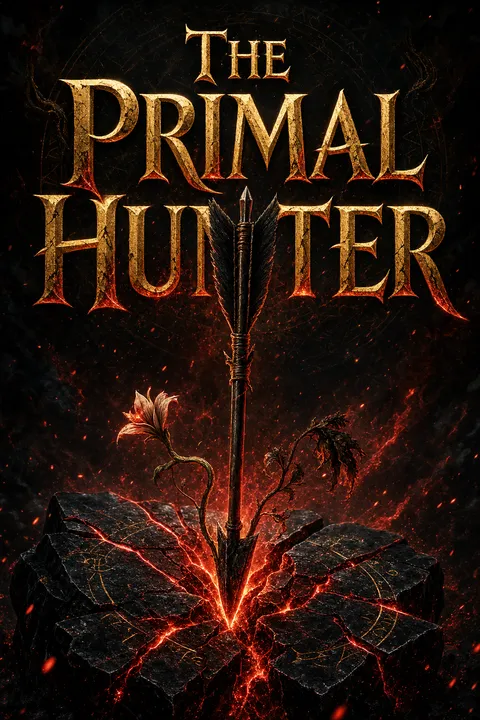


Plot Summary
Prologue
Interwoven with Jake's1 story is a quieter thread across the multiverse: an ancient, scaled entity2 stirs in a realm of grey desolation as the ninety-third universe crosses the threshold into the System. It murmurs that a new era has begun, then quells the flicker of hope in its own chest and sinks back into meditation.
Elsewhere, a faithful Order that worships a long-absent snake god2 waits, generation after generation, for a return that never comes. These fragments seem disconnected from a bored office worker riding an elevator,1 yet they frame everything: gods gamble on new worlds, and one mortal1 is about to become the wager that stirs a Primordial2 from eons of grief.
The framing establishes scale and dramatic irony. Before Jake grasps that reality has changed, the reader glimpses cosmic stakes: integration is not merely humanity's ordeal but a market where divine powers invest. The desolate god's suppressed hope seeds the novel's emotional counter-melody, that immortality's true burden is loneliness, not death. Zogarth uses these interludes to promise that the grinding LitRPG mechanics carry mythic weight. The Order's endless waiting introduces faith and legacy as themes, while the god's listlessness quietly foreshadows the redemptive human connection to come. It teaches us to read Jake's small choices as ripples in something enormous.
Just Another Monday Morning
Jake Thayne,1 a withdrawn business analyst who once dreamed of turning pro in archery before an injury ended it, rides an office elevator with his charismatic boss Jacob3 and several coworkers. A chime sounds, unfamiliar words flood his vision, and he blacks out.
He wakes in a sterile white room facing a featureless humanoid that explains Earth has passed a threshold into a vast multiverse governed by the System. Offered basic starting classes, Jake1 dismisses warrior, caster, and healer options and picks Archer, the path nearest his old hobby.
He receives a wooden bow, an enchanted quiver, a knife, potions, and a translation ability before being warned time is short. His ordinary life of spreadsheets and comfortable isolation dissolves in a single notification.
The opening weaponizes mundanity. Jake's flat contentment, his avoidance of attention and intimacy, is precisely the psychological baseline the System will detonate. His choice of Archer is characterologically revealing: he selects the discipline that lets him act alone, at distance, never in the messy proximity of melee or the dependence of a healer. Zogarth encodes personality into mechanics. The interrogation-room aesthetic frames initiation as a kind of processing, humanity reduced to data awaiting reclassification. The reader recognizes the isekai promise, but the emphasis on Jake's buried ambition and old wound quietly signals that this transformation will restore something he abandoned rather than simply granting escapist power.
Ten Coworkers, One Forest
Jake1 reunites with nine colleagues atop a descending pillar, all now reclassed and armored in medieval gear. The tutorial panel grants sixty-three days to survive a beast-filled forest, awarding Tutorial Points for kills.
Jacob3 naturally assumes leadership, and the group agrees to hunt only when necessary and avoid other survivors. When they find giant badgers feeding on a carcass, the others agonize over elaborate tactics while Jake1 simply nocks arrows and drops two before the plan begins. The skirmish ends easily.
His colleagues celebrate their first victory with nervous relief, but Jake1 feels something they do not: a clean, addictive satisfaction. He notices how out of step he is with these frightened civilians, and how natural the killing already feels to his hands.
The group functions as a control sample against which Jake's difference is measured. Their committee-style caution, arguing whether the beasts are badgers or weasels while prey waits, dramatizes civilian paralysis in a world that rewards decisive violence. Jake's competence is not just skill but temperament: he experiences no moral friction, only flow. Zogarth introduces the novel's central psychological question early, whether Jake's ease with killing is monstrous or simply honest. The tutorial's gamified brutality externalizes a Darwinian logic, forcing tender office workers to confront that survival here is not democratic. Belonging and individuality are already pulling in opposite directions.
The Boar and the Broken Leg
Scouting ahead, Jake1 fires on instinct into a rustling bush, killing a small boar and enraging its Jeep-sized parent, an Irontusk Boar. The group scatters as the beast rampages. Joanna,8 a panicking former receptionist turned caster, trips and freezes, and the boar tramples her, pulverizing one leg below the knee before the warriors finally bleed it dry.
Afterward Jacob3 confronts Jake,1 furious that he acted alone and crippled a teammate. Jake,1 unable to summon real guilt, coldly argues the shot was correct and that Joanna's8 own mistake caused her injury. The confrontation exposes the chasm between Jake's1 ruthless pragmatism and the group's need for consensus and safety. Jake1 begins to accept he does not belong among them.
This is the fracture point of Jake's social self. His refusal to perform contrition, even when it would smooth the group, reveals a man who trusts instinct and outcome over collective feeling. The scene interrogates responsibility: was the shot reckless or was Joanna's freeze the true failure? Zogarth resists easy moralizing, letting Jake's chilling logic stand partly vindicated, which unsettles the reader. Joanna's dismemberment makes the stakes visceral and permanent in a way earlier kills did not. The episode reframes leadership itself, contrasting Jacob's protective empathy with Jake's efficiency, and plants the question of whether kindness is survivable in this new order.
A Wonderful, Terrible Night
Standing lone watch, Jake1 is jumped by three higher-level human survivors. Cornered and briefly disarmed, his body takes over: he snatches an arrow from the air, slips between two warriors, and butchers all three, ending soaked in blood and smiling. The System awakens his Bloodline of the Primal Hunter, granting a spherical awareness of everything around him, a supernatural danger sense, and the Bloodline Patriarch title with a Vitality surge.
His colleagues arrive to a scene of carnage and see a monster. Privately, Jake1 confronts a harder truth: he felt no remorse, only euphoria. He decides it is not killing he loves but the hunt, the thrill of overcoming a lethal challenge, and resolves to grow stronger to protect them.
The Bloodline is both gift and diagnosis, literally naming Jake a primal hunter and externalizing what the boar incident implied. The euphoria after slaughter forces the novel's darkest self-examination: he distinguishes enjoying the hunt from enjoying death, a rationalization the reader is invited to weigh. His colleagues' fear marks his social exile as complete. Psychologically, this is individuation through violence, the emergence of an authentic self long suppressed by an anxious, conflict-avoidant surface. Zogarth ties power progression to identity: the stat that spikes is Vitality, tenacity of life, mirroring Jake's refusal to die and his growing appetite for the edge between survival and destruction.
Mr. Go-Fuck-Yourself
A fifty-strong faction led by Richard,5 a former private-security boss, corners the group and demands their healer Caroline,6 framing assimilation as cooperation. To spare his colleagues the role of hostages, Jake1 makes a cold calculation: he leaves them in Richard's5 protection but openly insults and threatens Richard,5 vowing to hunt him if his friends are harmed, then walks alone into the forest.
As expected, Richard5 sends a squad after him. Jake,1 hungry for solitude and for real challenges, prepares an ambush of his own, climbing a tree along his own backtrail. His departure severs him from the only people he knows, trading belonging for freedom and the pursuit of strength he now admits he craves.
Jake weaponizes his own reputation, converting the massacre of the previous night into deterrence, a mortal echoing the god-logic the book later articulates: cruelty that makes enemies hesitate. His provocation is theatrical, half-cringe bravado he later regrets, revealing a man still learning the performance of menace. The scene crystallizes his thesis that trust is a liability and self-reliance the only safety. Yet his parting concern for the group complicates the misanthrope reading; he leaves partly to protect them from himself and from Richard. Zogarth stages the classic loner's departure while seeding the antagonist relationship that will drive the tutorial's political plot.
The Duel with Nicholas
Richard's5 trusted lieutenant Nicholas10 leads six fighters after Jake,1 who has already reversed the hunt from the treetops. Jake1 picks them off with arrows and stealth, then locks into a prolonged, exhilarating cat-and-mouse duel with Nicholas,10 a genuinely capable archer faster than himself.
Using a slain comrade's propped corpse as bait, Jake1 lures Nicholas10 into a fatal lunge and stabs him through the heart, then honors him with a name exchange and cremation. He spares only a terrified teenage archer, sending him back to tell Richard5 that Nicholas10 fought well and that Jake1 welcomes more. The kills catapult Jake's1 levels and Tutorial Points, while a rattled Richard5 concludes the mad archer is not worth the losses.
The duel is the novel's first meeting of true equals, and Jake's respect, cremating Nicholas, extends the code beginning to govern him: enemies deserve a good death, not desecration. This ritual distinguishes him from the atrocity-prone survivors to come, positioning his violence as principled rather than sadistic. The bait-and-corpse trick shows tactical cunning layered atop instinct, proving his power is chosen craft, not just Bloodline luck. Zogarth uses Nicholas to humanize the enemy faction and to give Jake a mirror, a fellow professional whose competence earns dignity. The spared messenger converts victory into psychological warfare, a theme the antagonists will later escalate horrifically.
Down the Mushroom Spiral
Frustrated by dwindling prey, Jake1 follows a cave that descends in a seemingly endless spiral choked with glowing blue mushrooms. At the bottom he finds a rotten wooden door revealing a Tutorial Challenge Dungeon, enterable only by a solo challenger below level ten who ranks in the tutorial's top five percent by points. Warned that entry risks death, Jake1 accepts instantly, seduced by the word challenge.
Far away, an ancient god-like being2 rouses from a barren realm as the new universe integrates, briefly hoping something might finally change before dismissing the thought. Jake's1 restless curiosity, and his refusal to bunker down like other survivors, walks him straight into a lethal contraption designed eons ago by a bored deity.2
The spiral descent is archetypal, a katabasis into the earth and into the self, where the mundane forest world gives way to mythic trial. Jake's entry criteria reward exactly the traits he has been criticized for: solitude, aggression, high kill counts. The System validates his path even as society condemns it. The interleaved god-fragment builds structural irony; the reader senses the dungeon is personal to that lonely entity long before Jake does. Zogarth contrasts Jake's appetite for risk against the herd instinct of survivors hiding to wait out the timer, arguing that growth demands voluntary exposure to danger, the thesis the whole book will test.
The Halls of Spikes and Rot
Stripped of his gear, Jake1 threads halls that fire acid-drenched spikes, gathers silver mushrooms while dancing through kill-zones, and reaches a platform maze that nullifies every stat except his Bloodline. A bone dagger forces him to bleed onto symbols to advance, and one crossing literally rots his body away, killing him in all but name before the System restores him at the threshold.
In a hidden bonus room he witnesses a moving mural of a mushroom-eating snake evolving into a heaven-shattering dragon,2 and touching it grants Willpower for showing a dragon's courage. Traumatized by the helplessness of nearly rotting to death rather than falling in a fight, Jake1 emerges harder, humbled, and quietly reverent of the ordeal.
The dungeon strips Jake to essence, removing stats to reveal that his Bloodline, his innate self, persists where System-granted power fails. His terror is telling: he can accept dying in combat but not dissolving passively, a distinction that defines his entire value system. The rotting near-death rehearses the poison ordeal to come, and the snake-to-dragon mural supplies the novel's mythic template, ascension through relentless, courageous progress and the willingness to shatter one's own limits. Zogarth fuses gameplay puzzle with spiritual parable. Courage is coded as choosing the harder path when an easy safe one exists, the exact behavior that separates protagonists from survivors.
Poison in the Blood
A pedestal impales Jake's1 hand and injects a poison that will kill him in thirty days unless he becomes an Alchemist of the Malefic Viper and cures himself. He accepts, gaining a rare poison-specialized alchemy profession along with a library, garden, cave, and laboratory.
Jake1 teaches himself to brew potions and concoct toxins through relentless trial and error, even eating mushrooms and moss to absorb their properties via the Palate of the Malefic Viper2 skill.
He grinds profession levels, evolves his human race twice, and crafts his first common-rarity Necrotic Poison before his profession upgrade. The enforced isolation suits him perfectly; alchemy engages the same obsessive competitiveness that archery once did. Looming death becomes simply the hardest exam he has ever chosen to pass.
The profession recasts Jake as creator, not just killer, and the mushroom-eating self-experimentation literalizes learning through consumption, echoing the dragon-snake myth. Poison as specialty is thematically precise: Jake brings not restoration but decay, an artisan of death aligned with the Viper's identity. The deadline gamifies mortality into motivation, and Jake's contentment in solitary study exposes the truth beneath his social awkwardness, he was never lonely so much as unsuited to company. Zogarth uses the grind to model deep work and mastery, quietly arguing that meaning in this new world comes from self-directed challenge. Death is reframed from terror into problem, the ultimate expression of Jake's psychology.
Tea with a God
When Jake1 selects his Prodigious Alchemist evolution, the System yanks him before the Malefic Viper, the scaled Primordial2 whose legacy he appropriated. Rather than punishing the thief, the eccentric, isolated god2 is delighted that a mortal cleared his ancient prank dungeon.
They talk for hours about grief, power, and the multiverse, Jake1 unknowingly consoling a being who lost his beloved and withdrew for eons. The Viper2 admits he profited by investing in the tutorial, then grants Jake1 a True Blessing and a string of karma, hugely boosting his mental stats and cloaking his status from scrying.
Their conversation stirs the Viper2 toward ending his self-imposed exile. Jake1 gains a divine patron, a blunt mentor, and an unlikely friendship across an impossible gulf.
The heart of the book beats here, subverting the tyrannical-god trope with an absurd, grieving deity who needs comfort more than worship. Jake's fearlessness, a Bloodline effect, ironically makes him the one mortal capable of genuine friendship with a Primordial, since reverence precludes honesty. The scene proposes that even omnipotence cannot outrun loss, and that moving forward, building something new, beats clinging to the irretrievable. Zogarth grounds cosmic power in loneliness and healing. The blessing mechanically rewards emotional connection, fusing narrative and progression. Jake advises the god using wisdom his own father once gave him, quietly completing his arc from isolated son to someone who can offer solace.
The Amalgamation Gambit
Racing the timer, Jake1 concocts an unstable rare-grade sludge blending his toxic blood, condensed necrotic mushroom essence, and ten life-giving silver mushrooms.
Seconds before the dormant poison flares, he swallows the volatile mixture, letting opposing energies of life and death wage war through his body while his enormous Vitality mediates the battlefield of his own flesh. He nearly rots to death a second time, but survives, cured and gorged on Vitality. Clearing the dungeon rewards self-repairing boots, a spatial-storage necklace, and pioneer titles.
Jake1 loots the entire library, garden, and laboratory into his necklace and walks back into the forest utterly transformed, weeks of grinding having forged a novice archer into a poison-wielding predator far beyond who he was.
The cure is Jake's method externalized: fight poison with poison, meet death with more death, and let sheer vitality referee. It literalizes homeopathic courage and the dragon myth's principle that opposing forces, mastered, yield ascension. His willingness to nearly die on his own terms answers the earlier trauma of helpless rotting; this time he chooses the risk. Hauling the entire dungeon into storage marks a shift from survivor to accumulator, hoarding knowledge as power. Zogarth closes the dungeon act by demonstrating exponential growth, then returns Jake to the world so the reader can measure the gap between him and everyone else. Transformation demands the reckless embrace of near-death.
The Boy Made of Knives
Emerging into a forest emptied of beasts, Jake1 meets William,4 a cheerful blonde caster who offers to guide him to Richard's5 camp. Jake1 distrusts the too-friendly act immediately. William4 springs an ambush of metal-manipulated daggers, conjured iron walls, and a spinning steel disc, nearly keeping pace with Jake's1 shadow-dashing evasion.
Jake1 gambles, letting daggers sink into his back to close the gap, and slashes William4 with a blood-poisoned blade before a metal explosion blasts them apart.
William4 flees, surviving only because Caroline6 later heals the potent toxin. The clash teaches Jake1 that other survivors, especially this metal savant, are deadlier than any beast, and that his plan to reunite with his colleagues is dangerously premature. He withdraws to grow stronger.
William enters as Jake's dark twin, another gifted loner who reads the System as a game to min-max, but who lacks Jake's code and capacity for connection. Their duel is a thesis clash: Jake wins through willingness to absorb pain and through poison, patience over flash. The encounter punctures Jake's post-dungeon confidence, restoring stakes and humility. Zogarth uses William to argue that intelligence without empathy curdles into predation, foreshadowing the atrocities to come. Structurally, the fight reintroduces the human antagonists after the dungeon interlude and reveals that Richard's faction has consolidated power, resetting the political board Jake abandoned and must eventually confront.
The Reunion That Wasn't
Jake1 fires a note to Jacob3 requesting a meeting, and Jacob, Caroline, and Bertram3 come. The reunion goes warmly until dozens of hidden fighters, led by Richard5 and the fire-spear caster Hayden,11 shimmer into view. Jake1 grasps that he has been framed for murders and a war he never started.
Elemental whips, light walls, and Caroline's6 barriers pin him in place while Hayden11 impales him clean through the chest with a burning spear. Dying, Jake1 poisons Hayden11 with a desperate touch, then flees through the mysterious inner barrier and collapses among raptors.
His trust in Jacob3 nearly gets him killed. However unwitting the betrayal, it incinerates his last shred of naivety and hardens his resolve to become powerful enough that no scheme can ever touch him again.
The ambush is the novel's crucible, punishing Jake's single lapse into hope. The framing device pays off William's covert war-mongering, revealing Jake as a convenient scapegoat, and dramatizes how disinformation manufactures consensus. Caroline's participation, once his crush, delivers the personal sting; the woman he idealized helps trap him, completing his disillusionment with the group. Zogarth stages betrayal not through malice alone but through fear, desperation, and manipulation, a more chilling portrait of how good people become complicit. The near-death drives Jake past reconciliation entirely, converting the book's emotional wound into fuel. The barrier crossing physically relocates him into the escalated inner world.
A Fragment of Soul
On the brink of death, Jake's1 soul fragments through the blessing's karmic bond into the Malefic Viper's2 new lodgings, where the Order's Hall Master, Viridia,13 is scandalized to watch a mortal treat her god2 as a peer. The Viper2 reveals Jake1 is not dead, merely gravely fragile, his body slowly healing back in the forest.
He counsels Jake1 to abandon naive forgiveness, to rise so far above his enemies that plots crumble against pure power, and to ensure no one ever dares betray him again. Jake1 also learns Hayden11 somehow died despite his own escape, hinting at unseen manipulators steering events. He returns to his body with a new creed: no more indulgent fun, only relentless, ruthless growth toward unassailable strength.
This is Jake's dark-night pivot, the mentor sharpening the pupil after failure. The Viper's philosophy, might makes right and deterrence through demonstrated ruthlessness, is presented seductively but not uncritically; Jake internalizes the drive while retaining his own code. Viridia's horror provides comic and thematic contrast, underscoring how anomalous the god-mortal friendship is. The soul-projection mechanic literalizes how connection sustains Jake even at death's door, the blessing quite literally catching his falling spirit. Zogarth uses the interlude to reset the protagonist's motivation from curiosity and belonging toward power as security. The hint of hidden puppeteers keeps the reader ahead of Jake, sustaining dread about who truly orchestrates the war.
The Ambitious Hunter
Recovering beside three raptors he somehow slew while unconscious, Jake1 evolves his class, choosing Ambitious Hunter over darker offers like Bowman of Decay because its name and hunger for worthy prey match who he is.
He gains Big Game Hunter and Mark of the Ambitious Hunter, letting him punch far above his level. The inner area proves a vast realm of mountains, volcanoes, and high-level beasts. Jake1 experiments obsessively with mana manipulation, even blowing off his own arms testing how to accelerate his inner energy, and learns to enhance his shots.
He hunts with brutal efficiency, harvesting loot from System lockboxes tailored to him, methodically transmuting solitude and slaughter into escalating strength while the outer war rages unseen.
Class selection becomes an act of self-definition; Jake rejects the objectively stronger decay path to stay true to himself, echoing the Viper's parting advice and affirming identity over raw optimization. The self-mutilating experiments dramatize a scientist's willingness to suffer for understanding, and his indifference to losing limbs marks how far his relationship to his own body has shifted. Zogarth foregrounds curiosity as Jake's engine, learning the System's physics rather than merely leveling. The inner area functions as a bigger sandbox that isolates him further, deliberately walling him off from the human tragedy unfolding outside, so that when the survivor count crashes, both Jake and reader feel the horror at a haunting remove.
The War Eats Itself
While Jake1 grinds, the faction war detonates. Richard,5 secretly chasing a quest to rule ninety percent of survivors, storms Hayden's11 leaderless remnant camp and walks into a countertrap.
William,4 now armored in metal forged from the sacrificed life of the kindly smith Herrmann,12 betrays Richard5 mid-fight, kills Caroline,6 and unleashes a vortex of metal and corpses that shreds nearly everyone present. Over two hundred survivors die; Jake,1 far away, watches the tutorial counter crash toward forty-nine.
William,4 having finally felt grief and friendship through Herrmann's12 death, kills Richard5 but collapses, kept barely alive by a mysterious smiling stranger. Meanwhile Jacob3 evolves into an Augur of Hope, blessed by the Holy Mother, and quietly spares the unconscious William,4 refusing to snuff out even a monster.
The war's climax is a tragedy of manipulation reaping itself; Richard's Machiavellian empire-building and William's engineered chaos annihilate each other, indicting instrumental cruelty. Zogarth's boldest move is granting William an emotional awakening through Herrmann's paternal sacrifice, complicating the psychopath into a grieving boy who finally understands the feelings he weaponized. Caroline's death delivers delayed consequence for the betrayal arc. Jacob's parallel evolution offers the thematic antidote: leadership through hope and mercy rather than fear, his sparing of William an act of radical grace. The staggering death toll, witnessed by Jake only as a falling number, renders atrocity abstract and thereby more chilling, a meditation on distance and complicity.
The Den Mother Falls
Deep inside a mountain, Jake1 discovers the Badger's Den dungeon and methodically slaughters packs of Venomfang Badgers, refining new poisons between fights. Mid-battle against an Alpha he improvises, fusing stamina and mana to upgrade Powershot into the rare Infused Powershot.
Then, channeling raw fury from a haunting dream the Viper2 silently guards, Jake1 dismantles the level-82 Den Mother with a confidence he has never before possessed, exploiting its healing and instincts.
Victory grants pioneer titles, a poison gland, a bone shiv called Venomfang, and badger-hide armor. A new quest surfaces: slay the four Beast Lords who guard their dungeons to force their hidden King into the open. Reborn as a poison-mastering hunter, Jake1 fixes his sights on the next mountain.
The finale consolidates Jake's synthesis of his two identities, hunter and alchemist, into a single lethal method, the skill upgrade symbolizing hard-won integration of body and mana. His new confidence, forged through betrayal and the Viper's counsel, replaces the reactive euphoria of early kills with deliberate mastery. The dream the Viper guards signals ongoing divine investment and Jake's unresolved emotional wounds around family and abandonment. Zogarth closes book one by scaling ambition outward: from surviving a tutorial to a quest against lords and a king, promising a larger cosmology. The ending affirms the series thesis, that relentless self-challenge, not comfort or company, is Jake's chosen road to freedom and power.
Analysis
The Primal Hunter uses LitRPG scaffolding to stage a study of individuation, the emergence of an authentic self from beneath a life of quiet avoidance. Jake1 begins numbed by routine, his ambition long amputated by an old injury and an old betrayal. The System does not so much grant him power as give him permission to want again, and the novel's genius is encoding psychology into mechanics: he picks the class that lets him act alone, awakens a Bloodline literally named for the hunter he always was, and adopts a profession of decay that matches his comfort with killing. Progression becomes self-definition, most explicitly when he rejects an objectively stronger class to remain true to himself. Thematically the book wrestles with the ethics of ruthlessness. Jake's1 euphoria after slaughter, his refusal of guilt, and the Viper's2 might-makes-right philosophy could render him monstrous, yet Zogarth complicates this with a code, cremating worthy foes, sparing the helpless, protecting the few he loves, and by contrasting him against William,4 a mirror lacking empathy, and against Richard,5 whose calculation curdles into cruelty. The faction war's self-annihilation and Jacob's3 hope-based path argue that instrumental cruelty consumes itself, while mercy, however impractical, preserves meaning. The emotional core is loneliness and connection: a grieving god who withdrew for eons2 is coaxed back toward life by a mortal's honesty, and Jake's1 fearlessness, his supposed defect, becomes the very thing enabling genuine friendship across an impossible gulf. Even William's4 arc bends toward the terrible awakening of feeling. The takeaway is that growth demands voluntary exposure to danger and challenge rather than the herd's instinct to hide, and that power, pursued for security against betrayal, is hollow without the connections that make survival worth the effort.
Review Summary
The Primal Hunter receives mixed reviews, with an average rating of 4.28 out of 5. Readers praise its engaging LitRPG elements, character development, and fast-paced action scenes. Many enjoy the power fantasy and unique abilities of the protagonist. However, critics point out pacing issues, excessive filler content, and underdeveloped side characters. Some find the writing style lacking and the plot predictable. Despite its flaws, fans of the genre appreciate the detailed game mechanics and immersive world-building, while others struggle with the repetitive nature of level grinding and stat increases.
People Also Read
Characters
Jake Thayne
Reluctant loner turned hunterA withdrawn business analyst and lapsed competitive archer whose comfortable, isolated life is shattered by the System. Cautious and conflict-averse on the surface, Jake harbors a fierce, almost obsessive competitiveness that once drove his archery and academics, and now fuels his hunger for challenges. He trusts instinct and intuition to an unhealthy degree, a tendency amplified by his awakened Bloodline. Scarred by an old romantic betrayal, he keeps people at arm's length, yet quietly cares for the few he calls friends. Jake experiences little remorse in combat, distinguishing love of the hunt from love of killing. Curious to a fault, he treats death, poison, and even gods as fascinating problems to solve. His arc traces a passive, adrift man rediscovering ambition, purpose, and a ruthless will to grow.
The Malefic Viper
Lonely ancient godAn ancient Primordial deity who evolved from a mushroom-eating snake into a heaven-shattering dragon and now wears a scaled, human-looking form. Beneath a goofy, irreverent, prank-loving exterior lies profound grief; he lost his beloved and withdrew from the multiverse for eras, letting his once-glorious Order fade. Immeasurably powerful yet achingly lonely, he is delighted rather than offended when Jake1 clears his ancient joke dungeon and treats him as an equal. He becomes Jake's1 patron, mentor, and unlikely friend, dispensing blunt wisdom about power, ruthlessness, and moving forward from loss. His philosophy prizes strength, deterrence, and staying true to oneself. Warm, mercurial, and dangerous, he embodies the book's argument that even omnipotence cannot cure loneliness without connection.
Jacob
Charismatic protective leaderJake's1 former supervisor, a handsome, wealthy, effortlessly likable man who becomes the moral anchor of their colleague group. A born manager with elite social intelligence, Jacob leads through empathy, consensus, and relentless optimism rather than force. He is one of the few people Jake1 genuinely likes and trusts. Physically weak as a fighter, Jacob compensates with organization, diplomacy, and an unshakable refusal to abandon hope or people, even at great personal cost. His loyalty to Jake1 persists against mounting evidence and pressure. Haunted by his inability to protect those he cares for in a violent world, he searches for a way to matter without killing, clinging to leadership as both purpose and burden.
William
Manipulative metal prodigyA nineteen-year-old caster who manipulates metal with terrifying skill and views the world through a cold, gamified lens, dividing people into the useful and the disposable. Raised believing his inability to feel empathy was strength rather than defect, William excels at reading and manipulating others while faking a shy, harmless persona. Institutionalized before the System freed him, he embraces this brutal new world where killing is rewarded rather than punished. Ambitious, deceitful, and lethal at range yet fragile in defense, he schemes to become the tutorial's sole survivor. His interior life, shaped by rejection and misunderstanding, is slowly and painfully cracked open by genuine human connection, forcing him to confront the emotions he long dismissed as weakness.
Richard
Calculating faction warlordA former private-security firm owner who enters the tutorial with employees and swiftly builds the dominant survivor faction. Competent, ruthless, and politically shrewd, he treats people as assets, breaking up groups to prevent cohesion and hoarding items and healers. Driven by a hidden quest to rule the survivors, he manipulates threats and scapegoats to consolidate control while presenting a reasonable, protective face. He respects strength and keeps dangerous individuals close until they outlive their usefulness. His pragmatism curdles into cold callousness, making him both an effective leader and a quietly monstrous one.
Caroline
Coveted healer, Jake's old crushA young human-resources coworker, slim and blonde, who becomes the tutorial's premier healer and thus a prized, protected asset. Once the object of Jake's1 shallow infatuation, she gravitates toward Jacob3 and eventually shares a relationship with him. Kind at first, she hardens under the pressures of survival, becoming willing to make cruel pragmatic choices she frames as protecting everyone. Her shifting loyalties and desperation reveal how the tutorial corrodes gentle people, trading compassion for expedience.
Casper
Gentle archer turned trapperAn introverted R&D coworker and fellow archer who bonds with Jake1 over shared hobbies and social awkwardness. Kind and reluctant to kill, he specializes in traps and finds brief love in the tutorial before grief transforms him. His trauma pushes him toward darker powers, illustrating how loss can warp even the mildest souls in this merciless world.
Joanna
Chatty receptionist turned crafterA middle-aged, over-made-up office receptionist separated from her husband Mike during integration. Initially a liability after a devastating early injury, she reinvents herself through a tailoring profession, becoming a respected crafter leader. Her resilience and determination to remain useful make her a quiet emblem of endurance and adaptation among the noncombatant survivors.
Bertram
Loyal warrior bodyguardA large, brooding but soft-hearted man who effectively raised the wealthy Jacob3 and serves as his devoted protector. The most competent fighter among the original colleagues, he wields shield and sword with a soldier's steadiness. His unwavering loyalty is to Jacob3 above any faction, and his sober judgment often tempers the group's hopes with hard realism.
Nicholas
Skilled loyal assassinRichard's5 trusted right-hand man, a former security employee and capable archer sent to eliminate Jake1. Cool-headed, methodical, and genuinely dangerous, he engages Jake1 in a grueling duel and earns rare respect as a worthy opponent. He embodies the professional competence that sets Richard's5 core enforcers apart from the civilian masses.
Hayden
Grieving rival faction leaderAn ex-military caster who leads the faction rivaling Richard's5, wielding fire magic and a deadly spear. Volatile and emotional, especially after losing his son, he prioritizes vengeance over strategy. His grief makes him easy to manipulate, and his fury drives much of the escalating war between the two camps.
Herrmann Schmidt
Kindly master smithA large, bearded former steelworks foreman and gifted smith who lost his son and daughter-in-law early in the tutorial. Blessed by a forge god, he becomes an invaluable crafter and a rare paternal figure. His warmth, patience, and quiet longing for revenge lead him to invest everything, including himself, into forging a legacy through a chosen protege4.
Viridia
Devout Order hall masterThe green-haired, unnaturally beautiful highest-ranking mortal of the Malefic Viper's2 dwindling Order. Faithful for generations, she is thrown into panic and reverence by both her god's2 casual return and his baffling friendship with a lowly mortal1.
The Lord Protector
Weeping guardian deityA god affectionately nicknamed Snappy who guarded the Malefic Viper's2 Order through eras of absence. Deeply emotional and loyal, he weeps with joy at his master's2 return, contrasting divine grandeur with tender, almost childlike devotion.
Plot Devices
The System
Reality's game-like rulesetThe multiverse-wide framework that integrates Earth, granting classes, professions, levels, stats, skills, titles, and evolutions. It gamifies existence, rewarding kills with experience and Tutorial Points and structuring growth through status screens and notifications. The System is presented as an impersonal force, like gravity, neither benevolent nor cruel, yet it shapes every choice: Jake's1 class selections define his identity, his profession reframes him as a creator of poisons, and evolutions rebuild his very body. It also enables gods to invest in and influence tutorials. By translating psychology into mechanics, the System lets the narrative externalize character, ambition, ruthlessness, and courage all become measurable, choosable paths, making self-definition literal and consequential.
Bloodline of the Primal Hunter
Jake's innate signature powerA rare, inheritable ability unique to Jake1, awakened after his first lethal fight. It grants a Sphere of Perception that senses everything around him regardless of sight, a supernatural danger sense, and enhanced instincts and intuition, plus a growing Perception bonus. Crucially, it is not System-granted but intrinsically his, functioning even when stats are nullified. The Bloodline makes Jake1 fearless before overwhelming power, uniquely enabling his friendship with a god2, and lets him fight on instinct beyond his conscious speed. It defines him as a hunter at the deepest level, symbolizing an authentic self long buried beneath his anxious exterior, and its continual evolution mirrors his personal growth.
Alchemy and Poison
Jake's crafting and lethalityThrough the Alchemist of the Malefic Viper2 profession, Jake1 learns to brew potions and concoct poisons using mana-infused herbs, mushrooms, and his own toxic blood. Poison becomes his signature weapon, transforming a single arrow or cut from a minor wound into near-certain death, and letting him fell beasts and foes far above his level. The craft also drives his profession leveling, race evolutions, and mana mastery. Thematically, alchemy recasts Jake1 from mere killer into artisan, an agent of decay aligned with his snake-god patron2. His obsessive experimentation, including eating toxins to learn them and nearly killing himself with his own brews, embodies mastery through relentless, risky self-directed study.
Challenge and Tutorial Dungeons
Isolated crucibles of growthHidden pocket dimensions that offer danger and reward together. The Challenge Dungeon, secretly built as a lethal joke by the Malefic Viper2, strips Jake's1 gear and stats, subjects him to poisoned spikes and rot, tests his courage, and ultimately grants him his profession and near-death mastery. Later, the Tutorial Dungeon Badger's Den lets him grind against escalating beasts up to the Den Mother, refining skills and poisons in safe isolation. Dungeons function as controlled crucibles that accelerate transformation away from the messy human politics of the tutorial, and clearing them grants stacking pioneer titles, tailored loot, and quests, structurally propelling Jake1 from survivor toward a larger cosmology of lords and kings.
The Framing and Faction War
Manufactured scapegoat conflictA covert campaign of murders staged to look like inter-faction attacks ignites a devastating war between Richard's5 and Hayden's11 camps. Jake1, absent and misunderstood, is conveniently blamed as a lone psychotic killer, a narrative that hardens even his former colleagues against him and culminates in an ambush that nearly ends him. The device dramatizes how disinformation manufactures consensus and how fear, grief, and desperation turn ordinary people complicit in atrocity. It also masks the true instigator's manipulations, keeping the reader ahead of Jake1 and sustaining dread about hidden puppeteers. The war's self-consuming climax indicts instrumental cruelty and contrasts sharply with paths of mercy and hope offered elsewhere.
FAQ
Synopsis & Basic Details
What is The Primal Hunter about?
- Ordinary man, extraordinary world: Jake, an average office worker, is thrust into a new reality governed by a system akin to a video game, complete with stats, skills, and classes.
- Survival is paramount: Jake must navigate a deadly tutorial filled with dangerous beasts and other survivors, forcing him to adapt and grow stronger to survive.
- Embracing primal instincts: Jake discovers a unique Bloodline ability that enhances his instincts and perception, setting him on a path of self-discovery and forcing him to confront his own primal nature.
- Quest for power and understanding: The story follows Jake's journey as he navigates this new world, forming alliances, battling enemies, and seeking to understand the system and his place within it.
Why should I read The Primal Hunter?
- Unique LitRPG experience: The Primal Hunter offers a fresh take on the LitRPG genre, blending elements of survival, adventure, and character progression with a unique system and world.
- Compelling character development: Jake's transformation from an ordinary office worker to a skilled hunter and alchemist is a captivating journey of self-discovery and growth.
- Intriguing world-building: The story explores a complex and dangerous world governed by a mysterious system, filled with diverse creatures, powerful entities, and hidden secrets.
- Action-packed and engaging: The Primal Hunter is filled with thrilling battles, strategic decision-making, and unexpected twists, keeping readers on the edge of their seats.
What is the background of The Primal Hunter?
- Multiverse initiation: The story begins with Earth passing a threshold to enter the multiverse, triggering the system's integration and transporting individuals to a deadly tutorial.
- System-governed reality: The new world operates under rules similar to a video game, with stats, skills, classes, and levels determining an individual's power and abilities.
- Medieval-fantasy setting: The tutorial takes place in a vast forest filled with dangerous beasts, medieval-style weapons and armor, and magical elements.
- Survival-focused tutorial: The tutorial's objective is to survive for a set duration while collecting tutorial points, forcing participants to hunt beasts and potentially engage in conflict with other survivors.
What are the most memorable quotes in The Primal Hunter?
- "I did what I deemed best, and I do stand behind the decision to kill the small boar. Even if it had been another human, trusting anyone not from our team is a horrible idea. The tutorial actively encourages us to kill each other. Don't forget that.": Justification of ruthless pragmatism - This quote highlights Jake's willingness to prioritize survival and strength, even at the cost of morality, reflecting a key theme of the story.
- "I did not feel like having any unnecessary social interaction, and as the adrenaline slowly wore off, he looked at the system messages he had missed during the fight.": Prioritizing personal growth - This quote encapsulates Jake's introverted nature and his focus on self-improvement, often at the expense of social connections.
- "I won.": Triumph over adversity - This simple yet powerful statement, uttered after a brutal battle, encapsulates Jake's transformation from an ordinary man to a skilled and ruthless hunter, highlighting his determination to survive and thrive in the new world.
What writing style, narrative choices, and literary techniques does Zogarth use?
- First-person perspective: The story is told from Jake's point of view, allowing readers to intimately experience his thoughts, feelings, and perceptions as he navigates the new world.
- Detailed descriptions: Zogarth uses vivid descriptions to bring the world to life, immersing readers in the lush forests, dangerous caverns, and brutal battles of the tutorial.
- System integration: The author seamlessly integrates game-like elements, such as stats, skills, and levels, into the narrative, creating a unique and engaging LitRPG experience.
- Internal monologue: Jake's internal thoughts and reflections provide insight into his character development, motivations, and struggles as he adapts to the challenges of the tutorial.
Hidden Details & Subtle Connections
What are some minor details that add significant meaning?
- Joanna's wizard book: Joanna's fondness for a "certain book about a scarred boy wizard" foreshadows the presence of magic in the system and her choice of the Caster class, adding depth to her character.
- Bertram's military background: Bertram's competence in combat and knowledge of skinning animals hints at a hidden past, adding intrigue to his character and suggesting a life beyond his role as Jacob's "butler."
- Casper's romantic ineptitude: Casper's shared struggles with romance with Jake create a subtle bond between them, highlighting their similar personalities and providing a source of camaraderie in the harsh new world.
- The artificial sun: The artificial sun in the sky, and its movement, symbolizes the artificiality of the tutorial and the characters' confinement within a controlled environment.
What are some subtle foreshadowing and callbacks?
- Jake's archery practice: Jake's past experience with archery foreshadows his proficiency with a bow in the tutorial and his ability to quickly adapt to ranged combat.
- The small boar incident: The initial encounter with the small boar foreshadows the later, more dangerous encounter with the Irontusk Boar, highlighting the escalating threats in the tutorial.
- The glowing sword: The medium warrior's glowing sword foreshadows the existence of magical skills and abilities beyond the basic ones granted at the start of the tutorial.
- The translation skill: The translation skill granted upon entering the tutorial foreshadows the potential for communication and interaction with other races in the multiverse.
What are some unexpected character connections?
- Jacob and Bertram's relationship: The revelation that Bertram is akin to a butler or caretaker for Jacob adds depth to their dynamic and suggests a long-standing bond between them.
- Dennis and Lina's relationship: The ongoing, never-ending charade of pointless discussions between cousins Dennis and Lina provides comic relief and highlights the importance of human connection in the face of adversity.
- Richard and Nicholas's past: The fact that Richard and Nicholas worked together before the initiation adds a layer of complexity to their relationship and suggests a pre-existing power dynamic between them.
- Caroline and Jacob's attraction: Caroline's romantic interest in Jacob creates a subtle love triangle with Jake, adding a layer of emotional tension to the group dynamics.
Who are the most significant supporting characters?
- Jacob: As the de facto leader of the group, Jacob provides guidance, support, and a sense of stability in the chaotic new world, making him a crucial figure for the other survivors.
- Caroline: As the group's healer, Caroline's skills are invaluable for their survival, and her presence provides a source of comfort and hope in the face of danger.
- Bertram: As the heavy warrior and Jacob's protector, Bertram provides physical strength and a sense of security to the group, acting as a reliable shield against threats.
- Casper: As the other archer and a fellow introvert, Casper provides camaraderie and support to Jake, sharing his struggles and offering a different perspective on the challenges they face.
Psychological, Emotional, & Relational Analysis
What are some unspoken motivations of the characters?
- Jake's desire for control: Jake's actions are often driven by a desire to control his environment and his own destiny, stemming from a past where he felt powerless and betrayed.
- Jacob's need for validation: Jacob's eagerness to please and lead stems from a deep-seated need for validation, possibly linked to his privileged background and desire to prove his worth.
- Caroline's search for security: Caroline's attraction to Jacob and her willingness to follow his lead may be driven by a desire for security and stability in the face of the chaotic new world.
- Richard's ambition for power: Richard's actions are often motivated by a desire for power and control, stemming from a need to dominate and lead in any situation.
What psychological complexities do the characters exhibit?
- Jake's social anxiety: Jake's introverted nature and social awkwardness stem from past experiences of betrayal and rejection, making it difficult for him to connect with others and express his emotions.
- Jacob's savior complex: Jacob's desire to help and protect others may stem from a savior complex, driven by a need to feel useful and make a positive impact on the world.
- Caroline's codependency: Caroline's reliance on Jacob and her willingness to prioritize his needs over her own may stem from codependent tendencies, driven by a need for approval and validation.
- Richard's Machiavellianism: Richard's manipulative and strategic behavior stems from a Machiavellian mindset, driven by a belief that the ends justify the means and that power is the ultimate goal.
What are the major emotional turning points?
- Jake's decision to leave the group: Jake's decision to strike out on his own marks a turning point in his emotional journey, as he embraces his primal instincts and prioritizes his own growth over social connections.
- Joanna's injury: Joanna's injury and subsequent loss of a limb serve as a harsh reminder of the dangers of the new world, forcing the group to confront their own mortality and vulnerability.
- The ambush and deaths: The ambush and deaths of the three attackers mark a turning point in Jake's emotional journey, as he grapples with the reality of killing other humans and the potential for violence in the tutorial.
- The meeting with the Malefic Viper: Jake's meeting with the Malefic Viper provides him with guidance, validation, and a new perspective on his own path, helping him to embrace his unique abilities and potential.
How do relationship dynamics evolve?
- Jake and Jacob's friendship: Jake and Jacob's friendship evolves from a professional relationship to a bond forged through shared experiences and mutual respect, despite their differing views on morality and survival.
- Jake and Caroline's unrequited feelings: Jake's unrequited feelings for Caroline create a subtle tension in the group dynamics, highlighting his struggles with social interaction and romantic relationships.
- Richard and Jacob's leadership: Richard and Jacob's differing leadership styles create a power struggle within the group, as they compete for influence and control over the other survivors.
- The group's reliance on Jake: The group's increasing reliance on Jake's skills and instincts creates a shift in power dynamics, as he becomes a crucial figure for their survival, despite his initial reluctance to take on a leadership role.
Interpretation & Debate
Which parts of the story remain ambiguous or open-ended?
- The nature of the system: The true nature and purpose of the system remain a mystery, leaving readers to speculate about its origins, goals, and ultimate impact on the characters and the multiverse.
- The Malefic Viper's motives: The Malefic Viper's motives for intervening in Jake's journey and bestowing him with a blessing remain ambiguous, leaving readers to question his true intentions and the potential consequences of his actions.
- The fate of the other survivors: The fate of the other survivors in the tutorial, particularly those who were not part of Jake's group, remains uncertain, leaving readers to wonder about their struggles, triumphs, and ultimate destinies.
- The meaning of Records: The exact nature and significance of Records remain unclear, leaving readers to speculate about their role in determining an individual's potential, destiny, and place in the multiverse.
What are some debatable, controversial scenes or moments in The Primal Hunter?
- Jake's decision to kill the small boar: Jake's decision to kill the small boar, despite the potential risks and moral implications, sparks debate about the ethics of survival and the value of human life in the tutorial.
- Jake's actions after the ambush: Jake's brutal response to the ambush and his subsequent looting of the corpses spark debate about the morality of violence and the potential for corruption in a lawless world.
- The group's decision to leave Joanna: The group's decision to leave Joanna behind, despite her injury, sparks debate about the limits of compassion and the difficult choices that must be made in the face of survival.
- Jake's relationship with the Malefic Viper: Jake's relationship with the Malefic Viper, a powerful and potentially dangerous entity, sparks debate about the ethics of power and the potential for corruption when dealing with forces beyond human comprehension.
The Primal Hunter Ending Explained: How It Ends & What It Means
- Jake enters a new area: Jake enters a new area, leaving behind his former colleagues and the familiar landscape of the tutorial, signaling a transition to a new phase of his journey.
- The power of choice: Jake's decision to prioritize his own growth and follow his instincts, even at the cost of social connections, highlights the importance of individual agency and the power of choice in shaping one's destiny.
- The importance of self-reliance: Jake's success in the tutorial is a testament to the importance of self-reliance, adaptability, and the ability to trust one's own judgment in the face of adversity.
- The lure of power: The ending hints at the seductive nature of power and the potential for corruption, as Jake embraces his primal instincts and sets his sights on new challenges and greater heights.
The Primal Hunter Series
Download PDF
Download EPUB
.epub digital book format is ideal for reading ebooks on phones, tablets, and e-readers.








































