Plot Summary
Mother's Chokehold
Erika Kohut, a piano teacher in her late thirties, lives under the oppressive rule of her elderly mother in a cramped Vienna apartment. Their relationship is a toxic blend of love, dependency, and control, with Erika's every move scrutinized and dictated by her mother. The two are locked in a perpetual power struggle, oscillating between violent outbursts and tearful reconciliations. Erika's mother, having lost her husband to madness, has poured all her ambitions and anxieties into her daughter, molding her into a vessel for her own frustrated dreams. Erika, in turn, is both resentful and complicit, unable to break free from the maternal grip that defines her existence. Their home is a battleground, their lives a closed circuit of mutual need and sabotage, setting the stage for Erika's emotional and psychological stasis.
Erika's Secret Life
Beneath the surface of her dutiful daughter persona, Erika leads a secret life marked by compulsive rituals and furtive excursions. She is obsessed with control and cleanliness, yet drawn to the sordid and forbidden. Erika visits peep shows and pornographic cinemas, not for pleasure but to watch, to punish herself, and to experience vicariously what she cannot allow herself in reality. Her sexuality is repressed, twisted into voyeurism and self-harm. She buys beautiful dresses she never wears, hoarding them as symbols of a life she cannot live. Erika's existence is a paradox: outwardly disciplined and respectable, inwardly chaotic and self-destructive. Her mother's surveillance extends even to her private moments, leaving Erika with no true sanctuary except the fleeting anonymity of the city's darker corners.
The Closet of Desires
Erika's closet is a mausoleum of unworn clothes, each garment a relic of desire denied. She purchases dresses, shoes, and accessories compulsively, only to hide them away, never daring to wear them in public. These objects become substitutes for intimacy, love, and self-expression—things Erika cannot access in her real life. The closet is both a symbol of her longing and a prison of her own making. At night, she caresses the fabrics, imagining a different self, but always returns to her role as the obedient daughter. Her mother's constant interference ensures that Erika's desires remain unfulfilled, reinforcing the cycle of acquisition and deprivation. The closet, like Erika's psyche, is overstuffed, suffocating, and haunted by the ghosts of possibilities never realized.
Lessons in Submission
Erika's professional life as a piano teacher mirrors the dynamics of her home. She wields authority over her students, often humiliating and belittling them, yet she is also desperate for their admiration and love. Her teaching is less about music than about enforcing discipline and asserting control. Erika's own failed ambitions as a concert pianist haunt her, and she takes a perverse satisfaction in sabotaging the hopes of her most talented pupils. The conservatory becomes another arena for Erika's struggle with submission and dominance, as she oscillates between the roles of tyrant and victim. Her interactions with students are fraught with unspoken tensions, sexual undercurrents, and the ever-present threat of emotional violence.
The City's Dark Corners
Erika's nocturnal wanderings through Vienna's seedy districts are acts of both rebellion and self-punishment. She seeks out peep shows, porn theaters, and lovers' trysts in public parks, not to participate but to observe, to be near the forbidden without ever crossing the threshold. These excursions are marked by a sense of danger and shame, as Erika courts the possibility of discovery and humiliation. The city's underbelly becomes a stage for her fantasies of submission and degradation, a place where she can momentarily escape her mother's gaze. Yet even here, Erika remains an outsider, unable to connect, always watching from the shadows. Her voyeurism is both a symptom of her isolation and a desperate attempt to feel something—anything—beyond the numbness of her daily life.
Childhood in Chains
Erika's childhood was a regime of discipline, isolation, and relentless ambition. Her mother, aided by a grandmother, shielded her from all outside influences, especially men, and enforced a strict program of musical training. Erika was denied normal friendships, pleasures, and even the freedom to make mistakes. Every aspect of her development was monitored and controlled, with any sign of independence swiftly punished. The result is a woman who is emotionally stunted, unable to form healthy relationships, and haunted by a sense of inadequacy. Erika's self-worth is tied to her mother's approval and her own unattainable standards of perfection. The scars of her upbringing manifest in her compulsions, her fear of intimacy, and her need for punishment.
The Failed Pianist
Erika's early promise as a pianist was crushed by a combination of maternal interference, self-sabotage, and the pressures of competition. A disastrous public performance marked the end of her dreams of artistic greatness, relegating her to the role of teacher rather than performer. This failure is a source of enduring shame and resentment, fueling her bitterness toward her students and her mother. Erika's identity is fractured: she is neither the celebrated artist her mother envisioned nor the independent woman she might have become. Her life is defined by what she has not achieved, and her sense of self is built on a foundation of loss and regret. The piano, once a source of joy, becomes an instrument of torture and a reminder of all that has slipped away.
Klemmer's Arrival
Walter Klemmer, a young, attractive engineering student, enters Erika's life as both a pupil and a catalyst. His interest in Erika is initially ambiguous—part admiration, part sexual curiosity, part ambition. Klemmer's youth, health, and confidence stand in stark contrast to Erika's repression and self-loathing. He pursues her with a mixture of sincerity and calculation, sensing her vulnerability and testing the boundaries of their teacher-student relationship. For Erika, Klemmer represents both a threat and a hope: the possibility of love, but also the risk of exposure and humiliation. Their interactions are charged with erotic tension, power games, and the unspoken legacy of Erika's past. Klemmer's presence destabilizes the fragile equilibrium of Erika's world, setting in motion a chain of events that will lead to catastrophe.
The Peep Show Ritual
Erika's visits to peep shows become increasingly ritualized, serving as both an outlet for her repressed sexuality and a form of self-punishment. She is fascinated by the spectacle of anonymous bodies, the mechanics of desire, and the transactional nature of sex. Yet she remains detached, never participating, always observing. The peep show is a microcosm of Erika's life: a place where intimacy is impossible, where pleasure is commodified, and where the boundaries between watcher and watched are rigidly enforced. Erika's compulsions are both a rebellion against her mother's control and a reenactment of her own powerlessness. The ritual offers no release, only a deepening sense of alienation and despair.
The Letter of Demands
In a moment of desperation, Erika writes a letter to Klemmer, detailing her fantasies of submission, bondage, and punishment. The letter is explicit, humiliating, and deeply revealing—a confession of her need to be controlled, hurt, and degraded. She asks Klemmer to tie her up, gag her, beat her, and use her as an object, specifying the instruments and scenarios she desires. The act of writing the letter is both an assertion of agency and a surrender of self. Erika hopes that by articulating her desires, she can finally achieve the intimacy and release she craves. Yet the letter also exposes her to ridicule and rejection, making her vulnerable in ways she has never allowed herself to be before. Klemmer's reaction to the letter will determine the course of their relationship and Erika's fate.
The Toilet Encounter
The first physical consummation between Erika and Klemmer takes place in a public toilet, a setting that underscores the sordidness and secrecy of their liaison. The encounter is awkward, charged with conflicting desires and expectations. Erika attempts to assert control by dictating the terms of their intimacy, but Klemmer resists, confused and ultimately repelled by her demands. The scene devolves into a struggle for dominance, with Erika seeking submission and Klemmer refusing to play the role she has scripted for him. The encounter leaves both parties dissatisfied, humiliated, and angry. It marks the beginning of a downward spiral, as the boundaries between pleasure and pain, love and violence, become increasingly blurred.
The Spiral of Violence
The relationship between Erika and Klemmer rapidly deteriorates as their sexual and emotional needs prove incompatible. Klemmer, unable to fulfill Erika's fantasies of submission, responds with mockery, disgust, and eventually violence. Erika, desperate for love and punishment, submits to his abuse, hoping it will bring her the intimacy she craves. Instead, she is met with contempt and physical assault. The violence escalates, culminating in a brutal scene in Erika's apartment, where Klemmer beats, rapes, and abandons her. Erika's mother, locked in another room, is powerless to intervene. The spiral of violence exposes the emptiness at the heart of Erika's desires and the futility of seeking redemption through suffering.
Mother-Daughter Night
In the aftermath of Klemmer's assault, Erika seeks comfort in her mother's bed. The two women reenact the dynamics of their lifelong relationship, with Erika regressing to a childlike state and her mother alternating between tenderness and rejection. Their interaction is charged with erotic undertones, as Erika clings to her mother, kisses her, and tries to merge with her physically. The scene is both a return to the original trauma of Erika's upbringing and a final, desperate attempt to find solace in the only relationship that has ever defined her. The night is marked by tears, confusion, and a sense of irreparable loss.
The Final Humiliation
The next day, Erika, battered and humiliated, dresses in an outdated, ill-fitting dress and ventures into the city. She seeks out Klemmer at his university, only to find him laughing and flirting with a group of young students, oblivious to her presence. Erika is invisible, irrelevant, and utterly alone. The public space that once offered her anonymity now becomes a stage for her final humiliation. She is mocked by strangers, ignored by the man she loved, and left with no recourse but to turn her violence inward.
The Knife's Edge
Overwhelmed by pain, shame, and the collapse of her identity, Erika takes a knife from her kitchen and stabs herself in the shoulder. The wound is not fatal, but it is a symbolic act of self-annihilation—a final attempt to assert control over her own suffering. Blood flows, but Erika feels nothing. The world continues around her, indifferent to her pain. She returns home, her fate uncertain, her future erased.
Sunlight on Wounds
As the sun rises over Vienna, Erika moves through the city, wounded and alone. Her mother tends to her injuries with silent care, but the bond between them is irrevocably altered. Erika's journey has led her to the brink of self-destruction, and yet she survives, marked by her scars and her failure to escape the cycle of submission and violence. The novel ends not with resolution, but with the image of Erika walking into the sunlight, her wound exposed, her fate unresolved—a testament to the enduring power of trauma and the impossibility of redemption.
Analysis
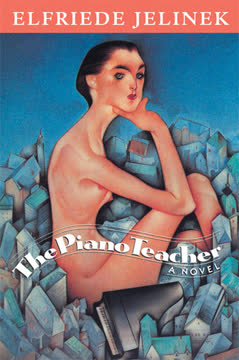
Elfriede Jelinek's The Piano Teacher is a harrowing exploration of the intersections between power, sexuality, and trauma in a society defined by repression and control. Through the character of Erika Kohut, Jelinek dissects the psychological consequences of a life lived under the shadow of maternal domination and societal expectation. The novel exposes the ways in which desire, when denied healthy expression, mutates into self-destruction, violence, and humiliation. Jelinek's Vienna is a city of surfaces—beautiful, cultured, and rotten beneath—mirroring Erika's own divided self. The narrative's relentless focus on the body, pain, and the mechanics of submission challenges the reader to confront uncomfortable truths about gender, authority, and the legacy of abuse. In a modern context, The Piano Teacher resonates as a critique of patriarchal structures, the commodification of intimacy, and the enduring scars of childhood trauma. Its lessons are bleak but vital: without agency, love becomes violence; without connection, desire becomes pathology; and without the possibility of change, suffering repeats itself endlessly. The novel's refusal to offer redemption or closure is its most radical gesture, forcing us to reckon with the realities we would rather not see.
Review Summary
Reviews of The Piano Teacher are deeply divided. Many praise Jelinek's unflinching psychological portrait of repressed piano teacher Erika Kohut, her suffocating maternal relationship, and her disturbing sexual obsessions, calling it a powerful feminist critique of patriarchal Austrian society. The writing style—stream-of-consciousness, shifting perspectives, dark irony—is frequently admired for its linguistic brilliance. However, others find it deliberately repulsive, structurally exhausting, and unnecessarily explicit. Some question whether its depictions of female masochism undermine rather than advance feminist discourse. Most agree it is profoundly uncomfortable yet impossible to dismiss.
People Also Read





Characters
Erika Kohut
Erika is the protagonist, a piano teacher whose life is defined by repression, self-denial, and a desperate longing for both autonomy and submission. Raised by a domineering mother, Erika's identity is fractured: she is at once a dutiful daughter, a failed artist, and a secret voyeur. Her sexuality is twisted into compulsive rituals of self-harm and voyeurism, and her attempts at intimacy are marked by humiliation and violence. Erika's psychological landscape is shaped by her mother's control, her own thwarted ambitions, and a profound sense of inadequacy. Her relationship with Klemmer exposes her deepest wounds, as she oscillates between the desire to be dominated and the need to assert control. Erika's development is a tragic descent into self-destruction, as she seeks redemption through suffering but finds only emptiness and pain.
Erika's Mother
Erika's mother is a formidable, manipulative presence whose love is inseparable from control and domination. Having lost her husband to madness, she invests all her hopes and fears in Erika, molding her into an extension of herself. The mother's methods are a mix of emotional blackmail, physical violence, and suffocating care. She sabotages Erika's independence at every turn, ensuring that her daughter remains dependent and isolated. Psychoanalytically, she embodies the devouring mother archetype, simultaneously nurturing and destroying. Her relationship with Erika is incestuous in its intensity, marked by jealousy, rivalry, and an inability to let go. As the novel progresses, the mother's power wanes, but her influence remains the defining force in Erika's life.
Walter Klemmer
Klemmer is a young, attractive engineering student who becomes Erika's pupil and lover. He is ambitious, confident, and initially fascinated by Erika's intelligence and authority. However, his interest is ultimately shallow and self-serving; he is drawn to Erika as a challenge, a means of sexual experimentation, and a way to assert his own power. Klemmer's reaction to Erika's desires is a mix of curiosity, disgust, and aggression. Unable to fulfill her fantasies of submission, he turns to violence and humiliation, ultimately abandoning her. Klemmer represents the destructive potential of unchecked desire and the dangers of seeking validation through another's suffering. His development is a journey from fascination to contempt, leaving Erika shattered in his wake.
The Father
Erika's father is a spectral presence, having been driven mad and institutionalized before the events of the novel. His absence shapes the dynamic between Erika and her mother, creating a vacuum that is filled with anxiety, control, and unresolved grief. The father's fate serves as a warning and a justification for the mother's obsessive attachment to Erika. For Erika, the loss of her father is both a source of trauma and a model for her own eventual breakdown. His madness is echoed in Erika's own psychological unraveling, suggesting a cycle of inherited suffering.
The Students
Erika's piano students are a diverse group, ranging from talented prodigies to hopeless amateurs. They serve as both victims and witnesses to Erika's internal struggles. She projects her own failures and frustrations onto them, alternately nurturing and sabotaging their ambitions. The students are also a source of envy and resentment, as Erika measures her own worth against their potential. Their presence highlights Erika's inability to connect, her need for control, and her fear of being surpassed. They are both the audience and the casualties of her emotional turmoil.
The Flutist
A young, attractive female student who becomes the target of Erika's jealousy and aggression. The flutist's youth, beauty, and talent represent everything Erika has lost or never possessed. In a moment of spite, Erika sabotages her by placing broken glass in her coat, causing a serious injury. The flutist's suffering is both a projection of Erika's own pain and a desperate attempt to reassert control in a world that is slipping away from her.
The Grandmother
Erika's maternal grandmother is a minor but significant figure in Erika's childhood, aiding her daughter in the strict upbringing of Erika. She represents the generational transmission of repression, discipline, and fear. The grandmother's presence reinforces the cycle of control and submission that defines Erika's life, serving as both a model and an accomplice for Erika's mother.
The City of Vienna
Vienna is more than a backdrop; it is a living, breathing entity that shapes and reflects Erika's inner world. The city's cultural heritage, its seedy underbelly, and its rigid social norms all play a role in Erika's psychological landscape. Vienna is a place of beauty and decay, tradition and transgression, offering both anonymity and surveillance. The city's streets, parks, and concert halls are stages for Erika's compulsions, fantasies, and humiliations.
The Peep Show Women
The women Erika observes in peep shows and pornographic films are both real and symbolic. They represent the unattainable, the forbidden, and the commodified nature of sexuality. Erika's fascination with them is a reflection of her own longing and her inability to participate in the world of desire. They are both mirrors and screens for Erika's fantasies, embodying the gap between watching and being seen.
The Crowd
The anonymous masses—students, concert audiences, passersby—serve as a constant reminder of Erika's isolation and difference. They are both the audience for her performances and the judges of her failures. The crowd's indifference, mockery, and occasional cruelty reinforce Erika's sense of alienation and her desperate need for recognition. Society, in the form of the crowd, is both the source of Erika's shame and the backdrop against which her tragedy unfolds.
Plot Devices
Duality of Submission and Control
The novel's central plot device is the tension between submission and control, both within Erika and in her relationships. This duality is explored through the mother-daughter dynamic, Erika's teaching methods, her sexual fantasies, and her interactions with Klemmer. The narrative structure mirrors this tension, alternating between scenes of dominance and moments of vulnerability. Foreshadowing is used to hint at the inevitable collapse of Erika's carefully constructed defenses, as her need for submission leads her into situations where she is ultimately destroyed by those she seeks to please.
Letters and Written Confessions
Erika's letter to Klemmer is a pivotal plot device, serving as both a confession and a contract. The act of writing externalizes her internal conflicts, making her vulnerable to ridicule and rejection. The letter functions as a catalyst for the novel's climax, transforming private fantasy into public humiliation. The use of letters and written instructions underscores the theme of communication and miscommunication, as Erika's desires are misunderstood, mocked, and ultimately weaponized against her.
Voyeurism and Spectatorship
Erika's compulsive voyeurism is both a symptom and a metaphor for her psychological state. The act of watching—whether at peep shows, in public parks, or through the lens of her own self-surveillance—serves as a means of exerting control while simultaneously reinforcing her isolation. The narrative frequently adopts a voyeuristic perspective, inviting the reader to observe Erika's suffering without intervening. This device blurs the boundaries between victim and perpetrator, watcher and watched, highlighting the complexities of desire and the impossibility of true intimacy.
Music as Metaphor
Music, and the discipline of piano playing, is a recurring motif that structures the novel's narrative and emotional arcs. The language of music—practice, performance, interpretation—serves as a metaphor for Erika's attempts to impose order on her chaotic inner life. Yet music is also a source of pain, a reminder of failure, and a tool of control wielded by both Erika and her mother. The narrative structure itself is musical, with recurring themes, variations, and dissonances that mirror Erika's psychological fragmentation.
Cyclical Structure and Repetition
The novel's structure is cyclical, with scenes and motifs repeating in ever-tightening spirals. Erika's attempts to break free from her mother, her compulsive rituals, and her failed relationships all follow patterns that lead inexorably back to the point of origin. This repetition reinforces the sense of entrapment and inevitability, as Erika's efforts to escape only deepen her captivity. The use of cyclical narrative devices underscores the novel's themes of trauma, inheritance, and the impossibility of change.








































