Plot Summary
Snowbound Discovery
The novel opens with a haunting image: a young woman, Alicia Western, is found dead, hanging in the winter woods, her body crystalline with frost, a red sash tied around her waist so she might be found. This stark, poetic scene sets the tone for the entire narrative—a world where beauty and sorrow are inseparable, and where the search for meaning is as cold and endless as the snow. The discovery is not just a literal event but a metaphor for the novel's exploration of loss, memory, and the impossibility of true understanding. The hunter who finds her is left wordless, unable to pray, and pockets her key and ring—small tokens of a life already slipping into myth. This moment foreshadows the novel's preoccupation with what remains after death: objects, memories, and unanswered questions.
Ghosts in the Attic
Alicia, a mathematical prodigy, is tormented by hallucinations—her "cohorts"—led by the Thalidomide Kid, a grotesque, wisecracking figure. These spectral visitors are both tormentors and companions, staging vaudeville acts and philosophical debates in her attic room. Their presence blurs the line between genius and madness, reality and delusion. The Kid's banter is laced with dark humor and existential dread, reflecting Alicia's struggle to find meaning in a world that feels increasingly unreal. The ghosts are manifestations of her isolation, her guilt, and her inability to reconcile her intellect with her suffering. Through these dialogues, the novel probes the limits of knowledge, the nature of consciousness, and the loneliness of those who see too much.
The Sunken Jet
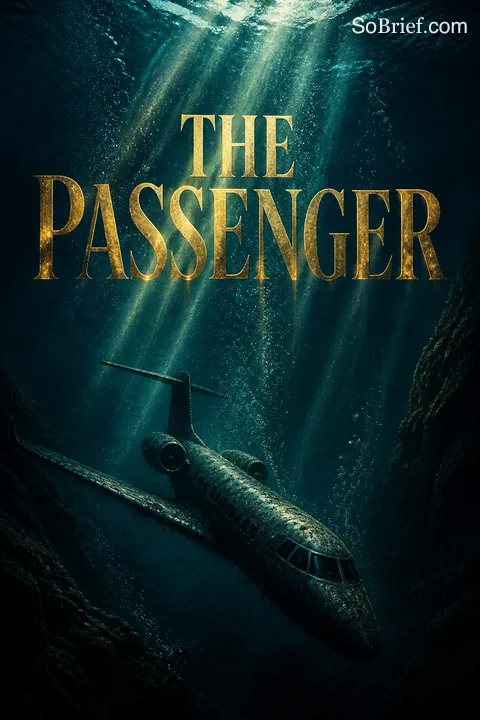
Bobby Western, Alicia's brother, is a salvage diver called to investigate a private jet that has crashed into the Gulf of Mexico. The plane is eerily intact, its passengers dead, their bodies suspended in the water as if time has stopped. But something is wrong: a passenger is missing, the flight bag and data box are gone, and the authorities are already watching. The scene is suffused with dread and ambiguity, as Bobby and his colleagues sense they are being drawn into a larger, more sinister narrative. The sunken jet becomes a symbol of secrets submerged, of histories erased, and of the impossibility of ever knowing the full truth. This event sets Bobby on a path of paranoia, loss, and exile.
New Orleans Shadows
In New Orleans, Bobby moves through a world of drifters, addicts, and intellectuals—his friends as lost as he is. The city is rendered with McCarthy's signature lyricism: a place of decay, beauty, and haunted memory. Bobby's conversations with his circle—Long John Sheddan, Bianca, Oiler—are filled with dark humor, philosophical musings, and confessions of failure. The city's underbelly mirrors Bobby's own sense of displacement and guilt, especially regarding his relationship with Alicia. The narrative lingers on the rituals of daily life—drinking, eating, storytelling—as a way to stave off despair. Yet, beneath the surface, the threat of surveillance and the weight of the past press ever closer.
Siblings and Secrets
The heart of the novel is the relationship between Bobby and Alicia, siblings bound by intellect, trauma, and a love that borders on the taboo. Their shared childhood is marked by brilliance and alienation, their adult lives by separation and longing. Through letters, dreams, and memories, the novel reveals the depth of their connection and the impossibility of their reunion. Alicia's descent into madness and eventual suicide haunt Bobby, who is left to wander the world in search of absolution. Their story is one of beauty and ruin, of promises that cannot be kept, and of the ways in which love can both save and destroy.
The Passenger Missing
As Bobby investigates the missing passenger from the jet, he finds himself pursued by shadowy agents and bureaucratic forces. The authorities' questions are laced with menace, and Bobby's every move is watched. His bank accounts are frozen, his passport revoked, and his possessions seized. The missing passenger becomes a cipher for all that is unknowable and uncontrollable in Bobby's life. The sense of being hunted, of being a "passenger" in his own story, drives Bobby into deeper isolation and paranoia. The novel uses this plot device to explore themes of surveillance, state power, and the erasure of identity.
War Stories and Regrets
In a series of raw, confessional conversations, Bobby's friend Oiler recounts his experiences as a Marine door-gunner in Vietnam. These stories are brutal, honest, and unvarnished—filled with violence, regret, and the lingering trauma of war. Oiler's memories of killing, survival, and the senseless destruction of both people and animals (notably elephants) serve as a counterpoint to Bobby's own sense of guilt and loss. The war stories are not just personal anecdotes but meditations on the nature of evil, the randomness of fate, and the impossibility of redemption. Through Oiler, the novel confronts the reader with the costs of violence and the scars it leaves on the soul.
The Vanishing Sister
Alicia's narrative, told through her hallucinations, letters, and memories, traces her journey from prodigy to patient at Stella Maris, a psychiatric hospital. Her brilliance is matched only by her suffering, and her dialogues with doctors and ghosts alike reveal a mind at war with itself. Alicia's refusal of medication, her philosophical skepticism, and her longing for oblivion culminate in her suicide. Her death is not just a personal tragedy but a commentary on the limits of reason, the cruelty of fate, and the loneliness of those who cannot be saved. Bobby's grief is compounded by the knowledge that he could not rescue her, and her absence becomes the central void around which his life revolves.
The Mathematics of Madness
The novel delves deeply into the world of mathematics and physics, using Alicia's and Bobby's intellectual pursuits as metaphors for their existential struggles. The dialogues about quantum mechanics, string theory, and the nature of reality are not mere technical asides but reflections on the limits of human understanding. Alicia's mathematical insights are both her gift and her curse, isolating her from others and driving her toward madness. The novel suggests that the pursuit of ultimate knowledge may lead not to enlightenment but to despair, and that some truths are too terrible to bear.
The Weight of Inheritance
The Western family is marked by brilliance and tragedy. Their father, a physicist involved in the Manhattan Project, is haunted by the consequences of his work and the loss of his wife. The family's history is one of displacement, loss, and the erasure of memory—symbolized by the theft of family papers and photographs. Bobby's discovery of buried gold coins in his grandmother's house is both a literal inheritance and a metaphor for the hidden burdens of the past. The novel explores how history, both personal and collective, shapes and dooms its inheritors.
The Pursuit and the Flight
As the net tightens around him, Bobby flees New Orleans, moving from city to city, job to job, always looking over his shoulder. His attempts to disappear—changing identities, living off the grid—are both acts of desperation and existential gestures. The world becomes increasingly hostile and surreal, with Bobby cast as a fugitive in a story he cannot control. The pursuit is not just by the authorities but by his own guilt, grief, and the memory of Alicia. The novel uses Bobby's flight to meditate on freedom, exile, and the impossibility of escape from oneself.
The World's Machinery
The novel is filled with discussions of the fundamental laws of nature, the history of physics, and the search for a "theory of everything." These scientific inquiries are paralleled by the machinery of the world—planes, cars, ships, and the gears of the windmill where Bobby eventually finds refuge. The world is depicted as a vast, indifferent machine, grinding on regardless of human suffering. The characters' attempts to understand or master this machinery are ultimately futile, and the novel suggests that the only certainty is loss.
The End of the Road
Bobby's journey takes him to remote places—Idaho, Spain, the beaches of Formentera—where he lives in increasing isolation. He survives by his wits, living off the land, haunted by memories and dreams. The deaths of friends, the loss of his home, and the disappearance of his cat mark the gradual stripping away of all that once anchored him. In the end, Bobby is left alone with his grief, his memories, and the indifferent stars. The novel closes with a sense of resignation and acceptance: the world is loss, and all that remains is to bear it with whatever dignity one can muster.
Letters Never Sent
Throughout the novel, letters—written, lost, or never sent—serve as symbols of failed communication and unresolved longing. Bobby's reluctance to read Alicia's final letter is emblematic of his inability to face the full truth of their relationship and her death. The act of finally opening the letter, with the help of his friend Debussy, is both a moment of catharsis and a recognition that some questions will never be answered. The letters are the last fragile threads connecting Bobby to the world he has lost.
The Last Sanctuary
Bobby's final refuge is an old windmill on a remote island, where he lives in near-total solitude. The windmill, with its ancient gears and creaking machinery, becomes a symbol of the world's indifference and the persistence of memory. Here, Bobby reflects on his life, his losses, and the nature of existence. The windmill is both a sanctuary and a tomb, a place where the past is both preserved and mourned. In this final exile, Bobby finds a measure of peace, if not redemption.
The Ghost Light
In a dreamlike encounter, Bobby meets the ghost of his friend Sheddan in an empty theater, illuminated only by the "ghost light" that is always left burning. Their conversation is a meditation on loss, memory, and the inevitability of oblivion. The ghost light becomes a metaphor for the persistence of grief and the impossibility of closure. The past, the novel suggests, is never truly gone; it lingers in the shadows, illuminating and haunting the present.
The Shape of Grief
The novel's final chapters are meditations on grief—its forms, its persistence, and its power to shape a life. Through conversations, dreams, and solitary reflections, Bobby comes to understand that grief is both universal and utterly personal. The loss of Alicia is not just his own but emblematic of all loss, all longing, all the ways in which the world fails to deliver on its promises. The novel ends not with resolution but with acceptance: grief is the shape of the world, and to live is to bear it.
Alone with the Stars
The novel closes with Bobby alone in the windmill, watching the stars, writing letters to Alicia he knows will never be answered. The world is silent, indifferent, and beautiful. The machinery of the windmill creaks on, the sea laps at the shore, and Bobby's memories fade into the night. In this final solitude, there is a kind of peace—a recognition that all things pass, that all stories end, and that the only thing left is to remember, to mourn, and to endure.
Analysis
Cormac McCarthy's The Passenger is a profound meditation on loss, genius, and the limits of human understanding. Through the intertwined stories of Bobby and Alicia Western, the novel explores the ways in which trauma, intellect, and love can both sustain and destroy. The narrative is suffused with a sense of existential dread, as characters grapple with the indifference of the world, the machinery of fate, and the impossibility of redemption. The novel's structure—alternating between external action and internal hallucination—mirrors its thematic concerns: the tension between reality and delusion, knowledge and madness, presence and absence. McCarthy's prose is both lyrical and precise, capturing the beauty and terror of a world in which all things pass and all stories end in loss. The novel's lessons are hard-won: that grief is the shape of the world, that love is both a gift and a curse, and that the only certainty is the persistence of memory and the inevitability of oblivion. In an age of surveillance, erasure, and exile, The Passenger asks what it means to endure, to remember, and to bear the unbearable.
Review Summary
Reviews for The Passenger are sharply divided. Admirers praise McCarthy's lyrical, hypnotic prose, rich philosophical dialogues, and emotionally devastating portrait of grief, calling it ambitious and singular. Critics argue the novel is self-indulgent, narratively incoherent, and ultimately unsatisfying, particularly regarding the unresolved mystery of the missing passenger. Many note the book defies conventional plotting, functioning more as a meditation on loss, guilt, and existence. The italicized sections featuring Alicia and her hallucinations polarize readers, as do the lengthy, digressive conversations on physics, history, and philosophy.
People Also Read








Characters
Bobby Western
Bobby is the novel's central figure—a salvage diver, former physicist, and the surviving sibling of Alicia. He is marked by guilt, grief, and a sense of being perpetually out of place. His relationship with Alicia is the emotional core of the novel: a bond of intellect, trauma, and forbidden love that both sustains and destroys him. Bobby's life is a series of exiles—geographical, emotional, and existential. He is pursued by shadowy authorities, haunted by the past, and unable to find peace. His psychological landscape is one of regret, longing, and a desperate search for meaning in a world that offers none. Over the course of the novel, Bobby is stripped of everything—home, friends, possessions—until only his grief remains. His journey is both literal and metaphorical: a passage through loss to a final, solitary acceptance.
Alicia Western
Alicia is Bobby's younger sister, a mathematical genius whose intellect is matched only by her suffering. She is plagued by hallucinations—her "cohorts"—who both torment and accompany her. Alicia's brilliance isolates her from others, and her inability to reconcile her intellect with her emotional pain leads her to madness and suicide. Her relationship with Bobby is intense, loving, and fraught with taboo; their bond is both a source of solace and a cause of anguish. Alicia's dialogues—whether with doctors, ghosts, or herself—are philosophical, poetic, and deeply moving. She is a figure of tragic beauty, a symbol of the costs of genius, and the embodiment of the novel's themes of loss, longing, and the limits of understanding.
The Thalidomide Kid
The Kid is the leader of Alicia's spectral "cohorts"—a deformed, wisecracking figure who stages vaudeville acts and philosophical debates in her mind. He is both tormentor and companion, a voice of dark humor and existential dread. The Kid's banter is laced with references to mathematics, physics, and the absurdity of existence. He serves as a kind of Greek chorus, commenting on the action and probing Alicia's deepest fears and desires. Psychologically, the Kid represents Alicia's struggle to make sense of a world that is both beautiful and cruel, rational and incomprehensible.
Long John Sheddan
Sheddan is one of Bobby's closest friends in New Orleans—a former academic, now a witty, self-destructive drifter. He is a master of dark humor, philosophical asides, and biting social commentary. Sheddan's conversations with Bobby are among the novel's most memorable, filled with reflections on history, literature, and the absurdity of life. He is both a source of comfort and a reminder of the world's indifference. Sheddan's own life is marked by failure, addiction, and regret, but he faces his end with a kind of stoic resignation.
Oiler
Oiler is a fellow diver and Vietnam veteran whose confessions of violence, regret, and survival form some of the novel's most powerful passages. He is blunt, honest, and deeply wounded by his experiences. Oiler's stories serve as a counterpoint to Bobby's own sense of guilt and loss, highlighting the ways in which trauma shapes and distorts a life. His death in a diving accident is another blow to Bobby, reinforcing the novel's themes of randomness, loss, and the impossibility of redemption.
Debussy Fields
Debussy is a performer and friend of Bobby's, notable for her wit, beauty, and emotional intelligence. She provides Bobby with support, understanding, and a measure of acceptance in a world that often feels hostile. Her own story—of transformation, exile, and the search for belonging—mirrors Bobby's in many ways. Debussy's willingness to help Bobby with Alicia's letters is an act of compassion and solidarity, highlighting the novel's concern with friendship, loyalty, and the search for connection.
The Cohorts
The "cohorts" are a shifting cast of hallucinated figures who populate Alicia's inner world. They include the Thalidomide Kid, Miss Vivian, Bathless Grogan, and others—each with their own quirks, voices, and obsessions. They stage acts, tell jokes, and engage in philosophical debates, serving as both tormentors and companions. Psychologically, they represent Alicia's isolation, her struggle to make sense of her suffering, and the ways in which genius can tip into madness. Their presence blurs the line between reality and delusion, highlighting the novel's preoccupation with the limits of knowledge and the nature of consciousness.
The Western Parents
Bobby and Alicia's parents are both marked by brilliance and tragedy. Their father, a physicist involved in the Manhattan Project, is haunted by the consequences of his work and the loss of his wife. Their mother, a beauty queen turned war worker, is a figure of strength and sorrow. The family's history is one of displacement, loss, and the erasure of memory—symbolized by the theft of family papers and photographs. The parents' legacy is both a gift and a curse, shaping the destinies of their children in ways they cannot escape.
Kline
Kline is a private investigator who helps Bobby navigate the dangers of being pursued by the authorities. He is practical, intelligent, and somewhat world-weary, offering advice on how to disappear, change identities, and survive in a hostile world. Kline's conversations with Bobby are marked by a blend of cynicism and compassion, and he serves as a kind of guide through the labyrinth of modern surveillance and bureaucracy.
Miss Vivian
Miss Vivian is one of Alicia's hallucinated "cohorts"—an old woman dressed in antique mourning clothes, obsessed with the sadness of babies and the nature of suffering. She represents the maternal, the mournful, and the inescapable presence of grief. Her dialogues with Alicia are poignant, philosophical, and deeply sad, reflecting the novel's concern with the universality of sorrow and the impossibility of consolation.
Plot Devices
Dual Narrative Structure
The novel alternates between Bobby's external journey—his work as a diver, his flight from the authorities, his exile—and Alicia's internal journey through madness, hallucination, and eventual suicide. This dual structure allows McCarthy to explore themes of loss, genius, and the limits of understanding from both an external and internal perspective. The siblings' stories mirror and echo each other, creating a sense of inevitability and tragic symmetry.
Hallucinations as Chorus
Alicia's hallucinated "cohorts" serve as a kind of Greek chorus, providing commentary, humor, and philosophical reflection on the action. Their presence blurs the line between reality and delusion, allowing the novel to explore questions of consciousness, identity, and the nature of suffering in a uniquely vivid way. The hallucinations are both a symptom of Alicia's illness and a vehicle for the novel's deepest meditations.
The Missing Passenger
The central mystery of the missing passenger from the sunken jet serves as both a plot engine and a metaphor for the novel's larger concerns. The search for the missing person becomes a search for meaning, identity, and truth in a world that resists all such efforts. The authorities' pursuit of Bobby, the erasure of evidence, and the sense of being watched all contribute to an atmosphere of paranoia and existential dread.
Letters and Unopened Messages
Letters—written, lost, or never sent—are a recurring motif, symbolizing the failures of communication, the persistence of longing, and the impossibility of closure. Bobby's reluctance to read Alicia's final letter is emblematic of his inability to face the full truth of their relationship and her death. The act of finally opening the letter is both a moment of catharsis and a recognition that some questions will never be answered.
Scientific and Philosophical Dialogue
The novel is filled with discussions of quantum mechanics, string theory, and the nature of reality. These dialogues are not mere technical asides but serve as metaphors for the characters' existential struggles. The pursuit of ultimate knowledge is depicted as both noble and doomed, a quest that leads not to enlightenment but to despair.
Objects as Memory
Objects—rings, keys, coins, photographs—are imbued with symbolic weight, serving as tangible reminders of what has been lost. The theft of family papers, the discovery of buried gold, and the preservation of Alicia's letters all underscore the novel's concern with memory, inheritance, and the persistence of the past.
Exile and Pursuit
Bobby's flight from the authorities, his attempts to disappear, and his eventual exile are both literal and metaphorical. The sense of being hunted, of being a "passenger" in one's own life, is central to the novel's exploration of freedom, identity, and the impossibility of escape from oneself.