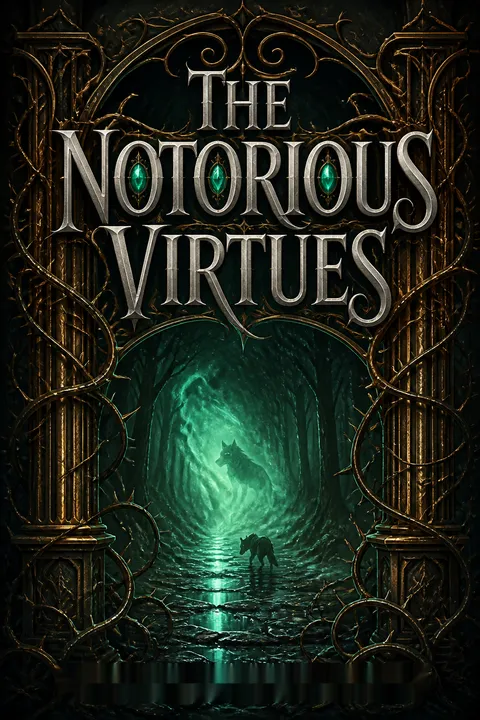

Plot Summary
1. Heirless in the Charmed City
Nora, once the presumed heiress of the powerful Holtzfall family, is nothing if not exceptional—bright, vain, and dazzlingly clever. Her world is overturned when her mother, the acclaimed Verity Holtzfall, is brutally murdered, shattering both Nora's future and the city's social order. In a 1920s-inspired city teeming with magic and headline-chasing journalists, Nora is thrust from unrivaled privilege to competition, forced to fight for her family's legacy just as the rest of the world expects her to collapse in grief. The chiaroscuro glamour of the Charmed City masks a labyrinth of family intrigue, power struggles, and the dark woods that threaten on the edge of civilization—a place humanity once tamed with axe and blood-stained bargains.
2. Lost Daughter, Secret Curse
Ottoline "Lotte" Holtzfall grows up ignored and isolated, believed to be a misbegotten outcast with a curse: she hears the viceful, ugly thoughts of everyone around her. Raised in poverty, chastened by nuns, and haunted by the cruelty of so-called virtue, Lotte aches for a life outside the convent—a place where she can finally belong. Her escape comes in the form of two men arriving from the world's most powerful family, with the promise that she is, in fact, one of them. The price of this revelation is immediate: she must step into a high-stakes game of magic, ancestry, and ugly family politics, with enemies ready to sacrifice her if she threatens the careful balance of Holtzfall power.
3. Blood Ties and Family Trials
The Holtzfall dynasty, built on a fabled axe and the blood of woodcutters-turned-kings, preserves its legacy through the Veritaz: a brutal, magical competition to find the next heir. Nora, Lotte, and their cousins—each clutching ambitions and resentments—are forced to wager their very magic and future on dangerous trials. The family convenes under their iron matriarch, Mercy Holtzfall, whose only loyalty is to the family legacy. Each heir must risk losing everything to the shining city or falling into ancient terrors lurking in the woods. The Veritaz becomes not just a test of worth, but a crucible burning away all pretense of loyalty, love, and safety among kin.
4. Murder and Ambition
Verity Holtzfall's death is more than a headline; it rips a hole in a succession meant to be serene and ensures her daughter's security. Instead, grief hardens into obsession—Nora transforms mourning into performance, daring the world to see her weakness but never her plan. Enter journalists, knights, and revolutionaries with their own agendas, all hunting secrets tied to power. Suspicion for Verity's murder falls on a petty criminal, but Nora's relentless intellect senses a deeper, orchestrated betrayal. As she scours the evidence, it clear that the same ruthless instincts that built the Holtzfall name will determine who survives the coming storm.
5. Knighthood and Oaths
Theo Rydder, descendant of a centuries-old knightly line bound to the Holtzfalls by sacred and bloody oaths, moves in Nora's shadow, haunted by lost siblings and the grief of failure. Knights live and die for Holtzfall virtue, their free will hostage to ancestral bargains. But as Theo navigates the treacheries of the court and defends the heiresses—even as he mourns his own brother, missing after Verity's death—he is forced to choose between the letter of his oath and the call of his heart. The cost of loyalty mounts with every ignored command and every secret uncovered, as the ancient magics binding family and knight begin to unravel.
6. New Arrivals, Old Secrets
Lotte's abrupt arrival at the Holtzfall mansion—a muddy, ragged waif thrust into opulence—throws cousins, knights, and matriarch alike into alarm. She is both a threat and a mirror: proof of family exile, of secrets so dangerous they might destabilize the world's greatest magical dynasty. Lotte's gift, mind-reading, becomes a blade; she must use it to survive the suffocating scrutiny and casual cruelty of the upper circles, all while longing for genuine connection. Every interaction is both performance and risk, as she is forced to outplay rivals who would sooner see her dead or returned to obscurity than share in the Holtzfall legacy.
7. The Games Begin
The Veritaz Trials descend into chaos as the rules twist and targets blur. Bravery, temperance, unity, and selflessness are not just abstract virtues but deadly tests, each disguised within city spectacles, assassinations, and magical traps. Dueling socialites, masquerade balls, and manufactured scandals become battlefields. Lotte, Nora, and their foes learn that in a family of survivors, virtue is never simple. Honesty is most dangerous of all. Only those who can distinguish self-preservation from selfishness, and love from possession, will reach the end with power intact—or simply remain alive.
8. Virtue and Violence
The city is wracked by violence as revolutionaries called the Grims, masked and vengeful, blend political idealism with old-world terror. Holtzfall magic and corruption reach battle climax: sabotage of factories, murder attempts at family gatherings, and citywide riots erupt. The trials are no longer contained—innocents become casualties, while the Grims maneuver for revolution by any means. Nora tracks her mother's real killer to criminal kingpin Oskar Wallen, only to discover deeper layers of Holtzfall complicity. In this crucible, every tie—blood, loyalty, or oath—is welded or shattered.
9. Of Wolves and Grims
Masked wolves slip among high society, urging the city to revolt against Holtzfall tyranny, promising "magic and money for all." Yet their leader, Isengrim, is more myth than man—a legend of vengeance and loss. Holtzfalls and knights struggle with ancient power, while the Grims weaponize stolen magic and unrest to bring down the old order. Theo's oath is leveraged for blackmail, Lotte is almost murdered for her blood, and the family's monstrous secrets prove as deadly as any masked revolutionary. When society's mask drops, no one is left untouched.
10. Scandal in the Spotlight
No trial, party, or victory is private in Walstad. The press simmers with innuendo and accusation, shaming, taunting, and even deifying every Holtzfall move, while the family's own ambitions and betrayals feed the frenzy. Nora and Lotte wield notoriety as both weapon and shield, dancing through scandal even as they engineer their own deceptions. Modesty's talent for manipulation becomes lethal; duels, sabotage, and outright assassination attempts move from rumor to bloodshed. Perception is always as important as truth, and the cost of keeping up appearances may be higher than survival.
11. Masks and Manipulations
Glamours, secret passageways, illegitimate offspring—every member of the Holtzfall clan, from youngest to matriarch, hides truths that matter. Lotte's mind-reading, concealed parentage, and identity as both curse and gift, enable her to survive but never trust. Oaths, both magical and personal, become prisons. Allegiances shift as knights, revolutionaries, and journalists maneuver for advantage. Even love becomes entangled in layers of manipulation and desperation, as the line between enemy and ally blurs. In a house of mirrors, no one's reflection is true.
12. Bloodlines Unbound
The Holtzfall-Rydder bond—a millennium-old pact—begins to disintegrate as illegitimate bloodlines are uncovered. Oskar Wallen, long believed to be just a gangster, is revealed as a knight bound to the Holtzfalls by blood, forced to orchestrate murder and cover-up by magical command. Lotte's true parentage fails to break the oath, while revolutionaries leverage blood and secrets to try to free themselves. The legacy that bound knight to heiress transforms from shield to chain, threatening to doom or liberate all.
13. Loyalty Fractures
Desperate to save those they love, characters must choose between blood, oath, and conscience; some choose betrayal. Family and knights fall by sword and by order, some by their own hands. In a final act of treachery, Mercy Holtzfall sacrifices her daughter and others to preserve the dynasty, ordering assassinations and memory wipes. The old world plunges into chaos, its security undone by the very magic meant to keep it safe. By the time the Grims attack, the Holtzfalls are already broken from within.
14. The Maze and the Fire
The cousins are trapped in a magical maze trial, forced to cooperate for survival. Modesty's ambition turns lethal; honest collaboration proves impossible amid simmering hate and old wounds. The maze becomes a funeral pyre—only miraculous self-sacrifice and clever magic allow some survivors to escape. Constance's death marks the climax of intra-family violence, and the Holtzfalls' remaining unity collapses in the wake of fire and grieving.
15. Treason and Triumph
The Grims' carefully orchestrated revolution, with Alaric (Theo's brother) as their inside man, uses the stolen Veritaz ring to seize the Holtzfalls' magic. The maid's uprising, knights' oaths broken, and revelations of magical and political treason bring the city, family, and power structure to a siege's end. The defense against the wolves falters; as the Flare's signal fires, knights and kin turn to stone and magic is forcibly unspooled from the Holtzfalls. In a moment engineered by traitors within and without, revolution finally succeeds, toppling the Holtzfall dynasty.
16. The Fall of the House
As Holtzfall magic is ripped from them, the fall becomes public carnival: the dynasty that once protected humanity from the supernatural unleashes ancient dangers by its very collapse. Statues of slain Holtzfalls litter their own gardens; their heirs flee for their lives, and newly unchained magic surges uncontrolled through the city. The Grims claim victory, establishing a fearless if precarious new order, as wolves once banished by the axe return to stalk the city's dreams.
17. Return to the Woods
In desperation and with everything lost, the three surviving heiresses—Nora, Lotte (Ottoline), and Modesty—escape into the deadly forest their ancestor once tamed. The city is changed, the family shattered, their magic gone, and the revolution won. Formerly suppressed ancient evils bleed into the world again, unleashed by the loss of Holtzfall protection. Yet within the untraveled woods remains the specter of hope, vengeance, and an uncertain future, as the final heirs become both hunted and hunters, determined to reclaim their fate.
Analysis
The Notorious Virtues is fundamentally an excavation and inversion of inheritance—personal, familial, and societal. Through high-octane magical trials, Hamilton exposes the violence, trauma, and self-delusion necessary to sustain dynastic power, merging 1920s decadence with millennia-old fairy tales to question who is "worthy" and how virtue is fabricated. The narrative leverages magical realism not merely as aesthetic, but as a diagnostic tool that literalizes the forces of class, family, and fate: oaths become blood chains, loyalty is marital and magical bondage, and even memory is just another asset to be hoarded or excised. Nora and Lotte's journeys, from spoiled heiress and broken orphan to battered survivors, spotlight how virtue can be both weapon and wound. Ultimately, The Notorious Virtues warns that houses built on blood and secrets will fall, and that revolution is never clean—when the wolves are at the door, what rises in their place may be just as hungry. Its lesson lingers: power without reflection ensures tragedy, and only through radical honesty, painful as that may be, might a better inheritance rise.
People Also Read


Characters
Nora Holtzfall
Nora stands as the complex heart of the narrative—intelligent, sharp-tongued, and unyielding in her pursuit of her birthright. Daughter of Verity Holtzfall, she simultaneously mourns and weaponizes her grief, projecting glamour for the world while hiding her strategic pain and rage. Psychoanalytically, Nora is an archetype of the gifted child denied acceptance, oscillating between entitlement and insecurity. Her journey strips away illusions of family, privilege, and safety, forcing her to confront betrayal and her own capacity for both honor and vengeance. Relationships with knights (particularly Theo), rivals (Modesty, Lotte), and her matriarchal grandmother all drive her to the edges of sacrifice and ruthlessness. In the end, Nora emerges not as a savior but as a survivor whose bitter inheritance is the shattered city and a new identity forged in loss and relentless adaptation.
Ottoline "Lotte" Holtzfall
Lotte embodies the desperate hunger for belonging and the trauma of rejection—both literal and emotional. Raised in abuse and poverty, Lotte's mind-reading ability is her curse and superpower, allowing her insight but raising walls of mistrust. Her narrative arc traces the evolution from objectified pawn to active participant, as she leverages her so-called curse for survival and ultimately for agency. Lotte's psychoanalytic complexity is marked by childhood abandonment and her desperate attachment to friends (Estelle) and romantic possibilities (Theo). Her self-loathing gradually gives way to self-acceptance, shaped equally by the Holtzfalls' cruelty and rare moments of family affection. Lotte is the audience's window into the consequences of systemic privilege, revealing how family and legacy can both wound and offer hope.
Theo Rydder
Theo is the quintessential loyal knight whose identity is forged by ancient oaths and a lifetime of training to serve. His psychological struggle is the tension between duty and desire: loyalty to Nora and the Holtzfalls pulls against familial bonds, love, and the growing realization that the system he serves may be both unjust and doomed. The loss (and seeming betrayal) of his brother Alaric exacerbates his sense of inadequacy, while his forbidden connection to Lotte deepens his emotional arc. Theo's journey becomes a painful exploration of what happens when the rules that structure meaning collapse, and duty becomes indistinguishable from complicity. Ultimately, Theo is forced to redefine honor on his own terms.
Modesty Holtzfall
Modesty is as much a product of the family's toxic legacy as Nora, but without her cousin's self-awareness. Endlessly performing for validation—on-screen, in parties, and in the arena of family rivalry—Modesty turns bitterness and jealousy into weapons, culminating in her literal attempt to kill competition within the maze. Her privileged upbringing belies deep-seated inadequacy and resentment, and she is the story's sharpest illustration of how systems of succession destroy those inside them.
Mercy Holtzfall
Mercy is the iron hand behind the Holtzfall destiny: ambitious, cold, and ultimately willing to sacrifice her children (both literally and metaphorically) to preserve power. She hones her grandchildren as tools, instills toxic lessons about virtue and worth, and ruthlessly eliminates threats (even commissioning murders). Psychoanalytically, she is the embodiment of the poisonous parent—projecting the family's ideals while perpetuating intergenerational trauma through control and manipulation. Her relationship to Nora is foundational: she simultaneously shapes, praises, and damns her heir.
Grace Holtzfall
Grace attempts to circumvent the inheritance game through self-sabotage, electing to lose the Veritaz and later hiding her illegitimate daughter, Lotte, away. Her attraction to romance and freedom is always fettered by learned helplessness and decadence. She is both victim and perpetuator of family dysfunction, unable to love Lotte authentically and perpetually estranged from real connection.
Alaric Rydder
Alaric is at first missing—a presumed martyr to the oath. When revealed as the Grims' inside man (and as the true "Isengrim"), Alaric becomes the subversive twin to Theo: radical, cunning, and the architect of the dynasty's fall. His betrayal is not merely personal, but the fulfillment of suppressed resentment, both against the Holtzfall order and his own forced lineage. Alaric is a complicated antihero, both liberationist and executioner, exposing the fragility of ancient promises.
Oskar Wallen (Oskar Rydder)
Oskar masquerades as an untouchable, amoral underworld lord. In reality, he is a bastard Rydder, magically compelled to serve the Holtzfalls—a pawn of dynastic will. He orchestrates cover-ups, murder, and manipulations not from personal ambition, but under compulsion. Oskar is the ultimate tragic figure of the subaltern, denied agency, forced to perform both betrayal and loyalty.
August Wolffe
August is the everyman with ambitions—shrewd, working-class, and caught between the gravitational pulls of injustice, self-interest, and romance. His love-hate relationship with Nora is a continuous sparring match of intellect and emotional need. He serves as the ethical and narrative counterweight to Holtzfall privilege, forcing uncomfortable truths into the open. Psychoanalytically, August is both the outsider aspiring in and the lone voice demanding reality inside the fairy tale.
Liselotte Rydder
Lis is the functionally maternal heart of the knights, mentor to both Theo and Alaric. She is ruthless but haunted, forced to perform assassinations on Holtzfall orders, her own memories stolen as part of family survival. She represents the cost of duty when wielded by the wrong hands—honor soured into trauma and compliance.
Plot Devices
Magical Trials as Social and Moral Catalysts
The Veritaz Trials are the primal mechanism driving plot and character evolution. Each trial is both a literal magical contest (with rings, axes, enchanted mazes) and a sociopolitical pressure cooker, forcing candidates to demonstrate (and pervert) virtues like bravery, unity, and honesty. The unpredictability of the trial format serves as a plot engine, scattering characters, exposing betrayals, and creating arbitrary moments of grace and damnation. Foreshadowed through fairy tales and historical anecdotes, these games interrogate which virtues matter and how society rewards (or punishes) their display. The ultimate failure of the trials reveals the bankruptcy of inherited systems and the high cost of survival.
Interlocking Narratives and Multiple Points of View
The story is told in close third person across a constellation of major players—Nora, Lotte, Theo, August, and others. This device provides deep internal access and psychological realism, showing how the same event churns up very different emotional realities. The narrative structure is non-linear but accelerates as destinies intertwine—with mythic backstory, fairy tale interludes, and present-day action colliding. Stringent, consistent chapter length and rhythm echo the relentless pressure and suffocation each character feels.
Family Secrets and Memory Manipulation
Secrets are currency. The narrative is packed with concealed parentage, lost heirs, hidden alliances, and magical devices that can wipe, steal, or replay memories (memorandum charms). Mercy Holtzfall uses such magic to erase the family's collective guilt, fostering cycles of violence and denial. The power to unearth truth—whether by Lotte's mind-reading curse or replayed memory—is the key to liberation and catastrophe. Whodunit plotting and recurring motifs of mistaken identity, hidden bloodlines, and unreliable narrative memory sustain suspense throughout.
The Symbiotic Collapse of Old and New Orders
Collapse is foreshadowed from the first chapter: ancient bargains and magical oaths have preserved security at great cost—but can last only as long as the underclass consents to wear its mask. As revolution breaks through, the knights' oath is subverted, the Grims' myths prove as powerful as their weapons, and the family's magical shield collapses, ancient supernatural threats return. Each plot device serves to dismantle security in favor of dangerous, dynamic change. In the final sequence, only improvisation, not inheritance, remains.


Download PDF
Download EPUB
.epub digital book format is ideal for reading ebooks on phones, tablets, and e-readers.








































