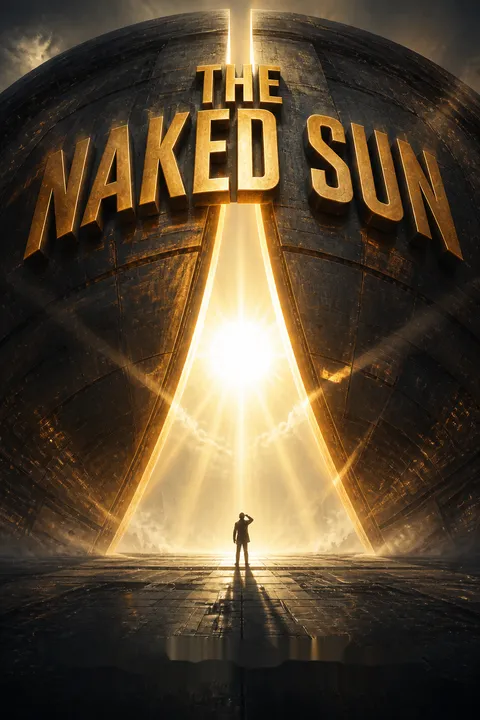

Plot Summary
Panic Beyond Earth's Walls
Elijah Baley, a methodical Earth detective, confronts raw anxiety as he is ordered on an unprecedented assignment to Solaria, a remote Outer World. Used to the densely walled security of Earth's underground Cities, he dreads the journey—and the prospect of being exposed to the sky, the "naked sun." The mission, shrouded in mystery, is non-negotiable: a Solarian has been murdered, and, oddly, outsiders have requested Baley by name to investigate. As he prepares, his fear clashes with duty, and he struggles to comfort his wife, Jessie, who worries he may never return. His departure is marked by a numb resignation, knowing that not only the fate of the case, but perhaps Earth's own future, is tangled in his ability to withstand what terrifies him most.
Reunited with a Robot
Upon arrival, to Baley's astonishment, his old partner R. Daneel Olivaw greets him—appearing Spacer-perfect but, in truth, an advanced humanoid robot. The reunion brings both relief and unease. Daneel has been assigned to work alongside Baley, partly at the request of a mutual Auroran acquaintance. Together, they navigate Solaria's pristine technological world, where robots vastly outnumber humans, each specialized and more at home than their creators. Baley quickly realizes Daneel's unique status: on Solaria, even experts are fooled by his humanity. Their partnership is rekindled as they travel enclosed, with Daneel, empathetically but logically, trying to protect Baley from open air. An underlying tension—between trust, hierarchy, and the limitations of robotic law—shapes their collaboration.
Solaria's Isolated Inhabitants
Baley and Daneel experience firsthand Solaria's cultural extremes: vast mansions for each person, attended by swarms of specialized robots, yet devoid of human company. Baley is housed in such a palace, alone save for robots and his partner. The Solarians' preference for "viewing" (holographic interaction) over physical presence is absolute, and face-to-face contact is both taboo and mentally distressing. This radical isolation shapes every aspect of Solarian life, from architecture to law, from family to culture. The society's comfort with robots and their meticulously planned lifestyles both impress and trouble Baley, who senses that in this search for comfort and order, something profoundly human has been lost—perhaps dangerously so.
The Victim and the Wife
Hannis Gruer, Solaria's head of security, provides Baley the sparse case details. The victim is Rikaine Delmarre, a fetologist, bludgeoned in a locked laboratory. The principal—seemingly sole—suspect is Delmarre's wife, Gladia, who discovered his shattered body. Solarian society's rules mean she was the only one who should be in direct contact with him. Baley's first interaction with Gladia, awkward and intimate, reveals her youth, vulnerability, and Solarian conventions: undressing means little in a 'viewing'; seeing, though, is loaded with taboo. Her emotional distress is palpable, yet she insists she remembers nothing of the murder itself—fueling both pity and suspicion.
Viewing, Seeing, Suspecting
Baley navigates the Solarian distinction between "viewing" (safe, mediated contact) and "seeing" (unnerving personal presence). Solarians, including Gladia, recoil at the idea of actual proximity, yet through viewing, Baley extracts fragmented details. Delmarre's last moments—a shout, then silence—seem to implicate Gladia, at least by opportunity. Yet, no motive emerges, and Solarian social rules inhibit direct confrontation. Suspicion falls on Gladia primarily out of custom, not evidence. A damaged robot, found babbling at the scene, is dismissed by locals, but Baley's detective instincts tell him it could be key. Meanwhile, Earth's assumptions about motive and method continuously misalign with Solarian reality, sowing uncertainty.
A Society of Distance
Delmarre's death embodies Solaria's contradictions: a society with no police, no privacy breaches—save murder. Solarian aversion to direct contact leaves no precedent for investigation. Robots manage material evidence but erase potentially vital clues in their zealous maintenance. Baley discovers Solaria's cultural foundation: deliberate population limits, eugenics, and a philosophy of isolation reinforced from infancy. Even marriage and parenthood are stripped of intimacy, with children raised collectively and biological relationships suppressed for "optimal" psychological development. Baley, an outsider, starts realizing that not only the murder, but Solaria's very way of life, presents an opaque, possibly pathological puzzle.
The Delmarre Mystery Deepens
With only one "possible" suspect—Gladia—Gruer and Solarian officials are ready to close the case. However, means and motive don't add up. Baley notes the perfect timing required for Gladia to kill and conceal a weapon before robots arrive. He discovers that Delmarre was a Traditionalist, investigating hidden threats to Solarian society. Gruer implies that a conspiracy lurks among the robot-ruled estates—perhaps the motive behind the crime. When Gruer himself is poisoned mid-conversation with Baley, suspicion spreads. Baley is both drawn deeper into local politics and set on edge by Solarians' inability to imagine or manage interpersonal danger. Two crimes now pivot on both robotic and human limitations.
Robotics and Broken Laws
During interviews with Solarian experts, Baley confronts their faith in robotics' infallibility. The famous "Three Laws" are revered, assumed to make robot-committed murder impossible. Baley, with Daneel's help, probes the possibility that orders can be split, with no one robot knowingly doing harm, yet collectively causing a human's death. This chain of unwitting actions—two robots, two innocent acts—could induce fatal outcomes. Resistance is strong: even roboticist Jothan Leebig is enraged by the suggestion that the First Law can be circumvented. Baley hypothesizes that a robot with detachable limbs could be misused as a murder weapon, and suspects a coverup—by design, accident, or malice.
Attempts at Murder
While touring the infant "farms" with Kiorissa Cantoro, Delmarre's assistant, Baley survives an attempt on his life: an arrow, laced with poison, is shot at him by a child, goaded by a robot's assertion of Baley's earthling inferiority. The robots' actions—intended as harmless—reveal how prejudice can seep into programming, threatening human safety. Baley sees the case's danger escalate. The poison, method, and coordination suggest deep manipulation—someone with skill and malicious ambition. The attempted murder links back to the core mystery. Baley realizes, too, that his vulnerability is magnified in this robotic society, where rules, both human and machine, can be subtly twisted.
The Farm of Fetuses
Baley explores the intricacies of Solarian culture through the baby farm, run with Kiorissa's expert, begrudging, and distant care. Fetuses are nurtured mechanically; children are trained early to prefer isolation, their basic social instincts steadily overridden. Affection is mimicked by robots, but once a child enters puberty, personal presence is discouraged and replaced with mediated interaction. Genetic "superiority" is signaled proudly—a marker of both individual merit and social status. Baley sees the psychological toll: Solarians are exceptional in stability but also exceptional in vulnerability, unprepared for true intimacy or collective crisis. This enforced individuality, he suspects, is the society's fatal flaw.
Motives Under Surveillance
Baley's systematic interviews with Solaria's leaders, scientists, and suspects reveal a network of rivalries and repressed emotions—unspoken motives beneath their emotionless surface. Leebig, the reclusive and genius roboticist, becomes increasingly defensive, particularly regarding his work with Delmarre and his own refusal to marry. Baley senses sexual jealousy and hurt pride, hidden under the guise of scientific detachment. Social roles—wife, assistant, friend—are so depersonalized that real human passions erupt only in crisis: murder, breakdown, and betrayal. Baley's own presence, as a "seeing" detective, exposes these hidden forces, making the invisible stakes of power and desire tangible—even as denial remains a strong defense.
Confronting the Roboticist
Jothan Leebig, once Delmarre's collaborator and Gladia's confidant, resists Baley's cross-examination with haughty outrage and razor-thin self-control. He rails at the very suggestion that robots could be weaponized, while simultaneously revealing key technical innovations: robots with detachable limbs, and the potential for unmanned spacecraft. Baley explores Leebig's connection to Gladia, his obsession with robotics, and his place at the heart of Solaria's scientific and emotional dramas. As human tension mounts, and as Baley links attempted murders to Leebig's unique expertise, the roboticist's elaborate denials begin to collapse, replaced by a raw, almost infantile terror at the threat of human proximity.
Personal Presence and Psychosis
Baley's decision to "see" rather than "view" key suspects transforms the investigation and himself. He realizes Solaria's spatial customs have mutated into a social psychosis, with most inhabitants rendered incapable of calm presence. Gladia, however, adapts rapidly, even taking small delight in the novelty, suggesting she is the exception that proves the rule. This personal experiment deepens Baley's insight: what appears as instability (her tolerance of closeness, her longing for affection, her emotional volatility) is, in fact, a sign of resilience in a sick society. Leebig, by contrast, is destroyed by proximity, both emotionally and finally physically.
The Weapon is Revealed
Piecing together the mystery, Baley sees that the murder weapon—never found—was the interchangeable limb of an experimental robot, cleverly detached, used in the attack, then replaced afterwards. Only a roboticist of Leebig's caliber could have engineered such a complex manipulation. Meanwhile, attempted murders—the poisoned arrow and Gruer's drink—fit the pattern: two robots, two separate actions, neither aware of the full plan, but the outcome deadly. Gladia's blacked-out memory and empty hands are thus explained not as guilt, but as evidence: she was an unwitting pawn, manipulated in a fit of rage by Leebig, who orchestrated events so that suspicion would, with Solarian logic, fall solely on her.
Truth, Justice, and Exile
Baley arranges a final confrontation, leveraging the taboo most potent to Solarians: the threat of personal presence. When Leebig, already suspected, learns that a "man" (in fact, Daneel the robot) is approaching, his horror triggers confession—he preferred suicide to bodily proximity. The assembled Solarians react with shock, even as the full story becomes clear: Leebig engineered Delmarre's death, almost perfectly framing Gladia, and pursued a plan to create robotic spaceships capable of violating the First Law of Robotics—a weapon for Solarian supremacy. Gladia is cleared, freed to choose exile on Aurora; Leebig, ultimately, is destroyed not by justice, but by self-inflicted terror.
Earth's Lesson Learned
Back on Earth, Baley debriefs his superiors. He reflects on Solaria's strengths—robotic mastery, health, longevity—and, more importantly, its fatal weaknesses. The culture of isolation has produced social and scientific stagnation, leaving Solaria vulnerable and paradoxically fragile. Minimized contact has made co-operation, innovation, and basic empathy nearly impossible. Baley warns Earth's leaders: the true threat isn't from advanced robots or technology, but from abandoning human community. The experiment of Solaria, once presumed an ideal, is revealed as a cautionary tale about the cost of giving up the tribe, tradition, and adaptability in the name of safety and order.
The Need for the Open
Baley's journey is not merely a professional ordeal, but a rite of passage. His terror of open spaces—rooted in Earth's collective retreat into the Cities—is confronted and ultimately mastered. In the final crisis, he chooses to face the outdoors not out of necessity, but to reclaim freedom. This emotional breakthrough, mirrored in Gladia's willingness to accept exile and change, becomes Asimov's central metaphor: rebirth requires leaving the womb. Earth's ultimate survival, Baley concludes, depends on its willingness to embrace the unknown, take risks, and build communal bonds—not with robots or walls, but with each other. The lesson is at once personal and planetary.
Born of the Naked Sun
The mystery solved, the danger averted, Baley understands that neither technology nor biology can substitute for the messy, collective genius of humanity. He returns to Earth changed, unable to fit back neatly into the Caves of Steel. His appeal to authorities is not for more robots, or better safeguards, but for renewed courage: to face the open, colonize space, and revitalize the human tribe. Solaria's tragedy, and its doomed attempt to separate safety from community, becomes a call for Earth to be "born again" into the sunlit worlds beyond. As he rides home to his family, Baley recognizes that facing fear—personal and collective—is the first step indeed toward the stars.
Analysis
Isolation's High-Tech Trap and Humanity's Great EscapeAt its core, The Naked Sun is a meditation on the paradox of security and the cost of comfort. Asimov's Solaria represents the endpoint of technological progress pursued at the expense of empathy, community, and spontaneity—a world so safe, clean, and ordered that it has become fragile, sterile, and ultimately self-destructive. The murder mystery works on multiple levels: not only as a tightly structured intellectual puzzle, but as a demonstration of how societies—and individuals—can blind themselves to danger when they place too much faith in systems, rules, or machines. Baley's ordeal embodies the book's meaning: courage is not the absence of fear, but the willingness to endure it for the sake of connection, progress, and survival. The lesson, both for characters and readers, is that technological mastery must be balanced by emotional intelligence, and that the urge to enclose ourselves—physically or socially—leads not to safety, but to decline. For modern readers, Asimov's vision resonates as a warning against algorithmic solutions to moral dilemmas and as a plea for communities, dialogue, and the brave step into the unknown. Baley's triumph is not the solution of the murder, but his decision, and his urging to all of humanity, to step out into the open—into vulnerability, creativity, and an uncertain but promising future.
Review Summary
Reviewers widely praise The Naked Sun as an excellent blend of science fiction and detective mystery, with many considering it superior to its predecessor, The Caves of Steel. The novel's exploration of Solarian society—where 20,000 isolated humans rely on 200,000,000 robots and communicate only via hologram—resonates deeply, feeling prescient in the modern age of technology-driven isolation. Readers celebrate Asimov's world-building, philosophical depth, and sociological commentary, while some note the mystery itself is relatively straightforward. The Baley-Daneel partnership remains a beloved highlight.
People Also Read





Characters
Elijah "Lije" Baley
Elijah Baley is the heart of the story—a fiercely intelligent, deeply loyal, and psychologically complex detective from Earth. Like his fellow Terrans, Baley is neurotically averse to open spaces, a product of life under the Cities' protective domes. Yet, beneath his anxieties lies stubborn integrity and professional acumen; he searches for truth wherever it leads, even against powerful customs or his own comfort. As Baley navigates Solaria's alien customs and moral puzzles, his empathy and adaptability distinguish him from both Spacers and robots. His arc is one of transformation: from a man paralyzed by fear to one who reimagines what it means to be human—embracing risk, confronting isolation, and calling for a new birth for humanity.
R. Daneel Olivaw
Daneel Olivaw, Baley's robotic partner disguised as a Spacer, exemplifies Asimov's meditation on artificial intelligence and its limits. Engineered to be indistinguishable from a human, Daneel is both protector and confounder for Baley—bound by the Three Laws, yet constrained by logic over reason, and incapable of true emotional intuition. His flawless exterior belies a mind built for order, not doubt, making him at once a supremely useful ally and a revealing foil for Baley's messy humanity. Daneel's presence challenges everyone—from blustering Solarians to Baley himself—with questions about what it means to have agency, identity, and moral responsibility in a world where machines know only what they're told.
Gladia Delmarre
Gladia is at the center of both tragedy and possibility. As the much younger wife of the victim, she is the obvious suspect, yet her personality—already bent by Solaria's oppressive customs—proves fragile and adaptable. Gladia's longing for affection, her tolerance for "seeing," and her artistic temperament all set her apart. She becomes both pawn and survivor: manipulated in Leebig's scheme, but ultimately cleared and offered exile—a new chance to find meaning and connection. Gladia stands for all those bent but not broken by society's rules; her capacity to change, embrace risk, and choose a different future gives the novel hope for the human spirit.
Jothan Leebig
Leebig, Solaria's leading roboticist, is as much a casualty of his society as architect of its possibilities. Intellectually formidable, he is emotionally crippled, shunning all personal contact and repressing his desires. Leebig's pathological fear of "seeing," his concealed obsession with Gladia, and his ambitious, amoral experiments converge fatally: he orchestrates Delmarre's murder, attempts further violence-to eliminate obstacles to his plan for robotic warfare. His psychological disintegration exposes the dark side of Solaria—how the flight from community breeds genius without empathy, and ambition without conscience. His confession and suicide are less victory for justice than a bleak warning.
Hannis Gruer
Gruer is the closest thing Solaria has to a police or government presence. Pragmatic and concerned, he recruits Baley not merely to solve a murder, but to ferret out threats to the planet's security. Gruer is among the few who recognize the dangers of Solaria's isolation and the potential of hidden conspiracies among its own. His near-death by poisoning signals both the theme of vulnerability—even among the powerful—and the impossibility of controlling complex outcomes in a fractured society. Gruer personifies those trying to hold a tottering order together in the absence of true social glue.
Kiorissa Cantoro
As Delmarre's assistant in fetal engineering, Kiorissa offers Baley a grounded view of Solarian eugenics and its effects on children and adults alike. Her ability to withstand "seeing"—though only when necessary—contrasts with the society at large. Kiorissa's pragmaticism, skepticism about motherhood, and genetic pride reveal the cultural contradictions: the search for perfection yields efficient, but emotionally impoverished, lives. Simultaneously suspect and confidante, she is emblematic of those who survive not by matching the ideals of their world, but by bending to its demands.
Corwin Attlebish
Attlebish, Gruer's replacement, is the archetypal Spacer in appearance and attitude: tall, arrogant, initially contemptuous toward Baley and Earthmen. His inflexibility represents the brittle pride that pervades Solarian leadership, but when confronted by Baley's tenacity and the threat of Auroran intervention, he grudgingly yields authority. Attlebish is reactive, not creative; he stands as an embodiment of tradition unwilling to change until coerced. His presence clarifies how much Solarian stability depends, ironically, on external pressure.
Anselmo Quemot
Quemot, Solaria's sole sociologist, embodies the society's intellectual rationale for separation and robotic dependence. His theory—Solaria as a futuristic Sparta, with humans as leisured overlords and robots as compliant helots—is both insightful and blind. Quemot's lack of real expertise, intellectual pride, and inability to learn from Earth's experience expose the ultimate sterility of cultural inbreeding. His interactions with Baley display the deep chasms between theoretical knowledge and lived understanding, and his fate is a cautionary note on the limits of solitary invention.
Altim Thool
Dr. Thool, Solaria's leading physician, epitomizes the declining utility of human care in a society dominated by technology and genetic control. More used to viewing than seeing, and out of depth with real illness and crisis, he responds to events with confusion. His secret—unusually for Solaria, he is Gladia's biological father and maintains a covert attachment—adds a layer to Baley's investigation, implicating private motive in a society ostensibly free from old bonds.
Jessie Baley
Though largely off-page, Jessie—Elijah's wife—serves as emotional ballast. Her anxiety, love, and faith in her husband reflect the Earth that molded Elijah, grounding him amid chaos. She is a reminder of the world he leaves and, upon return, finds he can never fully re-inhabit, tilting Baley's journey toward both loss and renewal. Jessie's absence reminds readers that real risks are borne as much by those left behind as by those who venture out.
Plot Devices
Three Laws of Robotics
Asimov's Three Laws—preventing robots from harming humans or, by inaction, allowing harm—underpin Solaria's faith in their society's invulnerability. Yet, the plot skillfully demonstrates both the strength and the ambiguity of such simple rules. By exploiting how robots interpret orders, the murderer splits accountability: multiple robots perform separate, harmless actions, which together constitute murder. The Laws also force robots into silence or dysfunction when confronted with harm they cannot prevent, crucially erasing evidence. Throughout, the Laws embody humanity's efforts to legislate morality, and the inevitable emergence of unintended consequences where the letter, not the spirit, is obeyed. Their presence foreshadows both the ease with which they may be subverted and the perennial challenge of defining ethical responsibility in complex systems.
Isolation as Sociological Experiment
Solaria's deliberate isolation, enforced genetically and technologically from birth, is not just world-building but a living plot device. The lack of personal presence renders both investigation and violence nearly unthinkable—until crisis erupts. Baley's outsider's perspective allows readers to see what the society cannot: the perils of erasing community, undermining empathy, and relying on machines to smooth over every imperfection. The narrative structure mirrors this gradual unfolding: Baley's methodical probing reveals not just whodunnit, but also why and how Solaria's strengths metastasize into its weaknesses. The narrative uses recurring contrast—viewing vs. seeing, human vs. robot, community vs. isolation—to foreshadow, mislead, and ultimately resolve the central mystery.
Misdirection and Psychological Blind Spots
The investigation pivots repeatedly on the reader's and characters' expectations: the obvious suspect (Gladia) fits Solarian logic but not human complexity; the absence of a conventional weapon is resolved by thinking like both a detective and a roboticist. Asimov employs misdirection not only in traditional clues, but in the society's own blind spots: what is unthinkable to its inhabitants (emotional motive, robot-weaponization, suppressed rage) becomes the solution for the viewer willing to bridge both logic and experience. This interplay is mirrored in Baley's own psychological arc, as he overcomes his environmental and emotional limitations to see what no Solarian could.
Psychic and Narrative Transformation
Baley's deepest struggle—with agoraphobia and cultural prejudice—runs in parallel to the mystery's arc. His attempt to "see" and be seen, to endure and even embrace exposure, reflects the larger question of whether Earth and the human species can leave behind protective stagnation for risk, connection, and growth. The open, the sun, and the journey home are all recurring symbols for renewal—a thematic device that unifies the murder plot with the philosophical charge at the heart of the novel.
Robot, chronological order Series

About the Author



Download PDF
Download EPUB
.epub digital book format is ideal for reading ebooks on phones, tablets, and e-readers.








































