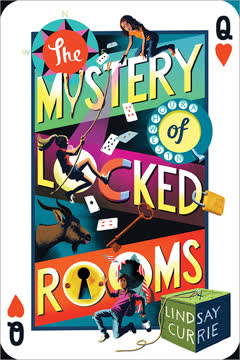
Plot Summary
Triangle Teamwork Begins
Sarah, West, and Hannah — the self-proclaimed Deltas — are escape room prodigies. Solving a notably intricate room called Lasers and Lava, they celebrate their victory as a tight-knit, mathematically-inclined team. Their chemistry is magical: Sarah, analytical and cautious, excels at probabilities; Hannah, exuberant and physical, brings fearless dexterity; West, sharp-witted, carries encyclopedic recall. The adrenaline of escaping together is a rare bright spot for Sarah, whose life at home is tinged with unease. This camaraderie is a source of joy even as shadows loom — especially for Sarah, whose family is on the verge of collapse due to her father's illness and mounting bills. For now, in the escape room, the world bends to logic, clues, and teamwork, and the Deltas hope their bond will beat any lock.
Family in Crisis
Sarah returns home to looming chaos: a notice of foreclosure fluttering on the door. Bills swamp her mother's desk; her father's chronic fatigue syndrome has steadily drained the family of income, optimism, and routine. Her mother juggles endless shifts at the dentist's and candy shop; Sarah is left helpless, stuck between childhood and the growing, adult worries that press in. Her brother is overwhelmed with anxiety about college. The security of their house and home is evaporating, and Sarah, suddenly aware of the precarity, feels pressure building to fix the unfixable. This is not just anxiety over a lost dwelling; it's the existential ache of a family with its foundation buckling, and the desperate longing for a solution she can't see.
The Triplets' Lost Dream
Sarah's friends rally around her in support, brainstorming wild solutions. The town's most persistent rumor comes to life: decades ago, three orphaned triplet brothers built a fantastical funhouse. Meant to be a triumphant symbol of reunion, it was never opened after tragedy struck. Local legend claims they hid a treasure inside — money, perhaps, or something even more valuable. The triplets' identities (cabinetmaker, banker, reader) shaped the funhouse puzzles. To lighten the grim news, Sarah's friends suggest seeking this treasure as their only real hope. Their plan is reckless and borderline illegal, but it is the only glimmer of salvation. Sarah's mathematical mind weighs risk against desperation: if the treasure is real, it may be the one chance to save her family.
Legend of the Locked Funhouse
The Deltas plunge into intense research. They uncover the tragic backstory: the Stein triplets, separated as children after their parents' deaths during the Depression, regathered as adults and poured their unique talents into creating the funhouse. Despite mix of optimism and sadness, the house remains off-limits, guarded by decades of rumors, legal confusion, and failed treasure hunters (some arrested and shamed). The triplets' funhouse is not merely a building — it's both an actual labyrinth and a symbol of dreams unfinished. The Deltas, pondering forbidden entry, recognize the dangers, but the appeal of a logic puzzle, the thrill of a real-life escape, and the promise of rescue for Sarah is too powerful to ignore.
Secret Entry, Secret Risks
Armed with their escape-room skills and an understanding of the triplets' confusing history, the Deltas devise a stealthy, risky plan to enter the funhouse. The journey itself is fraught with guilt, lies to their parents, and the gnawing realization of how fragile their situation is. Arriving at the overgrown, wildly-painted funhouse, they discover a cleverly-hidden entry behind a bush, triggered by a "wishbone" symbol. The secret passage opens; fortune, as the house declares, favors the bold. The trio steps into the darkness, both exhilarated and fearful of the unknown, their friendship the lifeline anchoring them as they trespass deeper into history, myth, and danger.
The Circus Room Challenge
Inside, the funhouse is breathtaking and threatening: the first major room is designed as a circus tent, complete with trapdoors, riddles, and a creepy clown set off by hidden triggers. West nearly injures himself as the low-tech, decades-old puzzles reveal physical dangers unfit for modern escape rooms. But with teamwork, logic, and a series of code-breaking, their progress is swift—until they encounter three doors with distinctly different locks, all echoing the rule-of-threes, and each requiring a different approach. They must adapt their skills and personalities, each friend confronting their own strengths and weaknesses, pushing past anxiety as the real stakes — and real consequences — grow sharper.
Three Doors and Three Keys
The Deltas navigate through pattern, logic, and intuition. Hidden blacklight markers, secret compartments, and the triplets' professions (cabinetmaking, reading, banking) provide thematic clues. The trio learns that every puzzle operates in sets of three—mirroring their own trio and the triplets who built the house. Figuring out this meta-pattern helps them find the right keys, doors, and symbols (wishbones, cards, compasses), allowing them to advance. Their bond is tested as they argue, stumble upon hollow doors, and make critical discoveries: the funhouse is a multi-layered logic puzzle and character test, one that deliberately resets or punishes mistakes through detours and dead ends, teaching them humility, patience, and wisdom.
Daring the Trapeze Swing
At a dead end atop a curious stairway-to-nowhere, the only way forward is a terrifying trapeze swing across a cavernous space—no safety nets, just a rope and a leap. Sarah, haunted by her own fear of heights and the grim odds of her family life, musters a courage fuelled by love and desperation. It's the ultimate escape-room moment: skill alone won't suffice; boldness and trust in her team—and herself—are required. Sarah swings across, followed by her friends. Each landing is a celebration, a reminder that true growth sometimes means leaping before you're ready, propelled by trust and necessity.
Through Boxes and Glass
Entering a box-filled room divided by glass, the Deltas are stymied by a puzzle requiring both strategy and luck. Dozens of boxes hang overhead, marked by the triplets' symbols. Each guess has unpredictable consequences—wrong choices reset the puzzle. The team's patience is strained, especially as impulsivity nearly dooms them. Hannah's confession—her struggles with dance and feelings of inadequacy—surface as the need for careful teamwork (not solo action) becomes clear. The friends admit their own anxieties and strengths; vulnerability ultimately allows progress. Overcoming trial and error, they succeed by combining logic (finding patterns in the boxes and clues written in invisible ink) and forgiveness.
Clues, Confessions, and Forgiveness
After solving the glass/box puzzle through persistence and communication, the friends tumble onto a slide — only to be dropped back into a duplicate of a previous room: a literal loop, a setback caused by choosing a subtle "wrong way." Their frustration boils, but now honesty emerges: West shares the pain of his hyperactive memory, often viewed with suspicion by others; Hannah admits she's long felt the odd one out since her dance failure. Instead of fragmenting them, these shared vulnerabilities make their friendship stronger. The only way forward is open-hearted, coordinated effort, combining strengths, forgiving old blunders, and trusting that together, they're more than the sum of their flaws.
Down the Wrong Slide
By misunderstanding a clue, the Deltas end up right back where they started, forced to replay a punishingly familiar room. This time, however, instead of frustration, they use their collective memory and improved communication to recover lost ground quickly. The wrong turn becomes a metaphor: life, like mazes, sometimes makes you redo hard parts. West's sharp memory and Sarah's ability to spot patterns allow decisive action; Hannah learns patience under pressure. Even mistakes yield lessons. Slowly, they begin to appreciate that the funhouse's real tests aren't of intellect alone, but of emotional resilience, trust, and the capacity to honestly accept and overcome setbacks.
Memory as Both Gift and Burden
As they escape their loop, West's prodigious memory proves invaluable—he solves the reset puzzle instantly. Yet, West confesses that his gift is often as much a curse as a tool: it led to social ostracism in the past, misread as unfair "cheating." The friends' response—combining gentle teasing and deep empathy—helps West drop some of his self-protective walls. Each of the Deltas is emboldened to bring their best selves to bear in the next challenges: new rooms that test not just problem-solving, but the depth, vulnerability, and courage in friendship. Admitting weakness, ironically, makes each stronger and the team more effective.
Patience, Patience, Panic!
The next opulent room is daunting: a Roman sculpture gallery with missing statues and ominous pedestals. The Deltas misjudge the puzzle, using their own weight as substitutes for statues—this triggers a trap and Hannah is dropped, caged beneath the floor. Panic and guilt surge, echoing real-world helplessness Sarah feels at home. The scenario exposes the limits of brawn and brain—a simple oversight, a rule not followed, has real sequelae. Yet, in Hannah's confinement, clues emerge; a magnet retrieved through an ingenious, nerve-racking feat with her nose and focused teamwork. This ordeal demands the slow, steady patience escape rooms rarely reward, but life often does. Teamwork and insistence on not abandoning each other are reaffirmed.
Statue Room Dangers
After freeing Hannah with the magnet and key, the Deltas realize the statues scattered around the room are a coded clue—three identical figures represent the Stein triplets. By following the gaze and gestures of the statues, they uncover a hidden floor grate containing the next essential key. The puzzle's solution rests on observation, subtlety, and attention to thematic echoes: threes, direction, and the legacy of the triplets themselves. Decoding the intent behind the funhouse design deepens the team's empathy for its creators—outsiders like themselves, desperate for connection and understanding.
Magnet, Nose, and Teamwork
The escape depends on a tense practical feat: Hannah, exhausted and claustrophobic, must painstakingly lift a magnet using only her nose. With Sarah and West coaching and encouraging, she achieves what looks impossible. This moment, both harrowing and comic, symbolizes friendship's power and the importance of believing in yourself and others against the odds. It also underlines one of the novel's key lessons: sometimes, overthinking is less useful than faith in your crew, patience, and perseverance. Their combined efforts, rather than individual genius, solve what intellect alone cannot.
Shadows, Mirrors, and Mazes
Emerging into a light-filled mirror maze, the trio faces the most disorienting room yet. Lacking clues, with only breath and lip gloss to mark progress, the friends struggle through bizarre illusions, dead-ends, and hidden coding. Real life intrudes, as a stray phone notification reveals their parents may have discovered their absence and location, sending police their way. This intrusion of reality threatens everything—the possibility of rescue vanishes as pressure mounts, and the drive to escape accelerates. The Deltas teeter between panic and purpose, their unity tested by fatigue and fear.
Time Runs Out
Racing against time and imminent discovery, the team makes missteps, falls into the wrong part of the maze, and encounters a puzzle with no logical solution—only luck. For Sarah, whose comfort is in numbers and predictable variables, this is profoundly destabilizing. The final doors require a blind guess; logic, strategy, even teamwork, cannot reduce the risk or guarantee success. The randomness of life is invoked: sometimes, circumstances cannot be controlled. The group confronts the pain of powerless situations, yet chooses to face fate together, validating the deep trust they now have in each other no matter the outcome.
Choosing Luck, Not Logic
Out of options, Sarah accepts the necessity of risk. Rather than paralyzed by the inability to calculate the correct path, she leads the group to choose boldly, accepting luck as the test itself. The panic of approaching police and inevitability of capture drives both action and deeper existential acceptance. In pushing the final puzzle, the Deltas learn that true escape—and true victory in life—sometimes demands both daring and surrender. The room itself, when completed, offers no visible riches, only an unceremonious exit. For Sarah, it seems as if all her efforts have come to nothing: no treasure, no salvation for her family.
Confrontation and Discovery
As they exit the funhouse's final slide, the Deltas are confronted by police, furious and disappointed parents, and crowds of onlookers. The fear of consequences—punishment, criminal records, and lost trust—is overwhelming. Ashamed, Sarah prepares to take the blame, feeling the crushing failure of her quest. Yet, in the chaos, she discovers a hidden triangle-engraved compartment in the slide, containing an old, official envelope. Encouraged to seize the last tiny hope, Sarah opens it, finding a letter addressed to "the worthy one," signifying the Stein triplets' real treasure. What had seemed like crushing defeat transforms in a heartbeat into astonishing triumph.
The True Treasure Revealed
The triplets' treasure is not gold but the deed to the funhouse itself—a legacy meant for someone who could appreciate, solve, and preserve their greatest adventure. That someone is Sarah. The ownership of the funhouse changes everything: her family's financial crisis is resolved, her father obtains medical help, her brother goes to college, and Sarah stays with her friends. The tale closes with words of hope, not just for the Deltas' future, but for the triplets' legacy, friendship, and the courage it takes to leap into the unknown even when the odds—and the logic—aren't in your favor.
Analysis
A modern parable on courage, luck, and togethernessThe Mystery of Locked Rooms is far more than a middle-grade adventure; it's a meditation on what is required to come of age when the rules of childhood (logic, fairness, and predictability) give way to the chaos, uncertainty, and imperfect justice of adult life. The puzzles of the funhouse, though coherent and solvable, are interrupted by setbacks, punishment for shortcuts, and moments where strategy is useless and only luck will do. Each character's strengths become weaknesses if over-relied upon, and vulnerabilities must not be hidden but shared. The lessons are practical and profound: facing the pain of family breakdown, risking embarrassment or failure, and trusting that friendship can be the key not only to puzzles but to rescue and self-worth. The ending's twist – that the real "treasure" is legacy, community, and belonging, not money – propels the novel out of escapist fantasy and into the territory of genuine coming-of-age literature. Currie's tale is a powerful reminder that while fortune may favor the bold, survival and triumph favor the bonded.
Review Summary
The Mystery of Locked Rooms receives generally positive reviews, averaging 3.92/5. Readers praise the clever escape room puzzles, strong friendship dynamics among the three protagonists, and fast-paced adventure. Many compare it favorably to The Goonies and Escape from Mr. Lemoncello's Library. Common criticisms include forced character development, an overly convenient ending, and some unrealistic dialogue. The inclusion of chronic fatigue syndrome representation is frequently appreciated. Most reviewers recommend it primarily for middle grade readers who enjoy puzzle-solving adventures.
People Also Read
Characters
Sarah Greene
Sarah is the protagonist and the Deltas' de facto brain, valued for her command of logic, numbers, and probabilities. Her controlling nature isn't just a personality quirk—it's a psychological defense mechanism born from fear about losing her home, her family stability, and her own sense of agency. Her anxieties make her both deeply empathetic and sometimes hesitant, yet necessity forces her into courage, notably when she faces her acrophobia during the trapeze challenge. Sarah's arc is one of growth from strict rationalist to someone who can accept uncertainty, make peace with luck, and value her relationships not as an equation to solve, but as the sustaining mystery at the heart of survival.
West
West is the team's riddle-solver and recall-expert, his uncanny memory an apparent superpower. Psychologically, West's relationship to his memory is conflicted: he has experienced alienation and suspicion, making him cagey about revealing the full extent of his abilities. He also struggles with fears of being branded a "cheater" or freak. West is a keen pattern-seeker, team-oriented yet cautious. The funhouse journey forces him to embrace his talents openly, accept emotional support, and realize that being different is a strength, not a curse, particularly when surrounded by people who value the "weird" in everyone.
Hannah
Hannah is the team's kinetic spirit, physically adept but inclined to leap before she looks. Her background in dance provides both literal balance (in trap and physical challenges) and an ongoing vulnerability—she is wrestling with the trauma of failing out of an important activity and concealing the shame from her friends. Under her bravado, Hannah harbors a need for affirmation and a hypersensitivity to being the "weak link." Her willingness to confess, ask for help, and endure embarrassment in order to save her friends marks her emotional maturation. Hannah's arc is about learning that value doesn't come from being flawless, but from showing up, trying again, and trusting her friends.
The Stein Triplets (Hans, Stefan, Karl)
The triplets haunt the narrative as much in spirit as in puzzle. Their varied professions (cabinetmaker, banker, reader) manifest as motifs throughout the funhouse. Psychologically, they represent both hope and loss: separated by childhood tragedy, reunited through invention, undone by misfortune. Their legacy reflects dreams deferred yet preserved, their funhouse a metaphor for longing for connection, accomplishment, and the possibility of triumph beyond tragedy. They are mirrored, literally and figuratively, in the Deltas; their design of rooms that require collective strengths echoes their own inability to succeed alone.
Sarah's Mother
Sarah's mother embodies the quietly heroic burden-bearer. She keeps the household afloat through multiple jobs, clinical efficiency, and stifled emotion (she "never cries"—until the foreclosure). Her struggle is emblematic of families stretched to breaking by illness and economic precarity. She is both a source of pressure (her need for Sarah to "step up") and the ultimate recipient of Sarah's risky devotion.
Sarah's Father
Stricken with chronic fatigue syndrome, Sarah's father is mostly absent physically but ever-present emotionally. His decline isolates the family, but Sarah's memories of his energy, humor, and gentleness drive her motivation. Recovery at the novel's end is both catharsis and reward: a reminder that no solution matters unless it enables love and connection.
Sean Greene
Sean's senior-year stress and looming adulthood parallel (and amplify) Sarah's anxieties. His humorous mishaps—like the Coke-and-Mentos incident—add levity, but his situation underscores that crisis affects all family members, regardless of age or perceived maturity.
William Taters
Initially portrayed as a comical would-be treasure hunter (with an "unfortunate" last name), he eventually reappears as an empathetic figure: a distant relative of the triplets, similarly driven to connect with lost family history. He serves as a warning, an echo, and finally, a celebrant and heir of the story's legacy.
The Police and Parents
They embody reality's boundaries, the threat of punishment, and the eventual guardianship of the young. Their entrance signals the end of playtime, pushing the Deltas to grow up, reckon with risk, and face the aftermath of their choices. Ultimately, they are not cruel but compassionate—understanding the motivation behind the trespass and the depth of the friendships at stake.
Plot Devices
Rule of Threes & Patterned Clues
The funhouse is built both narratively and physically on repeated triads—three doors, three keys, three statues, three friends. This "rule of threes" echoes not just classic storytelling, but the in-universe parallel between the three Stein brothers and the Deltas. The plot uses this device to structure every puzzle, reinforce thematic unity, and raise the stakes for each failure (punishing wrong decisions by making the team repeat rooms). It recurs as both literal clue and symbolic pattern: friendship is strongest, escape is possible, when all three are united.
Hidden Meanings and Misleading Appearances
The funhouse's design intentionally misleads—false doors, secret triggers, and puzzles whose logic requires participants to doubt their own assumptions (about themselves and the world). The mirror maze literalizes this: what is seen is not always what is real. The use of blacklights, invisible ink, and backward lettering requires perseverance, careful observation, and looking beyond surface. It's only in embracing confusion and error that the team advances—a compelling metaphor for adolescence, friendship, and problem-solving outside controlled environments.
Emotional and Psychological Quests
Every outward puzzle is matched by an internal one: Confessions, acceptance of flaws, and vulnerability are required "keys" as surely as anything mechanical or logical. The challenges map onto social fears (shame, being "the weak link," feeling unfairly lucky or unlucky), and require resolution at both the puzzle and emotional levels.
Time Pressure and Imminent Danger
The approach of pursuing parents and police adds external pressure, ensuring every puzzle has consequences beyond "game over." Wrong turns don't just reset the room; they threaten the friends' very futures—moving away, losing each other, or being accused of criminal trespass. Time in the funhouse figuratively and literally runs out—the outside world is waiting.








































