Plot Summary
Blood and Broken Dreams
Tucia Hatherley, once a promising physician, now toils in a St. Louis corset factory, haunted by the memory of a fatal mistake in the operating theater. Her hands, once steady, tremble with trauma and shame. When a coworker's arm is mangled in a machine, Tucia freezes, unable to help, and the girl dies. The ghosts of her past—her mentor's scorn, her own self-doubt—echo in her mind. She is a single mother to Toby, a boy with Down syndrome, scraping by on meager wages and burdened by debt. Each day is a battle against poverty, stigma, and the relentless voice in her head that tells her she is unworthy of her title, her dreams, and even her own child.
Counting Cracks, Counting Losses
Tucia's life is a careful choreography of avoidance and coping. She counts sidewalk cracks to anchor herself in the present, a trick learned from a traumatized neighbor. Her anxieties manifest in compulsive hair-pulling, leaving bald patches she tries to hide. The world is hostile: her son's condition is misunderstood, her debts mount, and her job is precarious. She is isolated, her only solace the small joys of motherhood and the faded medical textbooks she cannot bear to part with. Each day, she fears losing everything—her home, her son, her fragile grip on sanity.
Ghosts of the Operating Theater
A newspaper announces a lecture by Dr. Archibald Addams, the very man who destroyed Tucia's career. Compelled by a mix of dread and longing, she attends, only to be overwhelmed by memories of her public failure. The lecture hall becomes an echo chamber of her humiliation. A former colleague, Seldon, recognizes her and offers a clumsy apology, but it brings no comfort. Tucia flees, her trauma raw and unresolved, her sense of self-worth further eroded. The past is not past; it is a wound that will not heal.
Factory Fires and Fears
Tucia's world collapses further: she is fired from the factory after rebuffing the foreman's sexual advances. With no income, her debts threaten to consume her. She pawns her beloved medical books for pennies, each transaction a small death. Her son, Toby, is her only anchor, but even he cannot shield her from the encroaching darkness. The city is indifferent, her options few. The specter of the poorhouse and the asylum for Toby looms. Tucia is cornered, her pride and hope nearly extinguished.
Debts and Desperation
Enter Hugh "Huey" Horn, the charismatic leader of a traveling medicine show. He offers to pay Tucia's debts if she joins his troupe as a "doctor"—not to heal, but to lend legitimacy to his snake oil enterprise. Desperate, Tucia agrees, rationalizing that it is better than destitution or losing Toby. She and her son are swept into a world of performers, outcasts, and cons. The medicine show is a gaudy, itinerant family, and Tucia is both repelled and fascinated by its energy and deception. She is no longer in control of her fate, but at least she is moving.
The Amazing Adolphus Arrives
Tucia, Toby, and Huey travel by train to join the troupe. The show is a riot of color and chaos: a giantess, a crippled musician, a Native American lariat artist, a sullen tinker, and a sharp-tongued boy. Each has their own scars and secrets. Tucia is thrust into performance, forced to play the role of Madame Zabelle, a mind reader in widow's weeds. She is an outsider among outsiders, her medical credentials both a shield and a shackle. The show's success depends on spectacle and fraud, and Tucia must learn to survive in this new, morally ambiguous world.
Bargains with the Devil
Tucia's first attempts at performance are disastrous—stage fright and trauma paralyze her. The troupe bets on how long she'll last. Huey is both manipulative and menacing, reminding her of her debt and threatening her with destitution if she fails. The other performers are wary but not unkind; slowly, bonds form. Tucia learns tricks to manage her anxiety, drawing on advice from the giantess, Fanny, and the tinker, Darl. She finds small ways to help—offering real medical advice under the guise of palmistry. The line between fraud and healing blurs.
On the Road to Nowhere
The troupe travels from town to town, selling snake oil and hope. Tucia becomes adept at her act, and the show's rhythm becomes her own. She learns the stories of her companions: Fanny's exile from the ballet and the circus, Darl's time on a chain gang, Lawrence's forced servitude in Indian Territory, Cal and Fanny's fugitive past. Each is running from something, each has made compromises to survive. Tucia's relationship with Darl deepens, offering a fragile promise of love and acceptance. But Huey's control is ever-present, and the threat of exposure or abandonment never fades.
The Troupe of Misfits
The troupe is a patchwork found family, bound by necessity and shared marginalization. Fanny, the giantess, is both mother and protector; Cal, the musician, is her steadfast partner; Lawrence, the Indian, is haunted by loss and injustice; Darl, the tinker, is gruff but loyal. Al, the boy, is the heart of the group. Toby, though different, is embraced. Tucia finds belonging, but it is always conditional, always at risk. The show's success depends on deception, but within the troupe, honesty and vulnerability are rare gifts.
Snake Oil and Spectacle
Huey's medicine show is a masterclass in manipulation. The audience is seduced by music, dance, and tales of miraculous cures. Tucia is complicit, her medical degree a prop in the grand illusion. She is both ashamed and exhilarated by the power of performance. The show brings joy and distraction to the towns it visits, but also exploits ignorance and desperation. Tucia struggles with her conscience, finding small ways to do good—offering real advice, refusing to sell dangerous remedies. The line between healer and huckster is razor-thin.
The Case-Taking Tent
Huey sets up a case-taking tent, where Tucia, disguised as his assistant, "examines" patients and prescribes bogus cures. The charade is lucrative but soul-crushing. Tucia is haunted by the memory of her failure as a real doctor, and by the knowledge that she is now complicit in a different kind of harm. When a truly sick man comes for help, she risks Huey's wrath to send him for real treatment. Small acts of defiance become her salvation. The troupe's secrets and loyalties are tested as the stakes rise.
Palmistry and Small Mercies
Tucia invents a new act: palm reading. Under the guise of fortune-telling, she dispenses genuine medical advice and comfort. The townsfolk are grateful, and Tucia feels, for the first time in years, a sense of purpose and agency. Her anxiety lessens, her hair begins to regrow, and her relationship with Darl deepens into love. The troupe, too, finds moments of joy and connection. But Huey's greed and control threaten to unravel everything. The past is never far behind.
The Giant's Secret
Fanny, the giantess, shares her history: a promising ballerina in Vienna, exiled by her own body's transformation. She finds a home in the circus, then the sideshow, enduring exploitation and loneliness. Her friendship with Lena, a sword swallower, and her love for Cal, the crippled musician, offer solace. Together, they rescue Lena's child and flee after a tragic accident, finding refuge in the medicine show. Fanny's resilience and kindness become a model for Tucia, who learns that survival is not the same as living.
The Tinker's Chains
Darl, the tinker, reveals his past: a childhood of abuse, a stint on a Tennessee chain gang for a barroom brawl, and an uneasy alliance with Huey, who orchestrated their escape. Darl's skills keep the show running, but his freedom is always conditional, always threatened by Huey's knowledge of his past. His relationship with Tucia is a rare source of tenderness and trust. Together, they imagine a future beyond the show, but the weight of their histories is heavy.
The Indian's Bondage
Lawrence, the Indian lariat artist, recounts his coerced servitude: a Creek youth swept up in the Snake Uprising, imprisoned, and contracted out to medicine shows by the Bureau of Indian Affairs. His identity is commodified, his culture reduced to spectacle. He finds kinship with the troupe, but dreams of returning home and reclaiming his voice. His poetry and quiet strength inspire Tucia to resist her own exploitation.
Love and Larceny
Tucia and Darl's love blossoms amid hardship, offering hope and healing. But Huey's manipulations escalate: he threatens to expose Darl's past, to turn him in for murder if Tucia does not comply with his schemes. The troupe is drawn to Galveston, lured by promises of stability and profit. The city is vibrant but dangerous, and the shadow of disaster looms. Tucia must choose between complicity and resistance, between survival and integrity.
Galveston Beckons
In Galveston, the troupe finds temporary respite: real beds, steady work, and the illusion of safety. Tucia is pressured to participate in a sordid scheme—performing "examinations" for men seeking titillation rather than healing. She refuses, risking everything. The city is alive with anticipation, but the weather grows ominous. The troupe's bonds are tested as old wounds resurface and new dangers emerge. Tucia's love for Darl and her commitment to Toby become her guiding lights.
The Storm Unleashed
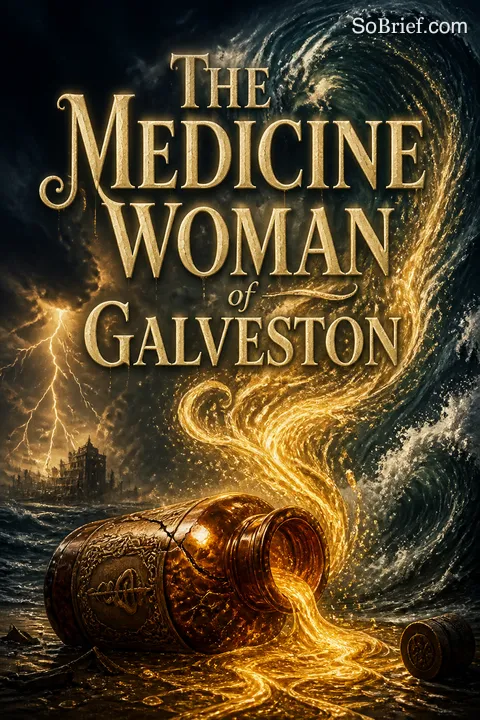
The hurricane strikes with unimaginable force, reducing Galveston to ruins. Tucia is separated from Toby and the troupe, swept into the chaos of flood and destruction. She clings to survival, rescuing strangers, stitching wounds, and searching desperately for her son. The city is a landscape of death and devastation. Tucia's trauma resurfaces, but she finds strength in action, in the small mercies she can offer. The storm is both an ending and a beginning.
Aftermath and Reckoning
In the storm's aftermath, Tucia searches morgues and ruins for Toby, haunted by guilt and fear. She reunites with Darl, confesses her love, and together they search for hope amid the wreckage. The troupe is scattered, some lost, some found. Huey, revealed as a looter, is shot and arrested. Tucia's medical skills are finally recognized and valued as she helps tend to the wounded and dying. The city mourns, but life persists. Tucia is changed—scarred, but not broken.
Healing and Hope
Weeks after the storm, the survivors gather what remains and look to the future. Fanny recovers from her wounds; Cal and Al prepare to start anew; Lawrence returns home. Tucia, at last, is offered a position as a physician, her skills and courage acknowledged. She and Darl, free from Huey's shadow, choose to stay in Galveston and rebuild. Toby, safe and cherished, is her anchor. The past cannot be erased, but it need not define her. In the ruins, Tucia finds not only survival, but the possibility of joy.
Analysis
A modern lens on trauma, resilience, and the ethics of survivalThe Medicine Woman of Galveston is a powerful meditation on the costs and possibilities of healing—in body, mind, and community. Through Tucia's journey, the novel interrogates the barriers faced by women and other marginalized people in medicine and society, exposing the ways trauma can fracture identity and limit agency. Yet it also insists on the possibility of redemption, not through grand gestures, but through small acts of mercy, honesty, and connection. The medicine show, with its blend of spectacle and fraud, becomes a metaphor for the stories we tell ourselves and others to survive. The hurricane, both literal and symbolic, is a crucible that destroys and remakes. Ultimately, the novel argues that healing is not the erasure of scars, but the integration of pain into a larger story of hope. In a world that often demands performance and punishes difference, The Medicine Woman of Galveston offers a vision of resilience, solidarity, and the hard-won joy of living authentically.
Characters
Tucia Hatherley
Tucia is a woman marked by trauma, guilt, and resilience. Once a promising physician, her career is destroyed by a public failure and the predations of a powerful mentor. She is fiercely protective of her son, Toby, whose Down syndrome makes him vulnerable in a harsh world. Tucia's psyche is a battleground: she suffers from PTSD, compulsive hair-pulling, and deep-seated shame. Yet she is also resourceful, compassionate, and capable of great courage. Her journey is one of reclaiming agency, forging connection, and redefining what it means to heal. Through love, loss, and the crucible of disaster, she learns to forgive herself and embrace hope.
Toby Hatherley
Toby is Tucia's young son, a child with Down syndrome whose vulnerability and joy shape the emotional core of the story. He is both a source of anxiety and a wellspring of love for Tucia. His presence exposes the prejudices of the era, but also the capacity for acceptance and kindness among the troupe. Toby's resilience and empathy inspire those around him. He is a symbol of hope, a reminder that worth is not measured by ability or conformity. His survival through the storm is a testament to the power of community and maternal devotion.
Hugh "Huey" Horn / The Amazing Adolphus
Huey is the flamboyant, cunning leader of the medicine show. He is both savior and oppressor, offering Tucia a lifeline while binding her in debt and deception. His charm masks a ruthless self-interest; he exploits the vulnerabilities of his troupe and the gullibility of his audiences. Huey is a survivor, shaped by hardship and incarceration, but his need for control and validation drives him to ever greater acts of manipulation. He is both a product and a perpetrator of the era's moral ambiguities. His downfall is both a reckoning and a release for those he held captive.
Darl
Darl is the troupe's handyman, a man of few words and deep scars. His past is marked by violence, abuse, and imprisonment; his present by quiet competence and steadfastness. Darl's relationship with Tucia is a slow-burning romance, built on mutual respect and vulnerability. He is haunted by guilt and the threat of exposure, but finds in Tucia and the troupe a semblance of family and purpose. Darl's journey is one of learning to trust, to forgive, and to hope for a future beyond survival. His love is a healing force, both for himself and for Tucia.
Fanny (Franziska Trout)
Fanny is a woman of extraordinary stature and heart. Once a ballerina, her gigantism leads to exile and exploitation in the circus and sideshow. She is both nurturing and formidable, a protector of the vulnerable and a survivor of profound loss. Fanny's partnership with Cal and her adoption of Al create a chosen family within the troupe. Her wisdom, humor, and resilience are a model for Tucia. Fanny's near-fatal injury in the storm and her recovery symbolize the possibility of healing and renewal.
Cal Trout
Cal is Fanny's husband, a virtuoso musician whose bowed legs and sharp wit belie a deep well of kindness. His past is one of poverty, exclusion, and fugitive flight after a tragic accident. Cal is the troupe's moral compass, offering comfort and stability amid chaos. His devotion to Fanny and Al is unwavering. Cal's music is both a balm and a bridge, connecting the troupe to their audiences and to each other. He is a reminder that dignity and artistry can flourish even in the margins.
Al
Al is the adopted son of Fanny and Cal, a spirited, resourceful child who finds belonging among misfits. His presence brings levity and innocence to the troupe. Al's injury and recovery are a crucible for the group's bonds. He is both a surrogate sibling to Toby and a symbol of the possibility of family beyond blood. Al's resilience and adaptability mirror the troupe's own.
Lawrence Hiya
Lawrence is a Creek Indian forced into performance by the government's policies. His identity is commodified, his autonomy constrained. Lawrence is quiet, observant, and deeply intelligent; his poetry and humor are acts of resistance. He is haunted by loss—of family, land, and self-determination—but finds kinship and dignity among the troupe. Lawrence's eventual return home is an act of reclamation, a refusal to be defined by others' narratives.
Kit
Kit, the monkey, is both comic relief and a symbol of resilience. His bond with Toby is a source of joy and comfort. Kit's survival through the hurricane is a small miracle, a reminder that life endures even in the face of catastrophe. He is a thread of continuity, connecting the troupe's past and future.
Dr. Archibald Addams
Dr. Addams is the surgeon whose cruelty and ambition destroy Tucia's career. He is a master of manipulation, using his authority to exploit and humiliate. Addams represents the barriers faced by women in medicine, the dangers of unchecked power, and the lasting wounds of betrayal. His presence in Tucia's psyche is both a torment and a catalyst for her eventual self-assertion.
Plot Devices
Trauma as Narrative Engine
The novel's structure is driven by Tucia's trauma—her failure in the operating theater, her abuse by Addams, her compulsive hair-pulling, and her fear of losing Toby. Flashbacks, intrusive memories, and dissociative episodes are woven into the present action, blurring the line between past and present. This device creates a sense of immediacy and vulnerability, allowing readers to inhabit Tucia's psyche. The narrative arc is one of gradual healing, as Tucia learns to manage her anxiety, reclaim her agency, and forgive herself.
Found Family and Marginalization
The troupe is a microcosm of the marginalized: women, people of color, disabled, queer, and neurodivergent characters. Their stories are revealed through interludes and confessions, deepening the emotional resonance and highlighting the era's injustices. The found family trope is both a source of comfort and a site of conflict, as loyalty is tested by external threats and internal wounds.
Performance and Identity
Performance is both literal and metaphorical: the medicine show, the mind-reading act, the case-taking tent, and the palmistry readings are all stages on which characters negotiate identity, survival, and morality. The tension between authenticity and deception is central—Tucia's struggle to be a real doctor in a world that demands she play a fraud, Darl's passing, Lawrence's forced performance, Fanny's sideshow exile. The narrative interrogates the costs and possibilities of self-invention.
The Storm as Catalyst
The Galveston hurricane is both a plot climax and a metaphor for upheaval and transformation. It strips away illusions, exposes vulnerabilities, and forces characters to confront their deepest fears and desires. The storm's aftermath is a landscape of loss and possibility, where old hierarchies are upended and new beginnings are forged. The narrative uses the storm to accelerate character development and to pose existential questions about meaning, survival, and hope.
Redemption through Small Acts
Tucia's journey is marked by small acts of kindness and resistance: offering real medical advice, saving Fanny's life, refusing to exploit the vulnerable, choosing love over fear. These moments accumulate, creating a counter-narrative to the grand deceptions and betrayals. Redemption is not found in dramatic gestures, but in the daily work of healing, connection, and self-forgiveness.








































