
Plot Summary
Fugitive's Arrival and Isolation
The story opens with an unnamed fugitive escaping persecution, arriving on a mysterious, supposedly deserted island. He is driven by fear, hunger, and the need to survive, haunted by the threat of capture and the harshness of the environment. The island is both a sanctuary and a prison, with its abandoned buildings—museum, chapel, and pool—hinting at a forgotten past. The fugitive's isolation is palpable; he struggles with the elements, scavenges for food, and battles loneliness. His only solace is the hope of anonymity, but the island's eerie silence and the remnants of civilization create a sense of unease. The fugitive's initial focus is survival, but the island's secrets soon begin to unravel, setting the stage for a confrontation with the unknown.
Phantom Guests Appear
One night, the fugitive is startled by the sudden appearance of elegantly dressed people on the island, as if conjured from thin air. They dance, swim, and socialize, oblivious to his presence. Their clothes and manners seem from another era, and their routines repeat with uncanny precision. The fugitive is both fascinated and terrified, unsure if these are hallucinations, ghosts, or something else entirely. He observes them from afar, especially drawn to a woman who watches the sunset each evening. The presence of these guests transforms the island from a place of desolation to one of mystery, deepening the fugitive's paranoia and curiosity. He becomes obsessed with understanding who—or what—these people are, and why they do not acknowledge him.
The Woman by the Rocks
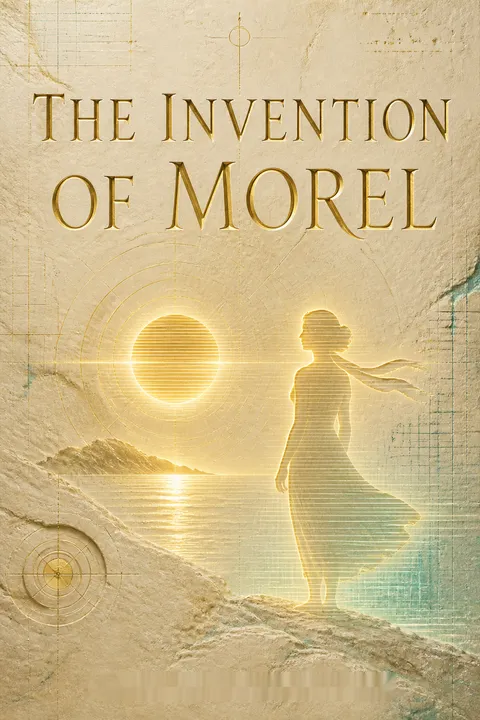
The fugitive becomes fixated on the woman with the bright scarf, whom he names Faustine. She sits by the rocks, watching the sunset, exuding a calm sensuality that entrances him. He watches her daily, his longing growing into an obsession. Faustine's indifference is both a torment and a lure; she never acknowledges his presence, yet her routine becomes the axis of his existence. The fugitive's isolation is now colored by hope and desire, as he dreams of making contact. His attempts to approach her are clumsy and unsuccessful, deepening his sense of inadequacy and fueling his yearning. Faustine becomes both a symbol of unattainable love and the fugitive's only connection to humanity.
Obsession and Failed Contact
Driven by longing, the fugitive tries to attract Faustine's attention—first with awkward conversation, then by creating a flower garden in her likeness. Each attempt is met with silence or indifference. His efforts only highlight the gulf between them, as if they exist in separate realities. The fugitive's jealousy is piqued by Faustine's interactions with a bearded man, Morel, and other guests. He oscillates between hope and despair, convinced that some invisible barrier prevents true contact. The repetition of events and conversations among the guests adds to his confusion, making him question the nature of their existence. His obsession with Faustine becomes a form of self-torment, as every gesture is swallowed by the void.
Repetitions and Uncanny Events
The fugitive notices that the guests' actions and conversations repeat with uncanny exactness, as if caught in a loop. Scenes play out identically, day after day, with no memory or awareness of change. The fugitive's attempts to interact are ignored, and he begins to suspect that he is invisible or that the guests are not truly alive. The boundaries between dream, memory, and reality blur. He considers various explanations—madness, death, or supernatural forces—but none satisfy. The island's environment itself seems to echo these repetitions, with tides and weather patterns reinforcing the sense of cyclical entrapment. The fugitive's sense of self begins to erode as he is drawn deeper into the island's enigma.
The Vanishing and Return
Suddenly, the guests vanish without warning, plunging the fugitive into a new level of isolation and anxiety. He searches the island frantically, unable to find any trace of them. The silence is now oppressive, and the fugitive is haunted by the possibility that he has imagined everything. Just as abruptly, the guests reappear, resuming their routines as if nothing had happened. The fugitive's relief is tinged with dread; he realizes that their presence is governed by forces beyond his understanding. The cycles of appearance and disappearance reinforce the sense that the island is governed by a hidden mechanism, and the fugitive's grip on reality grows ever more tenuous.
The Museum's Secret Machines
Exploring the museum's basement, the fugitive uncovers a network of mysterious machines—generators, projectors, and receivers—connected to the island's tides. He realizes that these devices are responsible for the guests' appearances and the repetition of events. The machines project not only images and sounds but also sensations, creating a complete simulation of life. The fugitive's attempts to interact with the machines are met with frustration; their workings are beyond his comprehension, and their protection is absolute. The revelation that the guests are projections, not living beings, is both a relief and a horror. The fugitive is confronted with the possibility that he is alone among phantoms, and that his own reality may be equally illusory.
Morel's Revelation
In a dramatic gathering, Morel, the bearded man, reveals the truth to his companions: he has invented a machine that records and eternally replays a week of their lives, capturing every sense and detail. The guests are, in fact, recordings—living images doomed to repeat the same moments forever. Morel confesses that his motivation was love for Faustine; unable to possess her in life, he sought to create an eternal paradise where they could exist together. The guests react with shock, disbelief, and horror, realizing that their souls may have been transferred to these images, and that they are, in effect, dead. The fugitive, listening in secret, is devastated by the implications for Faustine and for himself.
The Nature of Immortality
The fugitive reflects on the nature of Morel's invention and the immortality it offers. The guests, including Faustine, are preserved in a perpetual loop, unaware of their fate. Their paradise is both perfect and hellish—free from suffering, yet devoid of change or growth. The fugitive grapples with the philosophical implications: is this true immortality, or a mockery of life? He considers the possibility of using the machine to resurrect the dead or to create new paradises, but recognizes the limitations—these images cannot evolve or respond to the present. The invention is both a triumph over death and a prison of eternal sameness, raising questions about the value of memory, consciousness, and love.
The Fugitive's Despair
Realizing that Faustine is forever out of reach—an image, not a living woman—the fugitive is consumed by despair. He contemplates suicide, haunted by the futility of his love and the impossibility of escape. The island's cycles, the indifference of the images, and the impenetrability of the machines reinforce his sense of entrapment. Yet, even in his misery, the fugitive is drawn to the beauty of Faustine's image and the perfection of the eternal week. He oscillates between resignation and a desperate hope for connection, clinging to the illusion of presence even as he acknowledges its emptiness. The fugitive's suffering becomes a meditation on the human need for meaning and the pain of unattainable desire.
The Choice to Intervene
In a final act of longing, the fugitive decides to insert himself into the machine's cycle. He meticulously studies the guests' routines, rehearses his actions, and times his movements to coincide with the projections. By doing so, he hopes to become part of the eternal week, to exist alongside Faustine, even if only as an image. The process is painstaking and fraught with uncertainty, but the fugitive is driven by the hope of achieving a semblance of union with his beloved. He accepts the loss of his individuality and the dissolution of his physical self as the price for eternal proximity. The act is both a surrender and a triumph—a final assertion of agency in the face of oblivion.
The Eternal Week
The fugitive successfully integrates himself into the machine's projection, becoming an image among images. He experiences the joy of being with Faustine, free from the burdens of memory and mortality. The eternal week plays out endlessly, each moment fresh and unspoiled by the past. The fugitive's consciousness fades as his body deteriorates, but his image endures, locked in perpetual harmony with Faustine and the other guests. The paradise Morel created is now complete, encompassing both the inventor's and the fugitive's desires. The story's emotional arc culminates in a bittersweet acceptance of illusion as the only possible fulfillment of love and longing.
The Fugitive's Transformation
As the fugitive's body succumbs to the effects of the machine—losing sensation, hair, and nails—his sense of self dissolves. He is no longer a fugitive, but a participant in the eternal tableau. The pain of separation from Faustine is replaced by the serenity of eternal presence, even if only as a shadow. The fugitive's transformation is both literal and metaphorical: he becomes what he once feared, an image without agency, yet finds peace in the surrender. The boundaries between life and death, reality and illusion, are erased. The fugitive's journey ends not with escape or redemption, but with the embrace of a new, artificial existence.
The Final Embrace of Illusion
In his last act, the fugitive addresses a hypothetical future reader, asking that someone use the machine to reunite his consciousness with Faustine's. He acknowledges the limitations of Morel's invention, but holds out hope that a more advanced technology might one day restore true connection. The diary becomes both a testament and a prayer—a record of suffering, love, and the longing for transcendence. The fugitive's acceptance of his fate is tinged with hope, as he entrusts his story to the unknown, seeking meaning beyond the confines of the island and the machine. The narrative closes with a sense of closure and yearning, the fugitive's voice echoing into eternity.
Analysis
A meditation on love, memory, and the limits of immortalityThe Invention of Morel is a masterful exploration of the human longing to preserve what is fleeting—love, beauty, and happiness—against the inexorable tide of time and death. Through the fugitive's journey, Casares interrogates the nature of reality, the reliability of perception, and the dangers of confusing illusion with truth. Morel's machine, a prophetic vision of virtual reality, anticipates contemporary anxieties about technology's power to simulate and supplant life. The novel's emotional core is the fugitive's doomed love for Faustine, a love that can only be fulfilled in the realm of images, where agency and reciprocity are impossible. Casares suggests that the pursuit of eternal happiness may lead not to paradise, but to a sterile repetition that erases the very qualities that make life meaningful. The book's enduring lesson is that immortality, whether technological or emotional, is always haunted by loss, longing, and the irreducible mystery of the other.
Review Summary
Readers widely praise The Invention of Morel as a masterpiece of fantastic fiction, celebrating its atmospheric mystery, philosophical depth, and ingenious plot. Many highlight the story's exploration of love, immortality, consciousness, and the nature of reality through the eyes of a fugitive stranded on a strange island. Jorge Luis Borges famously called it "perfect." Comparisons are drawn to Borges' own writing style, silent film culture, and even the TV series LOST. A small minority found it overlong or underwhelming, but most consider it an essential, unforgettable work.
People Also Read



Characters
The Fugitive (Narrator)
The unnamed fugitive is the novel's central consciousness, a man driven to the island by persecution and existential dread. His psychological journey is marked by paranoia, longing, and a relentless search for meaning. Initially focused on survival, he becomes obsessed with the mysterious guests and, above all, with Faustine. His love for her is both redemptive and destructive, fueling his descent into obsession and despair. The fugitive's inability to interact with the guests leads him to question his own reality and sanity. Ultimately, he chooses to surrender his individuality, merging with the machine's projection in a final, poignant act of self-effacement. His arc is a meditation on isolation, desire, and the human need for connection, even at the cost of self-annihilation.
Faustine
Faustine is the enigmatic woman who captivates the fugitive with her beauty and serenity. She is both present and unattainable, her silence and indifference intensifying the fugitive's longing. As a projection, she is forever locked in the same gestures and routines, unaware of the fugitive's existence. Faustine embodies the ideal of love that can never be realized, a symbol of the distance between self and other. Her interactions with Morel and the other guests are ambiguous, fueling the fugitive's jealousy and hope. Psychologically, Faustine is less a character than a canvas for the fugitive's desires and fears, her inscrutability reflecting the novel's themes of illusion and unattainable fulfillment.
Morel
Morel is the creator of the machine that records and projects the eternal week. Driven by unrequited love for Faustine, he orchestrates the guests' unwitting participation in his experiment, seeking to create a paradise where he and Faustine can exist together forever. Morel's genius is matched by his moral blindness; he sacrifices the autonomy and perhaps the lives of his friends for his vision of immortality. His revelation is both triumphant and monstrous, exposing the costs of technological hubris and the dangers of idealizing love. Morel's psychological complexity lies in his blend of scientific rationality and emotional desperation, making him both a visionary and a villain.
Dora
Dora is one of the guests, notable for her frequent presence at Faustine's side and her spirited demeanor. She represents the ordinary pleasures and routines of social life, providing a contrast to the fugitive's isolation. Dora's interactions with the other guests, especially Faustine, highlight the warmth and camaraderie that the fugitive longs for but cannot access. As a projection, she is trapped in perpetual repetition, her vitality rendered static. Dora's role underscores the tragedy of the machine's immortality: the preservation of life's surface at the expense of its spontaneity and growth.
Alec
Alec is a young man among the guests, distinguished by his green eyes and businesslike demeanor. He attempts to engage the group in conversation about his wool business, but is largely ignored. Alec's presence emphasizes the diversity of personalities within the group and the richness of the life that has been frozen by Morel's invention. His interactions with Dora and Faustine suggest unfulfilled possibilities and the poignancy of lives interrupted. Alec's character serves as a reminder of the individuality and agency lost in the pursuit of eternal preservation.
Irene
Irene is a tall, long-armed woman whose expressions of disgust and skepticism provide a counterpoint to the group's general complacency. She questions Morel's motives and the implications of his invention, embodying the critical perspective that the fugitive himself struggles to maintain. Irene's presence adds depth to the group dynamic, highlighting the range of responses to the revelation of their fate. Her skepticism mirrors the reader's own doubts and anxieties, grounding the narrative's more fantastical elements in psychological realism.
Stoever
Stoever is a guest who quickly grasps the sinister implications of Morel's invention. He connects the machine to mysterious deaths and voices suspicions that unsettle the group. Stoever's cynicism and directness make him a disruptive force, challenging the illusion of paradise and forcing the others to confront uncomfortable truths. His role is that of the truth-teller, the one who sees through the facade and articulates the horror that others wish to ignore. Stoever's presence intensifies the novel's atmosphere of dread and inevitability.
The Servants
The servants—cooks, manservants, and others—populate the background of the guests' world, performing their duties without acknowledgment or agency. Their presence reinforces the illusion of normalcy and the completeness of the projected reality. For the fugitive, the servants are both a threat and a mystery, as their routines and conversations occasionally intersect with his own. Psychologically, they represent the unseen forces that sustain the illusion, as well as the expendability of individual lives in the pursuit of a greater vision.
The Bearded Man (Haynes)
The bearded man, sometimes called Haynes, is a recurring figure in Faustine's company, provoking the fugitive's jealousy and suspicion. His relationship with Faustine is unclear, oscillating between intimacy and distance. The bearded man serves as both a rival for Faustine's affection and a mirror for the fugitive's own desires and insecurities. His ambiguous role heightens the fugitive's sense of alienation and fuels the narrative's tension.
The Editor (Implied)
The editor, who appears in footnotes and commentary, provides context, clarification, and skepticism. This voice serves to anchor the narrative in a broader reality, questioning the fugitive's perceptions and offering alternative explanations. The editor's presence adds a layer of metafiction, inviting the reader to reflect on the nature of storytelling, truth, and interpretation. Psychologically, the editor represents the rational mind's attempt to impose order on chaos, to find meaning in the fugitive's fragmented experience.
Plot Devices
The Eternal Recurrence Machine
The central plot device is Morel's invention: a machine that captures a week of sensory experience—sight, sound, touch, taste, and smell—and projects it endlessly, creating perfect replicas of people and events. This machine blurs the boundaries between reality and illusion, life and death, presence and absence. The narrative structure is shaped by the machine's cycles, with events repeating and characters trapped in perpetual loops. Foreshadowing is achieved through the fugitive's observations of repetition and the gradual revelation of the machine's workings. The device serves as both a metaphor for memory and a critique of the desire to escape mortality. It raises profound questions about identity, consciousness, and the ethics of technological immortality.
Download PDF
Download EPUB
.epub digital book format is ideal for reading ebooks on phones, tablets, and e-readers.








































