Key Takeaways
1. The Southern Inferiority Complex: A Century of Indictment
Fred Hobson, reflecting on W. J. Cash’s The Mind of the South (1941), William Alexander Percy’s Lanterns on the Levee: Recollections of a Planter’s Son (1941), and Lillian Smith’s Killers of the Dream (1949), claims that white southerners like Debnam were obsessed with explaining the region to the nation at large.
Public criticism's profound impact. For over a century, the American South endured relentless external criticism, creating a deep-seated regional inferiority complex. This constant "indictment of every aspect of their civilization" (as Fred Hobson put it) forced white Southerners into a perpetual state of self-justification and defensiveness, often manifesting as a "defiant pride" in their perceived distinctiveness. This psychological burden, rooted in defeat, poverty, and societal failures, became a formative influence on Southern culture.
Adler's theory applied. Psychologist Alfred Adler's concept of the "inferiority complex" provides a useful lens, suggesting that sustained disapproval can trigger compensatory behaviors like a drive for superiority or rejection of society. While Adler's theories are individual, their broader application helps understand how public criticism—especially from mass media—became "the cradle of southern consciousness." This criticism often blurred lines between individual, regional, and national identities, turning personal slights into collective battles.
Expanding "whiteness" beyond race. Initially a racial construct against a Black "other," Southern whiteness expanded under public scrutiny to encompass a comprehensive cosmology defined in opposition to a growing list of perceived enemies. This intricate web extended beyond racial segregation to rigid stances on:
- Religion (anti-evolution, fundamentalism)
- Education (anti-intellectualism, local control)
- Role of government (states' rights, anti-federal intervention)
- View of art (anti-modernism, traditionalism)
- Opposition to science
This overdetermined identity, fueled by a unifying sense of inferiority, became a stubborn and persistent force in Southern conservatism.
2. Scopes Trial: Media Scrutiny Forged Reactionary Fundamentalism
Even though fundamentalist groups were active throughout the country, George Marsden argues that the Scopes Trial and its southern, rural backdrop “stamped the entire movement with an indelible image.”
A publicity stunt backfired. The 1925 Scopes Evolution Trial in Dayton, Tennessee, intended by local businessmen as a tourism booster, instead became a national and international media spectacle that ridiculed the white South. William Jennings Bryan's defense of biblical literalism under Clarence Darrow's cross-examination, coupled with journalists like H. L. Mencken's portrayal of locals as "yaps, yokels, morons and anthropoids," solidified a stereotype of Southern provinciality and anti-intellectualism. This intense scrutiny transformed a moderately religious town into a bastion of reactionary fundamentalism.
Bryan's martyrdom and legacy. Bryan's death just days after the trial, before delivering his final speech, cemented his image as a martyr for the fundamentalist cause. Mencken's biting eulogy, which depicted Bryan as a figure of ridicule, further inflamed Southern fundamentalists. This sense of humiliation and loss spurred Dayton citizens to found William Jennings Bryan College, a "city on a hill" dedicated to creationism and insulated from modern scientific thought and media criticism.
The birth of reactionary fundamentalism. The trial's aftermath saw the emergence of a more organized, insulated, and defiant form of fundamentalism. This "reactionary fundamentalism" retreated from mainstream society, establishing its own educational and social institutions. It rejected modernism, science, and Northern encroachment, becoming deeply entrenched in the expanding definition of Southern whiteness. Bryan College, with its literalist curriculum and ongoing advocacy for creationism, stands as a tangible monument to this defensive cultural isolation, demonstrating how public criticism can radicalize a community.
3. Fugitives to Agrarians: Intellectuals' Defensive Embrace of the South
I can hardly speak for others, but for John Ransom and myself, surely, the Dayton episode dramatized more ominously than any other event easily could, how difficult it was to be a Southerner and also a writer.
Mencken's "Sahara" and the Fugitives. Initially, the Vanderbilt Fugitive poets (Ransom, Tate, Warren, Davidson) sought to escape Southern romanticism and bring modernism to Southern letters, even quoting H. L. Mencken in their journal's advertising. Mencken's scathing "Sahara of the Bozart" essay, which declared the South culturally sterile, was initially seen as a challenge to be overcome by creating an "oasis" of art. However, the Scopes Trial criticism, which extended beyond religion to general Southern culture, forced a profound re-evaluation.
A "midnight alarm" for identity. Donald Davidson described the Scopes trial as a "midnight alarm" that awakened a dormant historical consciousness among the writers. They realized their individual identities were inextricably linked to a scorned regional identity, now defined in opposition to American national identity. This damming criticism, particularly from Mencken, made them feel "ineluctably enmeshed with the history and the future of their region," leading to a dramatic shift from fleeing Southernness to embracing it.
Agrarianism: A defensive counterattack. This newfound Southern consciousness led to the Agrarian movement and the manifesto I'll Take My Stand (1930). The Agrarians sought to:
- Reclaim the Southern past, glorifying an idealized agrarian lifestyle.
- Venerate the sacred and demonize urban industrialism.
- Associate white Southern culture with high European culture and authentic Americanism.
- Defend fundamentalism (Ransom, Davidson) and revise Civil War history (Tate, Warren).
This collective effort, born from a desire for recognition and a need to mask their inferiority, aimed to prove the intellectual and cultural viability of the white South, despite its glaring omissions regarding slavery and Jim Crow.
4. New Criticism: A Strategic Retreat to Aesthetic Authority
The New Critics’ distaste for modern society and their desire to isolate the world of literature from it mirrored and extended the Agrarian rejection of the modern South and its yearning for an earlier, imaginary version of the antebellum South.
Agrarian failure, critical pivot. The I'll Take My Stand manifesto, despite some Southern support, was largely condemned as impractical and nostalgic, drawing renewed ridicule. This second wave of public criticism, following the Scopes trial backlash, prompted another transformation for Ransom, Tate, and Warren. Recognizing the futility of their political efforts, they strategically shifted back to their expertise: literary criticism, giving birth to the "New Criticism."
A new set of rules for literature. New Criticism, championed by Ransom's The New Criticism (1941) and Warren and Brooks's Understanding Poetry (1938), redefined literary analysis. It emphasized:
- Textual autonomy: Viewing the literary work as an independent object, a "verbal icon."
- Close reading: Intense focus on language, form, and internal coherence.
- Rejection of external context: Downplaying authorial intent, reader response, and historical/sociological context.
This method, while seemingly objective, allowed them to assert intellectual authority and establish a literary canon that reflected their conservative, white, male sensibilities, effectively masking their controversial Southern identities.
Camouflage for a contested identity. By detaching literature from its social and historical moorings, New Criticism offered these embattled intellectuals a way to:
- Gain national intellectual influence and critical acclaim.
- Avoid the "baggage of the benighted South" and its associated ridicule.
- Reconstruct a conservative culture through aesthetic standards.
This "tactical manoeuvre" (as Mark Jancovich called it) allowed them to control the terms of literary judgment, promoting their own works and those that aligned with their traditional values, while suppressing the very Southernness that had proved so costly to their reputations.
5. Virginia's Moderate Shift to Massive Resistance
Virginia’s reaction to the Supreme Court’s decision was at first relatively moderate. Yet organization policy became very much like a canoe which, first drifting downstream in mild waters, soon followed more turbulent currents and eventually plunged over the waterfall.
Initial moderation, growing anxiety. Following the 1954 Brown v. Board of Education decision, Virginia's initial response was cautious, with Governor Thomas B. Stanley calling for "cool heads, calm study and sound judgment." This moderation, however, was fragile. The Supreme Court's ruling, coupled with rising international pressure on the U.S. regarding racial practices, created a profound anxiety among white Southerners. They feared that dismantling school segregation would unravel their entire way of life, leading to a sense of standing "once again on the wrong side of history."
The Gray Commission's compromise. Governor Stanley appointed the all-white Gray Commission to devise a plan for integration. Despite its pro-segregation leadership, the commission's initial report in November 1955 proposed a seemingly moderate three-point plan:
- Amending compulsory attendance laws (allowing white students to avoid integrated schools).
- Establishing local pupil assignment boards (allowing county-level control over integration).
- Providing tuition grants for private schools (using public funds to support segregation).
This plan, while designed to prevent "enforced integration," still allowed for some local choice, reflecting a temporary, uneasy compromise.
Public opinion radicalized. The commission's moderate stance quickly disintegrated. Between November 1955 and January 1956, a dramatic shift occurred, fueled by intensifying public criticism of Southern racial practices. This period saw the rise of an "all-out anti-Gray campaign" that demanded no integration anywhere. The fragile moderate community was rapidly radicalized, demonstrating how external pressure and a deep-seated sense of inferiority could transform cautious leaders into staunch advocates of "Massive Resistance."
6. Civil Rights Media: Catalyzing Southern White Backlash
The Southern contradiction of democracy is the only one in the nation against which an aggressive demand for full, abrupt, and forcible revision is continuously directed.
A new era of "Benighted South." The media's jubilant celebration of the Brown decision, coupled with international condemnation of American racial hypocrisy, intensified the "Benighted South" narrative. This constant "aggressive demand for full, abrupt, and forcible revision" of Southern racial practices, as Hodding Carter Jr. observed, created a "historic and a present-day basis for suspicion and fear" among white Southerners. The perception of being uniquely targeted for moral reproof fueled a defensive backlash.
Emmett Till and the Montgomery Bus Boycott. Two pivotal civil rights events in 1955 dramatically escalated media scrutiny and white Southern anxiety:
- Emmett Till's murder: The brutal lynching of a Black teenager from Chicago, and his mother's decision to display his open casket, generated graphic national and international media coverage. The acquittal of his confessed murderers, followed by their Look magazine confession, exposed the violent demons of white supremacy and solidified the image of a lawless South.
- Montgomery Bus Boycott: This year-long protest, led by Martin Luther King Jr., was a powerful act of public criticism. Its successful organization and extensive media coverage (including local NBC reports) showcased African American agency and the potential for tangible change, further threatening the racial status quo.
The "paper curtain" and perceived bias. White Southerners, particularly journalists like Thomas R. Waring Jr. and James J. Kilpatrick, began to complain about the "one-sided nature" of civil rights coverage, labeling it a "paper curtain" that silenced their perspective. They accused Northern media of:
- Citing unrepresentative Southern sources (liberals).
- Ignoring Southern "propriety" and non-violent resistance.
- Being a "Carpetbagger Press" controlled by Northern money.
This perception of media bias, whether real or imagined, intensified the sense of white Southern persecution and alienation, making moderation increasingly untenable.
7. Interposition: A Constitutional Guise for Segregation
This proposal for interposition is catching fire because it’s right—it is basically and fundamentally sound, it transcends the race issue.
Kilpatrick's strategic shift. James J. Kilpatrick, editor of the Richmond News Leader, initially urged compliance with Brown but quickly escalated his defiance, vowing to "litigate this thing for fifty years." Recognizing the vulnerability of white Southern moderates to media criticism and the need for a "defensible" stance against integration, Kilpatrick seized upon the "Doctrine of Interposition." This legal theory, which called for states to interpose their sovereignty against federal overreach, became a powerful rhetorical tool.
Resurrecting historical precedents. Kilpatrick's campaign, launched in November 1955, involved reprinting historical documents like the Kentucky and Virginia Resolutions of 1798-99, authored by Jefferson and Madison. He argued that these precedents, originally used to protest the Alien and Sedition Acts, justified Virginia's right to nullify the Brown decision. By invoking revered Founding Fathers and even citing abolitionist uses of interposition in Wisconsin, Kilpatrick aimed to:
- Elevate the debate from "distasteful morass of racial segregation" to "fundamental principles of government."
- Unite Virginians under a banner of constitutional defense, rather than overt racism.
- Exploit the Southern heritage of inferiority by presenting a seemingly intellectual and historically grounded argument.
A mandate for Massive Resistance. Despite its dubious legal standing (critics called it "an excursion into fantasy"), Interposition gained immense traction. Kilpatrick's pamphlets and editorials, widely distributed across the South, convinced many that it was a "valid and honorable approach." The successful passage of a state constitutional amendment in January 1956, allowing public funds for private schools, was seen as a mandate for greater resistance. This culminated in Virginia's General Assembly approving a Resolution of Interposition in February 1956, legally institutionalizing "Massive Resistance" and setting the stage for school closings.
8. The Enduring Legacy: Southern Whiteness and Political Realignment
The South, then, has been a region with painful memories joined politically with other regions whose history has been until recent years little but an optimistic chronicle of victories and achievements.
A multilayered identity. The constant public denunciation of the "Benighted South" throughout the 20th century, from the Scopes Trial to the Civil Rights Movement, forged a multilayered and overdetermined Southern white identity. This identity, initially rooted in racial superiority, expanded to encompass opposition to:
- Modern science and intellectualism (Scopes).
- Industrialism and singular definitions of American progress (Agrarians).
- Judicial activism, expanding federal government, and "liberal" media (Massive Resistance).
Each wave of criticism prompted a defensive reaction, solidifying a "us versus them" mentality that defined Southern whiteness against a growing array of perceived enemies.
Textual authority as armor. In each instance of perceived siege, Southern white communities retreated and established a defiant new reality, grounded in the "textual authority" of:
- The Bible (fundamentalists).
- Literary works and aesthetic principles (New Critics).
- The U.S. Constitution (Massive Resistance advocates).
This reliance on sacred or authoritative texts provided validation, encouraged righteousness, and propped up traditions, ensuring the longevity of these alternative realities long after the immediate crises subsided.
The politics of inferiority and realignment. Republican strategists in the 1960s, recognizing the vulnerability and alienation of white Southerners, capitalized on this "heritage of inferiority" to engineer the "Southern Strategy." By appealing to fears of federal overreach, "permissiveness," and "superior" treatment of minorities, figures like Barry Goldwater, George Wallace, and Richard Nixon successfully shifted Southern loyalty from the Democratic to the Republican Party. This political realignment, driven by a complex interplay of racial anxieties, cultural grievances, and a deep-seated sense of victimhood, cemented a conservative stronghold in the South, whose influence continues to shape national politics and cultural debates today.
Review Summary
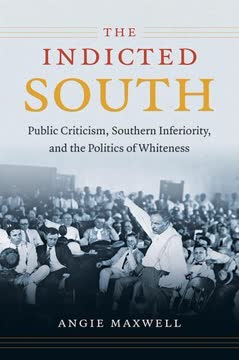
The Indicted South examines how conservative radicalization stemmed from public criticism of Southern ideology, using three case studies: the Scopes trial, post-Brown v. Board integration debates, and Southern intellectuals. Reviewers found the book persuasive on radicalization as defensive response to perceived out-group attacks, though the psychological arguments were less convincing. A key insight explores how Northern elites project racism and anti-science attitudes onto the South, creating distinct visions of America. The Scopes and integration sections were particularly compelling, while the literary movement analysis received mixed reception.








































