
Plot Summary
Arriving At Highwood's Gates
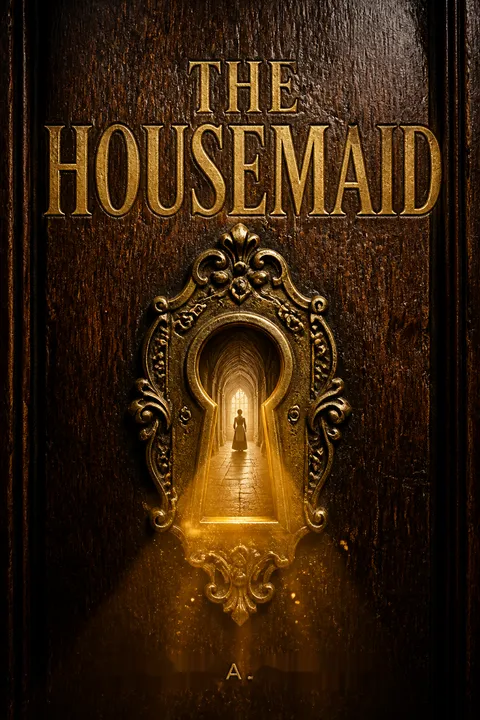
Emily arrives at the grandeur of Highwood Hall with nothing but desperation, trauma, and hope. Homeless, broke, and longing for a place she can call her own, Emily steps into the world of the elite as a maid. The gothic estate's imposing structure is matched only by its labyrinth of secrets. Here, she isn't simply interviewing for a job—she is searching for safety, even belonging. But as she's led around by the chilling, authoritarian housekeeper, Mrs Huxley, Emily instantly senses the coldness lurking within the stone walls. Her awe quickly fades into wariness as rules are listed and boundaries established. Highwood is not just another upper-class household—it's a fortress where the unspoken wields more power than the spoken. Emily's arrival is both a beginning and a haunting omen, binding her to a history she cannot yet see.
Hidden Histories, Hidden Agendas
While learning the routines of Highwood, Emily's own history begins to infiltrate her present. Highwood is the place where her mother once worked and vanished, a painful secret Emily quietly hopes to unravel. Sharing a room with Roisin, a lively yet troubled fellow maid, she finds comfort and camaraderie, but also the first hints that not everything is what it seems. The other staff carry their own burdens, especially Roisin, who reveals the high personal cost of working in this house. Mrs Huxley, both gatekeeper and warden, enforces discipline with icy precision. For all Emily's hope, there's never comfort—only distance, uncomfortable stares, and an ever-present sense of being watched and judged. As she glimpses faces in murals and reads faded letters from her mother, the estate's history begins to consume her, whispering that no one truly escapes Highwood Hall unscathed.
The First Threat Arrives
Emily's fragile start is quickly ruptured when she receives a morbid, handmade diorama depicting a maid—herself—dead at the bottom of the estate's spiral staircase. The gift strikes like a warning shot, unearthing suspicion, fear, and paranoia in both staff and family. The Howards, with their veneer of aristocratic calm, barely acknowledge the threat, each member reacting with calculated detachment or shallow concern. Roisin is frightened for Emily; Mrs Huxley is irritated, dismissing it as a bad joke. Family members—especially Alex, the magnetic heir—offer sympathy laced with patronization and potential menace. The diorama redefines Emily's stay: from grateful new employee to marked outsider. The boundaries between safety and danger blur by the day, and as Emily obsesses over the dolls, she realizes someone doesn't just want her gone—they want her afraid.
Chilling Confidences Among Servants
As Highwood's routines grind on, Emily burrows deeper into the hush-hush world of the house's working class. Through whispered conversations over laundry and tea, Roisin nudges Emily closer to ugly truths: the previous maid left without a word, but not before having an illicit relationship with Alex; staff come and go, most broken or fleeing. Shadows stretch through the servants' corridors, rumors echo of disappearances and haunted wings, and the fragile support network among the help becomes Emily's only comfort. Ade, the gentle gardener, and others urge caution, but also express quiet rebellion against the chill and power of Highwood's hierarchy. The sense that someone within their own ranks is watching—or worse, collaborating—grows. Each confession and small betrayal tightens the house's hold, deepening both fear and Emily's stubborn resolve to survive and uncover the source of its sickness.
Music, Power, and Seduction
Alex Howard, the enigmatic and talented heir, draws Emily into his world through the music room—a private domain where rank and trauma melt into musical collaboration. Sessions turn into seductions, and Emily is torn between excitement, belonging, and raw vulnerability. Yet the dynamic is never equal: Alex's interest oscillates between genuine affection and cold control; his "games" grow subtly sinister. The music room transforms into both refuge and snare, an escape from the terrors of servitude and a stage for power rituals that echo generations of Howard men preying on staff. Meanwhile, the dioramas continue—their diabolical creativity escalating, targeting not just Emily but Howard family members. Alex's charm, the intoxicating music, and the cultivated intimacy contrast sharply with increasing violence and objectification, blurring any hope of trust or real connection.
Dolls, Diaries, and Dead Maids
Emily is driven to investigate further by more deadly dioramas, the whispered absence of her predecessor, and Roisin's unstable moods. Old letters written by her mother begin to piece together a past riddled with abandonment and terror, hinting that Highwood's history of missing maids is no accident. Confidences with Ade and Roisin interweave the present with Highwood's legacy, exposing a cycle: the house draws in the desperate, then chews them up—sometimes quite literally. The dolls become more than threats—they're reenactments of real tragedies, trophies of a predator's ongoing game. When confessions spill out amid late night chats and breakdowns, Emily realizes Highwood may have devoured her own mother, and that Roisin, walking a similar tightrope of secrecy and forbidden love, is at increasing risk herself.
The Family's Living Ghosts
Emily glimpses layers of dysfunction, repression, and complicity as she is pulled deeper into the Howards' world. The matriarch, Margot, is a tragic specter—defiant, sharp, but powerless against the men. Lottie, the petulant daughter, reveals past cruelties and selfishness that haunt not just her, but maids who were fired (and ruined) in her wake. Dinner conversations and drunken confessions lay bare the degree to which the family's well-being rests on the silent suffering of servants. The stately murals and portraits are literal records of victims erased from real history, but immortalized on walls as vague, beautiful ghosts. Emily begins to see herself reflected in these images—disposable, unremembered, yet essential. The tension between seen and unseen reaches a breaking point: the living ghosts of Highwood are not just maids, but anyone outside the family's armor.
North Wing Secrets Unveiled
The cryptic North Wing, closed and decaying, beckons as more dioramas target the household. Alex leads Emily into its depths—not just as a lover, but as an heir performing a dark rite. Here, Emily sees the foundations of the family's twisted tradition: hidden rooms, secret corridors, passages acquainted with generations of abuses. The suggestion is that Highwood is not haunted by the dead but by the cruel will of its living occupants. Emily's exploration, emboldened by information she gleans from both Roisin and Ade, points to physical and psychological spaces designed for containment and punishment. Every step closer to the North Wing and its red room is a step closer to confirming that the estate's grandeur masks decades of predation and evil. The house itself is the instrument and witness of all that's been suppressed.
Growing Shadows, Growing Suspicion
Emily's spiralling fear turns into hypervigilance as more threats and paranoia grip the house. Another staff member is threatened, and Roisin's unraveling deepens. Emily suspects everyone—from family to her closest allies, even herself—as she realizes how easy it is to become complicit, to look away or rationalize evil. She investigates Huxley's locked office, uncovers secret dossiers, and begins to understand Mrs Huxley as a victim desperately clinging to power for the sake of her son, even as she enables horror. The complete unreliability of the Howards becomes clear; no one speaks the truth, and every kindness feels like a test. With Evelyn haunted by her mother's letters and Roisin's increasingly perilous relationships, Emily has to decide if she will survive by fleeing or by confronting the rot at the heart of Highwood.
Death Claims One of Their Own
The fragile equilibrium shatters when Roisin is found dead, hanging in the garden. The official verdict is suicide, but Emily can't believe the story—the staging feels off, the emotions too raw, the timing too convenient. Grief overpowers the staff, shame presses down, and the entire household goes into lockdown. Emily's guilt at having failed to protect Roisin ignites her urgency: she senses death at Highwood is never an accident, and the old pattern is repeating. The family closes ranks, offering platitudes and zero accountability. The motif of maids as ghosts—forgotten, misremembered, blamed for their own demise—becomes literal. In Roisin's death, Emily recognizes her mother's fate, and resolves not to let another woman disappear without justice.
Grief, Guilt, and Haunted Walls
With Roisin's funeral, Emily's resolve turns to obsession: she dives into documents, diaries, passages—anywhere that might hold the truth about the house and its owners. The walls are no longer just barriers; they're tombstones. She sees in Margot's suffering both complicity and powerlessness, and realizes how many have survived Highwood by simply refusing to see. Emily questions staff loyalties, suspects Mrs Huxley of both knowing everything and being as trapped as she herself feels. But grief is also galvanizing: the time for waiting for the Howards or the police to act is over. Emily's threat becomes existential—she is next, unless she exposes what so many have chosen not to.
Conspiracies in the Corridors
Determined to get answers, Emily forges an alliance with Ade, whose love and honesty become the only thing grounding her. With Mrs Huxley reluctantly drawn into her corner, Emily unearths decades of records, secrets, and confessions: Highwood has always been a hunting ground for the Howards and their allies. Blackmail, forced complicity, and the use of house secret passages for tracking, controlling, and disposing of victims are revealed. Mrs Huxley admits her own child is a product of past abuse—and that she has spent her life torn between protecting him and enabling evil. Together, they plot a trap to expose the Howards, not just for justice, but to save themselves and any future would-be ghosts.
Descent Into the Red Room
Emily volunteers as bait, knowing she will likely become the Howards' next victim, but this time her entrapment is strategic. Ade and Mrs Huxley rig a police sting and a digital livestream, exposing Bertie and Alex as serial predators who have tortured, raped, and killed women for decades. The red room—Highwood's hidden chamber of horrors—is revealed to the world, a voyeur's spectacle echoing back their own crimes. Violence ensues; Bertie is grievously wounded, Alex escapes. For Emily, survival comes at a steep psychological price, but for once, the ghosts are heard—the evidence is irrefutable, and the police must act.
Huxley's Terrible Testimony
Mrs Huxley—at last—confesses and hands evidence to authorities, ensuring that Emily's mother's fate, Roisin's murder, and the stories of other lost women cannot be ignored. She details a lifetime of trauma, both inflicted and endured, and demands protection for her own vulnerable son in exchange for her testimony. The gravity of her own complicity is neither minimized nor forgiven, but is set as another tragic example of how ordinary people, ensnared by dependency and fear, can be co-opted by evil. The testimony cracks open the family's entire legacy; the haunting is over, and reckoning begins.
The Howards' Appalling Legacy
Margot and Lottie, forced from their privileged denial, must reckon with the truth, and confront the ways small acts of silence, mockery, and selfishness have kept the Howards' secret safe. The media and public, appalled and fascinated, demand justice, and the iconic beauty of Highwood is replaced with a grotesque curiosity about its cruelties. Ade and Emily, shaken but resolute, confront survivors' guilt and the limits of justice—for themselves and the lost. Even as Bertie is brought down and Alex hunted, Emily is left acutely aware that the rich and powerful are never truly accountable. Only by naming the ghosts—reclaiming their names and faces—can any hope of true closure emerge.
Fire, Flight, and Final Confrontation
In a final, furious act, Alex attempts to erase the Howard family's crimes by setting Highwood Hall ablaze. Helped by a corrupt accomplice in the staff, he attacks Emily and Ade, intent on destroying both evidence and witnesses. In the chaos, Ade is nearly killed, but Emily's resilience prevails; Alex is fatally wounded in the struggle and the hall is lost to flames. In its destruction, the ghosts are freed: the cycle is broken, and Highwood's reign as a house of horrors ends in fire—a fitting pyre for the nameless, silenced women.
Fragments and a New Future
Survivors carry Highwood's scars, yet at last, possibility emerges. Emily keeps her promise to visit Mrs Huxley's son and to dignify the memory of the lost. Money and fame are inescapable, but she refuses exploitation, aiming instead for honest work and healing. Ade and Emily support each other, their relationship forged in truth rather than fantasy. Emily reconciles with her history and chooses a future rooted in care—seeking training work in a care home, rather than lingering as a ghost. The lessons of Highwood are never far, but for the first time, Emily can imagine life on her own terms, neither victim nor accessory, but survivor and witness.
Analysis
Sarah A. Denzil's The Housemaid is a modern gothic that laces psychological thriller with class critique and a sharp-eyed feminist perspective. At its core, the novel dissects how systems of power—aristocratic, patriarchal, and familial—enable and perpetuate generational trauma, especially for those who live at society's margins. The story exposes the mechanisms by which privilege and complicity suppress and erase women's experiences, with the literal ghosts of forgotten maids lingering, unacknowledged, within the home's walls. Denzil's central motif—the diorama—elevates the ordinary threat into an indictment of social voyeurism and the ease with which suffering is aestheticized or ignored. By centering the perspective of Emily—a survivor both in her own right and as daughter to the lost—the novel traces the journey from silence and shame to truth-telling and action, asking whether justice is possible when the powerful write the rules. Its lesson is clear: evil thrives not just in grand gestures of violence, but in every instance someone chooses to look away. Ultimately, The Housemaid affirms the resilience of those willing to bear witness, and the necessity of both remembering the lost and forging new, more humane narratives beyond the ruins of the past.
Review Summary
The Housemaid receives mixed reviews, averaging 3.57 out of 5. Many readers appreciate its gothic atmosphere, suspenseful plot, and the mystery surrounding Ruby's search for answers about her mother at Highwood Hall. Positive reviews praise the vivid setting, compelling characters, and surprising twists. However, critics find the plot predictable, characters one-dimensional, and the ending's twists far-fetched or poorly explained. Several readers humorously note they accidentally read this book instead of the similarly titled novel by Freda McFadden.
Characters
Emily Dean
Emily is the resilient, traumatized, and fiercely intelligent protagonist whose entire arc is driven by her need to belong, to find justice, and to uncover the legacy left by her vanished mother. Raised in instability and addiction, Emily's psychoanalytical profile is that of a woman forced to grow up too soon: deeply wary, but still hungry for connection and meaning. Highwood Hall is both a chance at redemption and the theater of her reawakening trauma. Her skill is in observation and empathy—she notes what others ignore, from servants' sorrows to the ghosts on the walls. Her greatest flaw is her tendency toward isolation and self-sabotage, her belief that suffering should be endured rather than escaped. Through the horror she endures—deadly threats, betrayals, literal brushes with death—her innate grit ultimately opens the way for not just personal survival, but the dismantling of an intergenerational system of abuse.
Alex Howard
Alex is the chillingly complex son of the Howard family: at once compelling, magnetic, and deeply disturbed. His attraction to Emily and other maids is never about genuine love, but about domination, sadism, and performance—he is at his most content in the voyeuristic, controlled setting of the music room, where he wields power under the cloak of sensitivity. Formerly groomed by his father to inherit not just property but a dark "tradition," Alex cycles between seductive charm and explosive violence. Psychologically, he is marked by arrested emotional development, compulsion, and toxic envy—at once a victimizer and the product of systematic cruelty. Ultimately, his inability to assert agency outside the family's sick rituals proves fatal.
Mrs Huxley
Mrs Huxley is the formidable housekeeper, both jailer and sometime protector. Her public role is one of exacting control—the classic stern Victorian manager—but privately, she is tormented by grief, fear, and a consuming sense of debt to her autistic son, for whom she is willing to sacrifice morals for safety. A product of the same cycles of abuse as the maids, she is alternately a perpetrator and a victim. Her eventual confession and alliance with Emily mark her as a deeply human, tragic figure: not blameless, but desperate and therefore understandable. Her arc lays bare the psychology of bystander complicity—how evil persists not through cartoon villains but ordinary people, cornered between survival and conscience.
Lord Bertie Howard
Bertie is the dual face of English privilege—one moment a philanthropist, generously hiring the desperate, the next a dead-eyed serial predator. His persona alternates between charm and sociopathic violence; he is addicted not only to power, but to the performance of power. His psychoanalytical portrait is that of malignant narcissism fused with generational entitlement; he both orchestrates and excuses evil, recruiting those around him with money, fear, and blackmail. Even when unmasked, he is so steeped in privilege that he never believes he could truly be caught.
Roisin Byrne
Roisin is Emily's confidante and "sister" among the servants, a lively young woman whose own trauma and need for attachment lead her to dangerous liaisons with both the kitchen staff and, fatally, Lord Bertie. Psychologically, Roisin is marked by a desperate hunger for love and validation, making her vulnerable to exploitation. Her death represents the point at which Emily's quest for truth becomes a quest for vengeance and prevention; Roisin is both a warning and the last straw—her fate pushes Emily to finally break the cycle.
Margot Pemberton
Margot, the chain-smoking, glamorous Dowager, is a survivor who wields her diminished power through wit, sarcasm, and a steely will. Haunted by complicity and her daughter's fate, she embodies the Faustian bargain many women in abusive systems make: protect one (Lottie), sacrifice others. Her emotional volatility masks a core of shame and helplessness. Ultimately, her agreement to fund Mrs Huxley's son's care represents a partial atonement, but she will never be innocent—her choices allowed evil to flourish.
Ade Bello
Ade is the gardener, a nurturing, perceptive presence often overlooked by both family and staff. His outsider status (as a man of color among the white elite) gives him clarity free of sentiment for the estate's traditions. Ade is steady, kind, and reliable—a man who finds meaning in caring for plants and, later, for Emily. In psychoanalysis, he represents the "good object," helping Emily anchor herself, culminating in his physical and emotional rescue of her from Alex's final attack.
Lottie Howard
Lottie, the youngest Howard, masks insecurity and clueless cruelty beneath rebellious whimsy and childishness. Her complicity is that of ignorance groomed by privilege: she knows her father is a monster but has been trained to look away or rationalize. Lottie is at once a symbol of the future and a casualty of her family's legacy—protected, yet deeply damaged.
Pawel
Pawel, the affable cook, seems loyal but is revealed as dangerously weak—susceptible to manipulation, jealousy, and ultimately complicit in Roisin's murder and the efforts to destroy evidence. His arc reveals how evil flourishes: not just through central actors, but through weak links willing to switch sides for security or love.
Emily's Mother (Emily Ferguson)
Haunting the narrative through letters and memories, Emily's mother is the ghost whose disappearance and anguish are finally given voice in the end. Her tragic arc—fleeing poverty to seek a better life for her baby, only to be engulfed by Highwood's malevolence—provides emotional ballast for Emily's whole quest. Her absence shapes everything, and reclaiming her name, face, and story becomes the book's true redemption.
Plot Devices
Secret Passages and Labyrinths
Highwood Hall's secret corridors and rooms function as a metaphorical and literal device, allowing characters to spy, plot, or escape. Their very existence enables the family's crimes and the staff's complicity; they are the arteries of the house's evil, enabling predation, surveillance, and the erasure of evidence. They represent the closed systems of privilege—a world within a world, invisible unless you know where to look.
The Diorama
The repeated dioramas are miniature death scenes, both threat and confession. They symbolize the objectification and disposability of the maids, simultaneously mocking, frightening, and preserving their memory. As plot device, each diorama foreshadows fate, marks the characters' progression toward doom, and, as the narrative turns, helps unlock the motivations of both perpetrator and accomplices. The artistry of the dioramas belies their horror, standing in for the seductive surface of Highwood itself.
Multiple Narratives & Unreliable Testimony
The narrative weaves Emily's perspective with letters from her mother, Mrs Huxley's confessions, and the stories of other maids. This splintered testimony not only delays revelation and builds suspense, it foregrounds how trauma fragments memory and how the truth is always contested—between personal survival, guilt, and systemic evil. This device ensures the reader questions not only what happened but whose version can be trusted.
Psychological Power Games
Alex and Bertie's interactions with the women—especially in the music room and "red room"—are stylized as games and rituals, shifting between seduction and abuse, discipline and reward. This device dramatizes the family's secret legacy and the weaponization of intimacy, charm, and art as predatory tools. The power games work also as foreshadowing, making each act of kindness or interest a potential threat.
Foreboding and Literary Allusions
Opening with references to Macbeth ("innocent flower, serpent under it") and throughout, the text constantly signals duplicity, danger, and the fate of women erased from official histories. These literary motifs signal to savvy readers that the story will center not on who dies but on how and who gets to tell the story.
Download PDF
Download EPUB
.epub digital book format is ideal for reading ebooks on phones, tablets, and e-readers.








































