Key Takeaways
1. The Vagus Nerve: Your Body's Master Regulator
Your health is a product—an emergent property—of your sensory and motor nerves working together to harmonize your existence in a perpetual exchange between the brain and body, each adapting and recalibrating based on the other’s signals.
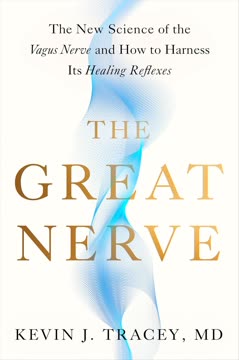
The "Great Nerve" revealed. The vagus nerve, historically known as "the great nerve," is far more than a wandering pathway; it's a precisely wired, finely tuned system crucial for maintaining the body's dynamic balance, or homeostasis. Comprising approximately 200,000 nerve fibers, it acts as a two-way superhighway, transmitting sensory input from organs to the brain and motor output from the brain back to the body. This constant communication orchestrates vital functions, often without conscious awareness, ensuring harmony across systems.
Homeostasis is key. This dynamic equilibrium is essential for health, enabling the body to adapt to internal and external fluctuations. The vagus nerve mediates countless reflexes that regulate:
- Blood pressure (baroreceptor reflex)
- Lung inflation and breathing rhythm (Hering-Breuer reflex)
- Heart rate synchronization with breathing (Respiratory Sinus Arrhythmia)
- Digestion and nutrient absorption (vaso-vagal reflex)
- Blood glucose levels (hepatic glucose sensing reflex)
- Oxygen use during cold exposure (diving reflex)
Disruption of these protective and healing reflexes leads to dysregulation and disease, highlighting the vagus nerve's central role in overall well-being.
Vagal tone for health. The activity level of the vagus nerve, known as vagal tone, is a reflection of the parasympathetic nervous system's influence. High vagal tone is associated with a relaxed state, improved mood, enhanced resilience, and a reduced risk of chronic diseases like heart disease, stroke, and diabetes. Conversely, low vagal tone is linked to chronic stress, illness, and faster resting heart rates. Understanding and enhancing vagal tone offers abundant opportunities to improve physical and mental health.
2. Bioelectronic Medicine: Electricity as a Healing Reflex
If the vagus nerve regulates the immune system through an anti-inflammatory, healing reflex, then it should be possible to regulate inflammation with devices that stimulate the vagus nerve in patients.
A personal quest. The author's journey into bioelectronic medicine was deeply personal, sparked by his mother's death from a brain tumor and a young patient's death from uncontrolled inflammation. This led to a decades-long quest to understand how the body's own immune system could cause harm and how the nervous system might control it. The prevailing dogma of the 1980s and '90s held that the immune and nervous systems were entirely separate, a belief the author's research would fundamentally challenge.
The inflammatory reflex. A groundbreaking discovery in the author's lab revealed that the brain and immune system are inextricably linked through the vagus nerve. Experiments showed that a molecule in the brain could prevent inflammation throughout the body, but only if the vagus nerve was intact. This led to the identification of the "inflammatory reflex," a two-way communication pathway where:
- Sensory vagus nerve fibers transmit information about inflammation from the body to the brain.
- Motor vagus nerve fibers send signals back from the brain to regulate the immune system's inflammatory response.
This discovery proved that the nervous system reflexively tunes the inflammatory response in real-time, offering a revolutionary opportunity to intervene.
Harnessing electricity. The realization that the vagus nerve could control inflammation opened the door to using electrical stimulation as a therapeutic tool. Unlike the continuous flow of electricity in wires, neurons propagate distinct electrical spikes (action potentials). Vagus nerve stimulators (VNS) deliver rhythmic bursts of electricity that mimic these natural signals, carefully calibrated to coax the nerve into firing its own action potentials without causing damage. This approach, rooted in the development of cardiac pacemakers, allows for precise modulation of specific nerve fibers to treat disease.
3. Vagus Nerve Stimulation (VNS) for Chronic Inflammation
This new field of vagus nerve stimulation therapy to treat inflammation is now poised to revolutionize the way millions of other people are cared for.
A new hope for autoimmune diseases. Inflammation, while protective, can become excessive and contribute to two-thirds of global deaths annually, linked to heart disease, stroke, Alzheimer's, diabetes, and autoimmune conditions. For patients like Kelly Owens (Crohn's disease and inflammatory arthritis) and Pero Dragoje (rheumatoid arthritis), conventional medications offered little relief and carried severe side effects. VNS emerged as a promising alternative, aiming to re-establish a healthy "set point" for the immune system.
Clinical breakthroughs. Initial human studies demonstrated that VNS significantly decreased the production of inflammatory cytokines like TNF, which are implicated in many chronic inflammatory conditions. This led to clinical trials for:
- Rheumatoid Arthritis (RA): Pero Dragoje, a truck driver crippled by RA, regained full function and stopped medication after VNS. The RESET-RA study, a large U.S. trial, showed VNS to be the first neuroimmune modulation device to demonstrate clinical benefit for moderate to severe RA.
- Crohn's Disease: Kelly Owens, after years of debilitating symptoms and failed medications, experienced clinical remission and a dramatic improvement in quality of life with VNS. A clinical study co-authored by the author showed significant decreases in disease activity and inflammation markers.
Safer, more effective alternative. VNS offers a compelling alternative to expensive, often toxic biologic drugs that carry "black box warnings" and only benefit a fraction of patients. VNS, with its established safety profile from decades of use in epilepsy, provides a potentially lifelong, medication-free solution with fewer side effects. The cost of a VNS implant is comparable to just one year of biologics, making it a more sustainable option.
4. Rewiring the Mind: VNS for Depression and Mental Health
For a person to be considered to have responded to a depression therapy, they had to experience a 50 percent decline in their standard depression score.
Beyond medication for depression. Depression affects up to 280 million people globally, with many finding little relief from conventional antidepressants or psychotherapy. Nick Fournie's story exemplifies this, as his severe, treatment-resistant depression significantly improved after receiving a VNS implant. This led to a large clinical trial where VNS, often combined with medication, improved quality of life in 10 out of 14 measured categories for patients who had not responded to four or more antidepressants.
The inflammation-depression link. While the exact causes of depression are complex, growing evidence points to a bidirectional link between inflammation and mental health. Chronic stress and anxiety increase sympathetic nervous activity, flooding the body with catecholamines and glucocorticoids, which in turn increase inflammation. Conversely, inflammation in the body can trigger depression-like "sickness behaviors" in the brain, as demonstrated by:
- Human volunteers infused with bacterial endotoxin developing flu-like symptoms and depression.
- Cancer patients receiving cytokine treatments often developing severe depression.
The vagus nerve, by suppressing inflammation, offers a plausible mechanism for alleviating depression in these cases.
VNS: A "pacemaker for the brain." FDA-approved since 2005 for treatment-resistant depression, VNS is like a pacemaker for the brain, sending tiny electrical blasts to the left cervical vagus nerve. While the precise mechanisms are still being researched, VNS is hypothesized to:
- Modulate brain regions involved in emotion (amygdala, cingulate cortex).
- Influence neurotransmitter levels (GABA, glutamate).
- Promote neuroplasticity and neuronal growth (BDNF).
- Block the production of inflammatory molecules that contribute to depression.
Despite its proven benefits for many, VNS for depression is not yet widely adopted due to factors like insurance reimbursement and the need for more extensive clinical data.
5. Non-Invasive Frontiers: Ultrasound for Metabolism and Beyond
In other words, a window into a future where focused ultrasound via a safe, noninvasive device could treat obesity.
Addressing the obesity epidemic. With over 650 million obese individuals worldwide, and rising rates of associated conditions like type 2 diabetes, liver disease, and heart disease, there's a critical need for new, non-invasive treatments. The success of GLP-1 agonist drugs (e.g., Ozempic) in promoting weight loss, partly by stimulating the vagus nerve, inspired research into drug-free alternatives. The author's lab explored focused ultrasound (pFUS) as a non-invasive method to stimulate the vagus nerve.
Focused ultrasound for weight loss. Unlike diagnostic ultrasound, pFUS delivers concentrated sound waves to a specific, small area, converting mechanical energy into nerve stimulation without damage. In a groundbreaking study, the author's team used pFUS on the vagus nerve at the liver in obese mice, resulting in:
- Significant weight loss.
- Reduced obesity-associated inflammation and metabolic derangements.
- Decreased inflammatory cytokines and lipids.
- Reduced belly fat.
This suggests pFUS could non-invasively activate vagus nerve fibers that convey satiety signals to the brain, influence the gut microbiome, and mimic GLP-1's effects on appetite, energy use, and insulin sensitivity.
Beyond weight: pFUS for inflammation. The potential of pFUS extends to treating inflammatory conditions. By targeting the spleen, an organ rich in white blood cells that produce cytokines, pFUS has been shown to inhibit cytokine storm in mice and significantly suppress cytokine production in healthy human volunteers. This non-invasive approach to modulating the inflammatory reflex could pave the way for new therapies for conditions like arthritis. Ongoing research, including efforts to map the human vagus nerve with unprecedented detail, aims to guide these therapies for precise targeting and broader clinical application.
6. The Ear-Brain-Body Connection: Accessible Stimulation
This just happens to be the only place in the body where a branch of the vagus nerve comes to the skin.
Auriculotherapy's modern revival. The external ear, specifically the cymba concha, is unique because it's the only superficial area where a sensory branch of the vagus nerve (the auricular branch, ABVN) extends to the skin. This anatomical connection has been leveraged for centuries in practices like auricular acupuncture and, more recently, with transcutaneous electrical nerve stimulators (TENS) for "transcutaneous auricular vagus nerve stimulation" (taVNS). Ulf Andersson's personal story of recovering from chronic inflammation, anxiety, and depression using a self-administered taVNS device highlights its potential.
Mechanisms and caveats. While taVNS is widely promoted, the precise mechanisms by which electrical signals applied to the ear affect the vagus nerve and the brain are still being investigated. The ear contains branches of several nerves, not just the vagus, making it difficult to confirm selective vagus nerve stimulation. However, studies using fMRI and EEG suggest that ear stimulation can:
- Activate brain regions associated with vagus nerve input and output.
- Influence neurotransmitter levels (e.g., GABA).
- Increase cerebral blood flow.
Despite these promising findings, direct proof of a cause-and-effect relationship between ear stimulation and specific vagus nerve fiber activation in humans remains elusive, leading some researchers to prefer the term "auricular electrical stimulation" (AES).
Clinical applications and future. Despite the mechanistic uncertainties, taVNS has shown compelling preliminary clinical benefits. The FDA has approved ear-based TENS devices for:
- Opioid withdrawal syndrome, reducing pain, sweating, and insomnia.
- Certain types of cluster and migraine headaches.
Ongoing clinical trials are exploring taVNS for a wide range of conditions, including epilepsy, tinnitus, cognitive impairment, type 2 diabetes, Parkinson's, Alzheimer's, fibromyalgia, major depressive disorder, rheumatoid arthritis, and inflammatory bowel syndrome. The low cost, safety, and user-friendly nature of these devices drive high interest, but more rigorous, large-scale randomized controlled trials are needed to standardize protocols and confirm efficacy.
7. Everyday Habits: Harnessing Your Vagus Nerve Naturally
I have learned that it is not possible for me to decide what will appear in my mind’s eye.
Meditation for mind and body. Meditation, a practice spanning diverse traditions, aims to cultivate inner peace, mental clarity, and emotional stability. The author, intrigued by its potential, adopted a daily meditation practice, noting its ability to foster non-reactive awareness of thoughts and emotions. While neuroimaging studies show varied brain activity patterns during meditation, research suggests it can:
- Enhance vagal tone (though evidence is mixed across studies).
- Reduce inflammatory markers like C-reactive protein and interleukin-6.
- Potentially influence telomere length, linked to aging and inflammation.
Despite the need for more rigorous, large-scale studies to definitively prove direct vagus nerve activation, the low cost and minimal risks make meditation a worthwhile practice for many seeking improved well-being.
Breathwork: A direct connection. Conscious breathwork, particularly diaphragmatic or deep breathing, directly engages the vagus nerve. Slow, deep inhalations followed by prolonged exhalations activate sensory vagus nerve signals, triggering parasympathetic responses that lead to:
- Slower heart rate and lower blood pressure.
- Increased heart rate variability (HRV).
- A general sense of calm and enhanced well-being.
Studies show diaphragmatic breathing can reduce anxiety, depression, and stress, and may even decrease inflammatory cytokines in conditions like hypertension and moderate COVID-19 pneumonia.
The Wim Hof Method and cold exposure. Wim Hof's method combines breathwork and cold exposure, claiming voluntary control over the autonomic nervous and immune systems. Studies on his method show that intense breathwork can significantly reduce cytokine production and elevate epinephrine levels, demonstrating that acute, extreme sympathetic activation can suppress inflammation. Cold exposure also activates the vagus nerve as part of the "diving reflex," slowing heart rate and potentially inhibiting inflammation over time. While anecdotal evidence abounds, rigorous randomized controlled trials are still needed to confirm the broad health benefits and optimal protocols for cold therapy. The author, however, personally incorporates cold showers and breathwork into his routine, noting reduced pain reactivity, improved mood, and better cold tolerance.
8. Navigating the Future: Empowering Patient Choices
I wrote this book for doctors as well as potential patients to offer a different way to have these potentially life-changing conversations.
VNS: A proven therapy. Vagus Nerve Stimulation (VNS) is an FDA-approved medical therapy delivered by an implanted device, typically by a neurosurgeon. It works by delivering small electrical pulses to the vagus nerve, stimulating its natural neural activities to transmit signals to the brain and body. Currently, VNS is approved for:
- Epilepsy (since 1997)
- Treatment-resistant depression (since 2005)
- Rehabilitation after stroke (since 2021)
Its safety is well-established from decades of use in hundreds of thousands of patients, with side effects generally mild and manageable.
Expanding applications and ongoing research. The field of bioelectronic medicine is rapidly expanding, with VNS showing significant promise for numerous other conditions. Large-scale clinical trials are underway for:
- Rheumatoid arthritis (FDA decision pending, with positive results from the RESET-RA study).
- Crohn's disease (early trials show meaningful reduction in disease severity).
- Other inflammatory conditions like multiple sclerosis, long COVID, migraine, chronic pain, asthma, diabetes, obesity, and hypertension.
These studies aim to provide robust evidence for VNS as a safer, more effective alternative to many current drug therapies, which often come with severe side effects and high costs.
Non-invasive and AI-driven future. While implanted VNS offers reliable, automatic therapy, research is also advancing non-invasive methods. Focused ultrasound (pFUS) is showing promise for directly stimulating the vagus nerve in organs like the liver and spleen to treat obesity, diabetes, and inflammation, with devices potentially becoming user-friendly for home use. Transcutaneous electrical nerve stimulation (TENS) devices, applied to the ear or neck, are already FDA-approved for conditions like opioid withdrawal and headaches, though their precise vagus nerve activation mechanisms require further study. The future of VNS will likely integrate artificial intelligence for personalized treatment protocols and real-time monitoring, creating dynamic, responsive therapies that continuously adapt to a patient's changing needs, ultimately empowering individuals to take charge of their health.
People Also Read



 Immersive