
Resumen de la trama
Moonlit Restlessness Awakens
Pernath, the protagonist, lies in bed, caught between sleep and wakefulness as moonlight pools at his feet. Haunted by a recurring image—a stone resembling a lump of fat—he is tormented by a voice within, demanding he find this elusive object. His thoughts spiral, blending memories, dreams, and fragments of Buddhist parables. The stone becomes a symbol of something lost in his memory, a key to his identity. This restless state sets the tone for the novel's exploration of consciousness, identity, and the porous boundary between reality and dream. Pernath's sense of self is already unstable, and the moon's influence hints at the cycles of transformation and recurrence that will shape his journey through Prague's haunted Jewish quarter.
The Ghetto's Living Shadows
Pernath awakens in the Jewish ghetto, surrounded by a cast of eccentric, troubled neighbors: the predatory junk dealer Wassertrum, the lascivious Rosina, and the tormented twins Loisa and Jaromir. The ghetto is depicted as a labyrinth of decaying buildings and interwoven lives, each resident marked by tribal animosities and secret desires. Pernath's interactions are tinged with unease and alienation, as he observes the cruelty and longing that animate his neighbors. The ghetto itself seems alive, its houses and streets imbued with a sinister consciousness. This chapter establishes the claustrophobic, oppressive atmosphere of the quarter, where the boundaries between the living and the dead, the real and the spectral, are blurred.
The Book of Ibbur
Pernath receives a visit from a stranger who brings him an ancient, ornate book—the Book of Ibbur, concerning the impregnation of souls. As Pernath repairs the book's damaged initial, he is drawn into a visionary trance, encountering a parade of symbolic figures: queens, hermaphrodites, and the dead. The book seems to speak directly to his soul, awakening forgotten knowledge and hinting at a deeper, hidden self. When Pernath tries to recall the stranger's appearance, he finds his memory blank, as if the visitor were a negative space, a doppelgänger. This encounter marks the beginning of Pernath's mystical journey, as the book becomes a catalyst for his quest for identity and spiritual awakening.
Charousek's Vengeance
Pernath meets Charousek, a brilliant but impoverished medical student consumed by hatred for Wassertrum and his son, the corrupt Dr. Wassory. Charousek recounts how he orchestrated Wassory's downfall, exposing his fraudulent medical practices and driving him to suicide. Charousek's vendetta is rooted in personal trauma—Wassertrum's exploitation and betrayal of his mother. The ghetto's web of secrets and vendettas is revealed, as Charousek's cunning and bitterness contrast with Pernath's confusion. Charousek's story introduces the theme of justice and retribution, as well as the idea that the ghetto's inhabitants are puppets of invisible forces, their fates intertwined in cycles of suffering and revenge.
The Golem's Legend Returns
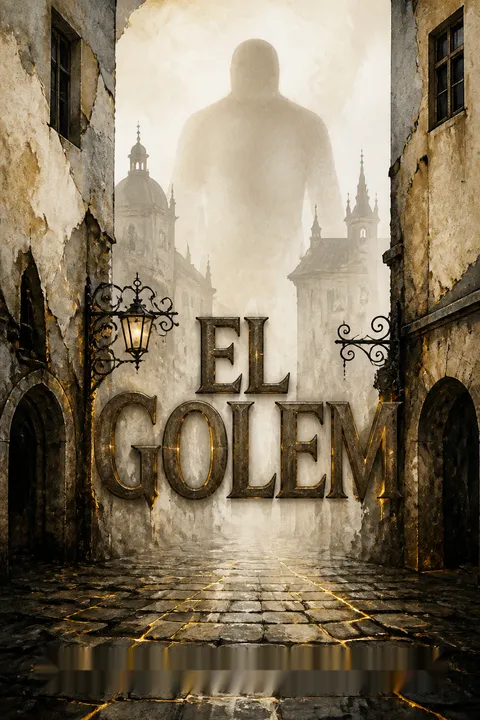
During a gathering with friends—Zwakh the puppeteer, Vrieslander the painter, and Prokop the musician—Pernath hears tales of the Golem, the legendary clay figure created by a rabbi to defend the Jews. Zwakh describes periodic sightings of a mysterious, stumbling figure with Mongoloid features, believed to be the Golem, appearing every thirty-three years. The Golem is both a symbol of the ghetto's collective soul and a doppelgänger for Pernath himself. The legend blurs into reality as Pernath experiences moments of paralysis and dissociation, suggesting that the Golem is not merely a myth but a manifestation of the ghetto's psychic unrest and Pernath's fractured identity.
Carnival of Puppets and Masks
The friends visit Loisitchek's tavern, a den of vice and spectacle where the boundaries between performance and reality dissolve. Zwakh's puppet stories, the grotesque clientele, and the presence of Rosina—now a prostitute—underscore the theme of people as marionettes, manipulated by unseen hands. Pernath's own sense of agency is fragile; he overhears his friends discussing his past madness and the hypnosis that walled off his memories. The motif of the puppet recurs, linking the Golem, the ghetto's inhabitants, and Pernath himself as figures animated by forces beyond their control.
Hillel's Mystical Guidance
After a breakdown, Pernath is taken to Shemaiah Hillel, the wise archivist and cabbalist. Hillel explains that most people live in a deeper sleep than they realize, and that true awakening is rare and transformative. He interprets Pernath's encounter with the Golem as a symbol of spiritual rebirth—the awakening of the dead through the innermost self. Hillel's teachings blend Jewish mysticism, Kabbalah, and universal spiritual truths, offering Pernath a path toward self-knowledge and transcendence. The encounter leaves Pernath with a sense of peace and clarity, though his quest for memory and identity remains unresolved.
Angelina's Desperate Plea
Pernath receives a secret letter from Angelina, a noblewoman entangled in a dangerous affair with Dr. Savioli and threatened by Wassertrum's blackmail. Meeting her in the cathedral, Pernath is swept up in her beauty and vulnerability, and vows to help her. Angelina's plight intertwines with Pernath's own search for meaning and redemption, as her trust in him awakens memories of lost love and childhood. The encounter deepens Pernath's emotional turmoil, as he becomes both protector and potential victim in the ghetto's web of intrigue.
Night Journeys and Doppelgängers
Pernath, driven by unease and intuition, explores the labyrinthine passages beneath the ghetto, discovering a hidden, doorless room—the legendary lair of the Golem. Trapped and freezing, he confronts his own double, a spectral figure that mirrors his face and identity. The experience is both terrifying and revelatory, as Pernath realizes that the Golem is a projection of his own unconscious, a symbol of the ghetto's collective memory and suffering. Escaping at dawn, he is mistaken for the Golem by the terrified residents, underscoring the fluidity of identity and the power of myth.
The Trapdoor and the Tarot
Pernath discovers a pack of ancient tarot cards in the Golem's room, each card painted with Hebrew letters and symbolic figures. The cards become a key to understanding the novel's mystical structure, linking the Kabbalistic tradition, the cycles of fate, and the characters' destinies. Hillel explains that the tarot is a book of life, each card a symbol of spiritual stages and choices. The motif of the Juggler (Magician) and the Hanged Man recurs, representing the interplay of free will, fate, and the quest for self-mastery. The tarot's imagery weaves together the novel's themes of transformation, doubling, and the search for meaning.
Miracles and Deceptions
Pernath becomes entangled in the lives of Hillel and his daughter Miriam, whose faith in miracles sustains them through poverty. Pernath, moved by compassion, secretly provides for them, but his attempts to engineer miracles threaten Miriam's spiritual innocence. The tension between genuine faith and self-serving charity emerges, as Hillel warns that true help must come from within. Meanwhile, Pernath's love for Angelina and Miriam deepens his inner conflict, as he oscillates between desire, guilt, and the longing for transcendence.
Charousek's Fatal Game
Charousek, now Wassertrum's heir by a twist of fate, orchestrates a psychological campaign to drive the old junk dealer to suicide, seeking poetic justice for his mother's suffering. Pernath is drawn into Charousek's scheme, torn between moral revulsion and complicity. The ghetto's cycle of vengeance reaches its climax as Wassertrum is found dead, murdered with a file—possibly by Loisa, the tormented twin. Charousek's triumph is hollow, as he succumbs to illness and despair, leaving Pernath with a legacy of guilt, gratitude, and unresolved questions.
Pernath's Imprisonment
Framed for Zottmann's murder by Wassertrum's machinations, Pernath is arrested and endures months of squalid, dehumanizing imprisonment. His cellmates are criminals and outcasts, each with their own stories of suffering and survival. Pernath's sense of self erodes as he is subjected to bureaucratic indifference, false confessions, and the grinding monotony of prison life. His only solace comes from dreams, memories, and the hope of eventual vindication.
Prison Visions and Revelations
In prison, Pernath experiences visionary encounters with Laponder, a somnambulist murderer whose sleep-talking channels the voices of Miriam, Hillel, and Charousek. Through these nocturnal dialogues, Pernath learns that Miriam is alive, that Hillel forgives him, and that Charousek's legacy endures. Laponder's own story—a man compelled to murder by forces beyond his control—mirrors Pernath's struggle with fate and free will. The prison becomes a crucible for spiritual insight, as Pernath confronts the mysteries of identity, guilt, and redemption.
Laponder's Confession
Laponder explains his belief that human beings are composed of many ancestral selves, and that true freedom comes from surrendering to the spirit within. His acceptance of his own execution is an act of faith, a mystical marriage of opposites. Laponder's story illuminates the novel's central themes: the interplay of destiny and choice, the possibility of awakening, and the transformative power of suffering. His death leaves Pernath with a sense of loss but also a deeper understanding of his own journey.
The End of the Ghetto
Released from prison, Pernath returns to find the ghetto razed, its inhabitants scattered, its secrets buried under rubble. He searches in vain for Hillel, Miriam, and his old friends, finding only traces and rumors. The destruction of the ghetto marks the end of an era, the erasure of a world haunted by memory, myth, and suffering. Pernath's quest for reunion becomes a search for meaning in a world where the past is irretrievable and the future uncertain.
Reunion and Transcendence
In a final, dreamlike sequence, Pernath (or his dreamer) glimpses a vision of Hillel and Miriam, eternally young, standing in a garden of light. The boundaries between dream and reality, self and other, dissolve as Pernath recognizes himself in their faces. The novel ends with a sense of transcendence, as the cycles of suffering and longing are resolved in a moment of mystical union. The Golem's legacy is fulfilled—not as a monster of clay, but as the awakening of the soul to its own divine potential.
Analysis
A modern parable of identity, suffering, and spiritual awakeningGustav Meyrink's The Golem is a masterpiece of expressionist fiction, blending psychological horror, mystical allegory, and social critique. Set in the decaying Jewish ghetto of Prague, the novel explores the porous boundaries between dream and reality, self and other, fate and free will. Through the figure of Pernath—a man haunted by amnesia, visions, and the specter of the Golem—Meyrink interrogates the nature of identity and the possibility of redemption. The ghetto itself becomes a living organism, its inhabitants puppets of invisible forces, their destinies intertwined in cycles of suffering and vengeance. Yet amid the darkness, the novel offers glimpses of transcendence: the wisdom of Hillel, the innocence of Miriam, the mystical symbolism of the tarot and Kabbalah. The Golem, as both monster and double, embodies the collective soul's longing for wholeness. In a world where reality is unstable and the past is irretrievable, Meyrink suggests that true awakening lies in the acceptance of suffering, the pursuit of self-knowledge, and the embrace of the miraculous. The novel's enduring power lies in its ability to evoke the anxieties of modernity while offering a vision of spiritual renewal—a lesson as relevant today as it was a century ago.
Resumen de reseñas
Reviews of The Golem are largely positive, praising its dreamlike atmosphere, dense symbolism, and gothic portrayal of Prague's Jewish Quarter. Many readers compare it favorably to Kafka and Poe, noting its mystical, unreliable narration and Kabbalistic themes. Critics warn it is not a straightforward monster story, but rather a psychological and spiritual journey. Some find its opacity frustrating, while others consider this ambiguity its greatest strength. H.P. Lovecraft reportedly called it "weird" — high praise indeed.
También leyeron

Characters
Athanasius Pernath
Pernath is the novel's protagonist, a gem engraver living in Prague's Jewish ghetto. Suffering from amnesia and a history of madness, he is plagued by dreams, visions, and a sense of lost identity. Pernath is both an observer and a participant in the ghetto's dramas, drawn into the lives of his neighbors and the mysteries of the Golem. His psychological journey is marked by dissociation, doubling, and the search for meaning. Pernath's relationships—with Hillel, Miriam, Angelina, and Charousek—reflect his longing for connection and redemption. Over the course of the novel, he evolves from a passive victim of fate to a figure of spiritual awakening, embodying the novel's themes of transformation, suffering, and transcendence.
Shemaiah Hillel
Hillel is the wise, enigmatic archivist of the Jewish Town Hall and a master of Kabbalistic lore. He serves as Pernath's mentor, offering guidance, comfort, and insight into the novel's mystical dimensions. Hillel's teachings blend Jewish tradition with universal spiritual truths, emphasizing the importance of awakening, self-knowledge, and compassion. His relationship with his daughter Miriam is marked by love and distance, as his spiritual stature sets him apart from ordinary life. Hillel's presence anchors the novel's exploration of the sacred and the possibility of redemption.
Miriam Hillel
Miriam, Hillel's daughter, is a figure of purity, faith, and longing. Her belief in miracles sustains her through poverty and hardship, and her relationship with Pernath is marked by mutual affection and spiritual kinship. Miriam embodies the novel's ideal of the soul's journey toward union and fulfillment. Her innocence is both a source of strength and vulnerability, as she navigates the dangers of the ghetto and the complexities of love. Miriam's fate is intertwined with Pernath's quest for meaning and the novel's vision of transcendence.
Charousek
Charousek is a brilliant, consumptive medical student driven by hatred for Wassertrum, who ruined his mother's life. His intelligence and cunning enable him to orchestrate the downfall of Wassertrum's son and, ultimately, Wassertrum himself. Charousek's vendetta is both personal and symbolic, reflecting the ghetto's cycles of suffering and retribution. Despite his bitterness, he is capable of deep loyalty and gratitude, especially toward Pernath. Charousek's death is both a defeat and a release, as he achieves a kind of spiritual victory through self-sacrifice and the fulfillment of his mission.
Aaron Wassertrum
Wassertrum is the ghetto's sinister junk dealer, a figure of greed, malice, and hidden power. His physical deformity mirrors his moral corruption, and his influence extends through blackmail, manipulation, and the exploitation of others. Wassertrum's relationships—with Rosina, Charousek, and his son—are marked by betrayal and destruction. He embodies the ghetto's darkest energies, serving as both antagonist and catalyst for the novel's tragedies. His eventual death is the culmination of the ghetto's cycle of vengeance and decay.
Angelina
Angelina is a noblewoman trapped in a loveless marriage and a dangerous affair with Dr. Savioli. Her vulnerability and trust in Pernath draw him into her struggle for freedom and happiness. Angelina's plight reflects the novel's themes of desire, guilt, and the longing for transcendence. Her relationship with Pernath is both a source of hope and a reminder of the limits of earthly love. Ultimately, she escapes her predicament, but her fate remains ambiguous, symbolizing the elusive nature of fulfillment.
Zwakh
Zwakh is an old puppeteer whose stories and marionettes animate the ghetto's folklore and collective memory. He serves as a link between the past and present, the real and the mythical. Zwakh's fascination with the Golem and his role as a storyteller underscore the novel's themes of performance, doubling, and the power of narrative. His friendship with Pernath provides moments of warmth and humor amid the novel's darkness.
Loisa and Jaromir
Loisa and Jaromir are twin brothers, both obsessed with Rosina and marked by suffering and violence. Loisa's jealousy and eventual act of murder reflect the destructive power of desire and the ghetto's cycles of retribution. Jaromir, the deaf-mute, is a tragic figure, capable of both tenderness and cruelty. Their story illustrates the novel's exploration of fate, free will, and the consequences of passion.
Amadeus Laponder
Laponder is a fellow prisoner of Pernath, condemned for murder and rape committed in a trance-like state. His sleep-talking channels the voices of other characters, serving as a medium for revelation and connection. Laponder's philosophy of surrender to the spirit within echoes the novel's mystical themes, and his acceptance of his fate offers Pernath a model of spiritual freedom. His presence in the novel blurs the boundaries between guilt and innocence, madness and enlightenment.
The Golem
The Golem is both a legendary figure and a projection of Pernath's unconscious, embodying the ghetto's collective memory, suffering, and longing for redemption. Its periodic appearances mark moments of crisis and transformation, serving as a catalyst for the novel's events. The Golem's ambiguous nature—as monster, protector, and double—reflects the novel's exploration of identity, otherness, and the power of myth.
Plot Devices
Dreamlike Narrative and Unreliable Reality
Meyrink structures the novel as a series of overlapping dreams, visions, and waking experiences, often leaving the reader uncertain as to what is real and what is imagined. This dreamlike quality is reinforced by the use of recurring symbols—the stone, the tarot, the Golem—and by the fluidity of time and identity. The narrative's unreliability mirrors Pernath's own fractured consciousness, inviting the reader to question the nature of reality and the possibility of awakening.
Doppelgängers and Doubling
The motif of the double recurs throughout the novel: Pernath and the Golem, Charousek and Wassertrum, Laponder and his victim, the tarot's symbolic figures. These doublings serve to explore the multiplicity of the self, the interplay of fate and free will, and the possibility of transformation. The Golem, as Pernath's doppelgänger, embodies the novel's central question: can one escape the cycles of suffering and become whole?
Mystical Symbolism and Kabbalistic Structure
The novel is rich in mystical symbolism, drawing on Jewish Kabbalah, the tarot, and alchemical imagery. The Book of Ibbur, the tarot cards, and the Golem itself are all vehicles for exploring spiritual truths and the stages of the soul's journey. The narrative structure echoes the cycles of the tarot and the Kabbalistic tree of life, with each chapter representing a stage of initiation, crisis, or revelation.
Foreshadowing and Recurrence
Meyrink employs foreshadowing through recurring images—the stone, the moon, the puppet, the trapdoor—that signal moments of transformation or crisis. The periodic appearance of the Golem, the cycles of vengeance and redemption, and the repetition of dreams and visions all serve to create a sense of inevitability and recurrence, reinforcing the novel's themes of fate and the possibility of breaking free.
Fragmented Narrative and Multiple Perspectives
The novel's narrative is fragmented, with shifts in perspective, time, and reality. Letters, stories within stories, and the voices of other characters (often channeled through Laponder or dreams) provide multiple angles on the central mysteries. This structure reflects the complexity of the ghetto's social fabric and the multiplicity of the self, inviting the reader to piece together meaning from fragments.
Descargar PDF
Descargar EPUB
.epub digital book format is ideal for reading ebooks on phones, tablets, and e-readers.








































