Key Takeaways
1. Finding Stillness and Connection in Place
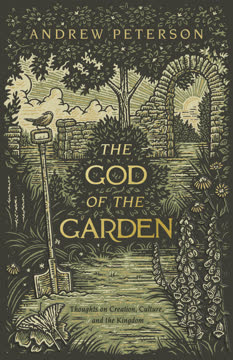
In short, I had never been so intimately connected to Place—to this place we call The Warren, utterly unique in all the wide world.
Forced grounding. The COVID-19 pandemic unexpectedly grounded the author, Andrew Peterson, at his home, "The Warren," for an extended period. This forced stillness, a stark contrast to his usual touring life, allowed him to deeply reconnect with his immediate surroundings. He experienced the rhythms of nature, from blossoming Lent to the blaze of autumn, observing specific birds, rabbits, and deer.
A writer's sanctuary. This newfound connection extended to his writing cabin, the Chapter House, built years prior with the help of generous friends. Every sentence of the book was penned within its walls, surrounded by books, art, and the tangible presence of trees that formed its structure. This physical rootedness mirrored a deeper imaginative journey, casting thoughts across time and memory.
Growth in stillness. The Chapter House became a symbol of how stillness enables growth, both for trees and for the human spirit. It provided a vantage point to observe creation's cycles and delve into personal history, branching into the present and straining towards the future Kingdom. This intimate connection to "Place" became the foundational theme for exploring his life's stories.
2. Memory: Unearthing Both Pain and Beauty
Going back and digging deep may unearth bones, or it may unearth treasure.
Childhood's landscape. The author's early childhood in Monticello, Illinois, is recalled as an idyllic "Eden," framed by two maple trees, cornfields, and blue skies. This period was marked by profound innocence, yet also the baffling onset of sin and terror. A return visit forty years later sought to recapture this wonder, but also to understand the hidden sources of later pain.
Searching for truth. During his visit, the author actively searched for tangible memories, hoping to restore "Polaroids" to his "photo album of mostly blank pages." He sought to "switch on the light" to understand what had shaped and potentially "wrecked" him, fearing the discovery of traumatic events. This quest for nostalgia was intertwined with a deeper, more anxious hunt for repressed truths.
Unexpected discoveries. While some memories proved unreliable or places had changed, the search ultimately yielded both new information and a profound shift in perspective. The "creepy-looking house" across from his childhood home, initially a source of dread, was revealed to be the site of a beautiful peony garden tended by kind neighbors. This experience taught him that memory, though capable of unearthing pain, can also reveal unexpected beauty and treasure.
3. Trees as Enduring Witnesses to Life and History
The mere fact of its aliveness connects those who stand under its shade with everyone who came before.
Ancient sentinels. From the maples of his Illinois childhood to the gargantuan live oaks of Florida, trees serve as powerful symbols and enduring witnesses. The author recounts his awe for the "dark, imposing ents" of the Deep South, like "The Big Oak" in Thomasville, Georgia, which has stood for centuries, silently observing historical events and human lives.
Stories in the rings. These ancient trees, some thousands of years old like "The Senator" cypress or "Prometheus" bristlecone pine, embody a profound connection to the past. They are living testaments to the passage of time, connecting present generations to those who came before. Their destruction, whether by carelessness or scientific curiosity, represents an irreplaceable loss of history and natural wonder.
Personal and universal. Trees are not just historical markers but also deeply personal anchors. The dogwood planted by his father in Illinois, or the maples he planted at The Warren, carry family stories and hopes for future generations. This deep appreciation for trees stems from their constant presence, slow growth, and ability to inspire a sense of permanence and continuity amidst life's changes.
4. Cultivating a Home: Land, Family, and Community
Shiloh, to me, is the best of what can happen when humans root themselves to a place.
Agrarian longing. The author's parents, both with deep agrarian impulses, longed for a place of their own after years in parsonages. They eventually found "Shiloh," a century-old "Florida cracker" house on six acres, which they transformed into a vibrant homestead. This act of rooting themselves to the land allowed their "true colors" as country people to show, fostering a deep connection to nature.
A named landscape. At Shiloh, the family embraced the practice of naming parts of their property, from "Goose Grove" to "Elderberry Holler," making the land a character in their story. They planted trees for each grandchild, creating living legacies that would grow for decades, if not centuries. This intentional cultivation imbued the place with unique meaning and personal history for the children.
Legacy and hope. Shiloh became a "wonderland" for the grandchildren, a "backwoods Disney World" where they learned about nature and family heritage. While acknowledging the bittersweet reality that such beauty might fade with time, the author finds hope in the belief of resurrection. He envisions a New Creation where humans, as "priests," will reign over eternal gardens, transforming fleeting beauty into everlasting glory.
5. The Healing Journey Through Despair and Doubt
My own descent into the dark woods of desolation was merely a footpath to the heart of Christ.
Spiritual crisis. The author recounts a period of intense emotional turmoil and depression, exacerbated by touring and significant life milestones. This culminated in a profound spiritual crisis, where he felt God's "immense, oppressive silence" and even expressed hatred towards God. This experience led him to a janitor's closet, a symbol of his lowest point, where he cried out for light amidst overwhelming darkness.
Seeking solace. A friend's suggestion led him to a silent retreat at the Abbey of Gethsemani, a Trappist monastery in Kentucky. Initially, the silence felt like a continuation of God's unanswered questions, and he struggled with frustration and rage. He sought answers, hoping for a clear revelation, but instead found himself wrestling with his deep-seated doubts about God's goodness.
Encounter in the grove. On his last morning, a footpath led him to a statue of Jesus in the Garden of Gethsemane, depicting Christ in desperate prayer. This encounter transformed his perspective, revealing God's companionship in suffering. He realized that his desolation was a path to understanding Christ's own anguish, finding solace and love in the "silent, weeping Word" that echoed in the lonely wood of his heart.
6. Gardening: An Act of Hope and Resurrection
Planting seeds / Inevitably / Changes my feelings / About rain.
From grief to garden. Following a period of deep depression and spiritual struggle, the author found profound healing through gardening. What began as a simple act of planting seeds with his daughter transformed his perspective on sorrow and hope. The physical act of tilling the earth and nurturing new life became a tangible metaphor for his own spiritual renewal.
Nature's therapy. Engaging with the garden provided daily rejuvenation, offering solace from hours spent writing indoors. The presence of growing things, from blooming flowers to buzzing honeybees and fluttering butterflies, had a demonstrable restorative effect. Scientific insights, like the serotonin-releasing microbes in soil, underscore the innate human connection to nature's healing power.
Practicing resurrection. Gardening, for the author, is fundamentally an act of hope. Each bulb planted in the fall is a hopeful anticipation of spring's new life, a "patiently practicing resurrection." This shift in perspective means that even heavy rain, once a symbol of his inner turmoil, now brings joy, signifying that "something good is coming" and that life inevitably triumphs over dormancy.
7. Footpaths: Connecting People to Land and Each Other
Without public footpaths, there’s no way for me to walk through that pasture without trespassing.
The English model. The author extols the virtues of English public footpaths, which offer rights of way across private land, connecting villages and allowing people to experience the countryside intimately. This system fosters a deep connection to the land, its history, and its beauty, contrasting sharply with the limited access often found in America.
Lost American connection. In America, vast stretches of beautiful countryside remain inaccessible due to private ownership and a lack of public rights of way. This prevents people from truly experiencing and cherishing the land beyond fleeting glances from a car. The author laments the loss of potential discoveries—ancient ruins, cemeteries, old trees—hidden behind "NO TRESPASSING" signs.
Hallowing the land. The absence of footpaths contributes to a disconnect between people and their local environment, hindering community and a shared sense of stewardship. The author advocates for "hallowing what we have" by creating accessible pathways, believing that if people could truly see and experience the land on foot, they would cherish and protect it more, fostering a deeper appreciation for its inherent beauty and history.
8. From "No-Places" to Communities of Meaning
We need Places with a capital P, places that honor the community’s history, the sacredness of creation, and our basic human need for beauty and nature.
Critique of sprawl. The author critiques American suburban sprawl, which he labels "no-places"—communities lacking commerce, walkable destinations, and organic gathering points. These areas, often named after the trees they replaced, prioritize convenience and profit over historical context, natural beauty, and genuine community interaction.
The cost of convenience. While acknowledging the comfort of ubiquitous chain stores and restaurants for travelers, the author argues that this sameness comes at a significant cost. It erodes local culture, obscures history, and disconnects people from the unique "Place-ness" of their surroundings. This design often hinders the very community it purports to serve, leading to isolation and a fear of strangers.
Vision for New Creation. Drawing on urban planning theories and theological insights, the author advocates for shaping communities that reflect human and creation's flourishing. He envisions a "graceful integration of nature and culture," where neighborhoods are "Places" with stories, fostering walkability, local commerce, and shared green spaces. This aligns with a vision of the New Creation as a city where nature and culture are harmoniously intertwined.
9. God's Presence in the Silence of Suffering
Ah, Lord, how precious is your weeping presence with those who weep! How much better is your companionship in the deep darkness than your absence in the light!
Anguish and accusation. The author recounts a profound spiritual crisis marked by intense anger at God's perceived silence and indifference to his suffering. In a moment of raw desperation, he lashed out, expressing hatred towards God, a memory that continued to haunt him. This period was characterized by a deep struggle to reconcile his belief in God with the experience of overwhelming pain and unanswered prayers.
A Gethsemane experience. His journey to the Abbey of Gethsemani, a monastery named after the garden where Jesus prayed in agony, became a pivotal moment. Kneeling before a statue of Christ in desperate prayer, surrounded by ancient olive trees, the author found an unexpected companionship in Jesus's suffering. He realized that God's "silence" was not absence, but a profound, weeping presence in his desolation.
Redemption in shared pain. This encounter transformed his understanding of God's love. He recognized that his own "descent into the dark woods of desolation was merely a footpath to the heart of Christ." Jesus, the "weeper in the trees," became a brother in suffering, offering not immediate answers but a profound, silent solidarity that brought healing and a renewed sense of being loved and never abandoned.
10. The Universal Longing for Eden and Redemption
If we find in ourselves a desire that nothing in this world can satisfy, maybe it’s because we were made for another world.
Childhood's lost Eden. The author reflects on his childhood in Illinois as an "Eden" and his adolescence in Florida as an "Exile," a period marked by the loss of innocence and the stark realization of a broken world. This personal narrative of a lost paradise resonates with a universal human longing for a perfect, untarnished beginning, a "secret and lovely place" that seems forever out of reach.
Stories as mirrors. Reading Marjorie Kinnan Rawlings's "The Yearling" became a transformative experience, helping him see the "enchanted grove" in Florida he had previously disdained. The story of Jody Baxter's lost innocence mirrored his own, revealing the universal nature of grief and the inescapable reality of suffering. This literary encounter resurrected his own childhood wonder, turning grief into longing.
Hope beyond tragedy. Despite the tragedies and brokenness of this world, the author finds profound hope in the Christian narrative of redemption. The "presence of the question is part of the answer," and the sorrow now is part of the joy later. This hope assures the "lost boy in the woods" that he is not alone and that the "enchanted" woods are a temporary home on the journey to a New Creation, where all will be made new.
11. Creation's Epic: Intertwining Trees, Stories, and Faith
That living Word planted a seed in my parents, a seed that fell on good soil, and they in turn planted in me and my siblings an imagination-grounding story about a tree in a garden, a tree on a hill of death, and a tree in a heavenly city.
The omnipresent tree. The author's life and writing are deeply intertwined with trees, which serve as constant companions and symbols. From the wooden structure of his Chapter House to the pulp of his books and journals, trees are a tangible presence. They represent warmth, shelter, and the very medium through which stories, including his own, are preserved and shared.
A grounding narrative. The "imagination-grounding story" of trees—from the Garden of Eden, to the cross on Skull Hill, to the Tree of Life in the New Jerusalem—forms the core of his faith and worldview. This narrative, passed down through his parents, anchors his compass on the Kingdom, providing meaning and direction amidst life's complexities and sorrows.
Bearing witness. In the quiet of his Chapter House, surrounded by the "voices of trees," the author reflects on his purpose: to bear witness to God's deeds. His personal journey, marked by both pain and profound encounters with Christ, culminates in a commitment to proclaim the story of redemption. He sees himself as a tree, planted and pruned by God, destined to bear everlasting fruit in the unending day of the New Creation.
Review Summary
Most readers found The God of the Garden deeply moving, praising Peterson's poetic prose, vulnerability about depression, and ability to weave themes of nature, faith, and personal struggle into a cohesive memoir. Many rated it five stars, frequently comparing it favorably to his previous book, Adorning the Dark. Readers appreciated his honesty about dark moments and found spiritual encouragement in his reflections on trees and creation. A few critics felt the book was misleadingly summarized, overly focused on suffering, or lacked a clear central message.