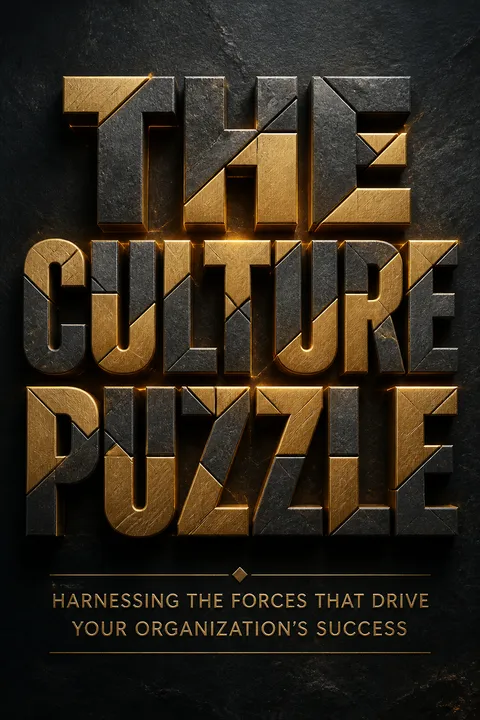

Key Takeaways
1. Culture is the ultimate driver of organizational success, not an add-on
Too often, strategy, finance, and operational issues occupy the front seats of the bus, with culture riding along in the back. In our view, culture should take the wheel.
Culture drives performance. Many leaders mistakenly treat culture as a soft, secondary concern that will manage itself while they focus on hard metrics like finance, strategy, and operations. In reality, culture is the foundational operating system of any enterprise because it directly addresses the biological and social needs hardwired into human DNA. When culture is ignored, even the most brilliant business strategies fail to take root.
The human element. Organizations are not merely collections of boxes on an organizational chart; they are living networks of human beings seeking connection, dignity, and purpose. When leaders ignore this reality, they suffer from "mismanagement by abstraction," leading to:
- Low employee engagement and widespread cynicism
- Strategic initiatives that fail due to passive resistance
- Toxic subcultures that quietly sabotage corporate goals
A continuous process. Culture is a ceaseless process of learning and adaptation that circulates through every meeting, conversation, and decision. To solve the culture puzzle, leaders must slow down, pay close attention to subtle social cues, and actively design an environment where people can thrive. It is a collective power that is always circulating, and everyone in the organization holds the keys to its success.
2. Lead like a vigilant gardener, not an autocratic Sun God
If you attempt to exert godlike control, you will end up watching your plans for a prosperous future join Akhenaten’s vision in the graveyard of failed projects.
The Sun God trap. Autocratic leaders, like Pharaoh Akhenaten or WeWork's Adam Neumann, attempt to mandate cultural change from on high through sheer force of personality and top-down decrees. This "Sun God" approach ignores the actual needs of the people on the ground, resulting in superficial compliance, hidden resentment, and eventual organizational collapse. Commands alone do not get the job done; they merely drive resistance underground.
The Gardener's Creed. In contrast, successful leaders act as gardeners who understand they cannot force plants to grow; instead, they must cultivate the perfect environment for them to flourish. The gardener's leadership style is characterized by:
- Designing a flexible ecosystem that adapts to changing conditions
- Protecting the community from internal and external threats
- Practicing humility, deep listening, and continuous learning
Architecting the greenhouse. By shifting from command-and-control to environmental cultivation, leaders empower their teams to take initiative and collaborate. Like General Stanley McChrystal in Iraq or Eileen Fisher in her fashion empire, gardener-leaders focus on building trust and encouraging open, non-hierarchical dialogue. They do not try to be the biggest plant; they architect the greenhouse where everyone can grow.
3. Harness the Four Forces of Culture: Vision, Interest, Habit, and Innovation
These forces have shaped every tribe, every organization, every nation, every society, and every civilization since the beginning of humanity.
The cultural engine. Just as physical laws govern the motion of planets, predictable social forces drive the evolution of organizational culture. These four forces—Vision, Interest, Habit, and Innovation—function like the soil, water, and sunlight required to sustain a healthy, growing garden. When properly harnessed, they align the deep motivations of employees with the strategic goals of the organization.
Interconnected puzzle pieces. To build a cohesive and high-performing organization, leaders must understand how these four forces interact and align them with strategic goals:
- Vision tells the story of who the tribe is and why it exists.
- Interest satisfies the deep emotional and social needs of the people.
- Habit translates abstract values into daily routines and behaviors.
- Innovation allows the organization to adapt and renew itself.
Balancing the forces. Focusing on only one or two forces leads to cultural imbalance and operational failure. For example, a compelling vision without supportive habits results in empty rhetoric, while rigid habits without innovation lead to stagnation and obsolescence. Gardener-leaders constantly monitor and adjust all four forces to keep the organizational ecosystem healthy and productive.
4. Build an "imagined community" by co-authoring a compelling tribal story
If you examine any large-scale human cooperation, you will always find that it is based on . . . the stories that we tell and that we spread around.
The power of story. Human beings are uniquely wired to cooperate on a massive scale through shared myths and narratives, creating what social scientists call "imagined communities." A powerful organizational vision is not a dry mission statement on a website; it is a living, breathing story that captures the hearts and minds of the entire tribe. It connects the leadership team to the front-line workers, creating a shared sense of belonging.
Co-authoring the narrative. Great leaders do not write the organizational story in isolation; they act as story-listeners who gather input from multiple co-authors across the enterprise. For example, when LEGO faced bankruptcy, CEO Vig Knudstorp revitalized the brand by:
- Mining the company's historical roots and core identity
- Conducting ethnographic research to listen to customers and employees
- Crafting the shared, unifying motto: "Inspiring the Builders of Tomorrow"
Defining the central idea. To unite diverse teams, leaders must distill their vision into a clear, 250-word "central idea" that explains why the organization exists and how it will succeed. This narrative must be free of corporate jargon and "garbage language," serving as an authentic guide for daily decision-making. When the story rings true, employees develop a deep, emotional commitment to the collective mission.
5. Satisfy deep human interests to transform a strategy into a movement
While most company cultures revolve around the central notion that people are motivated primarily, if not solely, by the immediate need for money, the most successful companies slake not only that thirst but also the need to do meaningful, fulfilling work.
Beyond economic incentives. While traditional management relies heavily on financial carrots and sticks, true engagement is driven by deeper, intrinsic human interests. People possess an evolutionary need to get along (relationships), get ahead (achievement and recognition), and get results (purpose and meaning). When work satisfies these needs, people fully engage in finding ways to achieve the organization's vision.
Building a movement. When an organization's culture satisfies these psychological needs, employees stop viewing their work as just a job and start treating it as a calling. Leaders can cultivate this deep alignment by:
- Showing genuine care, validation, and understanding for their people
- Creating safe forums, like Pixar's Braintrust, for honest feedback
- Framing corporate goals in terms of human impact and social contribution
The power of trust. By focusing on the emotional and social interests of their teams, leaders build a foundation of mutual trust. This trust acts as a powerful pull force, motivating individuals to collaborate across boundaries and dedicate their best efforts to the collective mission. Like coach Brett Brown with the 76ers, leaders must connect the strategy to the players' core identities to make them "trust the process."
6. Identify and align with informal influencers to bridge tribal divides
People in their informal tribe turn to them, rather than the Big Bosses, for cues on how to react. If you want to build a tribe of tribes, you’ve got to get your Piercing Eyes on board.
The informal network. Every organization is a "tribe of tribes," containing numerous subcultures and informal networks that do not appear on the official organizational chart. Within these subgroups exist key informal influencers—referred to as "Piercing Eyes"—who wield immense social power over their peers. They are the invisible culture virtuosos who guide how others react to management's directives.
Bridging the gaps. If leaders ignore these informal influencers, strategic changes will face silent sabotage and resistance. To successfully execute a new strategy, leaders must actively identify and partner with these cultural gatekeepers by:
- Seeking out respected, highly connected employees across divisions
- Involving them early in the change process to gather honest feedback
- Utilizing them as translators to communicate the vision across tribal boundaries
Creating a unified tribe. By building a robust network of these internal influencers, leaders can bridge the natural divides between competing silos. This collaborative approach transforms a fragmented organization into a cohesive, aligned community capable of working toward shared goals. It allows the organization to maintain the diversity of its subcultures while uniting them under a single, shared purpose.
7. Embed values into daily routines by turning rules into shared rituals
Every ritual represents a moment when we reaffirm or change habits to strengthen or revise existing culture.
The flywheel of habit. Abstract values and strategic plans mean nothing unless they are translated into daily habits and routines—the concrete "way we do things around here." Habits provide the stability and order that keep the organizational flywheel spinning smoothly on autopilot. Without supportive habits, even the most inspiring vision will fail to produce lasting results.
Rituals as social dramas. To establish and reinforce positive habits, leaders must design meaningful workplace rituals, which function as "social dramas" with clear scripts and roles. For example, organizations can reshape their cultures by reinventing common routines:
- Redesigning meetings to promote digital agility, like the New York Times
- Implementing structured feedback tools, like Bridgewater's Dot Collector
- Creating collaborative problem-solving frameworks, like DBS Bank's MOJO
Performing the culture. Leaders must actively step into the spotlight and model the behaviors they wish to see, turning rules into lived experiences. By repeating these ritual performances in endless encores, desired habits become deeply embedded in the organization's cultural memory. This process turns abstract corporate values into automatic, daily actions.
8. Nurture innovation through psychological safety, tinkering, and strategic humility
Give a mediocre idea to a good team, and they’ll find a way to make it better.
The nature of innovation. Innovation is not a linear, highly managed process that occurs in glorious isolation; it is a social, organic process of continuous tinkering and adaptation. It thrives when the people closest to the work are given the freedom and resources to experiment with creative work-arounds. To foster true innovation, leaders must step back and allow their teams the space to play and experiment.
Fostering psychological safety. To unleash the creative potential of their teams, leaders must cultivate an environment of psychological safety where people feel comfortable taking risks. This requires leaders to practice "strategic humility" and eliminate the fear of failure by:
- Openly admitting their own mistakes and limitations
- Encouraging diverse viewpoints and constructive dissent
- Asking simple, powerful questions to guide the creative process
Avoiding situational arrogance. Leaders who suffer from "situational arrogance" assume they have all the answers based on past successes, which invariably strangles innovation. By embracing vulnerability and supporting continuous trial and error, leaders keep their organizational culture fit, agile, and ready for the future. They value the team and the process of tinkering over any single "genius" idea.
9. Cultivate creative wildflowers while swiftly pulling toxic weeds
Your solution to the 'talent on the bubble' puzzle depends on a deep understanding of the plants that can either poison or add new vigor and life to the garden."
Managing outliers. A healthy culture will inevitably produce misfits, rebels, and highly eccentric high-performers. The vigilant gardener must distinguish between "wildflowers"—difficult but brilliant individuals who drive innovation—and "toxic weeds" who poison the team's collaborative environment. Managing this "talent on the bubble" is one of the most challenging aspects of the culture puzzle.
Nurturing the wildflowers. Outliers like Nobel laureate Kary Mullis or soccer star Brandi Chastain can cause disruption, but their unique talents are vital for breakthrough success. Gardener-leaders manage these complex personalities by:
- Providing a supportive structure that channels their energy productively
- Treating mistakes as valuable learning opportunities rather than failures
- Emphasizing collective, team-based problem-solving over individual egos
Weeding with vigilance. Conversely, leaders must remain highly vigilant and swiftly pull out toxic weeds—such as abusive behaviors or rogue subcultures—before they corrupt the entire organization. Constant, gentle tending ensures the cultural soil remains rich, healthy, and sustainable for the long haul. By balancing the cultivation of wildflowers with the removal of weeds, leaders maintain a flourishing organizational garden.
Download PDF
Download EPUB
.epub digital book format is ideal for reading ebooks on phones, tablets, and e-readers.








































