
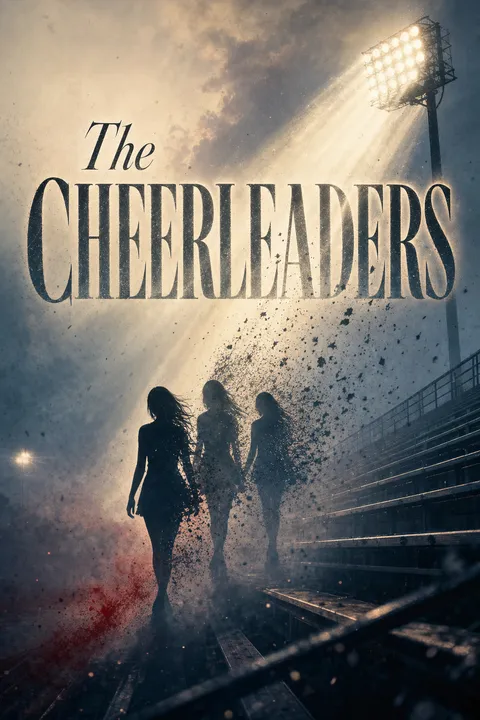


Plot Summary
The Town of Five Dead Girls
Monica Rayburn1 drags herself home from dance tryouts doubled over, secretly recovering from an abortion only her mother12 knows about. Five years earlier her older sister Jen2 and four fellow cheerleaders died within two months: two in a car crash, two strangled by a neighbor, and Jen by apparent suicide. Locals whisper about a curse.
At school, guidance counselor Demarco asks Monica1 to read poems at a memorial the murdered girls' teacher is planning, and she avoids the trophy-case photo of the smiling squad. She carries a fresher wound too: a summer fling with Brandon,5 the new cross-country coach, who has suddenly turned up employed at her school. Grief, shame, and dread crowd in from every direction.
The opening establishes trauma as Monica's permanent weather. Thomas frames her body itself as a site of concealment, the abortion pain literalizing how much she carries unspoken. The dead cheerleaders function as communal myth, a curse the town prefers to scrutiny. Being the suicide girl's sister is described as a scar she redresses daily, signaling identity built around loss. The reappearance of Brandon plants a private predator inside the public tragedy, quietly rhyming Monica's summer with something older and darker. The register is numb, controlled, the voice of a girl who has learned that feeling too much is dangerous, setting up her later thaw into purpose.
The Letters in Tom's Desk
Hunting through her stepfather Tom's4 office for painkillers, Monica1 finds four envelopes, each postmarked November 7, the anniversary of Jen's2 death. Inside sits the squad's photo and a typed message: someone knows it wasn't him and Monica1 should connect the dots. Tom,4 a police sergeant, shot the accused killer, Jack Canning,15 years ago.
Rattled, she reads old news online and notices the account contradicts her memory, that Canning15 was reaching into a drawer, not aiming a gun at the officers. Days later she picks the lock on a hidden drawer and discovers Jen's old cell phone, secretly preserved all this time. Charged back to life, its call log shows one unknown number Jen2 spoke with for seventeen minutes the morning she died.
The inciting engine turns over here. The letters convert diffuse grief into a concrete investigation and, crucially, implicate the family's safest figure. Postmarked to the anniversary, they read as ritualized mourning weaponized into accusation. The discrepancy between Monica's remembered version and the printed record introduces the novel's obsession with how memory launders comfortable stories. Jen's hidden phone is the season's most unsettling object, a stepfather keeping and unlocking a dead child's device, which reads as love and surveillance at once. That unexplained seventeen-minute call becomes the thread Monica cannot stop pulling, the moment private snooping curdles into a compulsion she will follow past every warning.
Texting a Dead Girl's Phone
Monica1 messages the unknown number from Jen's phone. The stranger answers in fragments, claiming to have been Jen's2 friend and warning her to distrust everything Tom4 says. Meanwhile she reaches out to Daphne Furman,8 the reporter whose article once enraged Sunnybrook by suggesting the police mishandled the case.
Over coffee, Daphne8 lists what refuses to line up: no forced entry at the Berry house,14 no bloody clothes at Canning's,15 a peephole through which Juliana13 would have recognized any visitor. She swears she never had an agenda, only inconvenient facts. Monica1 leaves shaken, gripped by the possibility that Tom4 killed an innocent man while the real murderer of Susan14 and Juliana13 still walks free somewhere close.
The phone becomes a literal channel to the dead, Monica texting into her sister's past and receiving replies, a haunting made procedural. The anonymous voice destabilizes her by targeting Tom, forcing her to doubt her one reliable parent. Daphne embodies the outsider truth-teller a grieving town punishes for asking questions, and her inconsistencies reframe closure as convenience. Thomas is dramatizing epistemic loyalty: how much easier it is to trust the official narrative than to entertain that neighbors, and family, might be complicit. Monica's dread here is moral vertigo, the recognition that solving this could cost her the people she loves and the version of events that let her keep breathing.
Ethan McCready's Hit List
Tucked inside Jen's2 copy of Wuthering Heights, Monica1 finds an unsettling anonymous poem and a note in which Jen2 admitted she was not okay and someone offered to talk. Her English teacher, Mr. Ward, recognizes the handwriting: Ethan McCready,6 a brooding boy who sat behind Jen2 and was expelled that fall for a notebook hit list of cheerleaders.
Chillingly, every squad member was named except Jen.2 Monica1 hunts down his yearbook photo with help from Ginny Cordero,3 a shy dance teammate who knew Jen2 from the gym years earlier. The pattern feels sinister: a boy who wanted the cheerleaders dead, who phoned Jen2 the morning she died, and who somehow knows where Monica's1 family now lives.
The hit list operates as both accusation and misdirection, and its single omission, Jen, is the loaded detail. Thomas plays on the archetype of the misunderstood outcast to test the reader's own rush to judgment, the same rush that expelled a lonely boy nursing a dying mother. The salvaged note, I'm not okay, cracks the myth of Jen the untouchable golden girl, hinting at hidden despair. Ginny's quiet entry matters: she is the rare person who remembers Jen's kindness rather than her tragedy. The section deepens the theme that grief distorts perception, turning a strange teenager into a monster because a monster is easier to blame than an unsolved question.
The Watcher Across the Street
The unfinished house facing Monica's1 new home has been serving as a lookout. She finds a cigarette butt at the bay window with a clear view of her family and an envelope waiting on the ledge. Inside is a note in Jen's2 own handwriting, proof the texter truly knew her sister.2 Monica1 draws closer to Ginny,3 the only person who will discuss Jen2 without flinching, and the two begin quietly investigating together.
Ginny3 offers a framework that reorganizes everything: the deaths are not scattered coincidences but a chain reaction, each event toppling into the next, a butterfly's wings stirring a distant storm. For the first time Monica1 has an ally who believes her sister2 did not simply give up.
The abandoned house is a resonant image, a structure built for watching, mirroring the surveillance threaded through the book, from Tom's cop instincts to Brandon's predation. The genuine Jen artifact authenticates the stranger and binds the past physically to the present. Most important is the alliance with Ginny, whose chaos-theory metaphor gives Monica a new epistemology: stop hunting a single villain and trace causation. That reframing is the intellectual pivot of the novel. Emotionally, the section is about no longer being alone in grief. Ginny's willingness to speak Jen's name treats the dead as a person rather than a warning, restoring dignity Monica has been denied by a town that flinches.
Tom's Wall of Denial
Monica1 presses Tom4 about Ethan McCready.6 He dismisses the boy6 as harmless, too slight to strangle two athletic girls, and swears the man who murdered Susan14 and Juliana13 died on his own bedroom floor. His certainty unnerves her more than doubt would.
Later, at a gun range, Tom's4 partner Mike Mejia9 lets slip details Tom4 concealed: Ethan6 lived around the corner from their old house, roamed the neighborhood at night, and Tom4 complained about him constantly. So Tom4 lied when he pretended barely to recognize the name. Monica1 cannot reconcile the loving stepfather4 who taught Jen2 to drive with a cop who may have buried the truth to protect his own shooting record.
Tom becomes the human embodiment of institutional denial, his conviction functioning as both paternal reassurance and defense mechanism. Thomas complicates him carefully: he is genuinely loving, which makes his evasions more disturbing than villainy would be. The revelation that he minimized his knowledge of Ethan fractures Monica's trust along a fault line she never expected. The gun range setting is pointed, foregrounding the weapon and the fatal decision that shadows his career. The section dramatizes how self-preservation and grief can corrupt even decent people, and how children reassemble their parents into strangers the moment they detect a lie. Monica's disorientation is the ache of loving someone she can no longer fully believe.
The Barista Was the Texter
Monica1 and Ginny3 trace the mystery number to a coffee shop, where Ethan McCready6 now works. No longer the hunched boy from the yearbook, he lays out his case: he witnessed an argument the night of the murders, tried to report it, and claims Tom4 threatened to beat him into silence. He is the one mailing the anonymous letters year after year.
His connect-the-dots theory braids all three tragedies together, a dark pickup truck spotted near both the crash and the murder scene, with Tom4 conveniently first to arrive at each. Ginny3 distrusts him instantly, remembering a night Tom4 showed her unexpected kindness at the station. Monica1 no longer knows whom to believe, only that Jen's2 final call still demands an answer.
The reveal upends the reader's suspicion, transforming the presumed stalker into a wounded truth-keeper who has spent five years grieving publicly through anonymous mail. Ethan's transformation, physical and moral, rebukes the town's stereotyping. His theory tempts with pattern, the seductive coherence of conspiracy, while Ginny supplies the crucial counterweight of doubt rooted in lived experience. Thomas stages competing testimonies without an arbiter, forcing Monica, and the reader, to weigh trauma against motive. The section's tension lies in unreliable narrators surrounding a girl desperate for certainty. It also quietly seeds Ginny's own guarded history at the police station, a detail whose full weight will not land until much later.
Stealing the Police Files
To read the sealed witness statements, the girls gamble everything. On a night most officers attend a dinner, Monica1 brings food to Mike Mejia9 at the station, coaxing him onto the state police database under the cover of looking up Ginny's3 absent father. Ginny3 then places an anonymous 911 call reporting an armed intruder at Mike's9 own house. He bolts, leaving his ID card in the reader.
Sick with guilt, Monica1 prints dozens of affidavits and slips out past the security camera. Afterward she vomits on the roadside, wrecked by the terror they inflicted on Mike's9 pregnant wife and stepdaughter. Over hot chocolate at Ginny's3 kitchen table, the two comb the pages for whatever the grieving, blinkered investigators might have missed.
The heist is the midpoint escalation, the point past which Monica cannot retreat into innocent curiosity. Thomas refuses to make it thrilling and clean; the moral cost is centered, Mike's family terrorized, Monica physically sickened. The scene interrogates the ethics of amateur justice, how the pursuit of truth can manufacture new harm. It also cements the Monica-Ginny partnership as an operation, revealing Ginny's startling competence beneath her meekness. The domestic coda, two girls with cocoa reading crime-scene bureaucracy, fuses the mundane and the macabre that defines the book. Their willingness to sacrifice a kind man's peace measures how consuming the need to know has become, foreshadowing the question of what any of us will trample for certainty.
The Truck and the Roof
The affidavits yield gold: elderly Mr. Brenner saw a petite dark-haired girl climb out of a dark pickup near the Berry house14 at 9:45, long after Juliana13 had already been dropped home. Someone waited, then followed. But a second statement notes the Berrys'14 tall privacy fence, proving Ethan6 could never have seen the deck from the woods as he claimed.
Confronted, Ethan6 admits he lied: Jen2 secretly snuck him into her bedroom that night, and he watched the argument from the garage roof while climbing out. He describes her room to prove it. Monica1 also learns Ginny's3 father drove a pickup and vanished around the time of the murders, and she secretly asks Daphne's8 investigator to trace him, a betrayal she hides from her friend.3
Physical evidence sharpens the phantom truck into something real, relocating the crime's timeline and implying premeditation. Ethan's corrected story does double work: it exonerates his witness account while exposing the tender, secret intimacy he shared with Jen, humanizing both. The room he describes is proof and elegy. Meanwhile Monica's covert probe into Ginny's father marks her own descent into the very suspicion-without-trust she resents in others, a moral mirror. Thomas threads dramatic irony here, letting the truck evidence point one direction while the reader senses complications ahead. The section is about how lies, even protective ones, corrode alliances, and how the search for a killer keeps producing collateral distrust among the searchers.
Carly's Buried Secret
Carly Amato,7 the reckless senior who once pulled the gentle Juliana13 into her orbit, lied about barely knowing her, then blocks Monica1 entirely. Ginny's3 fake nursing profile keeps them watching, and one photo shows Carly7 posing in a black pickup. The trail leads to Patrice, a rival coach who recalls Carly7 as vicious and desperate, kicked off the squad amid rumors she slept with the coach's boyfriend.
Monica1 then meets Allie Lewandowski,10 Jen's2 former cheer coach, who corrects the record: Carly's7 earring turned up in Allie's10 boyfriend's car because his best friend, a dealer, had been buying a high schooler alcohol. The dots sharpen toward older, wealthy Hamilton College men selling pills to teenage girls in Sunnybrook.
The investigation widens from a single suspect to a predatory ecosystem, older men exploiting girls hungry for status and escape. Carly is drawn with unusual sympathy beneath her hostility, a girl who reinvented herself yet flinches at the past she guards. Patrice and Allie function as memory-keepers whose fragments each carry a partial, self-interested truth, modeling how history is assembled from biased witnesses. Thomas quietly builds a feminist indictment: the machinery grinding these girls is not supernatural curse but grown men and the adults who look away. Allie's account reframes a slut-shaming rumor as evidence of adult misconduct, teaching Monica to read gossip as buried testimony about who preys on whom.
Cornering Carly
The girls ambush Carly7 in a campus parking lot, Ginny3 clutching a whistle for protection. Under pressure Carly7 finally cracks part of the story: she introduced Juliana13 to two wealthy college guys, and Juliana13 panicked once she realized one of them dealt drugs, refusing to see them again. Someone even overheard Juliana13 that fatal night shouting that she would not calm down.
But Carly7 refuses to name the men, terrified after watching one beat a customer bloody, insisting rich boys always walk free. Monica1 and Ginny3 now hold motive and a pickup truck but no name, and the maddening certainty that the true killer of Juliana13 and Susan14 has been breathing free air, unpunished, for five long years.
Carly's partial confession delivers motive while withholding identity, a structurally brutal choice that mirrors the powerlessness of the girls she describes. Her fatalism, that men like that always get away with it, articulates the novel's rage about class and gendered impunity. The whistle Ginny carries is a small, devastating prop, a reminder that these teenagers are investigating predators without any protection but their own nerve. Juliana emerges as a girl who tried to do the right thing and paid for it, complicating her saintly legend with agency and fear. The section frustrates catharsis deliberately, converting narrative momentum into moral fury: the truth is nearly assembled, yet justice feels further away than ever.
The Coach's Crescent Scar
At the homecoming parade Monica1 spots Allie10 beside her boyfriend and freezes: it is Brandon,5 the cross-country coach she slept with all summer. Ginny's3 research confirms Brandon5 graduated Hamilton and dated Allie10 back then. That night, drunk and grieving, Tom4 finally cracks open his memories, describing the Berrys' dog crouched over Susan14 with Juliana's13 blood on his paws, and admitting the dead neighbor15 bore no dog bite.
The detail detonates. Studying an old summer photo, Monica1 sees the crescent scar on Brandon's5 calf, exactly the size of a large dog's bite. The charming coach5 who cited her age to end their affair is the man who strangled two fifteen-year-old girls, and who has been circling her family all along.
The convergence is a gut-punch of recognition: the private predator and the public murderer are one man, collapsing Monica's summer shame into the town's central horror. Thomas makes the reveal intimate rather than procedural, routing it through a photo Monica once treasured and a scar her own body encountered. Tom's drunken testimony finally weaponizes grief into evidence, the overlooked dog detail embodying the book's thesis that truth hides in what mourning made everyone skip. The parallel between Monica and Juliana becomes explicit and unbearable. This is the moment denial ends for everyone, and the safe story of a dead villain gives way to the far worse reality that the danger is alive, employed, and known.
The Garage Confession
Brandon5 appears at Monica's1 house while she is home alone with her little brother Petey.16 She secretly records him as he confesses: Juliana13 threatened to expose their affair, he followed her inside, and when she fought back he killed her, then chased Susan14 when she overheard.
Monica1 sends Petey16 sprinting to Ginny's3 to call police and fights Brandon5 off with her brother's16 bat until Ginny3 arrives and clubs him unconscious. Offered the chance to finish him, Monica1 chooses instead to let the victims' families face him alive.
Brandon5 is arrested for statutory rape and assault, the murder case is reopened, and Tom4 is sidelined pending review. Her mother's12 love holds fierce. And Monica1 finally accepts the truth of Jen's2 suicide note, written to her.
The climax fuses Monica's two ordeals, survivor of abuse and detective of murder, into a single act of resistance. The recording turns her body and wits into instruments of justice, reclaiming agency Brandon stole. Her decision not to kill him, when the narrative and Ginny both offer permission, is the moral summit: she refuses to become what he is and honors the victims' right to confront him. Thomas grants partial, imperfect resolution, Tom endangered, the family reshaped, and crucially withholds the false comfort of overturning Jen's suicide. Accepting the note is the harder catharsis, mourning a sister who chose to leave rather than a sister who was taken, love and grief finally uncoupled from the mystery.
Epilogue
A final flashback rewinds to the rainy night of the first tragedy. Ginny,3 then a frightened child, rode in her drunk father Phil's pickup after he bullied her grandmother into surrendering her. At a convenience store he raged at two men in a truck for leering at underage girls.
Driving home wasted, he swerved into an oncoming car, killing Bethany and Colleen, then rolled down the embankment. Trapped and bleeding, he begged Ginny3 to unbuckle him. She climbed out, watched the truck sink into the lake, and walked away, telling no one. The chain of five deaths began with her silence, a secret she resolves to carry forever.
The reveal recasts the whole investigation as unknowingly circular: Monica's steadfast ally has been guarding the origin point of the curse all along. Ginny's passivity, letting her abuser die, is framed as both trauma response and rough justice, echoing the question Monica keeps asking, whether a terrible act is less terrible when you believe you had no choice. The dramatic irony is devastating, Ginny helps solve every death but the one she caused, and even glimpses the same predators who would later kill. Thomas closes not on justice but on the loneliness of buried knowledge, suggesting some truths protect no one and so stay swallowed, and that girls survive by deciding what the world does not get to know.
Analysis
The Cheerleaders interrogates the stories communities tell to survive catastrophe. Sunnybrook prefers a curse and a dead villain15 to the harder truth that ordinary men prey on girls and institutions look away. Kara Thomas builds a mystery whose real subject is the machinery of denial: grief-blinded cops, a town hungry for closure, parents who cannot bear to examine the worst day of their lives. The investigation succeeds not because anyone was evil but because everyone was too wounded to notice the small contradictions, the unbitten leg, the fenced yard, the phantom pickup. Running beneath the whodunit is a sustained study of how teenage girls are consumed. Juliana,13 Susan,14 and Jen2 are eulogized as flawless, yet the flashbacks restore their fear, jealousy, loneliness, and hunger to be seen. Monica's1 secret affair with an adult coach5 deliberately rhymes with Juliana's,13 exposing a predatory pattern the adults refuse to name and the girls are taught to blame themselves for. The recurring question, whether a terrible act is less terrible when you believe you had no choice, binds Monica's1 self-loathing, Ethan's6 survival, and Ginny's3 buried secret into one moral inquiry. The novel is finally about knowledge as burden. Everyone hoards a private truth: Tom4 his doubt, Ethan6 his witness, Monica1 her shame, Ginny3 her origin sin. The dual timeline weaponizes dramatic irony so that solving the murders never touches the deaths that started everything, a bleak comment on how justice arrives partial and truth is distributed unevenly. Thomas resists easy catharsis; the killer is caught but the sister stays dead by her own hand,2 and the person closest to Monica1 guards the deepest lie. What the book leaves is not the comfort of solution but the ache of Mrs. Ruiz's counsel, that at some point you stop grasping in the dark and choose to live in the light, even while carrying what you can never say.
Review Summary
The Cheerleaders received mixed reviews, with an average rating of 3.75 out of 5. Many readers praised the book's dark themes, compelling mystery, and well-developed characters. Some found it suspenseful and unpredictable, while others felt it was slow-paced or predictable. The book tackles serious topics like suicide, sexual assault, and abortion, which some readers appreciated for their realism. Critics noted that the ending was divisive, with some finding it anticlimactic. Overall, readers found it to be an engaging YA thriller that kept them guessing until the end.
Characters
Monica Rayburn
Grieving, guarded narratorSixteen and hollowed out, Monica moves through junior year performing normalcy, dance team, a sharp tongue, a family she keeps at arm's length, while carrying fresh private wounds and an old unhealed one, the loss of the sister2 whose shadow she has never escaped. Being the suicide girl's2 sibling is a scar she redresses every morning. Reckless when numb, she uses attention from boys to feel something, then loathes herself for it. Yet grief hardens into purpose when she starts to suspect the official story of the deaths is a lie. Loyal in her prickly way and hungry to be believed, she is driven less by abstract justice than by a daughter's refusal to accept that her sister2 truly chose to leave.
Jennifer Rayburn
The beloved dead sisterBlond and green-eyed where the rest of her family is dark, Jen was the town's golden girl, top of her class, bound for veterinary work, adored by everyone. The flashback chapters restore her as far more fragile than her legend, a tall girl who never felt she belonged among her petite cheer friends and grew secretly lonely as those friendships curdled during sophomore year. Kind to the outcasts others mocked, she hid a private sadness behind her smile. Her bonds with best friends Juliana13 and Susan14 frayed under jealousy and secrets, and a tentative closeness with a boy no one would approve of6 gave her the only place she felt truly heard and not measured against her own reputation.
Ginny Cordero
Quiet, watchful allyA pale, freckled dance teammate most people overlook, Ginny once knew Jen2 at the gym and remembers her kindness when few others do. Watchful and soft-spoken, she stuns Monica1 by proving fearless and resourceful when the investigation turns dangerous, engineering fake profiles and cool-headed plans. Beneath her gentleness runs a current of steel forged by a hard home with an abusive, absent father and a beloved nurse mother she adores. She insists she is not helping Monica1 so much as honoring the dead girls who deserved better. Precise, loyal, and privately grieving her own losses, Ginny becomes the one friend Monica1 can tell everything, the person who believes her without needing to be convinced.
Tom Carlino
Cop stepfather with secretsMonica's1 stepfather and a police sergeant, Tom has been more father than her absent biological one, showing up with roses at recitals and teaching the girls to drive. He is warm, steady, the calming hand on his wife's12 shoulder. But he was the officer who shot the accused killer15, and he guards Jen's2 memory, and certain memories of his own, fiercely. His refusal to reopen old wounds reads at times as devotion and at times as something closer to fear of what waits in the dark.
Brandon Michaelson
Charming young coachThe new cross-country coach, in his twenties, charismatic and easy in his own skin. Over the summer he drew Monica1 into a secret relationship at the country club pool, never asking her age because knowing would have ended it. His sudden appearance on her school's staff, and a girlfriend he neglected to mention10, curdle the memory into something colder and more calculating than the romance she once imagined.
Ethan McCready
Expelled loner who loved JenA brooding loner expelled years ago over a notebook hit list of cheerleaders, Ethan wore black, kept his headphones in, and unsettled classmates. Beneath the reputation lived a boy nursing a dying mother, with no father and a tender secret bond with Jen2 that no one would have believed. Bitter and sharp-tongued, he has spent years demanding the town confront a truth it buried, refusing to let the case rest quietly.
Carly Amato
Reckless girl with secretsA reckless transfer senior with platinum hair and a vape, Carly pulled the sweeter Juliana13 into a world of parties, older men, and pills. Combative, desperate to belong, and quick to lie, she reinvented herself as a nursing student but flinches whenever the old days resurface, guarding a secret she is too frightened to speak aloud even years later.
Daphne Furman
Doubting investigative reporterAn earnest reporter whose article questioning the police investigation once made her a pariah in Sunnybrook. She becomes Monica's1 cautious source, offering inconsistencies from the crime scene and, eventually, access to a connected private investigator.
Mike Mejia
Tom's loyal partnerTom's4 younger, well-liked partner, newly married with a stepdaughter and a pregnant wife. Kind to Monica1 since childhood, he was present the day the accused killer15 was shot, and his easy loyalty makes him both a resource and, unwittingly, a target.
Allie Lewandowski
Jen's former cheer coachJen's2 former cheer coach, beautiful and now a graduate student training to be a social worker. Warm with the girls, she carries a bruised history involving a boyfriend5, a rumor, and a fight that turned ugly, all of which resurface under Monica's1 persistent questions.
Rachel
Anxious perfectionist best friendMonica's1 cautious, cleanse-obsessed best friend since childhood, a careful driver haunted by a triple pirouette she cannot land and by the cousin she lost in the crash. She senses Monica1 drifting toward Ginny3 and toward secrets, and the widening distance between them wounds her deeply.
Phoebe
Distant, grieving motherMonica's1 mother, manager of a small playhouse, brittle and controlling in her grief. Since Jen's2 death she has stopped touching Monica1, treating her as breakable, doling out pills and disappointment in equal measure. Beneath the coldness lives a mother terrified she failed one daughter2 and cannot protect the other.
Juliana Ruiz
Popular murdered cheerleaderTiny, giddy, a gifted flyer and the most beloved of the squad, Juliana's warmth masked a dangerous new friendship7 that pulled her toward older men in her final months.
Susan Berry
Driven murdered cheerleaderDriven, anxious, perpetually studying, Susan measured herself against everyone and never felt she measured up. Her suspicion about Jen2 and a boy6 set painful events quietly into motion.
Jack Canning
The accused dead neighborThe reclusive neighbor with a troubled past whom police named as the murderer and Tom4 shot dead. Photos of Susan14 found in his room sealed his reputation, though doubts about the case linger for years.
Petey
Oblivious young half brotherMonica's1 ten-year-old half brother, glued to his tablet game and oblivious to the family's fault lines, an innocent whose safety later hangs in the balance.
Plot Devices
The anonymous letters
Catalyst that reopens the caseFour envelopes, each postmarked November 7, the anniversary of Jen's2 suicide, arriving yearly at Tom's4 address. Each holds the squad's photo and a typed demand: the man blamed15 was innocent, connect the dots. Discovered by accident when Monica1 hunts for painkillers, they ignite the story, converting private grief into active suspicion. Because they target Tom4 specifically and reach the family's new address, they signal a sender who knows the family intimately and refuses to let the case rest. The letters recur as a motif of unfinished mourning, mirroring how Monica1, and others, keep asking the same question hoping the answer will finally change into something bearable.
Jen's hidden cell phone
Key evidence trailThe dead girl's2 outdated cell, kept secretly in a locked drawer and charged back to life by Monica1. Its call log preserves a single unknown seventeen-minute conversation from the morning Jen2 died, the thread Monica1 tugs to unravel everything. The phone works as a literal channel to the dead, letting Monica1 text into her sister's2 past and receive answers from a stranger. It simultaneously raises its own mystery, why a grieving stepfather4 would preserve and unlock it, seeding doubt about Tom4 while relentlessly advancing the investigation. The device blurs mourning and detection, making Monica's1 search feel like both an autopsy and a conversation she was never able to finish.
Dual-timeline flashbacks
Dramatic irony engineInterleaved chapters marked Five Years Ago carry readers into the final autumn of Jen2, and later others, rendered in third person against Monica's1 first-person present. This structure builds sustained dramatic irony, letting readers glimpse truths Monica1 chases blindly, and reframes the beloved dead as complicated, frightened teenagers rather than saints. The gap between memory and reality becomes the book's engine, exposing how a town's tidy narrative was assembled from omissions. The device also stages the novel's final gut-punch, since the flashbacks eventually reach a witness3 Monica1 never suspects, delivering knowledge the living characters will never possess.
The hit list
Misdirection and suspicionThe notebook of cheerleaders' names that got Ethan6 expelled, with every squad member listed except Jen2. It functions as both red herring and lens, casting Ethan6 as a plausible suspect while its single omission hints at a hidden bond. The list dramatizes how a lonely boy's6 mistake was inflated into a monster's manifesto, and how the town's fear distorted its own investigation. It keeps the reader's suspicion productively misdirected, embodying the theme that communities prefer a legible villain to an uncomfortable, diffuse truth about the ordinary men actually harming their daughters.
The dog-bite scar
The clue that names the killerA crescent-shaped white scar the size of a large dog's bite, glimpsed on a suspect's5 calf in an old summer photo. Paired with Tom's4 drunken memory of the Berrys' dog crouched bloody over Susan's14 body, and the accused neighbor's15 lack of any such bite, the scar becomes the physical proof that finally identifies the true murderer5. It pays off an earlier, easily missed detail that a good cop4 overlooked in his grief, embodying the novel's thesis that the decisive truth hides in a small thing everyone was too broken to notice. The reveal is intimate rather than forensic, routed through Monica's1 own body and memory.
FAQ
Synopsis & Basic Details
What is The Cheerleaders about?
- Unraveling a Town's Trauma: The Cheerleaders by Kara Thomas follows Monica Rayburn, a high school junior haunted by the tragic deaths of five cheerleaders, including her older sister Jennifer, five years prior. The town of Sunnybrook has tried to move on, but Monica suspects there's more to the story than the official narrative of a car crash, a double murder, and a suicide.
- A Secret Investigation: Driven by anonymous letters hinting at a cover-up and the discovery of her sister's hidden cell phone, Monica embarks on a dangerous quest for truth. She teams up with an unlikely ally, Ginny Cordero, to uncover long-buried secrets, challenging the accepted version of events and confronting the adults who shaped the narrative.
- Coming-of-Age Mystery: Beyond the suspenseful mystery, the novel explores Monica's personal journey through grief, trauma, and self-discovery. As she unearths the dark underbelly of her seemingly perfect town, Monica grapples with her own hidden pain, a secret abortion, and strained family relationships, ultimately seeking to define herself outside the shadow of tragedy.
Why should I read The Cheerleaders?
- Masterful Suspense & Pacing: Kara Thomas crafts a gripping mystery with dual timelines and a relentless pace, keeping readers on edge as Monica uncovers shocking truths. The narrative expertly builds tension, making it an ideal read for fans of psychological thrillers and young adult mysteries.
- Deep Psychological Exploration: The novel delves into the complex emotional landscapes of its characters, particularly Monica's struggle with survivor's guilt, self-blame, and the weight of hidden secrets. It offers a nuanced look at how trauma impacts individuals and communities, making it a compelling character study.
- Thought-Provoking Themes: The Cheerleaders explores themes of truth versus perception, the dangers of collective denial, and the complicity of adults in protecting their own reputations over the well-being of children. It challenges readers to question official narratives and consider the ripple effects of seemingly small choices, offering a powerful commentary on justice and healing.
What is the background of The Cheerleaders?
- Suburban Façade & Hidden Decay: The story is set in the seemingly idyllic, wealthy town of Sunnybrook, New York, which serves as a microcosm for communities that prioritize appearance and reputation over confronting uncomfortable truths. The town's collective denial and superficiality create a fertile ground for secrets to fester, highlighting a common trope in psychological thrillers where a perfect exterior hides deep-seated corruption.
- Cultural Obsession with Tragedy: The narrative taps into the cultural fascination with true crime and local tragedies, particularly those involving young, seemingly perfect victims like cheerleaders. The town's annual memorials and lingering rumors reflect how communities process, and sometimes exploit, collective grief, creating a backdrop where the past is constantly re-litigated.
- Post-9/11 Echoes of Fear: While not explicitly stated, the pervasive fear and need for control, especially from figures like Tom, subtly echo a post-9/11 societal anxiety. The quick judgment of Jack Canning and the dismissal of alternative theories reflect a desire for immediate closure and a clear villain in the face of inexplicable horror, a common psychological response to widespread trauma.
What are the most memorable quotes in The Cheerleaders?
- "Pain isn't supposed to teach you anything. It only exists to hurt you.": This quote, uttered by Monica early in the novel, encapsulates her initial cynical worldview and deep-seated emotional numbness. It highlights her struggle to find meaning in suffering and foreshadows her journey toward understanding and healing, a central theme in The Cheerleaders.
- "It's like…the accident, and the murders…And Jen. Sometimes it feels like they're all dots that no one ever tried to connect.": Monica's realization to Rachel marks a pivotal shift in her investigation, articulating the core mystery and her intuitive understanding that the tragedies are interconnected. This quote introduces the central motif of "connecting the dots," driving the plot and Monica's relentless analysis of the past.
- "You're still here. That's all that matters now.": This line, spoken by Ethan to Jen in a flashback and later echoed by Ginny to Monica, becomes a powerful mantra of survival and resilience. It underscores the novel's ultimate message about choosing to live and find hope even after profound loss and trauma, offering a poignant counterpoint to the pervasive grief.
What writing style, narrative choices, and literary techniques does Kara Thomas use?
- Dual Timeline Narrative: Thomas masterfully employs a dual timeline, alternating between Monica's present-day investigation and flashbacks to the cheerleaders' final months. This technique creates suspense by gradually revealing past events and character motivations, allowing readers to piece together the mystery alongside Monica and understand the full scope of the tragedy.
- First-Person Limited POV: The story is primarily told from Monica's first-person perspective, immersing the reader in her emotional turmoil, suspicions, and discoveries. This subjective viewpoint enhances the unreliable narrator aspect, as Monica's biases and limited knowledge shape the initial understanding of events, making the eventual revelations more impactful.
- Symbolism and Motif: The novel is rich with recurring symbols and motifs, such as the "street of horrors" (representing lingering trauma), physical pain (mirroring emotional wounds), and the "butterfly effect" (small actions leading to large consequences). These literary devices deepen the thematic analysis of grief, complicity, and the interconnectedness of human experience.
Hidden Details & Subtle Connections
What are some minor details that add significant meaning?
- The Leaking School Ceiling: Early in the book, Monica notes the school's leaking ceiling and scattered buckets, with a custodian muttering about "all the goddamn rain this year." This seemingly mundane detail subtly symbolizes the decay and hidden problems beneath Sunnybrook's polished surface, foreshadowing the town's deeper, unaddressed issues and the eventual unraveling of secrets.
- Tom's Vicodin Prescription: Monica's initial search for painkillers in Tom's office, leading her to his Vicodin, is a subtle setup for his later reliance on alcohol to cope with his guilt and trauma. It hints at his own hidden struggles and vulnerabilities, complicating his image as the stoic police sergeant and adding depth to his character motivations.
- Ginny's Cat, Panda: Ginny's cat, Panda, is described as distrustful and wary of Monica, mirroring Ginny's own initial guardedness and her deep-seated mistrust of outsiders. This small detail subtly reflects Ginny's hidden trauma and her cautious nature, highlighting her journey toward opening up and forming a genuine connection with Monica.
What are some subtle foreshadowing and callbacks?
- Monica's "Breakable" Feeling: Monica's mother stops touching her after Jen's death, as if Monica became "breakable." This foreshadows Monica's own later emotional numbness and her desperate attempts to "feel something" through risky behaviors, revealing the lasting impact of grief on her psyche and her struggle with survivor's guilt.
- The "Street of Horrors" Name: The old house's street being known as the "street of horrors" is a direct callback to the murders, but it also subtly foreshadows that the trauma isn't confined to the physical location. Monica carries the "horrors" within her, and the new house, despite its distance, cannot escape the past, emphasizing the pervasive nature of trauma in The Cheerleaders.
- Allie's Boyfriend's Friend: Allie's casual mention of her boyfriend's friend buying Carly beer and hanging out with high school girls, initially dismissed as minor, subtly foreshadows his later reveal as the drug dealer and a key figure in Juliana's death. This detail highlights how seemingly insignificant connections can hold crucial information, driving the mystery explained later in the novel.
What are some unexpected character connections?
- Jen and Ethan's Secret Friendship: The revelation that Jennifer, the popular cheerleader, had a secret, tender friendship with Ethan McCready, the ostracized "creep," is highly unexpected. This connection subverts reader expectations and challenges the town's simplistic labels, revealing Jen's hidden empathy and Ethan's misunderstood nature, adding layers to Jennifer Rayburn's motivations and Ethan McCready's character analysis.
- Ginny's Father and the Car Crash: The most shocking connection is Ginny's father being responsible for the car crash that killed Bethany and Colleen. This twist reveals Ginny's deep personal stake in the tragedies and her own complicity in a cover-up, creating a powerful parallel to Monica's journey and deepening the themes in The Cheerleaders of hidden guilt and the weight of secrets.
- Brandon and Allie's Past Relationship: The discovery that Brandon Michaelson was Allie's boyfriend at the time of the murders, and that his friend was the drug dealer, creates a chilling connection between the cheerleading world and the illicit activities. This link exposes the adult complicity and the hidden dangers lurking within the seemingly innocent high school environment, crucial for the Brandon Michaelson analysis.
Who are the most significant supporting characters?
- Ethan McCready: More than just a red herring, Ethan is a crucial catalyst for Monica's investigation and a parallel figure in his own right. His anonymous letters and initial warnings about Tom force Monica to question the official narrative, while his secret friendship with Jen and his own survivor's guilt provide a poignant counterpoint to Monica's journey, deepening the Ethan McCready character analysis.
- Ginny Cordero: Ginny evolves from a quiet, overlooked classmate into Monica's indispensable partner in crime and emotional anchor. Her resourcefulness, quiet strength, and deeply personal connection to the tragedies (her father caused the car crash) make her a complex and vital character, embodying themes of hidden resilience and the burden of truth, central to Ginny Cordero's motivations.
- Tom Carlino: Monica's stepfather, Tom, serves as a complex figure of authority and flawed protection. His role as a police sergeant, his initial dismissal of Ethan's testimony, and his later confession of doubt reveal the human cost of the cover-up and the pressure to maintain order. His character highlights the themes in The Cheerleaders of parental love, complicity, and the difficulty of confronting painful truths.
Psychological, Emotional, & Relational Analysis
What are some unspoken motivations of the characters?
- Monica's Quest for Self-Definition: Beyond finding the truth about Jen, Monica is subconsciously driven to define herself outside of her sister's shadow and the town's pity. Her reckless pursuit of answers and her fling with Brandon are partly attempts to feel something, anything, and to assert her own identity separate from the "suicide girl's sister," a key aspect of Monica Rayburn's motivations.
- Tom's Need for Control and Closure: Tom's initial dismissal of Ethan's claims and his desire to quickly close the murder case stem from a deep-seated need for control and a desperate attempt to protect his family from further pain. His actions are motivated by a desire for a clear, manageable narrative, even if it means overlooking inconsistencies, reflecting his struggle with the limits of his authority and his own grief.
- Ginny's Penance and Connection: Ginny's unwavering loyalty and willingness to risk everything for Monica are driven by a subconscious need for penance for her own secret about her father. By helping Monica uncover the truth, Ginny seeks a form of redemption and a genuine connection with someone who understands the weight of hidden trauma, revealing the depth of Ginny Cordero's psychological complexities.
What psychological complexities do the characters exhibit?
- Survivor's Guilt and Numbness: Monica exhibits profound survivor's guilt, believing she "should have been there" the night of the murders and that her sister's death was a consequence of her own survival. This manifests as emotional numbness, leading her to seek intense experiences (like her relationship with Brandon) to feel alive, a core aspect of Monica Rayburn's psychological analysis.
- Denial as a Coping Mechanism: Many characters, particularly Monica's mother and the town at large, employ denial as a primary coping mechanism. They cling to the official narrative of the cheerleaders' deaths because the truth is too painful or disruptive to their sense of safety and order, illustrating the collective psychological impact of trauma on a community.
- The Burden of Secrecy: Ginny's character embodies the psychological toll of carrying a devastating secret. Her quietness, her initial reluctance to engage, and her later fierce loyalty to Monica stem from the immense burden of knowing her father caused the car crash. This highlights how secrets can isolate individuals and shape their entire personalities, a key theme in The Cheerleaders.
What are the major emotional turning points?
- Discovery of Jen's Phone and Anonymous Letters: Monica's discovery of Jen's hidden phone and the anonymous letters is the initial emotional catalyst, shattering her acceptance of the official narrative and igniting her desperate search for answers. This moment transforms her passive grief into active investigation, marking a significant shift in Monica Rayburn's motivations.
- Monica's Confrontation with Tom about Ethan: The heated argument between Monica and Tom about Ethan McCready and the inconsistencies in the murder investigation is a major emotional turning point. It exposes the deep rift in their relationship and forces Monica to confront the possibility of her stepfather's complicity, leading to profound disillusionment and a re-evaluation of her trust.
- Ginny's Confession about Her Father: Ginny's revelation that her father caused the car crash is a powerful emotional climax, not just for Monica but for Ginny herself. This confession unburdens Ginny, solidifies her bond with Monica, and recontextualizes her entire character arc, highlighting the emotional impact of truth and the possibility of shared healing.
How do relationship dynamics evolve?
- Monica and Her Mother: From Estrangement to Empathy: Their relationship begins strained, marked by Monica's mother's emotional distance and Monica's resentment. As Monica uncovers truths and experiences her own trauma, her mother's vulnerability (her hangover, her confession of fear) allows for a fragile re-connection and a deeper, albeit painful, understanding of each other's grief, evolving their family dynamics.
- Monica and Ginny: From Acquaintances to Unbreakable Bond: Their relationship transforms from a tentative alliance based on shared curiosity into a profound, mutually supportive friendship. Ginny's quiet strength and willingness to risk everything for Monica, coupled with Monica's growing trust and vulnerability, forge an unbreakable bond rooted in shared trauma and the pursuit of justice, showcasing a powerful friendship in The Cheerleaders.
- Monica and Tom: From Idealized Protector to Flawed Human: Monica initially views Tom as a steadfast protector, a better father than her biological one. As she uncovers his role in the cover-up and his own hidden pain, her perception shifts. Their relationship evolves into a more complex, realistic one, where love coexists with disappointment and the acknowledgment of human fallibility, central to Tom Carlino's character development.
Interpretation & Debate
Which parts of the story remain ambiguous or open-ended?
- The Full Extent of Town Complicity: While Brandon is identified as the killer and Tom's complicity in the cover-up is revealed, the novel leaves some ambiguity about how many other townspeople were aware of the truth or chose to ignore it. The "emotional blinders" Daphne mentions suggest a broader, unspoken agreement to accept the easy answer, leaving the full scope of collective denial open to interpretation.
- The Long-Term Healing Process: The ending suggests Monica and Ginny are beginning to heal and move forward, but the path to full recovery from such profound trauma is inherently long and complex. The novel leaves open how they will truly integrate these experiences into their lives and whether the town will genuinely reckon with its past, rather than just finding a new scapegoat.
- The Nature of Jen's Final Moments: While Brandon confesses to killing Juliana and Susan, and Jen's suicide is re-framed as a potential murder, the exact details of Jen's death remain somewhat ambiguous. The note she left, "I'm still here," can be interpreted in multiple ways, leaving readers to ponder the precise circumstances and her final state of mind, adding to the enduring mystery of Jennifer Rayburn's death explained.
What are some debatable, controversial scenes or moments in The Cheerleaders?
- Monica's Abortion and Its Portrayal: Monica's secret abortion and her subsequent physical and emotional pain are presented with raw honesty, which can be a controversial topic. The narrative explores her decision and its aftermath without explicit judgment, focusing on her internal struggle and the isolation she feels, prompting debate on the portrayal of such a sensitive subject and its role in Monica Rayburn's character development.
- Tom's Cover-Up and Justification: Tom's decision to dismiss Ethan's testimony and perpetuate the narrative of Jack Canning as the sole killer is highly debatable. While he claims it was to protect his family and the town, his actions directly led to a murderer walking free and Jen's death being mislabeled. This
Download PDF
Download EPUB
.epub digital book format is ideal for reading ebooks on phones, tablets, and e-readers.








































