Plot Summary
1. A Deadfall and a Curse
Young Navajo Luis Horseman, on the run after a violent crime, crafts a traditional deadfall trap and attempts a protective chant, praying to the old gods for safety. Deep fear haunts him, especially after glimpsing a mysterious wolf-like figure who invokes witchcraft legends. His anxieties are heightened by the strange tracks he notices, by trucks on distant roads whose purpose he's uncertain about, and by the inadequacy of his own resources. Horseman, vulnerable and alone, senses ancestral dangers as much as human ones. His every action negotiates between old beliefs and present threats, setting in motion a chain of events that will soon pull multiple lives into the bitter shadows of Navajo myth and murder.
2. Winds of Old Fears
The wind sweeps across the Navajo lands and as it does, it stirs up both literal and psychological ghosts. At Window Rock, police lieutenant Joe Leaphorn laments for his friend Bergen McKee, an anthropologist haunted by personal demons after a painful divorce. McKee considers returning to the reservation to complete his research into witchcraft—an enterprise tinged by skepticism, yet shadowed by the reality that belief breeds its own violence. The wind, for Leaphorn and McKee alike, seems to whisper both invitations and warnings, reminding them each of old wounds: loss, failure, and unresolved promises. The supernatural and emotional intertwine, setting the stage for a journey that is as much about inner reckoning as it is about Navajo mystery.
3. Letters, Loss, and Longing
In New Mexico, Bergen McKee finds academic obligations—grading, advising, expectations—intermixed with the ache of past loss, particularly his wife's abandonment. Letters as plot pivots from Leaphorn offer a lifeline to something meaningful, possibly a return to the reservation for fieldwork, and the chance to confront his theory about Navajo witch beliefs. Teased by friends about romance and research alike, McKee feels the tug of old passions and academic ambitions, even as his conversations with anthropologist Canfield reveal deeper personal scars. The characters' private longings—love, truth, relevance—set them in motion toward the reservation, where ancient stories of wolf witches and more recent hurt will soon entwine.
4. Warnings at Shoemaker's Post
At Shoemaker's Trading Post, Leaphorn and McKee encounter the local web of rumor and self-preservation. Leaphorn seeks a peaceful resolution to Horseman's fugitive status, hoping kin will persuade him to surrender. But no one admits knowledge—Navajo discretion and subtle social cues signal secrets behind stony faces. McKee, meanwhile, mines for stories about witches, but finds himself navigating not just suspicion but local prejudices and taboos. The motif of the stolen hat, pawned silver, and laughter over witch stories all mask deeper anxieties. A delicate dance plays out between duty, belonging, and exile, underscoring the isolation of both Horseman and his would-be pursuers.
5. An Omen and a Body
Joseph Begay wakes before dawn filled with anticipation, only for his day to take a nightmarish turn when he finds a dead body by the road. Horseman's corpse, stiff and twisted with terror, signals that physical death has deeper supernatural implications in Navajo culture, as do the omens—an owl in the road, unsettled ghosts—that attend the discovery. The border between crime and curse is blurred, and the sacred ritual responses (protective pollen, blessing chants) betray the pervasive power of old beliefs. In this moment, fear radiates outward, infecting both the living and the investigation with uncertainty and foreboding.
6. Shadows over Teastah Wash
Leaphorn, accompanied by McKee, investigates the scene where Horseman's body lies. A bottle of whiskey nearby suggests, to the coroner at least, death by suffocation in a drunken stupor. But Leaphorn notes oddities—a rigor-stiffened arm, expertly swept footprints, and a juniper branch used to erase tracks—evidence that someone carefully staged the scene. The death's violence is concealed beneath the appearance of natural consequence, hinting at both ruthlessness and traditional ritual knowledge. The investigators' skepticism grows, realizing they must dig past appearances to the buried motives and perhaps find themselves face-to-face with very human evil, cloaked in supernatural narrative.
7. Witches, Wolves, and Whispers
McKee interviews Old Woman Gray Rocks to collect tales of witch-trouble besetting local families. Her stories, peppered with shifting blame and evasions, suggest the danger isn't just internal clan friction but comes from an outsider—a "stranger" wolf. She also implicates a Nez boy as messenger to Horseman and echoes the fear that witchcraft is more than a scapegoat mechanism. Meanwhile, Leaphorn's methodical logic bumps against irrational communal defenses. Gathering names and testimonies is slow, but pieces coalesce: the wolf is real for the people, whether metaphor or man. As dusk falls, Canfield and McKee prepare for deeper exploration, not knowing the true shape of the threat stalking the canyons.
8. Death's Signature in Sand
The forensic report on Horseman deepens Leaphorn's suspicions. Horseman died not of alcohol, but from suffocation—all air passages packed with fine sand—yet there's no sand on his clothing, suggesting deliberate murder, not accident. Rumors that the wolf trouble is linked to outsiders, a missing rocket, or reward money add potential motives, but all remain murky. The investigation grows colder as possible witnesses melt away or become inaccessible. The shroud of ambiguity and fear propels the search for solutions—but the clues point as much to the living's secrets as to ancient evil.
9. Clues among the Ram Corpses
McKee inspects Yazzie's sheep pens and finds dead rams with their throats savaged, seemingly by animals but in improbable numbers. He suspects human intervention motivating witch rumors, peering into the psychology of scapegoating. Yet simple explanations don't hold—the pen's security suggests a deliberate human saboteur. Fear and community suspicion intensify, their roots both practical and superstitious. McKee, haunted by academic detachment and personal regret, becomes more entangled, forgetting the professional distance he once insisted on. Meanwhile, Canfield's abrupt, inexplicable absence and an unsettling note leave McKee alone, vulnerable, and increasingly convinced that the line between folklore and real threat has disappeared.
10. Ceremony under Thunderclouds
As the Enemy Way ceremonial unfolds—with sand paintings, chants, and dances—the community seeks protection for Charley Tsosie, recently plagued by the wolf. Sandoval, the aged Singer, orchestrates the rituals precisely, blending sacred tradition, astral symbolism, and communal solidarity. Leaphorn attends, observing how such ceremonies adapt ancient forms to modern needs: the witch is now a stranger, the defense weaponized by old myth. Ritual as both shield and screen: the symbolic scalp, the killing of a hat merges with gossip and guarded truths. Leaphorn's detective instincts bristle, sensing deeper contradictions—rituals simultaneously expose and conceal the real author of evil.
11. Night Terror, Moonlit Hunter
Left alone after Canfield's vanishing act, McKee spends a harrowing, sleepless night in the canyon. He is stalked by a figure in a wolf skin—human, armed, and uncannily skillful—who searches his camp and calls his name. The atmosphere blurs real and imagined terror; McKee's academic skepticism crumbles under mortal fear. The unknown assailant's cunning, his knowledge of McKee's papers, and the signature on Canfield's note mark him as a hunter as well as a killer. The prey's panic and shame at helplessness reflect the broader vulnerability that has crept over all the characters: knowledge and rationality are no protection in the wilderness of violence.
12. Festival, Secrets, and Hatred
Leaphorn's search for the truth leads him through days of ritual and social celebration, including the Girl Dance, during which key facts surface by happenstance. Billy Nez, Horseman's brother, is revealed as the scalp-taker in the Enemy Way. Through dances, gossip, and chance encounters, Leaphorn is steered toward a new web of connections—motives, relationships, and secrets multiply. The ritual that should offer closure instead deepens the mysteries, as does the specter of Billy pursuing justice the Navajo way. All the while, the shadow of the Big Navajo—a stranger and insider, a wolf and a man—looms uneasily over the congregation.
13. Lies, Escapes, and Entrapments
McKee, battered and exhausted, tries to escape the canyon with Ellen Leon, the academic's love interest chasing her own missing fiancé. Their flight is beset by logistical failure, mutual distrust, and the inexorable approach of the hunter in the wolf skin. Trapped, they are forced deeper into unknown canyons and finally captured by the Big Navajo, who reveals both competence and chilling calculation. The boundaries of heroism, survival, and cowardice blur as the pair are physically and psychologically bested. Ellen's compassion and doubt play against McKee's broken confidence, both now hostages in a plot surpassing simple personal malice.
14. Wolves Unmasked, Motives Revealed
The Big Navajo and his partner Eddie reveal themselves as professionals circulating criminal underworlds, uninterested in supernatural motives, though willing to exploit them. Their purpose: conceal an illicit, technologically sophisticated operation on Navajo land, for which anyone stumbling on their secret—witnesses and the inconvenient—must be eliminated. Hall, Ellen's fiancé, is implicated by association, his brilliance now jaundiced by greed and corruption. The real "witchcraft" turns out to be high-value espionage and technological theft. McKee's intellect, for once, proves useful only if he can buy time—or write a convincing letter that will keep searchers away. The world of spirits and old wrongs is replaced by a brutal, modern conspiracy.
15. Logic Broken on Ceniza Mesa
Leaphorn, piecing together physical evidence across the wild mesa, thinks he's reached an elegant solution: the death of Horseman and the wolf trouble all stem from greed over a lost Army rocket. But the physical clues—tire tracks, loading and unloading, changed routes, and missing equipment—collapse his neat logic. Nothing fits. His frustration, and sense of responsibility for Horseman's death, grow acute. Leaphorn recognizes that some evils are not only irrational but inhuman: not Navajo, not white—just unplaceable within any code or ceremony. As dusk falls on the high desert, the danger lying outside the law's reach grows urgent and real.
16. Prisoners Among Ancient Walls
Imprisoned in an Anasazi ruin, McKee and Ellen plot escape while reflecting on their lives, losses, and the nature of evil. The ancient kiva becomes both literal trap and a metaphor for the emotional and cultural labyrinths both face. Ellen confesses her disappointment in herself and in Hall; McKee, forced to improvise, musters the courage to challenge Eddie and the wolf. When a noisy altercation leads to Ellen's shooting and Eddie's fatal misstep, McKee is left battered but with a chance to save her—if he can reach help in time.
17. Last Stand, Last Betrayals
Staggering wounded, McKee stumbles upon the hidden cables of Hall's illicit operation. He discovers Hall, who is not the blameless fiancé, but a willing participant in espionage—his ambition driving him to betray every trust. The law, in the form of Leaphorn, Billy Nez, and the clan, finally catches up. Hall takes his own life rather than face justice, while the boy finds confirmation of the wolf's death. In this crucible of violence and duplicity, personal and cultural identities are finally unmasked—heroism and villainy both proved through action and sacrifice.
18. Endings and Reconciliations
In the hospital, McKee ponders the cost of the ordeal—his hand broken, kin and colleagues dead, but the living saved. Leaphorn relates how the collective storytelling of the Enemy Way and the practical pursuit of justice overlapped to bring peace. The crimes are officially erased—no murder, no conspiracy, just a hidden web of greed that will never be spoken of in the official record. For McKee and Ellen, survival opens a window to new possibility, their ordeal knitting together courage, compassion, and perhaps, hope, as tradition and the modern world reach a fragile detente.
Analysis
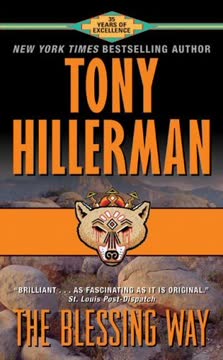
Tony Hillerman's The Blessing Way fuses the classic American mystery with a profound meditation on the fragmentation of culture, identity, and moral order. At its core, the novel asks whether evil is a matter of broken tradition, personal ambition, or something even more elemental—an unnameable wolf prowling at the margins of both civilization and myth. The mechanics of the murder plot—espionage, greed, betrayal—are gripping in their own right, but what lingers is the sense that justice and meaning are ultimately social and spiritual, as fragile and flawed as any human ceremony. The Enemy Way, as both ritual and plot device, embodies the struggle to exorcise what cannot be explained: loss, violence, longing. By allowing supernatural belief and modern crime to converse, Hillerman exposes the incompleteness of both rationality and ritual, and sets his heroes—not to vanquish evil, but to walk the hard "Middle Way" where personal sacrifice, communal story, and stubborn empathy just barely hold chaos at bay. In the end, the lesson is as stark and as comforting as the desert: beauty and terror, tradition and change, memory and loss—all walk together, and sometimes, for a moment, reconciliation is possible.
Review Summary
Reviews of The Blessing Way are generally positive, averaging 4 out of 5 stars. Readers praise Hillerman's vivid descriptions of the Navajo landscape and culture, calling the writing atmospheric and immersive. Common criticisms include an unclear protagonist split between Joe Leaphorn and Professor Bergen McKee, slow pacing in the early sections, and occasionally difficult-to-follow Navajo terminology. Many note it shows promise as a series opener despite its rough edges, and readers frequently express enthusiasm for continuing the series.
People Also Read




Characters
Joe Leaphorn
between worlds. Leaphorn is a Navajo police lieutenant whose training in both Navajo tradition and Western rationality positions him as an interpreter between two irreconcilable cosmologies. He's meticulous, skeptical, yet attuned to cultural nuance—the embodiment of a bridge between worlds often in conflict. His deep sense of communal responsibility is haunted by an unforgiving self-expectation: he feels guilt for Horsesman's death even when logic exonerates him. Psychoanalytically, Leaphorn channels both the rational father and the shaman, attempting to restore order while confronted with chaos beyond codes or ceremonies. He changes from a detached professional to a man wracked by agency and moral struggle, yet ultimately finds purpose in reconciling the "evil" of modern crime with ancient concepts of balance and healing.
Bergen McKee
McKee, an anthropologist specializing in Navajo culture, is afflicted by personal loss and existential drift. Divorced and doubting, he initially treats witchcraft stories as social psychology, seeking rational explanations behind the supernatural. However, when swept into the bloody, lived reality of the plot, his scholarly detachment collapses. He's forced to act—at times heroically, at times clumsily—trusting his life to intuition, love, and chance. His evolution is from observer to participant, from skeptic to believer in the power of both evil and resilience. His relationships—with Leaphorn, with Ellen, with himself—display a reluctant courage and the painful growth of humility.
Ellen Leon
Engaged to the elusive Dr. Hall, Ellen braves the reservation in pursuit of answers and closure. Her psychology is shaped by need—for love, for rescue, for personal agency—yet her path is marked by disillusionment as she discovers Hall's monstrous betrayal. Initially interpreted as a romantic, even naïve, outsider, she proves unexpectedly adaptive, resourceful, and compassionate under harrowing circumstances. Through trauma and confrontation with death, she matures from dependent to survivor, finding strength in her bond with McKee and her own will to live and help others.
Luis Horseman
Horseman is a young Navajo man running from both the law and himself—trapped in the borderlands between tradition and assimilation, belonging nowhere. His death, staged as accident, is both a catalyst for the plot and an indictment of how social and cultural alienation breeds tragedy. Symbolically, he is the scapegoat, sacrificed amid communal mythologies of evil and the practical, impersonal violence of outsiders. His journey, silent and hunted, is that of all who cannot bridge the ancient and the modern.
The Big Navajo / George Jackson
A product of Navajo ancestry and urban criminality, George adopts the wolf identity as camouflage and as weapon, exploiting both Navajo superstition and white law. He is a master manipulator, alternately pleasant and terrifying, skilled in killing and deceit. Unlike most, he is rootless—his crimes unlinked to place or loyalty. Psychologically, he is the id given agency—ruthless, ambitious, distanced from the Navajo "Middle Way" and from any sense of communal responsibility. His role as both real and symbolic "wolf" crystallizes the core theme of evil's many faces.
Eddie Poher
The blond gunman, Eddie, serves as George's technical partner and muscle. Amoral, skillful, and driven by profit alone, he brings organized crime's logic to the wilderness. He is never attached to community or kin, unable to grasp the resonance of place or ceremony—in essence, an avatar of entropy, whose pursuit of gain results only in suffering and ultimately his own destruction.
Billy Nez
Horseman's younger brother, Billy becomes both avenger and ceremonial participant in the Enemy Way ritual. His journey mirrors a traditional rite of passage: from youth and fear to adult responsibility and the taste of justice. He draws upon mythic songs and rituals for courage, standing as living testimony to the enduring—yet embattled—wisdom and virtue of traditional Navajo life.
Jeremy (John) Canfield
An archaeologist and McKee's friend, Canfield brings humor, warmth, and practicality to fieldwork. His murder—which precedes the action's climax—marks the movement of violence into the heart of the investigating community. Canfield, witty and self-deprecating, represents all those who, by trying to do good within the law, become casualties of people and patterns beyond their reckoning.
Charley Tsosie
A Navajo whose cattle and family are targeted by the "wolf," becoming the focus of the Enemy Way ceremony. His suffering unites mythic narrative, real-world danger, and the communal drive for healing. Charley is everyman, exposed to forces—natural, supernatural, and social—that threaten to tear his world apart.
Dr. Jim Hall
Hall, Ellen's fiancé, is ultimately revealed as a willing accomplice in the technological espionage at the heart of the plot. His psychological profile merges intellect, ambition, and emotional coldness—his love of Ellen real but dwarfed by his drive for wealth and significance. Hall's betrayal, and final suicide, expose the story's deepest cynicism: that evil is often clothed in the allure of progress, intelligence, and the dream of a better life.
Plot Devices
Two Worlds Colliding: Myth and Modernity
Hillerman's structure places murder mystery within the dense mesh of Navajo cosmology, ritual, and superstition. Plot hinges on ceremonial events (Enemy Way, Blessing Way) and the psychological power of myth—witches, wolves, omens—juxtaposed with criminal ingenuity, technology, and the depraved ambitions of outsiders. Key plot devices include:
- Foreshadowing through Navajo songs and omens,
which subtly predict and echo violence.
Both police and readers are led to mundane explanations—alcohol, accident, scapegoating—only to find a deeper, more human malignity at work.
Ceremonies offer comfort and structure but also blind characters to the full, modern threat until it is almost too late.
The canyons, ruins, and ceremonies mirror the moral and personal dead ends each character encounters.
Missives from Leaphorn, the killer's planted notes, and the demanded cover letter all shift and reset the investigation, ensuring danger remains just ahead or behind.
The narrative unfolds as a carefully modulated oscillation between rational deduction and existential dread, driving the protagonists toward both inner and outer reckoning.