Key Takeaways
1. The Child Possesses an Absorbent Mind: Unconscious Creation
Our mind, such as it is, could not do it; to accomplish it a different type of mind is needed, and that is what the child possesses, a type of intelligence different from ours.
Unseen intelligence. From birth to age six, children possess an "absorbent mind," a unique psychic capacity fundamentally different from adult intelligence. This mind unconsciously absorbs knowledge, language, and culture from its environment, much like a sponge. The first three years are particularly crucial, a "psycho-embryonic" period where the child creates the very foundations of their personality, intelligence, and faculties without conscious effort or memory.
Miracle of acquisition. Consider the acquisition of language: a two-year-old speaks their native tongue perfectly, knowing grammar, vocabulary, and syntax, yet no one explicitly "taught" them. This immense intellectual feat is achieved through an intense, unconscious sensitivity to the human voice and the surrounding linguistic environment. The child doesn't merely remember words; they incarnate the language, making it an integral part of their psychic being, a "mental flesh."
Beyond conscious learning. This absorbent process is akin to a mental chemistry, transforming external impressions into internal structures. Unlike adults who learn consciously and with effort, children absorb effortlessly, driven by an inner vital force. This profound, unconscious creation lays the groundwork for all future conscious learning, making the early years a period of unparalleled psychic activity and formation.
2. Sensitive Periods Guide Development: Nature's Timetable
Biological studies carried out upon different animals have revealed that all of them build their adult species by means of these sensitive periods.
Windows of opportunity. Children experience "sensitive periods"—temporary, intense sensitivities to specific environmental stimuli that guide their development. These periods are like internal timetables, prompting the child to focus on particular aspects of their environment, such as language, order, movement, or sensory refinement. During these windows, learning is effortless and joyful; outside them, it becomes difficult or impossible.
Instinctive drives. For instance, the sensitive period for language allows a child to absorb complex linguistic structures with ease, while the sensitive period for order drives a child to seek and create order in their surroundings. These innate drives ensure that the child constructs the necessary human faculties at precisely the right time. If these periods are missed or obstructed, development can be incomplete or "deviated."
Nature's wisdom. Just as a physical embryo develops organs at specific times, the "psycho-embryonic" child develops psychic organs (like language or coordinated movement) during these sensitive phases. Understanding these periods is paramount for educators and parents, as it reveals when and how to best support the child's natural self-construction, rather than imposing adult-centric learning methods.
3. The Prepared Environment: Fueling Self-Construction
The child is in need of an environment in order to develop himself.
A living laboratory. Given the child's absorbent mind and sensitive periods, the environment becomes the primary "teacher." A "prepared environment" is meticulously designed to meet the child's developmental needs, offering specific, scientifically constructed materials that attract their interest and allow for purposeful activity. This environment is not merely a shelter but a dynamic space for psychic growth.
Order and beauty. Key elements of a prepared environment include:
- Order: Everything has its place, promoting a sense of security and aiding the child's innate drive for order.
- Beauty: An aesthetically pleasing and clean space invites engagement and respect.
- Accessibility: Materials are proportionate to the child's size and strength, allowing for independent use.
- Limited choice: A carefully curated selection of materials prevents overstimulation and encourages deep concentration.
Beyond toys. Unlike traditional nurseries filled with often useless toys, the prepared environment offers "real" objects that allow children to engage in meaningful activities, mirroring adult work. This fosters concentration, independence, and the development of character, transforming the child from a passive recipient into an active constructor of their own being.
4. Movement and Hands: Instruments of Intelligence and Character
The hands are the instrument of the human intelligence.
Mind-body unity. Movement is not merely physical exercise but an integral part of intellectual and spiritual development. The nervous system, which connects the brain, senses, and muscles, functions as a unified whole. Separating mental activity from physical movement, as traditional education often does, creates an artificial division that hinders holistic development.
Hands as creators. The human hand, unlike the fixed movements of animal limbs, is an organ of immense versatility and creativity. It is through the hands that intelligence manifests, shaping the environment and building civilization. From the earliest grasp to complex artistic and scientific endeavors, the hand is the executive agent of the mind.
Character in action. Engaging the hands in purposeful work not only refines motor skills but also builds character. Children who work with their hands develop concentration, perseverance, independence, and a stronger will. Conversely, children deprived of opportunities for hand-work may exhibit laziness, lack of initiative, and emotional instability, demonstrating the profound link between physical activity and psychic formation.
5. Independence Through Activity: The Child as a Worker
The child seeks independence through work: independence of body and of mind.
Innate drive for self-sufficiency. Children possess an irresistible "horme"—a vital force driving them towards independence and self-perfection. This manifests as a profound desire to "do it myself," whether it's walking, dressing, feeding, or engaging with materials. Adults often mistakenly interpret this as naughtiness or stubbornness, when it is, in fact, a natural impulse for growth.
Work as development. For the child, activity is not merely play but "work"—a purposeful engagement with the environment that builds their physical and psychic faculties. Interrupting this work, or doing things for the child that they are capable of doing themselves, stifles their development and can lead to "regressions" or "deviations" in character.
Conquering the world. Each step towards independence, from walking to speaking, is a "conquest" that strengthens the child's personality. By allowing children the freedom to choose their activities and complete them without unnecessary adult intervention, we support their natural drive to construct themselves and adapt to their world. This self-directed activity is the foundation of a strong, capable individual.
6. Normalization: Unlocking the Child's True Nature
All children, if placed in an environment allowing ordered activity, show this new appearance, so there is one psychic type common to all humanity, which hitherto had remained hidden under the cloak of other apparent characteristics.
Beyond "good" and "bad." When children are provided with a prepared environment and the freedom to engage in purposeful activity, their "deviated" behaviors—such as tantrums, possessiveness, inattention, or shyness—spontaneously disappear. This transformative process is called "normalization," revealing a universal, underlying psychic type characterized by concentration, self-discipline, and inner calm.
The power of concentration. The key to normalization is the child's ability to concentrate deeply on an activity that genuinely interests them. Once this concentration is achieved, all other "defects" vanish, replaced by:
- Constancy: Repeated, focused engagement with tasks.
- Exactitude: A meticulous approach to completing work.
- Self-discipline: An inner order that guides their actions.
- Joy: A profound happiness derived from purposeful activity.
A new vision of childhood. Normalization demonstrates that many perceived "problems" in children are not inherent flaws but rather symptoms of an environment that fails to meet their developmental needs. It reveals the child's innate capacity for self-construction and self-perfection, challenging traditional views of childhood and education.
7. Control of Error: The Path to Self-Perfection
One of the greatest realizations of psychic freedom is to realize that we may make a mistake and can control it; to recognize and control error without help.
Learning from mistakes. Error is an essential part of learning and development, not something to be punished or hidden. A truly effective learning environment provides "control of error" within the materials themselves, allowing children to discover and correct their own mistakes independently. This fosters self-reliance and a deeper understanding.
Beyond external correction. Traditional education often relies on external correction (grades, teacher feedback, punishment), which can be humiliating and discouraging, hindering the child's intrinsic motivation. In contrast, when children can self-correct, they develop:
- Self-assurance: Confidence in their own abilities to learn and improve.
- Prudence: Careful consideration of their actions.
- Perseverance: The drive to repeat activities until mastery is achieved.
A scientific approach. Just as exact sciences value the calculation of probable error as much as the result, education should embrace error as a valuable source of information. By making error a friendly guide rather than a source of shame, children develop a positive relationship with challenges and a continuous drive towards perfection.
8. The Evolution of Obedience: A Developed Will
Obedience is the last phase of the development of the will, so the development of the will makes obedience possible.
Will as a developmental force. True obedience is not blind submission but a conscious act of will, developed through a process of inner growth. The child's will is an expression of the "horme," the universal life force driving development. Attempts to "break" the child's will through force or arbitrary commands are destructive, hindering this natural development.
Three degrees of obedience:
- Occasional obedience: The child obeys sometimes, depending on their developing capacities and the maturity of their abilities.
- Consistent obedience: The child can always obey, as their abilities are firmly established and can be directed by their own will or another's.
- Joyful obedience: The child eagerly and spontaneously obeys, recognizing the superior wisdom or guidance of the adult. This is a profound act of trust and admiration, a "sublimation of the individual will."
Responsibility of the adult. The teacher or parent's role is to foster the child's will through freedom and purposeful activity, not to impose their own. When a child reaches the third degree of obedience, the adult must exercise immense responsibility, ensuring their commands serve the child's highest good and development.
9. Social Cohesion: Natural Harmony Among Children
This social feeling that had not been instilled by any teaching and was completely different from a competitive sentiment or a personal interest, was like a gift of nature.
Spontaneous community. When children are free to work in a prepared environment, they spontaneously form a "cohesive society." This is not based on competition or individual gain, but on a natural bond and mutual respect. Children of mixed ages (3-6 years) particularly thrive in this setting, as older children naturally help and inspire younger ones, and younger children admire and learn from their elders.
Beyond adult intervention. In this cohesive society, children learn to solve their own social problems, respect each other's work, and develop virtues like patience and compassion without direct adult instruction. The teacher's non-interference allows these natural social instincts to flourish, revealing a profound capacity for harmonious community life.
A model for humanity. This "clan spirit" or "social integration" is a natural, almost "embryological" phase of social development. It demonstrates that humanity's social strength lies not just in external organization but in the inner cohesion and mutual support that can be cultivated from infancy. This natural social order offers a powerful model for a more harmonious adult society.
10. The New Teacher: A Humble Guide, Not an Imposer
The greatest effort in our method is that of trying to free the teacher from the prejudices he or she may possess and the greatest success is the teacher who can best free herself or himself from them.
Self-transformation first. The Montessori teacher's role is radically different from traditional educators. It begins with profound self-preparation, shedding preconceived notions about children and learning. Instead of seeing children as empty vessels or problems to be fixed, the teacher must cultivate "faith in the child" and perceive their latent spiritual potential.
Indirect guidance. The teacher's primary task is to prepare and maintain the environment, ensuring it is orderly, beautiful, and filled with stimulating, self-correcting materials. Their activity is largely indirect, creating the conditions for the child's self-construction. Once a child is concentrated on work, the teacher's "inactivity" becomes a sign of success, demonstrating the child's independence.
Stages of teacher development:
- Guardian of the environment: Focus on order, cleanliness, and readiness of materials.
- Seducer of interest: Attract children to activities through engaging presentations and enthusiasm, especially for those not yet concentrated.
- Non-interferer: Once concentration is achieved, the teacher observes without interruption, praise, or correction, respecting the child's work cycle.
This humble, observant role requires immense self-renunciation and a deep understanding of the child's inner life, allowing the child's true self to emerge.
11. Humanity's Future: Built by the Child
The child is the builder of our intelligence, and it is our human intelligence which guides our hands and produces what we call civilization.
The child as humanity's architect. The child is not merely a passive recipient of adult wisdom but the active "constructor of man" and, by extension, of civilization itself. The immense psychic and physical development achieved in the first six years lays the foundation for all human intelligence, character, and social capabilities. This makes early childhood education the most fundamental and critical task for society.
A non-violent revolution. Recognizing the child's creative power and the natural laws of development calls for a "non-violent revolution" in education and society. Instead of imposing adult will or artificial curricula, we must protect and aid the child's spontaneous self-construction. This means providing freedom, a prepared environment, and respectful observation.
Hope for a better world. By understanding and supporting the child's natural development, society can foster individuals with strong character, independent will, and a deep capacity for social harmony. This approach promises to reduce societal problems like crime and mental illness, leading to a future humanity that is more intelligent, capable, and spiritually evolved, fulfilling its cosmic purpose as a co-creator of the world.
Review Summary
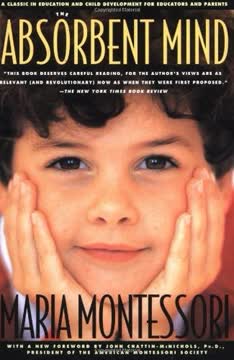
Reviews of The Absorbent Mind are largely positive, averaging 4.17/5. Many readers praise Montessori's profound insights into child development and her deep respect for children, calling it essential reading for parents and educators. Common criticisms include dense, dry writing that makes it difficult to read, and dated concepts reflecting early 20th-century thinking. The second half is frequently cited as more engaging and practical. Several readers note the word "Montessori" has been commercialized beyond its true meaning, which this book helpfully clarifies.
People Also Read