Key Takeaways
1. Dopamine: The Molecule of More Driving Our Desires
In most matters, if you want to improve your outlook and behavior, stroll past the other neurotransmitters and start here.
The central player. Dopamine is the most important chemical in the human brain for navigating modern life. It's the key to understanding our urges and responses, pushing us toward acquisition and discovery. While other neurotransmitters like serotonin, endorphin, and oxytocin are vital for mood, pain, and attachment, dopamine is the primary driver of our moment-to-moment choices.
Evolutionary purpose. Dopamine evolved to give us an instant, profound urge to investigate anything unfamiliar or unexpected, coupled with the capacity for planning and creative thinking. This "one-two punch" drove human progress, enabling us to understand and gain dominion over our world. However, in the 21st century, where immediate threats are rare, this hair-trigger response often becomes problematic, leading us astray with dubious opportunities.
The irony of progress. Dopamine helped us build a world of miracles, yet it now frequently reduces us to twitchy, dissatisfied subjects. Familiarity breeds boredom, and this biological imperative for restlessness asserts itself no matter how amazing our environment. We constantly think, "Surely I can do better. I want... more," making dopamine a frequent villain in our quest for contentment.
2. The Fundamental Conflict: Wanting vs. Having
There are two tragedies in life. One is not to get your heart’s desire. The other is to get it.
The progress paradox. Our lives are a constant trade-off between immediate gratification and future value. The things that ensure long-term survival rarely bring instant happiness, forcing us to compromise. This struggle between "now" and "later" is the engine of progress, as dissatisfaction motivates us to create better things, whether as individuals or societies. Happy people, ironically, don't improve themselves or the world.
The cycle of despair. We desire, chase, and acquire, but achievement brings only fleeting pleasure. The nagging question, "Is that all there is?" always returns, leading to a merry-go-round of disappointment, anxiety, or troubling behaviors. This links success and dissatisfaction inextricably, highlighting a core problem of human existence.
An ancient system in a modern world. Our dopamine system evolved for a world of scarcity and threats, where constant curiosity was a survival advantage. Today, in a safe and secure world, this same system makes us powerfully, biologically intrigued by every provocation, leading to unnecessary distractions and suffering. What was once an evolutionary advantage is now a burden, as we chase things we don't need.
3. Dopamine's Dual Nature: Desire and Control
Dopamine is promising you a good time because that’s what dopamine does. It’s out there writing checks it’ll never have to cash.
The "wanting" chemical. Dopamine is the neurotransmitter that identifies potential value and creates a tantalizing feeling of anticipation and optimism, driving us to investigate. It urges us forward based on possibility, not evidence, often leading us to sacrifice what we have for what might be better. Rainn Wilson's experience of feeling unhappy despite immense success perfectly illustrates this "never enough" phenomenon.
Dopamine's partner: Here & Now (H&N) chemicals. Dopamine (the "wanting" chemical) deals with distant possibilities, while H&N neurotransmitters handle immediate, consummatory pleasures like seeing, hearing, tasting, touching, and smelling. When we acquire something, the dopamine-driven wanting gives way to H&N-driven having, often marking the beginning of a letdown and explaining why we grow bored with what we possess.
Two powerful subsystems. The dopamine system comprises two circuits:
- Desire Dopamine: An "alarm system" originating in the ventral tegmental area and ending in the nucleus accumbens, creating urges, motivation, enthusiasm, and anticipation. It gives us a "taste" of future pleasure.
- Control Dopamine: A "processing tool" that directs dopamine to the frontal lobes, enabling planning, calculation, abstract thinking, and focus. It allows us to decide if a pursuit is worthwhile and how to achieve it.
These two systems work together, lashing feeling (desire) and thinking (control) to achieve goals.
4. The Danger of "More and More for Less and Less"
When dopamine pathways are too frequently activated, we build up a tolerance to their stimulation.
The tolerance trap. A critical characteristic of the dopamine system is that frequent stimulation of a pathway requires more stimulation to get the same response. This downregulation means it takes "more and more to feel less and less." Repeated gratification fades, leading to overindulgence in dangerous things like drugs or even Diet Dr Pepper, where constant use diminishes pleasure.
Addiction's cruel mechanism. While pleasure from dopamine stimulation can downregulate, the craving for that stimulation often does not. This is the engine of addiction: pleasure fades, but the dopamine-driven urge remains, compelling continued use despite no reward. Overcoming craving can take years and often requires professional support, as it's encoded in the brain similarly to persistent memories.
The balance of power. Dopamine extremes range from profound lack of motivation (depression) to overwhelming, joyless pursuit (mania). Understanding these extremes helps us recognize where our own experiences fall. The goal is to balance future possibilities with present pleasures, appreciating both wanting and having, to find peace and fulfillment.
5. Dopamine Revitalization: Resetting Your System
The goal isn’t to shut down the dopamine system, which is impossible anyway. It’s to resensitize the system to more subtle forms of stimulation, which leads to more complex and satisfying experiences of pleasure.
Beyond a "fast." A "dopamine fast" isn't about eliminating dopamine, which is impossible, but about reducing or eliminating specific problematic dopamine-boosting experiences. This strategy leverages the body's homeostatic mechanisms to restore normal tolerances and expectations, resensitizing the system to more subtle forms of stimulation.
Avoiding common pitfalls. Extreme deprivation, like avoiding all social interaction or exercise, is counterproductive. Such approaches deny the crucial role of H&N pleasures (like oxytocin from social connection or endorphins from exercise) which can help lower dopamine activity and promote resensitization. Lasting change requires incremental, consistent effort, not occasional heroic deprivation.
Your revitalization strategy. To succeed, treat it like working out:
- Start small, do daily: Reduce stimulation at predetermined times (e.g., no screens, sugar, or social media).
- Cut it out completely: Eliminate small, habitual thrills rather than incrementally cutting back to avoid constant craving.
- Embrace discomfort: Unpleasant feelings will fade as your body readjusts.
- Purposeful H&N stimulation: Replace dopamine-driven activities with sensory-rich, present-focused experiences.
This process lowers your baseline tolerance, making everyday anticipations and H&N delights more satisfying and restoring the zest of life.
6. Therapy: A Path to Balance and Meaning
Engaged therapeutic intervention can be the path to finding satisfaction and meaning in life. It’s that useful.
Beyond brain chemistry. Therapy offers a powerful, proven path to change the overall effects of dopamine in your life by focusing directly on mind, mood, attitude, behavior, and choice. It provides a framework for self-guidance, helping you define problems, understand their roots, accommodate discomfort, and take action towards improvement.
Cognitive Behavioral Therapy (CBT). This widely researched method helps you methodically examine thoughts and feelings, identify connections between beliefs and behaviors, and test those thoughts against reality. It teaches you to replace false ideas with true ones, using "possibility versus probability" to challenge troubling assumptions. CBT is effective for many dopamine-related issues like depression, anxiety, and OCD.
Acceptance and Commitment Therapy (ACT). ACT encourages accepting difficult feelings as part of a healthy emotional landscape, rather than trying to eliminate them. It promotes psychological flexibility through six skills:
- Acceptance: Acknowledging feelings without bias.
- Cognitive Defusion: Separating feelings from reactions.
- Observing Self: Making considered choices based on analysis, not just emotion.
- Living in the Present: Practicing mindfulness and savoring experiences.
- Value Identification: Aligning actions with core values.
- Committed Action: Translating plans into reality.
ACT is especially valuable for dopamine-driven problems, as it helps us live with discomfort while pursuing a meaningful life.
7. Taming Romance: Lust, Attraction, and Attachment
Romantic love is a part of the human condition and has been for a long time.
The biological imperative. Romantic love is deeply rooted in our biological drive for reproduction, mediated by an "ancient cocktail of neuropeptides and neurotransmitters," with dopamine at the forefront. Understanding this biological foundation is crucial for navigating relationships and heartbreak.
Three components of love: Anthropologist Helen Fisher identifies three key categories:
- Lust: Strong sexual desire, driven by testosterone and estrogens.
- Attraction: Desire for connection or knowledge, mediated by norepinephrine, serotonin, and dopamine (desire and control circuits).
- Attachment: Sense of connection, influenced by oxytocin.
Healthy romantic love ideally combines all three, with lust and attraction initiating, and attachment sustaining the relationship.
Adjusting the ingredients. To tame dopamine's influence in romance:
- Taming Lust: List reasons not to give in, distract yourself, reach out to a committed partner, practice mindfulness, or use ACT to accept the feeling without acting on it.
- Taming Attraction: Analyze specific attractive qualities, compare to past attractions, and note feelings when apart to distinguish true connection from fleeting interest.
- Taming Attachment: Focus on how the person makes you feel about yourself (secure, complete), assess consistency, and analyze feelings when apart to ensure it's based on love, not just need or insecurity.
8. Navigating Modern Temptations: Social Media, Porn, Shopping, Gaming
Social media is the latest hijacker of the dopamine process.
The dopamine drip. Modern digital platforms are expertly designed to exploit our dopamine system. Social media offers an endless stream of novelty and surprises, gaming provides a continuous "dopamine drip" with random rewards, and online porn delivers intense pleasure with little downregulation. These platforms are sophisticated slot machines, constantly promising "maybe" and keeping us hooked.
Regaining control through technology. Since these problems are rooted in technology, use technology to fight back:
- Social Media: Turn off all notifications, badges, and previews. Use apps like Screen Time or third-party blockers, and consider an accountability partner for passwords. Disable tracking to reduce algorithm-tailored content. Unfollow outrage-driven accounts and news feeds, recognizing clickbait as lies.
- Online Pornography: Install content blockers. Have alternative, non-tech activities ready. Confide in an accountability partner. Track your triggers to identify patterns and prepare alternative responses. Consider "rebooting" (abstinence) to resensitize.
- Shopping: Put credit cards out of reach (e.g., in the freezer). Plan alternative activities for free time. Shop with a trusted friend. Write down reasons why you want to stop to engage conscious reasoning.
- Gaming: Track your time (consoles, apps, manual log). Set daily time limits with "soft" and "hard" stops. Schedule gaming to fit priorities. Plan non-gaming alternatives, especially physical activities. Rehearse resisting the urge.
The "Joy of Hate" and disconnection. Social media's distance removes the guardrails of real-life interaction, incentivizing mean and destructive behavior. People become abstractions, and online conflict provides a dopamine buzz from putdowns, leading to a "race to the bottom of discourse and dignity." The only winning move in this corner of social media is often not to play.
9. Unlocking Productivity and Creativity
Create with the heart; build with the mind.
Ambition's engine. Dopamine is the chief driver of productivity and improvement, enabling us to recognize opportunities, act on them, and execute ideas. It powers both technological progress and personal advancement, helping us make something out of nothing or improve what already exists.
Two kinds of thinking:
- Divergent Thinking: The open-minded gathering of potentially useful ideas, even those with low initial salience. This is a dopamine-driven process, responding to novelty and new resources (desire circuit). Techniques include brainstorming (leveraging incubation effect, cognitive fatigue, group dynamics) and reverse reasoning.
- Convergent Thinking: The focused synthesis of ideas towards a solution, involving intellectual and emotional calculation (control dopamine circuit, prefrontal cortex). Techniques include pros and cons lists and the Eisenhower Matrix for prioritizing tasks.
The combination of a "wild mind and a disciplined eye" is key to impressive work.
Cultivating creativity. Creativity is often an unconscious act, but we can foster it:
- Practice: Creativity is built on making connections. Strengthen neural connections by frequently engaging in creative activities (drawing, writing, puzzles).
- Inspiration: Surround yourself with comforting and challenging objects. Explore what you think doesn't matter (new languages, art, museums). Spend time in nature for "soft fascination" that invites reflection.
- Dreams: Leverage hypnagogia (the state between wakefulness and sleep) and post-dream consciousness. Focus on a problem before bed, and immediately write down any ideas upon waking.
- Don't wait for permission: Creativity is in everyone; aptitude matters less than desire and consistent effort.
10. The Ultimate Quest: Finding Meaning Beyond Dopamine's Pull
What man actually needs is not a tensionless state but rather the striving and struggling for some goal worthy of him.
The emptiness of the chase. The cycle of anticipation and letdown, inherent in the dopamine chase, leaves us wondering about the ultimate meaning of life. While we can mitigate the immediate frustrations, a deeper existential void remains if our pursuits lack a unifying purpose.
Wonderful, demanding hope. Hope, like Gatsby's green light, fuels our pursuit of an "orgastic future" that always recedes. It's the "glory of maybe," but possession inevitably confronts us with reality's finitude. This constant cycle can lead to cynicism, but there is a way to find satisfaction beyond this "beautiful lie."
Aristotle's ancient wisdom. To find lasting satisfaction, we must identify virtues that are bigger than our own desires (e.g., wisdom, justice, temperance, courage) and align our actions with these higher purposes. This transforms struggles into meaningful efforts, making pleasure a byproduct of doing something we're suited for and that advances a selfless goal.
The arc of the universe is up to you. Meaning and morality are not inherent; they arise because we choose to do good things, often at personal sacrifice, in opposition to natural entropy. By pursuing activities that bring us appropriate pleasure while leveraging our skills and supporting our chosen virtues, we build fulfillment in the moment and across life. This integrates happiness (pleasure in the moment) and fulfillment (joy in lasting purpose), creating a richer, more sustainable life.
Review Summary
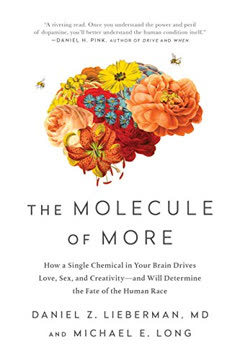
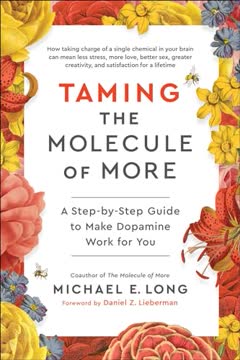
Reviews for Taming the Molecule of More are largely positive, averaging 3.76 out of 5. Most readers appreciate its accessible explanation of dopamine's role in behavior and its practical strategies for managing impulse control, addiction, and relationships. Many praise it as an excellent follow-up to The Molecule of More, offering more actionable advice. Some critics note it occasionally feels repetitive or lacks rigorous scientific depth. It is especially recommended for those with ADHD, addiction struggles, or anyone navigating today's overstimulating digital environment.
People Also Read


 Immersive
 Immersive



 Immersive