Plot Summary
Hostile Council, Brewing Storms
Moira MacNamara, diligent selkie council member and real estate agent, enters Folk Haven's Town Hall ready for battle. She faces Levi Abadi, recently added monster representative with a sharp intellect and even sharper grudge, during a churning council meeting. Both seek the upper hand over a lakeside property, plot 236, which teems with dangerous, lingering magic. Levi proposes a cleansing fire; Moira resists, protective of her land's natural beauty and deeper ties. Their mutual disdain masks a violent undercurrent of tension, bruised by past family wounds and current obstacles. The council's bickering, simmering prejudices, and personal vendettas showcase a town brimming with mythic secrets and unresolved pain—setting protagonists on a collision course neither can resist nor ignore.
Land Disputes and Old Secrets
Levi's "controlled burn" solution for cursed land infuriates Moira, whose deep-rooted attachment to plot 236 stems from both its enchanting natural aura and her family's bitter wounds. This land, bordering Levi's future luxury spa and plagued by chaotic magic, has become a magnet for trouble and a symbol of mythic rivalries. While both recognize the urgency, Moira clings to visions of preservation, feeling the weight of her ancestors' trust and a heartbreak dating back a century: the infamous theft of her great-grandaunt's selkie pelt, allegedly by Levi's father, a mythic leviathan. Family pain hardens her resolve, and as ancient grievances resurface, professional boundaries blur into deeply personal territory.
Monster Prejudices Surface
For Levi, "monster" is a name and a curse—one he's inherited, not chosen. Prejudices—spoken and unspoken—wound, as even Moira wields the term with biting condemnation. Both characters wrestle with damaging town labels that deepen rifts and inflame past injuries, and Moira's fixation on the stolen pelt turns Levi's life into a trial. Their mutual stubbornness is a mask for wounds they won't reveal; the council—and the whole of Folk Haven—serves as a stage for their animosity and coded longing. Their sparring echoes the larger struggle of monsters everywhere: to exist without apology, to reclaim dignity, and perhaps, to be loved at last.
Clashing Histories and Vows
Hostilities climax outside a council meeting, as Moira confronts Levi about her family's greatest sorrow: the pelt allegedly stolen by his legendary father. Levi—wounded, defensive—refutes the tale but can't reach his distant parent for proof. The two begin a dangerous game, agreeing to a blood vow: if Moira is proved correct during the upcoming magical Gauntlet, Levi must help her reclaim the pelt; if wrong, Levi enforces the fiery cleansing his spa demands. Their bond, forged in shared pain and urgent necessity, is as much a threat as a promise. Bound by spilled blood, argument blurs into intimacy, and both sense their tangled fates tightening further.
Bargaining, Blood, and Boundaries
The aftermath of the blood vow lingers—literally. Moira, shaken by their binding and attraction, throws herself into finding a cleansing witch, desperate to save her land and prove herself. Levi, saddled with a growing and unwelcome desire for his rival, seeks comfort with Satine, an ex and fellow monster who understands the ache of never fitting in. Their friendship provides sharp, wry perspective on the wounds exclusion creates, and further illustrates the unique burdens monsters bear. Levi's business and reputation now hinge on the outcome of the Gauntlet—and so, more than either wants to admit, does his heart.
Witches, Libraries, and Intrigue
Two witch sisters, Morgana and Amethyst Shelly, arrive with a proposition that disrupts town traditions: they wish to establish a pan-mythic library beyond their own territory, threatening Folk Haven's rigid divides. Their quiet power and irreverence rattle the council, especially when Amethyst displays unique magic—an ability to persuade and bend others' wills—that could upend power balances. Questions brew on allegiances and the true structure of the town, exposing more of Folk Haven's—and the main characters'—complicated, messy underpinnings.
Animosities and Reluctant Alliances
As magical threats increase and outside interests circle (especially in the form of nosy human Albert Durrand), Moira and Levi's truce becomes action. Reluctantly, Levi volunteers as Moira's backup in her quest to win the sirens' favor at the Gauntlet—a magical tournament offering the winner a wish. Their adversarial partnership simmers with barely-stifled attraction, and while both remain outwardly combative, glimpses of respect, longing, and vulnerability repeatedly threaten their emotional stalemate.
The Gauntlet Beckons—Rivals Compete
The magical Gauntlet transforms Folk Haven's rival councilors into competitors. Both enter the fray determined to win justice for personal causes—Moira for her pelt and pride, Levi for his land and legacy. The competition's magical obstacles force physical and psychological struggles: when they end up—by fate or mischief—locked in a "love cage" challenge, a furious, public kiss unlocks a dangerous new intimacy. As the Gauntlet continues, threats mount, alliances shift, and rivalry entwines irrevocably with desire.
Kisses, Cages, and Complications
Trapped together, Moira and Levi's forced kiss turns fierce, igniting every suppressed urge and leaving both rattled by its intensity. The aftermath brings chaos: Levi must save Moira when a magical obstacle triggers her worst fears, exposing her to the town's gaze and his own powers. Their intimacy is public now, opening them to gossip, council scrutiny, and their own confusion. The bruising closeness tolls as much as violence did—old wounds haven't disappeared, but another, deeper craving has surfaced.
Fears Faced, Tensions Clash
Freed from the Gauntlet but not from each other, Moira is immediately confronted by her manipulative ex, Hamish, and is hurt by the town's reactions to her apparent loss and public display with Levi. Family loyalty, trauma from past relationships, and self doubt crowd her mind. Meanwhile, Levi can't shake his need for Moira, nor the ghosts of his own monstrous heritage. Their mutual avoidance breeds further awkwardness, and emotional boundaries strain under each attempted "normal" interaction.
Unmasking Desires and Rejections
An emotionally charged visit—unexpectedly to Levi's mother, the powerful and sharp-tongued Violetta—illuminates more of the monsters' complicated lives. Here, Moira finally secures an alternative to fire: a purification spell requiring sacred seawater—and a road trip with Levi. The dangerous, seductive proximity of their quest, and the blurring of boundaries now that their rivalry is undercut by shared effort, brings their attraction to a tipping point: lust, honesty, and vulnerability fight for dominance as secrets are bared.
The Deal with the Devil
On their ocean-bound errand, Moira and Levi find pleasure, banter, and connection in tight quarters. Stranded by traffic and then by circumstance, their journey moves from grudging cooperation to complicated intimacy. A night in the "honeymoon suite" pushes them into new territory—playful, tipsy, dangerous. With nerves and secrets stripped bare, they inch closer to surrendering—if not to love, then to mutual trust and desire.
A Seaside Quest for Magic
Amid salt and starlight, Moira finally lets herself swim, aching for the sea her selkie soul was born for. Levi sees her as never before—vulnerable and alive. Their companionable quest, "just business," turns into a night of confessions and new boundaries crossed. At last, lust takes over: they surrender, together, to emotions and bodies they can't deny. In his most monstrous shape, Levi finds not rejection, but appetite; Moira, finally cared for, discovers the one person who meets—and matches—her on every level.
Salt, Sun, and Seduction
As night falls, Moira and Levi give in fully to want: in Levi's most vulnerable, star-flecked form, Moira is not repulsed but enthralled. Their union pushes physical and magical boundaries. Yet, come morning, shame and doubt breed distance—Levi's fear of being rejected for his monstrous nature clashes with Moira's anxieties about being "too much." Each feels they've crossed a line; neither can voice their fears. The fantasy fades, replaced by hard truths and silent wounds.
Honeymoon Suite Temptations
After their passionate, magical night, both Levi and Moira are torn between happiness and regret. Levi, fearful of having manipulated Moira with his powers or been unwanted in his monster form, chooses to sleep apart; Moira, waking alone, is tormented by memories of past rejection and flees, interpreting his absence as evidence she ruined everything. Painful, circular misunderstandings keep them apart even as both long to bridge the new gaps.
Vulnerable Transformations Shared
Back in Folk Haven, the wounds—literal and emotional—persist. As they work alongside Violetta to accomplish the cleansing, buried truths surface and old grievances are revealed as lies: the myth of the pelt theft is more complicated than anyone believed. For a brief, necessary interlude, Moira and Levi find solace in each other and tentative reconciliation, transforming their former animosity—through shared vulnerability—into the beginnings of partnership.
Stars, Scars, and Seduction
The cleansing complete, Levi and Moira steal time for themselves. At lunch on the land Moira fought to save, she confesses the childhood promise that bound her to plot 236: a mysterious "forest girl," a monster like Levi, who trusted her to watch over the magical place. Levi's simple, unflagging belief in her story becomes the antidote for all her former self-doubt, and, for the first time, they turn their desire into physical union born not of rivalry, but of mutual love and joy.
Monsters Loved, Monsters Feared
Their relationship is soon tested by external threats: an ordinary human, stoked by privilege and curiosity, and his friends vandalize Moira's business, confronting both with the cost of letting their passions—and powers—roam unchecked. Levi, torn between monstrous rage and the wish to protect, ponders vengeance, but Moira intervenes: violence is a part of their natures, but not their whole. Their embrace is no retreat; it is a renewed promise to face the world—town, council, and enemies alike—together.
Tensions Snap and Trust Forms
The final, necessary act is one of public declaration: Moira brings Levi home, unwilling to hide any longer. Her fierce, loving family—initially wary—embrace Levi. The truth of the pelt's history is uncovered by a siren's song—a tale of love, not theft, clears Levi's family name and releases old hatreds. With the past finally at peace, Levi and Moira find happiness as partners, mates, and kindred spirits—monstrous, perhaps, but monstrous together.
Village Threats and Vengeance
Folk Haven, ever a haven on the edge, faces new challenges: human meddling, weakening wards, and the persistent threat of bigotry. Magical agreements and the network of alliances—especially with the persuasive, dangerous witch Amethyst—safeguard the town, securing the peace for now. Still, the wounds of prejudice and the pressures of change compel all, especially Moira and Levi, to embrace not only each other but their duty to remake the world they live in, one act of courage at a time.
Truths, Teardowns, and Talking
After purging her land and facing down threats, Moira's final act is literal and symbolic repair—she rebuilds her business and her self-worth, refusing to let either be destroyed by outside hate. She invites Levi further in: to her home, her family, and her vision for a more accepting town. With their love now open and their vulnerabilities shared, they move beyond prejudice into a new, honest life, accepting the monstrous parts within themselves—and each other.
Forest Promises, Honest Hearts
In a reunion among trees, on the stone where childhood promise met mythic longing, Moira hands Levi her selkie pelt—a gesture thick with trust and risk, refuting generations of fear. Here, they reaffirm their love, monsters or not. Violence, they realize, is not a curse peculiar to their kind, but a human trait as well—hate, as much as magic, is what needs rooting out. They choose each other, vowing to cherish their powers, their flaws, and their shared, supernatural bond.
Acceptance, Aggression, and Boundaries
Moira and Levi's journey crescendos with their formal union—a declaration to all of Folk Haven that love, in all its forms and all its shapes, is worth fighting, changing, and sometimes offending tradition for. Before family and friends (and foes), they are bound both with a ribbon and with intent—defiant, joyous, and a little bit monstrous. They take the risk of happiness, and, at last, find the peace so long denied them.
New Dawn, Family Embrace
In the aftermath, with their union and the town's tentative acceptance, Moira and Levi enjoy the simple pleasures they've earned: ocean voyages, shared breakfasts, new beginnings. The forest girl's promise, the selkie's wound, and the monster's longing have all found rest. Now, sustained by love, kin, and friendship, the monsters of Folk Haven face the world as they are: never quite fitting, always together, and more at home than ever before.
Healing, Happiness, and Homecoming
Moira and Levi, once adversaries, now partners—healed, not spotless; happy, not without scars—lead Folk Haven into a new era. Their union breaks old patterns, beckoning others to trust, to change, and to love the very things that make them different. The town, too, is remade—still rife with magic and strife, but now also a place where monsters are welcomed, and wholeness, however imperfect, is finally possible.
Analysis
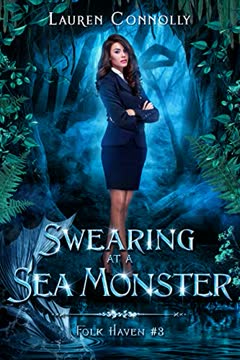
Swearing at a Sea Monster is, at its core, a luminous, witty exploration of monstrousness as both stigma and power—a paranormal romance that uses magical plot devices and humor to probe the deepest wounds of exclusion, generational trauma, and self-doubt. Lauren Connolly's narrative is, on the surface, a story of rivals whose antagonism is both real and performative—two leaders with bruised hearts, battling over land and reputation, and, indirectly, for the right to define their own identities. The most potent lesson of the book is that "being a monster" is not about what you are, but about what others fear—and that the only way to break the cycle of shame, violence, and distrust is radical, vulnerable love. The story critiques small-town insularity, the tendency to draw arbitrary lines, and the ways mythic communities can enact the same harms they suffer from the outside world. Ultimately, Moira and Levi's journey from bitterness to openness, from loneliness to acceptance, mirrors the possibility for communal healing in Folk Haven. Their union—public, imperfect, and transformative—reminds us that to be monstrous is to be powerful, and to love the monstrous in ourselves and others is the path to true belonging. Love does not "tame" the beast; it recognizes, honors, and frees it.
Review Summary
Characters
Moira MacNamara
Moira is a selkie—half-human, half-seal—whose entire being is geared toward responsibility and survival. As council member and real estate agent, she's meticulous, proud, and fundamentally distrustful, marked by generational hurt: her family's selkie pelt, stolen a century ago, has embedded in her both the will to fight and a terror of being truly vulnerable. Her ex, Hamish, left scars of manipulation and shame, making her both aggressive and frightened of being "too much." Initial animosity toward Levi is the surface of deeper pain, but over the story, Moira is tested to embrace honesty, relinquish rigid control, and accept not only her monstrousness, but also love—with all its risk, need, and dazzling, selfish hope.
Levi Abadi
Levi, the newly elected council "monster" and luxury spa owner, straddles worlds uncomfortably: his father is a legendary leviathan, his mother a powerful witch, but Folk Haven's rules and biases have labeled him "monster"—good or bad irrelevant. Haunted by both the sins and loneliness of his heritage, he craves acceptance but has learned to shield softer parts of himself, showing only polished professionalism or sardonic bravado. His attraction to Moira is as much longing for true understanding as for love; her hatred, based on family myth, threatens to break what peace he's managed. Through vulnerability, physical and emotional, Levi earns not only trust, but a reclamation of pride in all his monstrous, beautiful forms.
Violetta Radeva
Levi's mother, Violetta, is a witch who likes chaos as much as control. Though she loves her son, she embodies the paradox of parental love that is both nurturing and wounding, reinforcing prejudices even as she provides protection. Her magical power is significant, but her private, mercurial moods make closeness perilous. In empowering Moira (albeit for a price), she becomes an unwitting matchmaker and catalyst for change.
Satine Drakos
Levi's closest friend and former lover, Satine is dragon/undine hybrid who, unable to live in human form, personifies what it means to embrace one's monstrosity unapologetically. Wry, insightful, and quietly hurt, Satine offers solace and wisdom to both Moira and Levi, helping each accept what the world tries to shame. Her presence reminds all that being "monster" is less a curse than an invitation: to wholeness, joy, and chosen family.
Morgana Shelly
Morgana, witch and visionary, leads the push to create a mythic library that upends the town's rigid territorial rules, challenging the false borders that keep the mythics divided. Her calm, direct wisdom and measured power act as a foil to the council's posturing. Morgana's unapologetic philosophy—sharing knowledge, disrupting norms—gives Moira and Levi a glimpse of what Folk Haven could become.
Amethyst Shelly
Morgana's sister, Amethyst, has the rare ability to sway minds with her magic, a gift wielded with surprising morality. Self-effacing and mischievous on the surface, she ultimately becomes a crucial defender of the town, saving it from external threats (and banishing dangerous humans) while expecting only a chance for herself and her sister to belong. Amethyst's ability to do harm but choose mercy mirrors the best (untapped) potential of the town's monsters.
Hamish Barclay
Moira's ex, Hamish, is a classic, insidiously toxic partner—seductive but controlling, praising then undermining, fortifying Moira's fear of being unlikeable and "too much." Though he is external to the supernatural drama, his impact reverberates: his cruelty and invalidation have made Moira wary, self-erasing, and desperate never to be "a burden." That she must unlearn these lessons is central to her growth.
Owen MacNamara
Moira's brother Owen provides unconditional love and humor—never shy about voicing support. His willingness to defend and tease in equal measure makes him an anchor in Moira's often stormy life, and his acceptance of Levi is a turning point for both main characters, signaling the broader possibility of family, forgiveness, and joy.
Samantha
The town's mermaid police chief, Samantha represents a rare blending of authority and empathy. She handles human and mythic conflicts with balance, and her relationships across mythic boundaries hint at the possibility of a truly inclusive community. Samantha is the first to see the connection between Moira and Levi (and to normalize it), gently nudging both toward courage.
Seamus and Neri
Moira's brother Seamus and his mate, the siren Neri, symbolize the possibility of mythics finding love across traditional boundaries and the healing power of mutual rescue. Neri's song, which finally reveals the truth about the lost pelt, is the story's ultimate acceptance—that love, not hate, endures; that monsters and mythics alike are entitled to happiness.
Plot Devices
Enemies-to-lovers; binding pacts; magical competitions
The narrative arms Moira and Levi with grudges rooted in both personal and historical wounds, making their journey from enemies to lovers a constant tightrope walk between aggression and surrender. The blood vow, a literal and symbolic tie, ensures that neither can walk away from the conflict without risking much—a classic device that heightens stakes and intimacy.
The magical Gauntlet as trial and transformation.
The Gauntlet serves as both a test of strength and a forced proximity device—giving the characters physical (and public) obstacles to overcome, while also exposing them emotionally in ways neither anticipated. Each challenge, especially the love cage, drags true feelings into the open, using spectacle and ritual to move from competition to connection.
Secrets and misbeliefs, revealed by song.
The myth of the stolen selkie pelt, and its ultimate unraveling, is a device for generational trauma: a false history that must be confronted and healed if love is ever to be possible. The siren's song, a magical act that recasts the past, delivers catharsis and perspective—clarifying guilt and pointing to a way forward for Folk Haven.
Boundary-crossing as both plot and theme.
Whether it's social (monsters in "their" territory), magical (what counts as a legitimate solution), or romantic (can rivals truly be lovers?), the story's structure depends on pushing, crossing, and then breaking boundaries. New institutions (the library, the spa), and new alliances (with witches, monsters, and "others") all serve as echoes of Moira and Levi's own arc, inviting the reader to challenge old paradigms.
Secrets and misbeliefs, revealed by song
The myth of the stolen selkie pelt, and its ultimate unraveling, is a device for generational trauma: a false history that must be confronted and healed if love is ever to be possible. The siren's song, a magical act that recasts the past, delivers catharsis and perspective—clarifying guilt and pointing to a way forward for Folk Haven.
Boundary-crossing as both plot and theme
Whether it's social (monsters in "their" territory), magical (what counts as a legitimate solution), or romantic (can rivals truly be lovers?), the story's structure depends on pushing, crossing, and then breaking boundaries. New institutions (the library, the spa), and new alliances (with witches, monsters, and "others") all serve as echoes of Moira and Levi's own arc, inviting the reader to challenge old paradigms.