


Key Takeaways
You're more likely to face a psychopath than to have a heart attack
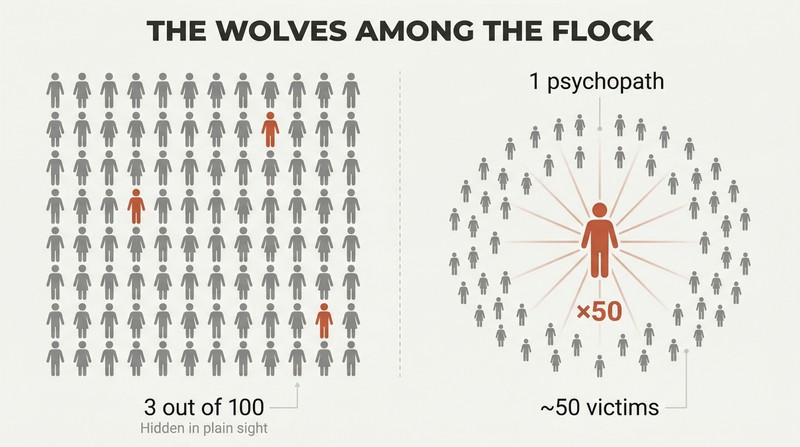
The wolves are already inside the pen. According to researcher Robert Hare, 2 – 4% of the population qualifies as psychopathic — roughly 7 million people in the US alone. Most aren't behind bars; only the ones with the worst impulse control end up in prison. The rest walk among us in offices, marriages, and friendships.
Erikson met a young man after a university lecture who stared at him unnervingly and wanted to learn "how to take advantage" of behavioral psychology. That man later embezzled $100,000, impregnated two colleagues, drove one to a suicide attempt, put two on sick leave, and forced the department head to resign — all while appearing perfectly likable. One psychopath, roughly fifty victims. And he was never convicted.
Your personality color is a psychopath's custom attack manual
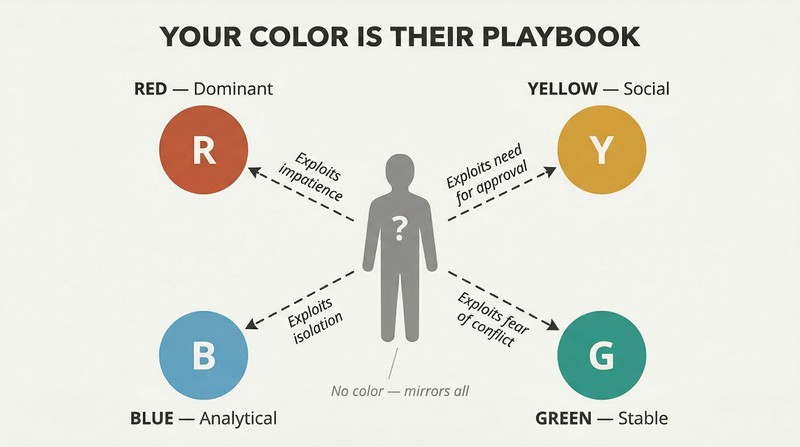
Erikson uses the DISC behavioral system to map four personality types by color: Red (dominant, fast, task-driven), Yellow (social, creative, talkative), Green (stable, loyal, conflict-averse), and Blue (analytical, detail-oriented, reserved). Most people combine two dominant colors. Psychopaths, however, are "no color" — chameleons who mirror whatever behavior gets them what they want.
This matters because each color has predictable vulnerabilities. A Red's impatience with details, a Yellow's hunger for approval, a Green's terror of conflict, a Blue's social isolation — each becomes a tailor-made entry point. Psychopaths instinctively read which color you are and adapt their approach accordingly. Understanding your own DISC profile is the first line of defense.
Catalog your blind spots before a manipulator weaponizes them
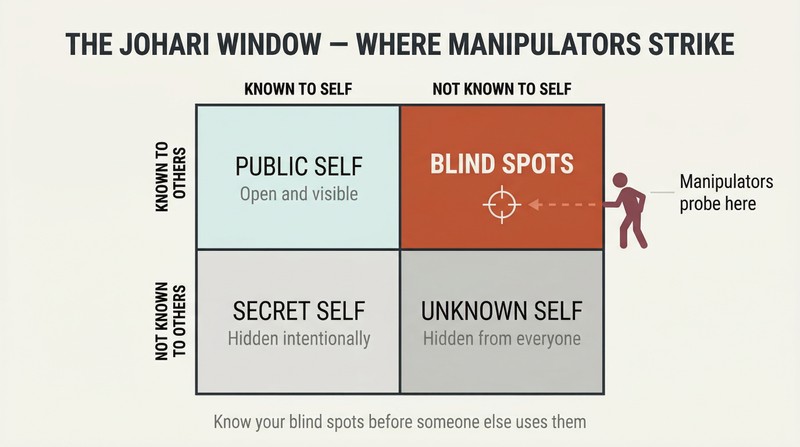
The Johari Window is your diagnostic tool. Developed by psychologists Luft and Ingham, it maps four zones: your public self (known to you and others), your blind spots (seen by others but invisible to you), your secret self (hidden from others), and your unknown self (hidden from everyone). Psychopaths hunt in your blind-spot quadrant.
Each DISC color has predictable blind spots: Reds don't realize they're intimidating, Yellows miss that their unfinished projects frustrate everyone, Greens insist they're open to change but resist it fiercely, and Blues can't see how emotionally cold they appear. Erikson urges a written self-inventory of your weaknesses — then watching for anyone who seems to probe exactly those points.
Real Red bosses work late; psychopathic ones take credit and leave
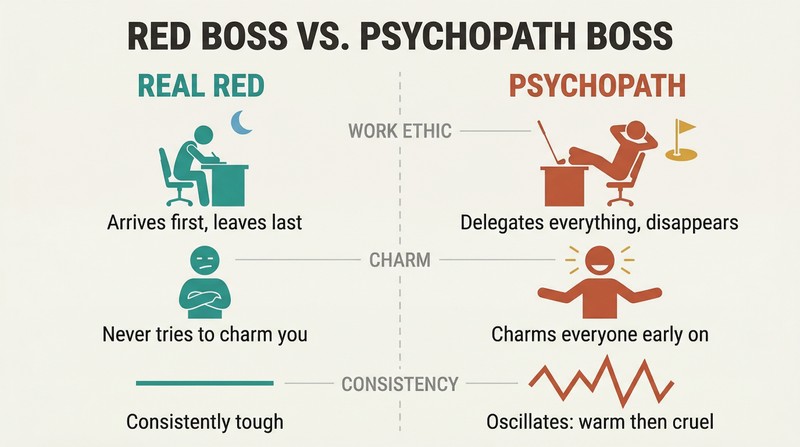
Red bosses get confused with psychopaths constantly. Both seem insensitive and will dress you down publicly. But the differences are revealing:
1. Reds arrive first, leave last, and do the work themselves — psychopaths delegate everything and take long lunches
2. Reds never bother trying to charm you — psychopaths charm everyone, especially early on
3. Reds are consistently tough — psychopaths oscillate between warmth and cruelty
In the case of Mike and Pernilla, psychopath Mike survived ten years at a company by positioning himself close to his Red CEO, feeding her compliments disguised as honest admiration, and guilt-tripping her out of confronting his failures. Pernilla ended up cleaning up his messes while he golfed on the company's dime.
Psychopaths isolate you first, then become your only lifeline
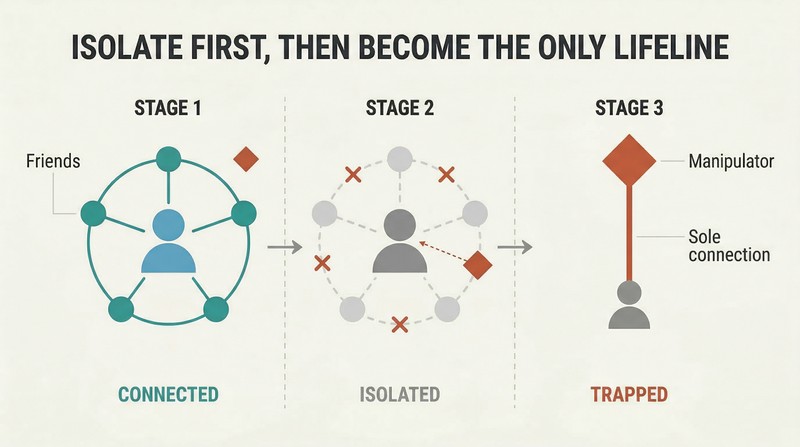
Social people are the most vulnerable to this tactic. Yellows depend on connection for energy, making isolation devastating. In the case of Lars and Anna, psychopath Anna told Lars that his best friend Simon had been criticizing him — targeting Lars's known sensitivity to criticism. She suggested they "give Simon space." Whenever Lars tried to reconnect, Anna manufactured a crisis — a health scare, a fight, a death in the family — to block the meeting.
Within eighteen months, Lars's entire friend circle was gone. Anna then attacked his humor, his self-centeredness, his listening skills — all real Yellow weaknesses — until the formerly vivacious Lars sat silently at home watching films he hated, too anxious to leave the house.
Praise-then-silence cycles create emotional addiction by design
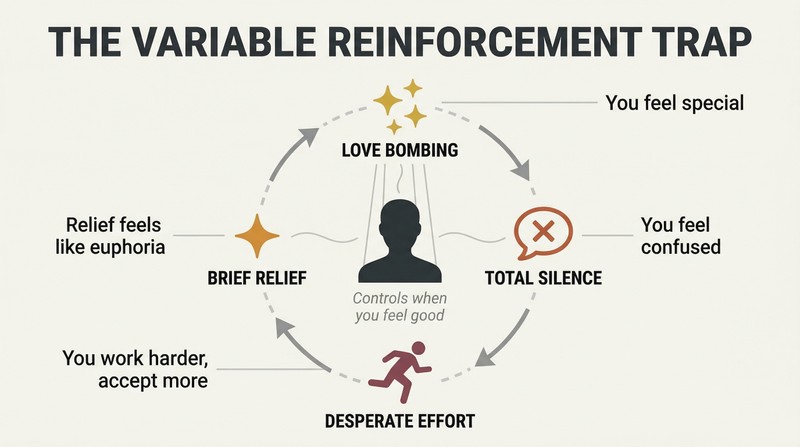
Love bombing is the hook; withdrawal is the leash. The psychopath showers you with praise — you're brilliant, you're the most incredible person they've ever met. This is love bombing. Then, without warning, total silence. No feedback, no warmth, no eye contact. You scramble to earn it back, working harder, accepting more. When praise briefly returns, the relief feels like euphoria.
Erikson compares this to lab mice trained to run for cheese. Remove the cheese randomly, and they run faster and more desperately. Humans react identically with validation. The manipulator controls when you feel good, which means they control what you'll do. This arbitrary positive reinforcement works on every DISC color — but Yellows and Greens, being relationship-oriented, are most susceptible.
Gaslighting bends your reality one crooked painting at a time
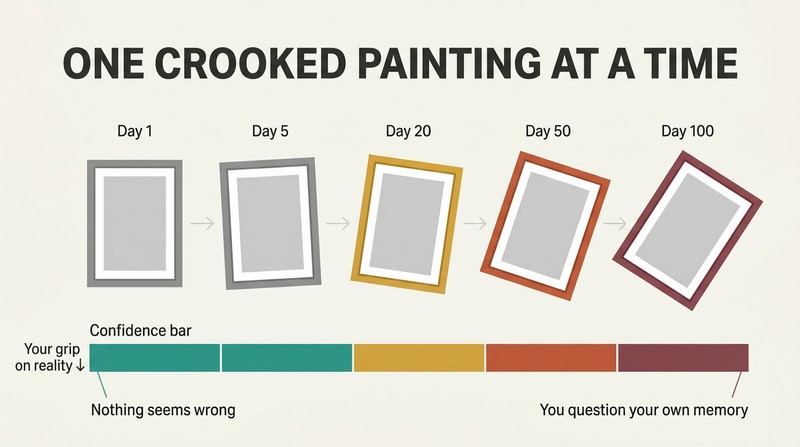
Named after a 1930s Ingrid Bergman film, gaslighting means systematically distorting someone's perception of reality. Erikson's simplest example: a partner tilts a framed painting slightly every day, then denies anything changed. It sounds absurd — until it compounds. A promised gift is denied. A meeting time gets altered. Different stories are told to your mother, your boss, your children.
Combined with other techniques, the effect is devastating. The psychopath says A on Monday, B on Tuesday, denies both on Wednesday. Their pawns — people charmed into unwavering loyalty — rush to the psychopath's defense when you speak up. Eventually, nobody trusts your version. You start questioning your own memory and sanity, which is precisely the goal.
Delay your knee-jerk reaction — manipulators can't handle the pause
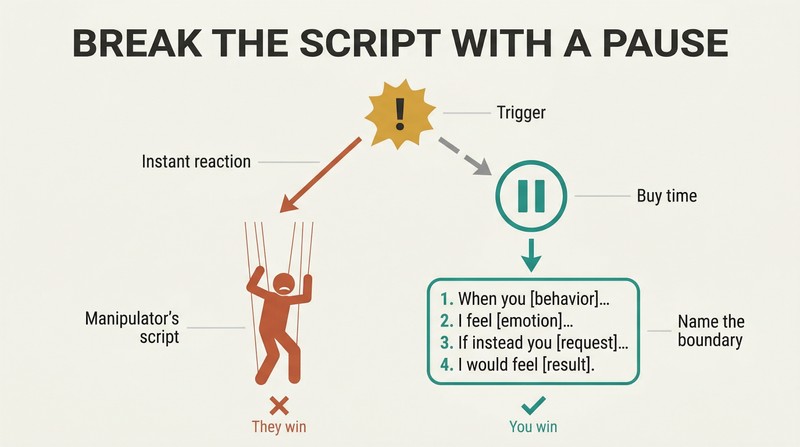
Your automatic reactions are the manipulator's script. They know you'll cry when yelled at, say yes when guilt-tripped, or apologize when pressured. Breaking this pattern starts with buying time: "You'll have to wait a minute" on a call, excusing yourself to the bathroom in person, or simply not replying to a text for two hours.
Then name the manipulation using Erikson's four-step formula:
1. "When you [describe their behavior]…"
2. "I feel [name the emotion]…"
3. "If instead you [describe desired behavior]…"
4. "I would feel [desired emotion]."
Repeat this boundary like a broken record — no explanations, no negotiations. The power of consistency forces the manipulator to either adapt or expose themselves.
Judge people by this morning's behavior, not last year's charm
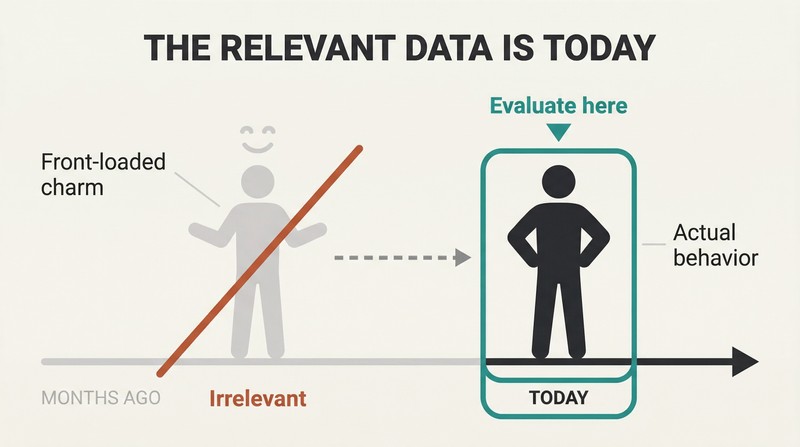
Trust requires three ongoing conditions: predictability (consistent behavior, not wild oscillation between warmth and cruelty), reliability (long-term honesty, not just honeymoon-phase performance), and certainty (confidence your partner will meet your needs beyond the first few months). Most people evaluate a partner or boss by their earliest behavior. Psychopaths exploit exactly this tendency by front-loading kindness.
Evaluate current actions relentlessly. If someone earned your trust six months ago but is gaslighting you today, the relevant data is today. As Erikson puts it bluntly: would you advise an abused wife to remember how nice her husband was three years ago and stay? Psychological manipulation follows the same rule. The real person is who they were last night, not who they pretended to be to snare you.
Psychopathy can't be cured — therapy hands them a better playbook
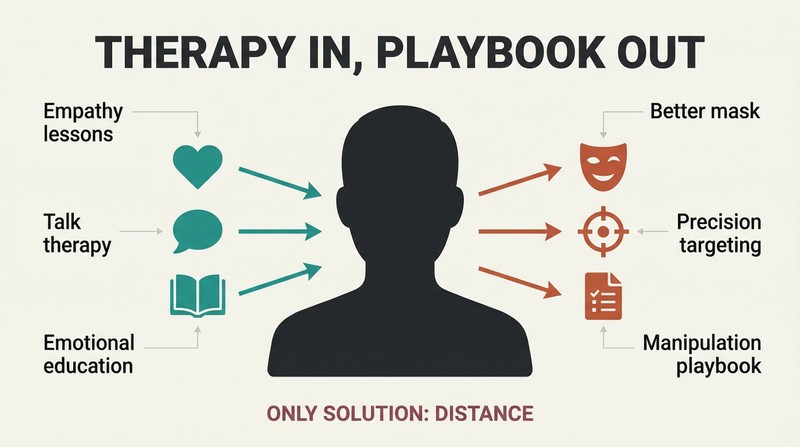
Medication doesn't work. Surgery isn't possible. Therapy backfires. Psychopathy is a personality disorder rooted in brain abnormality — specifically the amygdala. MRI scans confirm the structural difference. It's largely genetic, not caused by bad parenting or bullying. When therapists help psychopaths "understand" their impact on others, the psychopaths gain better tools to fake normalcy and cause more damage.
The only effective response is total distance. If you've tried Erikson's resistance steps — delaying reactions, naming manipulation, setting conditions — and the behavior returns within weeks, you're dealing with a true psychopath. Don't fight them publicly; their pawns will defend them. Don't expose them on social media; they'll counterattack ruthlessly. Get up and go. Only age slightly mellows psychopathic behavior. Nothing else works.
Analysis
Erikson's book occupies an unusual niche: it weaponizes a corporate communication framework (DISC) as a personal defense system against pathological manipulation. His central innovation — mapping psychopathic attack vectors onto specific personality types — is genuinely useful because most psychopathy literature treats victims as interchangeable. Erikson recognizes that a conflict-averse Green and an impulsive Red will be dismantled through entirely different mechanisms, and his color-specific case studies (Lars/Anna for Yellows, Katie/Ed for Greens, George/Roger for Blues, Mike/Pernilla for Reds) give readers concrete threat models rather than abstract warnings.
The manipulation taxonomy — eight named techniques from love bombing to gaslighting — functions as a field identification guide. Where most self-help books offer platitudes about toxic relationships, Erikson provides a diagnostic checklist: if you observe arbitrary positive reinforcement combined with isolation and smoke screens, you're not dealing with a difficult personality but with a deliberate predator.
However, the book has significant analytical weaknesses. Erikson frequently conflates subclinical psychopathic traits with clinical psychopathy, a distinction he acknowledges but fails to maintain consistently. His prevalence estimate of 2 – 4% sits at the aggressive end of scientific consensus, and by lumping 'people with some psychopathic traits' into the same threat category as clinical psychopaths, he risks encouraging paranoia rather than discernment. The DISC framework itself, while commercially popular, lacks the empirical rigor of the Big Five personality model used in academic research.
The book's most valuable contribution is its resistance framework — particularly the four-step verbalization formula and the broken-record technique. These tools work against any manipulator, not just clinical psychopaths. And Erikson's hardest advice — that psychopathy is incurable and distance is the only solution — is more honest and ultimately more helpful than therapeutic optimism about 'fixing' dangerous people.
Review Summary
Surrounded by Psychopaths receives mixed reviews. Some readers find it insightful and helpful for understanding manipulative behavior, while others criticize its lack of scientific rigor and overuse of the DISC personality model. The book's focus on identifying and dealing with psychopaths is praised by some but considered alarmist by others. Many appreciate the practical advice for recognizing manipulation tactics, though some find the content repetitive. The translation quality and physical book production are generally well-regarded. Overall, opinions are divided on the book's value and credibility.
People Also Read


Glossary
DISC system
Four-color behavior categorization modelA behavioral profiling framework based on William Moulton Marston's theories, categorizing people into four color-coded types: Red (dominant, task-oriented, fast-paced), Yellow (influential, social, creative), Green (stable, loyal, conflict-averse), and Blue (compliant, analytical, detail-oriented). Most people combine two dominant colors. Used in corporate training worldwide and translated into 50+ languages.
Johari Window
Four-quadrant self-awareness modelA psychological model developed by Joseph Luft and Harrington Ingham at the University of California in the 1950s. It divides self-knowledge into four quadrants: public self (known to you and others), overlooked self or blind spots (seen by others but not you), secret self (known to you but hidden from others), and unknown self (hidden from everyone). Erikson uses it to identify the blind spots that psychopaths exploit.
Love bombing
Overwhelming affection to create dependencyA manipulation technique where a psychopath showers a target with excessive praise, affection, gifts, and attention early in a relationship to create emotional dependency. The target becomes accustomed to this intense validation. Once hooked, the psychopath withdraws the affection unpredictably, forcing the victim to chase the approval they now crave. Often combined with arbitrary positive reinforcement.
Gaslighting
Distorting someone's perception of realityA slow, advanced manipulation tactic named after a 1930s film starring Ingrid Bergman, in which a husband manipulates his wife by altering her environment and denying it. In practice, it involves saying A on Monday, B on Tuesday, and denying both on Wednesday—systematically undermining the victim's trust in their own memory and judgment. Often combined with enlisting pawns who corroborate the psychopath's version of events.
Arbitrary positive reinforcement
Unpredictable praise-and-withdrawal cyclesA manipulation technique where the manipulator provides strong positive feedback and affirmation, then randomly withholds it without cause. This creates dependency on an unreliable source of validation, similar to how intermittent rewards in lab experiments produce the most persistent behavior in subjects. The victim works harder and harder to regain the praise, becoming increasingly controllable.
Triangle drama
Third-party introduction to create jealousyA manipulation technique where the psychopath introduces a third person—real or imagined—into the relationship dynamic to provoke insecurity and jealousy. The manipulator may praise a colleague, ex, or new acquaintance while simultaneously withdrawing affection from the victim. Often combined with love bombing withdrawal to maximize the victim's desperation to win back approval.
Pawns
Charmed allies defending the psychopathA term used by researchers Robert Hare and Paul Babiak for people who have been completely won over by a psychopath's charm and who serve as unwitting defenders. Pawns believe the psychopath is the best person they know and will rush to their defense whenever anyone raises questions. The psychopath uses pawns to build credibility, spread favorable narratives, and isolate critics.
PPI-R
Psychopathic Personality Inventory testThe Psychopathic Personality Inventory–Revised, originally developed by Scott Lilienfeld and Brian Andrews to evaluate psychopathic traits in non-criminal populations. It measures eight factors including Machiavellian Egocentricity, Social Influence, Cold-heartedness, and Stress Immunity, grouped into two subcategories: Fearless Dominance and Self-Centered Impulsivity. Kevin Dutton used it to rank historical leaders including Hitler, Churchill, and JFK.
Broken record technique
Repeating boundary without engaging debateA resistance strategy where the manipulation target repeats the same boundary statement consistently without explaining, apologizing, or engaging in debate about it—e.g., 'I need time to think this over. I'll get back to you.' The technique prevents the manipulator from dragging the conversation into emotional territory where they hold the advantage. Erikson emphasizes that the power of consistency forces manipulators to either change tactics or reveal their true nature.
Silent treatment
Withdrawal of communication as punishmentA passive-aggressive manipulation technique where the manipulator completely withdraws all communication—no greetings, no responses, no physical contact—to punish the victim for noncompliance. Erikson compares it to Chinese water torture: each moment of silence is individually trivial, but sustained over days or weeks, it can drive victims to capitulate to virtually any demand just to restore contact.
FAQ
What's Surrounded by Psychopaths about?
- Understanding Psychopathy: The book delves into the nature of psychopathy, focusing on how these individuals manipulate and exploit others in both personal and professional settings.
- Behavioral Analysis: It introduces the DISC model, categorizing human behavior into four colors—Red, Yellow, Green, and Blue—to help readers identify behavioral patterns.
- Protection Strategies: Thomas Erikson provides tools and strategies to recognize and protect oneself from manipulative individuals, especially those with psychopathic traits.
Why should I read Surrounded by Psychopaths?
- Awareness of Manipulation: The book equips readers with the knowledge to identify manipulative behaviors, crucial for personal and professional safety.
- Practical Tools: Erikson offers actionable advice on navigating relationships with potentially dangerous individuals, enhancing interpersonal skills.
- Insight into Human Behavior: It provides a deeper understanding of human behavior, fostering greater self-awareness and emotional intelligence.
What are the key takeaways of Surrounded by Psychopaths?
- Recognizing Psychopaths: The book emphasizes the importance of identifying psychopathic traits like charm, manipulation, and lack of empathy.
- Understanding the DISC Model: Readers learn about the four behavioral types, aiding in recognizing personal and others' strengths and weaknesses.
- Self-Protection Strategies: Erikson provides strategies to protect oneself from manipulation, such as increasing self-awareness and recognizing red flags.
How does the DISC model work in Surrounded by Psychopaths?
- Four Behavioral Types: The DISC model categorizes people into Red (dominant), Yellow (influential), Green (stable), and Blue (compliant), each with distinct traits.
- Understanding Interactions: Identifying these types helps improve communication and reduce conflict by understanding interactions better.
- Self-Reflection: The model encourages self-reflection, helping individuals recognize their dominant traits and adapt behavior in various situations.
What are the characteristics of a psychopath as described in Surrounded by Psychopaths?
- Lack of Empathy: Psychopaths are characterized by a profound lack of empathy, enabling them to manipulate and harm others without remorse.
- Superficial Charm: They often present as charming and charismatic, disarming victims and making them susceptible to manipulation.
- Manipulative Behavior: Psychopaths are skilled at reading others and exploiting weaknesses, using cunning and deceit to achieve their goals.
How can I protect myself from psychopaths according to Surrounded by Psychopaths?
- Increase Self-Awareness: Understanding your own weaknesses and vulnerabilities can make you less susceptible to manipulation.
- Recognize Red Flags: Be vigilant for signs of manipulative behavior, such as excessive charm or lack of accountability.
- Set Boundaries: Establishing clear boundaries and being assertive can help deter manipulative individuals from taking advantage of you.
What are some common manipulation techniques discussed in Surrounded by Psychopaths?
- Gaslighting: This involves distorting a victim's perception of reality, creating confusion and self-doubt to maintain control.
- Love Bombing: Overwhelming someone with affection to gain trust, only to withdraw it later, creating dependency.
- The Silent Treatment: A passive-aggressive tactic of ignoring someone to punish or force compliance, leading to feelings of worthlessness.
How does Surrounded by Psychopaths differentiate between normal behavior and psychopathic behavior?
- Intent and Frequency: While everyone may exhibit manipulative traits, psychopaths consistently engage in harmful behaviors with malicious intent.
- Emotional Response: Normal individuals feel remorse or guilt when they hurt others, whereas psychopaths lack these emotions.
- Behavior Patterns: Psychopathic behavior is characterized by deceit, manipulation, and exploitation, unlike typical human behavior.
What should I do if I suspect someone is a psychopath based on Surrounded by Psychopaths?
- Trust Your Instincts: If you feel uncomfortable or manipulated, trust your instincts and take a step back from the relationship.
- Gather Evidence: Document specific behaviors that raise red flags to clarify your thoughts and prepare for confrontations.
- Seek Support: Discuss concerns with trusted friends or professionals who can provide guidance and support.
How does Surrounded by Psychopaths suggest handling a relationship with a psychopath?
- Establish Boundaries: Clearly communicate your limits and what behaviors you will not tolerate to protect your well-being.
- Avoid Engaging in Their Games: Remain calm and assertive, avoiding reactions of anger or frustration that empower the psychopath.
- Consider Ending the Relationship: If manipulation continues, prioritize your mental health and safety by considering ending the relationship.
What personality types does Erikson discuss in Surrounded by Psychopaths?
- Red: Dominant and assertive, Reds are strong leaders but vulnerable to manipulation through guilt or anger.
- Yellow: Social and enthusiastic, Yellows seek approval, making them susceptible to flattery and emotional appeals.
- Green: Calm and supportive, Greens avoid conflict, leading to manipulation through guilt and emotional pressure.
- Blue: Detail-oriented and logical, Blues focus on facts, making them less susceptible to emotional manipulation but confused by deceit.
What are the best quotes from Surrounded by Psychopaths and what do they mean?
- “People generally cannot believe themselves so easily manipulated and controllable.”: Highlights the misconception of immunity to manipulation, emphasizing awareness.
- “The closer to the truth, the better the lie.”: Illustrates how manipulators use truths to craft convincing lies, necessitating scrutiny of intentions.
- “Psychopaths act out their lunatic thoughts while the rest of us just think them.”: Underscores the difference between psychopathic behavior and typical human restraint, illustrating the danger posed by such individuals.
About the Author
Other books by Thomas Erikson




Download PDF
Download EPUB
.epub digital book format is ideal for reading ebooks on phones, tablets, and e-readers.








































