Key Takeaways
Five scientific revolutions are converging to add healthy decades
“Cumulatively, hundreds of years of dogged perseverance have put us in an enviable position of being able to reset our human health span expectations.”
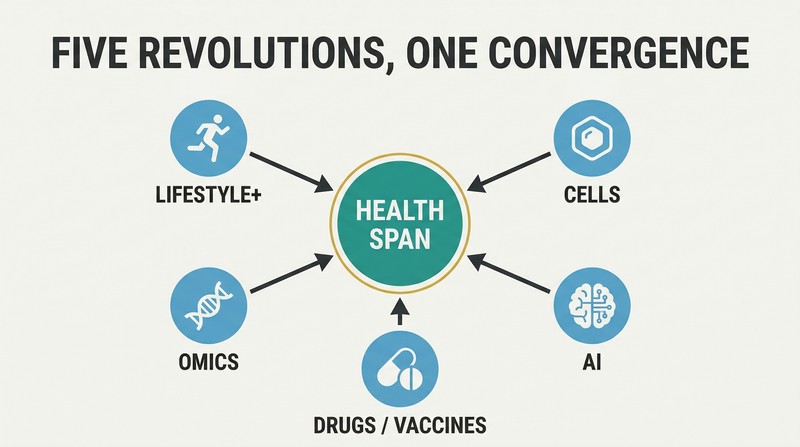
Two patients, one future. Dr. Eric Topol opens with Mrs. L.R., 98, who drove herself to his clinic — never seriously ill in her life. And Mr. R.P., also 98, who survived bypass surgery, stenting, a heart attack, and COVID. She represents natural resilience; he represents modern medicine's triumphs. Both embody what Topol calls health span — years lived in optimal health, not just years alive.
What makes this moment historic is the convergence of five interacting dimensions Topol calls the framework of the book:
1. Lifestyle+ (expanded beyond diet and exercise to include toxins, loneliness, precision nutrition)
2. Cells (engineering T cells, growing organoids)
3. Omics (genomic, proteomic, and microbiome data)
4. Artificial intelligence (risk prediction, drug discovery)
5. Drugs/Vaccines (GLP-1s, mRNA, CRISPR, immunotherapies)
Of centenarians studied, only 19% escaped chronic disease entirely. This book is about changing that ratio.
Only ~12% of longevity is genetic — daily choices matter far more
“Despite the arduous and expensive task of sequencing and interpreting whole genomes several years ago, there wasn't much in their DNA to illuminate the basis for healthy aging.”
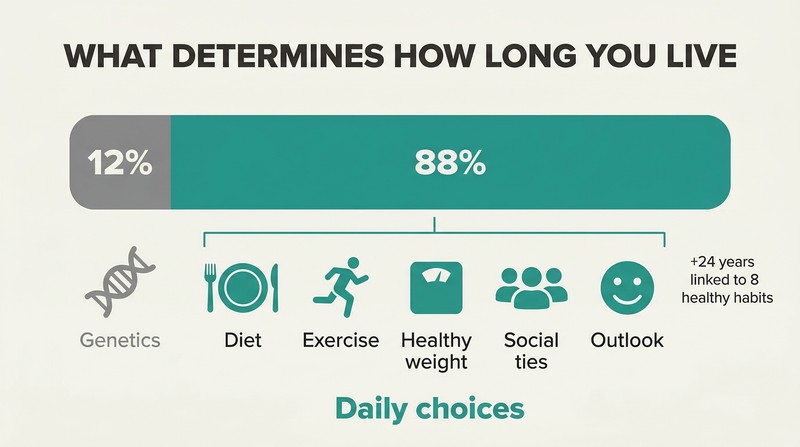
The Wellderly study surprised everyone. Topol's team spent six years enrolling 1,400 people aged 80+ who had never been chronically ill — the "Wellderly." Their entire genomes were sequenced. The expectation was that something in their DNA would explain their exceptional health. It didn't. Genetic risk markers for Alzheimer's and heart disease were only marginally lower than average.
What actually distinguished them? They were thinner by nearly 30 pounds, exercised more, had rich social networks, and were remarkably upbeat. The best estimate for heritability of longevity is roughly 12%. A modeling study found that switching from a Western to an optimal diet starting at age 20 could add over ten years of life. Among 700,000+ US veterans, adopting eight healthy lifestyle factors was linked to 24 added years of life expectancy for men at age 40.
Ultra-processed foods will soon be viewed as the new cigarettes
“Big Food spends twice as much lobbying the government as the tobacco and alcohol industries combined.”
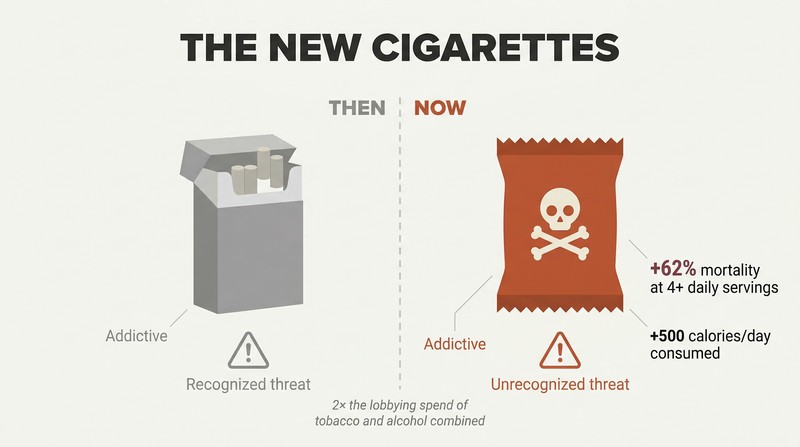
Industrial non-food is killing us. In an NIH randomized trial, people offered ultra-processed foods ate 500 extra calories per day and gained weight rapidly, while those eating unprocessed foods lost weight. British physician Chris van Tulleken ate 80% UPFs for a month: he gained 15 pounds, his brain scans showed surging connectivity between habit and addiction regions, hunger hormones spiked fivefold, and body-wide inflammation doubled.
The dose-response data is alarming: more than four daily servings of ultra-processed foods — industrially manufactured products with additives not found in any home kitchen — is linked to a 62% increase in all-cause mortality. A mere 10% increase in UPF intake among older adults correlates with 16% higher cognitive impairment. Topol's practical advice: shop the perimeter of grocery stores for fresh food, read ingredient labels, and use the Open Food Facts app to check products.
No drug matches what regular exercise does for every organ system
“If you could design a drug that exerted diverse potent salutary health impacts across all our organ systems, it would be considered a miracle breakthrough.”
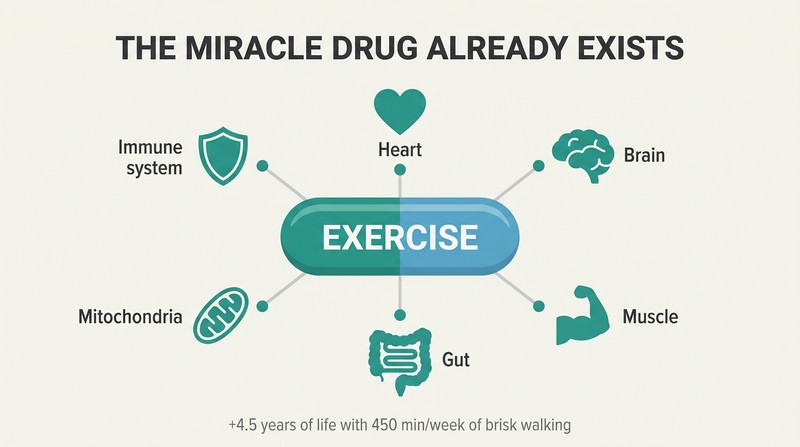
Exercise is that miracle drug. Regular physical activity improves cardiovascular function, insulin sensitivity, immune response, mitochondrial health, brain neurogenesis, and gut microbiome composition — all while reducing body-wide inflammation. Among 650,000+ people tracked for a decade, briskly walking 450 minutes per week was linked to 4.5 years of added life. Yet only one in four American adults meets minimum exercise guidelines.
Resistance training deserves equal billing. Just 60 minutes per week of strength training is associated with a 25% reduction in all-cause mortality. Between ages 60 and 90, men lose about 33% of their muscle mass. Grip strength, easily measured with a dynamometer, is linearly associated with survival. And it's never too late: Richard Morgan started rowing at 73, won four world championships by 93, and has a body composition of 80% muscle. His oxygen uptake resembles a young adult's.
Seven hours of sleep is the sweet spot — more increases risk too
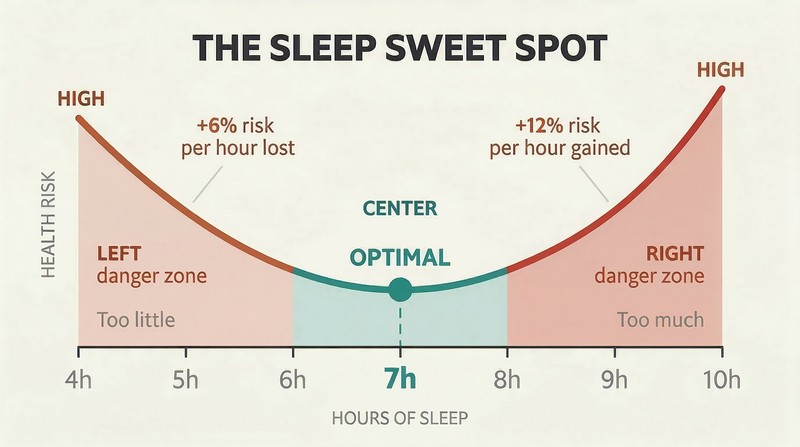
“It may come as a surprise that beyond seven hours there were consistent signs, both acutely and during follow-up, of cognitive and mental health decline, as well as unfavorable changes in brain structure.”
Your brain does its housekeeping at night. During sleep, the glymphatic system flushes metabolic waste through cerebrospinal fluid. Even one night of deprivation increases beta-amyloid protein — a precursor to Alzheimer's. The loss of a single hour from daylight savings time triggers a significant rise in heart attacks lasting four days.
The UK Biobank study of nearly 500,000 people confirmed that seven hours is optimal. Each hour below seven raises cardiovascular risk by 6%; each hour above raises it by 12%. Long sleep — over eight hours — is linked to approximately 30% higher all-cause mortality. Deep non-REM sleep, the most restorative kind, declines over 60% by one's late 40s and 80-90% by age 70. Topol's practical advice: eat dinner early, avoid screens before bed, maintain the same schedule daily, and keep the bedroom cool and completely dark.
GLP-1 drugs may reshape medicine more than any prior drug class
“The impact of GLP-1 drugs in medicine — for improving patient outcomes — will likely be more substantial than any prior class of medications, including statins.”
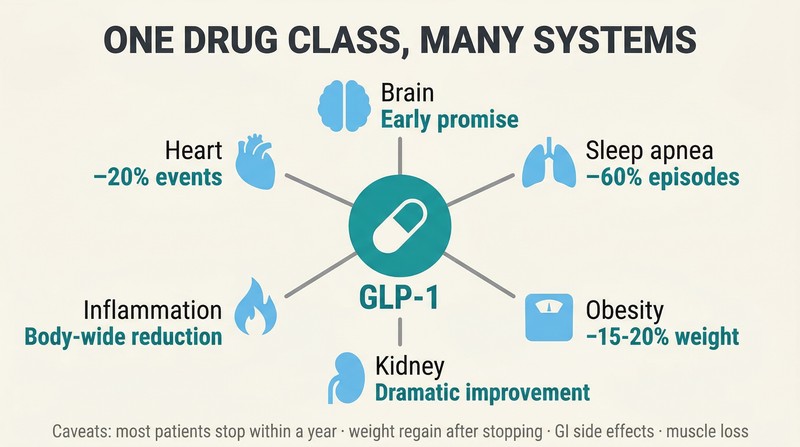
Twenty years of missed potential. GLP-1 drugs mimic gut hormones regulating metabolism. The first was approved in 2005 for diabetes, but it took until 2021 for higher doses to be tested for obesity — revealing 15-20% body weight loss. These drugs reduce inflammation body-wide before significant weight loss even occurs, which may explain benefits that extend far beyond the scale.
In randomized trials, GLP-1 drugs have reduced cardiovascular events by 20%, dramatically improved kidney function, cut sleep apnea episodes by nearly 60%, and shown early disease-modifying promise against Parkinson's and Alzheimer's. Newer triple-receptor versions may achieve even greater effects. But the caveats are serious: most patients stop within the first year, weight regain after discontinuation is the norm, gastrointestinal side effects affect many, and muscle mass loss remains a concern.
Intercept the big killers during their 20-year silent incubation
“A woman who developed breast cancer at the age of fifty-one had precursor clones of cancer evident at thirteen.”
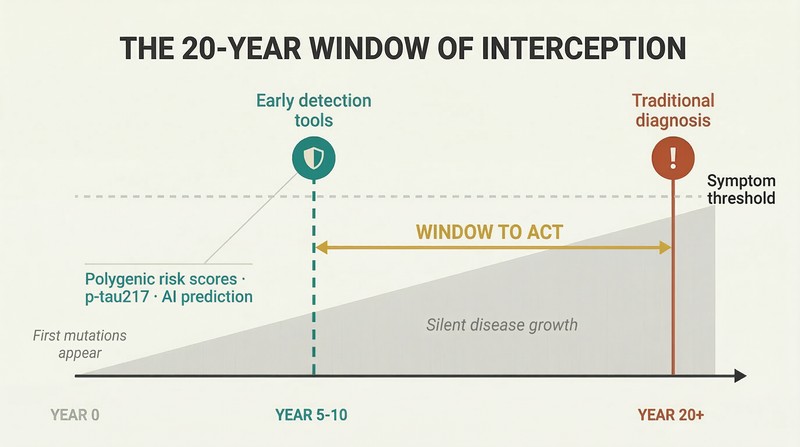
The long runway is our advantage. Atherosclerosis is detectable in the majority of people by age 30. Alzheimer's pathology builds for 20+ years before cognitive symptoms. Cancer driver mutations accumulate for a decade or more before a tumor is diagnosed. This extended incubation gives us an enormous window to intervene.
The tools now exist. Polygenic risk scores — inexpensive genetic tests aggregating hundreds of variants — can identify people at double or higher risk for heart disease, diabetes, and specific cancers. A blood biomarker called p-tau217 detects Alzheimer's risk with 91% accuracy versus 61% for primary care physicians. AI models combing electronic health records have predicted pancreatic cancer years in advance. Topol envisions multimodal AI integrating genetics, proteomics, imaging, and microbiome data to forecast and forestall disease before it ever declares itself.
Inflammation is the one mechanism linking every chronic killer
“The recognition of the immune system as a common mechanistic underpinning for chronic diseases… is a historic turning point.”
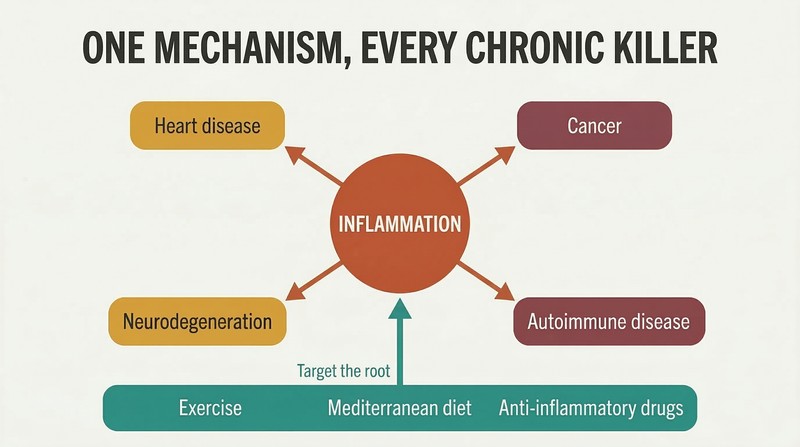
One thread runs through them all. Atherosclerosis is driven by inflammation in blood vessel walls. Cancer rarely kills unless it spreads — and the immune system can stop that. Neurodegeneration requires brain inflammation to take hold. Autoimmune conditions arise when the immune system attacks the body's own tissues. In every case, inflammation generated by the immune system is the common denominator.
This insight has practical consequences. In a landmark trial, a potent anti-inflammatory drug reduced heart attacks, strokes, cardiovascular deaths — and unexpectedly fatal cancers and lung cancer — without lowering cholesterol at all. Colchicine, a cheap anti-inflammatory, was FDA-approved in 2023 for cardiovascular inflammation. GLP-1 drugs also work partly through body-wide inflammation reduction. The implication: interventions that safely modulate inflammation — exercise, Mediterranean diet, emerging drugs — may protect against multiple diseases simultaneously.
Microplastics and forever chemicals are already inside your body
“There are over 240,000 particles in an average liter of bottled water; 90 percent are nanoplastics.”
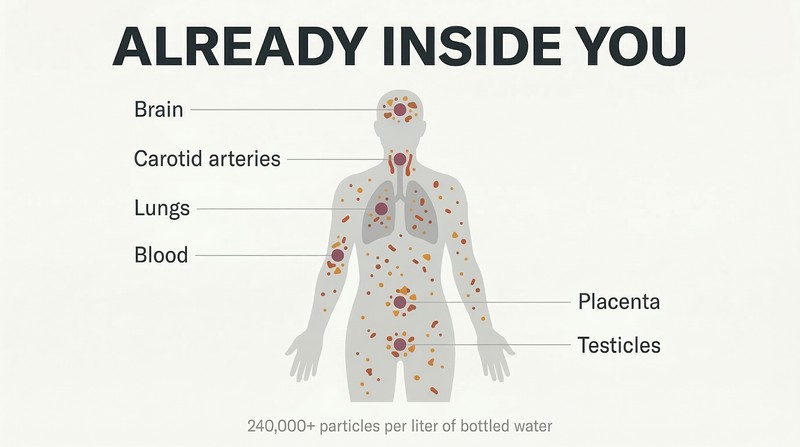
The invisible epidemic. An estimated 20% of type 2 diabetes is linked to fine particulate air pollution, which contributes to over 8 million premature deaths globally. Microplastics have been found in human arteries, brains, blood clots, testicles, and placentas. In patients who had carotid artery surgery, those with polyethylene or polyvinyl chloride in their arterial plaque had fourfold risk of heart attack, stroke, or death over three years.
The man-made PFAS "forever chemicals" were detected in 31% of EPA water samples. Nearly all Americans carry measurable PFAS in their blood. These are linked to kidney and testicular cancer, obesity, high cholesterol, and immune damage. Topol recommends avoiding plastic food containers, using glass or steel water bottles, limiting fast food, and testing your home for radon — 75% of American homes have never been tested.
Health span breakthroughs widen inequality without universal access
“If health span expanders are only accessible to the wealthy, then all they will do is make those inequalities worse.”
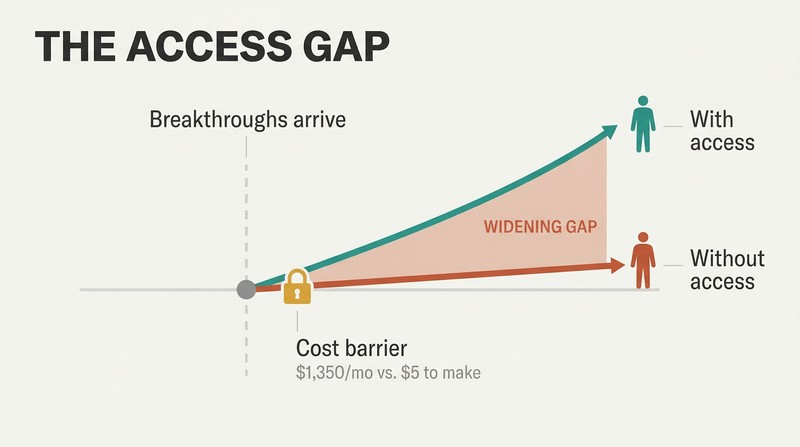
The biggest obstacle is access, not science. The United States is the only high-income country without universal health care. GLP-1 drugs cost $1,350 per month in the US versus $93 in the UK — while costing roughly $5 to manufacture. CRISPR editing for sickle cell anemia costs $2.2 million per treatment. Obesity disproportionately affects people of color and low-income populations, the very groups least likely to access these breakthroughs.
Over 24 million Americans live in food deserts. Food insecurity affects 50+ million people and is linked to approximately 50% more premature deaths. Socioeconomic status independently predicts premature mortality as much as smoking or physical inactivity. Topol argues that Operation Warp Speed's $12 billion public-private investment in COVID vaccines should be the template: health span expansion must be treated as a societal priority, not a luxury good.
Analysis
Eric Topol occupies a rare position in medicine: a practicing cardiologist, genomics researcher, and AI authority who has watched the longevity field oscillate between genuine breakthrough and snake oil. Super Agers is his attempt to separate the two, and the result is arguably the most comprehensive evidence-based guide to extending health span published to date.
What distinguishes this book from Peter Attia's Outlive or David Sinclair's Lifespan is Topol's skeptical pragmatism. He calls out the $50,000-per-week longevity clinics, the 110-pill-a-day biohackers, and the premature rapamycin evangelists — while simultaneously arguing we are at a genuine inflection point. His five-dimensions framework provides the structural clarity that the fragmented longevity field desperately needs, demonstrating how advances in genomics potentiate AI drug discovery, which accelerates cell therapy, which reshapes lifestyle recommendations.
The book's most provocative argument is that we already possess the tools to prevent most major diseases but aren't deploying them. Heart disease, still the number one killer, is 80-90% preventable through lifestyle factors. Only 14% of US cancers are caught through screening. Fewer than half of guideline-eligible adults take statins. The gap between what science knows and what medicine does is, in Topol's framing, the central crisis of modern healthcare — what he calls being stuck in a 'reactive rut.'
The equity critique elevates this above a typical health optimization book. Topol doesn't merely footnote inequality — he positions it as the defining variable that determines whether these breakthroughs improve civilization or create a two-tier biology of haves and have-nots. The $5 manufacturing cost versus $1,350 retail price of GLP-1 drugs crystallizes this tension with uncomfortable precision. At 167,000 words, Super Agers can read like a medical reference — but that density is also its authority. Topol doesn't ask readers to trust him; he shows his work, paper by paper, trial by trial.
Review Summary
Super Agers receives mixed reviews, with an average rating of 3.69 out of 5. Readers appreciate the thorough scientific approach and evidence-based analysis of longevity research. Many find the book informative and well-researched, offering insights into emerging technologies and medical breakthroughs. However, some criticize its dense, technical content, which may be challenging for general readers. The book is praised for its comprehensive coverage of lifestyle factors, cellular biology, and potential treatments for age-related diseases. While some readers find actionable advice, others feel it lacks practical recommendations for everyday life.
People Also Read



 Immersive
 Immersive
Glossary
Health span
Years lived free of diseaseThe number of years lived in optimal health, without impairment due to disease or disability. Distinct from lifespan or longevity, which measure total years alive regardless of health status. Topol argues that maximizing health span—not just lifespan—is the goal of modern medicine and the central objective of the book.
Lifestyle+
Expanded lifestyle risk factorsTopol's broadened definition of lifestyle factors beyond the traditional triad of diet, exercise, and sleep. Lifestyle+ adds environmental exposures (air pollution, microplastics, forever chemicals), social determinants of health (loneliness, socioeconomic status), precision nutrition (time-restricted eating, individualized diets), and specifics of physical activity including strength training and balance.
Wellderly
Topol's healthy aging research cohortA research cohort of approximately 1,400 people aged 80 and older who had never been chronically ill, enrolled by Topol's team at Scripps Research over six years. Despite whole genome sequencing, no clear genetic basis for their exceptional health was found—their genetic risk markers for major diseases were only marginally lower than average. The Wellderly were notably thinner, more physically active, and more socially engaged than the general population.
Five dimensions
Five interacting health span categoriesTopol's framework for the converging breakthroughs driving health span extension: (1) Lifestyle+ — expanded lifestyle and environmental factors; (2) Cells — cell engineering, organoids, and T cell therapies; (3) Omics — genomic, proteomic, epigenetic, and microbiome data; (4) Artificial Intelligence — risk prediction, drug discovery, and medical forecasting; (5) Drugs/Vaccines — GLP-1s, mRNA vaccines, CRISPR, and immunotherapies. All five interact with one another.
GLP-1 drugs
Gut hormone–mimicking obesity drugsGlucagon-like peptide-1 receptor agonists—injectable or oral medications that mimic naturally occurring gut hormones regulating metabolism. Includes semaglutide (Ozempic/Wegovy), tirzepatide (Mounjaro/Zepbound), and newer triple-receptor agents like retatrutide. Beyond inducing 15-25% body weight loss, they reduce inflammation body-wide and show benefits for heart disease, kidney disease, sleep apnea, and potentially neurodegenerative diseases.
Polygenic risk score
Aggregated genetic risk assessmentA quantitative score derived from hundreds of common genomic variants associated with risk for a particular disease. Calculated from a gene chip (array) or genome sequence, weighted by each variant's importance and adjusted for ancestry. Polygenic risk scores can identify individuals at double or higher risk for conditions including heart disease, type 2 diabetes, breast cancer, and Alzheimer's disease, independently of family history.
Ultra-processed foods (UPFs)
Industrial non-food products with additivesIndustrially manufactured food products containing chemical additives and ingredients not found in a standard home kitchen—including emulsifiers, artificial sweeteners, hydrogenated oils, and coloring agents. Classified as NOVA Group 4. Physical processing (extrusion, prefrying) maximizes digestibility and accelerates glucose and insulin spikes. Linked to increased risks of cardiovascular disease, cancer, cognitive impairment, obesity, and all-cause mortality in multiple large studies.
p-tau217
Blood biomarker for Alzheimer's riskPhosphorylated tau217, a plasma protein that serves as a breakthrough blood biomarker for Alzheimer's disease risk. The test achieved 91% diagnostic accuracy in a prospective study—compared to 61% for primary care physicians and 73% for neurologists using conventional assessments. It is as accurate as cerebrospinal fluid tests and avoids the need for invasive lumbar puncture or expensive PET imaging.
Senolytics
Drugs that kill zombie cellsDrugs designed to selectively eliminate senescent cells—dysfunctional 'zombie' cells that can no longer divide but secrete pro-inflammatory proteins throughout the body. First-generation senolytics include dasatinib (a cancer drug) combined with quercetin (a plant flavonoid). Second-generation approaches include engineered CAR-T cells targeting senescent cell markers. Clinical trials are underway for pulmonary fibrosis, kidney disease, Alzheimer's, and diabetic macular edema.
Diabesity
Twin pandemics of diabetes and obesityA portmanteau coined in 1973 by Ethan Sims to describe the intertwined pandemics of obesity and type 2 diabetes. While most people with type 2 diabetes are obese, many thin people develop diabetes and most obese people do not—indicating distinct but overlapping biological underpinnings. The genetic variants associated with type 2 diabetes are largely different from those linked to obesity.
Organ clocks
Protein markers of organ-specific agingClusters of plasma proteins that track the biological aging of specific organs, developed by Tony Wyss-Coray at Stanford. By assaying nearly 5,000 proteins across 11 organs, researchers found that individuals age heterogeneously across organs—some are 'heart agers,' others 'brain agers.' Each organ's protein signature independently predicts disease in that domain over 15 years of follow-up, potentially enabling organ-targeted anti-aging interventions.
FAQ
1. What is Super Agers: An Evidence-Based Approach to Longevity by Eric Topol about?
- Comprehensive longevity science: The book explores the latest scientific advances in aging, longevity, and health span, focusing on how to live longer, healthier lives.
- Health span vs. lifespan: Topol distinguishes between simply living longer (lifespan) and living more years in good health (health span), emphasizing the importance of the latter.
- Multidimensional approach: The book integrates insights from genetics, lifestyle, AI, medical innovations, and disease prevention to provide a holistic view of aging.
- Actionable and evidence-based: It offers both individual and societal strategies, grounded in rigorous research, to extend health span and prevent chronic diseases.
2. Why should I read Super Agers: An Evidence-Based Approach to Longevity by Eric Topol?
- Evidence-based guidance: The book separates scientific fact from hype, providing readers with validated strategies for healthy aging and longevity.
- Comprehensive and practical: It covers everything from lifestyle+ factors and mental health to cutting-edge therapies and AI, making complex topics accessible.
- Empowerment and action: Readers are encouraged to make informed decisions about their health and to advocate for systemic changes that promote health equity.
- Future-focused: The book highlights transformative technologies and societal implications, preparing readers for the future of medicine and aging.
3. What are the key takeaways and main concepts from Super Agers by Eric Topol?
- Five dimensions of aging: The book identifies lifestyle+, cellular health, omics (genomics, proteomics, etc.), artificial intelligence, and drugs/vaccines as the main drivers of longevity.
- Hallmarks of aging: It details biological processes like genome instability, cellular senescence, and chronic inflammation as targets for intervention.
- Personalized medicine: Emphasizes the use of biomarkers, biological clocks, and AI to tailor prevention and treatment strategies.
- Societal and ethical focus: Stresses the importance of equitable access to longevity advances and the need to address health disparities.
4. What is the "lifestyle+" concept in Super Agers and how does it impact healthy aging?
- Expanded lifestyle definition: Lifestyle+ goes beyond diet and exercise to include sleep, environmental exposures, social determinants, and mental health.
- Impact on disease risk: Adopting a healthy lifestyle+ can significantly reduce the risk of cancer, cardiovascular disease, neurodegeneration, and autoimmune conditions.
- Personalization and technology: The book advocates for individualized approaches using AI and genomics to optimize diet, activity, and other lifestyle factors.
- Social and environmental factors: Addresses the roles of loneliness, pollution, and food deserts in shaping health span and longevity.
5. How does Super Agers by Eric Topol explain the biology and measurement of aging?
- Hallmarks of aging: The book describes 12 interconnected hallmarks, including genome instability, telomere attrition, and mitochondrial dysfunction, as the biological basis of aging.
- Aging clocks and biomarkers: Discusses epigenetic, proteomic, metabolomic, and immune system clocks that more accurately measure biological age than chronological age.
- Predictive and actionable: These biomarkers help forecast disease risk, monitor interventions, and personalize longevity strategies.
- Modulation strategies: Highlights how lifestyle+ and emerging therapies can slow or even reverse some aspects of biological aging.
6. What role do genetics, omics, and genome editing play in longevity according to Super Agers?
- Omics integration: The book covers genomics, transcriptomics, proteomics, epigenomics, and the microbiome as layers of biological information guiding personalized medicine.
- Genome editing advances: Details CRISPR, base editing, and prime editing as transformative tools for correcting genetic diseases and potentially extending health span.
- Delivery and safety: Discusses innovations in nanoparticles and viral vectors for safe and efficient gene editing, while addressing ethical and safety concerns.
- Personalized risk assessment: Polygenic risk scores and multi-omic data are used to stratify disease risk and guide prevention.
7. How does Super Agers by Eric Topol address the immune system’s role in aging and disease prevention?
- Immune system complexity: Explains the diversity of immune cells and their roles in defending against disease and maintaining tolerance.
- Immunosenescence and inflammaging: Describes how aging impairs immune function, leading to increased vulnerability to infections, cancer, and chronic diseases.
- Immune rejuvenation: Highlights advances in CAR-T cell therapy, tolerogenic vaccines, and microbiome modulation as promising strategies to restore immune health.
- Biomarkers and intervention: Immune system clocks and immunome profiling are emerging tools for predicting disease risk and guiding personalized interventions.
8. What are the latest advances in drug therapies and medical innovations for longevity in Super Agers?
- GLP-1 drugs: Discusses the revolutionary impact of GLP-1 receptor agonists for obesity, diabetes, and possibly neurodegenerative diseases.
- Senolytics and rapamycin: Covers drugs that target senescent cells and mTOR pathways, showing promise in early trials for age-related diseases.
- Cancer immunotherapies: Details advances in targeted therapies, antibody-drug conjugates, and engineered cell therapies like CAR-T.
- Rapid vaccine development: Chronicles the speed and innovation behind mRNA vaccines and their application to multiple infectious diseases.
9. How does Super Agers by Eric Topol explain the role of artificial intelligence in health span and longevity?
- Data integration: AI combines health records, omics, imaging, and environmental data to create personalized medical forecasts.
- Diagnostic enhancement: AI improves accuracy in interpreting medical scans and pathology, reducing errors in cancer and cardiovascular disease detection.
- Drug discovery acceleration: AI is used to predict protein structures, design new drugs, and optimize therapies for individual patients.
- Personalized coaching: AI-driven tools provide tailored lifestyle and health recommendations, supporting prevention and early intervention.
10. What does Super Agers by Eric Topol recommend for lifestyle and mental health to support longevity?
- Diet and nutrition: Advocates for unprocessed foods, Mediterranean or MIND diets, and limiting ultra-processed foods and sugary beverages.
- Physical activity: Recommends regular aerobic and resistance exercise, balance training, and minimizing sedentary time for optimal health span.
- Sleep and environment: Stresses the importance of about seven hours of quality sleep, maintaining circadian rhythm, and reducing exposure to pollution and social isolation.
- Mental health strategies: Highlights the benefits of nature exposure, social connection, music, digital CBT, and AI chatbots for mental well-being and healthy aging.
11. What are the challenges, risks, and ethical considerations of antiaging interventions in Super Agers by Eric Topol?
- Cancer and safety risks: Many antiaging therapies overlap with cancer pathways, raising concerns about unintended consequences like tumor promotion or autoimmunity.
- Targeting specificity: Eliminating only harmful senescent cells without affecting beneficial ones is a major challenge for senolytic drugs.
- Regulatory and access issues: Aging is not classified as a disease, complicating drug approval and insurance coverage; health inequity may limit access to new therapies.
- Incomplete evidence: Many interventions lack large-scale, long-term clinical trials, and some have significant side effects or unknown long-term impacts.
12. What are the most memorable quotes from Super Agers by Eric Topol and what do they mean?
- “Ovaries are the only organ in humans that we just accept will fail one day.” Highlights the need to rethink menopause and ovarian aging as modifiable, not inevitable.
- “For the first time in human history, biology has the opportunity to be engineering, not science.” Emphasizes the shift toward programmable biology enabled by AI and digital tools.
- “If expanding health span turns out to be only for the rich and privileged, then it can be considered an abject failure.” Stresses the ethical imperative of equitable access to longevity advances.
- “Longevity escape velocity.” Refers to the concept that medical advances could eventually increase life expectancy faster than time passes, suggesting the possibility of indefinite lifespan extension.
Download PDF
Download EPUB
.epub digital book format is ideal for reading ebooks on phones, tablets, and e-readers.








































