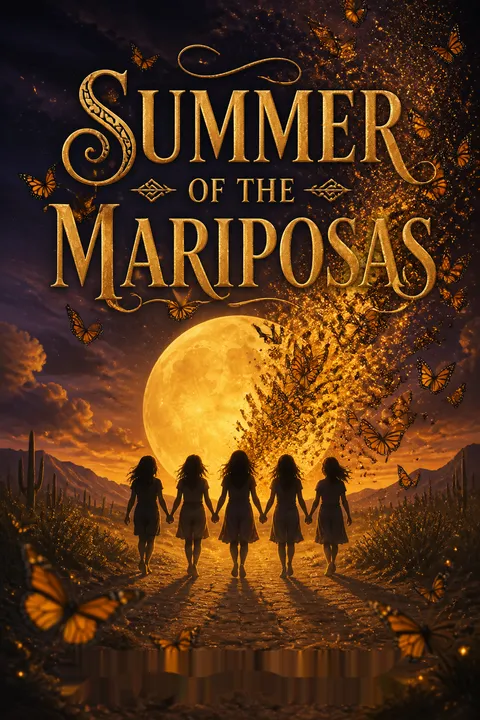

Plot Summary
Swarm of Butterflies
In the wake of their father's disappearance, Odilia and her four younger sisters find themselves restless, rebellious, and united in their shared sorrow and freedom. The summer is marked by an astonishing swarm of mariposas—monarch butterflies—flitting through south Texas, a mystical and ubiquitous reminder of transformation and resurrection and ancestral memory. The girls spend unsupervised days together, taking refuge in their sisterly code: "cinco hermanitas, together forever, no matter what." They roam the wilds, race their bikes, and swim by the Rio Grande, finding comfort in each other amid loss. The butterflies, considered by ancestors as spirits or omens, seem to urge change, signaling the beginning of something extraordinary and the ending of innocence as a magical adventure beckons.
A Drowned Stranger
One ordinary summer day, their familial joy turns to horror as the sisters discover a drowned man in their secret swimming hole. The body, a mystery from across the Mexican border, carries a wallet, a picture, and a stash of cash. The sisters debate what to do—alert authorities or treat him as family and return him to his people in Mexico. The prospect of being responsible, of being seen by the world, and of perhaps seeing their missing father, tugs at their hearts. They see themselves in the drowned stranger: an abandoned family, longing, unfinished stories. This emotional turmoil launches the siblings on a mission that becomes as much about their own healing as about delivering the stranger home.
The Decision to Cross
Determined to honor the dead man and perhaps reconnect with their father's roots, the sisters steal their father's old car and hatch a plan to drive into Mexico. There is division within the group—Odilia wants to do right, Juanita feels fate calls them, the twins hunger for adventure, and Pita, youngest, just wants certainty and love. Lies, trickery, and resolve entangle as the older sisters manipulate and ultimately join in the escape. Their world narrows to the five: they become a rogue family on the run, risking everything—safety and innocence—for something greater than themselves.
Sisters on a Mission
Driving into unknown territory, the sisters must quickly grow up. They disguise the dead man as their sleeping father to cross borders, bribing their way through with his money. American and Mexican customs are both threats and symbolic bridges. The butterflies—mariposas—still accompany them, portents of their journey inward and outward. Moments of levity, sibling bickering, and shared responsibility bind the girls tighter together. Their individual talents surface: Odilia's leadership, Juanita's empathy, the twins' cunning, and Pita's faith.
River Spirits and Warnings
At the edge of reality, magic intervenes. Odilia encounters the ghostly figure of La Llorona, the Weeping Woman, who reveals herself not as a monster but as a suffering, grieving mother. La Llorona becomes a supernatural guide, protecting and admonishing Odilia and her sisters. She gifts Odilia a magical ear-pendant with five uses—each a prayer for the Virgin Mother's aid. Merging Mexican folklore, Aztec roots, and modern struggle, the sisters are challenged to walk a path of kindness and courage, or risk spiritual and familial isolation.
Guardians and Ghosts
As they journey, each sister's strength and weakness comes forth—fears, longing for their parents, and sibling rivalry. Their dead passenger is at once a burden and a blessing; his secret—abandonment, possibly even crime—foreshadows their own family pain. The sisters begin to see themselves in the roles of mothers, daughters, and guardians, forced to make adult decisions. The mystical world grows closer as mariposas become omens and the sisters cross fields where the boundary between life and death blurs.
The Road to El Sacrificio
The journey culminates in El Sacrificio, a small town alive with festivity—a quinceañera. The sisters discover the dead man's daughter is coming of age, and now must choose: to reveal their tragic cargo and ruin her day, or fulfill their promise. In the heart-wrenching confrontation, the drowned man is returned, but not as a hero. His life's absences are felt keenly by his family, mirroring the Garza girls' own heartbreak. The girls are haunted by the ripple effects of abandonment—anger, shame, and the ache of being left behind.
Rejection and Pain
The sisters are confronted by the reality that not all homecomings or noble deeds are rewarded. The dead man's family responds with pain and fury more than gratitude. The sisters' own longing for reunion with their father is complicated by the evidence that some wounds cannot be healed by return. Their journey is no longer just about mending the past—it is about surviving their own present peril, as the authorities close in and their journey comes to feel ever more dangerous and mythic.
Bewitched by the Sorceress
Exhausted and desperate, the sisters are welcomed by Cecilia, a charming widow in the Mexican wilderness. Her home, seemingly idyllic, provides food and comfort, but soon they are lured into a magical slumber by her enchanted sweets. Cecilia turns out to be a witch, bewitched by loneliness, who seeks to keep them in her thrall forever. Only Odilia, with the aid of La Llorona, is able to resist and free her sisters by brewing a bitter antidote and destroying Cecilia's plans, learning the cost of misplaced trust and the resilience necessary to escape seduction.
Escape and Prophecy
Fleeing Cecilia, the sisters embark toward their grandmother's house, guided by a prophecy from the blind seer Teresita. They learn that curses have been unleashed upon them: monsters—a shapeshifting nagual (warlock), a cruel coven of lechuzas (witch-owls), and the feared chupacabras—await on the path ahead. Each threat is symbolic—a test of humility, courage, and sisterly harmony. Teresita's cryptic instructions force the sisters to recall childhood songs and faith, showing that their greatest weapons are memory, unity, and love passed down from their ancestors and mothers.
The Nightmarish Trinity
The journey turns nightmarish as one by one, the mythical beasts become real. The nagual deceives, tying them up for ritual sacrifice; only their mother's lullaby, summoned through La Llorona's magic, saves them. The lechuzas attack them in a storm, voices becoming those of scolding mothers; tied together and protected by prayer and knots, the sisters prevail through wit and unity. Each peril asks them to confront guilt, regret, and self-doubt—their real monsters.
Magic, Monsters, and Mercy
The final terror comes in the form of Chencho, a lonely boy who transforms at night into the chupacabras. Despite being wounded and betrayed, the sisters show mercy—choosing not to kill him, learning that even monsters can be victims, that mercy and understanding are potent forms of strength. They learn that judgment and vengeance are not the way to healing; instead, forgiveness and faith drive them forward, closer to adulthood, and inspire deeper empathy for their own parents' failures.
Harmony Among Sisters
Weary, battered, and changed, the sisters finally reach their father's mother, Abuelita Remedios, a curandera skilled in healing. Here old hurts are treated—wounds of body and soul—through wisdom, stories, and nourishing food. Abuelita helps Pita heal her wounds and, in conversation, helps the sisters see that sometimes adults fail, and children must grow past their pain. The sisters realize that their journey is as much about learning to love and forgive as it was about bringing home the dead.
The Grandmother's House
At Hacienda Dorada, the sisters recover and reconnect with family roots. Here the past collides with the present; crucial truths about their father's abandonment are disclosed. The sisters are forced to let go of the hope that he will return to fix everything. Abuelita prepares them to return home, equipping Odilia with seeds—a symbol of renewal. Their relationship to home and mother is transformed; they are ready to return not merely as children but as changemakers.
Revelations and Farewell
Abuelita drives the girls toward the border, but bureaucratic problems arise: the sisters lack the right documents. With all other doors closed, they return to faith and magic—entering a church, Odilia invokes the last gift of La Llorona's pendant. They are carried across the border in a vision, aided by ancestors and the spirit of the Virgin. The journey through Texcoco Lake and Aztec gardens reinforces their connection to ancient heritage and maternal love; through dream, vision, and memory, they are returned home.
Miraculous Crossing Home
Reappearing stateside, the Garza sisters are greeted by authorities and their devastated, overjoyed mother. Their adventure is recounted, authorities are appeased, and no blame is placed on Mamá—a tacit acknowledgment that rules must sometimes bend to love and sacred duty. The sisters, changed by their ordeal, must now confront a new threat: their father's return with his new family and new betrayals. Old wounds are reopened but met with newfound courage and clarity.
Family Tested, Hearts Mended
Facing their father's duplicity, infidelity, and disregard, the sisters and their mother band together. They reject his attempts to reclaim dominance and refuse to accept a new, artificial family. Mamá, empowered by love and wisdom, defends her daughters and kicks out the interlopers. The sisters learn, at last, to align themselves with the mother who never abandoned them. The family is tested and, at last, strengthened—not by a father's presence, but by the fierce love and solidarity among women.
Roses for the Mothers
With Papá gone and wounds still healing, the sisters work together to grow and mend. Odilia, recalling a final promise to the Virgin and La Llorona, delivers spiritual roses—magical symbols of hope and transformation—to La Llorona at the river, freeing the spirit from her grief and granting her peace. Back home, Mamá tells Odilia that true treasures are not gifts or flowers but the love and unity that beat within a family's heart. Through this act, the Garza girls—and Odilia most of all—discover the true crown of womanhood: finding strength, resilience, and joy in one another, forever changed and ready for their next rebirth.
Analysis
Summer of the Mariposas is a vibrant, emotionally resonant coming-of-age tale that weaves together Mexican-American identity, indigenous myth, and the universal quest for family and self-acceptance. By reimagining The Odyssey with a feminist and Latina lens, the novel reshapes the epic journey into one about healing generational wounds, re-forging bonds among women, and reclaiming agency from the hands of absent or failed patriarchs. The book argues that true maturity comes not from slaying external monsters but from confronting internal ones: shame, resentment, longing, and self-doubt. Through magical realism and strong character arcs, the Garza sisters—and particularly Odilia—learn that kindness, empathy, and forgiveness are acts of courage. The journey is ultimately about the transformation of pain into beauty, much as the mariposa emerges from its cocoon. For readers today, it is a call to honor heritage, value the power of sisterhood and motherhood, and trust that the love at the heart of a family is a force strong enough to remake the world.
Review Summary
Reviews for Summer of the Mariposas are polarized. Positive reviewers praise its magical realism, rich Mexican and Aztec mythology, beautiful prose, and celebration of sisterhood, calling it an enchanting Odyssey retelling. Many negative reviewers, often students assigned the book, criticize underdeveloped and annoying characters, over-reliance on magic to solve problems, predictable plot twists, repetitive monster encounters, and an unrealistic premise. The book holds an overall rating of 3.5 out of 5 across 3,288 reviews, suggesting a readership divided between those charmed by its cultural richness and those frustrated by its execution.
People Also Read


Characters
Odilia Garza
Odilia, the eldest sister, is thrust into the role of caretaker after her father's abandonment. She craves order and logic, but her longing for her family's wholeness manifests as both resistance and fierce protectiveness of her siblings. Within her, responsibility wars with resentment—she yearns for guidance but must become her sisters' anchor. Guided by visions, gifts from La Llorona, and a burgeoning sense of justice, she learns to balance tradition and modernity, reason and faith. By journey's end, Odilia matures profoundly, transitioning from uncertain adolescent to wise matriarch-in-training, discovering the true power of compassion, humility, and sisterhood.
Juanita Garza
Juanita, just a year younger than Odilia, is passionate, sometimes impulsive, and fiercely intellectual. She pushes the family's quest forward, often supplying their journey's sense of purpose and heroism. Quoting facts, challenging her siblings, and drawn to causes greater than herself, she embodies hope but sometimes endangers the group with her bravado. Psychologically, Juanita channels her grief into activism while still desperately longing for her father's return. As the sisters' conscience and challenger, she matures into someone capable of both vulnerability and surrender to the collective wisdom of the group.
Velia and Delia Garza (The Twins)
The twins are thirteen-year-olds who mirror and amplify each other's energy. Brash, sarcastic, always finishing each other's sentences, they bring humor but also reckless risk to the journey. Their inseparability is both strength and liability, embodying childish defiance and adolescent bravado. Underneath, both twins struggle with feelings of inadequacy and a desperate need to belong, first to their mother, then to any semblance of family—often rivaling even their own bond. As dangers mount, the twins reveal resourcefulness and deep loyalty, learning the value of humility and forgiveness through their ordeals.
Pita Garza
At ten, plump and often marginalized by her elder siblings, Pita is sincere, faithful, and easily frightened—yet surprisingly resilient. Her longing for parental love and security makes her the emotional barometer of the group. Pita's innocence often saves the sisters from cynicism, reminding them what matters most. Despite physical and emotional trials—she is both injured and traumatized—Pita holds the sisters together, and her healing becomes a metaphor for the family's own recovery. The journey transforms her from fragile baby sister to a quietly courageous and loving young girl.
Rosalinda Garza (Mamá)
Rosalinda is rendered both absent and present by her circumstances: forced into work, emotionally devastated by her husband's abandonment, yet always thinking of her children. While her absence hurts her daughters, her persistence, creativity, and determination ultimately keep the family afloat. Throughout the story, she transforms from a figure of sorrow to an empowered matriarch who finds healing through forgiveness, hard-won independence, and eventually, new love. Psychologically, she stands as both victim and victor—her vulnerability matched by her capacity for growth and rebirth.
La Llorona / Malitzin
At first a terrifying legend, La Llorona becomes a spiritual guide for Odilia and her sisters. Driven by the pain of losing her own children, she aids the girls on their journey, offering warnings, magical gifts, and wisdom grounded in sorrow and redemption. As a figure deeply misunderstood by history and myth, she seeks not vengeance but atonement and ultimately, through the sisters' courage, is lifted from her curse. She personifies the burdens and hopes of motherhood, and her release to the stars stands as a liberation for all mothers marked by loss and longing.
Gabriel Pérdido (The Drowned Man)
The dead man whose body the sisters return is both a literal and symbolic catalyst. His secrets, failures, and absence from his family mirror the Garzas' own father, standing as a cautionary tale of what happens when duty is forsaken. His story inflicts pain, shame, and ultimately, a lesson about the sometimes unbridgeable distance between hope and reality, forgiveness and forgetfulness.
Cecilia (The Witch)
A lonely widow with supernatural powers, Cecilia draws the girls in with hospitality before attempting to imprison them through enchanted food and slumber. She embodies the seductiveness of oblivion, immobilizing those who would choose comfort over growth. Ultimately defeated, she serves as a warning against bewitchment by nostalgia or the promise of easy answers.
Teresita (The Prophetess)
Teresita guides the girls with prophecies and cryptic instructions, facilitating their understanding of the dangers that await. Blindness here is a symbol of insight beyond physical vision. Her lessons teach the sisters that knowledge without humility and unity is powerless against the world's monsters.
Ernesto Garza (Papá)
The sisters' father exists first as memory and longing, then as a harsh reality. His abandonment marks the family's initial wound. On his return, he has already chosen a new life, attempting to replace his first family with another. He represents betrayal, sorrow, but also the limitations and fallibility of adults whom children must eventually forgive or outgrow. Ultimately, the sisters' refusal to be defined by his presence or absence marks their true coming of age.
Plot Devices
Mythic Structure and Journey
The novel appropriates elements from Homer's Odyssey—a journey home filled with monsters, temptations, enchantments, and divine intervention—but reworks the epic's masculine heroism into a powerful story of sisterhood, maternal legacy, and cultural identity. Structure is divided into Departure, Initiation, and Return. Each supernatural encounter allegorizes real emotional obstacles: fear of abandonment (the drowned man), seduction by nostalgia and escapism (Cecilia), paralyzing guilt and self-accusation (lechuzas), and mercy over vengeance (chupacabras).
Magical Realism and Folktale Intertextuality
Interwoven throughout are elements of Mexican folklore—most notably La Llorona, the chupacabras, lechuzas, and indigenous goddesses—presented as both real and metaphorical. The boundary between worlds is permeable, allowing the sisters (and readers) to treat the spiritual, psychological, and material as equally consequential.
Transformation and Resurrection Motifs
The mariposas and their life cycle—emergence, migration, death, and return—recur as markers of change and ancestral presence. The motif of magical roses (from the Virgin of Guadalupe legend) signifies forgiveness, maternal sacrifice, and the healing power of love. Dreams and vision sequences function as bridges between personal growth and collective, mythological memory.
Sisterhood and Collective Voice
The sisters' dynamic—from quarreling to defending and caring for each other—is a constant reminder that identity is communal and relational. Their evolution as a group parallels their individual transformations, cemented by their code of loyalty over all.
The Gift of the Magical Object
The earring gifted to Odilia enables miracles, but always at a cost and contingent on right intention—serving as a test of character and wisdom. Magic in the story is not a panacea but requires humility, right action, and balance.
Download PDF
Download EPUB
.epub digital book format is ideal for reading ebooks on phones, tablets, and e-readers.








































