Key Takeaways
1. Prioritizing maternal mental health is the foundation of a healthy family
Putting your well-being first will make your transition to motherhood so much easier and will be the foundation for a strong, happier family and life as a mom.
Self-care is essential. Taking care of yourself is not a luxury or an afterthought to be squeezed into the margins of parenting. It is the absolute bedrock upon which your family's health is built. When a mother prioritizes her own mental and physical well-being, she is better equipped to care for her child.
The lynchpin effect. Mothers are typically the emotional core of the household, meaning their psychological state directly influences the entire family dynamic. Research shows that children thrive when their mothers are emotionally stable and resilient. To achieve this, mothers must shift their mindset:
- View self-care as a non-negotiable daily requirement rather than a selfish indulgence.
- Understand that a recharged mother brings more patience, energy, and joy to her parenting.
- Incorporate "micro self-care" moments, like a quiet shower or a brief breathing exercise, into the daily routine.
A radical shift. Society often demands that mothers become martyrs, sacrificing every personal need for their children. However, this book advocates for a healthy reversal of this expectation. By putting yourself first, you teach your children that self-worth and self-preservation are vital life skills.
2. Expect and accept emotional ambivalence during pregnancy
Human beings have an amazing capacity to hold multiple emotions at the same time.
Embrace complex feelings. Finding out you are pregnant can trigger a dizzying array of conflicting emotions, from pure ecstasy to paralyzing terror. It is entirely normal to feel both excited about the future and mournful of the independent life you are leaving behind. Society often projects a false narrative of unremitting pregnancy bliss, which leaves many women feeling guilty for their natural doubts.
No bad emotions. Mental health experts emphasize that feelings are simply neutral pieces of information rather than moral indicators of your parenting potential. Suppressing negative or anxious thoughts only causes them to grow stronger and manifest in unhealthy ways. To navigate this emotional landscape, try the following strategies:
- Acknowledge and name your feelings without judging yourself for having them.
- Write down your thoughts in a journal or speak openly with a trusted, nonjudgmental friend.
- Practice self-compassion by reminding yourself that ambivalence is a universal human experience.
Bonding takes time. Do not panic if you do not feel an instantaneous, magical bond with the fetus growing inside you. True attachment is a relationship that develops gradually over time, both during pregnancy and long after birth. Give yourself permission to adjust to this massive life transition at your own pace.
3. Manage early pregnancy anxiety by avoiding the "Google Trap" and building trust with your provider
In general, information seeking, like repeatedly typing your symptoms into Google, usually heightens anxiety rather than alleviating it.
The Google trap. Early pregnancy is often a period of intense vulnerability and worry, particularly regarding the risk of miscarriage. When physical symptoms like spotting or cramping occur, the immediate instinct is to search the internet for answers. However, this digital deep-dive usually exposes you to terrifying, worst-case scenarios that fuel a vicious cycle of panic.
Build professional trust. The most effective antidote to pregnancy anxiety is establishing a strong, communicative relationship with your obstetrician or midwife. If you do not feel comfortable asking your current provider "silly" questions, the first trimester is the perfect time to switch to someone you trust. Relying on personalized medical advice is far safer than consulting search engines:
- Limit your internet searches to a few highly reputable, evidence-based medical websites.
- Write down your questions between appointments so you can address them directly with your doctor.
- Acknowledge your anxious thoughts, accept them, and then redirect your focus to the present moment.
Mindful distraction. When worry threatens to overwhelm you, engage in activities that require the coordination of both mind and body. Crossword puzzles, prenatal yoga, cooking from a recipe, or walking with a friend can help pull you out of your head. These practices train your brain to tolerate uncertainty, which is an essential skill for parenthood.
4. Establish co-parenting equity and divide labor explicitly before the baby arrives
Talk about all the issues together so that it doesn’t feel like one person is the boss and the other is the employee.
Avoid default parenting. Many couples assume they will naturally share parenting duties equally, only to fall into the "default parent" trap after birth. The default parent becomes the manager of all domestic logistics, from tracking pediatrician appointments to knowing diaper sizes. This unequal division of mental labor breeds deep resentment and exhaustion.
Explicitly divide tasks. To prevent this imbalance, couples must have highly specific conversations during pregnancy about how they will split daily responsibilities. Do not just discuss high-level parenting philosophies; break down the daily grind into concrete assignments. Consider creating a written plan or contract that outlines:
- Who is responsible for nighttime soothing, feeding logistics, and diaper changes during specific shifts.
- Who will manage administrative tasks like scheduling doctor visits and researching childcare.
- How you will ensure both partners get guaranteed blocks of uninterrupted sleep and personal time.
Allow partner autonomy. Once tasks are assigned, the birth parent must resist the urge to micromanage or criticize the other partner's methods. If a partner feels incompetent or constantly corrected, they will eventually stop trying, reinforcing the default parent dynamic. Allow your partner to make mistakes and develop their own unique bond and rhythm with the baby.
5. Build a supportive village and practice asking for specific, practical help
Human beings could not have evolved unless mothers had had allomaternal support.
It takes a village. Evolutionary history proves that human mothers were never meant to raise children in isolation. Historically, "alloparents"—sisters, aunts, and neighbors—shared the heavy burden of childcare and domestic work. In our modern, fragmented society, mothers often try to replicate the work of an entire village by themselves, leading to rapid burnout.
Organize your support. Building a village requires you to identify who in your life will be genuinely helpful after delivery, and who will simply be a guest requiring entertainment. Categorize your friends and family based on their strengths and comfort levels. Create a structured visitation schedule and set up practical systems to make it easy for others to pitch in:
- Use online tools like MealTrain.com or TakeThemAMeal.com to coordinate dinner deliveries.
- Designate a close friend or partner as a "bouncer" to politely manage visitors and set boundaries.
- Write a visible list of household chores on a chalkboard so visitors know exactly how they can help.
Practice asking early. Asking for help can feel uncomfortable, but it is a vital skill that you must practice during pregnancy. Frame this not as a sign of weakness, but as a way of nurturing your community and deepening your relationships. Accepting help allows you to focus on your recovery and bond with your newborn without collapsing from exhaustion.
6. Prioritize sleep as a non-negotiable medical necessity for mental resilience
Trying to function well when we are exhausted is a little bit like trying to drive a car with a flat tire.
Sleep is medicine. Sleep deprivation is often treated as an inevitable rite of passage or a badge of honor for new parents. However, sleep is a fundamental biological need that directly impacts your emotional stability and physical recovery. Severe sleep disruption is one of the strongest predictors of postpartum depression and anxiety.
Protect your sleep. To safeguard your mental health, you and your partner must actively design a nighttime routine that prioritizes sleep. Aim for at least one uninterrupted four-hour block of sleep each night, which allows your brain to complete a full, restorative sleep cycle. Implement practical strategies to maximize rest:
- Divide the night into shifts so that each parent gets a guaranteed, continuous block of sleep.
- If breastfeeding, pump before bed so your partner can handle at least one nighttime bottle feed.
- Practice strict sleep hygiene, such as avoiding screens before bed and keeping the bedroom dark and cool.
Seek professional help. If you are struggling with persistent insomnia, restless leg syndrome, or sleep apnea, do not dismiss it as "normal pregnancy discomfort." Speak to your healthcare provider or a sleep specialist immediately to address these issues. Protecting your sleep is not selfish; it is the most effective way to ensure you have the patience and clarity needed to parent well.
7. Choose a feeding method that preserves your sanity, rejecting the "breast is best" moral pressure
In our case, a present, emotionally healthy mom was more important than breast milk.
Sanity over pressure. While breastfeeding offers documented health benefits, our culture has turned the choice of how to feed a baby into a moral test of a mother's love. This intense pressure leaves many women feeling like failures if they struggle with supply, latching, or physical pain. The truth is that both breast milk and formula will successfully nourish your child, but a severely stressed mother will negatively impact the baby's environment.
Evaluate your options. Before the baby arrives, write down your thoughts, values, and fears regarding feeding to make an unencumbered, informed choice. Be open to the idea that your plans may need to change once the baby is born. Remember that feeding is not an all-or-nothing proposition, and you can choose a path that fits your lifestyle:
- Consider combination feeding (both breast and formula) to alleviate the pressure of exclusive breastfeeding.
- Hire an internationally board-certified lactation consultant (IBCLC) early to troubleshoot breastfeeding pain.
- If formula-feeding, embrace skin-to-skin contact during bottle-feeding to foster deep bonding.
Give yourself permission. If breastfeeding is destroying your mental health, causing dread, or preventing you from bonding with your baby, give yourself permission to stop. Your self-worth is not tied to your biological output. A happy, present, and emotionally stable mother is far more valuable to a child's development than breast milk.
8. Process birth trauma or disappointment by letting go of the "perfect birth" myth
The way your baby enters this world is not a measure of the kind of mother you will be or the priorities you will have or how much you love your child.
Release the plan. Many expectant mothers invest heavily in creating a highly detailed "birth plan," hoping to control an inherently unpredictable biological event. When medical complications arise, leading to inductions, epidurals, or emergency C-sections, women often experience profound disappointment, shame, or trauma. They internalize these deviations as personal failures rather than natural variations of childbirth.
Process your story. If your delivery did not go as planned, it is vital to acknowledge and grieve the loss of the birth experience you wanted. Do not let well-meaning friends silence you with platitudes like "at least the baby is healthy." Healing requires you to actively process your emotions and reframe your narrative:
- Share your birth story with a trusted friend, therapist, or a trained "birth listener."
- Request your medical records to help make sense of the clinical decisions made during labor.
- Practice self-compassion by recognizing that you did the absolute best you could under intense pressure.
A lesson in control. Childbirth is often a mother's very first lesson in how little is actually under her control when it comes to parenting. Embracing flexibility and expecting uncertainty during labor prepares you for the beautiful chaos of raising a child. A healthy birth is any birth that results in a safe mother and baby, regardless of the route taken.
9. Recognize the signs of Perinatal Mood and Anxiety Disorders (PMADs) and seek early treatment
Getting help sooner is always better than waiting until you are miserable.
Beyond the blues. While the "baby blues" are a common, temporary hormonal reaction lasting up to two weeks after birth, Perinatal Mood and Anxiety Disorders (PMADs) are serious medical complications. PMADs affect up to 20 percent of new mothers and encompass depression, severe anxiety, panic disorder, OCD, PTSD, and, rarely, postpartum psychosis. These conditions are highly treatable, yet many women suffer in silence due to shame and stigma.
Identify the symptoms. PMADs do not always look like the stereotypical image of a weeping, bedridden mother. Anxiety, rage, hypervigilance, and terrifying intrusive thoughts are incredibly common manifestations of postpartum distress. It is critical to monitor your mental state and seek professional help if you experience:
- Persistent feelings of dread, panic, or overwhelming worry that interfere with daily functioning.
- An inability to sleep even when the baby is sleeping and you are completely exhausted.
- Repetitive, compulsive behaviors or scary, intrusive thoughts of harm coming to your baby.
Treatment is effective. If you are struggling, remember that you are not alone, it is not your fault, and you can feel better. Treatment options include individual psychotherapy, support groups, and safe medications that can be used during pregnancy and breastfeeding. Prioritizing your mental health is the greatest gift you can give to your child.
10. Reject the "Cult of Perfect Motherhood" and embrace being a "good enough" mother
Winnicott wasn’t saying give up on perfection because your kids will be okay with good enough... He was saying good enough is good for your kids.
Ditch the perfection. Modern mothers are trapped in an epidemic of unrealistic expectations, fueled by social media and intensive parenting philosophies. We are told we must be highly successful professionals, blissful partners, and perfect mothers who curate every aspect of our children's lives. This pursuit of perfection is not only exhausting and unsustainable, but it is actually detrimental to our children's development.
Embrace "good enough." Pediatrician and psychoanalyst Donald Winnicott introduced the concept of the "good enough mother" to reassure women that perfection is not the goal. A good enough mother meets her baby's basic needs for love, food, and safety, but naturally fails in small, manageable ways as the child grows. These minor failures are essential because they:
- Teach children how to tolerate disappointment and navigate the realities of an imperfect world.
- Foster resilience, self-soothing skills, and independence in developing children.
- Allow mothers the space to maintain their own identities, interests, and mental health.
Model real life. Your children do not need a perfect, robotic mother; they need a real, human mother who makes mistakes, apologizes, and shows self-compassion. By embracing your imperfections, you give your children permission to accept their own faults and grow into resilient, compassionate adults. Release yourself from the burden of perfection and celebrate the wonderful, good enough mother you are.
I confirm that I have written detailed takeaways for ALL 10 key takeaways in the format requested.
Review Summary
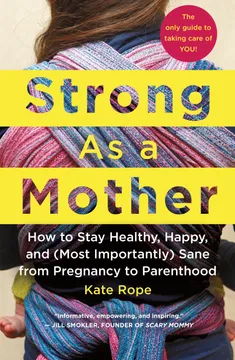
Strong as a Mother receives overwhelmingly positive reviews, with readers praising its compassionate, non-judgmental approach to pregnancy and new motherhood. Many wish they had read it earlier, highlighting its focus on maternal mental health, self-care, and normalizing perinatal mood disorders. Reviewers appreciate the relatable, conversational tone and real-mom anecdotes. Common criticisms include repetitiveness and limited actionable advice. It is frequently recommended as a gift for expecting mothers.








































