
Plot Summary
In the Shadow of Blue
Kevin Pace, an accomplished but emotionally guarded painter, works on a monumental, secretive canvas in a locked barn. He obsessively controls access, even denying his family and closest friend entry. The colors he uses and their precise names symbolize his need for order within his chaotic inner life. Despite outward comfort and the trappings of creative acclaim, Kevin is restless, increasingly aware that he is defined as much by what he keeps hidden as by what he shows to the world. His private art, unshared, hosts his greatest vulnerabilities and failures, underscoring a life lived in partial shadow, always holding back a crucial part of himself.
A Private Canvas Unveiled
Kevin's secret painting embodies everything unspoken in his life. While his other works are public—judged, bought, and sold—this masterpiece occupies a physical and spiritual space of its own, becoming a receptacle for decades of buried experiences, guilt, and longing. He views the painting as a fortress, its value increasing through isolation, yet its very secrecy alienates him from his wife and children. This painting becomes a metaphor for unsaid truths and the paradox that hiding something precious often renders its keeper even lonelier, making intimacy with others more difficult. The painting thus evolves from an artistic project into a symbol of both self-preservation and quiet devastation.
Fractures in the Family
At home, Kevin's relationships with his wife, Linda, and their children, April and Will, are loving yet fraught with distance. His emotional detachment manifests most during family vacations and day-to-day routines. He laments his failures as a father, noting the gradual estrangement from his daughter as she grows into adolescence. Despite superficial harmony, the family is held together by routines and unspoken sacrifices. Kevin's work becomes an accepted obsession, a stand-in for genuine communication, leaving the family structure fragile and weighted by the things left unsaid—notably, April's growing anxieties and Kevin's persistent self-doubt.
Crossing Boundaries in Paris
Years earlier, Kevin and Linda traveled to Paris for a romantic escape, intending to rekindle intimacy. Linda's brief trip elsewhere leaves Kevin alone, where he drifts into an affair with Victoire, a young art student. Their connection begins with subtle flirtation and quickly escalates to physical intimacy. Kevin is struck by Victoire's youth and artistic ambition and is seduced both by her and the chance to momentarily escape his own staleness and regrets. The affair brings joy but also guilt—a guilt complicated by Kevin's realization that desire can coexist with love for his wife, and that secrets have a way of binding as well as breaking.
The Call to El Salvador
Kevin's best friend, Richard, pleads for help finding Richard's troubled brother Tad, rumored lost in El Salvador. Despite misgivings, Kevin accompanies Richard, drawn by loyalty and a sense of emotional debt. Their journey plunges them into a volatile, war-torn world—starkly different from Rhode Island. The search is messy, dangerous, and morally ambiguous: the lines between helper and intruder blur. Surrounded by violence, corruption, and mercenaries, Kevin's identity as an observer is shattered; he's drawn into direct action, forced to reckon not just with foreign chaos but the darkness within himself.
Through the Jungle of Youth
The novel braids Kevin's coming-of-age in El Salvador with moments of reflection as a father and husband years later. Youthful bravado and idealism are eroded by exposure to trauma abroad and the slow-motion crises at home. In both places, Kevin is forced into new roles: friend, father, accomplice, confessor. He is confronted with the failures of good intentions—watching innocence destroyed, relationships fracture, and the past reverberate into his present. The literal jungles and urban wilds mirror his internal confusion and shape his haunted adult self.
Violence at the Edges
Kevin and Richard are swept up in violence that is at once political and deeply personal. Searching for Tad, the men witness aftermaths of atrocity—a murdered child, a grieving father—and are drawn into perilous dealings with mercenaries and local power brokers. Kevin is uniquely scarred by a moment when he kills an armed stranger in self-defense, an act he never fully processes or confesses. The violence is not only an indictment of war, but of men's attempts to manage fear, guilt, and duty. These memories will haunt, and eventually define, Kevin's later life, surfacing in dreams and art.
Clandestine Love and Secrets
After Paris, Kevin's affair with Victoire lingers, complicating his feelings towards Linda and his sense of self. Victoire's youthful bravado, the excitement of secrecy, and the taste of a different life all temporarily buoy him, but the guilt and emotional fallout deepen. The affair is punctuated by the exchange of confessions—Kevin's violence, Victoire's suffering—binding them in ways that echo the destructive cycles of secrecy throughout his life. Ultimately, what begins as liberation collapses into more silences, returning Kevin to familiar territory: a man at odds with the truths he cannot say.
Tension in the Vineyard
Annual family summers in Martha's Vineyard bring fleeting moments of happiness but also expose rifts. Canoe outings and nature-watching cannot bridge emotional divides; the changing dynamics between father, daughter, and son are magnified in the closeness of the isolated vacation home. A singular moment of connection with April becomes for Kevin the nucleus of his great painting—yet the joy is tinged by his chronic inability to sustain intimacy. These rituals, meant to forge closeness, instead emphasize everything ephemeral and out of reach.
Promises and Betrayals
April, sixteen and pregnant, confides in Kevin and extracts a promise that he will not tell Linda. Kevin struggles with the obligation of this "magic incantation," weighing loyalty to his daughter against honesty with his wife. The secret eats away at him, isolating him from both women. When April suffers a miscarriage and the truth emerges in crisis, both April and Linda feel betrayed—not because Kevin broke his word, but because his silence failed to protect or honor them. The knot of promises and secrecy encapsulates the core of Kevin's failings: well-intended, but ultimately alone with his choices.
Grave in the Rain
The El Salvador storyline climaxes with Kevin, Richard, and Tad stumbling into a village devastated by violence. There, they help a grieving father bury his murdered daughter in the rain, wordlessly sharing trauma across language and nationality. This act—mundane, necessary, horrifying—becomes an indelible wound and the deepest secret in Kevin's life. The memory, preserved and reinterpreted over decades, infects his art and his parenting. He is joined to the little boy—Luis—forever, both by action and by the secret of the severed hand silently placed in his care.
Daughter's Secret, Father's Burden
After April's miscarriage, the family reels. Linda is furious to learn Kevin kept April's secret; April is embittered that her father's loyalty achieved nothing. Will, the son, tries to be a supportive brother and seeks connection with his father, but senses the dysfunction. The episode renders the family's underlying fractures explicit. Kevin's guilt is twofold: for failing to protect his daughter, and for having failed as a husband and father to maintain trust or open communication. The miscarriage becomes emblematic of the costs—emotional and existential—of secrets kept for the wrong reasons.
To Keep or Reveal
Kevin struggles with the aftermath of promises broken and kept. He analyzes his motivations, recognizing how pride, fear, and self-interest guided him more than love or wisdom. Discussions with Richard, and attempts at reconciliation with Linda and April, reveal how secrets, even well intentioned ones, often wound rather than shield. The difficulty of finding the "correct" ethical path—particularly as a father—makes clear the perplexing, often paradoxical nature of human relationships. Here, forgiveness is hard won, and change only comes with the painful recognition of harm.
Return to the Colors
Kevin's obsession with blue—and his inability to control or fully comprehend it—mirrors his struggle to make sense of his life's traumas. The act of painting becomes a way to process memory, guilt, and longing. The secret canvas swells with layers of experience: the violence of El Salvador, the regret of his affair, the pain of breaking his daughter's trust. Each pigment is heavy with meaning. Across time, his art offers both solace and accusation, the only language sufficient for wounds too deep for speech.
Seeking Closure Abroad
Thirty years after his first trip, Kevin returns to El Salvador—ostensibly to seek "closure," but also, perhaps, to seek punishment, forgiveness, or understanding. He finds the village changed but still haunted by memory. Meeting Lavada's family and visiting her grave, Kevin is both comforted and unsettled. The past remains irremediable, but his acknowledgment and grief are finally shared, if only briefly, with those most affected. The journey yields no easy epiphany; instead, it offers a modest, necessary act of witness.
Resurfacing Truths
Back home, Kevin comes as close as he can to confession with Linda, sharing what he can bear, keeping back what he cannot. Family dynamics remain altered—April distant, Linda hurt but forgiving, Will gently supportive. Reflection leads Kevin to acknowledge, perhaps for the first time, that he never truly loved Linda at the start, but that love, complicated but real, has grown through shared experience, sorrow, and reconciliation. Complete understanding is impossible, but recognition and a willingness to finally open the locked door signal a hesitant peace.
Of Guilt, Grace, and Blue
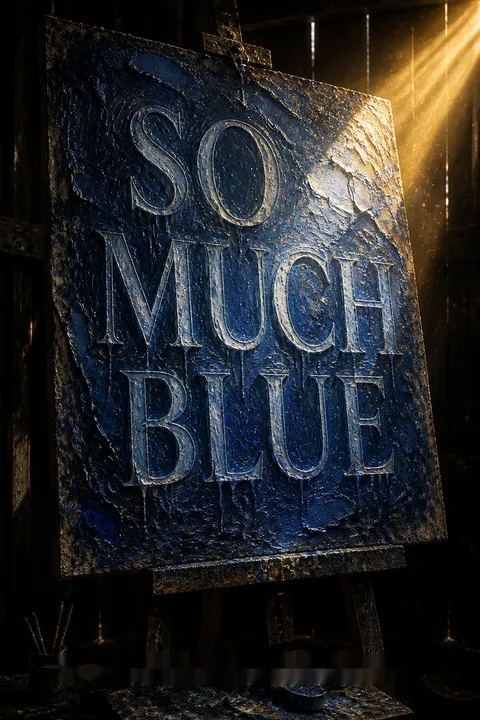
In the end, Kevin reconciles himself to a life shaped by guilt, loss, and regret—recognizing that such burdens are simply the price of living and loving. His painting—so long shielded—becomes a way of honoring what cannot be ever fully healed or explained. When, at last, he allows Linda to see his masterpiece, it is not as explanation or absolution, but as a gesture of honesty, saying, "Now you know everything." The "so much blue" of his canvas stands for sadness, sorrow, the sky, the ocean, and the possibility of transformation.
Opening the Locked Door
Allowing Linda into his sacred space, Kevin performs the ultimate act of vulnerability. She stands before the painting, struck by its beauty and its weight. Their bond, damaged but unbroken, is reaffirmed through this shared encounter. The locked door—literal and figurative—finally opens, signifying not the end of secrets, but the possibility of grace. The private and the shared, the past and the present, are unified for a moment in art. The blue, endless and ambiguous, remains, but now as witness rather than as prison.
Analysis
In So Much Blue, Percival Everett crafts a haunting exploration of secrecy, trauma, parenthood, and the messy requirements of love. The novel interrogates the idea that art can somehow redeem or explain the inexplicable—that through creative toil, one might locate a sense of self beyond guilt. Yet, as Kevin learns, neither secrecy nor confession offers full absolution; relationships, like art, are constructed of compromise, loss, and tentative grace. The narrative's nonlinearity reinforces the persistence of memory and the way past errors shape present understandings. At the heart of the novel lies a study of the dangers and necessities of secrecy: how what we keep hidden is both connective and corrosive. Yet, in the end, So Much Blue suggests the possibility—perhaps the necessity—of revelation, and the redemptive if incomplete power of vulnerability. Through his final act of unlocking the door to his painting, Kevin offers up not just his art, but his battered, imperfect self—a gesture of trust that, while unable to erase pain, makes forgiveness and connection possible. The story stands as a powerful meditation on the costs of silence, the courage required to face oneself, and the uneven ways that blue—sadness, memory, beauty—infuses us all.
Review Summary
So Much Blue receives mostly positive reviews, averaging 4.02/5. Readers praise Everett's masterful three-timeline structure, weaving together present-day New England, 1979 El Salvador, and 1990s Paris through protagonist Kevin Pace, a painter burdened by secrets. Many highlight the novel's meditations on guilt, artistic sacrifice, and emotional distance within families. The writing is frequently described as precise, humorous, and moving. Critics note some storylines feel clichéd, particularly the Paris affair, but most agree the narrative threads converge powerfully, leaving a lasting impression.
People Also Read








Characters
Kevin Pace
Kevin is an acclaimed painter whose internal landscape is as turbulent as his sprawling, secretive canvas. An analytical, introspective man, Kevin is skilled at observing the world yet wrestles with connection and intimacy. His identity is built around concealment—whether hiding a painting, an affair, or a traumatic past. Drawn to both order and chaos, he obsesses over colors and names, seeking clarity where life offers only ambiguity. His guilt over silenced confessions and the inability to bridge the gaps within his family or himself drive both his personal failures and his artistic achievements. In the end, Kevin pursues redemption, however incomplete, through honesty, vulnerability, and creation.
Linda Pace
Linda, Kevin's wife, is practical, intelligent, and deeply committed to her family. Patient and perceptive, she senses emotional rifts long before they are acknowledged. Her love is steadfast but not uncritical: she is frustrated by Kevin's emotional defensiveness and secrecy, feeling shut out of vital aspects of his life, especially his art and his heart. Her pain at infidelity and at being denied important truths is countered by resilience and eventual forgiveness. Linda's capacity for care and her measured responses provide the gravity around which the family orbits—even as her dreams and disappointments remain, like Kevin's paintings, only partly visible.
April Pace
April is a bright, sensitive, and ultimately wounded teenager. Her growing pains are intensified by a gulf with both parents: a yearning for connection with her distracted father, and a tense relationship with her mother. Her secret (pregnancy) and her demand for Kevin's silence reflect both trust and rebellion. The loss she suffers and the revelation of her secret leave her disillusioned—resentful not just that her father kept his promise, but that he failed to act on her behalf. April's hurt, sarcasm, and eventual estrangement embody the complexities of adolescence and the collateral damage of adult failings.
Will Pace
Will, the family's younger child, is cheerful, intelligent, and insightful in his quiet way. While less turbulent than April, he is acutely aware of his family's undercurrents. Often overlooked in the midst of adult drama, Will nonetheless seeks and provides comfort, expressing care for his sister and concern for his parents' wellbeing. He has a dry wit and a natural, unassuming kindness. His interactions with Kevin reflect both disappointment and love, allowing for moments of gentle reconnection and forgiving intergenerational empathy.
Richard
Richard, a Beowulf scholar, is Kevin's oldest and closest friend. He shares Kevin's belief in deep loyalty—traveling together through graduate studies, artistic ambitions, and the perilous search for Richard's brother in El Salvador. Richard's pragmatic, sometimes sardonic, voice provides counsel and confrontation. Their friendship endures strain—testing the capacities for forgiveness, confession, and tacit understanding. Richard serves both as sounding board and conscience, enduring his own setbacks but modeling resilience in the face of loss and moral ambiguity.
Victoire
Victoire—a young, aspiring French painter—embodies temptation, freedom, and the intoxicating lure of new beginnings. She is intelligent, spirited, and more emotionally complex than her youth might suggest. Her affair with Kevin oscillates between tenderness and transgression, ultimately prompting him to confront his own longings and limitations. Victoire's own pain, including struggles with depression, are shared in moments of vulnerable honesty. Despite her role as transgressor and secret-keeper, she refrains from victimhood or melodrama, instead offering Kevin a bittersweet, impossible love that illuminates—and complicates—his life.
Tad
Tad, Richard's older brother, is the troubled figure at the heart of the El Salvador journey. Addicted, reckless, and often absent, Tad embodies chaos and the destructive consequences of addiction, poor decisions, and evasion. His disappearance spurs Kevin and Richard's journey through violence and moral quandary, yet his eventual appearance is anticlimactic, exposing not heroism but fragility and self-sabotage. Tad's impact is ultimately less about his presence than about the loyalty, suffering, and disillusionment he provokes in others.
The Bummer (Bumgarner)
The Bummer is a terrifying, charismatic mercenary whose presence in El Salvador epitomizes the brutality and amorality of war. Traumatized by Vietnam, he is alternately boastful, racist, vulgar, and oddly vulnerable. His interactions with Kevin and Richard precipitate their most dangerous moments, forcing them into actions and moral compromises they will never fully undo. The Bummer's eventual death is both a literal and symbolic killing of innocence—and a haunting testament to the cycles of violence men perpetuate and endure.
Carlos
Carlos is a polyglot intermediary in El Salvador, profiteering off the misery of others by photographing the dead and charging grieving families to see his notebook of images. Cosmopolitan, ambiguous, and detached, he highlights the problematic roles of outsiders and witnesses. His encounters with Kevin fuel rage and despair, pushing Kevin closer to the limits of empathy and violence. Carlos's existence in the narrative foregrounds the commodification of suffering and the ethical burdens of bearing witness.
Emberto Rodriguez ("Luis's father")
The grieving father whom Kevin aids in El Salvador is the unwitting repository of Kevin's greatest guilt and secret. His enduring loss, humility, and resilience become a touchstone for Kevin decades later. Their silent communion in trauma and bereavement—across time, language, and culture—underscores the universality of suffering and the possibility, however fleeting, of mutual recognition and grace.
Plot Devices
Secrets: Burden and Bargain
Throughout the novel, secrets serve as both catalysts and poisons. Kevin's private painting, his affair, April's pregnancy, and the violence in El Salvador are all hidden or half-shared, each secret both safeguarding and isolating. The narrative structure—moving between decades and geographies—mirrors the ways secrets persist, mutate, and eventually demand revelation or atonement. At each turn, the cost of secrecy is measured not only in suffering, but in the loss of intimacy it produces.
Nonlinear Narrative: Past and Present
The novel employs a nonlinear structure, interleaving the present with crucial periods from Kevin's past: the Paris affair, the El Salvador calamity, and present-day unfolding family drama. This interlacing allows plot points to resonate across time, showing how trauma, love, and bad choices echo into the future. The technique enhances suspense, complicates causality, and heightens thematic unity by demonstrating how the past insists on its presence.
Art as Metaphor and Mirror
Art, especially painting and the use of color (especially blue), is both literal and figurative throughout. Kevin's artistic process shapes his identity and expresses the inexpressible. His secret canvas stands both as a physical object and an extended metaphor for memory, secrecy, and the complexity of experience. The language of painting—names of colors, struggles with form, and debates over meaning—is used to represent both the beauty and violence of life, the attempt to make permanent what is fleeting.
Promises: Spoken and Broken
Marriage vows, parent-child promises, oaths to friends—each propels the plot forward, shaping both action and guilt. Kevin's promise to April, Richard's bond to Kevin, and Kevin's own inability to keep or break vows cleanly demonstrate that promises, once made, have a power beyond reason. The narrative repeatedly explores the tragic gap between intention and action, confession and concealment.
Violence and Its Repercussions
A core narrative driver is the lasting psychological effect of the violence Kevin experiences and commits in El Salvador. The trauma is refracted and digested, appearing in dreams, in canvases, and family interactions. The recursive, cyclical structure of this memory—constantly returning, never resolved—mirrors how violence is inherited, transformed, and sometimes (imperfectly) atoned.
Foreshadowing and Irony
Everett employs subtle and overt foreshadowing—jokes about death, comments about art, minor characters' roles—which come full circle in shocking or poignant ways. The painting's title, never revealed aloud until the end, and the recurring motif of blue, both literal and metaphorical, deepen the sense of inexorability and irony as the story's threads converge.

Download PDF
Download EPUB
.epub digital book format is ideal for reading ebooks on phones, tablets, and e-readers.








































