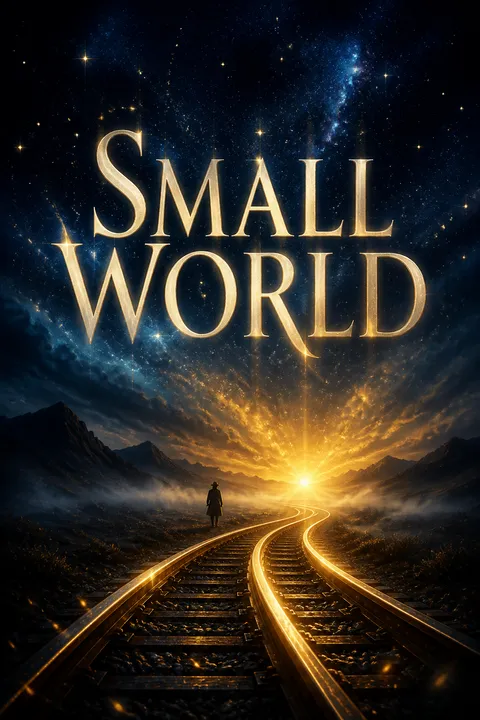
Plot Summary
Crossing the Golden Door
The Bergen family, fleeing famine and despair in Ireland, endures a harrowing Atlantic crossing, clinging to the promise of America as their salvation. Alma, the mother, sacrifices everything to keep her twins, Finn and Nora, alive, even as death and deprivation haunt their journey. Upon arrival in New York, the family is battered by the squalor and chaos of Five Points, only to find their promised land is as unforgiving as the one they left. Yet, the hope of opportunity persists, buoyed by the kindness of strangers and the relentless will to survive. The Golden Door is both a literal and symbolic threshold, marking the beginning of a generational saga of striving, loss, and the search for belonging in a land that promises much but delivers little certainty.
Roots and Rails
Walter Bergen, a modern-day train engineer, reflects on his family's deep connection to the American railroad, stretching back to his great-great-grandfather Finnegan, who helped lay the transcontinental tracks. The railroad is both a source of pride and a symbol of the American dream—mobility, progress, and the hope of a better life. Yet, as Walter faces retirement and the end of his family's railroad legacy, he is haunted by the realization that progress is double-edged, often leaving behind those who built it. The chapter weaves together past and present, showing how the rails that once united a nation also carry the weight of broken promises and unfinished journeys.
Westward Bound
Across generations, characters are propelled westward by necessity and hope. Othello, an enslaved man, dreams of freedom as he travels with his master toward Chicago, contemplating escape and the terrifying prospect of self-determination. Wu Chen, a Chinese immigrant, endures hardship and violence in pursuit of Gum Shan—the Golden Mountain—only to find that America's bounty is guarded by prejudice and brutality. Luyu, a Miwok girl, is displaced by colonization and forced to navigate a world that seeks to erase her identity. Each journey west is fraught with peril, but also with the possibility of reinvention, as the characters seek to carve out a place for themselves in an ever-shifting landscape.
Broken Promises
The promise of America—freedom, equality, prosperity—is repeatedly undermined by exploitation, racism, and violence. The Bergen twins are separated by the orphanage system, their bond severed by the very institutions meant to protect them. Othello's dreams of liberty are stifled by the relentless pursuit of his former master. Wu Chen's hard-won fortune is tainted by bloodshed and betrayal. Luyu's attempts to build a home are shattered by violence and loss. The railroad, once a symbol of unity, becomes an engine of displacement and greed. Through these intertwined stories, the novel interrogates whether America has ever truly delivered on its promises, or if those promises were always reserved for the few.
New World, Old Wounds
The scars of the past—personal and collective—shape the lives of descendants. In the present, Brianna Flowers struggles to provide for her son Malik, determined to break the cycle of disadvantage that has plagued her family since emancipation. Jenny Chen, a corporate executive, is haunted by the sacrifices of her immigrant ancestors and the pressures of modern success. Laila Tully, fleeing abuse, carries the weight of her Miwok heritage and the legacy of displacement. Each character grapples with inherited wounds, seeking healing and meaning in a world that often feels indifferent to their suffering. Yet, resilience endures, passed down like a stubborn flame.
The Ties That Bind
Amidst hardship, characters find solace and strength in chosen families and unexpected alliances. The Bergen twins, though separated, remain tethered by memory and longing. Othello, reborn as George Flowers, finds love and purpose with Cora, forging a new lineage in the face of relentless pursuit. Wu Chen and Ai Lu build a life together, their partnership a testament to perseverance and adaptation. In the present, Malik and Brianna's bond is both a shield and a launching pad, while Jenny and Todd Chen-Murphy navigate the complexities of marriage, parenthood, and cultural inheritance. These ties, fragile yet enduring, are what make survival possible.
Fractures and Fortunes
The march of progress—railroads, industry, westward expansion—creates winners and losers. The Vogels, Finn's adoptive family, are forced to sell their farm to the railroad, trading dreams of independence for survival. The Chens' grocery business flourishes, but Wu Chen is haunted by the violence that enabled his success. The Tullys' attempts at homesteading are undone by murder and dispossession. In the modern era, economic insecurity and systemic barriers persist, as Brianna faces workplace harassment and Jenny confronts the emptiness of material achievement. The pursuit of fortune is always shadowed by fracture—of families, communities, and ideals.
The Smallest World
The novel's narrative threads converge on a single train journey—the Coast Starlight—where descendants of these interwoven families are brought together by chance and catastrophe. Walter Bergen, on his final run, is at the helm when disaster strikes. Malik Flowers, en route to a basketball tournament that could change his life, is forced to confront the fragility of dreams. Jenny Chen-Murphy and her family are caught in the wreck, their carefully constructed world upended. Laila Tully, fleeing her past, finds herself among strangers whose histories echo her own. In the aftermath, the boundaries between past and present, self and other, blur, revealing the smallness of the world and the vastness of human connection.
Lost and Found
In the wake of the train collision, characters are forced to reckon with loss and the possibility of renewal. Walter is haunted by guilt, his legacy forever altered. Malik must choose between personal ambition and familial duty as his mother is injured. Jenny and Todd face the unthinkable as their son's life hangs in the balance, their marriage tested by grief and blame. Laila, adrift but determined, presses on toward an uncertain future. Through suffering, the characters discover unexpected reservoirs of strength and compassion, forging new paths even as they mourn what has been lost.
Generations in Motion
The narrative leaps across time, tracing the ripple effects of choices made by ancestors. Nora Bergen, now a wealthy heiress, uses her fortune to search for her lost twin, her life defined by longing and generosity. Finn, restless and rootless, drifts ever westward, his journey emblematic of the American impulse to move, to seek, to escape. The Chens and Flowerses, now established in the Pacific Northwest, grapple with the legacies of migration, assimilation, and resistance. The novel suggests that history is not a straight line but a web, each generation both burdened and buoyed by those who came before.
The Weight of Inheritance
Nora's unexpected inheritance transforms her from servant to benefactor, yet she finds little solace in riches without connection. Wu Chen's fortune, built on violence and perseverance, is both a blessing and a curse, shaping the destinies of his descendants. The Flowers family, from enslavement to present-day Portland, carries both the scars and the strengths of their lineage. The Chen-Murphys, beneficiaries of generations of sacrifice, struggle to find meaning beyond material comfort. Inheritance is revealed as more than money—it is memory, pain, resilience, and the stories we tell ourselves about who we are.
The Cost of Progress
The completion of the transcontinental railroad is celebrated as a triumph, yet its true cost is measured in lives disrupted, lands stolen, and promises broken. The novel interrogates the myth of American progress, exposing the exploitation and violence that undergird its achievements. The characters' personal struggles mirror the nation's unfinished reckoning with its past. As the world grows smaller, the debts of history become harder to ignore, demanding acknowledgment and, perhaps, atonement.
The Longest Journey
Finn's odyssey across America, from Ireland to the Pacific, is both literal and metaphorical—a quest for home that is always just out of reach. Luyu's flight from violence and dispossession echoes the journeys of countless others, her resilience a quiet act of defiance. Malik's pursuit of basketball glory is shadowed by the weight of family and history. Jenny's restless ambition is tempered by the realization that fulfillment cannot be bought. The novel suggests that the longest journey is not across continents, but toward understanding, acceptance, and connection.
Collisions and Consequences
The train wreck is both a literal and symbolic collision—of past and present, hope and reality, individual and collective fate. In its aftermath, characters are forced to confront the limits of control and the unpredictability of life. Walter's mistake reverberates through the lives of strangers, binding them together in shared vulnerability. The survivors must navigate grief, guilt, and the challenge of rebuilding. The consequences of a single moment ripple outward, echoing the unforeseen impacts of choices made generations before.
The Search for Home
As the dust settles, the characters continue their search for home—geographical, emotional, spiritual. Nora, in her final years, journeys west to find her brother's grave, finding solace in connection with his descendants. Laila, battered but unbroken, arrives in Queets, determined to build a new life. Malik, tested by adversity, recommits to his dreams and his family. Jenny and Todd, scarred by loss, seek meaning in the fragments of their shattered world. The novel insists that home is not a place, but a constellation of relationships, memories, and hopes.
Horizons Unseen
The story closes with the next generation—children of the Chens, Flowerses, and Tullys—standing on the threshold of new journeys. The world, made small by rails and wires, remains vast in its possibilities and perils. The characters' struggles and triumphs become the inheritance of those who follow, their stories woven into the fabric of a nation still striving to live up to its ideals. The horizon is both a boundary and an invitation, beckoning each new traveler to seek, to question, and to dream.
Full Circle
In the end, the novel returns to its beginnings—the crossing of oceans, the forging of rails, the search for belonging. The descendants of those who braved the Golden Door gather in the shadow of the Sierras, their lives shaped by the choices and sacrifices of those who came before. The world is both smaller and larger than they imagined, its promises still unfinished, its injustices still unresolved. Yet, in the persistence of love, memory, and hope, there is the possibility of redemption—a small world, but one worth fighting for.
Analysis
A sweeping meditation on American identity, Small World interrogates the myths and realities of progress, belonging, and justice
Jonathan Evison's novel is both an epic and an intimate portrait of a nation built on hope and haunted by broken promises. By weaving together the stories of immigrants, the enslaved, the displaced, and the striving, Evison exposes the costs of progress and the persistence of trauma across generations. The railroad, both symbol and engine, unites and divides, offering mobility while exacting a toll on those left behind. The novel's structure—braiding past and present, individual and collective—invites readers to see themselves in the struggles and aspirations of others, to recognize the smallness of the world and the vastness of our connections. Ultimately, Small World is a call to empathy and reckoning, insisting that the work of building a more just and inclusive America is unfinished, and that the stories we inherit and pass on are both our burden and our hope.
Review Summary
Small World receives mostly positive reviews, averaging 4.07 out of 5. Readers praise Evison's ambitious multigenerational structure, weaving together diverse 19th-century characters and their modern descendants across two timelines. Many admire the seamless handling of numerous storylines, the vivid historical settings, and the overarching American Dream themes. Common criticisms include an abrupt, unresolved ending that leaves many character arcs incomplete, and occasional flatness or lack of depth in characterization. Despite mixed feelings about the conclusion, most reviewers found the novel compelling, panoramic, and emotionally resonant.
People Also Read


Characters
Finn Bergen
Finn is the emotional heart of the novel, a twin whose life is defined by separation, longing, and perpetual motion. Orphaned in America, adopted by the Vogels, and later cast adrift by circumstance, Finn's journey westward mirrors the restless spirit of the nation. He is both witness and participant in the building of America, laying rails across the continent while searching for a sense of belonging that remains elusive. His silence, both literal and metaphorical, is a shield against trauma and a testament to resilience. Finn's relationships—with Nora, with his adoptive family, with the strangers he meets—are marked by both tenderness and distance. His inability to settle, to claim a home, is both his tragedy and his legacy, passed down to future generations as a yearning that never quite finds rest.
Nora Bergen
Nora's life is shaped by the loss of her brother and the hardships of immigrant survival. From the orphanage to servitude in the Seymour household, she endures with a quiet strength, eventually inheriting a fortune that she uses to search for Finn and to uplift others. Nora's generosity is both a response to her own deprivation and a challenge to the inequities of her time. Her psychological landscape is marked by longing, guilt, and a fierce commitment to justice. Even as wealth and influence become hers, she remains defined by the absence of her twin, her life a testament to the enduring power of love and the costs of separation.
Walter Bergen
Walter is the modern embodiment of his family's railroad legacy, a man whose identity is inseparable from the rails he runs. Facing retirement and the end of a generational line, Walter is forced to confront the limits of control and the weight of history. His mistake on his final run—a moment's distraction with catastrophic consequences—becomes a crucible of guilt and self-examination. Walter's relationships, especially with his daughter Wendy, are fraught with generational tension, pride, and the struggle to adapt to a changing world. His journey is one of reckoning—with the past, with progress, and with the possibility of forgiveness.
Wu Chen
Wu Chen's story is one of endurance, adaptation, and the moral ambiguities of survival. Arriving in America with nothing, he endures exploitation and violence, ultimately achieving prosperity through both luck and grim necessity. His marriage to Ai Lu is a partnership of equals, marked by mutual respect and shared ambition. Yet, Wu Chen is never free from the ghosts of his past—the friends he could not save, the men he killed, the compromises he made. His psychological struggle is one of self-forgiveness and the challenge of building a future untainted by the sins of survival. Wu Chen's legacy is both material and emotional, shaping the destinies of his descendants and the city he helps build.
Othello / George Flowers
Othello's transformation from enslaved servant to free man is fraught with peril, longing, and the constant threat of recapture. His love for Cora is both a refuge and a source of vulnerability, as together they forge a family in the face of relentless pursuit. Othello's journey is marked by the tension between fear and hope, agency and dependency. His psychological arc is one of claiming selfhood in a world determined to deny it, and of passing on the hard-won lessons of survival and dignity to his children. The Flowers family's story is a testament to the endurance of love and the ongoing struggle for freedom and belonging.
Luyu Tully
Luyu is a Miwok woman whose life is shaped by colonization, violence, and the relentless search for home. Her resilience is quiet but profound, as she endures loss, displacement, and the burdens of single motherhood. Luyu's psychological landscape is marked by both trauma and hope, her identity forged in the crucible of survival. Her relationships—with John Tully, with her children, with the land—are sources of both pain and healing. Luyu's story is a counter-narrative to the myth of American progress, revealing the costs borne by those erased from history.
Brianna Flowers
Brianna is a modern Black woman whose life is defined by sacrifice, resilience, and the determination to secure a better future for her son, Malik. Her struggles—with poverty, workplace harassment, and the pressures of single parenthood—are both personal and emblematic of systemic injustice. Brianna's psychological strength is matched by vulnerability, as she navigates the tension between hope and pragmatism. Her relationship with Malik is both nurturing and demanding, a testament to the power of maternal love and the burdens of generational aspiration.
Malik Flowers
Malik is the embodiment of possibility and the weight of expectation. A basketball prodigy, he is both celebrated and burdened by the hopes of his family and community. Malik's journey is one of self-discovery, as he navigates the pressures of performance, the temptations of escape, and the responsibilities of legacy. His psychological arc is marked by the tension between individual ambition and collective identity, between the desire to transcend circumstance and the pull of loyalty. Malik's story is a meditation on the costs and rewards of dreaming big in a world that is both rigged and full of promise.
Jenny Chen
Jenny is a high-achieving Chinese American woman whose life is shaped by the sacrifices of her ancestors and the demands of modern success. Her psychological landscape is marked by guilt, restlessness, and the struggle to balance ambition with fulfillment. Jenny's relationships—with her husband Todd, her children, her parents—are fraught with expectation, disappointment, and the challenge of bridging cultural divides. Her journey is one of reckoning—with the costs of assimilation, the emptiness of material achievement, and the search for meaning beyond success.
Laila Tully
Laila is a contemporary Miwok woman escaping an abusive relationship, carrying the weight of generational trauma and the hope of starting anew. Her journey north is both a flight from violence and a quest for self-determination. Laila's psychological arc is one of reclaiming agency, forging new connections, and confronting the legacies of displacement and erasure. Her story is a meditation on the challenges and possibilities of beginning again, and the quiet heroism of survival.
Plot Devices
Interwoven Generational Narratives
The novel's structure braids together the stories of several families—Irish, Black, Chinese, Miwok—across 170 years, using alternating chapters and shifting points of view. This device allows the reader to see how individual choices and historical forces ripple across generations, creating unexpected intersections and resonances. The narrative's nonlinearity mirrors the unpredictability of history and the complexity of inheritance, inviting the reader to draw connections between past and present, self and other.
The Railroad as Symbol and Catalyst
The railroad is both a literal and metaphorical engine of the story, representing mobility, opportunity, and the myth of American progress. It is the means by which characters move, escape, and seek fortune, but also the instrument of displacement, exploitation, and broken promises. The completion of the transcontinental railroad is a pivotal event, celebrated and mourned in equal measure. The train journey that brings the modern characters together is both a culmination and a reckoning, a moment when history's debts come due.
Foreshadowing and Echoes
The novel employs foreshadowing and echoes and recurring motifs—crossings, separations, collisions, inheritances—to create a sense of inevitability and interconnectedness. The struggles of one generation are echoed in the next, as characters grapple with similar dilemmas, hopes, and losses. The train wreck is foreshadowed by earlier disasters, both personal and historical, underscoring the fragility of dreams and the unpredictability of fate.
Letters and Artifacts
Letters, lockets, and other keepsakes serve as tangible links between characters and generations, carrying the weight of memory and longing. These artifacts are both burdens and blessings, reminders of what has been lost and what endures. The act of writing—letters never sent, stories never finished—is a means of survival and connection, a way of asserting presence in a world that forgets.
Modern Parallelism
By juxtaposing the lives of present-day characters with those of their ancestors, the novel highlights the persistence of injustice, the endurance of hope, and the unfinished work of building a more just world. The challenges faced by Brianna, Jenny, Malik, and Laila are not relics of the past, but living realities, shaped by history and shaping the future.
Download PDF
Download EPUB
.epub digital book format is ideal for reading ebooks on phones, tablets, and e-readers.








































