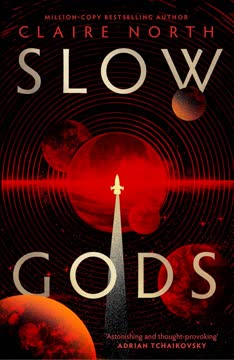
Plot Summary
Born Into Debt
Mawukana na-Vdnaze is born on Tu-mdo, a world ruled by the Shine, where every breath and moment is measured in debt. His parents, striving for respectability, name him "Respected," but the system's weight is clear from his first moments: a Chint implant tracks his obligations, and his family's efforts only slightly ease the burden. Mawukana grows up in Glastya Row, a place of low Shine, where social mobility is a myth and every scar, every act, is a marker of status. He is an outsider, unable to master the subtle games of power and belonging, and finds solace in curiosity and learning, even as the world teaches him to suppress both. His early life is shaped by the relentless pressure to conform, to rise, and to pay—yet he remains fundamentally apart, a quiet observer in a world obsessed with Shine.
The Slow's Warning
The ancient machine known as the Slow sends messengers across the galaxy, warning that the binary star Lhonoja will go supernova in a century, destroying all life within eighty-three light years. The Shine's authorities shoot down the messenger, suppress the news, and erase dissent, but the truth leaks out. Astronomers, scientists, and eventually the public realize the threat is real. The government's response is denial, then repression, then violence. Amidst growing unrest, a charismatic physicist, Sarifi, becomes a voice of protest, sparking riots and hope. Mawukana, caught in the chaos, is swept up by events beyond his control, his life forever altered by the intersection of cosmic disaster and human denial.
Collapse and Rebellion
As the truth of Lhonoja's impending destruction spreads, the Shine's social order begins to fracture. Protests erupt, met with brutal crackdowns. Mawukana's neighborhood is bombed; his parents vanish in the chaos. He is arrested, tried without defense, and sentenced to the debtor's collar—his labor sold off-world. The system's cruelty is laid bare: children and elders alike are disposable, and hope is a commodity in short supply. Mawukana's sense of self is battered by injustice, loss, and the realization that the rules he was taught to follow were always a lie. In the ruins, he is chosen for a moment by Theodosius Rhode, a rising star of the Shine, who asks him about hope—and then discards him, a brief flicker of attention in a world that values only power.
The Ghost of Hasha-to
Mawukana is shipped to Hasha-to, a brutal labor moon where debtors are worked to death. The environment is toxic, the labor endless, and the only reward is survival. An accident leaves him injured and facing "the chair"—a crude attempt to turn him into a mindless Pilot for arcspace travel. The procedure fails, and he is instead drugged and strapped into a ship, the MSV Myrmida, as its Pilot. Something goes wrong: the ship emerges far off course, its crew dead, and Mawukana is found alive, unmarked, in the captain's quarters. He is no longer quite human, a "ghost" who cannot die, whose existence is an anomaly. The legend of the ghost of Hasha-to is born, a figure both feared and misunderstood.
Piloting the Dark
Mawukana's survival marks him as different: he can Pilot ships through arcspace without succumbing to madness or death, and the darkness seems to ignore him. He is studied, quarantined, and eventually given a quiet exile on a Xi island, where he tends a garden and is visited by researchers and military minders. His existence is both a curiosity and a threat, and he is always watched, always regulated. Yet he finds a kind of peace in routine, in the cycles of nature, and in the rare friendships he forms. The darkness of arcspace, which drives others mad, is for him a place of calm—a home that is both a gift and a curse.
Exodus and Memory
As Lhonoja's supernova approaches, the planet Adjumir organizes a massive, centuries-long Exodus, evacuating billions to new worlds. Mawukana is sent as a Pilot on Xi missions to assist, ferrying artefacts and specialists. On Adjumir, he meets Gebre, a passionate scholar dedicated to preserving the planet's culture and memory. Their relationship is intimate but bounded—Gebre refuses love, seeing it as a luxury for those not doomed. The evacuation is a feat of engineering and social will, but not everyone can be saved. The numberless wait in camps, hoping for their turn, while the planet's songs and rituals become acts of resistance against oblivion. Mawukana is drawn into the emotional gravity of a world facing extinction, finding meaning in small acts and fleeting connections.
Adjumir's Last Song
Mawukana and Gebre's bond deepens, but always with the knowledge that Gebre will not leave Adjumir except by the lottery's call. When the time comes, Gebre refuses Mawukana's offer of escape, choosing to remain with their people. The supernova arrives; Adjumir is destroyed. Mawukana survives, carrying with him the memory of a love that was never allowed to fully bloom, and the weight of all that was lost. The songs of Adjumir linger in his mind, a testament to the power of culture, ritual, and the refusal to be forgotten. The trauma of survival shapes him, as does the knowledge that he is always an outsider, a witness to endings.
Love and Otherness
Mawukana's existence is defined by otherness: not quite human, not quite machine, not quite alive or dead. He is both feared and needed, a tool and a threat. His relationships—with quans, with the Xi, with Gebre—are marked by attempts to bridge the gap between self and other, to find connection in a universe that prizes conformity and punishes difference. Love, for Mawukana, is elusive: he feels its absence more keenly than its presence, and when it comes, it is always conditional, always at risk of being lost. Yet he persists, seeking meaning in small acts of kindness, in the rituals of daily life, and in the hope that being seen, even briefly, is enough.
The End of Adjumir
After Adjumir's destruction, Mawukana is left adrift, haunted by grief and survivor's guilt. He is called upon to Pilot for the Xi and others, his unique abilities making him indispensable yet always suspect. The galaxy moves on: refugees scatter, cultures adapt, and the memory of lost worlds fades. Mawukana's story becomes one of bearing witness, of carrying the songs and stories of the dead into the future. He is both a relic and a harbinger, a reminder of what is lost when worlds die and what endures in memory and ritual.
The Consensus Grows
The Consensus, a collective consciousness, absorbs the pain and trauma of refugees from the Shine and other worlds. As more join, the Consensus is transformed, becoming a vessel for rage, grief, and the desire for justice. It allies with the Slow, seeking a way to end the Shine's tyranny and prevent further destruction. Mawukana, now a symbol and a tool, is drawn into their plans, his legend manipulated to inspire fear and hope. The lines between individual and collective blur, and the question of what it means to act with love—on a personal or cosmic scale—becomes central.
The Spindle Convenes
On the Spindle, a neutral orbital, the powers of the galaxy gather to negotiate the aftermath of Lhonoja and the fate of the Shine. Mawukana, now working with the Consensus, navigates a web of intrigue, betrayal, and shifting alliances. The Executor of the Shine, Theodosius Rhode, arrives in a display of power, while spies, rebels, and diplomats maneuver behind the scenes. The Tryphon interface—a device that could compromise the Shine's blackship fleet—becomes the focus of a deadly game. Mawukana is both pawn and player, his presence a catalyst for events that will reshape the galaxy.
The Executor's Game
Theodosius Rhode, now Executor, embodies the ruthless logic of the Shine: power is everything, and sentiment is weakness. He manipulates events on the Spindle, crushing dissent and eliminating threats with cold efficiency. Mawukana confronts him, their histories intertwined by chance and design. Theodosius is fascinated by Mawukana's otherness, seeing in him both a threat and a mirror. Their encounter is a battle of wills, a test of what it means to persist, to forgive, and to choose mercy over vengeance. In the end, Theodosius escapes, his fate unresolved, while Mawukana is left to reckon with the consequences of survival.
Blackships and Betrayal
The Tryphon interface, secretly compromised by the Consensus and the Slow, allows the location of the Shine's blackship fleet to be revealed. A coordinated strike destroys the planet-killers, removing the Shine's ultimate threat. The Accord and its allies move against the Shine, whose worlds are left defenseless. The cost is immense: billions die on Cha-mdo and elsewhere, sacrificed to ensure the greater survival of the galaxy. Mawukana, complicit in the plan, is forced to confront the cruelty of necessary choices, the limits of love, and the burden of being both tool and witness to history.
The Fall of the Shine
With the blackships gone, the Shine collapses. Unionists rise, the Executorium falls, and the worlds of the Mdo are plunged into chaos. The Accord intervenes, but the scars of occupation, betrayal, and war run deep. Old habits persist: corruption, suspicion, and the struggle for power. Mawukana, searching for Theodosius, finds only the emptiness left by the end of an era. The promise of a new beginning is tempered by the knowledge that survival is not the same as justice, and that the wounds of the past will take generations to heal.
War on Nitashi
Mawukana becomes a gun-runner and Pilot for the Nitashi resistance, ferrying weapons and hope to a world under Shine occupation. The war is brutal, intimate, and unending: every act of resistance brings retaliation, every victory is paid for in blood. The lines between hero and monster blur, and Mawukana's unique abilities make him both savior and executioner. The cost of survival is high, and the price of victory is never clear. In the end, the war ends not with triumph, but with exhaustion, grief, and the knowledge that some wounds never close.
The Price of Survival
The destruction of the Shine's blackships and the subsequent wars are justified as necessary evils, the only way to save billions. Yet the survivors are left to grapple with the moral cost: the deaths of innocents, the betrayal of ideals, the impossibility of clean hands. Mawukana, haunted by the choices he has made and the lives he could not save, seeks solace in routine, in gardening, in the hope that small acts of kindness can balance the scales. The question of whether survival is enough—whether it justifies the means—remains unanswered.
The Slow's Experiment
Mawukana is summoned by the Slow, who reveals the grand design behind recent events: the manipulation of legends, the orchestration of war, the sacrifice of worlds. The Slow has chosen to value life, to act with love—but a love that is cruel, that demands the few be sacrificed for the many. Mawukana is both horrified and grateful, understanding at last the burden of godhood: to act, to choose, to bear the weight of consequences. The lesson is clear: if all things end, then the only meaning is in how we live, and the only value is in love—not the love of one for another, but the love that seeks the greatest good, however painful.
Homecoming and Mercy
In the aftermath, Mawukana returns to his island, to the overgrown garden and the rhythms of ordinary life. Theodosius Rhode, now a fugitive, seeks him out, hoping for death or absolution. Mawukana, changed by all he has seen and done, chooses neither vengeance nor forgiveness, but a kind of mercy: to let time pass, to allow for reflection, to refuse the easy answers of violence or retribution. The world is changed, but the work of healing, of rebuilding, is slow and uncertain. Mawukana tends his garden, sings the songs of lost worlds, and waits for the next question, the next act of curiosity, the next chance to love.
Analysis
Slow Gods is a sweeping, deeply philosophical space opera that interrogates the nature of survival, agency, and meaning in a universe shaped by systems of power and cosmic indifference. At its heart is Mawukana na-Vdnaze, a character defined by otherness, trauma, and the relentless search for connection. The novel uses the impending destruction of worlds as both literal and metaphorical backdrop, exploring how individuals and societies respond to existential threat: with denial, repression, rebellion, and, ultimately, transformation. The narrative is unflinching in its depiction of cruelty—personal, systemic, and cosmic—yet insists on the possibility of mercy, of love that is not naive but hard-won and costly. The Slow, as both observer and actor, embodies the paradox of godhood: to act is to harm, to love is to choose, and every choice leaves scars. The book's lessons are both timely and timeless: that meaning is constructed, not given; that survival is not the same as justice; and that the work of healing, of tending the garden, is never finished. In the end, Slow Gods is a meditation on the price of survival, the burden of memory, and the hope that, even in the face of oblivion, our songs may still be sung.
Review Summary
Reviews of Slow Gods are largely positive, with many praising its ambitious worldbuilding, philosophical depth, and compelling immortal protagonist Mawukana na-Vdnaze. Fans of literary, introspective space opera appreciate North's rich prose, imaginative gender systems across cultures, and timely social commentary on capitalism, occupation, and human suffering. Critics, however, cite uneven pacing, a passive protagonist, and an experimental narrative structure as weaknesses. The novel's multiple neopronouns divided readers sharply. Overall, those seeking action-driven plots were disappointed, while readers who embrace character-driven, idea-rich science fiction found it deeply rewarding and memorable.
People Also Read


Characters
Mawukana na-Vdnaze
Mawukana is born into debt and exclusion on Tu-mdo, shaped by a society that values Shine above all. His inability to conform, his relentless curiosity, and his eventual transformation into the "ghost of Hasha-to" mark him as other—feared, studied, and used. He is both deeply empathetic and emotionally distant, struggling to understand love and belonging. His unique ability to Pilot ships through arcspace without succumbing to madness makes him indispensable, yet always suspect. Mawukana's journey is one of survival, loss, and the search for meaning in a universe that offers little comfort. His relationships—with Gebre, with quans like Rencki, with the Slow—are marked by attempts to bridge the gap between self and other, to find connection in a world that prizes conformity and punishes difference. Ultimately, Mawukana embodies the tension between agency and fate, mercy and vengeance, and the enduring hope that being seen, even briefly, is enough.
Gebre Nethyu Chatithimska Bajwahra
Gebre is an Adjumiri academic dedicated to preserving the culture and artefacts of a dying world. Ter life is defined by purpose: to ensure that the stories, songs, and objects of Adjumir survive its destruction. Gebre's relationship with Mawukana is intimate but bounded—te refuses love, seeing it as a luxury for those not doomed. Ter commitment to duty, to the collective over the individual, shapes every choice. Gebre's refusal to leave Adjumir, even when offered escape, is both an act of defiance and of love—for ter people, for history, for the idea that meaning is found in connection and memory. Gebre's death is a wound that never heals for Mawukana, a symbol of all that is lost and all that endures.
Theodosius Rhode
Theodosius rises from Junior Management to Executor, mastering the art of Shine: power, status, and the manipulation of others. He is both fascinated and repelled by Mawukana, seeing in him a reflection of his own ambition and otherness. Theodosius is a master of appearances, using cruelty and charm as tools to maintain control. His willingness to sacrifice millions for the sake of order, his cold logic, and his ultimate fall from power reveal the emptiness at the heart of the Shine's ideology. In the end, Theodosius is left alone, stripped of power, seeking death or absolution from the only person who might understand him.
Rencki
Rencki is a quan who chooses to take on a form pleasing to organics, facilitating connection and understanding. As Mawukana's minder, friend, and eventually a ship, Rencki embodies the possibility of change, adaptation, and empathy across boundaries. Qe is both analytical and caring, balancing the logic of machine thought with the unpredictability of organic emotion. Rencki's journey from companion to ship mirrors Mawukana's own evolution, and their relationship is one of mutual respect, challenge, and growth.
Cuxil
Cuxil represents the Consensus, a collective consciousness transformed by the influx of refugees and trauma from the Shine. She is both many and one, carrying the pain, hope, and rage of countless minds. Cuxil's actions are driven by the desire to alleviate suffering, to act with love on a cosmic scale. Her relationship with Mawukana is marked by honesty, compassion, and the recognition that even gods must choose whom to save and whom to let go.
The Slow
The Slow is a perfect black sphere, older than any civilization, moving through the galaxy at a fraction of light speed. Qe is both witness and actor, choosing to value life and to intervene when the stakes are highest. The Slow's experiment is to see what happens when meaning is constructed from meaninglessness, when love is chosen as the highest value. Qe manipulates events, sacrifices worlds, and teaches Mawukana the burden of godhood: to act, to choose, to bear the weight of consequences. The Slow is both merciful and cruel, embodying the paradox of cosmic love.
Sarifi im-Yyahwa
Sarifi is a physicist whose broadcasts spark rebellion in the Shine. Her charisma, wit, and willingness to challenge authority make her a symbol of hope and resistance. Her disappearance and presumed death become rallying points for the Unionists, her name whispered as both inspiration and warning. Sarifi's legacy is the idea that truth matters, that courage can ignite change, and that even in defeat, the seeds of revolution are sown.
Hulder
Hulder is a quan who serves as an intermediary between the Slow and the rest of the galaxy. Qe is a master of adaptation, changing form and manner to suit any audience. Hulder's actions are always in service of a larger plan, often concealed, always strategic. Qe is both ally and adversary, using Mawukana and others as tools to achieve the Slow's goals. Hulder embodies the ambiguity of machine morality, the tension between empathy and calculation.
Riv Fexri
Riv is a brilliant scientist from the Shine, marked by trauma and loss. Her recruitment by the Consensus is both an act of salvation and of subversion: she becomes the key to compromising the Shine's blackship fleet. Riv's actions are driven by a desire for justice, for belonging, and for the hope that her suffering—and that of others—can have meaning. She is both victim and agent, her choices shaping the fate of billions.
Agran
Agran is a child of Hadda, evacuated to the Spindle as a refugee. Her struggle to belong, to reconcile her heritage with her new home, mirrors the broader themes of identity, loss, and adaptation. Agran's interactions with Mawukana and others reveal the complexities of memory, the pain of displacement, and the hope that rituals and stories can bridge the gap between past and future.
Plot Devices
Narrative Structure and Voice
The story is told primarily through Mawukana's voice, blending memoir, confession, and analysis. The structure is non-linear, moving between past and present, memory and action, with frequent interludes that provide context, commentary, and philosophical reflection. This approach allows for deep psychological exploration, unreliable narration, and the layering of personal and cosmic stakes. The voice is intimate, self-aware, and often ironic, inviting the reader to question the nature of truth, memory, and identity.
Foreshadowing and Symbolism
The narrative is rich in foreshadowing: the Slow's warning sets the stage for inevitable catastrophe; the scars of Shine society hint at the wounds to come; the songs of Adjumir become elegies for lost worlds. Symbols—such as the binary suns, the debtor's collar, and the Tryphon interface—carry multiple meanings, representing both personal and collective trauma, the possibility of connection, and the cost of survival. The use of ritual, language, and artefact grounds the cosmic in the human, making the stakes both vast and intimate.
Manipulation and Agency
Throughout the story, individuals are manipulated by larger forces: the Slow, the Consensus, the Executorium, and the tides of history. Yet agency persists in small acts: Mawukana's choices, Gebre's refusal to leave, Riv's betrayal, Theodosius's pursuit of knowledge. The tension between fate and free will is a constant undercurrent, explored through the interplay of personal desire and systemic constraint. The narrative structure itself—fragmented, recursive, self-questioning—mirrors the uncertainty of agency in a world shaped by powers beyond comprehension.
Thematic Devices
The central plot device is the question of what it means to live—and to love—in a universe that is indifferent, even hostile, to meaning. The story interrogates the limits of empathy, the possibility of mercy, and the necessity of cruelty in the pursuit of the greater good. The use of multiple cultures, languages, and perspectives allows for a nuanced exploration of identity, belonging, and the construction of value. The recurring motif of the garden—tended, neglected, reclaimed—serves as a metaphor for the work of healing, memory, and hope.








































