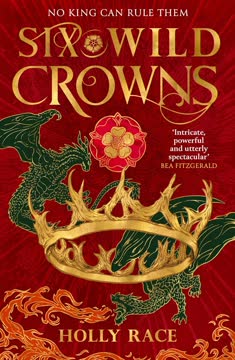
Plot Summary
Scarlet Wedding, Crimson Threats
Boleyn's wedding to King Henry is a spectacle of ambition and desire, her scarlet dress a bold declaration of her intent to be more than just another consort. The court is a stage, every gesture calculated, every gift a message. Boleyn's sharp wit and determination set her apart, but also mark her as a threat to the established order. Her sister Mary's gentle presence is a bittersweet reminder of what Boleyn leaves behind. The gifts from the other queens are both tokens of welcome and veiled warnings, especially Aragon's "gift" of Lady Seymour—a spy in Boleyn's household. The air is thick with rivalry, and Boleyn's triumph is shadowed by the knowledge that love and power in Elben are always entwined with peril.
Gifts, Spies, and Sisters
Lady Seymour, awkward and overlooked, is thrust into Boleyn's world as Aragon's emissary. The court's hierarchy is on display, with alliances and ambitions swirling around the new queen. Seymour's brothers pressure her to use her position for family gain, while Boleyn's siblings offer genuine support. The procession to the wedding is a parade of status and subtle threats, with Seymour's discomfort highlighting the court's cruelty. The queens' households are divided, each vying for influence. Seymour's outsider status makes her both invisible and vulnerable, yet she observes the dynamics that will shape her fate. The seeds of future betrayals and unlikely alliances are sown in these early encounters.
Divine Bonding, Sacred Pain
The wedding ceremony is not just a union of hearts but a ritual of power. Boleyn and Henry are bound by ancient magic, the pain of the divine bonding a test of worthiness. The sacrifice of a dragon and the symbolism of tokens exchanged reveal the weight of tradition and expectation. Boleyn's tokens—stag, quill, storm—signal her intent to be an equal partner, not a passive vessel. Henry's gift, a poesy ring with a bound fairy, is both a promise and a threat. The ceremony's public consummation is a performance for the kingdom, but the private moment in the woods is raw and intimate, blending love with the ever-present shadow of violence.
Rivalries and Schemes Begin
As Boleyn settles into her new role, the court's rivalries intensify. Seymour is caught between her brothers' ambitions and Aragon's manipulations, pressured to seduce the king or betray her mistress. The queens' households are microcosms of the larger political landscape, each maneuvering for advantage. Boleyn's transformation of Brynd Castle is both a personal project and a statement of power. The public consummation is a spectacle, but beneath the surface, doubts and insecurities fester. The court is a labyrinth of secrets, and every alliance is fragile. The stage is set for the battles—emotional, political, and magical—that will define the fate of Elben.
Lightning Castle, Public Consummation
Brynd Castle, perched above the stormy sea, becomes the crucible for Boleyn's ambitions. The melding with the castle's spirit stone connects her to the lineage of queens and the god Cernunnos, but also to the burdens of history. The public consummation is both humiliation and assertion, a necessary ritual to secure the kingdom's protection. Boleyn's desire to be more than a pawn is clear, but the expectations of fertility and loyalty weigh heavily. The castle's starkness mirrors the challenges ahead, and Boleyn's resolve is tested by the demands of tradition and the scrutiny of her subjects.
Daven's Sanctuary, Prophecies
Seymour returns to Daven, seeking solace in Queen Aragon's sanctuary. The palace is a haven from her family's machinations, but also a place of exile. Aragon's court is steeped in Quistoan tradition, and Seymour's loyalty is tested by conflicting demands. The prophecy given to Princess Tudor by the oracle—"From the storm, a blossom…"—haunts the queens, foreshadowing the coming upheaval. Aragon's request that Seymour undermine Boleyn for the sake of her daughter's future sets in motion a chain of betrayals. The weight of destiny and the fear of being overshadowed drive the characters toward choices that will have far-reaching consequences.
War Clouds, Queenly Games
Boleyn's intellect comes to the fore as war with Lothair and Alpich looms. She navigates the council of men—Wolsey, Cromwell, Henry—proving her worth as a strategist. The threat of invasion is both external and internal, as rumors of Blount's illness and the weakening bordweal spread. Boleyn's pregnancy is both a personal joy and a political weapon, promising hope for the kingdom but also exposing her to new dangers. Seymour's failed assassination attempt marks a turning point, as her loyalty shifts from Aragon to Boleyn. The court is a battlefield, and every victory comes at a cost.
Poisoned Wine, Broken Loyalties
Seymour's attempt to poison Boleyn is thwarted by her own conscience and Boleyn's unexpected kindness. The revelation of Boleyn's pregnancy changes the stakes, and Seymour's loyalty is fractured. The court's web of spies and informants grows tighter, and Seymour's family pressures her to secure their future by any means. The emotional toll of divided loyalties is palpable, as Seymour grapples with guilt and longing. Boleyn's growing suspicion of those around her is matched by her determination to protect her unborn child and her place in the kingdom.
Pregnancy, Power, and Plots
Boleyn's pregnancy isolates her even as it elevates her status. The transformation of Brynd Castle mirrors her own metamorphosis, but the court's expectations and the ever-present threat of miscarriage weigh heavily. Seymour's role shifts from would-be assassin to confidante, as she witnesses Boleyn's vulnerability and strength. The search for knowledge leads Boleyn to ancient texts and hidden chambers, where she uncovers secrets about the true source of the kingdom's magic. The discovery of a mysterious word—nimæn, "stolen"—hints at a deeper betrayal at the heart of Elben's power.
Secrets Beneath Pillar's Vein
Boleyn's investigation into the origins of the bordweal leads her to the mines beneath Pilvreen, where she uncovers evidence that the power attributed to the king is, in fact, stolen from the queens. The chamber of sleeping queens, encased in crystal, reveals a forgotten history of female sovereignty and divine magic. The goddess Medren, not Cernunnos, is the true source of Elben's protection. This revelation shakes Boleyn's faith and sets her on a path of rebellion. The knowledge is dangerous, and the forces that benefit from the lie will stop at nothing to preserve it.
Letters, Lies, and Betrayals
The spread of rumors and pamphlets accusing Boleyn of witchcraft and treason undermines her authority and isolates her further. The court's loyalty is fickle, and even her own household is infiltrated by spies. Mary's betrayal, motivated by fear and self-preservation, is a devastating blow. The execution of supposed traitors is a public spectacle designed to break Boleyn's spirit. The machinery of power grinds on, indifferent to justice or truth. Boleyn's resolve hardens, and she prepares for the ultimate confrontation with Henry and the system that sustains him.
Storms, Sickness, and Seduction
Boleyn's body begins to fail, the price of the king's theft of her power made manifest in grey, withered flesh. The sickness spreads among the queens, each sacrificed for Henry's ambition. The Moon Ball becomes the stage for Boleyn's rebellion, as she orchestrates a masque that reveals the truth of the queens' power. The dance of the five queens, united in defiance, unleashes a surge of magic that cannot be denied. The court is electrified, and the king's authority is visibly weakened. The storm has broken, and the reckoning is at hand.
The Moon Ball Masquerade
The Moon Ball is a dazzling display of artistry and subversion. Boleyn's masque rewrites the kingdom's foundational myth, centering the queens as the true source of Elben's strength. The dance of the five queens, their gowns shimmering with the color of the bordweal, is both a celebration and a declaration of war. The magic unleashed is undeniable, witnessed by all. The king's fury is palpable, but the momentum has shifted. The queens' unity is both their shield and their weapon, but the cost of rebellion is steep, and the consequences are immediate.
Five Queens, One Rebellion
Boleyn is arrested for treason, betrayed by those closest to her. The Tower is a place of humiliation and despair, but also of resolve. Seymour, aided by Clarice and Howard, orchestrates a daring rescue, killing without hesitation to save the woman she loves. The escape is fraught with danger, and the cost is high—Wyatt, Boleyn's would-be lover, is executed as a warning. The queens' alliance is tested by fear, betrayal, and the relentless pursuit of the king's forces. The rebellion is no longer a secret; it is a battle for survival.
Treason, Trials, and Sacrifice
Boleyn's return to Brynd is met with siege and the certainty of death. She ensures Elizabeth's escape, choosing to face Henry alone. The final confrontation is a reckoning of love and power, as Boleyn bargains for her daughter's future and the possibility of a fairer world. The promise extracted from Henry is both victory and defeat, a testament to the complexity of their bond. Boleyn's leap from the cliff is an act of defiance and sacrifice, a martyrdom that galvanizes the remaining queens. The storm has claimed its first and greatest victim.
The Tower, The Escape
Boleyn's imprisonment in the Tower is a crucible of suffering and resolve. The cruelty of her captors and the execution of Wyatt are reminders of the system's brutality. Seymour's rescue is both a physical and emotional liberation, as the two women confront the cost of their choices. The escape is a testament to the power of friendship, love, and shared purpose. The world outside the Tower is changed, and the path forward is uncertain. The queens are fugitives, but they are also free.
Sisters' Betrayal, Sisters' Salvation
Mary's betrayal is revealed in a violent confrontation with Seymour, the sisters' bond shattered by fear and ambition. The old order is crumbling, and the cost of survival is measured in blood and broken trust. Seymour's transformation from victim to avenger is complete, as she rejects her brother's control and claims her own agency. The flood of Hyde is both an act of destruction and a cleansing, washing away the past and opening the way for a new beginning. The queens' alliance is fragile, but it endures.
The Fall of Boleyn
Boleyn's death is both an ending and a beginning. Her sacrifice is witnessed by the queens, her message a call to arms. The kingdom mourns and gossips, but the truth cannot be buried. Seymour's grief is matched by her resolve, as she breaks free from her brother's tyranny and claims her own destiny. The alliance of queens, forged in pain and loss, is the hope for a new Elben. The storm has passed, but the world it leaves behind is forever changed.
Flooded Palaces, New Dawns
Seymour's escape from Hyde, the flooding of the palace, and her flight with Clarice and Haltrasc to the Feorwa Isles mark the beginning of a new era. The old world is drowned, and the survivors must chart a new course. The alliance of queens, the legacy of Boleyn, and the promise of Elizabeth's future are the seeds of transformation. The story ends with the hope that from sacrifice and rebellion, a fairer world can be born.
Analysis
Six Wild Crowns is a searing reimagining of Tudor history through the lens of feminist fantasy, interrogating the structures of power, gender, and narrative itself. Holly Race crafts a world where the personal is always political, and where the bodies and desires of women are both the source of magic and the site of exploitation. The novel's central revelation—that the kingdom's protection is not the gift of a male god or king, but the stolen power of its queens—serves as a powerful metaphor for the erasure and reclamation of female agency. The alternating perspectives of Boleyn and Seymour allow for a nuanced exploration of trauma, love, and resistance, showing that survival is not just endurance but transformation. The use of prophecy, performance, and public spectacle underscores the ways in which stories are weaponized, and how rewriting those stories can be an act of revolution. Ultimately, Six Wild Crowns is a meditation on the cost of change, the necessity of solidarity, and the hope that from sacrifice and rebellion, a fairer world can be born. Its lessons resonate far beyond the fantasy court of Elben, challenging readers to question who holds power, how it is wielded, and what it means to claim one's own crown.
People Also Read

Characters
Boleyn
Boleyn is the storm at the heart of Elben's court—a woman of fierce intellect, wit, and ambition. Her rise from outsider to queen is marked by calculated risks and a refusal to be merely a vessel for the king's power. Psychoanalytically, Boleyn is driven by a need for recognition and equality, haunted by the knowledge that love and power are always conditional. Her relationships—with Henry, her siblings, Seymour, and her rivals—are complex, blending genuine affection with rivalry and manipulation. Boleyn's arc is one of transformation: from performer to rebel, from lover to martyr. Her discovery of the true source of Elben's magic and her ultimate sacrifice redefine the meaning of queenship and legacy.
Seymour
Seymour is the quiet center of the storm, underestimated by all—including herself. Pressured by her family and manipulated by Aragon, she is initially a pawn, but her journey is one of awakening and agency. Her psychoanalytic core is shaped by trauma, self-doubt, and a longing for safety and belonging. Seymour's love for Boleyn is both a source of strength and vulnerability, driving her to acts of courage and violence. Her transformation from victim to avenger is mirrored in her rejection of her brother's control and her embrace of her own desires. Seymour's survival is not just physical but existential—a claim to life and happiness on her own terms.
Henry
Henry is both lover and antagonist, embodying the contradictions of power. His charm and passion are matched by a ruthless need for control, fueled by the divine magic he siphons from his queens. Psychoanalytically, Henry is driven by insecurity, legacy, and the fear of impotence—personal and political. His relationships are transactional, even when cloaked in romance. The revelation that his power is stolen, not innate, is both his undoing and his tragedy. Henry's love for Boleyn is genuine but destructive, and his inability to change seals his fate as both victimizer and victim.
Mary
Mary is the sun to Boleyn's storm—gentle, nurturing, but ultimately self-preserving. Her loyalty to family is genuine, but fear and pragmatism lead her to betray Boleyn to save the rest. Psychoanalytically, Mary is torn between love and survival, her actions shaped by the trauma of loss and the desire for stability. Her betrayal is both understandable and devastating, a reminder that in a world of shifting power, even the closest bonds can be broken.
Howard
Howard is the youngest and most naive of the queens, her beauty both a blessing and a curse. Initially a pawn, she grows into her own agency, aided by Boleyn's mentorship. Psychoanalytically, Howard's arc is one of awakening—learning to see beyond the roles assigned to her and to claim her own desires. Her loyalty is hard-won, and her courage, though fragile, is real. Howard's journey mirrors the broader theme of women finding voice and power in a patriarchal world.
Cleves
Cleves is underestimated for her plainness and foreignness, but she is shrewd, practical, and fiercely independent. She avoids the king's bed through cunning, carving out a space of autonomy within the constraints of queenship. Psychoanalytically, Cleves represents the possibility of resistance through subterfuge and self-knowledge. Her alliance with Boleyn and Seymour is pragmatic but sincere, and her loyalty is to herself and her chosen family of animals and allies.
Aragon
Aragon is the embodiment of dignity and endurance, her Quistoan heritage both a source of strength and isolation. Her loyalty to Henry is rooted in faith and sacrifice, but it becomes her undoing as she is consumed by the same sickness that claims the other queens. Psychoanalytically, Aragon is trapped by the roles of wife and mother, her agency circumscribed by duty. Her refusal to join Boleyn's rebellion is both a flaw and a testament to the complexity of survival in a hostile world.
Princess Tudor
Princess Tudor is the daughter of Aragon, her fate intertwined with Boleyn's child by the oracle's prophecy. She is intelligent, proud, and fiercely loyal to her mother, but also haunted by the fear of being overshadowed. Psychoanalytically, she represents the next generation's struggle to define itself amid the legacies of power and trauma. Her relationship with Seymour and the other queens is marked by suspicion and longing for agency.
Wyatt
Wyatt is the court's truth-teller, his wit and artistry both shield and weapon. His love for Boleyn is genuine, but he is ultimately expendable in the games of power. Psychoanalytically, Wyatt is the outsider who sees too much, his fate a warning about the cost of honesty and loyalty in a world that values neither. His execution is a turning point, galvanizing Boleyn's final rebellion.
Clarice
Clarice is Seymour's anchor, their friendship and unspoken love a source of resilience. As a servant from the Feorwa Isles, Clarice navigates the court's hierarchies with quiet competence and loyalty. Psychoanalytically, Clarice represents the possibility of solidarity across class and gender lines, their actions often the catalyst for Seymour's transformation. Their presence is a reminder that true power often lies in the margins.
Plot Devices
Dual Narratives and Shifting Perspectives
The novel's structure alternates between Boleyn and Seymour, allowing readers to experience the court's machinations from both the center of power and its periphery. This duality exposes the limitations of perspective, the unreliability of memory, and the ways in which truth is constructed and contested. The shifting viewpoints also highlight the psychological complexity of the characters, their motivations, and the consequences of their choices.
Symbolism of Crowns, Colors, and Magic
Crowns, tokens, and colors are not mere decorations but symbols of status, allegiance, and rebellion. The scarlet wedding dress, the poesy ring, the storm cloud insignia, and the Queen's Kiss flower all carry layered meanings. The divine magic, channeled through rituals and the spirit stones, is both a literal and metaphorical representation of the theft of female power. The sunscína mirrors serve as both communication devices and symbols of lost sovereignty.
Foreshadowing and Prophecy
Prophecies and omens—especially the oracle's riddle—foreshadow the coming upheaval and the necessity of unity among the queens. The recurring motif of storms, both literal and metaphorical, signals impending change. The gradual revelation of the true source of the kingdom's magic is seeded early, with clues hidden in ancient texts, songs, and the physical decay of the queens.
Performance and Public Spectacle
Public performances—the wedding, the Moon Ball, the masque—are stages for both conformity and subversion. The queens use these spectacles to assert agency, challenge the king's narrative, and rally support. The tension between private desire and public duty is heightened by the ever-present gaze of the court and the people, making every act a potential act of rebellion.
Betrayal and the Cost of Survival
Betrayal is a constant threat, whether from family, lovers, or allies. The characters are forced to choose between self-preservation and solidarity, with devastating consequences. The cost of survival is measured in blood, guilt, and the loss of innocence. The novel interrogates the ethics of resistance and the price of complicity.








































