


Plot Summary
Prologue
Nine years before the story begins, Raphael Visconti2 stands in a fortune teller's wagon in Vegas the night he buries both parents. His eldest brother Angelo3 has abandoned the family's Cosa Nostra dynasty, leaving Raphael's2 future as underboss in ruins. The gypsy reveals he has two fate cards — the King of Diamonds for power, or the King of Hearts for love — but never both.
He touches the King of Diamonds, choosing empire over intimacy. Then comes the doom card: the Queen of Hearts, the red-haired lady who will bring him to his knees. He ties the wagon's door handles shut with his silk tie, sets it ablaze, and walks into the Las Vegas night — a man who has chosen his fate but cannot stop wondering what he has condemned.
The Mark Who Bit Back
Penny Price1 steps off a Greyhound in Devil's Cove with zero dollars and a vow to go straight — right after one last con. She steals a dress, ducks into a bar, and targets a suited man nursing expensive whiskey. He dismisses her coldly.
She persists, proposing a game: five questions he must answer incorrectly. He agrees, not realizing the fifth question is the trap. When she wins, his security closes in and he calls for a hammer. She braces for broken bones — but he only smashes the security tag off her stolen dress and slips his Breitling watch into her coat pocket.
Only then does the bartender whisper his name: Raphael Visconti,2 casino king of Las Vegas. Penny1 flees with a six-figure timepiece and the terrifying certainty she picked the most dangerous mark on the Pacific coast.
A Glock in Her Water
At Angelo's3 wedding in the Devil's Preserve, Penny1 discovers the celebration is crawling with Viscontis. She reconnects with Nico,5 the cousin who taught her swindling as a child at the Visconti Grand Casino. Then Raphael2 materializes — pretending not to recognize her, though his glint says otherwise.
He stoops close and whispers a vulgar rejection against her earlobe before vanishing into the crowd. Emboldened by champagne and a friend's cash bribe, Penny1 finds him again and proposes a drinking game: her two waters against his three shots.
The trick requires trapping his glass under her empty one. But Raphael2 sees through it instantly. He pulls a gun from his waistband and drops it into her water with a soft plunk. Game over. He warns her that luck disappears when leaned upon, and tells her to find the exit.
Ace of Spades, Not Doom
That same night, Dante Visconti17 — Angelo's3 rival cousin — blows up the Devil's Dip port in retaliation. Penny,1 stranded at the docks, is caught in the blast and wakes in the hospital with a head wound. A cheerful volunteer named Wren7 befriends her.
Rolling through the hallways in a wheelchair, she stumbles upon Raphael2 in a private room surrounded by bribe money and bodyguards. He has been brooding over whether copper-haired Penny1 might be his doom card — the Queen of Hearts the fortune teller warned about.
On impulse, he fans a deck and orders her to draw. She pulls the Ace of Spades, the luckiest card in the deck. Relieved she is not the prophecy incarnate, he slides the card between her lips and tells her to bring a resume Monday at six.
Lipstick Prints and Lingering Hands
Penny's1 new workplace is Signora Fortuna, Raphael's2 mega-yacht turned temporary casino. On her first shift, she stumbles into his boardroom meeting barefoot and dripping, then accidentally changes in his private bathroom.
She sprays his aftershave on her throat, draws something obscene on his steamed mirror, and leaves a lipstick kiss print on the vanity. Behind the bar she is a disaster — broken glassware all night. But every man onboard gravitates to her. Late in the shift, Raphael2 finds her freezing on the terrace and drapes his jacket over her shoulders.
His fists linger at her rib cage. Then he squeezes — barely a twitch beneath her breasts — and four more glasses hit the lower deck. He mutters that even the way she shivers is annoying, and walks away, leaving her wrapped in his jacket and burning.
Don't Call Me Boss
After the shift, the locker room empties and Penny1 stands at the sinks in just a bra, panties, and tights. Raphael2 walks in without apology. His gaze performs a clinical sweep of her body — indifferent enough to sting — then he holds out a fifty-dollar bill.
She lasted the night; he owes her the bet. But her hands are slathered in stolen face cream, and both of them know the only uncovered destination is her bra. He glances at the tips already tucked there, asks why his patrons seem so fond of her, then refuses to cross the line.
She whispers that she does not want him to be a gentleman. His jaw tightens. He tosses the bill on the counter, warns her never to call him boss when half-naked, and slams the door — leaving a threat that haunts her until dawn.
Eight Square Feet of Lightning
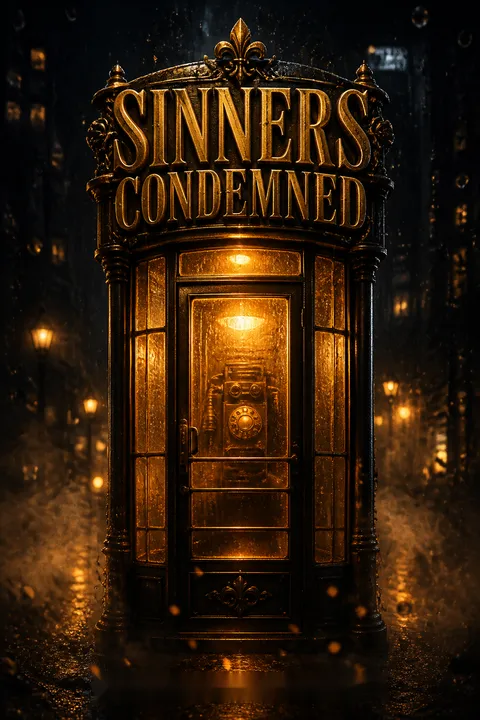
Penny1 spots Martin O'Hare16 on the diner television, declaring he has hired private investigators to hunt his female arsonist. Panic drives her into the street, where a thunderstorm sends her into a phone booth. She calls Sinners Anonymous — the confessional hotline she has used since age thirteen — but can only confess to unreturned library books.
Raphael2 finds her there, returning from a forgettable date. He calms her lightning phobia with a dice game: she guesses four and wins a hundred dollars. Steam fogs the glass. His knee slides between her thighs; her hips shift against it.
He forces himself to stop. He walks her home. Both claim they have never loved anyone. But after she vanishes behind her door, Raphael2 returns to the booth, traces her call, and discovers the confessional she trusts is a hotline he created. He begins listening to every message she has ever left.
Three Hundred Plus Tip
Raphael2 weaponizes his new surveillance — ordering Penny1 onto dish duty and buying his men the exact foods she told the hotline she hates. When his recruit Blake14 harasses her in the kitchen, Penny1 flirts back and lifts Blake's14 wallet in seconds.
Raphael2 watches from the shadows, hand gravitating toward his gun — aimed at Blake,14 not Penny.1 Later, he corners her in the locker room, hooks a finger into her waistband, and demands to know where she learned to pickpocket. She insists she is trying to go straight. He snaps her elastic as punishment.
Then she produces his own wallet from under her dress — stolen while he lectured her. She extracts three hundred dollars and announces it as payment for their earlier bet, plus VAT, plus tip, before sauntering into a cubicle and leaving him with an empty wallet and an unwilling smile.
Rory Learns to Count
Tuesday nights at the Rusty Anchor — a splinter-ridden dive bar in Devil's Dip — become Penny's1 lifeline. Rory,6 Wren,7 and a tattoo artist named Tayce8 draw her into a circle she has never had: women who share candy, trade insults about Viscontis, and refuse to judge.
When Rory6 confesses she owes Raphael2 three hundred thousand dollars in Blackjack debts and cannot stop trying to win it back, Penny's1 old instincts ignite. She teaches Rory6 card counting over beer and M&Ms, scribbling notes they hide whenever Angelo3 appears.
Penny1 tells herself it is harmless — just helping a friend — but the snap of shuffled cards in her hands feels like a recovering addict's first taste of heroin. Meanwhile, Nico5 hints he has a job for her in Devil's Hollow, something more stimulating than bartending. She files it away, too consumed by Tuesday-night warmth and the dangerous man filling her other six days.
Front Seat, Full Surrender
Raphael2 intercepts Penny1 walking alone past midnight and orders her into his car. Over fast food at the cliffside church, she reveals her parents were murdered at 3:40 a.m. — the reason she never sleeps through the night. She mentions her past as a stripper, and his expression goes volcanic behind a mask of calm.
He pushes his seat back and dares her to prove it. She calls his bluff. What begins as defiance — peeling off layers to Christmas carols on the radio — turns devastating. She grinds against the hard plane of his thigh until she comes undone, teeth sunk into his bicep.
He surrenders his Black Amex PIN to coax off her bra. Afterward, she falls asleep in his passenger seat, and he drives through Devil's Dip all night rather than wake her. At dawn, he wipes hot cocoa from her chin and delivers a warning: strip for another man, and that man dies crossing the road.
The Bet He Wouldn't Lose
During a business meeting on the yacht, Irish businessman Kelly O'Hare15 — brother to the man hunting Penny for arson16 — grabs her wrist and murmurs that he knows who she is. The card game between Kelly,15 Angelo,3 and Raphael2 escalates.
Raphael2 has wagered something he describes as too sentimental to lose: Penny1 herself. The final card turns — Queen of Hearts. Raphael2 folds the hand, rises, and puts a bullet between Kelly's15 eyes. The gunshot detonates Penny's1 deepest trauma, hurling her back to the kitchen where her parents bled out.
She runs to the swim platform, hyperventilating. Raphael2 finds her gripping the railing, presses his lips to the nape of her neck, and tells her to breathe. She calls him a psychopath. He says it is simply how made men are built.
Eight. The Gun Jammed.
On the swim platform, Penny1 tells Raphael2 what she has never spoken aloud. Two men in balaclavas slid through her family's window and shot her alcoholic mother at the kitchen table. Her father was killed trying to run. A killer pinned ten-year-old Penny1 against the refrigerator, pressed a revolver to her temple, and told her to count down from ten.
At eight, the gun jammed. He told her she was one in a million — the origin of everything she believes about luck. Days later on a different night, Raphael2 confronts her after connecting her to the Hurricane casino fire.
She runs into the forest; he chases her, pins her to a tree by the throat. She confesses: Martin O'Hare16 choked her, so she burned his building with a lit vodka bottle. He does not kill her. He throws her over his shoulder, tucks her into his car with a pillow and blanket, and claims her enemy as his own.
Cards Under the Table
At the monthly poker night in the caves beneath Devil's Hollow, Rory6 beats Raphael2 at Blackjack for the first time — and his gaze cuts straight to Penny.1 He gives her a ten-second head start. She bolts through the tunnel system; he catches her in darkness, pins her against dripping stone, and yanks up her red dress.
Back at the table, visible only to each other, he deals higher or lower. Each correct guess slides his hand further up her thigh, past the band of her thong, and inside her.
The pressure builds to a maddening crest — then he withdraws. He smears her wetness across her bottom lip and walks away, taking her orgasm with him as punishment for teaching Rory6 to count cards. She retaliates by coating his mouth with her own fingers before he escapes into the crowd.
Tails Never Fails
In his moonlit office, Raphael2 proposes heads or tails with a catch Penny1 does not see: the winner kisses the loser, but he never specifies where. She calls tails, wins, and celebrates thinking she has earned a kiss on the mouth. He pats his desk and tells her to sit. Understanding arrives with a rush of heat instead of protest.
He removes her pants with ceremonial precision, folds them, pockets her thong, and puts his mouth between her thighs. She comes apart at the edge of his desk. But she refuses to let him claim the final word — she slides her own fingers inside herself and paints his lips with the evidence. He licks them clean, sends her back to work without her underwear, and locks the office door twice behind her.
Queenie
After another night of Penny1 sleeping in his car, Gabe4 summons Raphael2 to a cave where one of Dante's17 associates hangs bound and bleeding. Gabe4 offers his brother something unexpected: relief. For the first time in nearly a decade, Raphael2 picks up a hammer and uses his own hands.
Hours pass in firelight and screaming. Emerging at dawn, he finds his recruit Blake14 pressed against the car window, peering at sleeping Penny.1 Every remaining thread of composure snaps. His fist connects with bone — once, twice, then beyond counting — until Gabe4 pulls him off.
Penny1 wakes to bloody knuckles gripping the steering wheel. She asks where they are going. His hand slides to her knee, and the word he murmurs — Queenie — lands with the weight of a prophecy the fortune teller made nine years ago about a red-haired woman who would bring him to his knees.
Analysis
Sinners Condemned interrogates the architecture of self-deception through two narrators who are mirror images of each other's denial. Penny1 claims she is going straight while wearing a stolen watch and teaching card counting. Raphael2 insists he is a gentleman while groping employees and shooting business partners. The novel's precision lies in making neither character simply a hypocrite — each is performing the version of themselves they desperately wish were true.
The book operates on a theory of luck as theology. Penny's1 four-leaf clover is not mere superstition; it is her substitute for a God who failed to intervene when her parents were executed. Raphael's2 dismissal of luck is equally religious — a denial born from choosing material power over love at the fortune teller's table. His terror of the Queen of Hearts exposes the contradiction: he built an empire on probability but lives in fear of a playing card. The real tension is not whether Penny1 will bring him down, but whether acknowledging her importance means admitting his life's defining choice was wrong.
The novel subverts mafia romance conventions by making the power dynamic genuinely unstable. Penny1 is not merely a woman taming a dangerous man — she is a professional manipulator encountering someone whose games are bigger than hers. Every sexual escalation doubles as a power negotiation: who pulls away first, who breaks composure, whose pleasure gets confiscated mid-act. The gentleman mask becomes the central metaphor — not for hypocrisy, but for the exhausting labor of civilization. Raphael's2 descent from outsourcing violence to swinging a hammer himself charts what proximity to authenticity costs a man whose entire identity is performance.
The cliffhanger, where he names Penny1 with the title of his doom card, signals not resolution but capitulation. The question left open is whether destruction and devotion might be synonyms in a world where every relationship is a bet placed against yourself.
Review Summary
Sinners Condemned receives mostly positive reviews, with readers praising the chemistry between Rafe and Penny, their witty banter, and the slow-burn romance. Many compare it favorably to the first book in the series. The story is described as a mafia romance with strong sexual tension and well-developed characters. Some criticism is directed at the repetitive plot and lack of action. Overall, readers find the book engaging and entertaining, with particular praise for the main characters' dynamic and the author's writing style.
People Also Read




Characters
Penny Price
Red-haired con artist going straightA twenty-one-year-old grifter with copper hair and a four-leaf clover necklace she credits with saving her life. Orphaned at ten when masked gunmen executed her alcoholic parents, Penny survived only because the revolver jammed at her temple — an event that forged her obsessive belief in luck. Raised in foster homes, she was mentored by Nico Visconti5 in card counting and pickpocketing, then spent three years swindling men in Atlantic City before burning down a casino and fleeing to the Coast. Beneath her bravado lives a girl who has never had close female friends, never slept through the night, and measures her worth by how many men she can outwit. Impulsive, sharp-tongued, and desperately lonely, she craves connection but equates vulnerability with the trap she watched destroy her mother.
Raphael Visconti
Casino king hiding his darknessThe middle Visconti brother: thirty-four, Harvard-educated, and owner of forty-eight casinos across Las Vegas. He chose power over love at a fortune teller's table and has spent nine years perfecting the gentleman mask — smooth talk, bespoke suits, outsourced violence. But the facade fractures around Penny1. Deeply superstitious despite building his fortune on probability, he is haunted by the prophecy that a red-haired Queen of Hearts will bring him to his knees. His self-control is legendary — he has not thrown a punch in a decade — yet Penny's1 presence corrodes it like salt water on polished steel. Possessive without admitting it, drawn to her defiance, and terrified that his crumbling empire proves a fortune teller right, he wages a private war between the man he presents to the world and the one Penny1 forces him to become.
Angelo Visconti
The eldest brother, ViciousThe firstborn Visconti and newly returned capo of Devil's Dip, nicknamed Vicious for his explosive temper. He abandoned the Cosa Nostra for nine years before killing his uncle and reclaiming his birthright. His marriage to Rory6 has softened his edges but not his instincts — he still reaches for his gun at shadows. His return to the Coast triggered the civil war with cousin Dante17 that threads through the entire narrative.
Gabriel Visconti
The youngest, unhinged brotherThe youngest Visconti brother and newly appointed consigliere, who returned from years abroad with a scar splitting his face and an insatiable appetite for violence. He barely speaks, never smiles, and maintains a secret torture chamber in the caves beneath Devil's Hollow. Where Angelo3 explodes and Raphael2 calculates, Gabe simply destroys — methodically, musically, and without remorse. He serves as both Raphael's2 dark mirror and his unlikely therapist.
Nico Visconti
Penny's childhood gambling mentorA Visconti cousin in his early twenties who taught young Penny1 card counting and pickpocketing in the coat room of the Visconti Grand Casino. Once a lanky geek obsessed with statistics, he has transformed into a tattooed, imposing figure. He remains protective of Penny1, asking Raphael2 to give her a job, while warning her to keep away from his cousin's dangerous orbit. His loyalties bridge the family's warring factions.
Rory
Angelo's bride, secret wildcardAngelo's3 new wife, a Devil's Dip girl who married into the most dangerous family on the coast. She wears sneakers under her wedding dress and curses like a sailor. Her growing friendship with Penny1 includes secret card-counting lessons aimed at beating Raphael2 at Blackjack — a debt of three hundred thousand dollars she hides from her husband. Beneath her sweetness, flashes of something fiercer emerge: slashed tires, gleeful spectating at broken fingers.
Wren Harlow
The Coast's radiant good samaritanA sweet, golden-haired volunteer who befriends Penny1 at the hospital. She works at the Rusty Anchor, never drinks alcohol, and invites Penny1 into her Tuesday-night circle. Gabe4 reacts with startling protectiveness whenever anyone pressures her.
Tayce
Tattooed mystery with sharp fistsA dark-haired tattoo artist from Devil's Cove who runs in Rory's6 circle. She once punched out another girl's front teeth for talking behind Rory's6 back. She recognizes in Penny1 a fellow woman running from something she will not name.
Benny Visconti
Nico's brash, reckless brotherNico's5 older brother, perpetually chasing women and losing bets. He sacrifices three fingers to Gabe4 in a card game and flirts relentlessly with every woman who breathes. He manages logistics for the Visconti poker nights.
Matt
Penny's easygoing neighborPenny's1 blond neighbor in Devil's Dip and her sole pre-existing friendship on the Coast. A PE teacher with surfer-dude hair, he invites her to the wedding and provides her only anchor of normalcy amid escalating chaos.
Laurie
Raphael's seasick right handRaphael's2 competent right-hand woman for Coastal Events, managing the yacht staff with dry humor despite chronic seasickness. She never asks questions about bloodstains on the carpet or sudden firings.
Dan
Personal bartender, reluctant witnessRaphael's2 personal bartender who witnessed Penny's1 first con at the Blue's Den. He moonlights on the yacht and serves as a sardonic observer of their escalating dynamic.
Griffin
Raphael's veteran security chiefRaphael's2 longtime head of personal security, a bald ex-military veteran who prefers silent, elegant eliminations. He increasingly disapproves of his boss's reckless return to the Coast and erratic behavior.
Blake
The recruit who crossed a lineRaphael's2 newest and most foolish security recruit, whose persistent wolf-whistles and suggestive comments toward Penny1 become the final catalyst for Raphael's2 violent loss of composure.
Kelly O'Hare
The Irish brother who knewAn Irish businessman and Raphael's2 longtime partner, brother to the casino owner hunting Penny for arson16. His recognition of Penny1 during a yacht meeting seals his fate when Raphael2 refuses to lose a card game.
Martin O'Hare
Casino owner hunting PennyOwner of the Hurricane casino Penny1 burned down in Atlantic City. He appears on national television declaring he is hunting a female arsonist, creating the external threat driving Penny's1 paranoia.
Dante Visconti
Cousin who blew up the portAngelo's3 rival cousin and self-appointed head of Devil's Cove. He bombed the Devil's Dip port on Angelo's3 wedding night and runs an opposing operation, though he appears only through consequences.
Tor Visconti
Raphael's vanished best friendRaphael's2 closest friend and Dante's17 brother, who vanishes after the port explosion. His disappearance haunts Raphael2 as an unresolved question of loyalty and becomes a dangling thread for the sequel.
Castiel
Devil's Hollow's neutral heirThe eldest Hollow cousin, a businessman running the Smugglers Club whiskey company. He tries to maintain neutrality between warring Visconti factions while hosting the underground bar Whiskey Under the Rocks.
Anna
Raphael's ambitious pursuerA dark-haired server on the yacht who openly pursues Raphael2 and treats Penny1 with thinly veiled hostility. She represents the type of woman Raphael2 charms and forgets.
Plot Devices
The Queen of Hearts Doom Card
Prophecy engine driving paranoiaA fortune teller's prophecy that the Queen of Hearts — a red-haired woman — will destroy everything Raphael2 has built. It transforms every interaction with copper-haired Penny1 into a calculated risk. He makes her draw from his deck at the hospital specifically to test whether she will pull the fateful card. She draws the Ace of Spades instead, but his empire crumbles anyway — lost investments, bombed properties, murdered partners — and each disaster amplifies his superstition. The prophecy creates a devastating paradox: he is drawn to Penny1 but terrified she will prove the gypsy right. The doom card functions less as literal fate and more as a psychological prison, giving Raphael2 a supernatural framework for the entirely natural experience of falling for someone against his will.
Sinners Anonymous Hotline
Secret confessional turned surveillanceA matte-black card with gold lettering and a voicemail service where callers confess their sins. Penny1 has used it since age thirteen as a diary — her only confidant through orphanhood and loneliness. The twist is that Raphael2 and his brothers created the hotline as the basis for a monthly game: they listen to confessions and choose a sinner to punish. When Raphael2 traces Penny's1 phone booth call and discovers she is a regular caller, he gains asymmetric access to her inner world — her food preferences, daily ramblings, fears. He weaponizes this knowledge but also grows addicted to her voice, playing her mundane messages on repeat in his office. The hotline functions simultaneously as Penny's1 lifeline and Raphael's2 leash.
The Breitling Watch
Trophy, tether, and symbolRaphael's2 Breitling, won by Penny1 through a bar trick on the night they met, becomes the physical symbol binding them. She wears it every day despite its absurd size on her wrist — telling herself she will sell it but never acting on it. Raphael2 notices it constantly, and the sight of his timepiece on her arm provokes a possessiveness he cannot explain. She plunges it into dishwater to antagonize him. He watches it slide up her forearm when she gestures. It appears in the final scene, still on her wrist as he drives her home with bloody knuckles. The watch represents what he gave up willingly and what she cannot let go of — a shared object that makes denial of their connection impossible.
The Four-Leaf Clover Necklace
Penny's identity and faith anchorA pendant given to Penny1 by a mysterious woman in the alleyway behind the Visconti Grand Casino when she was young. It represents her entire belief system: that she is supernaturally lucky, that surviving the gun jam was proof of cosmic protection. Raphael2 views it with open disdain, calling her self-absorbed for believing she is one in a million — while being deeply superstitious himself. The necklace becomes a friction point in every encounter: she runs it up and down its chain when anxious, and he glares at it like an accusation. It embodies the philosophical war between them — she worships luck, he worships control — and neither will admit both are forms of the same desperate prayer.
The Gold Poker Chip
Raphael's tell and talismanA gold poker chip Raphael2 spins between his fingers whenever he is thinking, calculating, or masking emotion. It appears in nearly every scene from his perspective — in boardrooms and caves, at card tables and swim platforms. The chip functions as his equivalent of Penny's1 necklace: a talisman he reaches for when the world tilts sideways. Its constant spinning is the gentlemanly equivalent of cracking knuckles, revealing the gambler beneath the businessman. The chip also represents his worldview — everything is a game, every interaction a wager — and its conspicuous absence from the final scene, where his fists are otherwise occupied, signals how far he has fallen from the controlled operator he once was.
FAQ
Synopsis & Basic Details
What is Sinners Condemned about?
- A Dark Romance Unfolds: Sinners Condemned introduces Raphael Visconti, a powerful casino owner grappling with family tragedy and a cryptic prophecy, and Penny Price, a skilled grifter on the run from her past. Their paths collide in Devil's Cove, igniting a dangerous game of wits, attraction, and escalating stakes.
- Fates Intertwined: The story follows Raphael's struggle with a fortune-teller's prediction of a "Queen of Hearts" who will be his downfall, even as Penny, a red-haired woman, enters his life and challenges his carefully constructed world of logic and control. Penny, seeking a fresh start after a disastrous con, finds herself drawn into the treacherous orbit of the Visconti crime family.
- High-Stakes Survival: As a brewing mafia war threatens the Devil's Coast, Raphael and Penny navigate a landscape of deception, violence, and unexpected desire. Their individual quests for survival and redemption become inextricably linked, forcing them to confront their deepest fears and the true cost of their choices.
Why should I read Sinners Condemned?
- Intense Psychological Depth: Dive into the complex minds of characters like Raphael Visconti, a man who meticulously crafts a "gentleman" facade to conceal his ruthless nature, and Penny Price, whose sharp wit and reliance on "luck" mask profound trauma. The novel offers a compelling exploration of their internal conflicts and coping mechanisms.
- Electrifying Power Dynamics: Experience a dark romance built on a thrilling push-and-pull between two formidable protagonists. The narrative masterfully uses games, wagers, and verbal sparring to explore themes of control, submission, and mutual fascination, making every interaction crackle with tension.
- Rich, Immersive World-Building: Immerse yourself in the atmospheric Devil's Coast, a setting steeped in mafia lore, where glitzy casinos hide dark secrets and ancient family rivalries dictate life and death. The story seamlessly blends the opulent world of high-stakes gambling with the gritty reality of organized crime.
What is the background of Sinners Condemned?
- Mafia Underworld Setting: The novel is deeply embedded in the Cosa Nostra, specifically the Visconti crime family's control over the fictional "Devil's Coast" (comprising Devil's Cove, Hollow, and Dip). This backdrop dictates power structures, loyalty, and the constant threat of violence, influencing every character's decisions and fate.
- Trauma and Legacy: Both protagonists are shaped by significant past traumas: Raphael by the sudden, violent deaths of his parents and the weight of his family's criminal legacy, and Penny by her parents' murder and her subsequent life as a grifter. These events drive their motivations and their approaches to life, love, and survival.
- Dark Romance Genre Conventions: Sinners Condemned operates within the dark romance genre, featuring morally gray characters, intense emotional and physical intimacy, and a narrative that explores the darker aspects of human nature and relationships. The author explicitly warns of triggers including alcoholism, suicide, murder, and sexual assault, setting the tone for a gritty, unvarnished love story.
What are the most memorable quotes in Sinners Condemned?
- "You're bad news, darling. You know that? I hope you get what's coming to you.": Raphael's chilling parting words to the gypsy in the prologue perfectly encapsulate his initial cynicism and foreshadow the dangerous path he's set upon, hinting at the karmic retribution that will follow.
- "Women don't fall in love, Matt. They fall into traps. They are lured in by sweet lies and smooth promises.": Penny's jaded perspective on love, shared with her neighbor Matt, reveals her deep-seated cynicism and trauma, explaining her reluctance to form emotional attachments and her reliance on transactional relationships.
- "Just because I'm a gentleman, Penelope, doesn't always mean I'm a gentle man.": Raphael's confession to Penny after the shooting is a pivotal moment, stripping away his carefully constructed facade and revealing the inherent violence and duality of his character, confirming Penny's earlier suspicions.
What writing style, narrative choices, and literary techniques does Somme Sketcher use?
- Dual First-Person Perspective: The novel alternates between Raphael's and Penny's first-person viewpoints, offering intimate access to their thoughts, feelings, and internal struggles. This technique creates dramatic irony and allows readers to understand the complex motivations behind their actions, enriching the Sinners Condemned character analysis.
- Sharp, Witty Dialogue and Internal Monologue: Somme Sketcher employs quick, often sarcastic dialogue that reflects the characters' intelligence and defensiveness. Both protagonists engage in extensive internal monologues, revealing their true intentions, vulnerabilities, and the constant mental games they play, especially with each other.
- Sensory-Rich and Visceral Descriptions: The author uses vivid sensory details to immerse the reader in the setting and characters' experiences, from the "tangy cocktail of expensive cologne and mint" of Raphael's scent to the "ice-cold hand of realization" gripping Penny. This creates a visceral reading experience, particularly during moments of tension or intimacy.
Hidden Details & Subtle Connections
What are some minor details that add significant meaning?
- Raphael's Zippo Lighter: Beyond being a smoking accessory, Raphael's Zippo is a recurring symbol of his destructive impulses and control. In the prologue, he uses it to threaten the gypsy, and later, he uses it to burn her wagon, a direct act of defiance against fate. This small object highlights his capacity for calculated violence in Sinners Condemned.
- Penny's "For Dummies" Books: Penny's collection of "For Dummies" books (Excel, German Grammar, Real Estate, HTML) is a subtle yet poignant detail. It represents her desperate, often misguided, attempts to "go straight" and find a legitimate career, contrasting sharply with her natural talent for grifting and her deep-seated belief in luck. It underscores her search for identity beyond her criminal past.
- The "Sinners Anonymous" Card: The recurring appearance of the Sinners Anonymous card (in Penny's apartment, hospital room, and the phone booth) is a direct link to Raphael's hidden life. It's his "calling card" and a tool for his vigilante justice, but for Penny, it's a lifeline, a "diary" for her unspoken sins, creating a profound, unknown connection between them long before she realizes its true purpose.
What are some subtle foreshadowing and callbacks?
- The Gypsy's Doom Card: The gypsy's prophecy of the "Queen of Hearts" as Raphael's doom card is a constant, subtle thread. Every interaction with Penny, especially her red hair, triggers Raphael's internal conflict and paranoia, subtly guiding his actions and deepening his obsession, making the Sinners Condemned prophecy a self-fulfilling element.
- Penny's "Sins Will Catch Up": Nico's parting words to Penny, "your sins will catch up with you eventually, Little P. They always do," are a powerful callback. This phrase echoes throughout Penny's narrative, particularly after the Atlantic City casino fire and her subsequent encounters with Martin O'Hare, reinforcing the theme of karma and inescapable consequences in Sinners Condemned.
- The "Apology Accepted" Exchange: The repeated phrase "Apology accepted" between Raphael and Penny, first used by Raphael to dismiss Penny at the bar and later by Penny to mock him, subtly establishes their dynamic of mutual defiance and verbal sparring. It highlights their quick wit and the underlying power struggle that defines their relationship, a key aspect of Raphael and Penny relationship analysis.
What are some unexpected character connections?
- Nico's Mentorship of Penny: The revelation that Nico Visconti, Raphael's cousin, taught Penny everything she knows about advantage gambling and picking pockets is a significant, unexpected connection. This deepens Penny's ties to the Visconti family beyond Raphael and explains her exceptional skills, while also highlighting Nico's complex role as a family member who operates in the shadows.
- Wren Harlow's Unseen Influence: Wren, the "Good Samaritan," is more connected to the Visconti world than her innocent demeanor suggests. Her job at The Rusty Anchor (a port bar) and her knowledge of the port explosion and Angelo's return subtly link her to the family's operations, providing Penny with crucial information and acting as a moral counterpoint to the Viscontis' darkness.
- Raphael's Knowledge of Penny's Trauma: Raphael's awareness of Penny's insomnia ("Why don't you sleep at night?") and her parents' murder, revealed during their car ride, is unexpected. This suggests he has done extensive research on her, indicating a deeper, more personal interest than mere professional curiosity, hinting at his growing possessiveness and the blurring lines of their relationship.
Who are the most significant supporting characters?
- Nico Visconti: As Penny's childhood mentor in grifting and Raphael's cousin, Nico serves as a crucial bridge between their worlds. His quiet intelligence and loyalty to both Penny and his family make him a complex figure, often providing Penny with warnings or insights that shape her decisions, influencing the Penny Price character development.
- Rory Carter Visconti: Angelo's wife, Rory, humanizes the formidable Visconti family. Her genuine friendship with Penny offers a glimpse of normalcy and warmth amidst the chaos, while her own surprising resilience and willingness to learn card counting from Penny highlight her adaptability and subtle defiance within the mafia world.
- Wren Harlow: The "Good Samaritan" of Devil's Hollow, Wren acts as a moral compass and a stark contrast to the Viscontis' violent world. Her unwavering kindness and community involvement provide a different perspective on the Coast, and her casual revelations often provide Penny with vital, albeit unintentional, information about the family.
- Laurie: Raphael's efficient and loyal right-hand woman, Laurie provides a grounding presence in his chaotic life. Her competence and no-nonsense attitude offer a glimpse into the legitimate side of Raphael's empire, while her occasional exasperation with his antics subtly highlights his more unpredictable traits.
Psychological, Emotional, & Relational Analysis
What are some unspoken motivations of the characters?
- Raphael's Need for Control: Beneath Raphael's ambition and pursuit of power lies a deep-seated need for control, stemming from the sudden, uncontrollable loss of his parents. His meticulous routines, his "gentleman" facade, and his attempts to manipulate Penny are all manifestations of this desire to impose order on a chaotic world, a core aspect of Raphael Visconti motivations.
- Penny's Search for Belonging: While Penny claims to be "going straight" for practical reasons, her repeated calls to the Sinners Anonymous hotline and her efforts to forge friendships (with Rory, Wren, and even Matt) reveal an unspoken longing for connection and belonging. Her grifting past, born from isolation and trauma, contrasts with her desire for a stable, accepted life.
- Gabe's Pursuit of Violence as Release: Gabe's extreme violence and preference for brutal retaliation are not just inherent traits but also a coping mechanism for his own unspoken trauma. His desire for "something to silence it all" suggests that violence provides a temporary release from internal turmoil, making his actions a form of self-medication in Sinners Condemned character study.
What psychological complexities do the characters exhibit?
- Raphael's Duality and Superstition: Raphael presents as a logical, calculating businessman, yet he is deeply superstitious, especially regarding the gypsy's prophecy and Penny's perceived "bad luck." This internal conflict between his rational mind and his primal fears creates significant psychological tension, revealing a man who is not as in control as he appears, a key element of Raphael Visconti character analysis.
- Penny's Trauma-Induced Insomnia and Hotline Reliance: Penny's inability to sleep at night, a direct consequence of witnessing her parents' murder, highlights her unresolved trauma. Her use of the Sinners Anonymous hotline as a "diary" or "friend" rather than for confession showcases a complex coping mechanism, where she seeks comfort in an impersonal, automated voice to process her isolation and past.
- Angelo's "Vicious" Persona vs. Domesticity: Angelo, known as "Vicious," exhibits a fascinating psychological split. His brutal reputation and capacity for violence are undeniable, yet he displays profound tenderness and protectiveness towards Rory, even allowing her to influence his decisions (like choosing a "sinner"). This contrast reveals a man capable of both extreme cruelty and deep affection, adding layers to Angelo Visconti character study.
What are the major emotional turning points?
- Penny's Confession in the Preserve: Penny's raw, detailed confession of her parents' murder and her near-death experience to Raphael in the Devil's Preserve is a major emotional turning point. It strips away her tough exterior, revealing her deep vulnerability and trauma, and elicits an unexpected protective response from Raphael, shifting their dynamic.
- Raphael's Act of Protection: Raphael's decision to kill Kelly O'Hare to protect Penny, despite his usual preference for outsourced, "clean" violence, marks a significant emotional shift. This impulsive act, driven by his possessiveness and a desire to shield Penny from harm, demonstrates the depth of his feelings and his willingness to break his own rules for her.
- The Shared Hot Cocoa and Sleep: The scene where Penny falls asleep in Raphael's car after their intense encounter, and he drives her around, watching over her, is a quiet but powerful emotional turning point. It signifies a moment of profound trust and vulnerability for Penny, and for Raphael, a rare instance of comfort and domesticity that challenges his solitary, controlled existence.
How do relationship dynamics evolve?
- From Adversaries to Obsession: The relationship between Raphael and Penny rapidly evolves from a cat-and-mouse game of grifter and mark to a complex dynamic of mutual obsession. Their initial disdain gives way to a magnetic attraction, fueled by their shared wit, defiance, and a dangerous understanding of each other's hidden depths, central to Raphael and Penny relationship analysis.
- Employer-Employee to Intimate Power Struggle: Raphael's decision to hire Penny, initially a calculated move to keep his "doom card" close, transforms their professional relationship into a highly charged personal one. The power imbalance of boss and employee is constantly challenged by Penny's insolence and Raphael's possessiveness, blurring boundaries and escalating their emotional and physical intimacy.
- Visconti Brothers' Shifting Alliances: The family dynamics among the Visconti brothers are constantly in flux. Angelo's return and marriage to Rory, Gabe's extreme violence, and Raphael's strategic maneuvering create a complex web of loyalty, rivalry, and shifting power. Raphael's attempts to maintain control and unite his brothers are a recurring theme, impacting his personal choices and the broader conflict.
Interpretation & Debate
Which parts of the story remain ambiguous or open-ended?
- The True Nature of the Sinners Anonymous Hotline: While Raphael reveals he created the hotline, its ultimate purpose and the extent of its "vigilante justice" remain somewhat ambiguous. The reader is left to wonder about the full scope of the brothers' involvement and the moral implications of their actions, prompting debate on the Sinners Anonymous meaning.
- The Extent of Penny's "Luck": The narrative constantly plays with the idea of Penny's "luck" versus her skill. While she attributes her survival to her four-leaf clover, Raphael dismisses it as probability. The story leaves it open to interpretation whether her "luck" is a genuine supernatural force, a psychological crutch, or simply a narrative device to highlight her resilience.
- Raphael's Long-Term Intentions for Penny: Despite Raphael's growing possessiveness and protective actions, his ultimate intentions for Penny remain somewhat ambiguous by the end of the book. Is she truly his "Queenie" in a romantic sense, or is she a valuable asset he needs to control, or perhaps even a pawn in a larger game? This fuels Raphael Visconti motivations discussions.
What are some debatable, controversial scenes or moments in Sinners Condemned?
- Raphael's "Gentleman" Facade and Actions: Raphael's self-proclaimed "gentleman" status is highly debatable, especially given his violent tendencies, manipulative behavior, and the explicit threats he makes towards Penny (e.g., the hammer, the gun in the car, the "put you down" comment). Readers might debate whether his charm is genuine or purely a tool for control, and if his actions can ever be truly justified, central to Raphael Visconti character analysis.
- The Lap Dance and its Aftermath: The scene where Penny performs a lap dance for Raphael in his car is controversial due to the power dynamics and the ambiguous nature of consent. While Penny initiates it as a "game," Raphael's subsequent actions (denying her orgasm, the "strip for another man and he'll die" threat) raise questions about his control and her agency, sparking discussions on Raphael and Penny relationship dynamics.
- The Sinners Anonymous "Justice": The Visconti brothers' use of the Sinners Anonymous hotline to identify and punish "sinners" is a morally ambiguous plot point. While presented as a form of vigilante justice, the methods (e.g., Gabe's torture, Raphael's killing of Kelly O'Hare) are brutal and extrajudicial, prompting readers to debate the ethics of their actions and the definition of "justice" in themes in Sinners Condemned.
Sinners Condemned Ending Explained: How It Ends & What It Means
- Raphael's Violent Protection and "Queenie" Declaration: The book culminates with Raphael brutally beating Blake for perving on Penny and then declaring her "Queenie" as he drives her home, his bloodied hand on her knee. This signifies a profound shift: Raphael has fully embraced his violent nature to protect Penny, acknowledging her as central
Sinners Anonymous Series
Download PDF
Download EPUB
.epub digital book format is ideal for reading ebooks on phones, tablets, and e-readers.








































