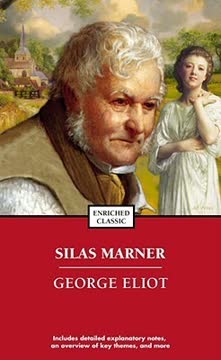
Plot Summary
Lantern Yard Betrayal
In the tight-knit religious community of Lantern Yard, Silas Marner is a devout and trusting young weaver. His world collapses when his closest friend, William Dane, frames him for theft, using Silas's own knife as evidence. The community, relying on the drawing of lots, declares Silas guilty, and his fiancée, Sarah, abandons him for William. Silas's faith in God and humanity is destroyed, leaving him isolated and embittered. This foundational trauma sets the stage for his journey, as he leaves Lantern Yard, carrying only his skills and a wounded heart, seeking refuge in the unknown village of Raveloe.
Exile in Raveloe
Silas settles in the rural village of Raveloe, where his odd habits and mysterious past make him an object of suspicion. The villagers, superstitious and insular, keep their distance, and Silas, wounded by betrayal, withdraws further into himself. He finds solace only in his weaving, working tirelessly and avoiding all social contact. The warmth and fellowship he once knew are replaced by a cold routine, and his heart, once open and trusting, hardens in self-protection, deepening his alienation from the world around him.
Gold and Isolation
As years pass, Silas's only comfort becomes the gold he earns from weaving. He hoards his coins obsessively, counting and caressing them in secret, finding in their gleam a poor substitute for human connection. The villagers' suspicion persists, and Silas's attempts at kindness—such as healing Sally Oates—only reinforce his reputation as a man with uncanny powers. His life narrows to a cycle of work and hoarding, his soul shrinking as his gold pile grows. The gold becomes his companion, his purpose, and his prison, deepening his loneliness and making him ever more vulnerable to loss.
Cass Family Secrets
In Raveloe, the Cass family stands at the social summit, but beneath their prosperity lies dysfunction. Squire Cass's indulgence has bred idleness and vice in his sons. Godfrey, the eldest, is good-natured but weak-willed, entangled in a secret marriage to the opium-addicted Molly Farren. His brother Dunstan, manipulative and reckless, exploits Godfrey's secret for his own gain. Godfrey longs for Nancy Lammeter, the village's admired young woman, but his hidden past and Dunstan's threats keep him trapped. The Cass family's outward respectability masks a web of lies, debts, and moral compromise, setting the stage for future upheaval.
Theft and Despair
When Godfrey needs money to cover his debts, Dunstan seizes the opportunity to sell Godfrey's horse, Wildfire, but the horse is killed in an accident. Desperate, Dunstan stumbles upon Silas's cottage, finds the door unlocked, and steals the weaver's hoarded gold. Silas returns to discover his treasure gone, plunging him into utter despair. The loss is not just financial—it is the destruction of the only thing that gave his life meaning. Silas's grief is raw and public, and for the first time, he seeks help from the villagers, exposing his vulnerability and beginning a subtle shift in his relationship with Raveloe.
Raveloe's Suspicion
The theft of Silas's gold becomes the talk of Raveloe. The villagers, initially suspicious of Silas, now view him with pity, seeing his suffering as proof of his innocence. The local authorities investigate, but clues are scarce, and suspicion falls on a passing pedlar. Silas's openness about his loss and his willingness to accept help begin to soften the villagers' attitudes. Dolly Winthrop, in particular, reaches out with practical kindness, offering food and comfort. Though Silas remains grief-stricken, the community's response plants the first seeds of connection, hinting at the possibility of healing and belonging.
The Child in the Snow
On a snowy New Year's Eve, Molly Farren, Godfrey's secret wife, trudges toward the Red House, intending to reveal her marriage and claim her rights. Exhausted and weakened by opium, she collapses and dies in the snow near Silas's cottage. Her toddler daughter, drawn by the light and warmth, wanders into Silas's home. Silas, in a trance-like state, discovers the golden-haired child by his hearth, mistaking her at first for his lost gold. The child's arrival is both mysterious and miraculous, a turning point that will transform Silas's life and offer him a new kind of treasure.
Eppie's Arrival
Silas finds Molly's body and realizes the child is orphaned. He decides to care for her, naming her Eppie after his mother and sister. The villagers are astonished by Silas's decision, but Dolly Winthrop supports him, helping him learn to care for the child. Eppie's presence brings warmth and purpose to Silas's life, drawing him out of isolation and into the community. The villagers' suspicion turns to admiration, and Silas's cottage becomes a place of laughter and love. Eppie's golden curls replace the lost gold in Silas's heart, and he is reborn through fatherhood.
Redemption Through Love
As Eppie grows, Silas's love for her deepens, and his life is transformed. He becomes an attentive, devoted father, and his relationship with the villagers flourishes. Eppie's mischief and innocence bring joy and challenge, teaching Silas patience and tenderness. The community, once wary, now embraces Silas and Eppie, offering friendship and support. Silas's faith in goodness is gradually restored, and he finds meaning not in gold, but in human connection. Through Eppie, Silas is redeemed, and his story becomes one of hope, resilience, and the healing power of love.
Godfrey's Hidden Guilt
Godfrey Cass, relieved by Molly's death and Eppie's adoption by Silas, keeps his paternity secret, marrying Nancy Lammeter and striving for respectability. Yet the absence of children in their marriage becomes a source of sorrow, especially for Nancy, who yearns for motherhood. Godfrey's guilt festers, and his attempts to adopt Eppie are thwarted by Nancy's principles. The Casses' outward success is shadowed by regret and unspoken truths, as Godfrey's failure to claim his daughter haunts him. The contrast between Silas's humble happiness and Godfrey's uneasy prosperity underscores the novel's moral center.
Eppie's Growing World
Sixteen years pass, and Eppie blossoms into a kind, spirited young woman, beloved by Silas and the village. She falls in love with Aaron Winthrop, and together they dream of a simple, happy life. Silas, now aged and frail, finds comfort in Eppie's devotion and the community's support. The draining of the Stone-pit reveals Dunstan's skeleton and Silas's stolen gold, bringing closure to old wounds. Eppie's identity and future become central, as questions of belonging, gratitude, and loyalty come to the fore, setting the stage for the story's final reckoning.
Claims and Choices
The discovery of Dunstan's body and the gold compels Godfrey to confess his paternity to Nancy and to claim Eppie as his daughter. He and Nancy visit Silas, offering Eppie wealth, status, and a new home. Silas, torn between gratitude and fear of loss, leaves the choice to Eppie. Eppie, steadfast in her love for Silas and her humble life, refuses the Casses' offer, choosing loyalty over luxury. Godfrey and Nancy, chastened and sorrowful, accept her decision, recognizing the limits of their claims and the consequences of past actions. Eppie's choice affirms the primacy of love and belonging.
Truths Revealed
Silas, seeking closure, returns with Eppie to Lantern Yard, only to find it transformed and his old life erased. He realizes that some mysteries remain unsolved, but his faith in goodness endures. The journey affirms that home is not a place, but the bonds of love and community. Silas's story, once marked by loss and injustice, is now defined by redemption and acceptance. The past cannot be undone, but its wounds can be healed through compassion, forgiveness, and the creation of new, meaningful ties.
Lantern Yard Revisited
The vanished Lantern Yard symbolizes the irretrievability of the past and the futility of seeking perfect justice. Silas accepts that some questions will never be answered, but finds peace in the life he has built with Eppie. Dolly Winthrop's wisdom helps him see that trust and love are more important than certainty. Silas's journey comes full circle, as he lets go of old grievances and embraces the blessings of the present. The story's spiritual resolution lies in the acceptance of mystery and the affirmation of faith in human goodness.
Eppie's Wedding Day
Eppie marries Aaron Winthrop, surrounded by the love of Silas, Dolly, and the community. The humble wedding, marked by simplicity and genuine happiness, contrasts with the Casses' unfulfilled grandeur. Silas, once an outcast, is now honored and cherished, his life redeemed by love and selflessness. Eppie's choice to remain with Silas and marry within her community affirms the novel's central values: loyalty, gratitude, and the transformative power of love. The story ends with a vision of enduring happiness, as Silas and Eppie, once lost and alone, find their true home in each other and in the hearts of those around them.
Analysis
A modern parable of loss, love, and belongingSilas Marner endures as a powerful meditation on the human need for connection and the possibility of redemption. Eliot's narrative interrogates the dangers of isolation—whether imposed by betrayal, grief, or social prejudice—and the ways in which love, especially in its most selfless forms, can heal and transform. The novel critiques rigid religious and social systems, exposing their capacity for injustice and exclusion, while celebrating the quiet heroism of ordinary people like Silas and Dolly. Through the contrast between material wealth and spiritual richness, Eliot suggests that true happiness lies not in gold or status, but in the bonds of family and community. Eppie's choice to remain with Silas, despite the allure of privilege, is a radical affirmation of gratitude, loyalty, and the sufficiency of humble joys. The story's enduring lesson is that suffering, though inevitable, can be the crucible for growth, and that the greatest treasures are found not in what we possess, but in whom we love and who loves us in return.
Review Summary
Reviews of Silas Marner are largely positive, with readers praising its themes of redemption, love, and community. Many appreciate Eliot's psychological insight and vivid portrayal of rural English life. Some readers initially assigned the book in school resisted it, only to discover its merits later in life. Common criticisms include overly wordy prose and a weaker second half. The story of a lonely miser transformed by an orphaned child resonates emotionally with most readers, who find it a heartwarming, if sometimes slow, parable about the true nature of wealth and belonging.
People Also Read

Characters
Silas Marner
Silas Marner is the novel's protagonist, a weaver whose life is shaped by betrayal, loss, and ultimately, love. Initially, Silas is a trusting, devout young man, but the treachery of his friend William Dane and the injustice of his religious community shatter his faith in both God and humanity. In Raveloe, he becomes a recluse, finding solace only in his work and the gold he hoards. The theft of his gold plunges him into despair, but the arrival of Eppie, an orphaned child, awakens his capacity for love and transforms him. Through fatherhood, Silas reconnects with the community, regains his faith in goodness, and finds redemption. His journey from isolation to belonging is the emotional heart of the novel, illustrating the healing power of love and trust.
Eppie (Hephzibah Marner)
Eppie is the golden-haired child who wanders into Silas's cottage and becomes his adopted daughter. Orphaned by her mother's death and abandoned by her biological father, Godfrey Cass, Eppie is raised with tenderness and devotion by Silas. Her presence brings warmth, purpose, and joy to Silas's life, drawing him out of isolation and into the embrace of the community. As she grows, Eppie becomes spirited, compassionate, and loyal, embodying the novel's ideals of gratitude and fidelity. When offered wealth and status by her biological father, she chooses to remain with Silas, affirming the primacy of love over blood or social position. Eppie's character is a beacon of hope and renewal.
Godfrey Cass
Godfrey Cass, the Squire's eldest son, is a man torn between desire and duty. His secret marriage to Molly Farren and the resulting child, Eppie, become sources of shame and anxiety. Godfrey's inability to confront his past or assert himself leads to a life of compromise and regret. He marries Nancy Lammeter, seeking respectability, but the absence of children and his hidden guilt haunt him. Godfrey's eventual confession and attempt to claim Eppie are acts of conscience, but they come too late. His character illustrates the consequences of moral weakness and the limits of repentance, contrasting sharply with Silas's redemptive journey.
Nancy Lammeter Cass
Nancy is admired for her beauty, kindness, and moral integrity. She marries Godfrey, unaware of his secret, and becomes the moral center of the Cass household. Nancy's longing for children and her refusal to adopt Eppie, based on her sense of Providence and propriety, reveal both her strength and her limitations. When Godfrey confesses the truth, Nancy responds with compassion and regret, wishing she could have done right by Eppie from the start. Her steadfastness and capacity for forgiveness anchor the novel's exploration of duty, love, and the complexities of conscience.
Dunstan (Dunsey) Cass
Dunstan is Godfrey's younger brother, a gambler and blackmailer who exploits Godfrey's secrets for personal gain. His theft of Silas's gold and subsequent disappearance set the novel's central events in motion. Dunstan's character is a study in selfishness and moral decay, serving as a foil to both Godfrey and Silas. His eventual fate—discovered as a skeleton in the drained Stone-pit—serves as a grim reminder of the consequences of unchecked vice and the inescapability of truth.
Dolly Winthrop
Dolly is a central figure in Raveloe, known for her compassion, common sense, and unwavering support. She befriends Silas at his lowest point, offering comfort, guidance, and practical help in raising Eppie. Dolly's faith is simple but profound, and her influence helps Silas regain trust in humanity and find spiritual peace. She represents the best of rural community life, embodying the values of charity, humility, and steadfastness.
William Dane
William is Silas's closest friend in Lantern Yard, whose jealousy and cunning lead him to frame Silas for theft. His betrayal is the catalyst for Silas's exile and spiritual crisis. William's self-righteousness and duplicity contrast sharply with Silas's innocence, highlighting themes of hypocrisy and the dangers of blind faith in authority.
Squire Cass
The Squire is the wealthiest man in Raveloe, presiding over his family and estate with a mixture of indulgence and severity. His lack of discipline and foresight contributes to his sons' failings and the family's decline. The Squire's values are rooted in tradition and status, but he is ultimately powerless to prevent the unraveling of his household.
Aaron Winthrop
Aaron is the son of Dolly Winthrop, growing up alongside Eppie and eventually becoming her suitor. His love for Eppie is sincere and steadfast, and his willingness to care for Silas as well as Eppie reflects the novel's ideals of family and community. Aaron's character represents the promise of a new generation grounded in kindness and responsibility.
Molly Farren
Molly is Godfrey's secret wife and Eppie's biological mother, whose addiction and despair lead to her death in the snow. Her fate is a stark reminder of the consequences of social exclusion and personal weakness. Molly's death, while tragic, becomes the occasion for Eppie's salvation and Silas's redemption.
Plot Devices
Framing, Exile, and Found Family
The novel's structure is built on the motif of exile and return, beginning with Silas's unjust expulsion from Lantern Yard and culminating in his spiritual homecoming through Eppie. The theft of Silas's gold and the arrival of Eppie serve as pivotal plot devices, transforming loss into opportunity for renewal. The use of secrets—Godfrey's hidden marriage and paternity, Dunstan's crime—creates tension and drives the narrative toward revelation and resolution. Foreshadowing is employed through recurring symbols: gold as both a source of isolation and a metaphor for Eppie's value; the Stone-pit as a place of both loss and discovery. The narrative's dual focus on Silas and the Cass family allows for parallel explorations of guilt, responsibility, and the consequences of choice. The eventual convergence of these threads—through confession, recognition, and Eppie's decision—brings the story to a moral and emotional climax, affirming the primacy of love, community, and personal integrity.








































