Plot Summary
Invitations and First Impressions
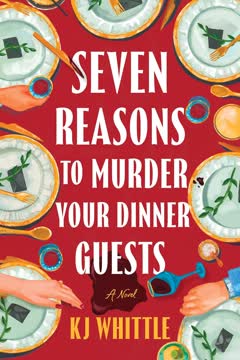
Seven strangers are summoned to an enigmatic underground restaurant in London by ornate black invitations, each personalized and mysterious. Among the guests: jaded journalist Vivienne, anxious programmer Tristan, swaggering banker Matthew, embattled cop Melvin, social media star Stella, self-satisfied Dr. Gordon, and glamorous, insecure Janet. Their host is conspicuously absent as they sit beneath an odd painting of animals behaving like people—harbingers, perhaps, of what's to come. With curiosity and suspicion palpable, the group finds comfort and friction in first exchanges, establishing hierarchies and alliances. Each is driven by private hopes, pain, and grievances, their diverse backgrounds quickly apparent in banter and body language. None knows quite why they're here, but all sense that this is no ordinary PR event. The tension simmers, setting the stage for revelations.
The Sins Among Us
As dinner unfolds, subtle and not-so-subtle barbs reveal the guests' flaws: Vivienne's bitterness and envy, Stella's frantic hunger for more, Matthew's predatory charm, Melvin's avoidance, Janet's vanity and self-indulgence, Gordon's smug pride, and Tristan's simmering resentment. Each is assigned a place setting decorated with an emblematic animal. Patterned conversations and half-spoken stories draw out their neuroses, ambitions, and doubts. Personal histories—career disappointments, broken relationships, and betrayals—surface through observations and memories. Tension shuffles between laughter and discomfort, as alliances form or fracture based on status and attraction. What's meant to be a festive meal feels increasingly like a psychological cross-examination or the first act in a cruel game.
Foie Gras, Wine, and Masks
The dinner's luxurious offerings become battlegrounds for the guests' insecurities and desires. Janet devours the feast, to Dr. Gordon's judgement and Melvin's amusement. Matthew toys with Janet and Stella, using wit and attention as both weapon and seduction, while flashbacks expose deeper wounds—overlooked affection, desperate ambition, and repressed longing. At the table and in private interludes, the veneer of manners erodes. Under social pressure and the effects of (drugged) wine, unraveled truths leak out: professional failures, marital disappointments, addiction, silent loneliness. The painting above, showing "sinful" creatures in finery, presides silently as the shadow of ritual and judgement grows long over their gilded gathering.
Numbers Sealed in Black
As dessert ends, each guest finds a black envelope at their setting, containing a card predicting the age they will die. Panic spreads—Janet's reveals "forty-four," her current age; Gordon and others find shockingly near or distant numbers. Fear, denial, and accusation ripple through the guests, suspicion veering toward an elaborate (and cruel) prank. Some refuse to open their envelopes, others demand answers. Attempts to leave or find the host are thwarted; escape routes prove locked or useless. Through confusion and bitter laughter, a new, urgent alliance forms: the survivors against the unknown sender—and perhaps against one another. Fear of mortality settles in, hearts racing under the knowledge that someone, or something, is watching.
The Shocked and the Shaken
The guests leave the party with nerves frayed and suspicions raised. In the aftermath, Vivienne embarks on her own investigation, hunting for connections between the diners, their numbers, and the host. Emotional fallout emerges at work and at home for all involved. Janet is haunted by the deadly prediction; Melvin and Gordon fall back into old patterns, seeking comfort in drinks and routines. Matthew's bravado cracks, and Tristan's anxiety intensifies. The envelopes become personal talismans—either tucked away or obsessively scrutinized. Each struggles alone and in private correspondence. Fear triggers rash decisions and unearths long-dormant secrets, as the group is drawn together again by tragedy.
The First to Fall
Barely weeks later, news arrives that Stella—vivacious, greedy for recognition and success—dies when she falls under a train. Scrutinizing the circumstances, Vivienne and others notice alarming coincidences: Stella received the number "twenty-three"—her age at death. Group emails ignite fresh panic. Was her death an accident, suicide, or something more sinister? Speculation and guilt over who opened (or hid) which envelope breed paranoia and finger-pointing. The once-absurd numbers suddenly seem like prophecies, or worse—a deadly countdown plotted by someone in their midst. Past wounds are reopened, trust erodes further, and Vivienne's resolve to uncover the host's motive becomes all-consuming.
Numbers That Haunt
The survivors are forced to reckon with the numerical predictions. Janet, obsessed with her prophecy, spirals into guilt, excess, and desperate pleasures—her indulgence fueling her downfall. Matthew succumbs to old traumas, haunted by childhood bullies and unreliable identity, while Melvin, torn between convention and desire, seeks riskier escapes. Vivienne juggles family, guilt, and obsession as she deepens her amateur detective work with Tristan's help. Meanwhile, Dr. Gordon doubles down on scientific rationalizations—pushing his own "anti-destiny" experiment in diet, exercise, and social withdrawal. Each attempts to outwit or ignore fate, risking more by the day as the group watches their numbers edge closer.
Deaths and Doubts Multiply
The deaths of Matthew and Janet follow swiftly. Both die precisely at their predicted "numbers"—Matthew by a fall from his office building, Janet under a taxi just before her forty-fifth birthday. Panic surges as Vivienne, Melvin, and Tristan try to make sense of the pattern. Each death grows more suspicious, the method different yet chillingly efficient. Vivienne now suspects Janet, then Melvin, then even herself—her blackouts and dissociative fugue states leaving her terrified she might somehow be the killer. The group's ranks dwindle; friendships and alliances unravel under relentless, inescapable dread. The question sharpens: is this elaborate revenge? Who is the orchestrator? And how long before the next number comes due?
The Living, the Lost
As numbers dwindle, survivors become increasingly haunted by their own flaws and histories. Melvin, now in a love triangle, flails between guilt and self-acceptance. Vivienne's obsession with finding connections hits dead ends; Tristan's panic and sense of alienation deepen, as the mirror of his own fury grows clearer. Dr. Gordon, convinced he can "beat" his number, intensifies his anti-social, experimental regimen—to tragic, self-inflicted results. The remaining guests meet to trade theories: are they victims of a psychic ritual, a social experiment gone wrong, or a skilled murderer among them? As sickness, age, and fear chip away at their certainty, every shadow hints at betrayal.
The Web Tightens
Vivienne and Tristan (the last survivors besides Melvin) revisit clues and interview acquaintances, even tracking the letterpress source of the dinner invitations—only to find tenuous leads. Vivienne's health falters, fugue states become more frequent, and suspicion falls upon herself as much as others. Melvin dies on his sixty-first birthday, the "sloth" in his number realized through his inability or unwillingness to act as a detective (or as a partner and friend). Vivienne attends funerals, interrogates family, befriends Melvin's wife—and uncovers long-forgotten letters from her own past, hinting at secrets she's buried even from herself. The stage is set for reckoning.
Sins Revealed in Shadows
At last, Vivienne realizes the painting from the dinner is a classic depiction of the seven deadly sins, and each guest embodied one. She wrestles with memories, her lost envelope, and an investigation that circles ever closer to home. Old colleagues, ex-lovers, and even her own mentee Cat are re-examined. Long-buried trauma—especially regarding her own lost child—reemerges, shrouded in uncertainty from her fugue states. As Vivienne's doubts crescendo, she begins to suspect not just her friends but herself. Doubt, envy, anger, and guilt coil tighter as the past and present threaten to finally collide.
Nearing the Final Countdown
The last survivors grapple with their ghosts, past failures and missed chances crowding in. Vivienne's search turns desperate—her fear of her own number mounting as her body weakens and her mind's clarity slips. She questions her memory, suspects hidden enemies, and prepares for the end, whether at someone's hands or by inevitable fate. Tristan recedes emotionally, his own trauma bubbling toward the surface, as Vivienne struggles to reach him. Their bond is tested in late-night confessions and attempted interventions. Fate feels both unavoidable and unfathomable. The story's spiral approaches its deadly center, each character's "sin" set for final judgment.
The Truth Below the Surface
A devastating twist unfolds: key clues hidden in blackouts, letters, and confessions reveal that Vivienne's and Tristan's lives are inextricably linked—not just by the dinner, but by blood. Vivienne is Tristan's long-lost mother, her memories of childbirth and loss reawakened by the trauma and investigation. Interwoven memories and documents point to a deeper, orchestrated design behind the "accidental" deaths. The dinner party's host isn't an outsider after all. The murderer is one of them, hiding in plain sight, shaping not just the events but the narrative itself. Motive, revenge, and the cycle of sin are laid bare.
The Water's Edge
On a night charged by dread and apocalyptic finality, Vivienne and Tristan walk across a London bridge. In a moment shaped by shared trauma and fearful love, both teeter on the edge. Tristan's despair over his fate and anger toward Vivienne erupt into violence; he drags her over the edge with him in an apparent suicide attempt-cum-murder. In the frigid, unforgiving Thames, consequences—planned and unintended—are finally met. One survives, scarred forever in body and soul. The orchestration, motives, and sins that bound them together are, at last, exposed by the most primal survival.
Vindication, Memory, and Loss
Vivienne survives the fall but is haunted by loss and guilt. Her recovery is marred by confusion, regret, and endless questions. The lost envelope is finally found; the truth about her relationship with Tristan solidifies as she pieces together letters, adoption documents, and their intertwined lives. For her, the mystery is transformed into a tragedy about secrets kept too long and wounds never healed. As funerals gather those left behind, forgiveness and acceptance remain elusive, but the drive to connect and comprehend persists.
Letters and Reconciliations
With the last clues in hand—Vivienne's long-missing envelope, her letter to Tristan's father, and Susan's confessions about adoption—the threads come together. Vivienne realizes she was both target and cause, her sin of envy both the reason for her own suffering and the fuel for Tristan's grand design. The cycle of revenge is mirrored in the generational trauma of abandonment, secrecy, and misunderstood love. As Cat and her new family rally around Vivienne, the possibility of healing, albeit incomplete and broken, emerges at last.
Unmasked at the Grave
"Kieran," Tristan's new alias, secretly attends Vivienne's burial. The circle is complete: all seven "sinners" have died save him; now, under a new name, he quietly reflects on what he wrought. Each death was both retribution and design, with detailed justifications rooted in personal grievances—the dinners, the wine, the animal symbols, the numbers. The narrative reconfigures one last time—revenge as art, punishment, and perhaps a last attempt to find meaning and connection in a painful, rejected life. Tristan, undetected, walks away—ready to begin again or let the story finally rest.
Legacies After Death
The final chapter reflects on what the dinner party and its aftermath have changed—for the survivors, for those left behind, and for the reader. Each sin, number, and secret rippled outward, affecting children, lovers, and stranger-observers. The lessons are stamped in the haunting final image: that our darkest flaws and unspoken wounds shape destinies not just for ourselves, but for the circles of people touched by our choices and silences. The narrative leaves a question burning: what is the point of vengeance, and what legacy do even the "victors" of such a story truly claim?
Analysis
K.J. Whittle's Seven Reasons to Murder Your Dinner Guests is a dazzling, subversive modern mystery that blends classic whodunnit structure with a dark parable about sin, fate, and the destructive legacy of trauma. Through intricate, multi-voiced storytelling, the novel interrogates whether people can ever truly escape their own worst instincts or the wounds inflicted by others. Each character is a sharply drawn psychological study—a product of individual history and larger societal failures, their "sin" both chosen and inherited. The ingenious use of prophetic envelopes and deadly "numbers" weaponizes that sin, beckoning both reader and character closer to their own mortality. By mirroring Agatha Christie's closed-room classics through the lens of contemporary dysfunction—celebrity, internet shame, professional burnout, family secrets—the book explores the ways we manufacture and distribute judgement, vengeance, and forgiveness. Ultimately, Whittle's work is a meditation on agency: whether we shape destiny or it shapes us, whether revenge consuming the punisher or freeing the punished. It asks what—if anything—endures when all secrets are laid bare or all scores are settled. The answer is at once bleak and redemptive. In the end, what lingers are not sins or punishments, but the broken, salvaged connections we dare to offer and accept.
People Also Read






Characters
Vivienne
Vivienne is the lens through which much of the story's emotional arc is seen. Once a promising magazine writer, she's become embittered by professional stagnation and societal invisibility, her aching loneliness and suppressed envy coloring interactions. Motherly but often brittle, she mentors those around her while privately resenting their advantages. The trauma of abandoning a child as a teen—after being told he died—still shadows her, affecting relationships and fueling self-doubt. Throughout the narrative, she transforms: her investigation into the dinner-party deaths becomes a reckoning with her own limitations and regrets. Ultimately, her journey is about seeking absolution—uncovering not just the killer, but herself. Her late-life friendships, especially with Tristan, open long-sealed wounds and force her to confront personal failings. In the end, Vivienne is both victim and the unwitting trigger of revenge, her fate intertwined with her lost son.
Tristan (Kieran)
From brittle, anxious outsider to master manipulator, Tristan is both victim and villain. Scarred by early trauma, bullying, failed ambitions, and the bitter revelation of adoption, he grows to see the world through a lens of grievance and moral accounting. Each remembered slight—whether professional, emotional, or familial—becomes another mark against the world. The dinner party is his elaborate vendetta, each guest carefully selected for their role in his perceived ruin. Developed as both socially awkward and intensely intelligent, he cycles through isolation, bitter longing, and finally cold calculation as "Kieran." His relationship with Vivienne is the crux: not only is she his unwitting biological mother, but her own envy and neglect serve both as motivation and target for his elaborate plot. Psychologically, he embodies wrath, his rage harnessed as a god's judgment but rooted in a child's pain.
Janet
Janet masks her loneliness and trauma under charm and bravado—flirting, overeating, shopping, and taking lovers for comfort and validation. A successful businesswoman with a hollow marriage, her lust for life becomes self-destruction after receiving her "number." Humiliated and desperate, Janet's coping spirals into excess, her tragic backstory and acute pain surfacing in fleeting moments of vulnerability. While outwardly controlling her narrative (her body, her brand), she is, at heart, a woman running from profound grief and a sense of lost potential—especially regarding motherhood. Her relationship with others is performative, and her fate—dying at the age "predicted" for her—confirms her deepest fear: she can never truly outrun her appetites or her regrets.
Melvin
Melvin is presented as a competent, soulful police officer who, beneath bravado and humor, hides from truth and personal confrontation. Closeted, then torn between two partners, his inaction becomes both safety and doom. When forced to face personal and professional crises—his wife's illness, his affair—he drifts, finding solace in drink, food, and routine rather than decisive action. Melvin's affection for the other guests and his inability to break harmful cycles cement his spot as "sloth." Despite opportunities to act—as detective, partner, or friend—he defers, and in the end falls victim to his own inertia, dying exactly as predicted. His story is about the destructiveness of not acting amid moral challenge.
Dr. Gordon
Gordon's self-image is built upon intellectual authority and fastidious control—over food, appearance, and relationships. He psychoanalyzes others but disowns his own eating disorder and emotional fragility. Though outwardly successful, he is plagued by inadequacy and shame, which he channels into punishing regimens and bristling interactions. His pride manifests most dangerously after the dinner: convinced he alone can outwit his "number," he embarks on a self-experiment in longevity and social withdrawal, only to fall victim to his own hubris. Gordon's inability to see his own failings—while diagnosing those of others—cements his fate as the "peacock" of the group, a lesson in the self-destructive power of pride unchecked.
Matthew
Matthew charms all, masking deep insecurities—class shame, childhood bullying, and fractured identity. He craves validation and exploits vulnerable lovers, using sex and power as surrogates for real connection. His inability to break the patterns of his own trauma—replicating the cycle of use and abandonment—drives ever riskier pursuits. The dinner party's "lust" both defines and dooms him: his predicted number becomes a self-fulfilling prophecy as old wounds and recent anxieties spiral into self-destruction. In the end, Matthew's inability to let go of his persona and open up leads to his literal and figurative fall.
Stella
Stella's hunger—for attention, followers, luxury, and love—propels her meteoric rise and swift collapse. Her success is built on frantic accumulation, self-deception, and bullying of rivals. Though she projects control, inwardly she is lost, marked by childhood grievances and an inability to receive genuine support. Stella's "greed" is literal and emotional: she wants everything, and nothing she gets is enough. Betrayed by those she trusted, and unable to adapt, her death as the first victim triggers the others' realization: none can escape what's written, and greed offers no defense against fate.
Cat
Cat is not a dinner guest but becomes pivotal as Vivienne's mentee, later surrogate daughter, and witness to personal transformation. Orphaned and struggling as a single mother, Cat navigates the world with emotional intelligence and warmth, challenging Vivienne's hardened outlook. As a counterweight to envy and bitterness, she represents hope, healing, and the possibility of new beginnings—her arc contrasting the destructive obsession of the primary cast.
Susan & James (Jim)
Susan, emotionally distant but well-meaning, longs for connection but is ultimately incapable of truly knowing or rescuing her troubled son. Jim, once Vivienne's lover, embodies the pattern of denial and avoidance that leads to Tristan's abandonment and later vengeance. Their inability to face hard truths—about adoption, disappointment, and love—spurs Tristan's sense of displacement and revenge.
Ellie
Intelligent, sensitive, but ultimately unable to accept Tristan's rage, Ellie's departure catalyzes his collapse. Her perspective offers nuance, revealing Tristan's duality: the loving, attentive partner, and the simmering, sometimes dangerous, outcast. She represents the lost promise of happiness, a possibility destroyed by the sins and cycles at the core of the narrative.
Plot Devices
The Black Envelopes and Numbered Deaths
The black envelopes—each containing a precise age of death for the recipient—serve as both literal plot triggers and psychological weapons. Their mysterious, individualized predictions set off fear, denial, and obsession, reframing every personal flaw as a potential mortal sin. They are the story's central foreshadowing device: each time a character's number comes due, anxiety tightens, and deaths follow. The envelopes turn classic whodunnit suspense into existential dread, escalating from prank to prophecy, and finally to an elaborate moral sentence carried out by the story's architect. The mounting body count and shrinking cast refocus suspicion and narrative perspective, keeping the reader unbalanced and deeply engaged.
Multi-Perspective Structure
The narrative unfolds through the inner and outer lives of each main character, never allowing a simple, omniscient or "safe" angle. This structure deepens the psychological portrait: every event is filtered through the lens of personal bias, memory, and secret history. Decreasing points of view as characters are lost both sharpens suspense and draws the reader closer to the final survivor(s), culminating in a deeply personal, even solipsistic, conclusion. This device also withholds and reveals crucial information at differing paces, ensuring the twist—the identity of orchestrator and motive—lands with both shock and satisfaction.
Symbols and Allegory: The Seven Deadly Sins
The seemingly whimsical painting—depicting animals as sinful aristocrats—and the matching motifs at the dinner table are later revealed as a moral map: each character assigned a sin that mirrors their fatal flaw and destiny. These classic symbols offer darkly playful commentary, enriching the text as parable and puzzle. The lush, almost mythical atmosphere underlines the allegorical dimension, as well as providing a modern spin on the locked-room/morality-play conventions of golden-age mysteries.
Dissociative Blackouts & Unreliable Memory
Vivienne's amnesia and fugue states serve as both a red herring and a metaphor for personal repression and trauma. They undermine the security of memory, making the protagonist (and reader) suspect herself, and highlighting the gap between perceived and hidden truths. These episodes reinforce the book's psychological complexity and support the central twist: she is both closer and farther from guilt than she realizes.
Gradual Unmasking & Letters from the Past
The central mystery's resolution relies on withheld letters, adoption records, and confessions tracked across decades. These items shift understanding of the characters' relationships and the moral logic of the party. They deliver both emotional catharsis and the narrative's last devastating reversal, merging detective fiction's clues with the emotional signatures of family drama.








































