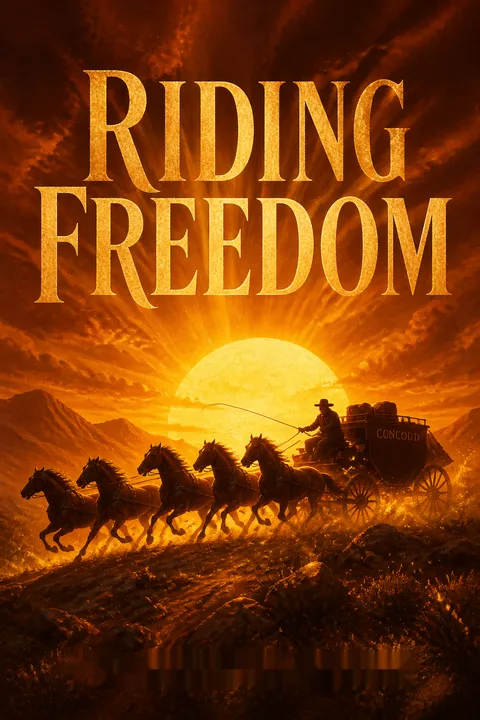

Plot Summary
Orphaned in the Storm
In the wilds of 1800s New Hampshire, a fierce storm claims Charlotte's parents, leaving her a survivor at just two years old. The horses that caused the accident become her first protectors, standing guard through the night until neighbors find her. With no family to claim her, Charlotte is sent to an orphanage, clutching a strip of leather rein—a symbol of her resilience and the freedom she craves. Even as a toddler, her stubbornness and strength are evident, foreshadowing a life spent fighting for her place in a world that offers her little. The trauma of loss shapes her, but so does the quiet comfort of horses, setting the stage for a journey defined by grit, longing, and the search for belonging.
Freedom Lost, Dreams Born
Ten years at the orphanage harden Charlotte, who grows up more at home in the stables than the kitchen. She finds solace with Vern, the wise stable master, and Freedom, her beloved horse. The orphanage is a harsh place, ruled by the cruel Mr. Millshark and indifferent Mrs. Boyle. Charlotte's only joy comes from racing horses and dreaming of a future beyond the orphanage's fences. Her friendship with Hayward, another outcast, becomes a lifeline. Together, they imagine a ranch of their own, a place where they can finally belong. The death of Freedom, her horse, is a devastating blow, but it also ignites a fierce determination in Charlotte to escape and claim the life she dreams of.
Racing Boys, Breaking Rules
Charlotte's skill with horses sets her apart, but also makes her a target. She races against the boys, besting them with her knowledge and bond with Freedom. William, a bully, resents her victories, and Mr. Millshark sees her as a threat to the orphanage's reputation. When Freedom falls ill and dies, Charlotte is blamed and banned from the stables. The loss is crushing, but it also marks a turning point. No longer content to be confined by others' rules, Charlotte's resolve hardens. She realizes that to find freedom, she must break away from the roles and limitations forced upon her as a girl.
Hayward's Friendship, Millshark's Threat
Hayward, Charlotte's loyal friend, is unexpectedly adopted, leaving her more isolated than ever. The orphanage's cruelty and the loss of her only confidant push Charlotte to the brink. Millshark's threats and Mrs. Boyle's exploitation make it clear that she will never be allowed to live freely as herself. Hayward's departure is bittersweet, but it also gives Charlotte the final push she needs. She decides to run away, knowing that the world outside is dangerous, but the world inside is unbearable. With Hayward's help, she prepares for a daring escape, determined to forge her own destiny.
Grief, Betrayal, and Resolve
Charlotte's grief over Freedom and Hayward's departure is compounded by betrayal from those meant to care for her. Mrs. Boyle hides her from potential adopters, and Millshark blames her for Freedom's death. These injustices crystallize Charlotte's resolve. She realizes that survival means more than endurance—it means action. She enlists Vern's help, gathering supplies and cutting her hair to disguise herself as a boy. The pain of leaving behind her identity and the people she loves is sharp, but the hope of freedom is stronger. Charlotte steps into the unknown, guided by the memory of those who believed in her.
Disguise and Escape
Under cover of night, Charlotte transforms herself into Charley, donning boy's clothes and cutting her hair. She leaves behind the only home she's known, slipping away before dawn to catch a stagecoach out of town. The journey is fraught with fear and uncertainty, but also exhilaration. For the first time, Charlotte experiences the world as someone unbound by the expectations of her gender. She navigates new dangers, relying on her wits and her bond with horses to survive. The act of disguise is both liberation and loss, as she must hide her true self to claim the freedom she seeks.
New Life, New Name
Arriving in Worcester, Charley finds work in Ebeneezer Balch's stables. The transition is difficult—she must constantly guard her secret and prove herself among skeptical men. Ebeneezer, gruff but fair, recognizes Charley's talent with horses and gives her a chance. Through hard work and determination, Charley earns respect and a place in the stable. The masquerade is exhausting, but it also brings a sense of belonging and purpose. Charley's skills grow, and so does her confidence. The stables become a new kind of home, and for the first time, the dream of independence feels within reach.
Ebeneezer's Test
When rumors of a runaway girl reach Worcester, Charley's secret is nearly exposed. Ebeneezer, suspecting the truth, tests Charley's abilities by challenging her to drive a six-horse team. The task is daunting, but Charley's determination and instinct prevail. Through repeated failures and perseverance, she masters the ribbons, proving her worth not just as a stable hand, but as a driver. Ebeneezer's acceptance is unspoken but profound—he offers Charley a future as a coachman, valuing skill over gender. This pivotal moment cements Charley's identity and sets her on a path toward mastery and self-reliance.
Mastering the Ribbons
Years of practice under Ebeneezer's guidance transform Charley into a renowned stagecoach driver. Her reputation grows as she navigates treacherous roads and demanding passengers with unmatched skill. The masquerade continues, but Charley finds pride in her work and the respect of her peers. Letters to Hayward and memories of Vern keep her connected to her past, while her achievements in the present fuel her ambition. The threat of discovery remains, but Charley's confidence and competence make her indispensable. She becomes a symbol of excellence, quietly challenging the limitations imposed on her by society.
Outrunning the Past
A chance encounter with Mr. Millshark, now a passenger on her stage, tests Charley's nerve and ingenuity. She outsmarts him, using her skills to maintain her disguise and assert her authority. The episode is both a personal victory and a reminder of the dangers that still lurk. When former stable boys invite her to California, promising land and opportunity, Charley seizes the chance. The West represents a new beginning—a place where she can finally own property and live on her own terms. The journey is long and perilous, but Charley's determination is unwavering.
Westward to California
The journey to California is arduous, involving ships, mules, and riverboats. Charley arrives in Sacramento, drawn by the promise of land and independence. The boomtown is chaotic and full of opportunity, but also danger. Charley's skills are in high demand, but a kick from a wild horse leaves her blind in one eye. The injury is a devastating setback, threatening her livelihood and dreams. Yet, Charley's resilience shines—she adapts, retrains herself, and refuses to be sidelined. The West tests her limits, but also offers the possibility of a life she has always imagined.
One-Eyed Charley Rides
Despite her injury, Charley fights to reclaim her place as a driver. She retrains herself, learning to rely on her remaining senses and her deep connection with horses. Her determination pays off—she becomes known as One-Eyed Charley, a driver of legendary skill and courage. Her exploits become the stuff of local lore, inspiring awe and admiration. Charley's perseverance in the face of adversity cements her reputation and secures her place in the community. She saves passengers from disaster, navigates treacherous roads, and proves that true mastery comes from heart and grit, not outward appearance.
Proving Worth, Facing Prejudice
As Charley's fame grows, so does the scrutiny. She faces prejudice and skepticism, but her competence silences most critics. The West is a place of reinvention, but also of entrenched biases. Charley's ability to pass as a man allows her to claim opportunities denied to women, but it also forces her to live in secrecy. Encounters with suffragists and women fighting for their rights stir something within her. Charley realizes that her personal struggle is part of a larger fight for equality. Her life becomes a quiet act of rebellion, proving that women are as capable as men in every way.
Land of Her Own
With years of hard work and careful saving, Charley finally buys her own land in California. The property is modest but represents everything she has fought for—freedom, security, and a place to call home. She helps a neighbor, Margaret, avoid foreclosure, creating a small community of mutual support. The ranch becomes a sanctuary, a testament to Charley's perseverance and vision. Yet, even in success, she feels the absence of those she loves. Letters to Hayward and memories of Vern remind her that true fulfillment comes from connection as well as achievement.
Reunion and Remembrance
Hayward's arrival at Charley's ranch is a joyful reunion, filled with memories and shared dreams. The two friends reflect on their journey from the orphanage to the wide-open spaces of California. They honor Vern's memory and the lessons he taught them about courage and kindness. Hayward's presence brings comfort and a sense of completion, but also raises questions about the future. Charley's decision to stay and build her life in California is reaffirmed, even as she faces the challenges of living authentically in a world that may never fully accept her.
Voting for Change
In a bold act of defiance, Charley registers to vote in Santa Cruz County, fifty years before women are granted the right nationwide. Disguised as a man, she casts her ballot, knowing that her one vote may not change the world, but it is a statement of her worth and agency. The act is both personal and political—a tribute to the women who fight for their rights and to the men who support them. Charley's vote is a quiet revolution, a testament to the power of individual action in the face of systemic injustice.
Freedom's Legacy
As Charley settles into her life on the ranch, surrounded by friends and the horses she loves, she reflects on the meaning of freedom. The birth of twin foals—Vern's Thunder and Freedom—symbolizes hope and renewal. Charley's story becomes legend, inspiring others to challenge the boundaries of gender and possibility. Her life is a testament to the power of resilience, the importance of chosen family, and the enduring quest for self-determination. In the end, Charley's greatest legacy is not just the land she owns or the records she breaks, but the example she sets for all who dare to ride for freedom.
Analysis
Pam Muñoz Ryan's Riding Freedom is a powerful reimagining of the true story of Charlotte "Charley" Parkhurst, a woman who defied 19th-century gender norms to become a legendary stagecoach driver and, possibly, the first woman to vote in the United States. The novel's enduring relevance lies in its exploration of identity, resilience, and the quest for autonomy. Charlotte's journey from orphaned girl to self-made landowner is both a personal triumph and a commentary on the limitations imposed by society. Through her disguise, Charlotte exposes the arbitrary nature of gender roles and demonstrates that skill, courage, and determination are not bound by sex. The story's emotional arc—from loss and longing to achievement and legacy—resonates with modern readers, especially those who have felt marginalized or constrained by societal expectations. Ultimately, Riding Freedom is a celebration of self-determination, the power of chosen family, and the ongoing struggle for equality and recognition.
Review Summary
Riding Freedom receives an overall rating of 4.18/5, with readers praising its inspiring, historically-grounded story of Charlotte Parkhurst, an orphan who disguises herself as a man to pursue her passion for horses in 1800s America. Many appreciate its themes of perseverance, gender identity, and women's rights. Readers highlight it as an excellent choice for young audiences while remaining enjoyable for adults. Some criticism includes slow pacing, minimal character development, and wanting more depth. The true story element consistently surprises and delights readers.
People Also Read
Characters
Charlotte "Charley" Parkhurst
Charlotte is the heart of the story—a girl orphaned young, shaped by loss and hardship, who refuses to accept the limitations placed on her by society. Her love for horses and her longing for freedom drive her to disguise herself as a boy, becoming Charley. This transformation is both a survival strategy and an act of rebellion. Charley's journey is marked by perseverance, adaptability, and a deep sense of justice. She is fiercely loyal to those she loves, especially Hayward and Vern, and her courage in the face of adversity inspires those around her. Over time, Charley evolves from a desperate orphan to a legendary stagecoach driver and landowner, quietly challenging gender norms and paving the way for future generations.
Hayward
Hayward is Charlotte's closest friend and confidant, a fellow orphan who shares her dreams and supports her through every trial. His loyalty is unwavering, and his gentle humor provides comfort in dark times. Hayward's own journey—from bullied orphan to Pony Express rider and eventual Californian—mirrors Charlotte's in its search for belonging and purpose. He represents the importance of chosen family and the enduring bonds of friendship. Hayward's acceptance of Charlotte's true self, and his willingness to stand by her regardless of societal expectations, make him a vital anchor in her life.
Vern
Vern, the stable master, is a source of wisdom and kindness in Charlotte's early life. He teaches her about horses, resilience, and the importance of naming and claiming one's destiny. Vern's stories and gentle guidance shape Charlotte's values and ambitions. His own history as a former slave who found freedom parallels Charlotte's quest for autonomy. Vern's belief in Charlotte's potential gives her the confidence to pursue her dreams, and his memory continues to inspire her long after his death.
Ebeneezer Balch
Ebeneezer is the tough but fair stable owner who becomes Charley's mentor in Worcester and Rhode Island. Though initially suspicious, he recognizes Charley's talent and gives her opportunities to prove herself. Ebeneezer's gruff exterior hides a deep sense of care and respect for Charley, and his willingness to look past gender norms is pivotal in her development. He becomes a surrogate father, offering both challenge and support, and ultimately follows Charley to California, helping her build a new life.
Mr. Millshark
Mr. Millshark is the overseer of the orphanage, a figure of authority who enforces rigid gender roles and exploits the children in his care. He represents the societal forces that seek to confine and control Charlotte. His pursuit of the runaway "girl" and later encounter with Charley as a stagecoach driver highlight the ongoing threat of exposure and the dangers of nonconformity. Millshark's inability to recognize Charley's true identity is both a source of tension and a testament to her successful transformation.
Mrs. Boyle
Mrs. Boyle, the orphanage cook, is a figure of neglect and exploitation. She hides Charlotte from potential adopters to keep her as unpaid labor, denying her the chance for a better life. Mrs. Boyle's actions reinforce the theme of institutionalized injustice and the obstacles faced by girls and women seeking autonomy. Her eventual departure from the orphanage marks a symbolic end to one chapter of Charlotte's struggle.
William
William is the orphanage bully, embodying the toxic masculinity and jealousy that Charlotte must overcome. His antagonism pushes Charlotte to prove herself, both in the pasture races and in her broader quest for respect. William's eventual failure and return to the orphanage after being "unadopted" serve as a contrast to Charlotte's resilience and success.
Margaret
Margaret is a widowed neighbor in California who faces foreclosure on her land. Charlotte's decision to help her reflects the themes of solidarity and community. Margaret becomes a partner in running the ranch, contributing her skills and companionship. Their relationship highlights the importance of women supporting each other in a male-dominated world.
James Birch and Frank Stevens
James and Frank are former stable boys who invite Charley to California, offering her the chance to join the California Stage Company. Their belief in her abilities and their stories of opportunity in the West inspire Charley to take the next step in her journey. They represent the spirit of adventure and the possibilities of reinvention that define the American frontier.
Freedom (the horse)
Freedom, Charlotte's beloved horse, is more than an animal—she is a symbol of Charlotte's longing for autonomy and her connection to the past. Freedom's death is a turning point, fueling Charlotte's resolve to escape and seek a better life. The naming of a new foal "Freedom" at the story's end signifies renewal and the enduring nature of hope.
Plot Devices
Disguise and Gender Passing
Charlotte's decision to live as Charley is the central plot device, enabling her to access opportunities and freedoms denied to women. The disguise is both a shield and a source of tension, driving much of the story's conflict and suspense. It allows for exploration of gender roles, identity, and the costs of living inauthentically. The constant threat of exposure adds urgency, while the success of the masquerade challenges societal assumptions about gender and capability.
Mentor Figures and Found Family
Mentors like Vern and Ebeneezer provide Charlotte with the skills, confidence, and emotional support she needs to succeed. The theme of found family—through friendships with Hayward, Margaret, and others—underscores the importance of connection and mutual aid. These relationships offer refuge and affirmation in a world that is often hostile.
Symbolism of Horses and Names
Horses are more than background—they are extensions of Charlotte's spirit and vehicles for her transformation. Naming, as taught by Vern, is an act of claiming identity and destiny. The recurring motif of horses named Freedom, Justice, and Charity reinforces the story's themes of hope, struggle, and renewal.
Foreshadowing and Circular Structure
The story's opening tragedy foreshadows later challenges, while memories of loss and survival recur at key moments. The narrative comes full circle as Charlotte achieves the independence she once only dreamed of, and as new foals are born, symbolizing the continuation of her legacy.
Historical Context and Realism
The use of real historical events—westward expansion, the Gold Rush, early suffrage movements—anchors the story in a specific time and place. This realism heightens the stakes and allows for nuanced exploration of social issues, including gender, class, and race.

Download PDF
Download EPUB
.epub digital book format is ideal for reading ebooks on phones, tablets, and e-readers.








































