


Plot Summary
The Hopeless Romantic Next Door
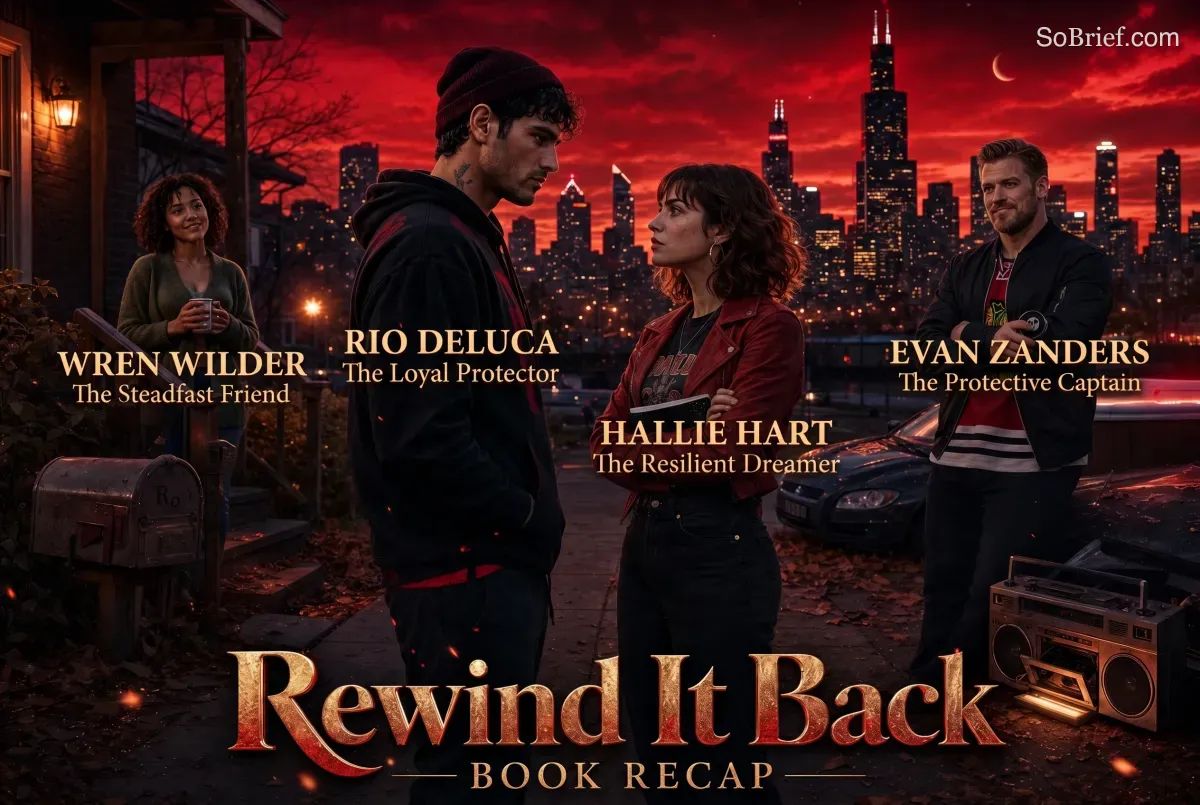
Rio DeLuca1 plays defense for the Chicago Raptors, but off the ice, he's spent six years striking out. Every first date dies the same way — he can't find the spark he once had. His friends are all paired up, his Sunday dinners feel increasingly lopsided, and the four-bedroom house he bought at twenty-one sits mostly empty, a monument to a future that never materialized.
When he notices his neighbor Wren's15 home has been transformed by a designer, he decides to hire the same firm — partly to increase resale value if he moves back to Boston, partly because the house needs to stop looking like a hockey frat house. He has no idea that the designer who renovated Wren's15 place is about to move in next door.
Through the Glass, Six Years Later
Hallie Hart,2 a twenty-five-year-old design intern juggling two jobs to stay afloat, has avoided the United Center since moving to Chicago six months ago. When her date takes her to a Raptors game — glass seats behind the goal — she watches in silent dread as players take the ice. Then Rio1 delivers a crushing hit and his eyes lift through the plexiglass.
Recognition floods his face. She's frozen, staring at the man she once loved, and he's staring right back. She flees after discovering her date is married. That night, pulling boxes from a car at her new roommate Wren's15 house, she hears her name from across the lawn. Rio1 lives ten feet away. And she's the designer his firm assigned to renovate his home.
The Roof Between Their Houses
They met when Hallie2 was eleven and Rio1 twelve — the Hart family moving into the attached house next door to the DeLucas in Boston. She introduced herself with her full name, headphones around her neck, explaining how she picked songs for important moments so she could rewind them later.
Over the years that followed, they became inseparable in secret. She gave him a handmade mixtape every birthday, narrating each song's story on the rooftop between their bedrooms — each signed with an H and a hand-drawn heart whose tail always overextended past where it should stop.
He wore the friendship bracelet she made him until it disintegrated. Their families intertwined — Sunday dinners, shared vacations — never suspecting the neighbors' kids were falling in love beneath them.
You Start Tomorrow
Hallie's2 career hangs by a thread — her boss Tyler8 needs another major project before he'll offer a permanent position, and Rio's1 renovation is the only one available. She tracks him down at the practice rink to beg. He refuses: five minutes together and it already feels like old times, which terrifies him.
They banter about his ancient boombox, and for a moment the old ease surfaces before he shuts it down and leaves for a road trip. Back home, his closest friend Indy3 asks the question that unravels his resistance — who better to design his house than someone who actually knows him? That night, sitting at Sunday dinner with all eight friends watching, Rio1 pulls out his phone and texts Hallie2 three words that change everything.
Friends Is a Lie
Their first design meeting is a disaster of emotional whiplash. Rio1 covers the imperfect tail of Hallie's signature heart doodle — a gesture he's made since her thirteenth birthday — then says something cutting about her not caring about their history. She walks out. He waits on his front steps past midnight to apologize, admitting he has no idea how to treat her anymore.
She offers her hand and introduces herself the way she did at age eleven: full name, big smile. He recognizes the echo. They agree to be friends — a word that tastes wrong to both of them. The handshake is professional and quick, but the one before it, when his thumb traced her wrist, was anything but.
The Bartender He Knows
Rio's1 team celebrates at a downtown bar after a rookie's first goal. When the bartender approaches their table, he realizes it's Hallie2 — pouring drinks, taking orders, wearing an apron over painted-on jeans. She's been working nights here on top of full days at the design firm, getting home after two every morning. Outside, she admits what she's been hiding: she's broke.
The revelation shifts something in him. He starts showing up at the bar regularly, sitting in the corner drinking water, watching her work, driving her home when shifts end. Her car breaks down one night and he gets his mechanic to fix it in exchange for game tickets — help offered sideways, in a currency she can accept.
Moana and Almost
When his friends' babysitter cancels, Rio1 panics and texts Hallie2 for backup. She crosses the lawn within minutes. They wrangle four children through a movie, popcorn, and bedtime — falling into a rhythm so natural it aches. Rio1 falls asleep with his head on Hallie's2 thigh. After the kids are picked up and she slips out, he chases her onto the lawn.
He pulls her into the first hug they've shared since reuniting, and they hold each other far longer than friends should. Foreheads touching, lips barely apart, he waits for her to close the distance. She whispers that she's glad they can be friends instead. He laughs softly, kisses her forehead, and lets her go. From her doorstep, she calls back that she missed him too.
We Aren't Friends
Rio1 comes straight from a game in his maroon suit, sits at her bar for hours, and waits. When she gets off work, a folded blanket and small pillow are resting on the passenger seat of his truck — placed there before he even knew he'd be driving her home. During the ride, Hallie2 reaches for the stereo and picks a song, the first she's consciously attached to a moment in years.
They drive past their exit and keep going for two hours, laughing about old memories and terrible boy bands. At her door, she kisses the corner of his mouth — unpolished, almost a miss, just like their very first kiss at sixteen. He grabs the side of her neck and presses his mouth to hers, declaring that whatever they are, they are not friends.
Room Service for Two
Rio1 manufactures a reason for her to fly to New York — insisting on making design decisions in person. Tyler's8 firm covers travel. They skip the fancy restaurant and order room service in sweatpants, spreading her design concepts across the hotel couch while he trusts every choice she makes. She paints her nails ten different colors — a quirk from childhood — and he notices.
That night, she calls his hotel room on the landline and asks him to come sleep beside her. In the dark, he asks if she'd ever give them another chance. She says she doesn't know — he broke her heart by leaving. He admits he can't separate sex from commitment, not with her. They fall asleep tangled together, and he whispers he'll be waiting whenever she's ready.
The Box He Kept
Before leaving on a road trip, Rio1 gives Hallie2 implicit permission to explore the closet he once physically blocked her from entering. Alone in his house, she opens it and finds a black cardboard box with edges worn from years of handling.
Inside: every mixtape and CD she ever made him, from ages eleven to nineteen. The cases are cracked from overuse, hinges broken from being opened and closed hundreds of times. Beside them lies a tattered piece of embroidery thread — the friendship bracelet she made him at thirteen, worn until it fell apart.
She traces the heart signature she'd inked on each one, lingering where it always overextended past its stopping point. He kept everything. He's been rewinding their best moments for six years, long after she believed he'd thrown them away.
The Game He Missed
Hallie's brother Luke5 calls with terrifying news: their father6 is in the hospital, fever spiking, possible cancer relapse. She drives six hours to Minnesota alone. The tests come back clean — dehydration, not a relapse — and relief floods the waiting room. Then Rio1 walks through the door. He'd been at the airport, about to catch a flight home, when he learned from Wren15 that Hallie2 had left with a suitcase.
He scratched himself from the Raptors' game against Boston — the franchise he'd dreamed of playing for — and caught the first flight to Minnesota. He has no idea what's happening, only that she needs someone. For the first time in six years of handling everything alone, Hallie2 lets herself cry against his chest.
The Timeline That Breaks Him
In the hospital, Hallie's father6 tells Rio1 what he never knew. Non-Hodgkin lymphoma — two rounds of treatment, two remissions. Hallie2 dropped out of college, moved to Minnesota, worked odd jobs, and quietly took on massive debt to cover costs she told her dad were handled. On the drive home, she reveals the devastating timeline: her dad was diagnosed two weeks before Rio1 left for Chicago.
In that same impossible window, she'd discovered a secret about their parents — one that, when it eventually surfaced, led his mother4 to blame Hallie2 and Rio1 to choose his mother's side. Six years of anger dissolve as he finally understands: she was never the villain. She was carrying everything alone.
The Only One
Guilt consumes Rio1 for weeks. He plays terribly, withdraws, can't stop punishing himself. At girls' night, he finally tells his four closest female friends the complete story — childhood sweethearts, the secret, the cancer, all of it.
Miller11 tells him to stop feeling sorry for himself. Indy3 says Hallie's2 already forgiven him; the only one who hasn't is Rio1 himself. He drives straight to her house and delivers the truth: he doesn't want to start over, he wants to move forward with everything they are, broken parts included.
She tells him to kiss her. That night, wrapped around each other for the first time in six years, he admits he hasn't been with anyone since her. When she says the same, they both laugh in stunned disbelief at their own stubbornness.
Number Thirty-Eight
Rio1 pays off both of Hallie's2 loans without asking and buys her a car. She's furious, then relents when he frames it as correcting what he should have handled years ago — if he'd been there, she never would have taken on that debt alone. In exchange, she agrees to quit the bar on her own terms. At Sunday dinner with the full group, conversation turns to jersey numbers.
Each friend explains theirs. When it's Rio's1 turn, he admits he originally wore eighty-three — his birthday, August third. When he entered the NHL, he changed it to thirty-eight. The table waits. March eighth, he finally says. Hallie's2 birthday. She leans close with a grin and asks if he really likes her that much. He tells her the word goes much deeper than like.
Hallie Faces Mia Alone
Hallie2 overhears Rio1 agonizing to Indy3 about his mother's4 refusal to accept her — the strain is slowly breaking him. Without telling him, she flies to Boston and knocks on Mia DeLuca's4 door.
Over coffee spiked with Bailey's, she explains everything: at nineteen, she accidentally walked in on her own mother leaving Mia's4 bedroom — Rio's1 father and Hallie's2 mother had been having an affair. Hallie's2 mom weaponized her sick father's6 fragile health, threatening that revealing the truth could kill him.
For two agonizing weeks, Hallie2 carried both secrets — the affair and her father's6 diagnosis — paralyzed with fear. Mia4 absorbs the truth and breaks down, recognizing that she'd used the same kind of manipulation on her son, forcing him to choose sides for six years.
Rewind It Back
Rio1 discovers Hallie2 is in Boston when his mom4 texts him. He catches a flight and walks into his childhood home to find them watching television together, reconciled. That night — midnight, Hallie's2 birthday — he leads her onto the roof between their old houses.
He plays her a playlist through shared earbuds: each song marks an important moment from their year of reunion, mirroring the tradition she started as a child. Then he plays the final track — the song that was on when he signed his contract extension with Chicago.
Not Boston. He chose to stay. He tells her what she hasn't realized: the house he bought six years ago was built to her exact specifications — white walls, four bedrooms, family neighborhood. It was always hers. He was always waiting for her to come make it home.
Epilogue
Two months later, renovations complete, their home hosts a housewarming party packed with teammates, friends, and family. Hallie2 has been hired full-time at the design firm. Wren15 says goodbye before moving back to the West Coast. Rio's mom4 and Hallie's dad6 reconnect for the first time in six years — embracing like the old friends they once were.
Mia4 quietly reveals she's been dating Rio's1 uncle. And tucked in Rio's1 pocket sits an engagement ring, its band a mix of white and yellow gold, waiting for the moment the party ends and he can take the woman he's loved since he was twelve up to the roof of their house — the one she designed, the one he bought for her — and ask for forever.
Analysis
Rewind It Back interrogates the difference between love as feeling and love as action — specifically, how the failure to act becomes its own form of betrayal, even when motivated by fear. Rio1 and Hallie's2 separation wasn't caused by infidelity or falling out of love, but by the cascading consequences of a parental affair and a cancer diagnosis colliding in a two-week window when they were barely adults. The novel argues that trauma radiates outward from its epicenter, forcing impossible choices on bystanders who lack the maturity to make them well.
The book dismantles the childhood sweethearts trope by examining what happens when the model relationship a child builds their worldview around turns out to be fraudulent. Rio's1 six-year search for proof that love exists is less romantic quest than psychological compulsion — a man trying to rebuild a belief system his father's betrayal destroyed. His discovery that the proof was always behind him, not ahead, reframes the entire narrative arc.
Hallie's2 journey interrogates the gendered expectation of sacrifice. She is praised for dropping out of school, taking on debt, and becoming her father's6 caretaker — but the novel doesn't flinch from showing the cost. Her financial ruin, isolation, and emotional numbness aren't presented as noble; they're the predictable result of a family system that rewards one sibling's self-erasure while permitting the other's absence. Her armor — the short hair, the refusal of help, the punishing work schedule — is survival strategy mistaken for personality.
The novel's central metaphor — rewinding music to relive moments — evolves from a child's whimsy into an adult's lifeline. The boombox Rio1 carries everywhere is simultaneously a refusal to let go and a refusal to upgrade, literally incompatible with modern technology because it needs to play cassettes from the late nineties. The final scene inverts the metaphor entirely: instead of rewinding, Rio1 creates new music — a forward-facing playlist. The message is that the most important moments aren't behind you. They're the ones you choose to make next.
Review Summary
Readers are eagerly anticipating Rewind It Back, the final book in the Windy City series featuring Rio's story. Many express excitement for the second chance romance trope and childhood friends-to-lovers storyline. The book's red cover and revealed tropes have increased anticipation. Fans predict an emotional, angsty read with golden retriever hero vibes. While sad to see the series end, readers are thrilled for Rio's book and hope for a potential Monty and Reese story. The novel is set to release in May 2025, leaving fans impatient for its arrival.
Characters
Rio DeLuca
NHL defenseman, the boy next doorNHL defenseman for the Chicago Raptors, Rio is the rare combination of fierce competitor and gentle soul—a man whose aggression exists only on the ice. Beneath the humor, warmth, and obnoxious charm lies chronic insomnia and a mind that never stops spinning, quieted only in the presence of one person. He's a self-proclaimed mama's boy, an unashamed attendee of girls' nights, and the kind of friend who stocks coffee he doesn't drink for guests who do. His defining psychological trait is a deep need to love correctly, shaped by watching his parents' relationship and internalizing it as the template for his own. He carries an ancient boombox everywhere and has never upgraded it. His greatest fear is failing the people who trust him most.
Hallie Hart
Interior designer, the girl who stayedInterior design intern at Tyler Braden Interiors8 who moonlights as a bartender, Hallie is a woman whose resilience has calcified into armor. She carries a deep wound from being left by the one person she trusted most, compounded by secrets she couldn't share. Her creativity is irrepressible: ten different nail colors, walls repainted quarterly since childhood, rooms that tell stories. Her psychological core is a tension between fierce independence born from years of managing alone and a desperate, unspoken hunger to be taken care of. She protects the people she loves even at the cost of protecting herself—a pattern established young and reinforced by circumstances that forced her to grow up faster than anyone around her. Her signature heart doodle has a distinctive overdrawn tail.
Indy Shay
Rio's best friend and conscienceRio's1 closest friend in Chicago, a former team flight attendant turned stay-at-home mom. Married to NBA captain Ryan Shay9, mother of twins. She cries at everything remotely beautiful, hugs strangers on first meeting, and possesses an emotional intelligence that cuts through Rio's1 deflections with surgical precision. She's the one who convinces him to hire Hallie2 and later to stop punishing himself for past mistakes.
Mia DeLuca
Rio's fiercely protective motherRio's1 Italian mother, the emotional center of his Boston life. Loud, loving, and an extraordinary cook, she shaped her son's understanding of love through the example of her own marriage. Fiercely protective of her only child, she responds to perceived betrayals with an intensity that reflects deep wounds. Her relationship with Rio1 is both his greatest source of comfort and, at times, his most complicated allegiance.
Luke Hart
Hallie's older brotherHallie's2 older brother, once Rio's1 closest friend in Boston. Protective of his sister from a young age, he carries guilt about the years he wasn't present when his family needed him most. His wife Sarah17 eventually catalyzed his growth. His path toward reconciliation with both his sister's burden and his old friendship with Rio1 mirrors the larger healing of the story.
Mr. Hart
Hallie's devoted fatherHallie's2 father, warm, self-deprecating, and devoted to his children. He represents the person Hallie2 would do anything to protect—and has, at great personal cost. He carries quiet guilt for the sacrifices she made and the youth she spent focused on his needs rather than her own. His greatest wish is for his daughter to finally live her own life, with someone who will look after her the way she looked after him.
Zanders
Rio's captain and defensive partnerRaptors captain and Rio's1 blue-line partner—together they hold the record for the NHL's longest-running defensive duo. Married to Stevie10, father of Taylor. Charismatic and perceptive, he's the first to notice Rio's1 reaction to Hallie2 at practice and the teammate most attuned to what lies beneath Rio's1 humor.
Tyler Braden
Hallie's famous bossCelebrity interior designer with an HGTV show and a Target line. Fashion-forward, supportive, and pragmatic, he sees Hallie's2 talent and pushes her toward the full-time position she deserves. He once delivered pizza at night just to pay rent, making him more understanding of her hustle than she expects.
Ryan Shay
Chicago's NBA captainIndy's3 husband and Chicago's basketball captain. Stoic and reserved, he stubbornly refuses to tell Rio1 he loves him—a running joke that becomes the group's longest-standing bit.
Stevie Zanders
Zee's wife, former flight attendantZanders'7 wife, former team flight attendant who now runs a senior dog rescue. She serves as a steady, grounding presence and helps orient Hallie2 at her first game as a player's girlfriend.
Miller Rhodes
Tattooed pastry chef, blunt truth-tellerTattooed pastry chef with two patisseries, married to Kai Rhodes13. Direct and unflinching, she's the friend who tells Rio1 to stop feeling sorry for himself and go get Hallie2.
Kennedy Rhodes
Team doctor with clinical precisionRed-haired sports medicine doctor married to Isaiah Rhodes14. She diagnoses Rio's1 emotional state with the same clinical precision she brings to her work.
Kai Rhodes
Retired pitcher, devoted fatherRetired MLB pitcher, Miller's11 husband, father of Max and Emmy. Gentle, glasses-wearing, and deeply family-oriented—the emotional center of the Rhodes contingent.
Isaiah Rhodes
Goofy shortstop, Kai's brotherMLB shortstop and Kennedy's12 husband. His energy mirrors Rio's1, and he's the one who forces the group to stop tiptoeing around the topic of Rio's1 potential departure.
Wren Wilder
Rio's neighbor, unwitting catalystRio's1 neighbor and Hallie's2 roommate, a grad student whose brother bought the house next door. She unknowingly connects Hallie2 to both the house and the renovation project.
Carson
Hallie's bar coworkerHallie's2 bartending coworker, whose protective gesture toward her and use of a particular nickname nearly gets him punched. His boyfriend also works at the bar.
Sarah
Luke's wife, quiet catalystLuke's5 wife who convinced him to move back to Minnesota and take over their father's6 care, giving Hallie2 the freedom to finally pursue her career in Chicago.
Plot Devices
The Mixtapes and CDs
Memory anchors and relationship proofHallie's2 lifelong tradition of attaching songs to important moments and compiling them into yearly playlists, gifted to Rio1 on her birthday. Beginning with cassette tapes at age eleven and transitioning reluctantly to CDs, each compilation is signed with an H and a hand-drawn heart. The tradition forms the emotional backbone of their relationship—a shared language that persists even when they don't. Rio1 carries the same boombox everywhere because it's the only device that can still play her oldest tapes. When Hallie2 discovers every single one in his closet, cases cracked from overuse, it proves he spent six years rewinding their memories. In the final scene, Rio1 reverses the tradition, making her a digital playlist of their reunion year's important moments—transforming the device from a tool of nostalgia into one of hope.
The Roof Between Their Houses
Sacred space for vulnerabilityThe flat portion of roof connecting the DeLuca and Hart homes becomes the geography of their entire relationship. Starting on Hallie's2 thirteenth birthday, they meet there in secret—exchanging playlists, sharing fears, falling in love under the moon. The roof is where he first learns she likes him, where they listen to every yearly mixtape, and where he tells her he loves her. It represents the liminal space between their separate lives—neither his house nor hers, but the connective tissue between them. When they return to Boston years later, the same roof becomes the site of their most pivotal moment. The device recurs across every major turning point of their lives, transforming ordinary architecture into consecrated ground.
The Heart Signature
Identity marker and emotional threadHallie's2 hand-drawn heart—used to sign her mixtapes with an H for Hart—has a distinctive flaw: one side extends past where it should stop, creating a small tail. Since her thirteenth birthday, Rio1 has covered that imperfection with his fingertip every time he sees it, calling it his favorite part because no one else draws hearts like her. The gesture becomes their private language, recurring through decades of birthdays and notebooks. Rio1 eventually has the heart permanently inked over his own chest—embedding her mark on his body years before they reconnect. At hockey games, he forms the shape with his hands, deliberately letting one thumb overlap past the other. The overdrawn heart becomes a symbol of love's refusal to end where convention says it should.
Rio's House
Physical manifestation of waitingAt twenty-one, Rio1 purchased a four-bedroom house in a family neighborhood outside Chicago. His teammates thought he was foolish—a single rookie buying a suburban family home. But years earlier, Hallie2 had described her dream house to him in specific detail: white builder-grade walls she could paint herself, four or five bedrooms to fill with kids, close to the city but in a quieter area. He bought it to those exact specifications, intending for her to be the one to renovate it. When the firm assigns her to his project, the irony is devastating—she's designing the house that was always meant to be hers without knowing it. His eventual revelation completes the device's arc, transforming a real estate investment into a love letter written in square footage.
Jersey Number 38
Hidden public declaration of devotionIn high school and college, Rio1 wore number eighty-three—his birthday, August third, chosen at age ten because he thought picking his favorite day was clever. When he entered the NHL, he changed to thirty-eight. For six years, he carried the number across every game, every arena, every televised moment, and no one in Chicago knew why. The reveal at a family dinner—March eighth, Hallie's2 birthday—arrives as one of the quietest yet most devastating emotional payoffs in the story. The device illustrates that even during the years Rio1 was consciously trying to forget Hallie2, his subconscious wouldn't let him. He wore his devotion in public, broadcast to millions, hidden in plain sight.
FAQ
Synopsis & Basic Details
What is Rewind It Back about?
- A Second Chance Romance: Rewind It Back follows Rio DeLuca, a professional hockey player, and Hallie Hart, an interior designer, who were childhood sweethearts and neighbors in Boston before a painful breakup and family secrets drove them apart for six years.
- Reunion in Chicago: Fate brings them back together in Chicago when Hallie moves in next door to Rio's house and is unknowingly hired to renovate it, forcing them to confront their unresolved past and the lingering feelings between them.
- Healing and Forgiveness: The story explores their journey of navigating old wounds, revealing hidden truths about their pasts, and deciding if their deep connection is strong enough to build a future together, supported by a close-knit group of friends.
Why should I read Rewind It Back?
- Deep Emotional Resonance: The novel delves into complex themes of first love, family trauma, sacrifice, and forgiveness, offering a raw and honest portrayal of healing from past hurts.
- Compelling Dual Timeline: Alternating between their poignant childhood/teenage years and their tense yet hopeful reunion as adults, the narrative provides rich context and emotional depth to their present-day struggles and rekindled connection.
- Rich Character Development: Readers will connect with Hallie's resilience and vulnerability and Rio's journey of self-forgiveness, set against a backdrop of supportive friendships that highlight the power of chosen family.
What is the background of Rewind It Back?
- Chicago Sports Setting: The story is set primarily in Chicago, leveraging the backdrop of professional hockey (Rio's career) and basketball/baseball (his friends' careers), integrating the demanding schedules and public nature of professional sports into the characters' lives.
- Focus on Found Family: A significant cultural element is the strong emphasis on the close-knit group of friends in Chicago, who function as a supportive, chosen family for Rio and later Hallie, providing a sense of belonging away from their biological families.
- Themes of Sacrifice and Caretaking: Hallie's backstory highlights the immense personal and financial sacrifices made when caring for a sick parent, a reality that deeply impacts her independence and initial reluctance to accept help.
What are the most memorable quotes in Rewind It Back?
- "Hallie, you're in here.": Rio taps his chest in Chapter 31, telling Hallie she's still in his heart despite their years apart, symbolizing how deeply ingrained she is in his identity and how he never truly moved on.
- "It's always been you, Hallie, and I think we both know it.": Rio's declaration in Chapter 31 encapsulates the core theme of their enduring connection, emphasizing that despite the detours and pain, their bond was always destined.
- "You're my childhood dream.": Rio tells Hallie this in Chapter 43, revealing that his lifelong ambition wasn't just playing for the Boston Bobcats, but being with her, highlighting the ultimate priority of their relationship over career goals.
What writing style, narrative choices, and literary techniques does Liz Tomforde use?
- Dual POV and Timelines: The story alternates between Hallie and Rio's perspectives and weaves in flashbacks to their past, providing a comprehensive view of their individual experiences and shared history.
- Emotional and Vulnerable Tone: Tomforde employs a writing style that is direct and emotionally resonant, allowing characters to express their inner turmoil and desires with raw honesty, particularly in internal monologues and intimate dialogue.
- Symbolism and Metaphor: Key elements like music (mixtapes, playlists), the physical space of the roof, and the process of home renovation serve as powerful metaphors for memory, connection, healing, and building a future.
Hidden Details & Subtle Connections
What are some minor details that add significant meaning?
- Hallie's Heart Signature: The specific way Hallie draws a heart with an extra tail (Chapter 15, 22, 24, 29) is a seemingly small quirk that Rio consistently notices and touches, symbolizing his acceptance of her imperfections and foreshadowing the heart tattoo he gets in her handwriting (Chapter 32).
- Rio's Boombox: The old, non-Bluetooth boombox Rio carries (Chapter 5, 6, 16, 19) isn't just a quirky habit; it's explicitly linked to his need to play Hallie's old mixtapes and CDs (Chapter 29), revealing he actively held onto their shared musical history and memories even when trying to forget her.
- The Coffee Bar: Rio's elaborate coffee setup (Chapter 10) is initially presented as a convenience for guests, but Hallie recognizes it as a deeper trait: his innate way of caring for and making those important to him feel comfortable, a subtle demonstration of his nurturing nature that extends beyond romantic partners.
What are some subtle foreshadowing and callbacks?
- The First Drive Home: Rio driving Hallie home in his truck as teenagers (Chapter 16) mirrors his driving her home from the bar as adults (Chapter 11), establishing a pattern of him being her safe transport and a space for vulnerability and connection, culminating in the significant drive after the bar where they reconnect emotionally.
- The Locked Closet: Rio preventing Hallie from seeing a specific closet during the initial house tour (Chapter 10) creates mystery and foreshadows the significant personal items (mixtapes, bracelet) hidden within it (Chapter 24), revealing the depth of his preserved memories.
- "It's nothing you haven't seen before": Rio's teasing line about being shirtless (Chapter 10) and later about Hallie watching him in the shower (Chapter 24) is a callback to their teenage intimacy, subtly reminding Hallie (and the reader) of their shared physical history and the comfort level they once had.
What are some unexpected character connections?
- Hallie's Roommate & Rio's Friend Group: Wren Wilder, Hallie's roommate, is the sister of Cruz Wilder, a prominent athlete who is friends with members of Rio's core group (Ryan, Isaiah, Kai) (Chapter 37), unexpectedly integrating Hallie into Rio's established social circle through a seemingly unrelated connection.
- Rio's Uncle Mikey & His Mom: The revelation that Rio's uncle Mikey and his mother Mia are dating (Chapter 43) is a surprising development that provides a hopeful parallel to Rio and Hallie's second chance, showing that love and new beginnings are possible even after significant past pain and loss within the family.
- Hallie's Dad & Rio's Mom: The unexpected reconciliation and warm interaction between Hallie's dad and Rio's mom at the housewarming party (Chapter 43) highlights the healing of the family rift caused by the affair, demonstrating that forgiveness and renewed friendship are possible even after deep betrayal.
Who are the most significant supporting characters?
- Indy Shay: As Rio's best friend and the emotional core of the Chicago friend group, Indy provides crucial emotional support, pushes Rio towards vulnerability, and acts as a bridge for Hallie to integrate into the group, often offering insightful observations about Rio's feelings (Chapter 6, 13, 14, 31, 38).
- Mia DeLuca: Rio's mother is a pivotal figure whose pain from the affair and initial resentment towards Hallie significantly impact Rio's emotional state and their relationship, representing the primary external conflict they must overcome for their future (Chapter 26, 38, 40, 41, 43).
- Mr. Hart: Hallie's father's illness and his sacrifices for her (Chapter 28) are central to understanding Hallie's character, her financial struggles, and her deep-seated need to care for others, while his eventual recovery and support for Hallie and Rio's relationship provide a source of healing and hope.
Psychological, Emotional, & Relational Analysis
What are some unspoken motivations of the characters?
- Rio's Need for Control: Rio's insistence on paying off Hallie's loans (Chapter 27, 37) and buying her a car (Chapter 37) isn't solely altruism; it's partly an unspoken attempt to exert control over the financial situation he feels guilty for unknowingly leaving her in, a way to "fix" the past through present actions.
- Hallie's Testing of Rio: Hallie's initial defiance and subtle pushing of Rio's boundaries (e.g., asking about his dating life, teasing him) (Chapter 10, 19) can be interpreted as an unspoken test to see if he will truly stay and fight for her this time, or if he will retreat when things get complicated, mirroring his past abandonment.
- Rio's Delayed Vulnerability: Rio's struggle to fully articulate his deepest feelings and the extent of his hurt (Chapter 29) is an unspoken manifestation of the emotional walls he built after his parents' divorce and Hallie's perceived betrayal, making his eventual raw honesty (Chapter 31) more impactful.
What psychological complexities do the characters exhibit?
- Hallie's Caretaker Identity: Hallie exhibits a complex psychological pattern rooted in her years as a caregiver, where her self-worth became intertwined with her ability to sacrifice and handle burdens alone (Chapter 8, 28), leading to difficulty accepting help and vulnerability, even from someone she loves.
- Rio's Trauma Response: Rio displays psychological complexities stemming from the trauma of his parents' divorce and the perceived betrayal by Hallie, leading to a defensive mechanism of emotional avoidance and a tendency to "run away" from difficult feelings or situations (Chapter 4, 26, 31).
- Intergenerational Trauma: The novel subtly explores intergenerational trauma, showing how the painful choices and unresolved issues of the parents (affair, divorce, secrecy) directly impact the emotional well-being and relationship patterns of the children (Rio's trust issues, Hallie's fear of abandonment, their secrecy).
What are the major emotional turning points?
- The Hospital Reunion: Rio showing up at the hospital in Minnesota (Chapter 27) is a major emotional turning point, demonstrating his unwavering support and care for Hallie regardless of the circumstances or his understanding of the situation, breaking through her emotional walls and allowing her to show vulnerability ("Am I allowed to say no?").
- The Closet Revelation: Hallie discovering the box of mixtapes and the friendship bracelet in Rio's closet (Chapter 24) is a pivotal emotional moment, providing tangible proof that he never forgot her and actively held onto their shared history, fundamentally shifting her perception of his actions after their breakup.
- The Phone Sex Scene: The phone call where Hallie and Rio engage in phone sex (Chapter 25) is an emotional turning point that allows for raw vulnerability and honesty ("I don't want to want you," "I'm tired of lying"), pushing their emotional connection forward even while physically apart and revealing the depth of their continued desire and longing.
How do relationship dynamics evolve?
- From Childhood Sweethearts to Estranged Adults: The dynamic shifts from innocent, deeply connected childhood friends and first loves (Chapter 3, 15, 22, 30) to tense, resentful strangers (Chapter 1, 2, 5), highlighting the profound impact of unresolved conflict and unspoken pain over six years.
- From Client/Designer to Tentative Friends: Their forced professional relationship (Chapter 5, 8, 10) gradually evolves into a tentative friendship (Chapter 9), marked by cautious interactions, shared history callbacks, and a slow rebuilding of trust, laying the groundwork for something more.
- From Healing Partners to Committed Couple: The dynamic transforms from two individuals healing from past trauma and helping each other (Chapter 27, 28, 29) to a fully committed couple (Chapter 31, 32, 33, 34), openly communicating, supporting each other's dreams, and building a shared future based on forgiveness and mutual understanding.
Interpretation & Debate
Which parts of the story remain ambiguous or open-ended?
- The Full Extent of Parental Relationships: While the affair and its immediate fallout are central, the long-term dynamics between Hallie's parents, Rio's parents, and their respective relationships with Luke remain somewhat open-ended, focusing primarily on the impact on Hallie, Rio, and Mia.
- Hallie's Mother's Perspective: Hallie's mother's motivations and feelings beyond her initial fear and manipulation remain largely unexplored, leaving her character primarily as a catalyst for conflict rather than a fully developed individual with her own complex arc.
- The Future with Boston: While Rio re-signs with Chicago, the possibility of playing for Boston is left open as a future possibility ("If it's about me staying in Chicago, I don't have to. I can come with you..."), suggesting that the tension between his dream team and his established life in Chicago could resurface later.
What are some debatable, controversial scenes or moments in Rewind It Back?
- Hallie's Decision to Keep the Secret: Hallie's choice at age 19 to keep her mother's affair a secret from Rio and his mother (Chapter 41, 42) is highly debatable; while motivated by fear for her father's health, it directly leads to years of pain and misunderstanding, raising questions about the ethics of silence and loyalty.
- Rio's Immediate Abandonment: Rio's reaction to learning Hallie knew about the affair and immediately cutting her out of his life (Chapter 42) is controversial; while understandable given his pain, the swiftness and completeness of his abandonment can be debated as an overly harsh response to a complex situation Hallie was forced into.
- Rio Paying Off Hallie's Debt: Rio secretly paying off Hallie's loans (Chapter 37) can be seen as controversial; while intended to help, it bypasses Hallie's independence and pride, sparking debate about financial power dynamics in relationships and whether such significant gestures should be made without prior discussion.
Rewind It Back Ending Explained: How It Ends & What It Means
- Rio Re-signs with Chicago: Instead of pursuing his childhood dream of playing for the Boston Bobcats, Rio signs a contract extension with the Chicago Raptors (Chapter 43), signifying that his definition of "home" and his primary dream have shifted from a geographical location/career goal to being with Hallie and the life they've built together in Chicago.
- Proposal on the Roof: Rio proposes to Hallie on the roof of their newly renovated Chicago home (Epilogue), mirroring the rooftop where their love story began in Boston, symbolizing their journey coming full circle and establishing their new house as the foundation for their future together, built on shared history and forgiveness.
- Found Family Embraces Hallie: The ending emphasizes the strength of the Chicago friend group, who fully embrace Hallie as part of their chosen family (Epilogue), highlighting the theme that family is built on love and support, not just blood, and providing a strong community for Hallie and Rio as they start their life together.
Windy City Series




About the Author
Other books by Liz Tomforde
Download PDF
Download EPUB
.epub digital book format is ideal for reading ebooks on phones, tablets, and e-readers.








































